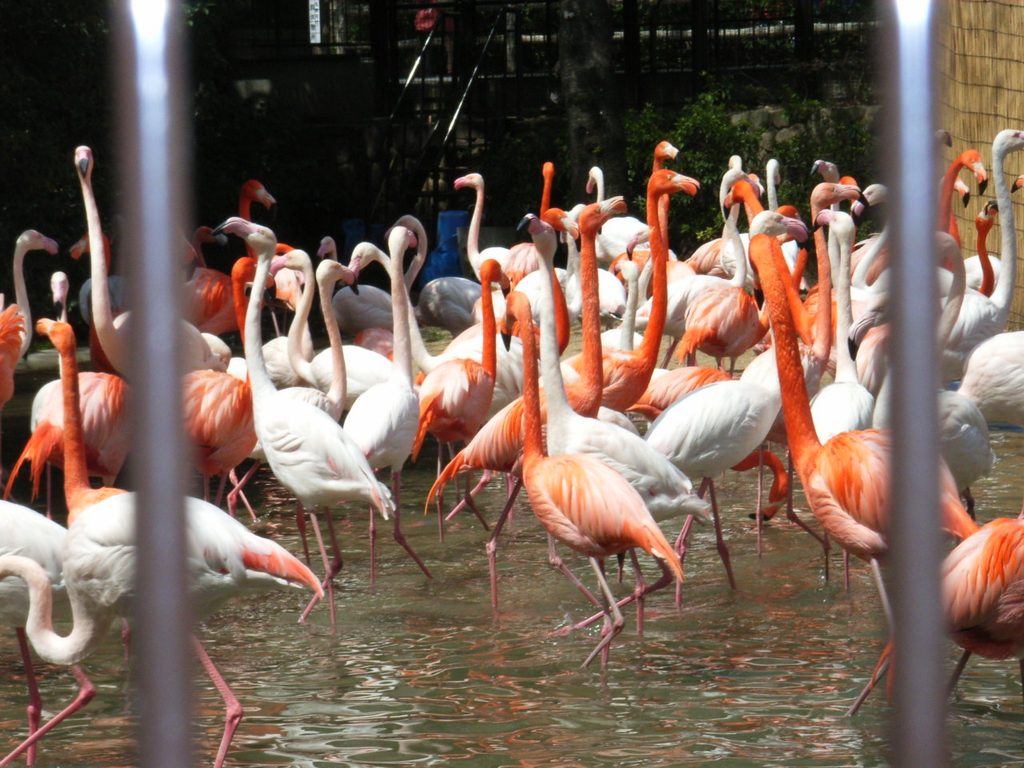
The bright pink flamingos you see at the zoo are treated as the main subject of Kenshi Yonezu's song "Flamingo." Their unstable posture on one leg, their beaks curved in a V-shape, and their striking red color all contribute to a song that depicts the fleeting relationship between unfulfilled men and women, as well as the emptiness and patheticness of modern people.
This bird is often sung about in songs, but why is it so red? And why does it stand on only one leg?
The red feathers of flamingos are produced by carotenoids, a pigment they obtain from their food. However, even if we understand how they obtain this pigment, the question remains as to why their vibrant colors have been maintained throughout the course of evolution.
To find the answer, we need to consider the function of flamingos as a signal of their health, their sexual selection for mating partners, and the harsh saltwater lake habitat in which they live.
Many flamingo species live in saltwater lakes, tidal flats, and coastlines with high salinity. Lesser flamingos, in particular, inhabit lakes with extremely high salinity, sometimes called "dead lakes," with Lake Natron in Africa being a prime example. For flamingos, these lakes are a source of abundant food containing carotenoids and are important breeding grounds. The fact that land predators have difficulty approaching the breeding grounds is also a significant advantage.
In such an environment where it is relatively safe to be conspicuous to natural enemies, it is thought that the carotenoids in the abundant food source have developed functions as signals indicating health status and as an attraction to mates (both males and females).
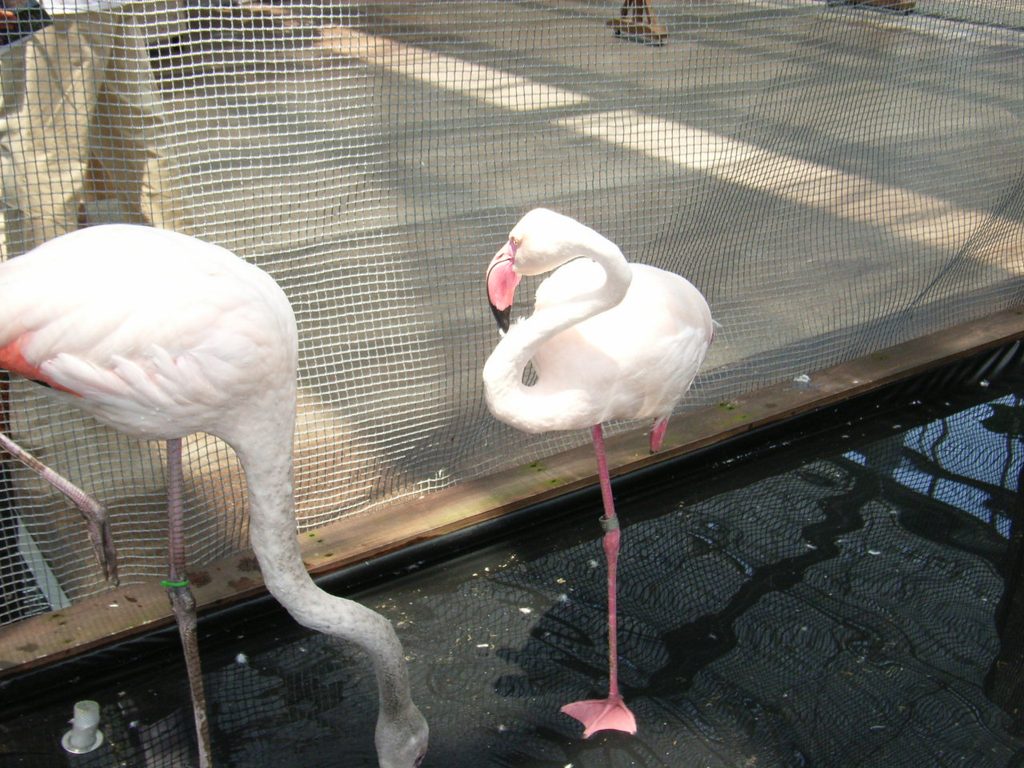
Standing on one leg is also thought to be the most energy-efficient adaptation for two reasons, allowing them to live in the lake for extended periods.
This article explains, based on scientific papers, everything from the classification of the six extant flamingo species to the scientific characteristics of dead lakes (saltwater lakes), the relationship between red color and sexual selection, the antioxidant effects of canthaxanthin, and the evolution of one-legged standing.
- What are flamingos? Classification and the 6 extant species
- Why are flamingos red? How carotenoids color their feathers.
- A key characteristic of flamingos is that they live in saltwater lakes, tidal flats, and coastlines.
- What is the ultimate reason why flamingos turn red?
- Hypothesis 1: Red is an honest signal indicating health status or individual quality.
- Hypothesis 2: Red is a sexual signal for selecting a mate.
- Has the color red evolved from a health signal to a sexual adornment?
- Hypothesis 3: Is the antioxidant effect of canthaxanthin related to the evolution of red color in flamingos?
- Is the benefit of being red greater than the risk of being conspicuous to natural enemies?
- Why do flamingos stand on one leg?
- Summary: What was the purpose of the flamingo's red color and one-legged stance?
- References
What are flamingos? Classification and the 6 extant species
Flamingos are waterfowl classified under the order Phoenicopteriformes, family Phoenicopteridae, and class Aves. They are characterized by their long legs and neck, beaks adapted for filter feeding, and pink to red plumage.
Extant flamingos are generally classified into 3 genera and 6 species.
- Flamingo genus (Phoenicopterus)
- Greater Flamingo (Phoenicopterus ruber)
- Greater flamingo (Phoenicopterus roseus)
- Chilean flamingo (Phoenicopterus chilensis)
- Lesser flamingo (Phoeniconaias)
- Lesser flamingo (Phoeniconaias minor)
- Andean flamingo genus (Phoenicoparrus)
- Andean flamingo (Phoenicoparrus andinus)
- Short-billed flamingo (Phoenicoparrus jamesi)
However, there is debate regarding the classification of genera based on genetic research, and their treatment may differ depending on the classification system (Torres et al., 2014; Frias-Soler et al., 2022).
Flamingos are distributed across Africa, Europe, Asia, and North and South America. Their habitats and diets vary depending on the species.
The following post provides an interesting and easy-to-understand explanation of how to distinguish between the three species found in Japanese zoos.
Why are flamingos red? How carotenoids color their feathers.
The main factor that gives flamingos their pink to red feathers is a pigment called carotenoid.
Carotenoids are a general term for yellow, orange, and red pigments found in algae and crustaceans. Flamingos take in carotenoids from their food, absorb and metabolize them in their bodies, and then accumulate them in their feathers and skin.
Fox et al. (1967) compared carotenoids in the blood and feathers of lesser flamingos, Chilean flamingos, and greater flamingos. In greater flamingo feathers, canthaxanthin was reported to be one of the major carotenoids.
In other words, the red color of flamingos is not simply the color of the food they eat transferred to their feathers. It is created by a physiological mechanism that takes in pigments contained in food, utilizes them in the body, and distributes them to feathers and other parts of the body.
Cyanobacteria and crustaceans are the source of the red color.
The diet of flamingos varies depending on the species and habitat.
The beak curves sharply downwards in the middle, giving it a V-shape. The angle of the beak's curve corresponds to the feeding posture in which the bird places its head downwards and immerses its beak in the water. The edge of the beak has whisker-like tissues called lamellae, which are used for filter feeding, filtering out cyanobacteria and small animals from the water (Ortega-Jimenez et al., 2025).
Interestingly, flamingos create vortices by quickly retracting their heads, stirring up sediment and shrimp. Furthermore, they create directional currents by clicking their beaks and whirlpools by stomping their feet to catch invertebrates.
East African lesser flamingos primarily feed on Arthrospira fusiformis, a type of cyanobacteria (blue-green algae). Other flamingo species, on the other hand, also rely on cyanobacteria and aquatic crustaceans such as brine shrimp (Artemia) as important food sources.
The carotenoids contained in this food are responsible for the flamingo's vibrant colors.
However, feather color is not determined solely by diet. Factors such as pigment absorption efficiency, metabolic capacity, distribution within the body, and the condition of the feathers also play a role.
Flamingos maintain the red color of their feathers themselves.
Greater flamingos engage in a "makeup behavior" where they apply secretions from their uropygial gland at the base of their tail to their feathers.
Amat et al. (2011) reported that this secretion contains carotenoids, which enhance the coloration of the feathers.
Furthermore, Chiale et al. (2021) experimentally demonstrated that exposing feathers to sunlight without applying uropygial gland secretions reduces their reddish color. Since carotenoid pigments fade in light, continuous maintenance is necessary to maintain vibrant colors.
This indicates that the red color of flamingos is not simply the result of ingesting pigment, but rather is achieved through the acquisition and metabolism of pigment, its distribution to the feathers, and the behaviors that maintain the color.
A key characteristic of flamingos is that they live in saltwater lakes, tidal flats, and coastlines.
When considering the evolution of flamingos, the fact that they live in saltwater lakes, tidal flats, and coastlines is an important factor.
Many flamingo species filter-feed large quantities of microorganisms such as crustaceans and cyanobacteria. They can then utilize the excess carotenoids contained in these microorganisms for other purposes.
Furthermore, because they build their nests in mud mounds in saltwater lakes, tidal flats, and coastlines, they have very few natural enemies.
The "Lake of Death" where lesser flamingos live
Lesser flamingos live in even more unique environments.
Lakes like Lake Natron in Tanzania, where lesser flamingos live, are sometimes called "dead lakes" not just because they are extremely saline. In soda lakes located in the East African Rift Valley, high pH, water rich in salinity and carbonates, intense sunlight, and seasonal water level fluctuations combine to create a harsh environment for many organisms.
However, even if an environment is harsh for many organisms, it can be a suitable habitat for certain microorganisms. Soda lakes like Lake Natron are home to microorganisms adapted to alkaline and saline conditions, and cyanobacteria such as Arthrospira fusiformis thrive there.
In other words, the lesser flamingo habitat is not simply a harsh environment for them. It is also a place where they can obtain specialized food in an environment that is difficult for many other creatures to access.
The Lake of Death protects breeding grounds from predators.
Another notable feature of Lake Natron is that its breeding grounds are isolated from terrestrial predators.
Brown (1971) reported on the breeding ecology of the lesser flamingo, stating that a major advantage of their breeding grounds in Lake Natron is that they are located in the central part of the lake, inaccessible to predatory mammals.
The vast surface area of a lake and the warm, muddy areas make it difficult for predators to approach the breeding grounds. These environments are advantageous for protecting eggs and chicks.
On the other hand, if the lake's water level drops and a passage opens between it and the land, the chances of predators approaching increase. In fact, flamingos incubating eggs may abandon breeding en masse if disturbed by hyenas or other predators (Brown, 1971).
This point is important when considering the evolution of red coloration in flamingos. Even if bright colors make them easier to spot for predators, if the breeding grounds themselves deter predators, the cost of coloration may be reduced.
Adaptation to the dead lake is directly linked to the survival and reproduction of flamingos.
The harsh conditions of the dead lake are not unrelated to the lesser flamingo. While the severe water quality limits the types of organisms that can utilize it, it provides a food source for the specialized lesser flamingo. Furthermore, it offers the advantage of separating their breeding grounds from predators.
However, the Lake of Death is not always safe for flamingos. Depending on the lake's water level, the amount of food available, the types and toxins of microorganisms, and environmental changes, conditions can actually threaten their survival.
For example, the relationship between mass deaths of lesser flamingos and cyanobacterial toxins has been studied in Lake Nakuru and Lake Bogoria. Krienitz et al. (2003) detected hepatotoxic microcystin and the neurotoxin anatoxin-a from cyanobacteria in Lake Bogoria, suggesting their possible contribution to the mass deaths of lesser flamingos.
Therefore, the Lake of Death is not simply a place that is "safe for lesser flamingos because it is a dangerous environment." While it offers the benefits of abundant food and isolation from predators, it is also an ecologically unique place where there are risks from environmental changes and toxins.
What is the ultimate reason why flamingos turn red?
The fact that food turns red due to pigments absorbed from food is the mechanism by which color is produced, or the "proximate cause."
So, why has the red coloration of flamingos been maintained throughout the evolutionary process?
To answer this question, we need to consider what benefits color brings to survival and reproduction. This is the "ultimate cause" problem.
When considering the red color of flamingos, we need to distinguish between at least the following three perspectives.
- The color red may act as an honest signal indicating health status or individual quality (Hypothesis 1).
- The possibility that these colors are emphasized by sexual selection, such as mate selection (Hypothesis 2)
- Physiological functions of carotenoids, such as antioxidant effects (Hypothesis 3)
These are not necessarily mutually exclusive. A complex evolutionary scenario is also conceivable in which physiologically functional pigments reflect individual qualities, and this information is used in the selection of reproductive partners.
Hypothesis 1: Red is an honest signal indicating health status or individual quality.
In birds that utilize carotenoids, vibrant colors can indicate nutritional status and physiological condition.
This is because individuals that can acquire, metabolize, and distribute sufficient carotenoids to their feathers and other parts of their body are more likely to maintain vibrant colors.
This function of color in conveying information about an individual's state is called an "honest signal." Here, "honest" does not mean that the individual is intentionally conveying information. Rather, it means that there is a certain relationship between color and the individual's state that the recipient can utilize.
What research on greater flamingos shows
Amat et al. (2022) investigated the relationship between foraging locations, physical condition, sex, and feather color in greater flamingos (Phoenicopterus roseus).
As a result, individuals with more vibrant colors tended to be in better physical condition.
The authors point out that this could indicate the individual's condition and social relationships at the foraging site.
These results support the possibility that flamingo coloration is not merely decorative, but conveys information related to foraging ability and physiological condition.
Hypothesis 2: Red is a sexual signal for selecting a mate.
If vibrant plumage indicates an individual's quality, it could be helpful when selecting a breeding partner.
In greater flamingos, the relationship between feather coloration and breeding behavior has been studied. Amat et al. (2011) reported that feather coloration and grooming behavior are related to the timing of the start of breeding.
Flamingo coloration is not a fixed ornament. It changes depending on the behavior of attaching pigment to their feathers and the individual's condition during the breeding season, so coloration may communicate information about the individual's condition and reproductive capabilities to the opposite sex.
However, unlike many traits that arise from sexual selection, which exhibit sexual dimorphism, flamingos have vibrant colors in both males and females.
Furthermore, unlike typical male-to-female attraction in mammals and birds, Amat et al. (2022) showed that females are actually more colorful and in better physical condition than males.
Therefore, the evolution of red cannot be explained solely by male courtship decorations, suggesting that females also need to appeal to males in order to produce better offspring.
Has the color red evolved from a health signal to a sexual adornment?
An interesting aspect to consider when thinking about the evolution of flamingo red feathers is the relationship between honest signals and sexual selection.
First, let's assume that the ability to acquire sufficient carotenoids, metabolize them, and utilize them for feathers is related to the individual's nutritional status and physiological condition. In this case, brightly colored feathers may function as an honest signal reflecting the individual's state.
If such a function exists, it lays the foundation for color to be used in the selection of breeding partners. In other words, the function of color indicating individual quality may have acted as a "pre-adaptation" that later led to its use in sexual selection.
When considering the evolution of color through sexual selection, Fisher's runaway effect is an important theory (Fisher, 1930).
This theory suggests that if a preference for individuals with certain characteristics is genetically linked to those characteristics, then both can be mutually reinforced across generations.
For example, suppose there is a preference for brightly colored individuals, and that this coloration is genetically variable. If brightly colored individuals are reproductively advantageous, both the trait related to coloration and the preference may increase within the population. As a result, the coloration may become even more exaggerated.
This has not yet been proven, but at this point, the following evolutionary scenario is conceivable.
- The ability to acquire and metabolize carotenoids, as well as the individual's physical condition, are reflected in the coloration of their feathers.
- Coloration functions as an honest signal that reveals the quality of an individual.
- Those colors began to be used in mate selection.
- Under the right conditions, color can be further enhanced by sex selection processes such as the runaway effect.
This is a hypothesis that combines existing research findings with sexual selection theory. It is important not to conclude that the red color of flamingos evolved solely as a health indicator or solely as sexual ornamentation, but rather to consider the possibility that both were involved in a gradual process.
Hypothesis 3: Is the antioxidant effect of canthaxanthin related to the evolution of red color in flamingos?
When considering the red color of flamingos, the antioxidant effects of carotenoids are an important point that cannot be ignored.
Carotenoids have the ability to scavenge reactive oxygen species such as singlet oxygen, and their antioxidant activity has been confirmed in in-vitro experiments. Canthaxanthin is one of the carotenoids that possesses antioxidant activity.
However, we need to distinguish between three questions here.
- Does canthaxanthin have chemical antioxidant properties?
- Does this effect also bring physiological benefits to the bird's body?
- Did those profits lead to the evolution of the flamingo's red color?
Regarding the first question, there are studies on the chemical properties of carotenoids. Regarding the second question, experiments and meta-analyses have been conducted on birds. Regarding the third question, it cannot be said that it has been directly demonstrated in flamingos.
A meta-analysis examining carotenoids and antioxidant capacity in birds.
Simons et al. (2012) integrated studies of 88 bird species to analyze the relationship between carotenoid-dependent coloration and blood carotenoid concentrations and indicators of immune function and oxidative stress.
As a result, blood carotenoid concentrations showed a positive correlation with antioxidant capacity. On the other hand, no significant correlation was found between the redness of feather color and oxidative damage.
This study supports the possibility that carotenoids are involved in antioxidant function in birds, but also shows that brightly colored feathers do not necessarily indicate good antioxidant status.
Therefore, when linking the antioxidant effects of carotenoids to the evolution of red color in flamingos, it is necessary to distinguish between the chemical properties of the pigment and its actual physiological function.
Antioxidant effects are not always exerted in the bodies of birds.
Isaksson and Andersson (2008) experimentally induced oxidative stress in great tits and investigated the effects of carotenoid intake on feather coloration.
As a result, the prediction that oxidative stress alters the mobilization of carotenoids in the blood or the distribution of pigments to feathers was not supported. The authors point out that a simple explanation may not hold for the role of carotenoids as antioxidants in birds.
Mohr et al. (2019) also reported that in an experiment in which carotenoids were supplemented in two species of ducks, no consistent reduction in oxidative damage to the tissues examined was observed.
What we know directly about canthaxanthin in flamingos
Greater flamingo feathers contain a high amount of canthaxanthin, which is used to maintain the reddish color of their plumage. They have also been observed applying carotenoid-containing secretions from their uropygial gland to their feathers (Amat et al., 2011; Chiale et al., 2021).
However, within the scope of the literature we were able to review, we could not find any studies that directly demonstrated that canthaxanthin in flamingos protects individuals from ultraviolet radiation and oxidative stress in the wild, thereby increasing their survival rate.
The antioxidant properties of carotenoids are a physiological function that may be related to the evolution of the red color in flamingos. However, the possibility that the red color of flamingos evolved as a "protective suit to shield cells from ultraviolet radiation" is currently considered quite low.
Is the benefit of being red greater than the risk of being conspicuous to natural enemies?
However, being red has the significant disadvantage of making them easily visible to predators. Isn't this a problem?
As for the lesser flamingo, it breeds in areas that are difficult for terrestrial predators to access, such as the central part of Lake Natron and large muddy areas (Brown, 1971).
In such environments, even if bright colors make birds easier to spot, it becomes difficult for predators to actually reach the breeding grounds.
In other words, the risk of predation will not be eliminated entirely, but it may be mitigated by the environment.
However, to date, we have not found any studies that directly compare the benefits of red coloration with the risks of predation and quantitatively demonstrate the balance between the two.
Furthermore, this explanation only applies to lesser flamingos, and it's unclear if it's the same for other species. However, given that land mammals also have difficulty venturing into saltwater lakes, tidal flats, and coastlines, this explanation, while predation by other birds is possible, is somewhat plausible.
Why do flamingos stand on one leg?
Regarding flamingos standing on one leg, the main theories studied are thermoregulation and energy conservation.
For regulating body temperature
Birds' legs have many areas that are not covered with feathers, making them more susceptible to heat loss when exposed to water or cold air.
By bringing one leg closer to your body, you can reduce the surface area of the leg exposed to water and air, which may help reduce heat loss.
Anderson and Williams (2010) observed Caribbean flamingos in captivity and reported that a higher proportion of individuals stand on one leg in water than on land, and that the proportion of individuals standing on one leg decreases as the temperature rises.
These results support the hypothesis that standing on one leg helps regulate body temperature. However, this study is based on behavioral observations and does not directly measure the reduction in heat loss caused by standing on one leg.
To save energy
Chang and Ting (2017) investigated the biomechanical mechanisms of one-legged standing through experiments using flamingo carcasses and measurements of the posture of living individuals.
The results showed that flamingos can support their weight on one leg without having to constantly exert strong muscle power by utilizing the arrangement of their joints.
In other words, standing on one leg may not be a posture that uses as much muscle strength as it might appear.
For birds that rest standing for long periods, being able to maintain their posture with less energy is likely to be advantageous.
Thermoregulation and energy conservation are not necessarily conflicting hypotheses. If standing on one leg reduces heat loss while also suppressing muscle activity, it may be possible to reap the benefits of both.
It has also been found that flamingos spend more time standing on one leg in the water than on land. This is thought to be an important adaptation for flamingos, which filter feed for long periods in lakes and also carry out other activities in the lake.
Summary: What was the purpose of the flamingo's red color and one-legged stance?
Flamingos are able to obtain large amounts of carotenoids from their diet by living in saltwater lakes, tidal flats, and coastlines.
Lesser flamingos, in particular, live in dead lakes, where high pH, salinity, and temperature fluctuations are harsh conditions for many organisms. However, lesser flamingos have the advantage of abundant microorganisms for food and their breeding grounds are isolated from terrestrial predators. This may create a situation where the cost of their vibrant colors, even if they increase the risk of predation, is reduced.
The red color of flamingos comes from carotenoids they ingest from their food. In greater flamingo feathers, canthaxanthin is one of the main pigments, and the vibrant color is maintained by the behavior of coating their feathers with secretions from their uropygial gland.
There is research evidence supporting the relationship between flamingo coloration, physical condition, and reproductive behavior. It is possible that red acts as an honest signal indicating individual quality, that this function is pre-adapted and used in sexual selection, and that it is further amplified by the runaway effect.
While carotenoids have antioxidant properties, studies in birds have not supported a correlation between apparent carotenoid concentrations and antioxidant capacity. There is currently insufficient direct evidence that canthaxanthin in flamingos caused the evolution of red coloration by protecting the body from ultraviolet radiation and oxidative stress.
Standing on one leg may be related to both thermoregulation and energy conservation. It is thought that standing on one leg reduces heat loss and suppresses muscle activity by utilizing the structure of the joints. This is likely closely related to filter feeding in saltwater for extended periods.
To understand the red color and one-legged stance of flamingos, it's important to consider their habitat rather than simply assuming evolutionary reasons based on observations at a zoo.
References
Amat, JA, Rendón, MA, Garrido, A., Ramírez, JM, Pérez-Gálvez, A., & Garrido-Fernández, J. (2011). Greater flamingos Phoenicopterus roseus use uropygial secretions as make-up. Behavioral Ecology and Sociobiology, 65, 665-673. https://doi.org/10.1007/s00265-010-1068-z
Amat, JA, Garrido, A., Rendón-Martos, M., Portavia, F., & Rendón, MA (2022). Plumage coloration in Greater Flamingos Phoenicopterus roseus is affected by interactions between foraging site, body condition and sex. Ardeola, 69 (2), 219-229. https://doi.org/10.13157/arla.69.2.2022.ra3
Anderson, MJ, & Williams, SA (2010). Why do flamingos stand on one leg? Zoo Biology, 29 (3), 365-374. https://doi.org/10.1002/zoo.20266
Brown, LH (1971). The breeding behavior of the Lesser Flamingo Phoeniconaias minor. Ibis, 113 (2), 147-172. https://doi.org/10.1111/j.1474-919X.1971.tb05141.x
Chang, Y.-H., & Ting, LH (2017). Mechanical evidence that flamingos can support their body on one leg with little active muscular force. Biology Letters, 13 (5), Article 20160948. https://doi.org/10.1098/rsbl.2016.0948
Chiale, MC, et al. (2021). The color of greater flamingo feathers fades when no cosmetics are applied. Ecology and Evolution, 11, 13773-13779. https://doi.org/10.1002/ece3.8041
Fisher, RA (1930). The genetic theory of natural selection. Clarendon Press.
Fox, DL, Hopkins, TS, & Zill, LP (1967). Carotenoid selectivity in blood and feathers of lesser (African), Chilean and greater (European) flamingos. Comparative Biochemistry and Physiology, 23 (1), 225-232. https://doi.org/10.1016/0010-406X(67)90490-2
Frias-Soler, RC, et al. (2022). Phylogeny of the order Phoenicopteriformes and population genetics of the Caribbean flamingo (Phoenicopterus ruber: Aves). Zoological Journal of the Linnean Society, 196 (4), 1485-1504. https://doi.org/10.1093/zoolinnean/zlac040
Isaksson, C., & Andersson, S. (2008). Oxidative stress does not influence carotenoid mobilization and plumage pigmentation. Proceedings of the Royal Society B: Biological Sciences, 275 (1632), 309-314. https://doi.org/10.1098/rspb.2007.1474
Krienitz, L., Ballot, A., Kotut, K., Wiegand, C., Pütz, S., Metcalf, JS, Codd, GA, & Pflugmacher, S. (2003). Contribution of hot spring cyanobacteria to the mysterious deaths of Lesser Flamingos at Lake Bogoria, Kenya. FEMS Microbiology Ecology, 43 (2), 141-148. https://doi.org/10.1111/j.1574-6941.2003.tb01053.x
Mohr, AE, Girard, M., Rowe, M., McGraw, KJ, & Sweazea, KL (2019). Varied effects of dietary carotenoid supplementation on oxidative damage in tissues of two waterfowl species. Comparative Biochemistry and Physiology Part B: Biochemistry and Molecular Biology, 231, 67-74. https://doi.org/10.1016/j.cbpb.2019.02.003
Ortega-Jimenez, VM, Yee, T., Rohilla, P., Seleb, B., Belair, J., & Bhamla, S. (2025). Flamingos use their L-shaped beak and morphing feet to induce vortical traps for prey capture. Proceedings of the National Academy of Sciences, 122 (21), e2503495122. https://doi.org/10.1073/pnas.2503495122
Simons, MJP, Cohen, AA, & Verhulst, S. (2012). What does carotenoid-dependent coloration tell? Plasma carotenoid level signals immunocompetence and oxidative stress state in birds—A meta-analysis. PLOS ONE, 7 (8), e43088. https://doi.org/10.1371/journal.pone.0043088
Torres, CR, Ogawa, LM, Gillingham, MAF, Ferrari, B., & van Tuinen, M. (2014). A multi-locus inference of the evolutionary diversification of extant flamingos (Phoenicopteridae). BMC Evolutionary Biology, 14, Article 36. https://doi.org/10.1186/1471-2148-14-36