Cauliaceae

Sponsored Link
plant

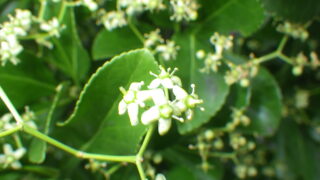
What are the differences between Euonymus japonicus, Euonymus fortunei, and Euonymus sieboldianus? How do they differ from Aucuba japonica and Cleyera japonica? We explain how to distinguish between similar species.

Euonymus japonicus, Euonymus fortunei, and Euonymus sieboldii all belong to the Euonymus genus of the Celastraceae family and are common trees in forests throughout Japan. Furthermore, they are frequently planted in urban areas for ornamental purposes and as hedges. These three species are broadly classified into Euonymus japonicus, Euonymus fortunei, and Euonymus sieboldii based on whether they are evergreen or deciduous.
plant

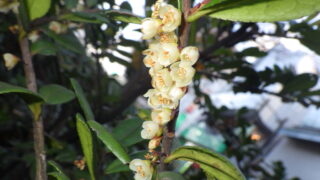
What are the differences between Eurya japonica, Eurya japonica, and Sakaki? We'll explain how to distinguish between similar species! Do they bloom in early spring because they rely on bees and flies for pollination?

Hisakaki, Hamahisakaki, and Sakaki all belong to the family Cleyera (or Theaceae). Hisakaki and Sakaki, in particular, have been considered "yorishiro" (objects that house divine spirits) in Shintoism since ancient times and have been traditionally cultivated in Japan. However, their similar names may often lead to confusion...
plant

What are the differences between Ternstroemia gymnanthera, Pittosporum tobira, Rhaphiolepis indica, and Ilex crenata? We explain how to distinguish between similar species! Did you know that Ternstroemia gymnanthera is a rare species in the biological world, possessing both male and hermaphroditic flowers on separate plants? And that its fruit deceives birds?

Ternstroemia gymnanthera is an evergreen tree that grows in relatively dry areas near the coast and is quite popular as a garden tree. However, because its leaves are entire and have no serrations, it lacks distinctive features and is often confused with completely different species such as Pittosporum tobira, Rhaphiolepis indica, and Ilex crenata. However, in many cases, the color of the leaf stalks...
Sponsored Link