Amaryllidaceae

Sponsored Link
plant

There are differences between Agapanthus and Clivia! We'll explain how to distinguish between these similar species! It turns out they've been mistakenly identified as the same species for a long time!?

Agapanthus and purple lily are both perennial plants belonging to the genus Agapanthus in the Amaryllidaceae family. While they are unique in that they both bear numerous blue, funnel-shaped flowers, making it unlikely to confuse them, the common misconception that "Agapanthus cultivated for ornamental purposes is the same as purple lily...".
plant

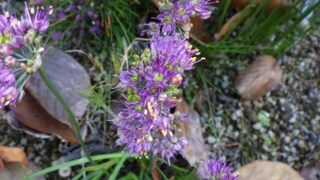
What's the difference between *Hatake-nira* and *Nira-modoki*? An explanation of how to distinguish between similar species.

Both Allium spectabile and Allium sibiricum belong to the genus Allium in the Amaryllidaceae family. Although they are introduced species in Japan, they are now very common, growing in places like between concrete blocks along roadsides. However, they are extremely often confused. To distinguish between these two species, it's necessary to examine their leaves and flowers. Regarding the flowers...
plant

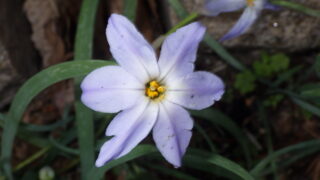
What are the differences between Ipheion uniflorum, Ipheion leek, and Ipheion japonica? We'll explain how to distinguish between similar species! Are they edible?

All three species—Ipheion uniflorum, Allium sibiricum, and Allium sibiricum—belong to the Amaryllidaceae family, Allioideae subfamily, and share the name "nira" (leek). They are common perennial plants found in fields and urban areas. However, their confusing names can make it difficult for those unfamiliar with these three species to distinguish between them...
plant

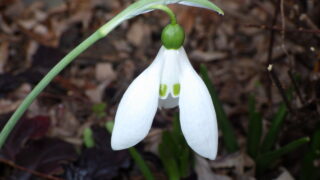
What are the differences between snowdrops (Euphorbia marginata) and snowflakes (Euphorbia hederacea)? We explain how to distinguish between similar species! The "green" color of the perianth segments has various roles!?

Snowdrops and snowflakes both belong to the Amaryllidaceae family and are very commonly cultivated in Japan as ornamental plants that bloom in winter. Both are native to Europe, and because they are both white with green spots and have similar names, they are often confused...
plant

What are the differences between Japanese shallots (rakkyo), wild shallots (yamarakkyo), and thread shallots? How do they differ from yellow thread shallots (kii-itorakkyo)? This article explains how to distinguish between similar species.

Japanese shallots (rakkyo), wild shallots (yamarakkyo), and thread shallots (itorakkyo) all belong to the genus Allium in the Amaryllidaceae family and share the common characteristic of having the word "rakkyo" in their Japanese names. Japanese shallots are eaten as pickled shallots, while wild shallots and thread shallots are wild species native to Japan...
plant

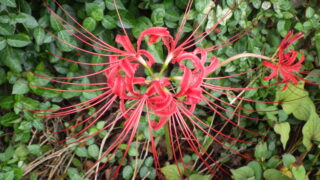
What are the differences between Lycoris radiata (Red Spider Lily), Lycoris radiata var. alba, Lycoris radiata var. alba, and Lycoris radiata var. alba? An explanation of how to distinguish between similar species.

Lycoris radiata (red spider lily), Lycoris radiata var. alba, Lycoris radiata var. alba, and Lycoris aurea are all perennial plants belonging to the Lycoris genus of the Amaryllidaceae family. They are very familiar to Japanese people due to their toxicity and the clusters of flowers they produce in autumn. However, there are many varieties...
plant

There are differences between Japanese daffodils and regular daffodils! Are they poisonous? How do they differ from chives? Where are they native to? Why did the flowers evolve to bloom in winter?

水仙は日本では冬に咲く観賞用の園芸植物としてとても人気の高い種類です。しかし、少し調べるとニホンズイセンあったり、単にスイセンと表記されている場合があります。ニホンズイセンとスイセンでは何か違いがあるのでしょうか?ニホンズイセンとは中国原産...
plant

What are the differences between Zephyranthes candida, false saffron, and saffron? We'll explain how to distinguish between similar species! Why is it called "false"? In its native habitat, only beetles visited the flowers!?

Zephyranthes candida and false saffron are widely cultivated in gardens for ornamental purposes, but there may be some confusion regarding their Japanese names. The most significant difference is that the inner part of the perianth lobes of Zephyranthes candida is white, while that of false saffron is bright pink. False saffron is called "modoki" (meaning "false")...
Sponsored Link