Lycoris radiata (red spider lily), Lycoris radiata var. alba, Lycoris radiata var. alba, and Lycoris aurea are all perennial plants belonging to the genus Lycoris in the family Amaryllidaceae. They are very familiar to Japanese people because they are poisonous and bloom in clusters in autumn. However, there are many varieties, and people who have never seen them may not know the difference. Distinguishing between Lycoris radiata var. alba and Lycoris radiata var. alba and Lycoris aurea var. alba is easy; they can be distinguished by the color of their flowers. Distinguishing between Lycoris radiata var. alba and Lycoris radiata var. alba is difficult; it is determined by whether or not they produce viable seeds, but this is difficult to observe, so if you really want to distinguish them, the flowering period and the intensity of the flower color will also be important. Other easily confused varieties and cultivars are also introduced. This article will explain the classification of Lycoris radiata species.
- What are Lycoris radiata, Lycoris radiata var. alba, Lycoris radiata var. alba, Lycoris radiata var. alba, and Lycoris radiata var. alba?
- What are the differences between Lycoris radiata, Lycoris radiata var. alba, Lycoris radiata var. alba, and Lycoris radiata var. alba?
- What is the difference between Lycoris radiata and Lycoris radiata var. japonica?
- What are other varieties or cultivars of the red spider lily?
- References
What are Lycoris radiata, Lycoris radiata var. alba, Lycoris radiata var. alba, Lycoris radiata var. alba, and Lycoris radiata var. alba?
The red spider lily, Lycoris radiata var. radiata, is also known as Manjushage. It is thought to be a mutation of the Chinese red spider lily, which was introduced to Japan in ancient times and spread there. Currently, it is distributed in Honshu, Shikoku, Kyushu, and the Ryukyu Islands, and is a perennial plant that grows in clusters along the edges of fields, on embankments, and in cemeteries (Kanagawa Prefecture Flora Survey Association, 2018).
Lycoris radiata var. pumila, also known as Chinese spider lily (Lycoris radiata var. pumila), is a perennial plant distributed in China, Korea, and Nepal, growing in shady or damp places on slopes and on rocky riverbanks (Wu & Raven, 2000). Since the Japanese name "Kohiganbana" is more frequently searched, we will refer to it as Kohiganbana below.
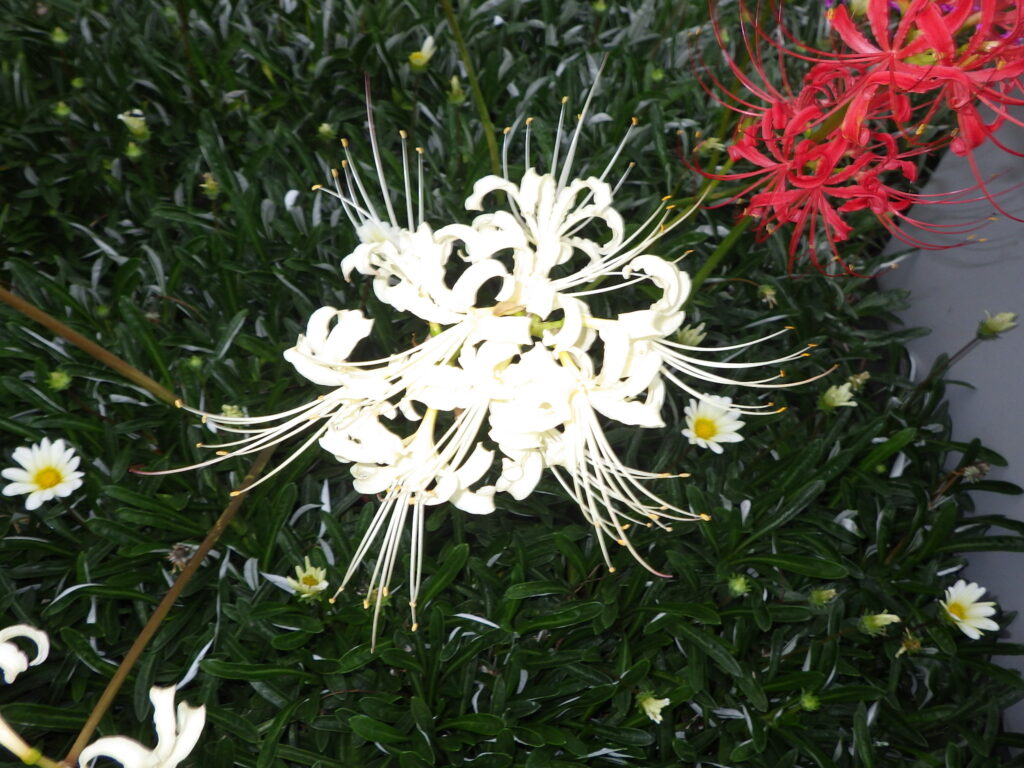
White-flowered red spider lily (Lycoris x albiflora) is a hybrid of Lycoris radiata and Lycoris aurea. It is distributed in Japan, China (Jiangsu Province), and Korea, and is a perennial plant that grows near houses, such as on rice paddy ridges and embankments.
Lycoris traubii, also known as the bell-wielding narcissus, is a perennial herb that grows in grasslands and forest edges, distributed in Kyushu and the southwestern islands of Japan, as well as in China, India, Indonesia, Laos, Myanmar, Pakistan, Thailand, and Vietnam.
All of these are perennial plants belonging to the genus Lycoris in the family Amaryllidaceae. In terms of their relationship with humans, the entire plant, including the bulb, contains alkaloids such as lycorine and galantamine, and is known to have pharmacological effects such as cough suppressant, expectorant, analgesic, antihypertensive, and emetic properties. They are also known for being planted to deter moles and mice from underground (though it is unclear if this is scientifically correct), and for becoming a devouring food source when exposed to water.
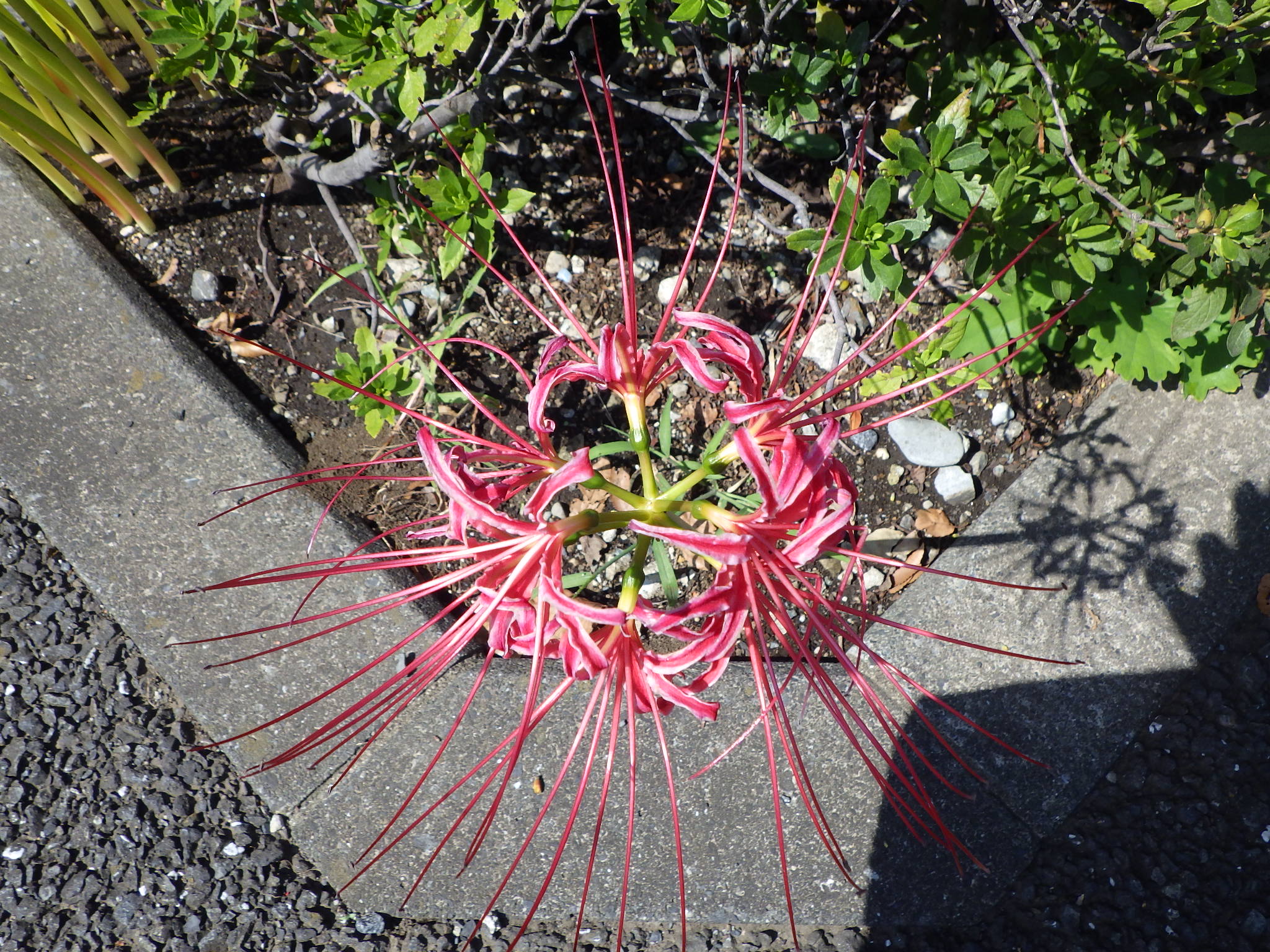
Morphologically, a major characteristic, similar to other species in the genus Lycoris, is that the leaves and flower stalks emerge at different times (Kanagawa Prefecture Flora Survey Association, 2018). In other words, you cannot find the leaves when the flowers are in bloom. The timing of leaf loss varies depending on the species, but in the Lycoris species mentioned here, the leaves emerge in late autumn and wither in spring.
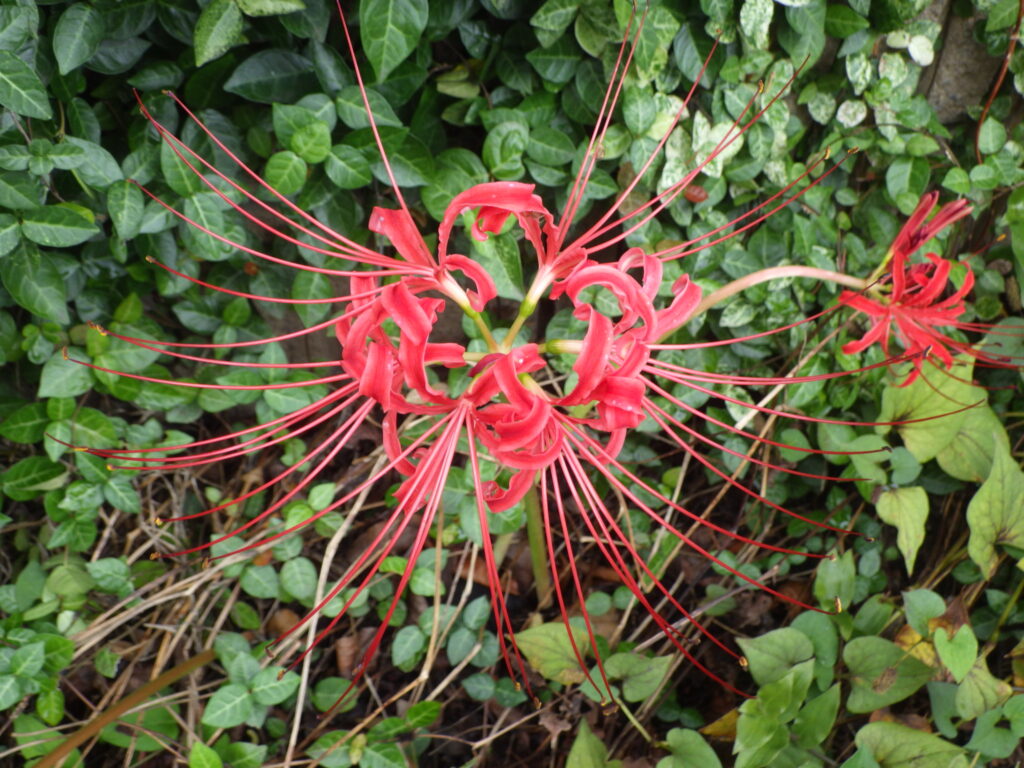
Furthermore, among the species of the Lycoris genus, the species mentioned here are characterized by their curled perianth segments and flowers with very long stamens and pistils that bloom around September to October. In addition, the edges of the perianth segments are wavy, and the leaf width is 8 mm or less.
Therefore, people who haven't seen it before might not notice the difference.
It's especially difficult to distinguish between the red spider lily (Lycoris radiata) and the small red spider lily (Lycoris radiata var. japonica).
What are the differences between Lycoris radiata, Lycoris radiata var. alba, Lycoris radiata var. alba, and Lycoris radiata var. alba?
However, distinguishing between Lycoris radiata, Lycoris radiata var. alba, and Lycoris radiata var. alba
First and foremost, it's important to understand that the red spider lily (Lycoris radiata) is also known as Manjushage, and that they refer to the exact same species.
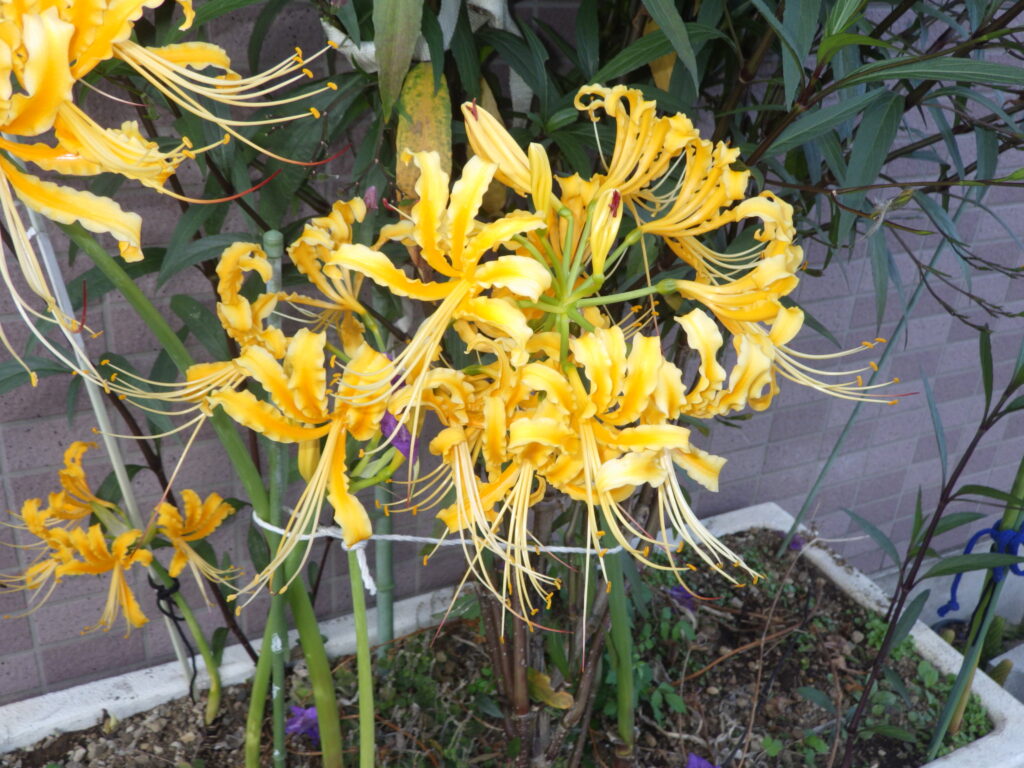
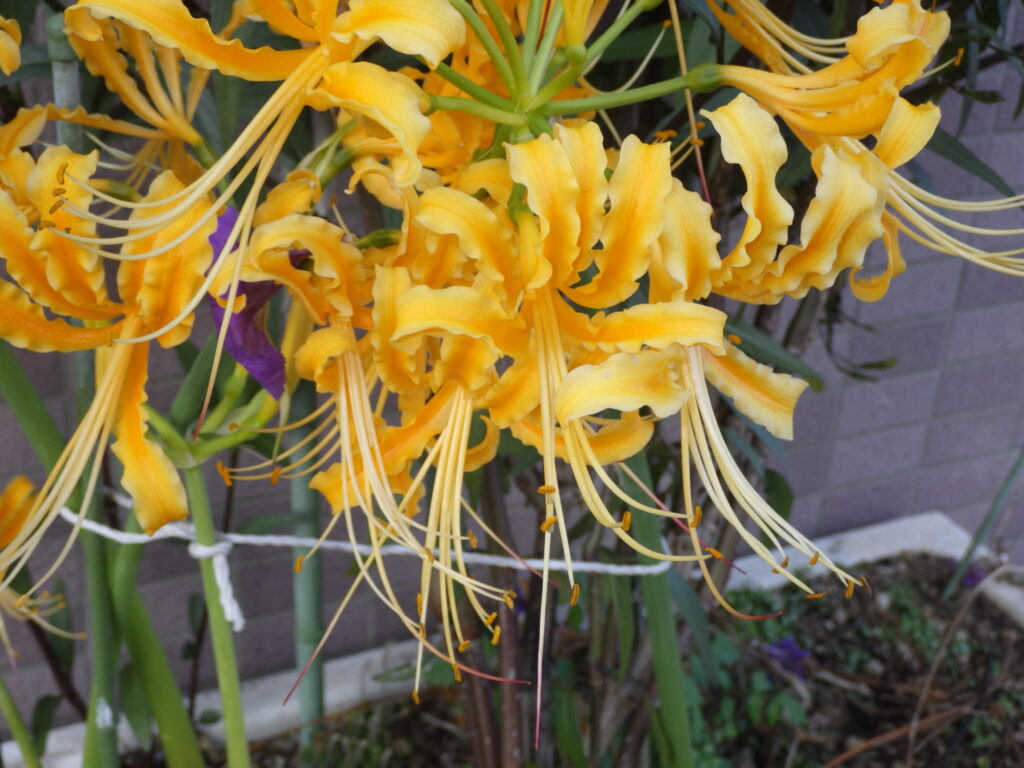
The most important thing is the color of the flower. Flowers of the Lycoris genus are composed of "perianth segments." They are called this because the petals and sepals cannot be distinguished.
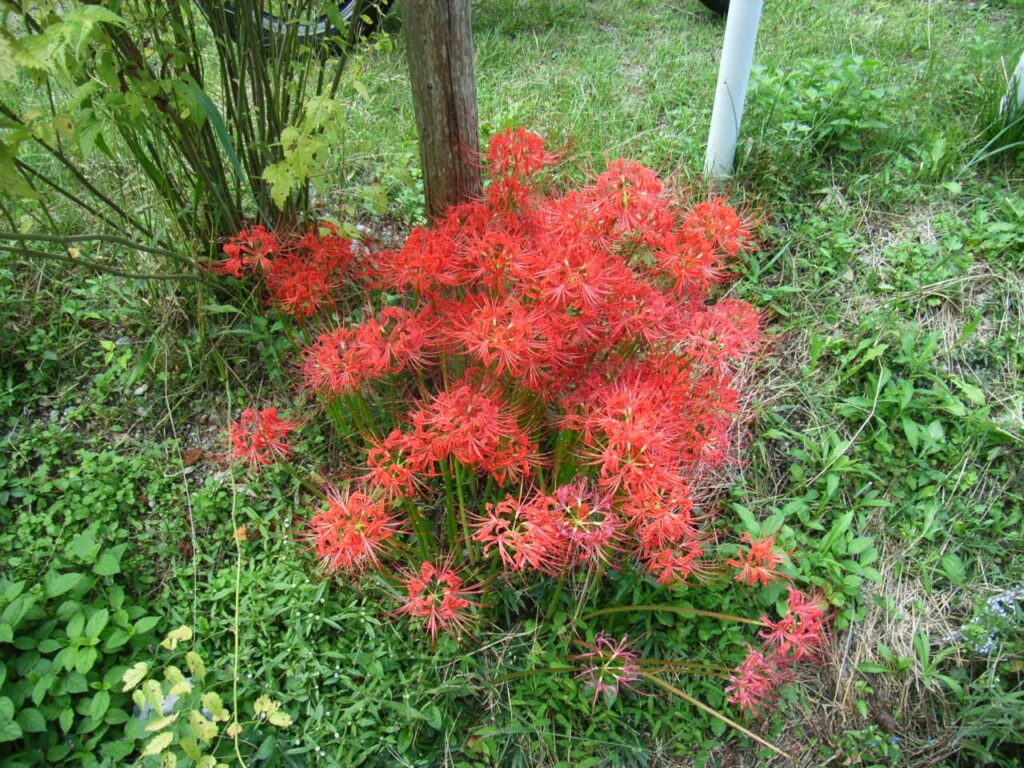
The perianth segments differ in color: red in Lycoris radiata and Lycoris radiata, white in Lycoris radiata, and yellow in Lycoris aurea. It's obvious at a glance, isn't it?
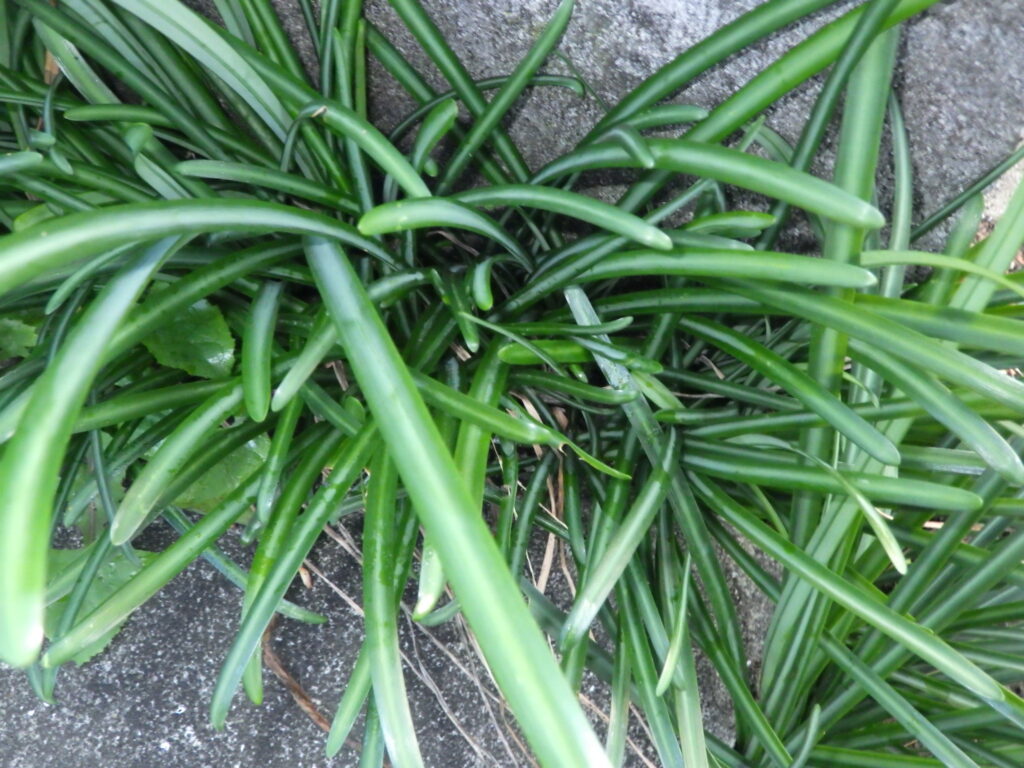
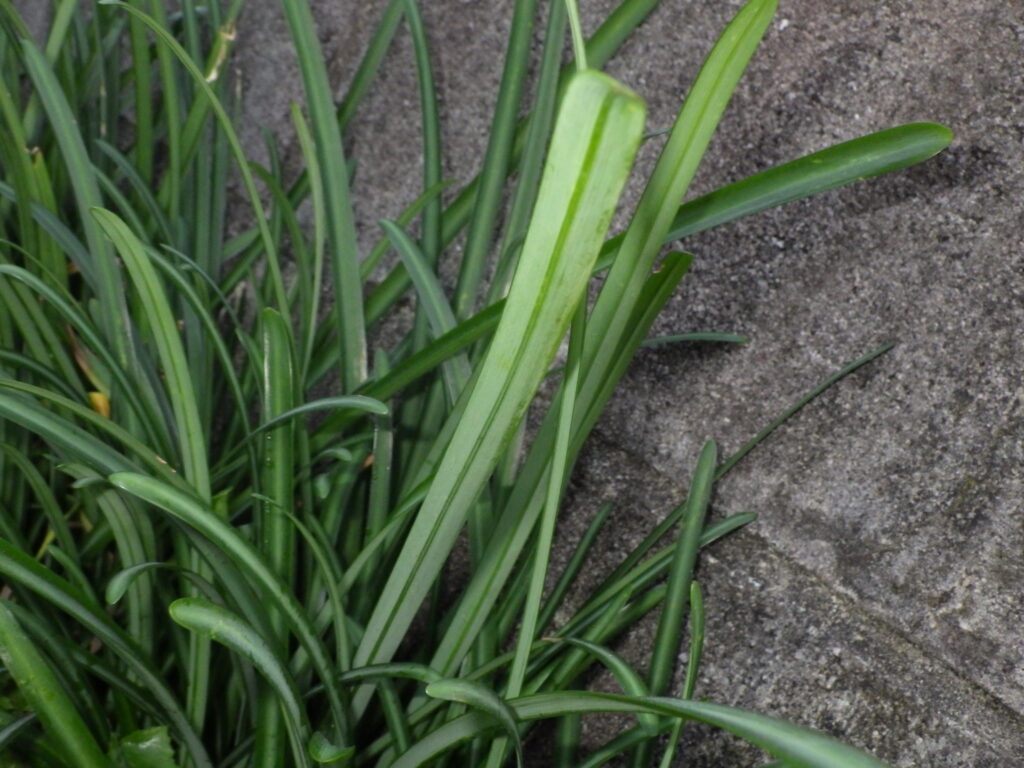
There are also slight differences in the leaves, which can be seen when the flowers are not in bloom. The leaves of Lycoris radiata and Lycoris radiata are 0.5 cm wide, those of Lycoris radiata are 1.5 cm wide, and those of Lycoris radiata are 0.8 cm wide.
It may be difficult to distinguish between species of the Lycoris genus when only the leaves are visible, but this might be helpful as a reference.
What is the difference between Lycoris radiata and Lycoris radiata var. japonica?
The question is, what is the difference between the red spider lily (Lycoris radiata) and the small red spider lily (Lycoris radiata)?
The crucial difference is that the red spider lily (Lycoris radiata) has 2n=33 chromosomes, making it triploid and therefore sterile (it does not produce viable seeds), while the small red spider lily (Lycoris radiata) has 2n=22 chromosomes, making it diploid and therefore fertile (it produces viable seeds) (Nishiyama, 1939).
I won't go into a detailed explanation of chromosomes, but essentially, because the red spider lily has three sets of chromosomes, it cannot undergo proper meiosis and therefore cannot produce seeds. For this reason, red spider lilies do not spread their distribution far and wide through seeds, and can only reproduce by transplanting their underground bulbs by humans or through vegetative reproduction.
It is believed that the red spider lily (Lycoris radiata) originated from a mutation of the Chinese red spider lily (Lycoris radiata), which was then introduced to Japan. In other words, most of the red spider lilies in Japan are clones.
However, recent studies have shown that, although extremely rare, some plants produce fertile seeds (Seto et al., 2015). The mechanism is not fully understood, but it is possible that in very rare cases, meiosis is successful.
As explained above, these descriptions do not describe morphological characteristics, and there are exceptions, so it will be impossible to distinguish between the two types at a glance.
According to a fairly old paper, the following are some of the differences that are useful for distinguishing between the two.
Regarding the bulbs, there is a difference: the bulbs of the red spider lily (Lycoris radiata) are hard, while those of the small red spider lily (Lycoris radiata) are soft.
Regarding the flowering period, there is a difference: the red spider lily blooms from mid- to late September, while the small red spider lily blooms in early September.
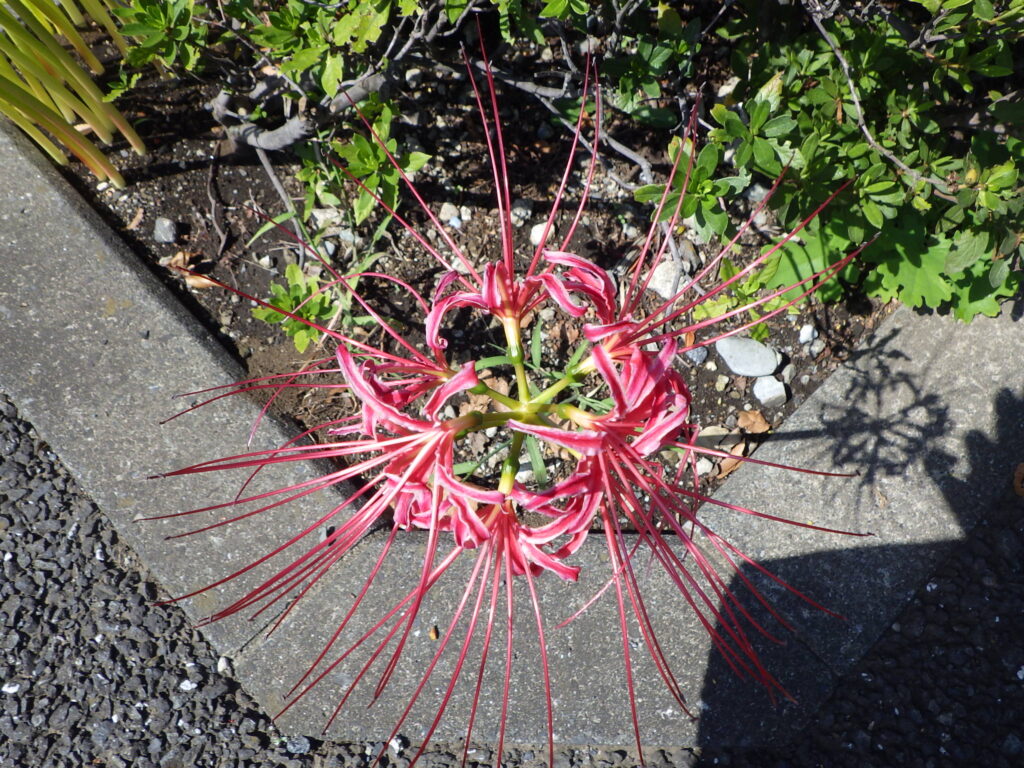
Regarding the color of the flowers, there is a difference between the red spider lily (Lycoris radiata) and the small red spider lily (Lycoris radiata var. japonica): the red spider lily is a deep crimson, while the small red spider lily (Lycoris radiata var. japonica) is a pale crimson.
Regarding the leaves, there is a difference in texture: the leaves of the red spider lily (Lycoris radiata) are hard to the touch, while those of the small red spider lily (Lycoris radiata) are soft.
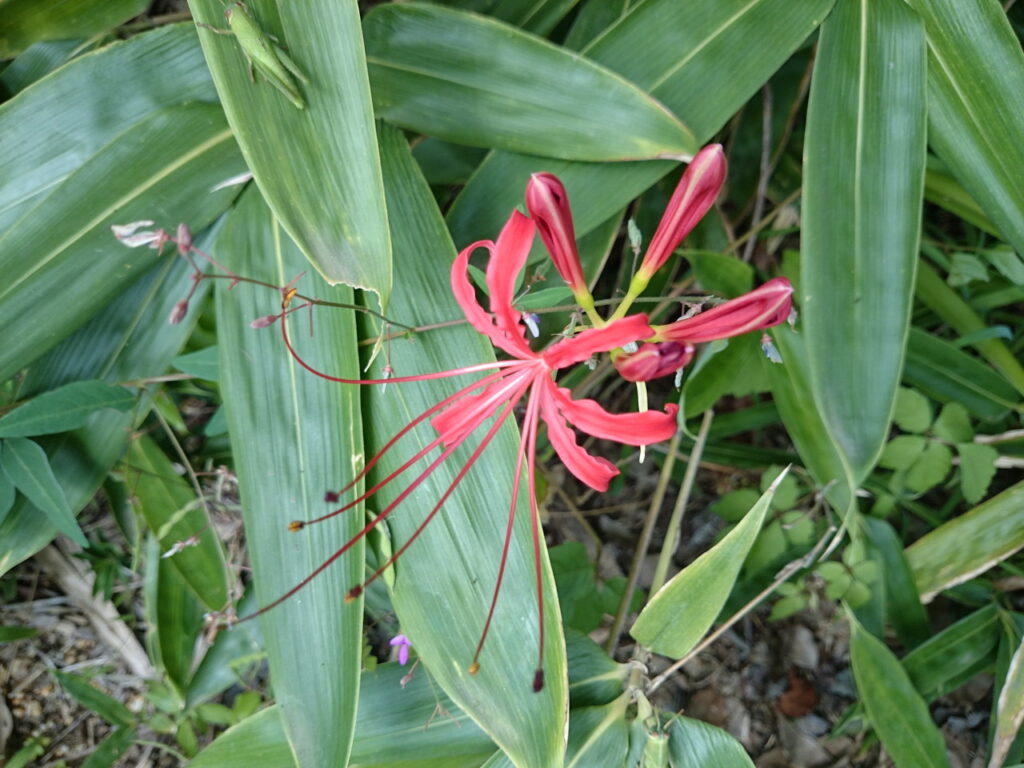
In addition, although not mentioned in this paper, it is said on the internet that Lycoris radiata has smaller flowers and fewer flowers per inflorescence. However, I have not been able to find any data on the specific number. Further investigation is needed to determine if this is correct, but I have included a photo of a flower with fewer blossoms that may fit this description.
Because the morphological distinctions are so subtle, they are sometimes not even differentiated in other countries.
What are other varieties or cultivars of the red spider lily?
Several other varieties and cultivars of the red spider lily are also known.
Lycoris radiata f. bicolor is almost identical in shape to the common spider lily (Lycoris radiata), but is a variety in which the edges of the perianth segments and parts of the stamens and pistil are faded (Yonezawa, 1989). The name "bicolor" comes from the fact that the boundary between the two colors is clearly defined.
Lycoris radiata var. kazukoana is a variety with small flowers, almost flat perianth segments, perianth segments that do not curl strongly, and flowers that are pink to white. It is often confused with Lycoris radiata var. japonica, but its perianth segments are straight and the color boundaries are not clearly defined. It is also thought to be a malformation caused by herbicides (Iwatsuki et al., 2016).
The paper (Yonezawa, 1989) includes two color photographs, so if you're unsure, please check them.
References
Iwatsuki, K., Boufford, DE, & Oba, H. 2016. Flora of Japan (Vol. IV-b). Kodansha, Tokyo. 352pp. ISBN: 9784061546080
Kanagawa Prefecture Flora Survey Association. 2018. Kanagawa Prefecture Flora 2018 (Electronic Edition). Kanagawa Prefecture Flora Survey Association, Odawara. 1803pp. ISBN: 9784991053726
Nishiyama, 3. 1939. Chromosome number of Lycoris from China. Journal of Genetics 15(2): 83-85. https://doi.org/10.1266/jjg.15.83
Seto, Yoshihisa; Takeichi, Sanae; and Nakajima, Katsuyuki. 2015. Morphological observations of growth and first flowering in two cases of seedling Lycoris radiata. Kanagawa Natural History Materials 36: 7-10. https://doi.org/10.32225/nkpmnh.2015.36_7
Wu, ZY, & Raven, PH (Eds.). 2000. Flora of China (Vol. 24 Flagellariaceae through Marantaceae). Science Press, Beijing, and Missouri Botanical Garden Press, St. Louis. 431pp. ISBN: 9780915279838
Yonezawa, Nobumichi. 1989. A new variety and new cultivar of Lycoris radiata. Phytogeography and Taxonomy 37(2): 73-74. https://kanazawa-u.repo.nii.ac.jp/records/49655