Euphorbiaceae

Sponsored Link
plant

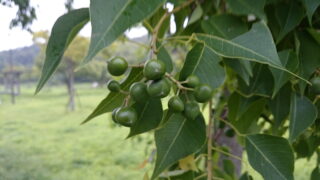
What are the differences between Chinese tallow tree and Japanese wax tree? We explain how to distinguish between similar species! Why did the white seeds, which contain a lot of fat, evolve?

Both the Chinese tallow tree (Toxicodendron sylvaticum) and the Japanese wax tree (Toxicodendron succedaneum) are deciduous trees, and both share the name "haze." This name comes from the fact that their fruits or seeds contain a large amount of fat, which has historically been used as wax. However, perhaps because of this, the Chinese tallow tree and the Japanese wax tree are often confused...
plant

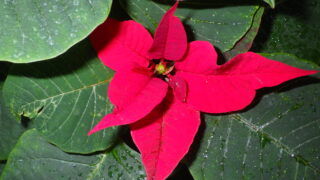
What are the differences between poinsettias, Epipactis thunbergii, and false Epipactis thunbergii? We'll explain how to distinguish between similar species! Is it a myth that poinsettias are poisonous?!

Poinsettias, Euphorbia hederacea, and Euphorbia leucocephala all belong to the Euphorbia genus of the Euphorbiaceae family. While widely cultivated for ornamental purposes, they also sometimes become naturalized. Their most striking feature is their bright red or white, conspicuous petal-like "bracts"...
plant

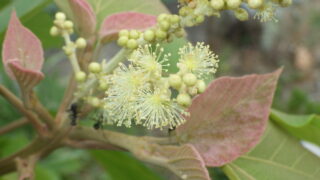
What are the differences between Mallotus japonicus, Mallotus japonicus, and Quercus dentata? We'll explain how to distinguish between similar species! Mallotus japonicus has hairs on its surface and an impenetrable defense against ants!?

Both *Mallotus japonicus* and *Mallotus japonicus* are deciduous trees belonging to the Euphorbiaceae family, and they share the characteristic of having extrafloral nectaries at the base of their leaves. Therefore, it can sometimes be difficult to distinguish between them. Furthermore, the Japanese name "Akamegashiwa" includes the word "kashiwa," which is similar to oak...
Seed Plant Encyclopedia

[Seed Plant Encyclopedia #139] What are the species of the Daphniphyllaceae family? Photo list

The family Daphniphyllaceae consists of evergreen trees or shrubs. The leaves are densely arranged alternately at the tips of branches, narrowly oblong, and entire. The flowers are unisexual and dioecious, growing in axillary racemes. There are no petals, and the calyx has 3-6 sepals. There are 6-12 stamens. Because it has 2 carpels instead of 3, it is not related to Euphorbia...
plant

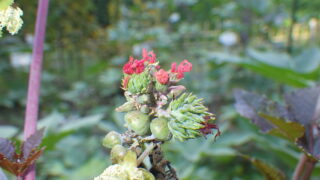
How toxic is castor bean? What are its components? What are the uses of castor oil? Why is it considered safe despite being toxic? Its flowers are pollinated by both wind and insects! Its seeds are dispersed automatically and by ants!

Castor bean is a perennial plant said to originate from northeastern Africa, cultivated worldwide for commercial and ornamental purposes, and sometimes naturalized. It's almost impossible to mistake it for anything else. Its seeds, called "himashi," are rich in oil, and the extracted "castor oil" is used in cosmetics, shampoos, soaps, and more...
plant

What's the difference between Enokigusa and Enoki? We'll explain how to distinguish between similar species! What are Nagaba Enokigusa and Velvet Enokigusa? These unassuming flowers are pollinated in two ways!?

While *Enokigusa* (Japanese hackberry) is a common species found along roadsides and in fields in flat areas, those unfamiliar with it may easily confuse it with the Japanese hackberry (*Enoki*), as its name suggests. Although they share some similarities, such as leaf veins, serrations, and pointed tips, their classifications are fundamentally different, with a major difference being whether they are herbaceous or woody plants...
plant

What are the differences between Japanese wax tree (Rhus sylvestris), Japanese lacquer tree (Rhus trichocarpa), and Japanese lacquer tree (Rhus trichocarpa)? We explain how to distinguish between similar species! Why do they cause rashes? Why was Japanese lacquer tree used as a raw material for Japanese candles? What birds in nature like them? Did autumn foliage play a role?

Japanese wax tree (Rhus sylvestris), Japanese lacquer tree (Rhus trichocarpa), and Japanese lacquer tree (Rhus trichocarpa) all belong to the Rhus genus and are relatively common even in urban areas. They are similar species often seen in gardens and along roadsides, characterized by their odd-pinnately compound leaves. Distinguishing between them is difficult, but careful observation of the leaves is essential. The number of leaflets and the degree of hairiness are major clues...
Sponsored Link