Both Crocosmia crocosmia (Belamcanda chinensis) and Montbretia crocosmia (Montbretia crocosmia) are perennial plants native to Africa, belonging to the genus Crocosmia in the Iridaceae family. They are commonly cultivated as ornamental plants, share many similarities such as having underground bulbs and producing red flowers, and many people may confuse them. However, there are differences between these two species in the degree of flower opening and color. Currently, the dominant species in Japan is almost exclusively Montbretia crocosmia. The plant from which the name of Montbretia crocosmia originates does not have a bulb, and its flowers have patterns, making it easy to distinguish if the flowers are in bloom. This article will explain the classification of Montbretia crocosmia, Crocosmia crocosmia, and Belamcanda chinensis.
What are Crocosmia and Crocosmia?
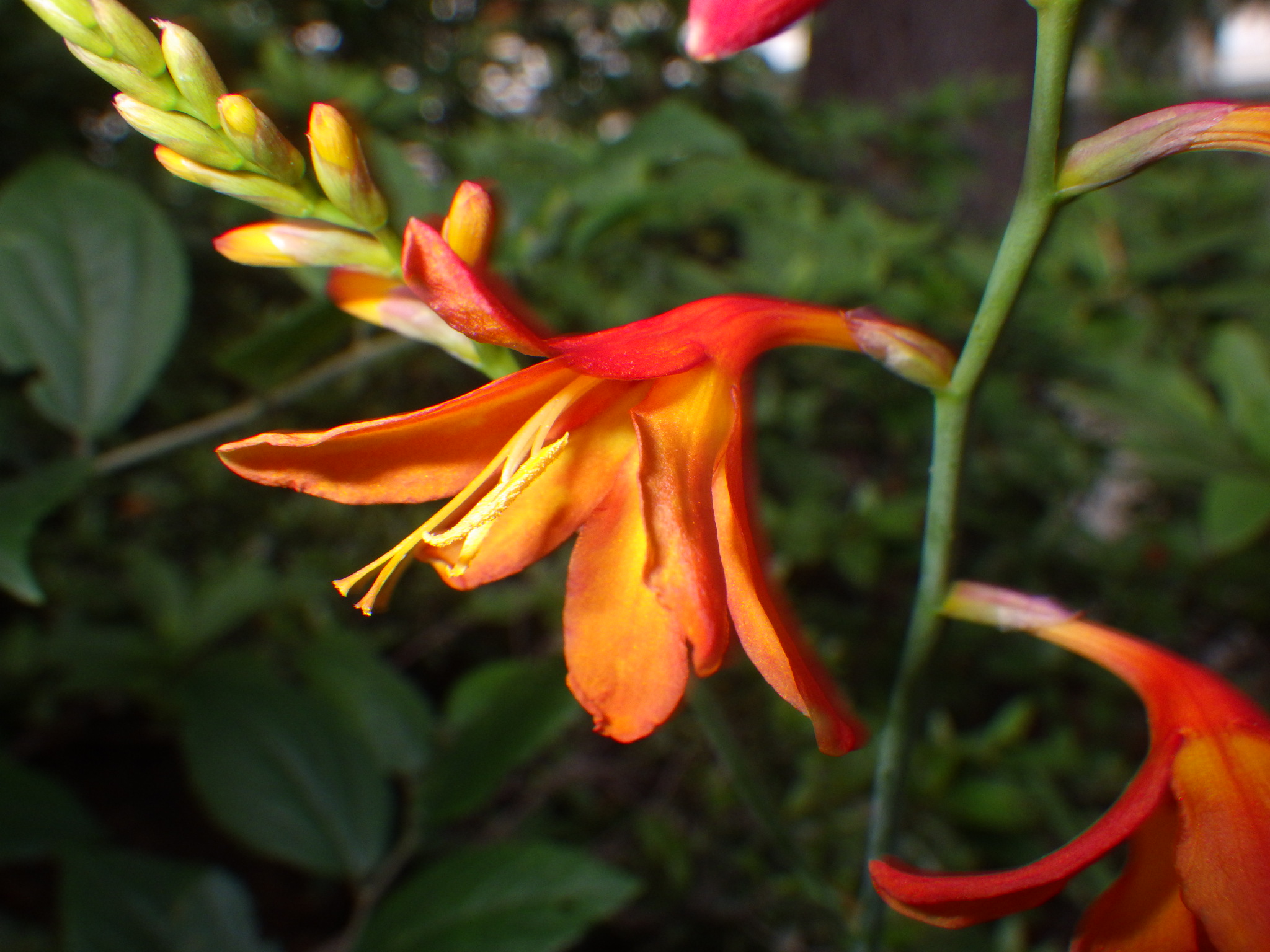
Crocosmia aurea, also known as the iris or fan narcissus, is a perennial plant distributed in eastern and southern Africa, growing in shady forests and riverbanks (RBG Kew, 2023). In Japan, it is cultivated for ornamental purposes. It blooms from June to August.
Crocosmia x crocosmiiflora, also known as Montbretia or Dwarf Iris, is native to South Africa and was developed in Europe (France) in 1880 as a cultivated hybrid of Crocosmia crocosmiiflora and Crocosmia pottsii. It was introduced to Japan in the mid-Meiji period (around 1890) and cultivated for ornamental purposes. Cultivated individuals have become naturalized throughout Japan. It blooms from June to August.
All of them belong to the genus Crocosmia in the Iridaceae family and are perennial plants native to Africa. They are commonly cultivated as ornamental plants, and they share several common characteristics, including having underground bulbs and producing red flowers.
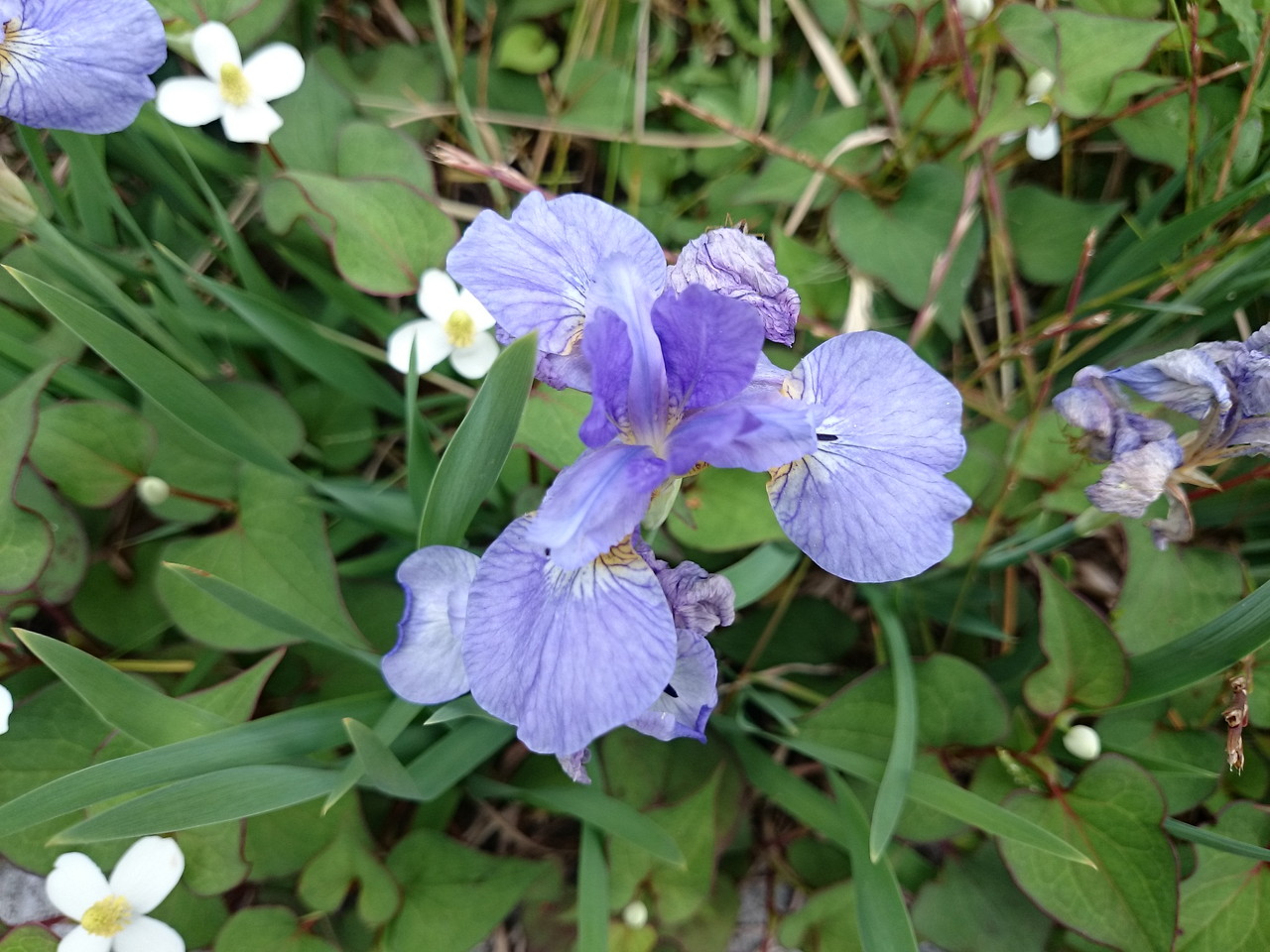
On the internet, only the lesser crocosmia is introduced, and some people may not know about the crocosmia plant itself, or the difference between the lesser crocosmia and the crocosmia.
What is the difference between Crocosmia crocosmia and Crocosmia gracilis?
However, there are significant differences between Crocosmia crocosmia and Crocosmia gracilis.
As mentioned above, Crocosmia gracilis is a hybrid of Crocosmia gracilis and Iris gracilis. Therefore, it possesses characteristics intermediate between Crocosmia gracilis and Iris gracilis.
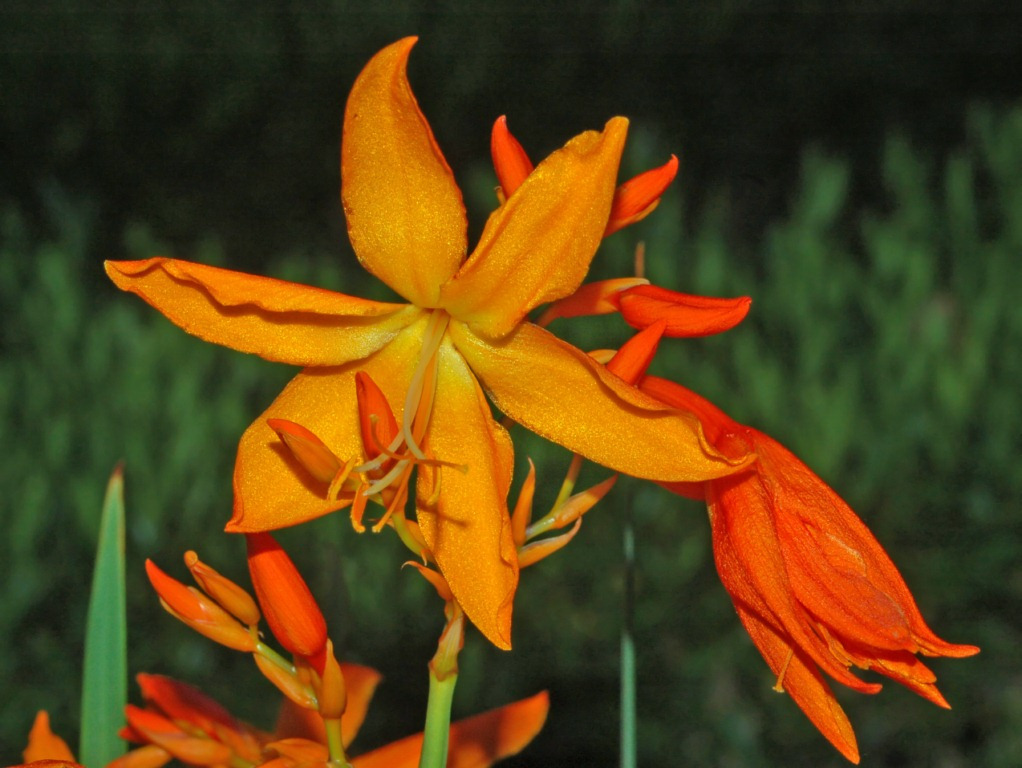
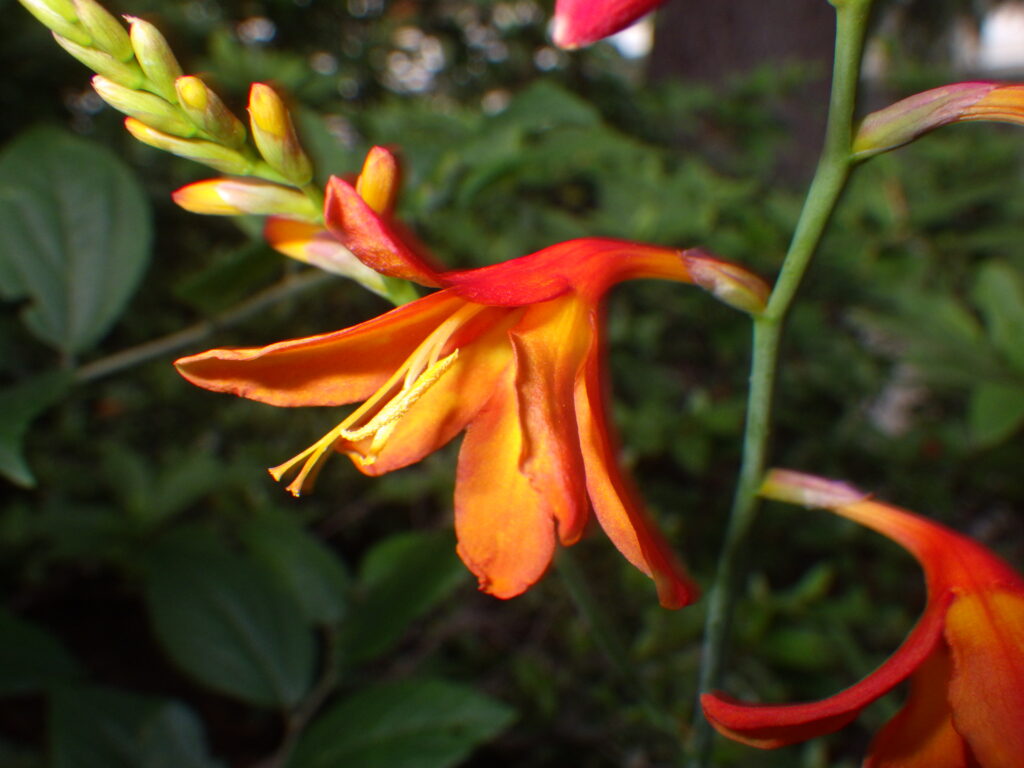
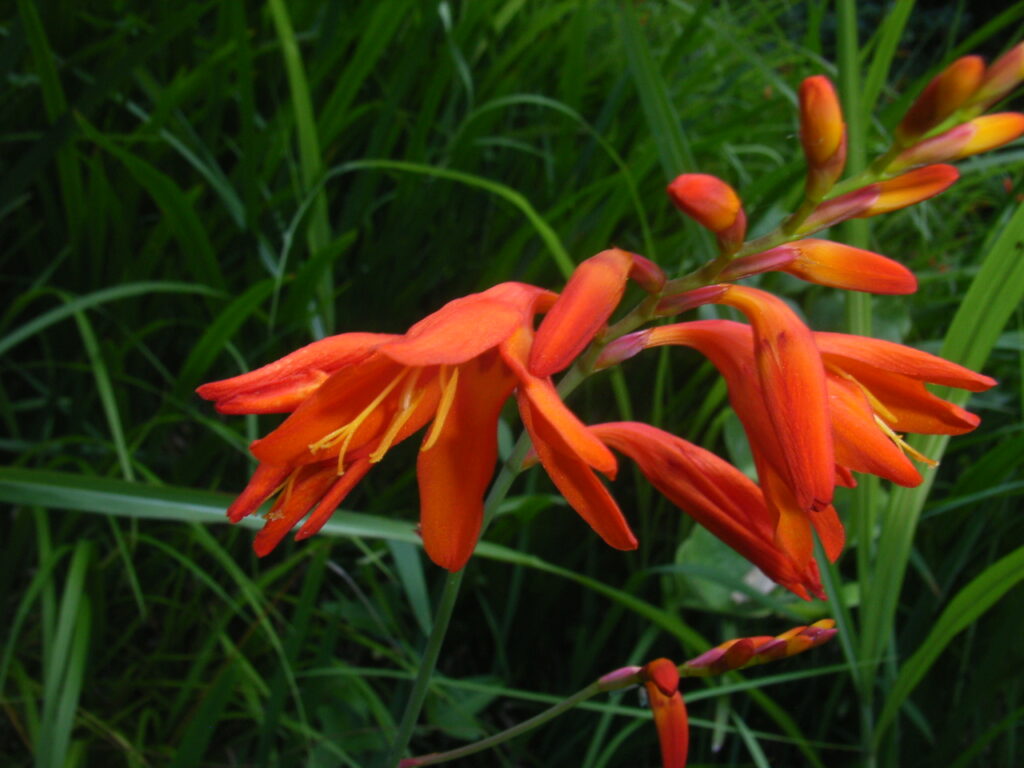
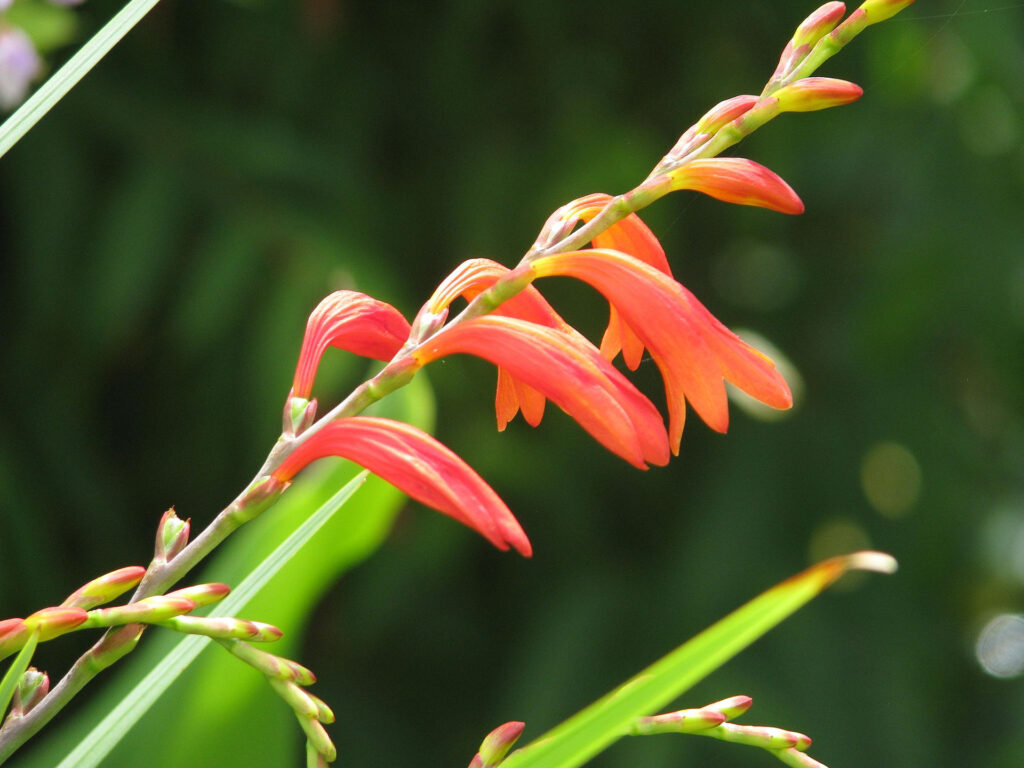
Specifically, the difference lies in how the flowers open: in Crocosmia, the flowers open fully like ordinary flowers, while in Iris gracilipes, the flowers close up and become tubular.
Therefore, in Crocosmia crocosmiifolia, the flowers open slightly in between, but the inside remains completely hidden.
Another difference is that in Crocosmia crocosmia, the inside of the perianth segments is uniformly yellow, whereas in Crocosmia gracilis, the inside of the perianth segments is orange-red with the base often tinged with yellow.
Think of perianth segments as the same thing as petals. They're called this because they're indistinguishable from sepals.
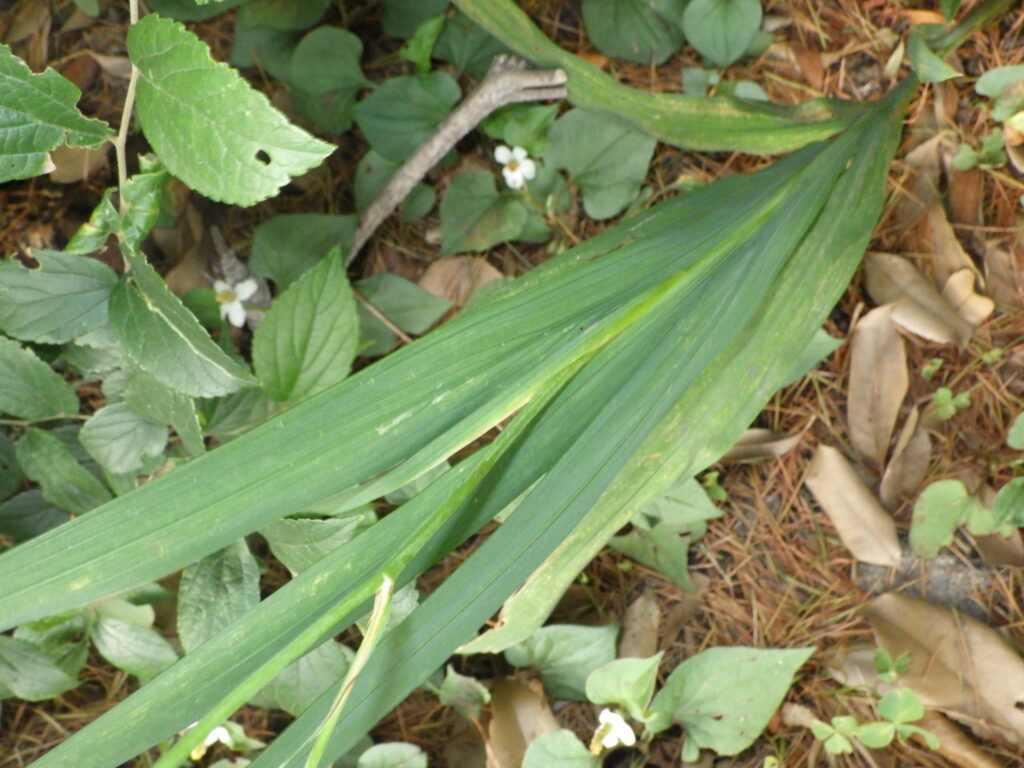
In addition, as the name suggests, Crocosmia gracilis can grow up to 120 cm tall, while Crocosmia gracilis only reaches a maximum height of 90 cm.
The above should make it possible to distinguish between them. However, recently, most of the flowers seen in Japan are Crocosmia gracilis.
What is the difference between Crocosmia gracilis and Belamcanda chinensis?
The name *Himehiougisuisen* (small crocosmia) comes from the *Hiougi* (belly grass), but what are the differences between these two species?
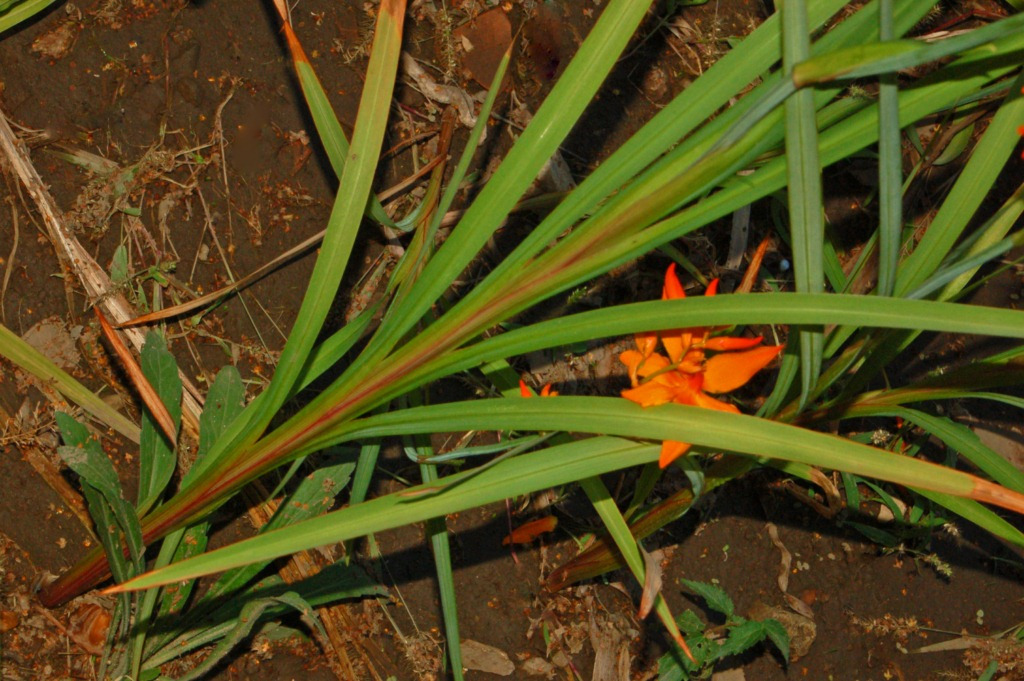
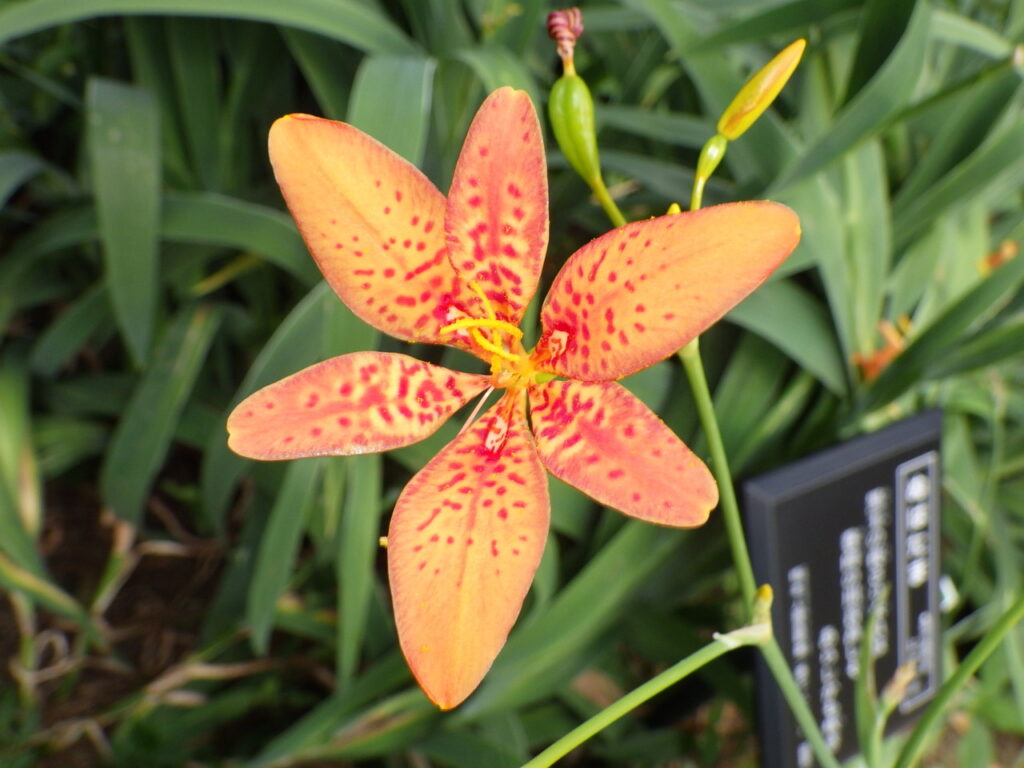
Iris domestica, also known as the bellflower, is a perennial herb that grows in mountain grasslands and is also cultivated in Japan (west of the Kanto region), Shikoku, Kyushu, and the Ryukyu Islands; the Korean Peninsula; China; Southeast Asia; and India. (Kanagawa Prefecture Flora Survey Association, 2018)
First, although both species belong to the Iridaceae family, Crocosmia crocosmifolia belongs to the Crocosmia genus, while Iris ensata belongs to the Iris genus. Therefore, it can be expected that there are significant differences between them.
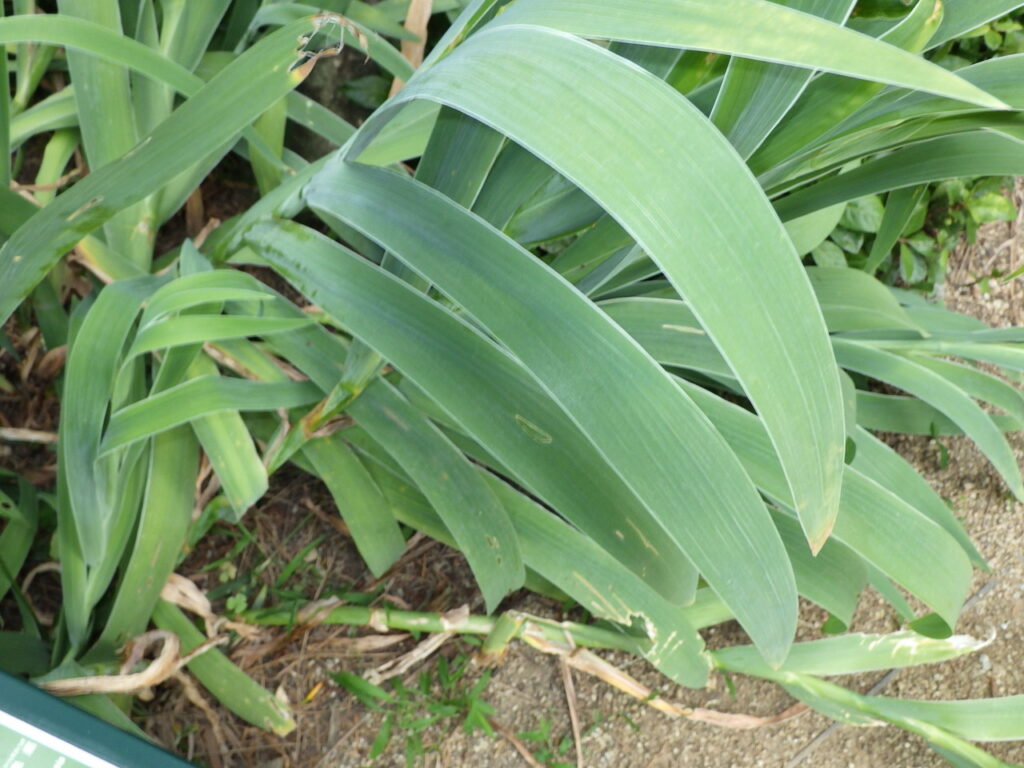
Specifically, the difference lies in the fact that in the genus *Crocosmia*, stems emerge from corms (underground stems that have swollen into a spherical shape by storing nutrients such as starch) and produce spike-like inflorescences, while in the genus *Iris*, stems emerge from rhizomes and produce racemes.
Therefore, Crocosmia has a corm, which is a type of bulb, and can be grown by planting the corm, but this is not the case with Belamcanda chinensis. The name "Narcissus" comes from this. However, the bulb of the narcissus is a bulbous structure (an underground stem with many fleshy, scale-like leaves).
Another notable feature of the Belamcanda chinensis is that its flowers fully open and have patterns on the perianth segments.
References
Kanagawa Prefecture Flora Survey Association. 2018. Kanagawa Prefecture Flora 2018 (Electronic Edition). Kanagawa Prefecture Flora Survey Association, Odawara. 1803pp. ISBN: 9784991053726
RBG Kew. 2023. The International Plant Names Index and World Checklist of Vascular Plants. Plants of the World Online. http://www.ipni.org and https://powo.science.kew.org/