Fabaceae

Sponsored Link
animal

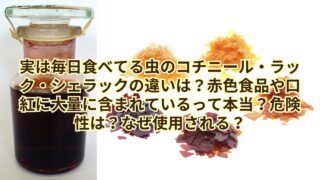
What are the differences between cochineal, lac, and shellac, insects we actually eat every day? Is it true that they are found in large quantities in red foods and lipstick? Are they dangerous? Why are they used?

In Japan, except in some regions, eating insects is extremely rare, and it's safe to say that it's almost unheard of among younger generations, especially in urban areas. While some advocate for insect consumption as a way to prepare for food shortages, cries of "Absolutely not!" are heard, mainly on social media. Even though I work with insects, I still...
animal

Why shouldn't we exterminate bears to the point of extinction? A complete explanation of the benefits of bears (Asian black bears and brown bears)!

In Japan, the Japanese black bear (Ursus thibetanus japonicus) is found on Honshu and Shikoku, while the Hokkaido brown bear (Ursus arctos yesoensis) is found on Hokkaido. In 2025, these bears were projected to be active in populated areas...
plant

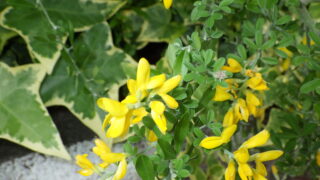
What's the difference between broom and dwarf broom? We'll explain how to distinguish between similar species! Do the flowers "burst" to release pollen onto bees?!

Both *Cytisus scoparius* (Japanese broom) and *Cytisus scoparius* (dwarf broom) belong to the legume family and are classified under the genus *Cytisus* in Japanese classification. They are characterized by their small, trifoliate compound leaves and the yellow, butterfly-shaped flowers they produce in spring. While cultivated for ornamental purposes, *Cytisus scoparius* is sometimes sold under the name "Japanese broom"...
plant

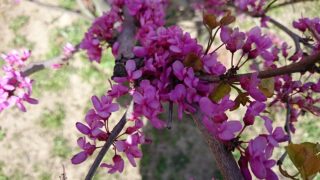
What are the differences between Japanese redbud (Cercis chinensis), American redbud (Cercis chinensis), and European redbud (Cercis rupestris)? We'll explain how to distinguish between these similar species!

The most distinctive feature of the Japanese redbud (Cercis chinensis), American redbud (Cercis rupestris), and European redbud (Cercis rupestris) is that, like cherry blossoms, they are covered in dense clusters of pink to purple, butterfly-shaped flowers characteristic of the legume family in spring before the leaves unfurl. While the Japanese redbud, cultivated for centuries, is well-known, the American redbud and European redbud have become increasingly popular in recent years...
plant

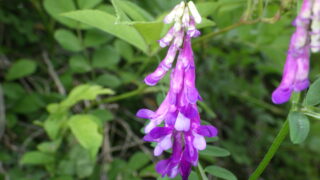
What are the differences between Vicia cracca, Hairy Vetch, Slender Vicia cracca, and Velvet Vicia? We explain how to distinguish between similar species! Was the nectar stolen from the flowers without restraint?!

Vicia cracca, hairy vetch, slender vetch, and velvet vetch all belong to the Vicia genus of the Fabaceae family. They are characterized by numerous purple, butterfly-shaped flowers (10-30 in number) arranged in racemes in spring, and by having five or more pairs of leaflets. From a distance, they are very similar...
plant

What are the differences between Lespedeza bicolor, Lespedeza thunbergii, Lespedeza cyanea, and Lespedeza thunbergii? An explanation of how to distinguish between similar species.

Lespedeza bicolor, Lespedeza thunbergii, Lespedeza thunbergii, and Lespedeza thunbergii are all perennial herbs belonging to the genus Lespedeza in the family Fabaceae. They are particularly small, less than 10mm in length, and do not develop woody tissue. A major common feature is that their petals are primarily white with purple markings that serve as nectar guides, making them difficult to distinguish...
plant

What are the differences between Gomphrena globosa (globe amaranth) and Gomphrena globosa (yellow gomphrena)? What are the differences between them and crape myrtle (Lagerstroemia indica), Sanguisorba officinalis (burnet), and white clover (Trifolium repens)? We'll explain how to distinguish between similar species.

Both Gomphrena globosa (globe amaranth) and Gomphrena globosa (yellow globe amaranth) belong to the genus Gomphrena in the Amaranthaceae family. Their bright, almost fluorescent-colored flowers and long flowering periods make them popular ornamental plants frequently planted in gardens. However, the differences between these two species are not well understood...
plant

What are the differences between Cassia obtusifolia (Ketsumeishi), Cassia occidentalis (Habuso), and Cassia tomentosa? We explain how to distinguish between similar species! And "Habu tea" isn't actually made from Cassia occidentalis!?

Cassia obtusifolia, Cassia japonica, and Cassia nomame are all annual plants belonging to the legume family, and were formerly classified in the same genus. Their common characteristics include once-pinnately compound leaves with opposite leaflets, and flowers with five yellow petals of almost identical shape...
plant

What are the differences between *Phyllanthus urinaria*, *Phyllanthus urinaria*, and *Phyllanthus longifolius*? An explanation of how to distinguish between similar species.

Phyllanthus urinaria, Phyllanthus sempervirens, and Phyllanthus longifolius all belong to the Phyllanthus genus of the Phyllanthaceae family. These annual plants grow in fields and roadsides, and are notable for their numerous small, orange-like green to red fruits rather than their flowers. These three species are among the most frequently found in the Phyllanthus genus...
plant

What are the differences between Rhynchospora tetrandra, Rhynchospora tokiri, and Vigna angularis? An explanation of how to distinguish between similar species.

Tankirimame, Tokirimame, and Nosasage all belong to the legume family and are common climbing perennial herbs found in the forest edges of Japan. They share several characteristics, including trifoliate compound leaves, butterfly-shaped flowers that bloom from summer to autumn, and yellow flowers, which can sometimes make them difficult to distinguish. However, these three...
Sponsored Link