Fabaceae

Sponsored Link
plant

What are the differences between wild beans, wild beans, and soybeans? An explanation of how to distinguish between similar species.

Both wild soybean (Amphicarpaea rhynchophylla) and climbing soybean (Glycine soja) are annual vines belonging to the legume family. In Japan, they grow in very similar environments such as embankments, grasslands, and forest edges. Their trifoliate compound leaves are also similar in shape, which can lead to confusion. However, there are differences at the genus level, and these differences are clearly evident in the leaves, flowers, and fruits...
plant

What are the differences between autumn olive, summer olive, Chinese olive, and white olive? Can they be eaten raw? Is the "sparkle" on the leaves to prevent drying? What insects visit the flowers? Are the sweet and sour fruits very popular in nature?

Autumn olive, summer olive, Chinese olive, and white olive are all members of the Elaeagnus genus in the Elaeagnaceae family. They can be found in various locations throughout Japan, including rivers, coastlines, and forests. Their leaves are covered in shimmering stellate or scale-like hairs, and they produce pale yellow flowers consisting only of a cylindrical calyx tube, lacking petals.
Seed Plant Encyclopedia

[Seed Plant Encyclopedia #153] What are the types of legumes? Photo list

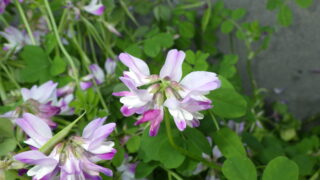
The Fabaceae family is a large family of vascular plants, second only to the Asteraceae and Orchidaceae families in terms of the number of species it contains. It includes many useful plants used for food and other purposes, and is deeply connected to human life. It includes herbs and woody plants ranging from annual to perennial, with many being climbing or possessing tendrils...
plant

What species resembles the egret orchid? The flowers are visited by hawk moths! And not only that, tiny insects called thrips also play an important role in pollination! What is the "Egret Orchid Legend"?

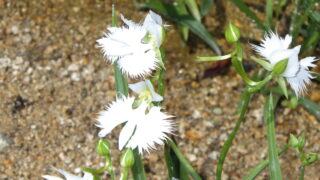
The egret orchid (Habenaria radiata) is a perennial plant that inhabits slightly damp areas and is a popular choice for gardening. Unfortunately, due to the decline of its wetland habitat and illegal harvesting, it is listed as near-threatened on the Ministry of the Environment's Red List. There are many closely related species, and many that share the name "egret orchid," but this particular species has a flattened stem resembling a heron...
plant

What species resembles the Bletilla striata (purple orchid)? Recent research has revealed that the flowers not only deceive bees, but also utilize male bees for courtship!

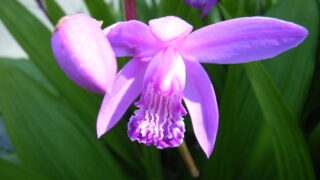
Bletilla striata is a perennial plant naturally distributed from Honshu to Okinawa in Japan, but wild specimens are classified as near-threatened. On the other hand, it's also a popular ornamental plant, and can be seen in almost every town. While it was once thought that the wild population in Japan consisted of escaped cultivated plants, it is now believed that the wild population is...
plant

What are the differences between Greater Celandine and Japanese Kerria? We'll explain how to distinguish between similar species! Are they poisonous? Why do Greater Celandine flowers bloom at an angle?

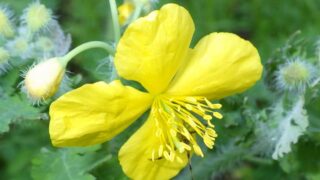
Both *Chelidonium majus* and *Cornus kousa* are wild species of the poppy family, composed of four yellow petals, so it can be difficult to distinguish between them. Their leaves can be differentiated by the presence or absence of serrations on the leaflets, and their flowers are almost identical, but there are differences in the arrangement of the inflorescence and the shape of the stamens and pistils...
plant

What are the differences between wisteria, mountain wisteria, and summer wisteria? We'll explain how to distinguish between similar species! Why is it so beloved by the Japanese? Were the flowers originally for bumblebees? Do wisteria pods pop and scatter?

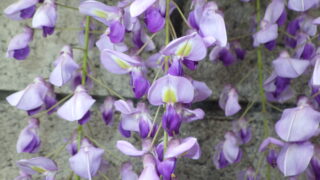
Wisteria floribunda, mountain wisteria, and summer wisteria remain popular legumes, so much so that trellises are still provided for them. However, distinguishing between the three species can be difficult until you become familiar with them. Examining their flowering period and the direction in which their vines twine is crucial for identification. Wisteria has a long history, and is even mentioned in the oldest document in Japan, the "Kojiki," which dates back to the Nara period...
plant

There are differences between Phalaenopsis orchids and other similar species! We'll explain how to distinguish between them! Why are they so popular? What's their history? Did the flowers attach pollen clumps to the backs of insects?! But the species is unknown?

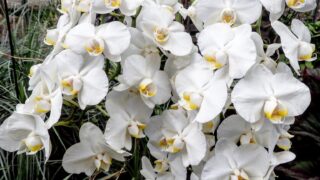
Phalaenopsis orchids are very popular in Japan as high-end potted plants and cut flowers. They are the number one orchid species in terms of both production volume and value. However, they are also known as "Phalaenopsis," which can be confusing. Biologically, however, the terms refer to different species, with Phalaenopsis being the "Phalae..." orchid.
plant

What are the differences between *Lespedeza bicolor* and *Robinia pseudoacacia* (black locust)? We'll explain how to distinguish between these similar species! Why are they considered invasive species of concern? The two species have contrasting flowers and fruits!

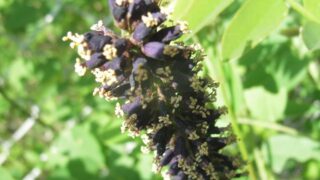
Black locust and black locust are both members of the legume family, have odd-pinnately compound leaves composed of numerous leaflets, and are often confused with each other because they are used for greening and naturalize in similar environments. In Japan, both are classified as invasive alien species (formerly designated as species requiring caution) due to their potential to cause damage to ecosystems. The difference between these two species is the presence or absence of thorns...
plant

What are the differences between Erythrina variegata, Erythrina crista-galli (American Erythrina), and Coral Tree? We explain how to distinguish between similar species! Is it an invasive species in Okinawa? Why is it Okinawa's prefectural flower? Did the Erythrina genus evolve its pollination strategy using hummingbirds in the New World?

The three species of Erythrina variegata (Deigo), Erythrina variegata (American Erythrina), and Coral Tree (Erythrina crista-galli) are relatively common in Japan and are cultivated for ornamental purposes. They are sometimes confused with each other because they have red flowers and trifoliate compound leaves. While the leaves are very similar, careful observation of the leaflet shape, thorns, and petioles is important...
Sponsored Link