Ternstroemia gymnanthera is an evergreen tree that grows in relatively dry areas near the coast and is quite popular as a garden tree. However, because its leaves are entire and have no serrations, it lacks distinctive features and is often confused with completely different species such as Pittosporum tobira, Rhaphiolepis indica, and Ilex crenata. However, in most cases, it can be distinguished by observing the color of the petiole and the condition of the veins on the upper and lower surfaces of the leaf. If there are flowers or fruits, it can be distinguished even more reliably. Ternstroemia gymnanthera has a sex system that is quite rare among plants, with individuals that produce only hermaphroditic flowers (hermaphroditic plants) and individuals that produce only male flowers (male plants). This is called "male-flowered, hermaphroditic-flowered, dioecious." This is thought to have evolved to counteract the disadvantages caused by inbreeding called "inbreeding depression," but it is a sex system that is still shrouded in mystery. The fruit is also mysterious; it is known to be eaten by birds and its seeds dispersed, but when ripe it only turns red and does not contain water like a berry. Moreover, when ripe, the pericarp dries out further and loses its shape, exposing the seeds. And now the seeds are red, attracting attention. The fact that they turn red despite being dry and lacking nutrients suggests that they are mimicking nutritious fruit to deceive birds. However, the reason why the fruit changes shape after turning red, and why the seeds also turn red, is still not well understood. Perhaps a different type of bird visits. This article will explain the classification, pollination ecology, and seed dispersal of Ternstroemia gymnanthera.
- What are the differences between Ternstroemia gymnanthera, Eurya japonica, and Cleyera japonica?
- What are the differences between Ternstroemia gymnanthera, Pittosporum tobira, Rhaphiolepis indica, and Ilex crenata?
- Are there any other similar species?
- What is the structure of a Ternstroemia gymnanthera flower?
- Why did the unusual sex system "male flowers, hermaphrodite flowers, dioecious plants" come about?
- Do male flowers, which are full of pollen, attract bees?
- The fruit of the Japanese holly (Mokkoku) is a capsule, yet it's dispersed by birds!?
- References
- Source
What are the differences between Ternstroemia gymnanthera, Eurya japonica, and Cleyera japonica?
Ternstroemia gymnanthera, also known as Mokkoku, is an evergreen tree that grows in relatively dry areas near the coast, distributed throughout Japan (including the southwestern islands of Honshu, west of the Kanto region), Shikoku, Kyushu, the Ryukyu Islands, the southern Korean Peninsula, Taiwan, China, and extending from Southeast Asia to India (Kitamura & Murata, 1979; Mogi et al., 2000). In Japan, it has been commonly used as a garden tree due to its resistance to diseases and pests, its beautiful leaves, and its well-formed shape. It belongs to the family Cleyera.
The family Cleyraceae also includes the genera Eurya and Cleyera (Kanagawa Prefecture Flora Survey Association, 2018). However, while Eurya has serrated leaves and Cleyera does not have leaves clustered at the branch ends, Ternstroemia gymnanthera has serrated leaves and its leaves are clustered at the branch ends, which are clear differences, so it may be less likely to get confused.
What are the differences between Ternstroemia gymnanthera, Pittosporum tobira, Rhaphiolepis indica, and Ilex crenata?
What might be more confusing are the species that belong to a completely different group but have entire leaves and are used as garden trees. Typical examples include Pittosporum tobira, Rhaphiolepis indica, and Ilex crenata.
Pittosporum tobira, also known as sea laurel or door tree, is distributed in Honshu, Shikoku, Kyushu, and the Ryukyu Islands of Japan, as well as in southern Korea. It is an evergreen shrub or small tree that grows naturally in coastal forests and forest edges, and also escapes cultivation into inland broad-leaved evergreen forests. In Japan, it is planted in coastal sand dune forests and gardens. It belongs to the Pittosporaceae family.
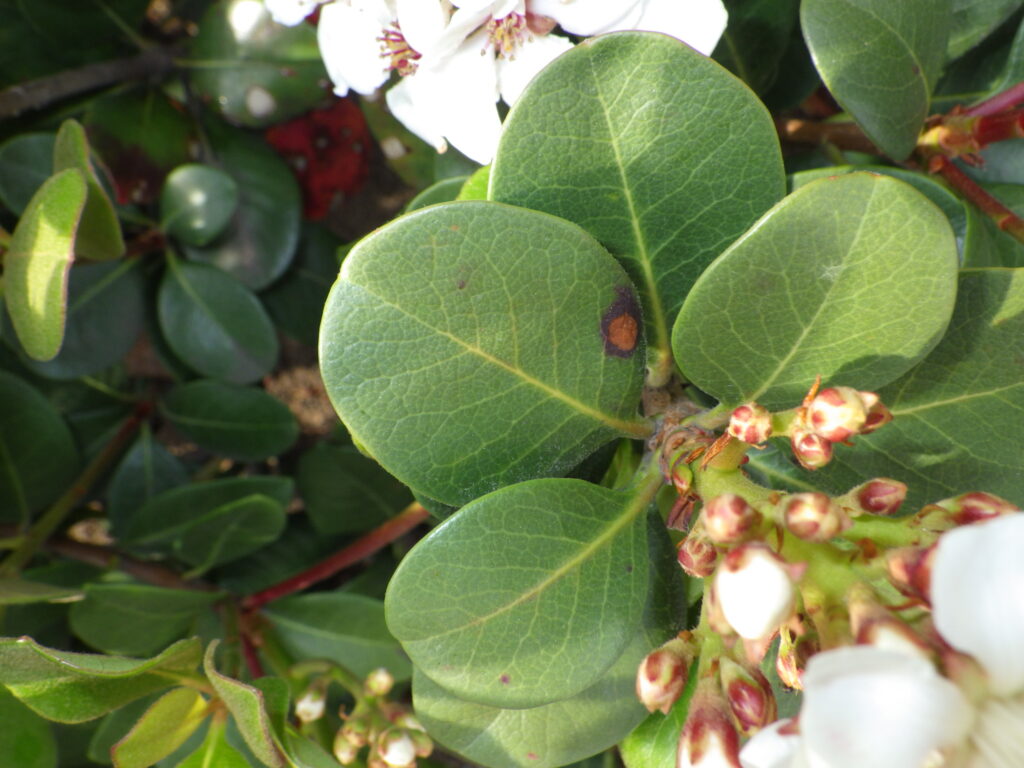
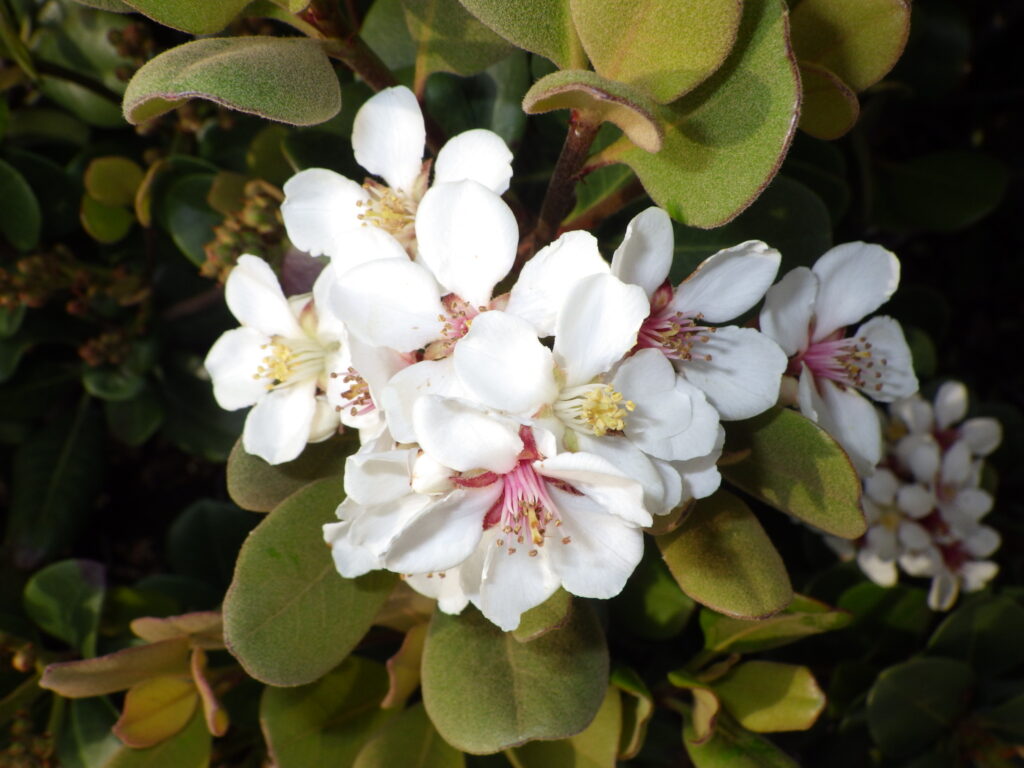
Rhaphiolepis indica var. umbellata, also known as Indian hawthorn, is an evergreen shrub distributed in Honshu, Shikoku, Kyushu, the Ryukyu Islands, and the Ogasawara Islands of Japan; as well as in Korea, China, Taiwan, and Southeast Asia, growing near the coast. It is commonly planted in parks and other public spaces. It belongs to the rose family. While there are various varieties of Indian hawthorn, the one most often confused is Rhaphiolepis indica f. ovata, which has leaves without serrations.
Ilex integra, also known as Japanese holly (Ilex integra), is an evergreen tree distributed in Honshu (south of the Tohoku region), Shikoku, Kyushu, and the Ryukyu Islands of Japan, growing in evergreen broad-leaved forests. It belongs to the family Aquifoliaceae.
How can we distinguish between these and other species of Japanese holly?
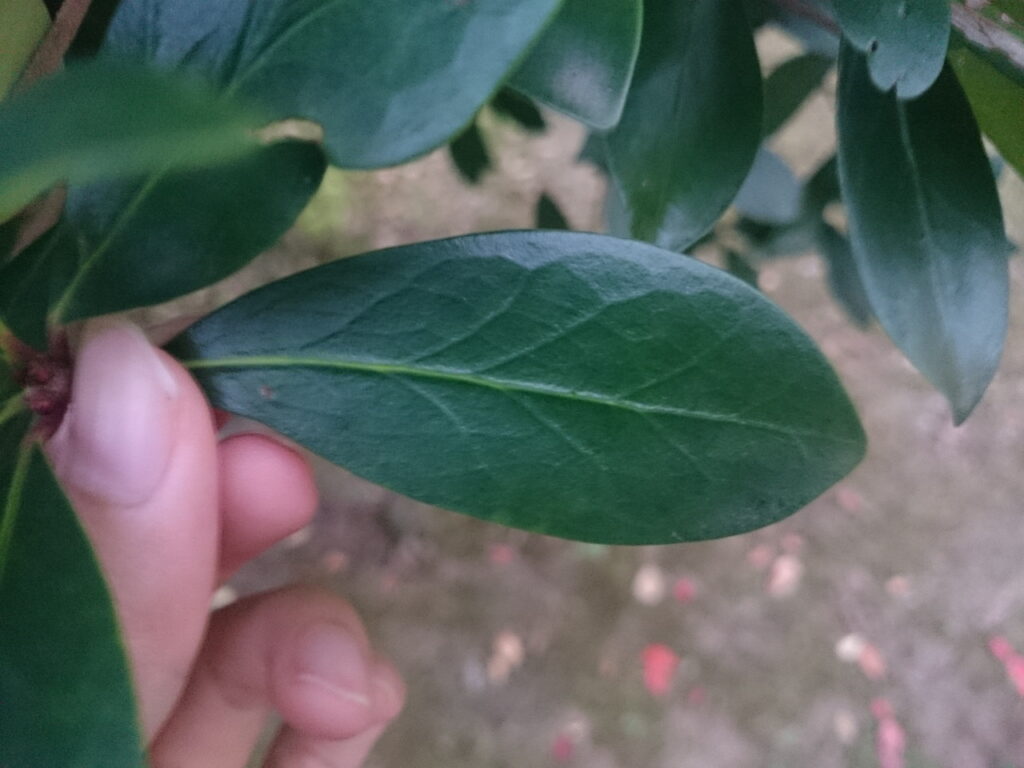
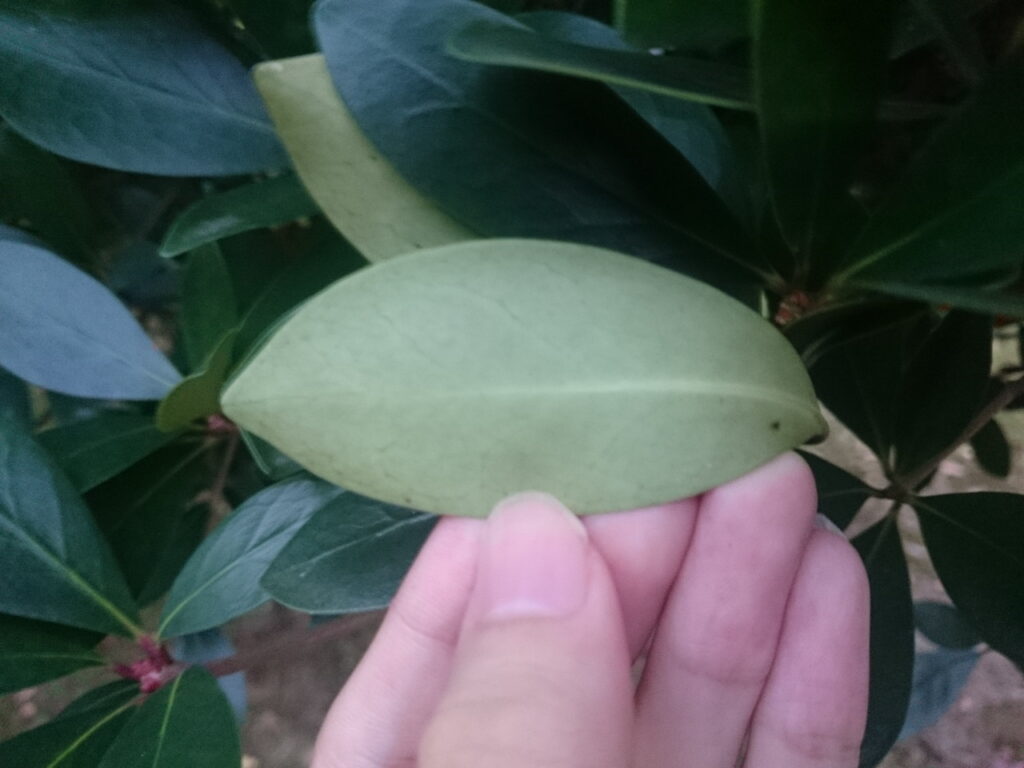
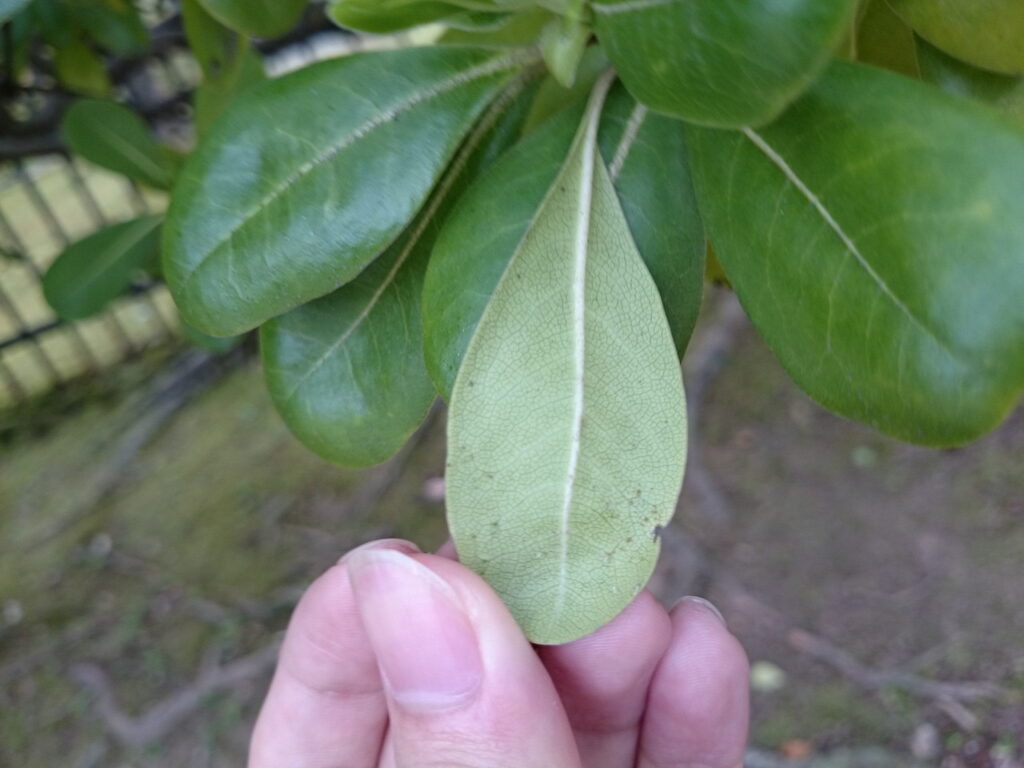
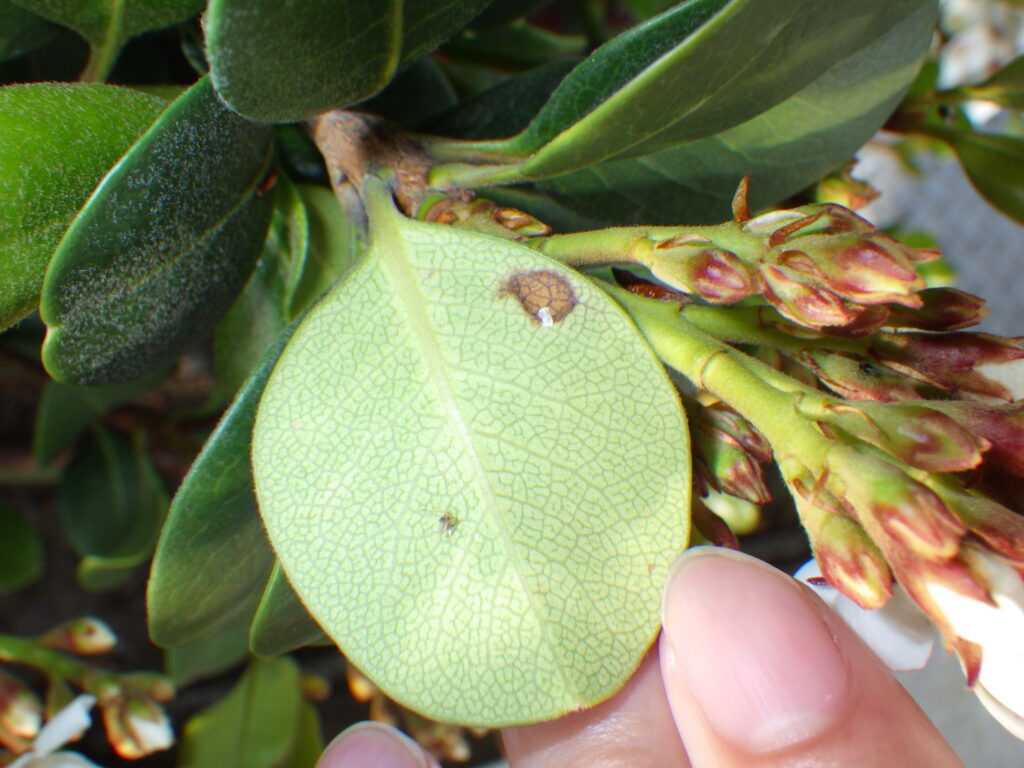
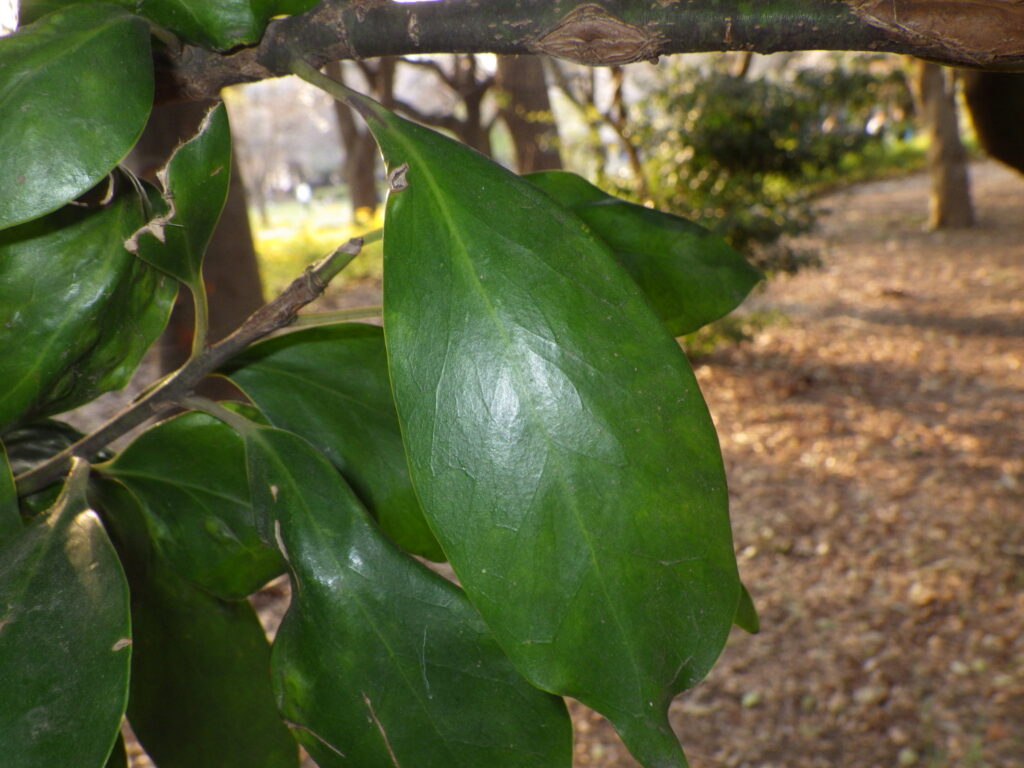
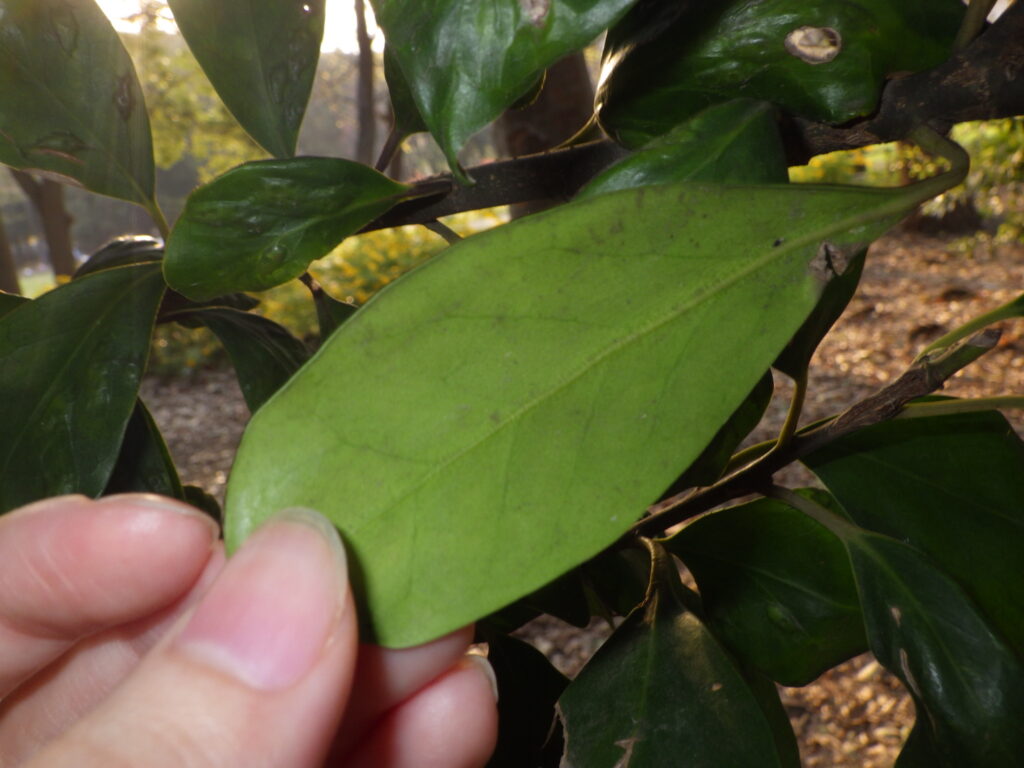
The best way to distinguish them based solely on their leaves is that the petioles of Ternstroemia gymnanthera are usually bright red (Hayashi, 2014). Pittosporum tobira has green petioles, and Ilex crenata has green or inconspicuous purple petioles. Rhaphiolepis indica can turn red, but this is not uniform and varies depending on the position of the leaf, and it is often green.
Furthermore, in Ternstroemia gymnanthera, the veins on the underside of the leaves are barely visible. However, with the exception of Ilex crenata, Pittosporum tobira and Rhaphiolepis indica have clearly visible veins on the underside of their leaves.
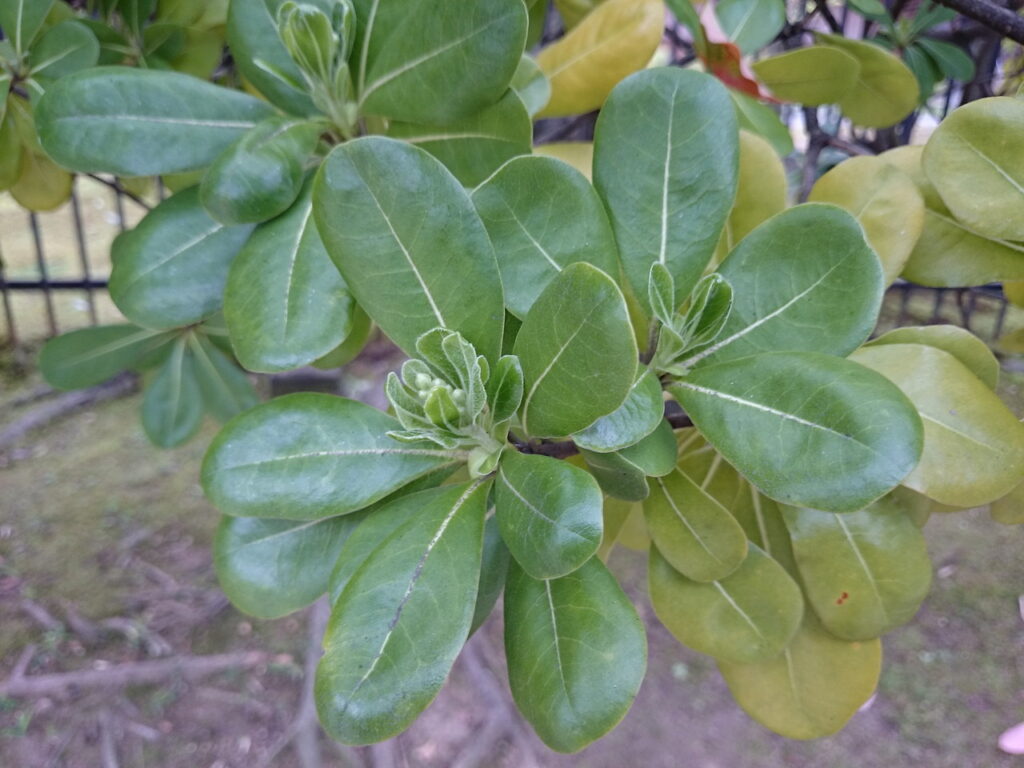
If we consider them individually, in Pittosporum tobira, the leaf margins usually curl towards the underside of the leaf, and the veins on the underside of the leaf are clearly visible, whereas this is not the case with Ternstroemia gymnanthera.
In Rhaphiolepis indica, there are differences between individual leaves; some have serrations, and the veins on the underside of the leaves are clearly defined, whereas this is not the case with Ternstroemia gymnanthera.
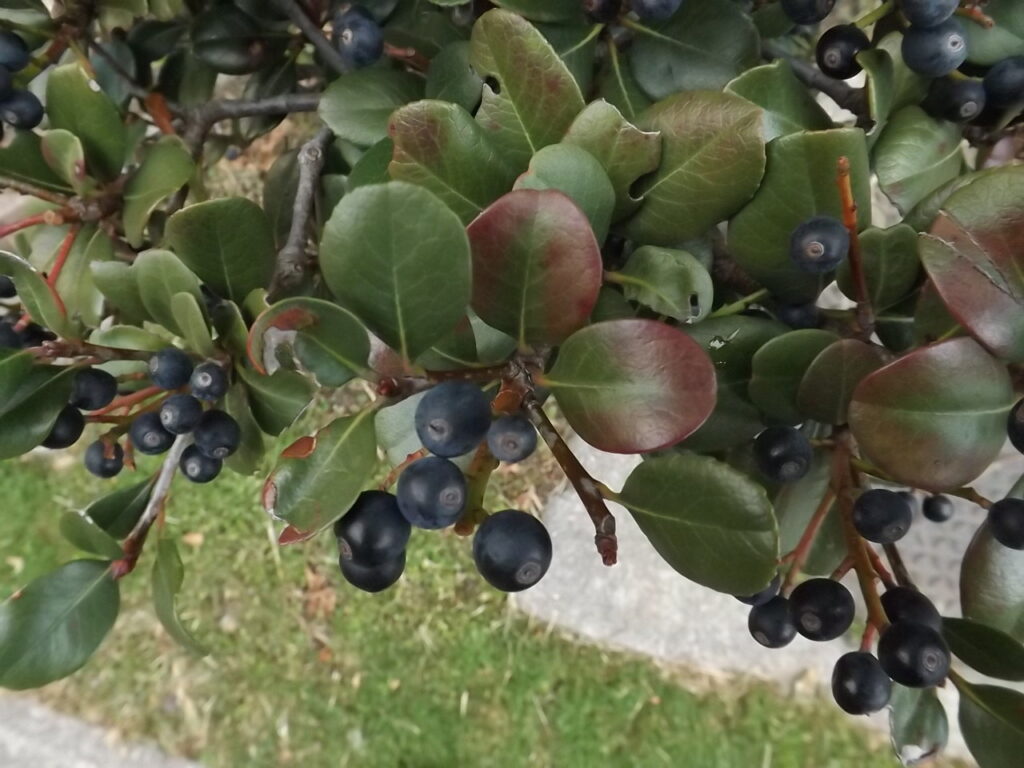
In holly (Ilex crenata), the veins are not very prominent on the upper surface of the leaves, and the tips of the leaves protrude slightly, but this is not the case with Ternstroemia gymnanthera (Turkish holly).
By considering all of the above factors, you should be able to distinguish between them.
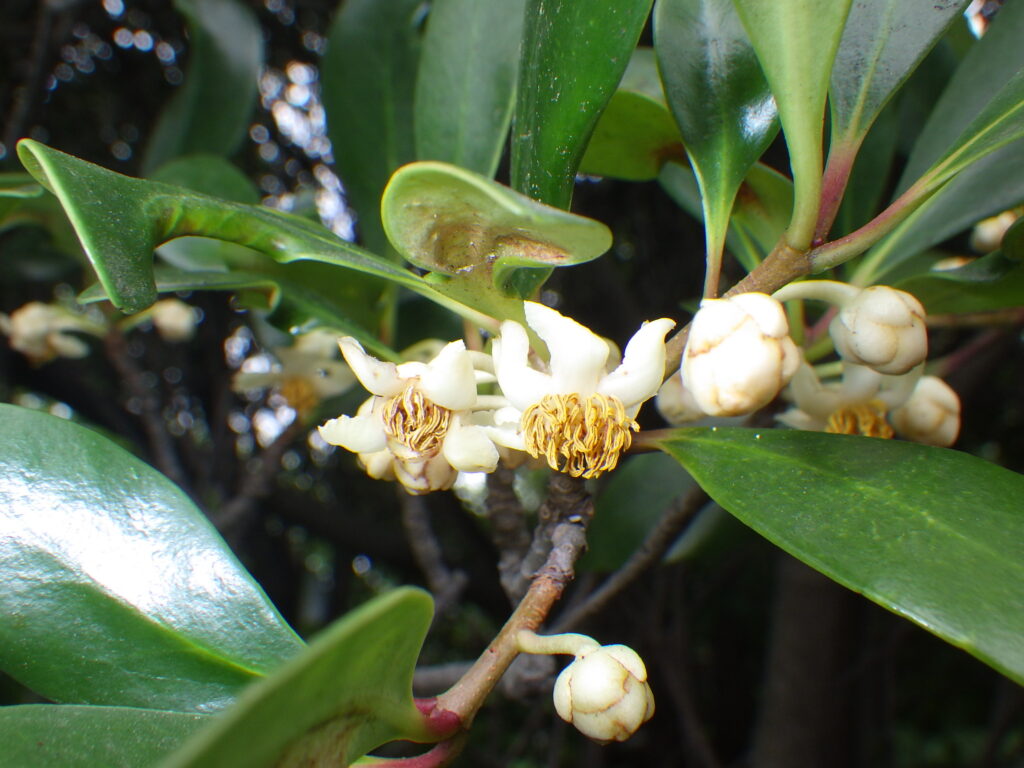
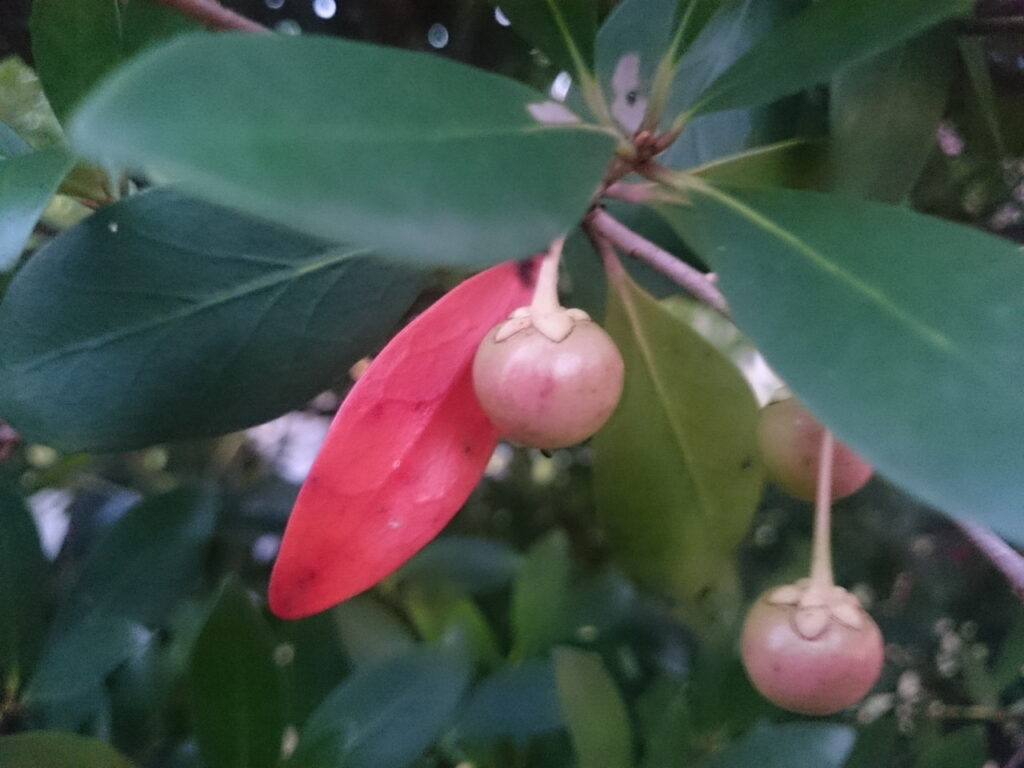
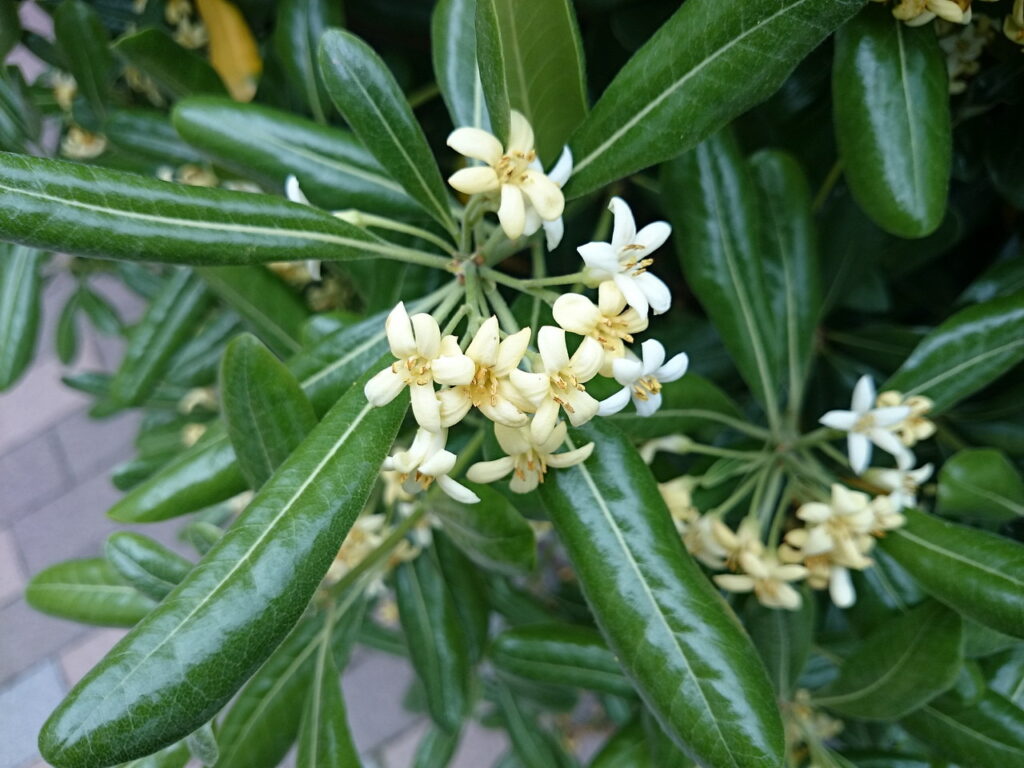
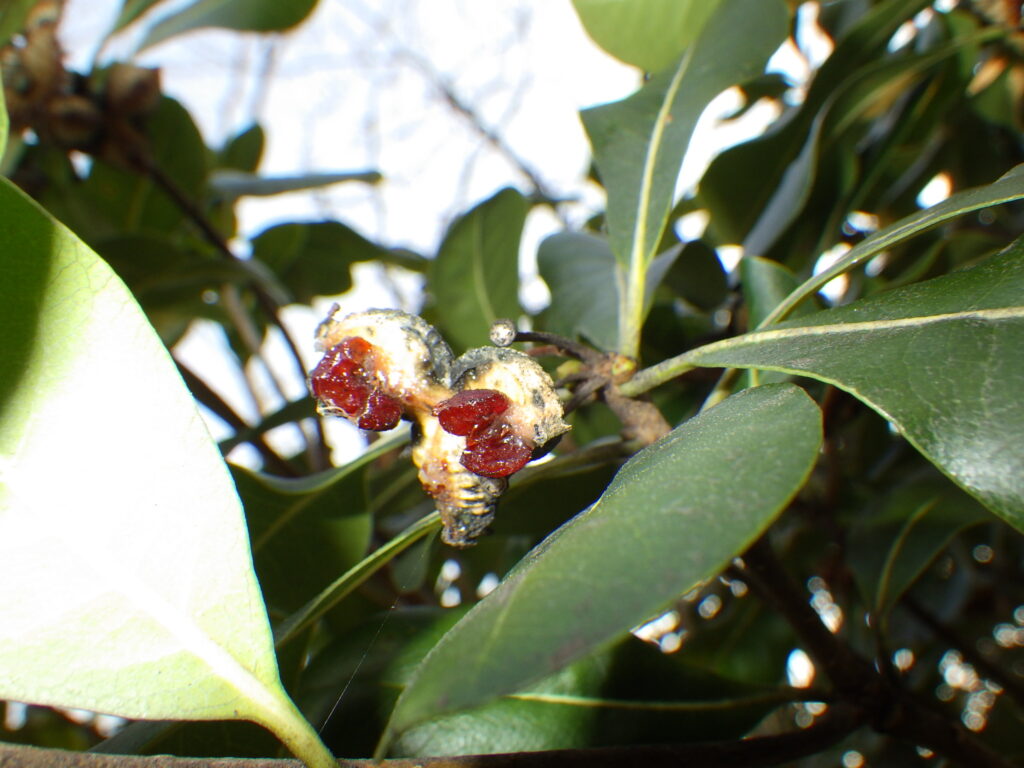
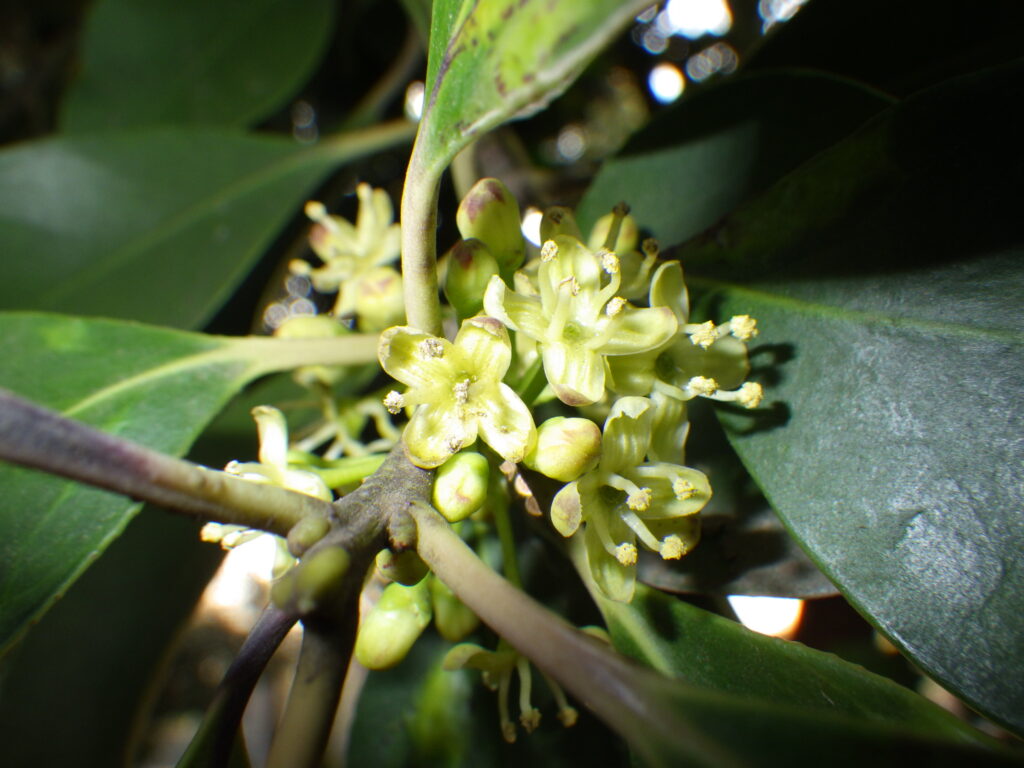
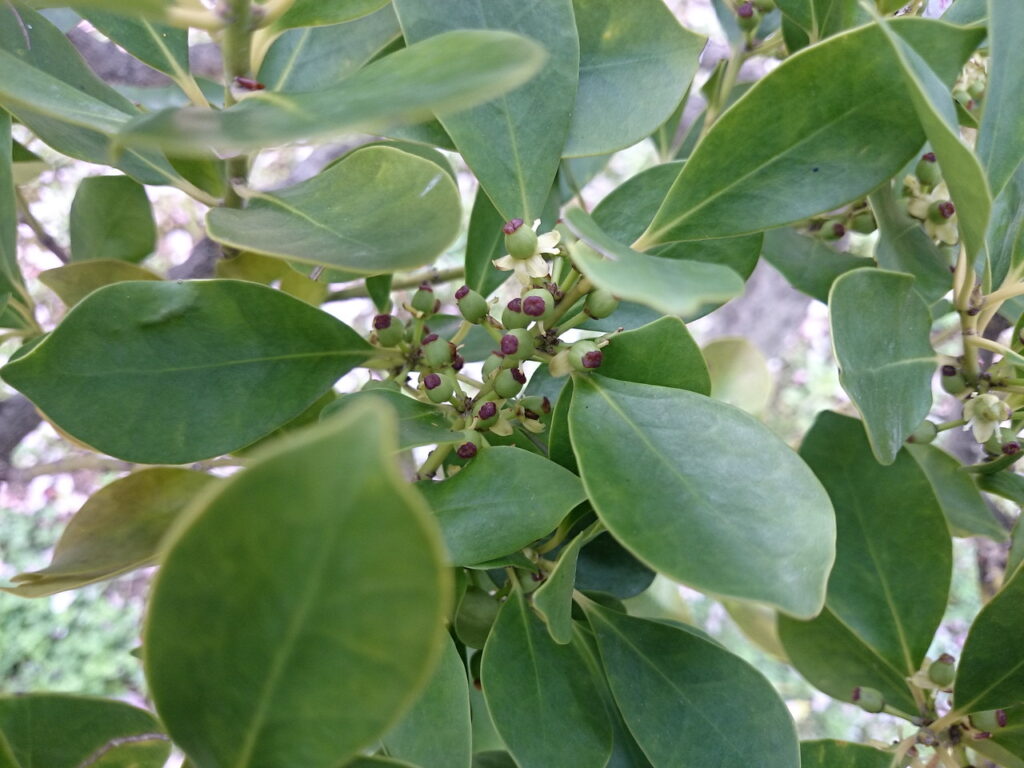
I will omit the detailed morphology of the flowers and fruits, but as you can see in the photos, they are completely different because they belong to different families. The mature fruits of Ternstroemia gymnanthera and Pittosporum tobira expose the seeds, but in Ternstroemia gymnanthera, the fruit splits irregularly to expose the seeds, while in Pittosporum tobira, it splits regularly into three lobes to expose the seeds. If you check the fruit, you can definitely distinguish between them.
Are there any other similar species?
The distinctions between species in the genus Ilex, which are closely related to Ilex crenata, are explained in a separate article.
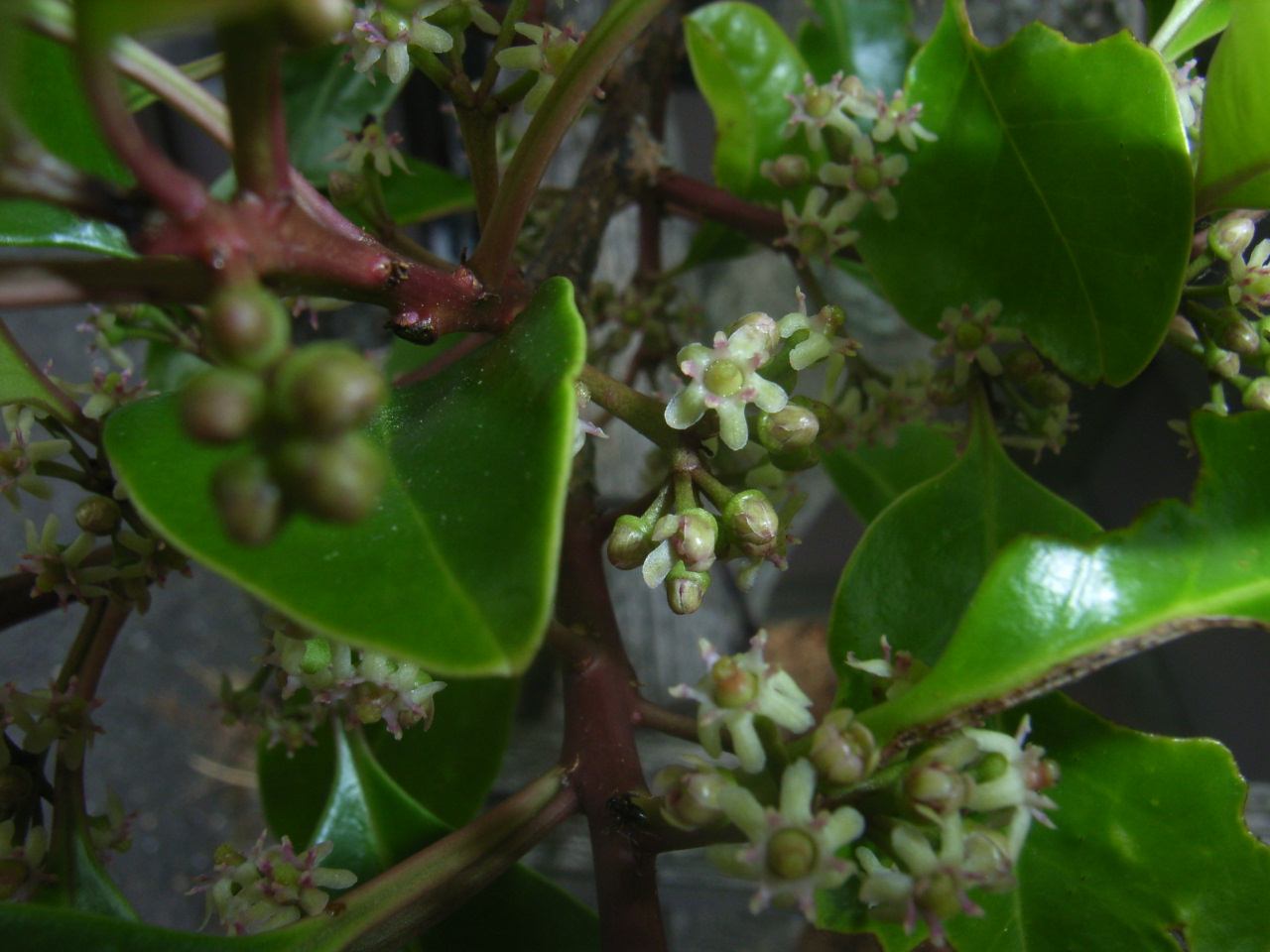
Please see our separate article for information on the differences between species of Rhaphiolepis indica (including Ternstroemia gymnanthera). Although Ternstroemia gymnanthera has a somewhat confusing name, it is a relative of Rhaphiolepis indica and is unrelated to Ternstroemia gymnanthera.
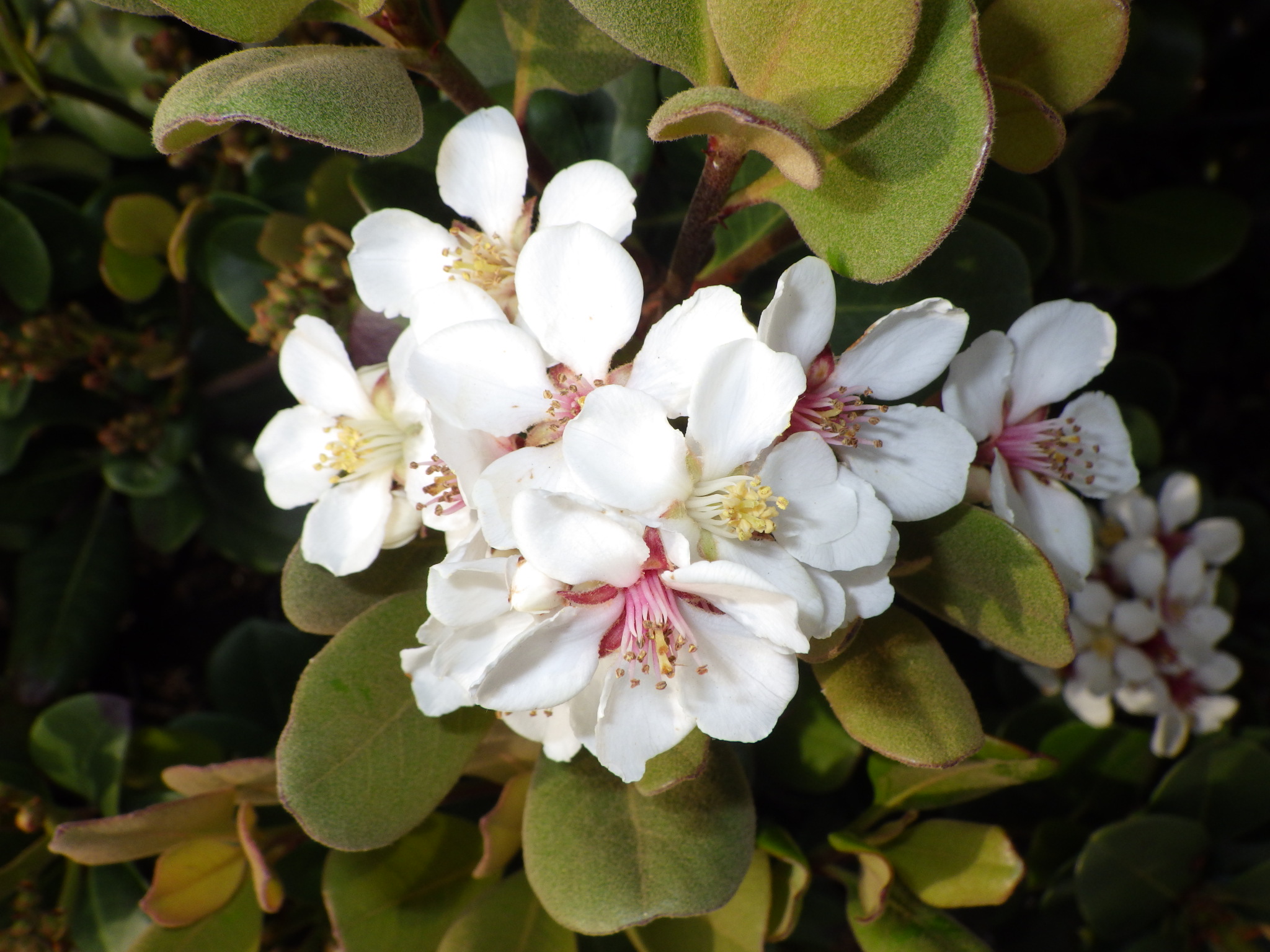
What is the structure of a Ternstroemia gymnanthera flower?
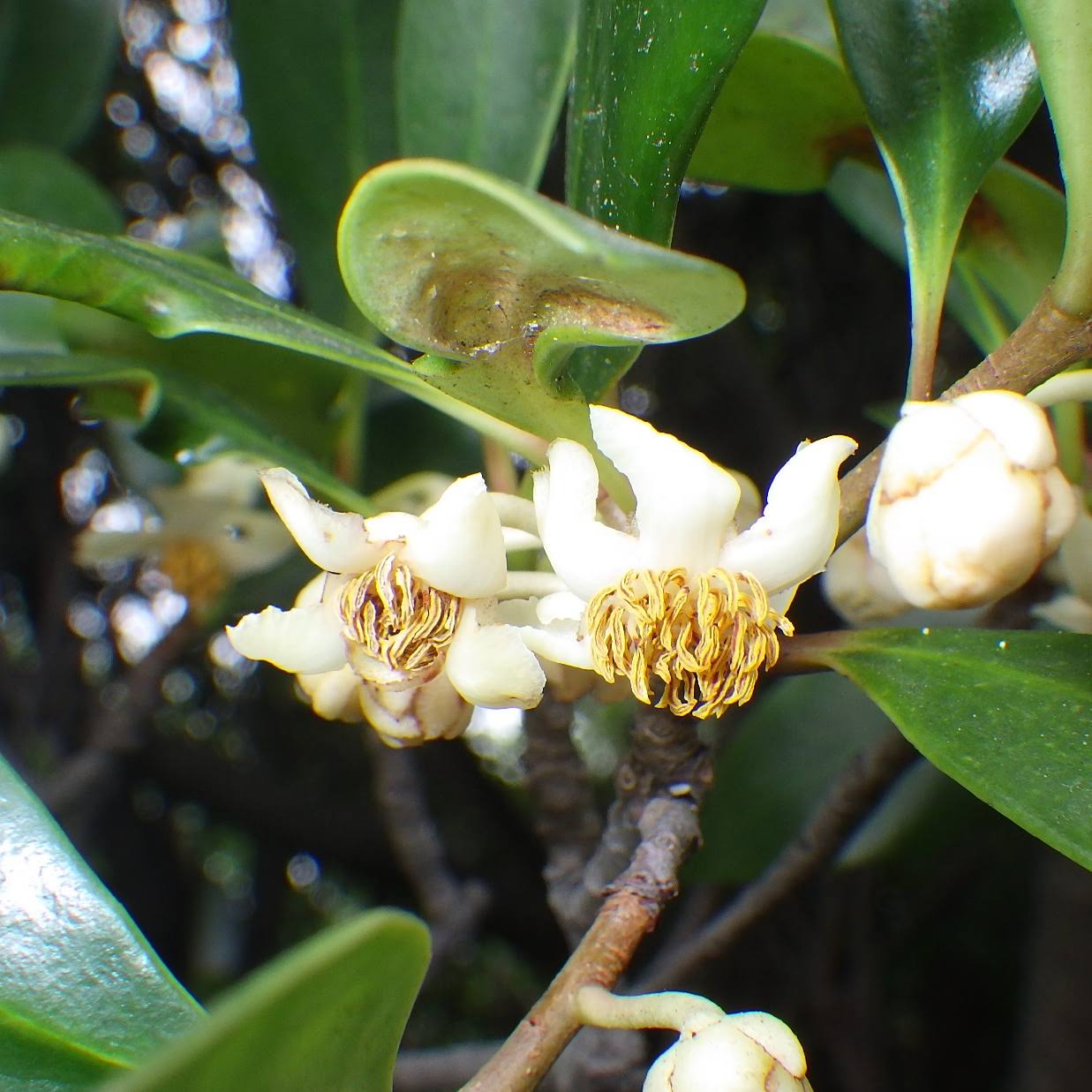
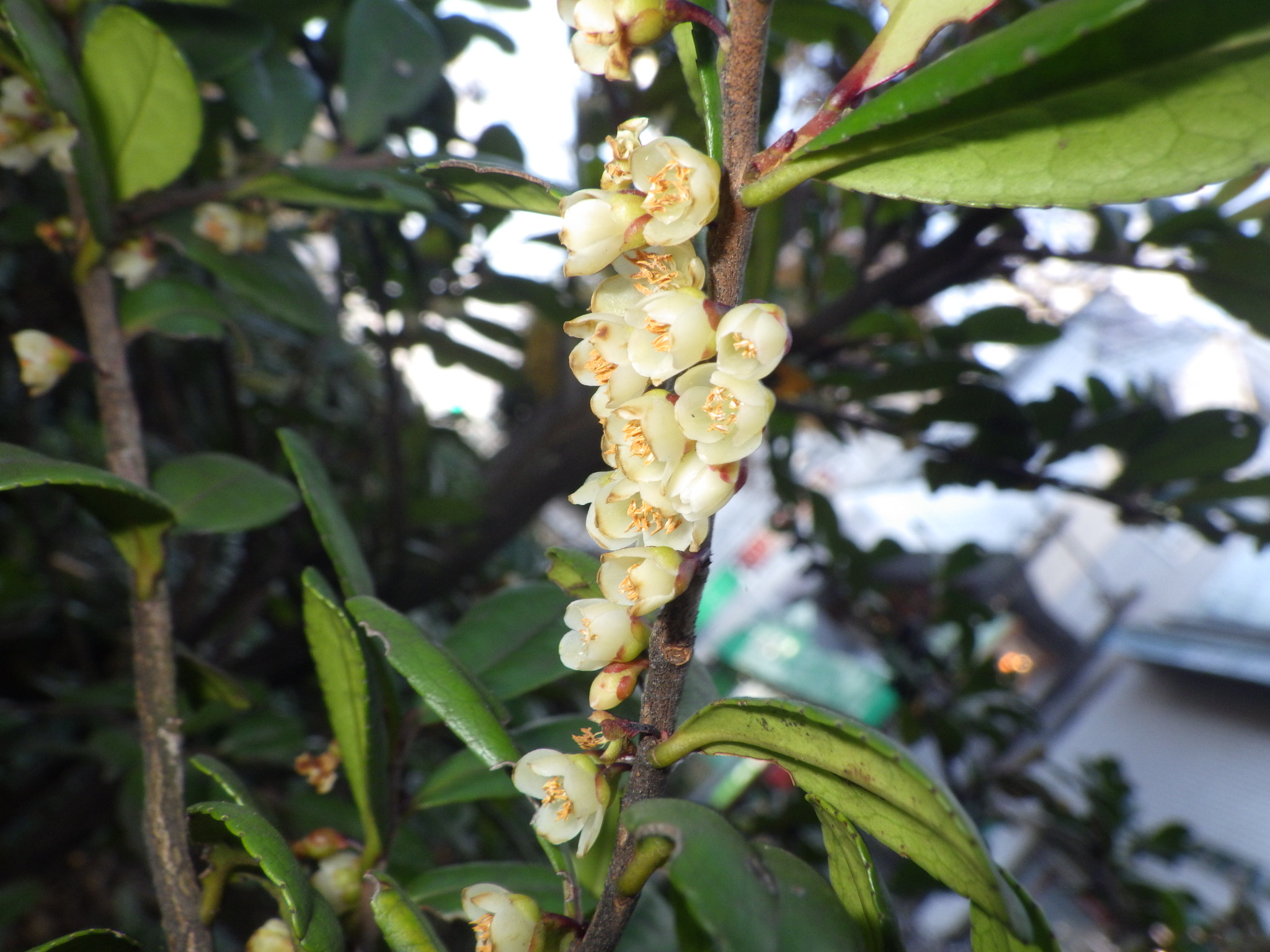
The flowering period of Ternstroemia gymnanthera is from June to July, blooming from early summer to summer (Mogi et al., 2000). Flowers about 1.5 cm in diameter hang downwards in the leaf axils. The flowers are white, later turning yellowish. The narrow, oblong petals, 8-10 mm long, open flat, and there are numerous stamens. There are male and hermaphroditic flowers. In male flowers, the stamens are arranged in three rows and have a lot of pollen, and the pistil is small and reduced. In hermaphroditic flowers, the stamens are arranged in one row and have less pollen, and one pistil can be seen.
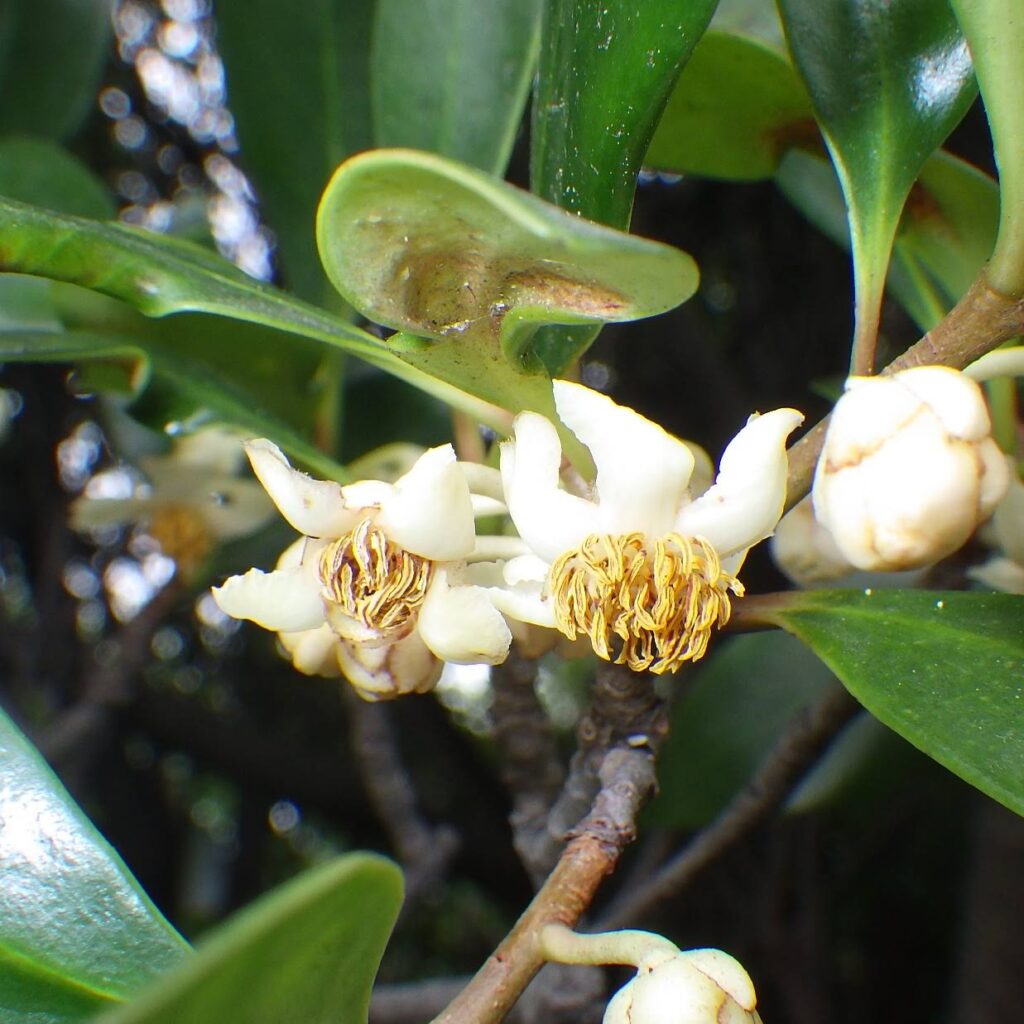
Why did the unusual sex system "male flowers, hermaphrodite flowers, dioecious plants" come about?
As mentioned above, the gender of the Japanese holly has some distinctive characteristics.
This means that there are individuals that produce only hermaphroditic flowers ( hermaphroditic plants) and individuals that produce only male flowers (male plants). In other words, it's a world where both hermaphrodites and only males exist.
This is called androdioecy, or dioecy of male and hermaphroditic flowers on separate plants. The opposite case, where some plants produce only hermaphroditic flowers and others only female flowers, is difficult for humans to understand, but it is relatively well known in the plant world (Maki & Yahara, 1993). Dioecy of male and hermaphroditic flowers is an extremely rare case in plants, and only a handful of organisms exist in the world (Charlesworth, 1984)!
Why do they employ such a sexual system?
This is a very difficult topic. One theory suggests that originally, plants only existed as individuals that produced only hermaphroditic flowers, but for some reason, if individuals with similar genes come together, inbreeding can occur, resulting in the production of very weak offspring (this is well known in human history and is called inbreeding depression).
In such a situation, if a plant were to produce only male flowers and focus solely on pollen production, the same thing would happen if the pollen were carried by insects to the flowers of nearby plants. However, if it were lucky enough to be carried far away, it might be able to produce healthy offspring. This is thought to be the reason why male plants are born. However, even if this is the case, the detailed conditions are still not fully understood. It would be interesting if this complex mystery were to be researched and solved someday.
Do male flowers, which are full of pollen, attract bees?
For the reasons mentioned above, it can be observed that male flowers, in particular, have a large amount of pollen, suggesting that the flowers of the Japanese holly (Turkish japonica) attract bees that carry a lot of pollen.
However, my research did not yield any papers that specifically listed the visiting insects. I did find four photos on the internet of European honeybees (Apis mellifera) visiting flowers in Japan, so I suspect that many of the bees are indeed there for pollination.
Even though the flower shapes differ significantly between *Tetramorium laevigata* and *Tetramorium dentata*, which are related species to *Tetramorium*, it has been confirmed that bees visit them and carry pollen using a special method called "vibration pollination" (Bittrich et al., 1993). This further supports the prediction that bees will visit the flowers.
The fruit of the Japanese holly (Mokkoku) is a capsule, yet it's dispersed by birds!?
The fruit of Ternstroemia gymnanthera is a capsule. It is spherical, 1-1.5 cm in diameter, and ripens red in October and November. The pericarp is fleshy and splits open irregularly when ripe, releasing orange-red seeds. The seeds are obovate, about 7 mm long.
How is seed dispersal carried out?
Several Japanese studies have shown that the fruits of the Japanese holly (Turkish japonica) are eaten by birds such as the Oriental Turtle Dove (Streptopelia orientalis), the Daurian Redstart (Phoenicurus auroreus), the Varied Tit (Sittiparus varius), and the Carrion Crow (Corvus corone) (Fujita and Shinohara, 2001), as well as mammals such as the Yakushima Macaque (Macaca fuscata yakui) (Otani, 2005). However, considering its size and habitat, it is thought that it is more often eaten by birds than mammals. In addition, there have been observations of thrushes, flycatchers, and the Japanese White-eye (Zosterops japonicus) eating the fruits (Kanouchi, 2021), and a study in Korea has also recorded that it is eaten by the Brown-eared Bulbul (Hypsipetes amaurotis) (Kim et al., 2015).
By the way, the fruit of the Japanese holly is a little strange. It turns red when ripe, which is clearly to attract animals and get them to eat it, but it doesn't contain much water like a berry. Moreover, when it ripens, the pericarp dries out and loses its shape, exposing the seeds. And then the seeds turn red to attract animals.
It's still unclear how this is perceived by birds that eat the fruit of the Japanese holly tree. However, considering this progression, there may be two phases: one that appeals to birds that eat the whole fruit, and another that appeals to birds that eat only the seeds.
In the phase where the fruit is intended to appeal to birds that eat it whole, the thin peel makes it unsuitable as a food source for birds. In other words, it seems that the Japanese holly (Mokkoku) deceives birds by mimicking ordinary fruits by turning red (Ueda, 1999).
It's unclear to what extent the phase of appealing to birds that only eat seeds contributes to seed dispersal. In the case of seeds, unless the seed coat is made quite strong, there is a risk that it will simply be digested by birds and used for nutrition.
As you can see, there are many mysteries surrounding both the flowers and fruits of this plant. When you come across a Japanese holly tree, try observing it carefully to see what animals it interacts with; you might discover something new.
References
Bittrich, V., Amaral, MC, & Melo, GAR 1993. Pollination biology of Ternstroemia laevigata and T. dentata (Theaceae). Plant Systematics and Evolution 185(1): 1-6. ISSN: 0378-2697, https://doi.org/10.1007/BF00937716
Charlesworth, D. 1984. Androdioecy and the evolution of dioecy. Biological Journal of the Linnean Society 22(4): 333-348. ISSN: 0024-4066, https://doi.org/10.1111/j.1095-8312.1984.tb01683.x
Fujita, Kaoru & Shinohara, Yukiko. 2001. Dispersal of planted trees into natural forests by birds and mammals. Strix 19: 103-113. https://mobile.wbsj.org/nature/public/strix/19/Strix19_12.pdf
Hayashi, Masayuki. 2014. 1100 Tree Leaves Identified Through Real-Life Scans. Yama-kei Publishers, Tokyo. 759pp. ISBN: 9784635070324
Kanagawa Prefecture Flora Survey Association. 2018. Kanagawa Prefecture Flora 2018 (Electronic Edition). Kanagawa Prefecture Flora Survey Association, Odawara. 1803pp. ISBN: 9784991053726
Kanouchi, Takuya. 2021. Handbook of Wild Birds and Tree Nuts (Revised and Expanded Edition). Bun-ichi Sogo Shuppan, Tokyo. 104pp. ISBN: 9784829981672
Kim, EM, Kang, CW, Won, HK, Song, KM, & Oh, MR 2015. The status of fruits consumed by brown-eared bulbul (Hypsypetes amaurotis) as a seed dispersal agent on Jeju Island. Journal of the Korean Society of Environmental Restoration Technology 18(1): 53-69. https://doi.org/10.13087/kosert.2015.18.1.53
Kitamura, Shiro & Murata, Gen. 1979. Illustrated Flora of Japan in Color: Woody Plants, Vol. 2. Hoikusha, Osaka. 630pp. ISBN: 9784586300501
Maki, Masayuki & Yahara, Tetsuichi. 1993. Evolution of asymmetric sexual expression in plants. Chemistry and Biology 31(4): 242-245. ISSN: 0453-073X, https://doi.org/10.1271/kagakutoseibutsu1962.31.242
Mogi, Toru; Ota, Kazuo; Katsuyama, Teruo; Takahashi, Hideo; Shirokawa, Shiro; Yoshiyama, Hiroshi; Ishii, Hidemi; Sakio, Hitoshi; and Nakagawa, Shigetoshi. 2000. Flowers Blooming on Trees: Polypetalous Flowers (Vol. 2, 2nd edition). Yama-kei Publishers, Tokyo. 719pp. ISBN: 9784635070041
Otani, T. 2005. Characteristics of medium-sized mammals as seed dispersers of berries—mainly using Japanese macaques as an example—. Nagoya University Journal of Forest Science 24: 7-43. https://doi.org/10.18999/nagufs.24.7
Ueda, Keisuke. 1999. Unexpected Birds' Unexpected Preferences: Who Eats the Inconspicuous "Dry Fruit"?. In: Ueda, Keisuke (Ed.), Seed Dispersal: The Evolution of Mutual Aid Vol. 1: Seeds Carried by Birds (pp. 64-75). Tsukiji Shokan. ISBN: 9784806711926
Source
This article is a significantly expanded version of one included in the following book.