Both Christmas roses and Lenten roses belong to the genus Helleborus in the Ranunculaceae family, and in Japan, they are frequently cultivated as ornamental plants in gardens because they bloom during the winter. Extensive breeding efforts have resulted in large-flowered and double-flowered varieties. However, due to the diversity of varieties, the two species are often collectively referred to as "Helleborus," the scientific name for the genus, and many people seem to misunderstand the distinction between them. In reality, Christmas roses and Lenten roses are completely different species, with differences in flowering period and flower color, but examining the bracts is a more reliable way to distinguish them. This article will explain the classification of the genus Helleborus.
What are Christmas roses and Lenten roses?
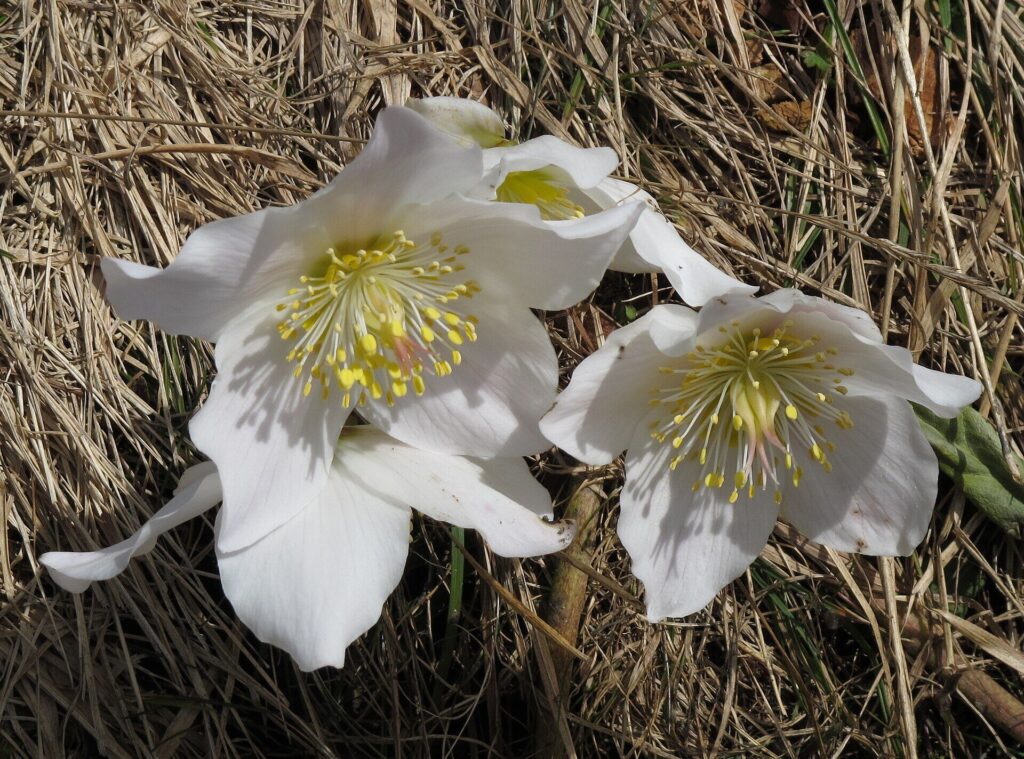
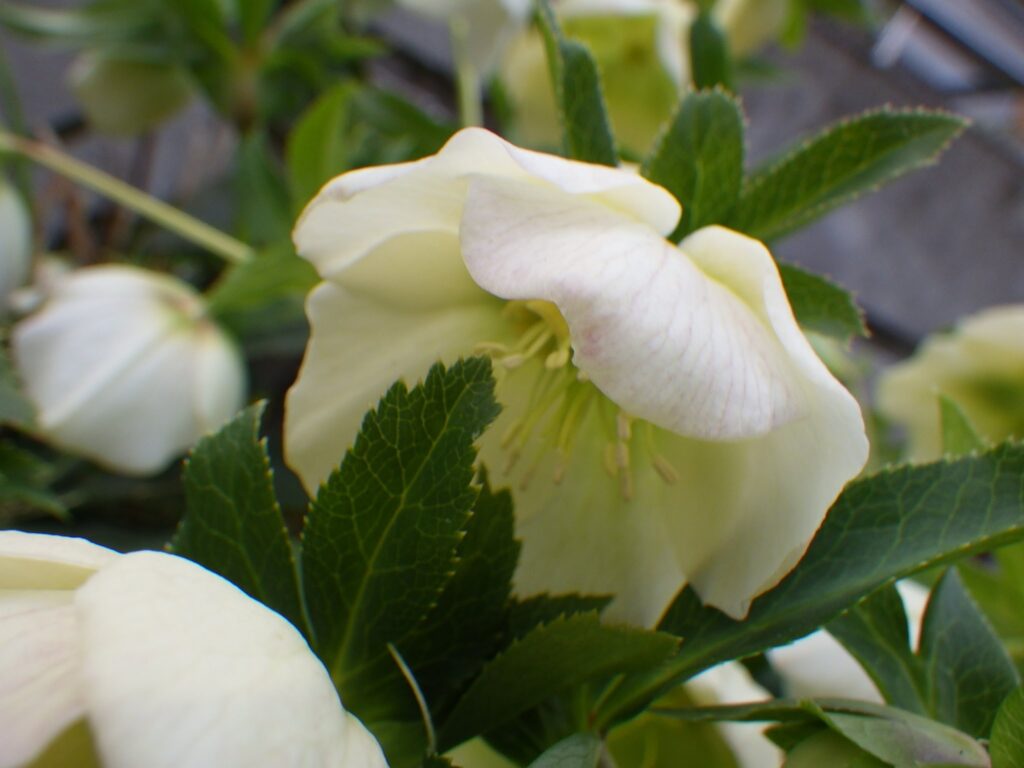
Christmas rose (Helleborus niger), also known as winter peony, winter peony, or snow-awakening flower, is native to the Alps of Europe (Austria, Germany, Italy, Switzerland, and Yugoslavia) and is an evergreen perennial. It is cultivated as an ornamental plant all over the world, including Japan.
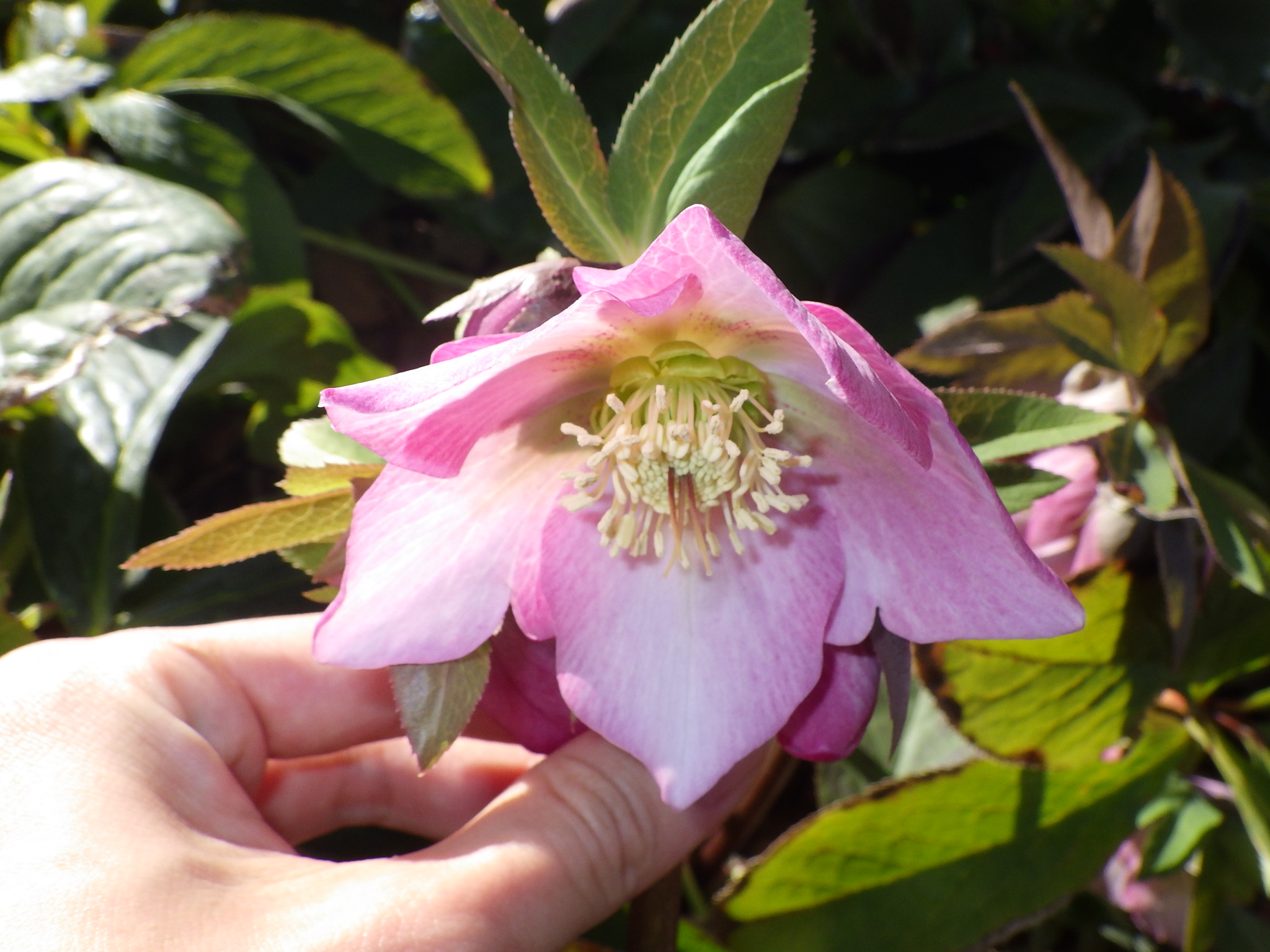
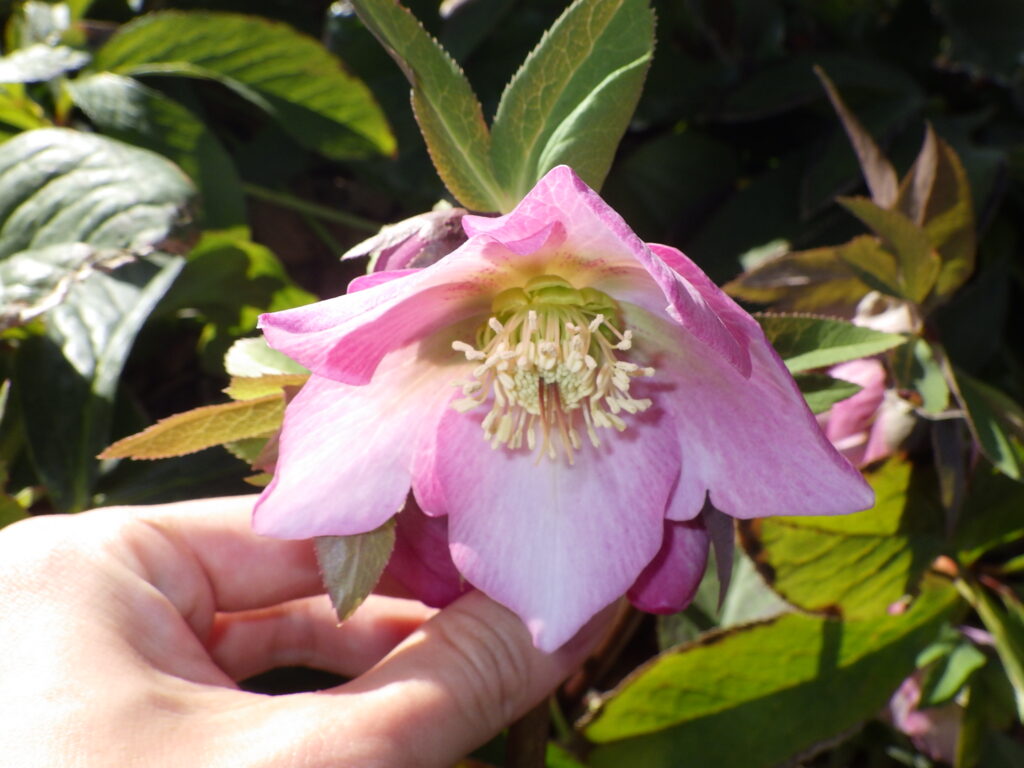
The spring-blooming Christmas rose, Helleborus orientalis, is also known as Helleborus orientalis, Lenten rose, or Dwarf Winter Peony. Native to Turkey, the Caucasus, and Greece, it is an evergreen perennial. It is cultivated as an ornamental plant all over the world, including Japan. The standard Japanese name comes from its flowering period, while the alternative name Lenten rose comes from the fact that it blooms around Lent in Europe and America.
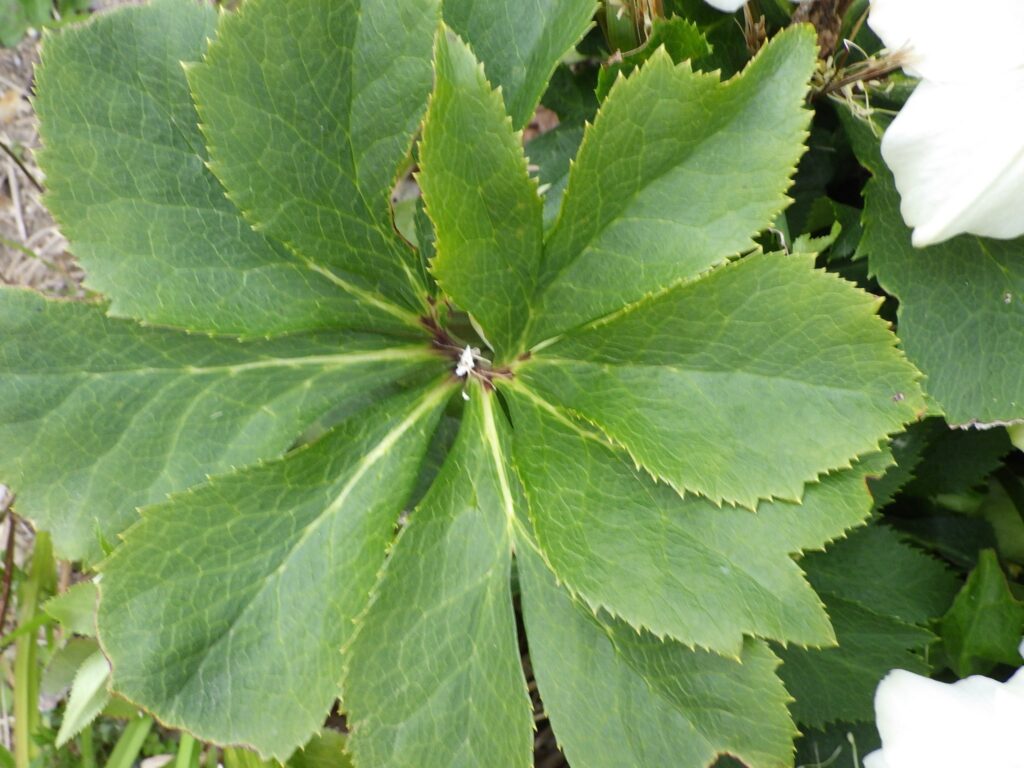
All of these species belong to the genus Helleborus in the Ranunculaceae family. Morphologically, like many other plants in the Ranunculaceae family, the parts that appear to be "petals" on the flower are actually composed of "sepals," and the true petals have transformed into nectaries. All members of the genus Helleborus are perennial herbs, and their leaves are "trifoliate compound leaves" consisting of three leaflets.
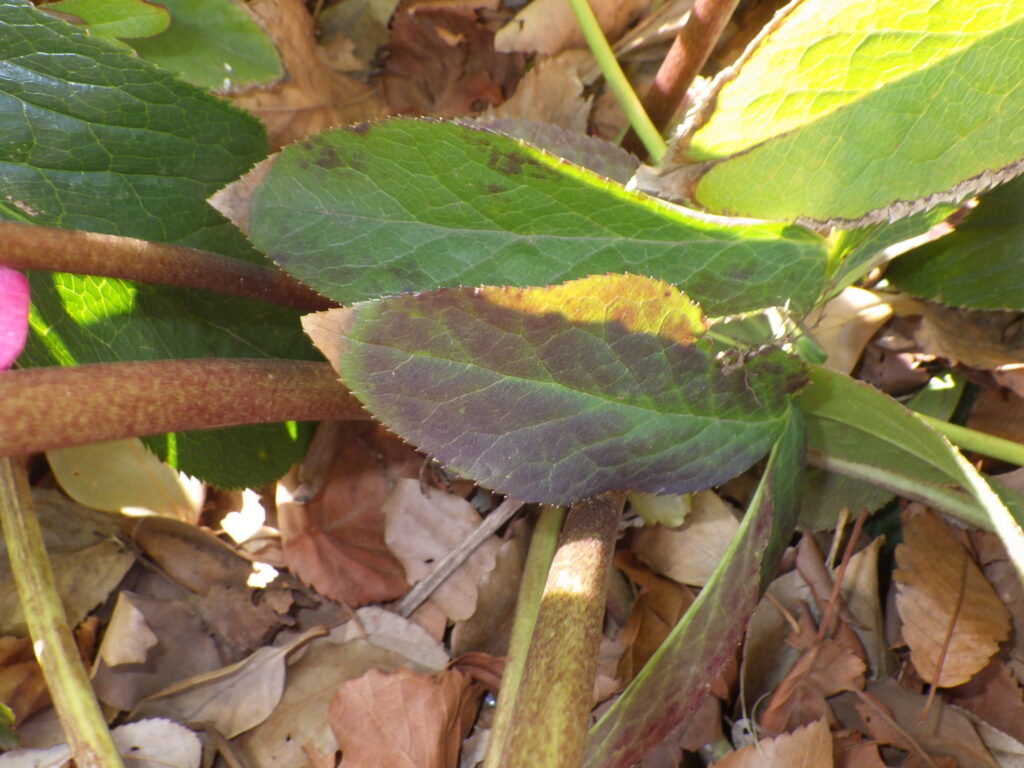
Furthermore, among the Christmas rose genus, Christmas roses and Lenten roses have basal leaves, meaning the leaves and flowers are on different stems.
In Japan, because it blooms during the winter, it is frequently cultivated in gardens for ornamental purposes. Extensive breeding efforts have resulted in large-flowered varieties, a wide range of flower colors, and even double-flowered varieties.
Perhaps due to this diversity of varieties, the two species are often collectively referred to as "Helleborus," the scientific name for the Christmas rose genus, and it seems that many people do not properly distinguish between the two species.
It is believed that a significant portion of what is sold as "Christmas rose" in Japanese gardens is actually "Lenten rose."
What is the difference between Christmas roses and Lenten roses?
Christmas roses and Lenten roses are actually completely different species.
The most commonly cited difference is the timing of when the flowers bloom (flowering period).
In Japan, Christmas roses bloom from January to March, while Lenten roses bloom from March to early April.
As you can see from this, despite its name "Christmas rose," it doesn't actually bloom in December, the month of Christmas. This is because it blooms a little earlier in regions with warmer winters, and there is a discrepancy in Japan.
However, the flowering period actually varies among cultivated varieties, so it's often not a reliable indicator. I've actually seen Lenten roses blooming in February.
So, where can we look to accurately distinguish between the two types?
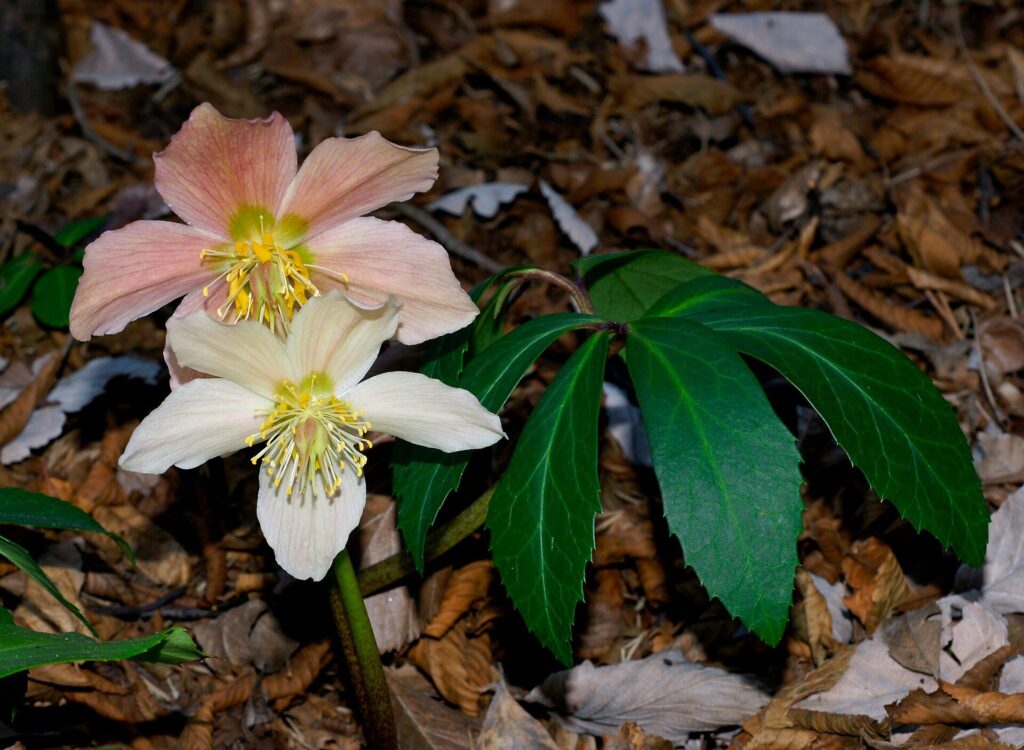
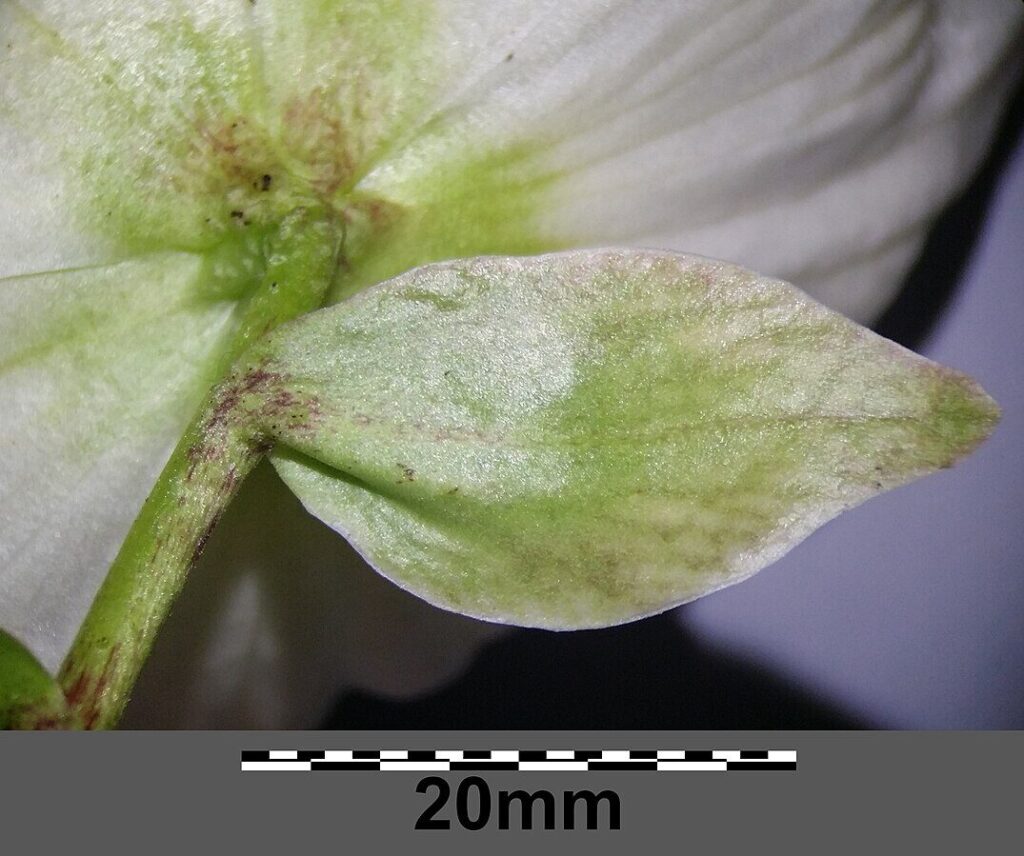
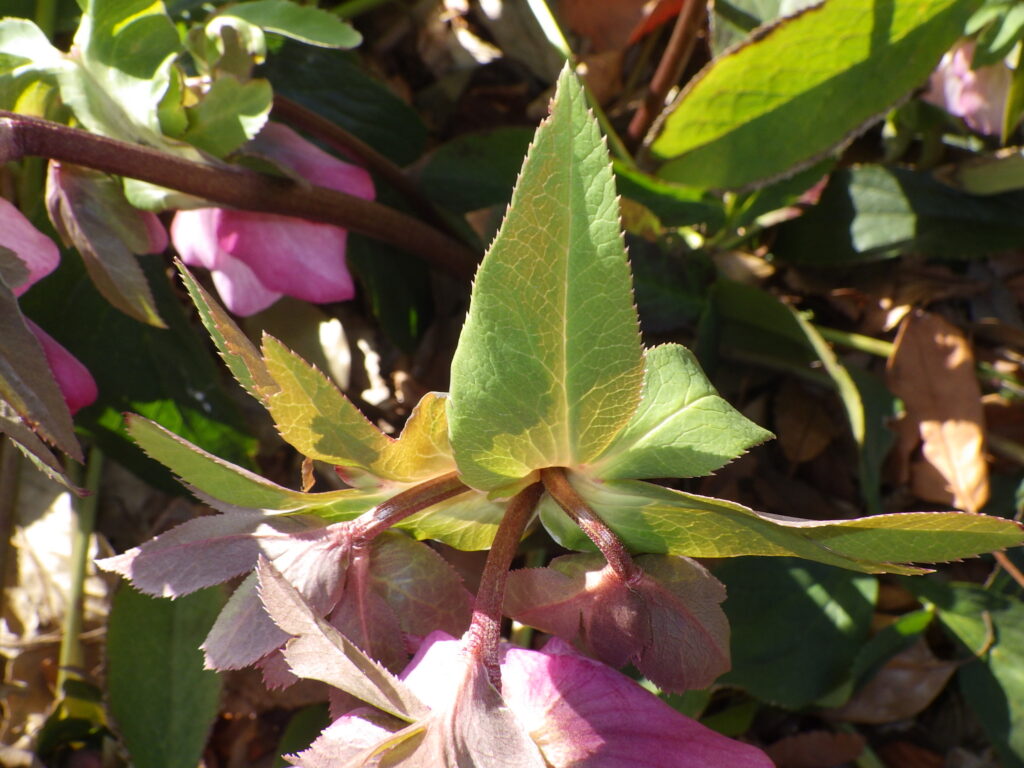
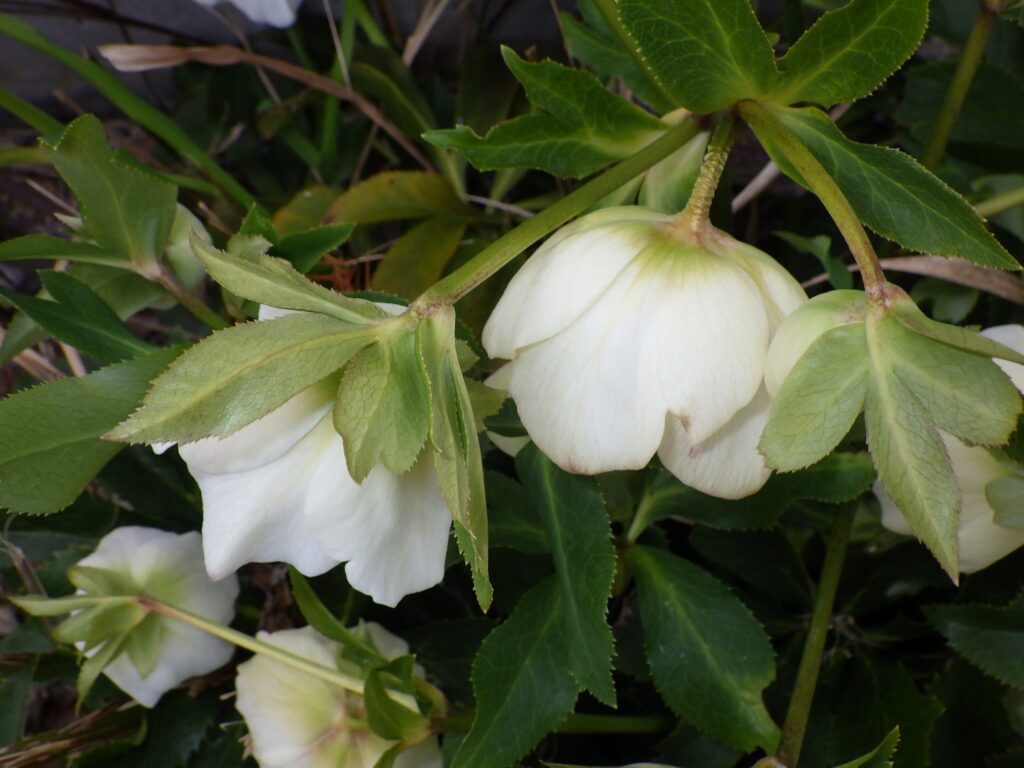
In fact, Christmas roses and Lenten roses can be clearly distinguished by what are called "bracts" or "bract leaves" located behind the flower (Spencer, 1997). A "bract" refers to a leaf that has specialized to enclose the flower.
In Christmas roses, the bracts are entire (without serrations) and not divided (appearing as a single leaf), whereas in Lenten roses, the bracts have serrations and are divided (appearing as multiple leaves joined together).
In other words, you'll get the impression that the Lenten rose has pointed leaves surrounding the back of the flower. The bracts themselves are also larger and more prominent in the Lenten rose. If you check these points, you won't make a mistake.
Some people also point to the flower color as another difference between the two species.
It's true that the calyx color of the original species is white for Christmas roses and pink for Lenten roses. However, white Lenten roses also exist, so it's best to consider this only as a general guideline.
While hybridization between Christmas roses and Lenten roses is considered rare and difficult, hybrids resulting from crossing Christmas roses with other members of the Christmas rose genus are also known. Therefore, distinguishing a hybrid from a Christmas rose solely based on the presence of entire bracts may be difficult.
Are there any other members of the Christmas rose genus?
There are several other known species in the genus Christmas rose, and I will briefly introduce them along with how to distinguish them (Spencer, 1997; Yokoyama, 2023). For more detailed information, I recommend referring to Yokoyama (2023).
The tree-shaped Christmas rose, Helleborus foetidus, is also known as Helleborus foetidus. Unlike Christmas roses and Lenten roses, it lacks basal leaves, and the leaves and flowers grow on the same stem. The flower calyx is noticeably small and not very conspicuous. The flowers and leaves have a rather unpleasant odor.
Helleborus viridis, also known as the light yellow winter peony, is also called the green Christmas rose. Unlike Christmas roses and Lenten roses, it lacks basal leaves, and the leaves and flowers grow on the same stem. The leaves have prominent serrations, and the flower calyx is green.
It should be noted that while the Japanese name is Fuyubotan (winter peony), the winter-blooming variety of Paeonia suffruticosa, a member of the Paeoniaceae family, is also called Fuyubotan, so care should be taken not to confuse them.
References
Spencer, R. 1997. Ranunculaceae. In: R. Spencer (Ed.), Horticultural Flora of South-eastern Australia: The identification of garden and cultivated plants (Vol. 2 Flowering plants. Dicotyledons. Part 1). University of New South Wales Press, Sydney. ISBN: 9780868403038, https://hortflora.rbg.vic.gov.au/taxon/ad8cd5b4-5340-11e7-b82b-005056b0018f/key
Yokoyama, Naoki. 2023. Christmas Roses: Everything You Need to Know About Wild Species, Hybrids, and Cultivation. Seibundo Shinkosha, Tokyo. 143pp. ISBN: 9784416623107