Both Leptospermum scoparium and waxflower belong to the Myrtaceae family and are cultivated for ornamental purposes or used as branches in flower arrangements, as they are part of the "native flowers" or "wildflowers" collectively known as those native to Australia. Furthermore, some varieties of Leptospermum scoparium are known as nectar sources and are the raw material for Manuka honey. Some people may not be able to distinguish between the two species, but there are significant differences in the way the leaves are arranged and their shape. The flowers and fruits also differ, although this may be a little difficult to confirm. Manuka honey is certainly known to have antibacterial properties, but it does not have systemic effects, and its effects from the stomach to the small intestine are not yet well understood. This article will explain the classification and morphology of Leptospermum scoparium and waxflower.
What is Leptospermum scoparium (also known as wax flower)?
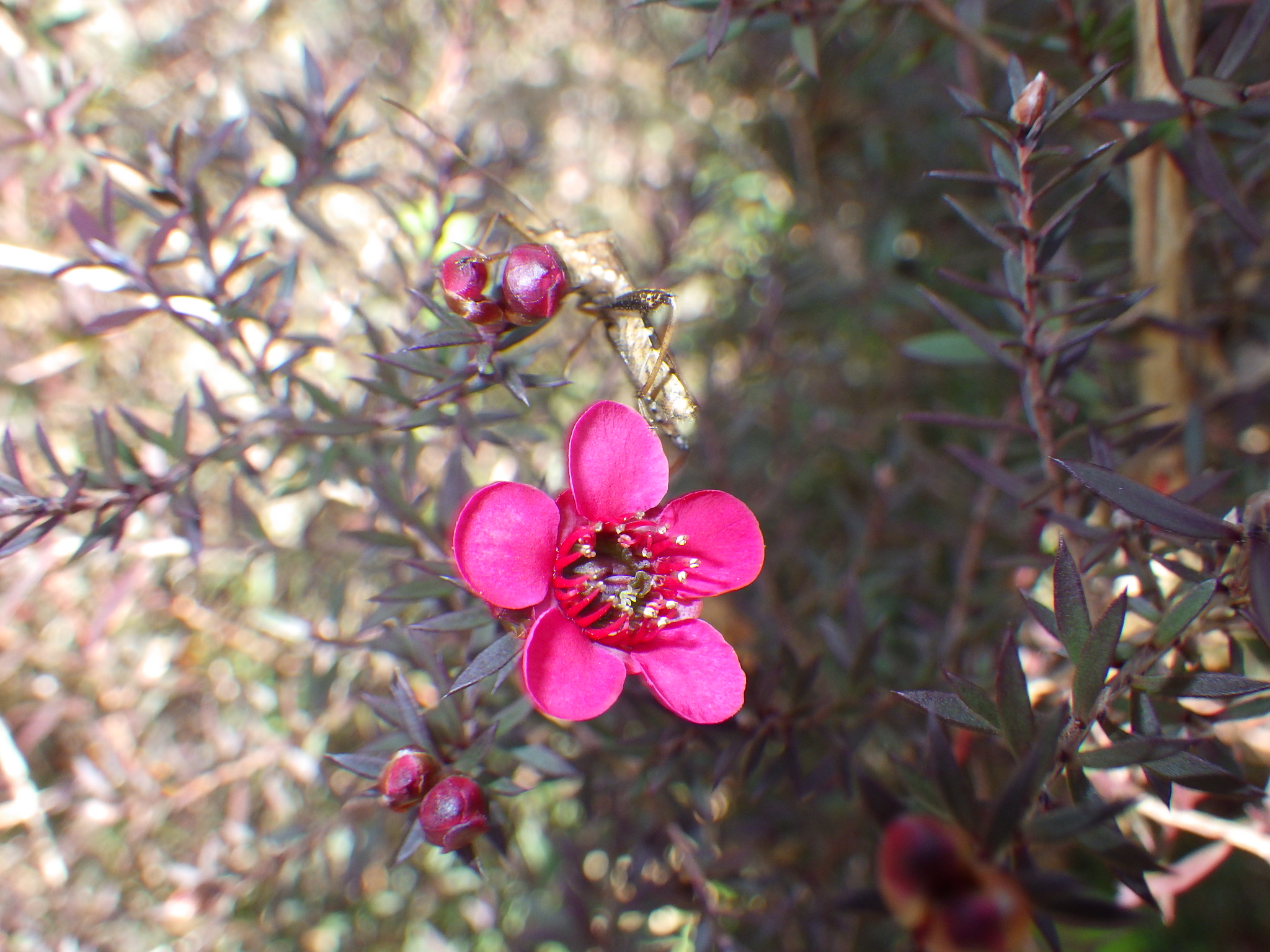
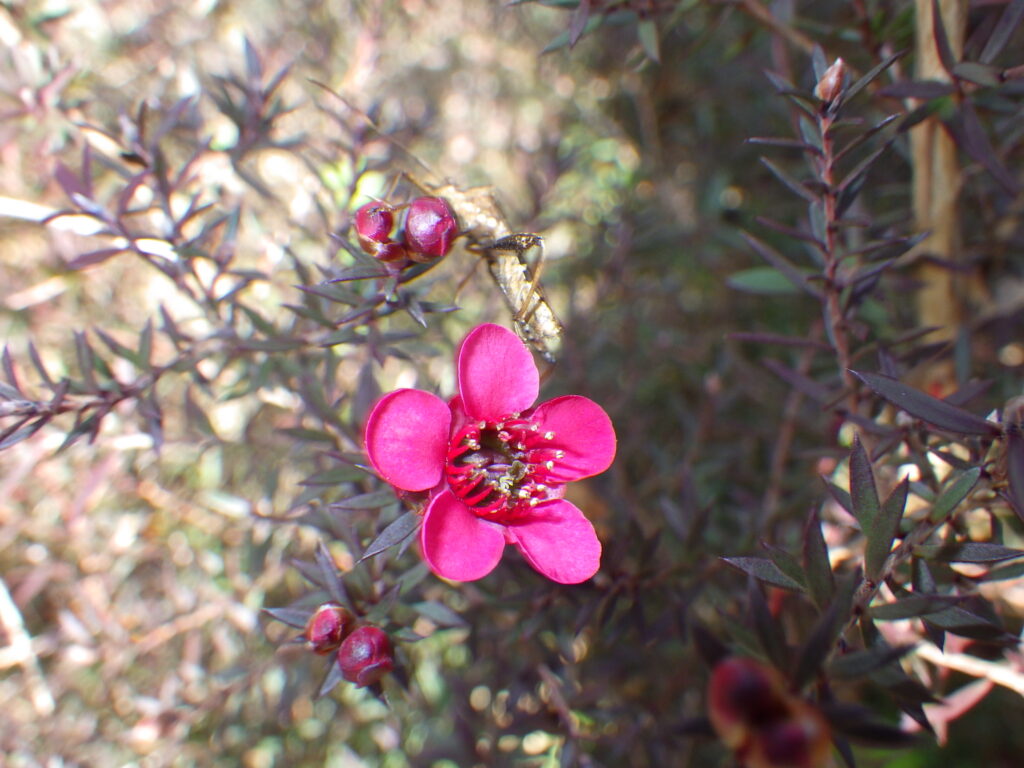
Leptospermum scoparium, also known as Manuka, Manuka Bush, Scoparium, Manuka Bush, or Nezumodoki, is a shrub or small tree native to southeastern Australia and New Zealand, and introduced to the United Kingdom (RBG Kew, 2025). In Japan, it is cultivated for ornamental purposes and used as a branch in ikebana (Japanese flower arrangement). Its name comes from the fact that its leaves resemble those of the Tamarix (Gyoryu) and its flowers resemble those of the Japanese plum (Ume).
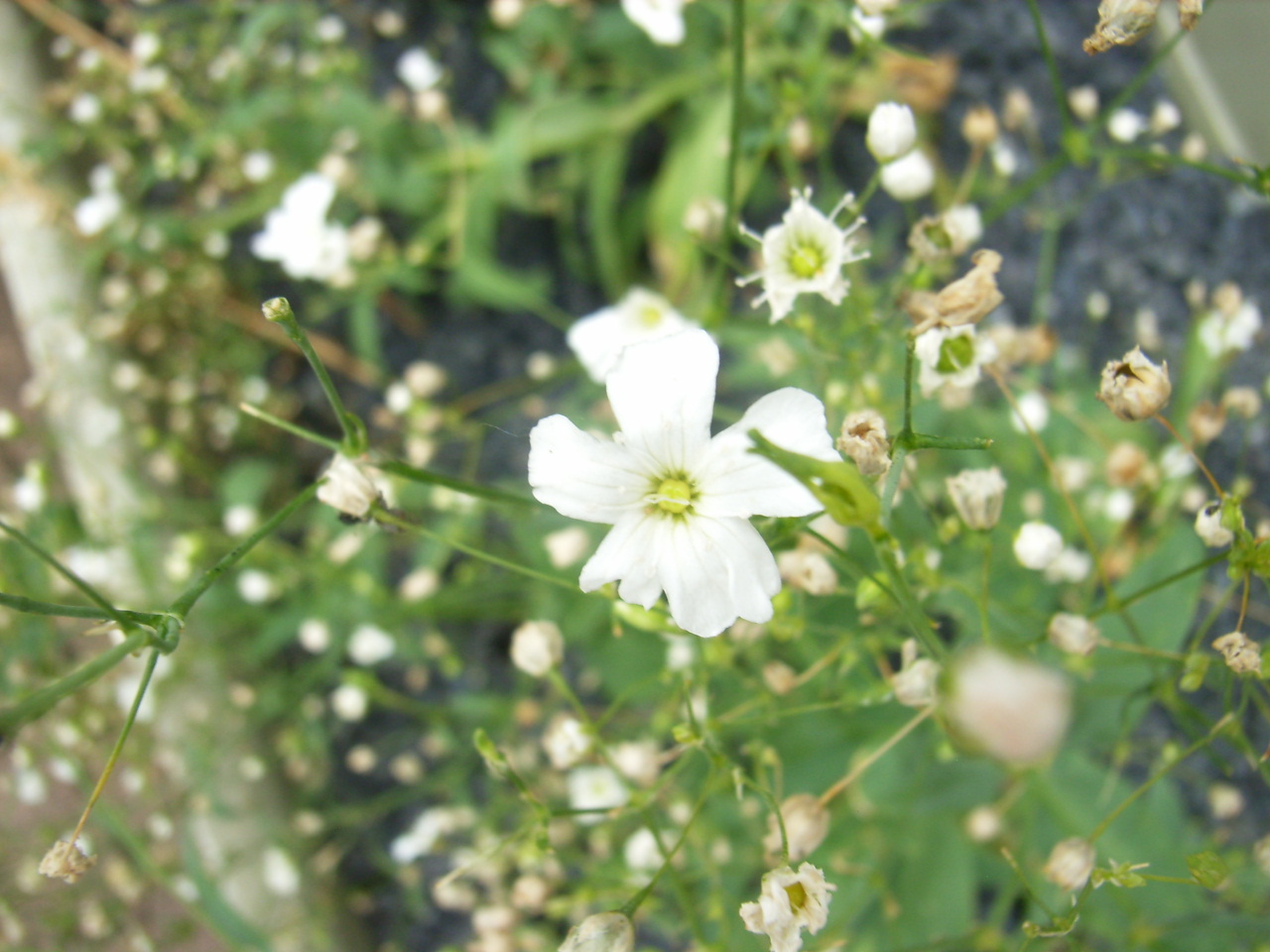
The wax flower , Chamelaucium uncinatum, also known as Geraldton's wax flower, is a shrub native to western Australia and introduced to Britain and New Zealand. In Japan, it is cultivated as an ornamental plant and used as a branch in flower arrangements. Its name comes from the waxy, glossy appearance of its flowers.
Both belong to the Myrtaceae family and are cultivated for ornamental purposes or used as branches in flower arrangements as they are part of the "native flowers" or "wildflowers" collectively known as "Australia" (Sotooka & Funakoshi, 1991). Their unique shapes, which are not commonly found in Japan, give them an exotic feel.
Furthermore, in the case of Leptospermum scoparium, some varieties are nectar-producing plants, and the nectar collected from the flowers by European honeybees is known as Manuka honey. Manuka is the Maori word for Leptospermum scoparium itself. Few people may be aware of this.
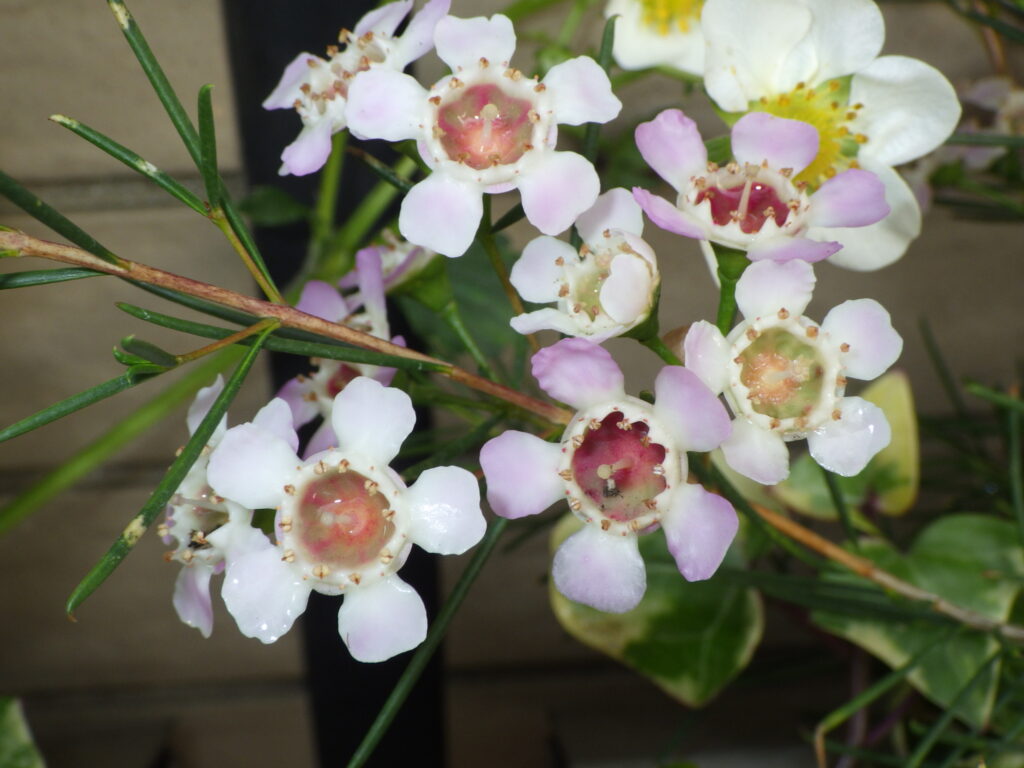
Morphologically, both species are shrubs with linear, sharp leaves and five petals. They also share similarities such as a central depression in the flower containing nectaries and a nectar disc, surrounded by stamens arranged in a ring.
The petals come in various colors, but since they can range from white to red, they are often confused and difficult to distinguish.
What is the difference between Leptospermum scoparium and waxflower?
The differences between Leptospermum scoparium and waxflower are evident in various aspects (Flora of North America Editorial Committee, 2021).
As a fundamental point, Leptospermum scoparium belongs to the genus Leptospermum, while waxflower belongs to the genus Cameraucium.
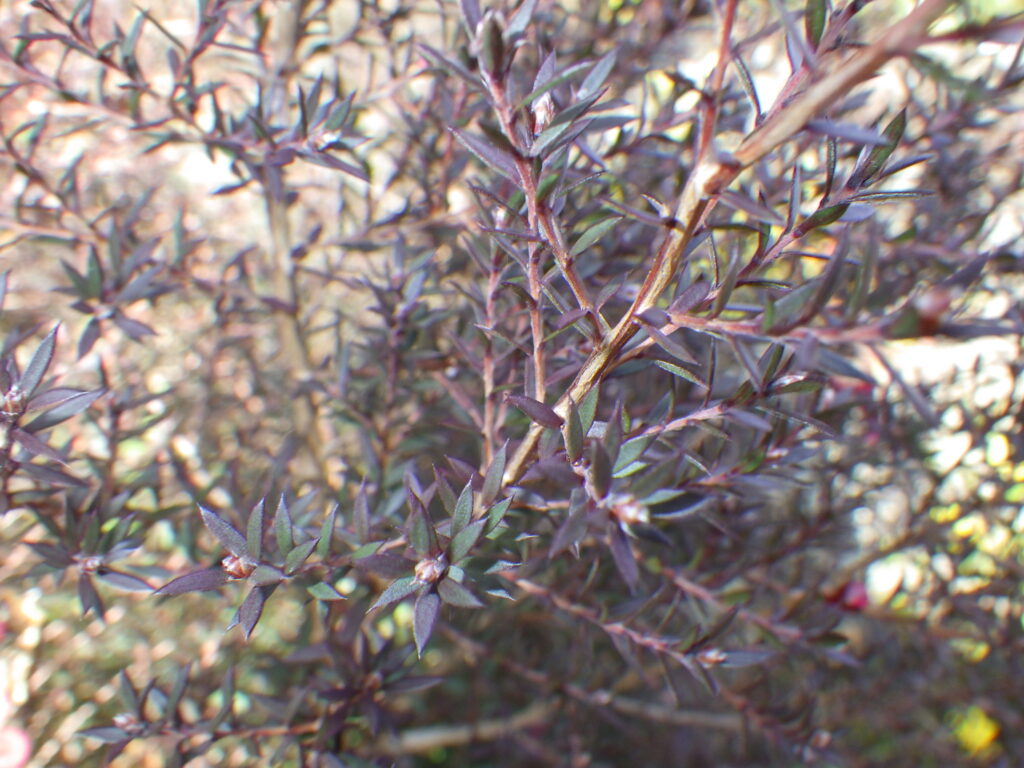
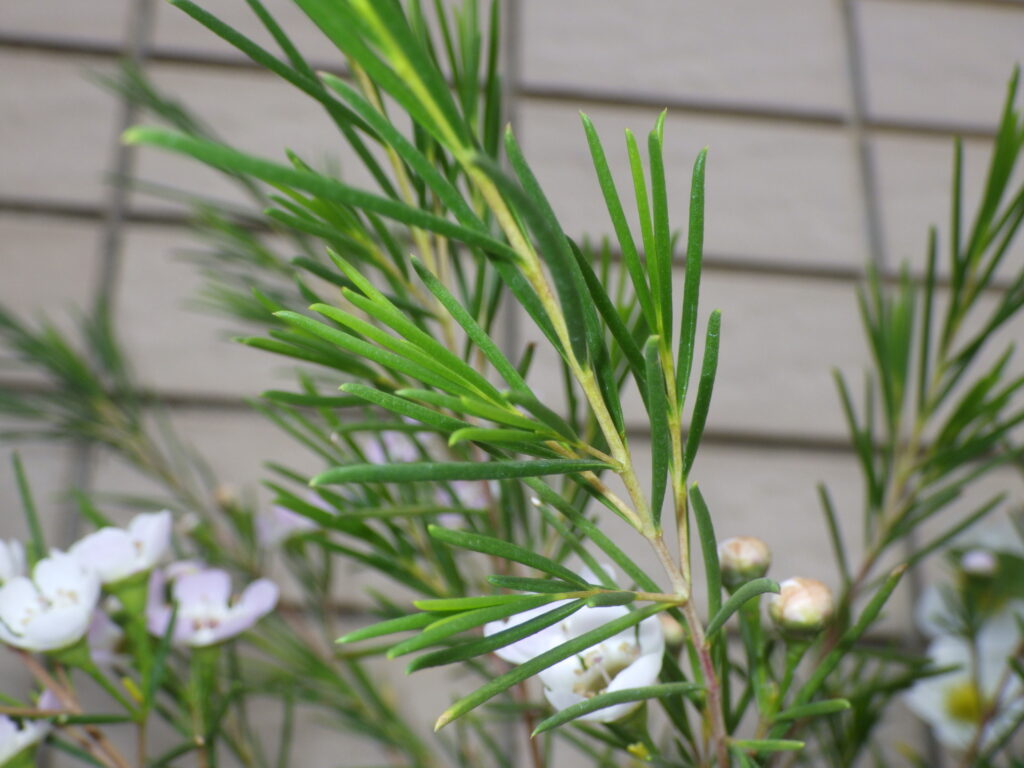
Morphologically, the first difference is that the leaves of Leptospermum scoparium are alternate, while those of waxflower are opposite.
In other words, in Leptospermum scoparium, the leaves are arranged alternately on the stem, while in waxflower, they are arranged facing each other.
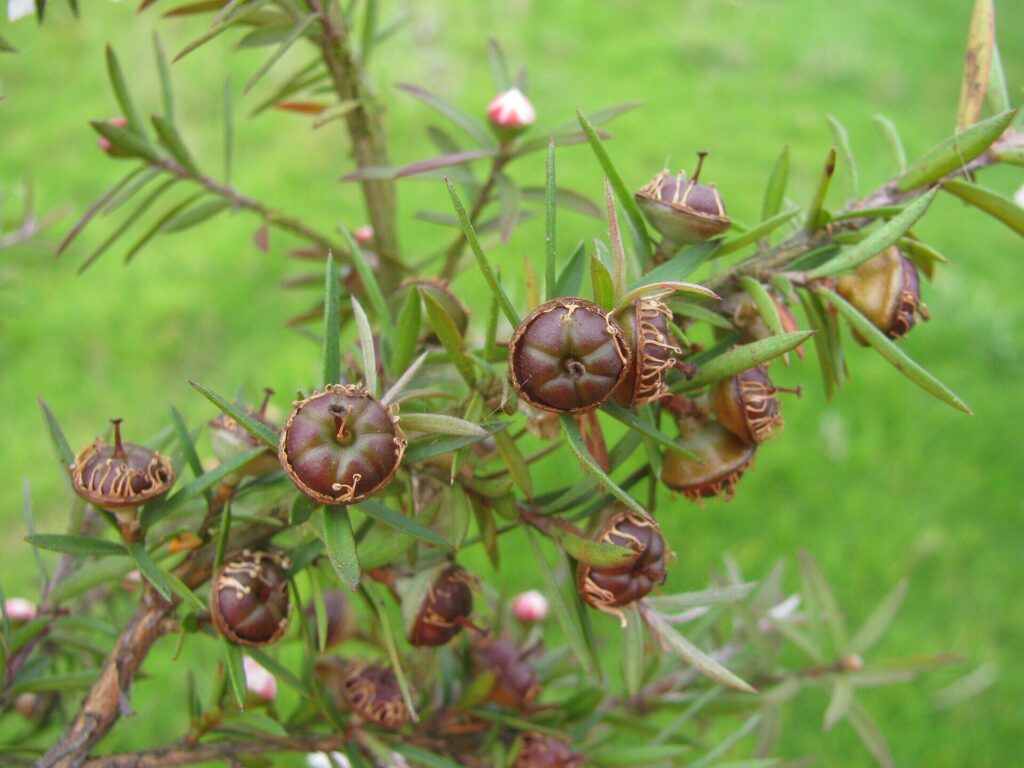
Furthermore, while both have long, narrow leaf blades with sharp tips, there is a difference: Leptospermum scoparium has broad, plate-like leaf blades, while waxflower has long, narrow, tubular leaf blades.
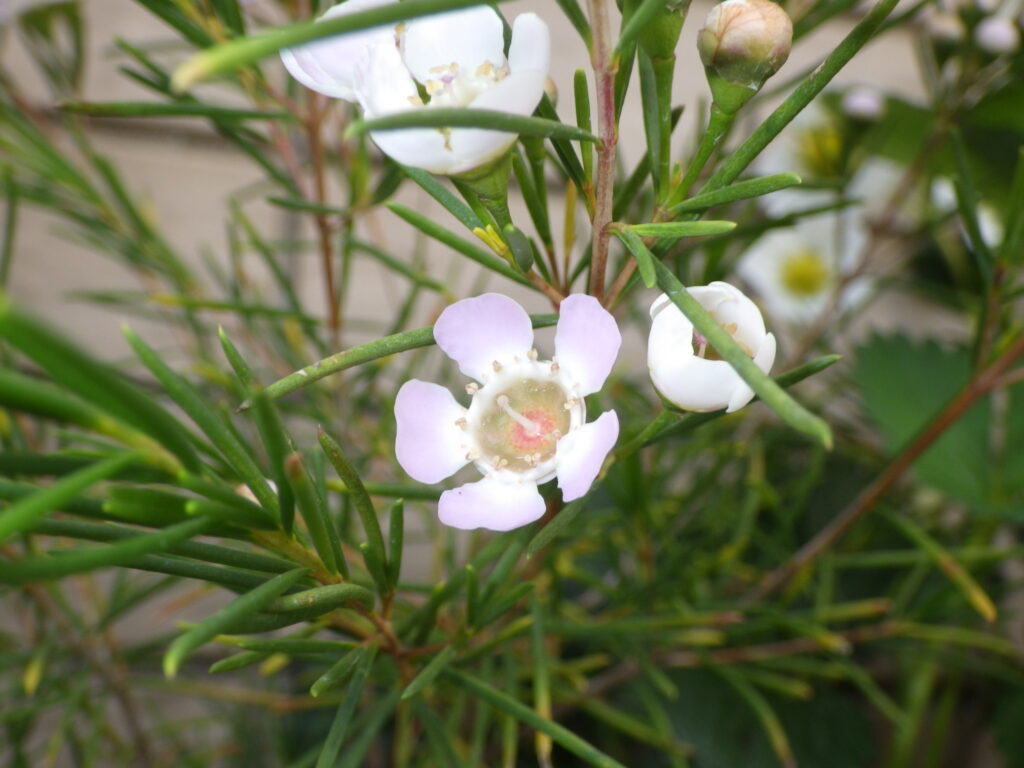
Regarding the flowers, there is a difference in that Leptospermum scoparium has no hairs on the style (the thin part below the stigma, which is the tip of the pistil), while waxflower has small hairs growing in a ring around the style just below the stigma.
If you carefully observe the pistil in the center of the flower, you'll notice that the differences are quite subtle.
In addition, Leptospermum scoparium has an ovary with 6 to 12 chambers and its fruit is a capsule that releases seeds when it dries, whereas waxflower has an ovary with 1 chamber and its fruit is nut-shaped, round, and remains hard even when dried. However, opportunities to observe this difference may be rare.
Does Manuka honey really have health benefits?
Manuka honey, made from the Leptospermum scoparium plant, contains methylglyoxal and other substances that provide antibacterial effects, and has recently become a very popular product due to its antibacterial properties and its prebiotic effect on regulating bowel function (Kato, 2019).
However, methylglyoxal itself is not present in the nectar of the Leptospermum scoparium flower; rather, its precursor, dihydroxyacetone, is present. Dihydroxyacetone, carried to the hive by bees along with the nectar, gradually transforms into methylglyoxal within the hive.
Leptospermum scoparium is becoming increasingly important in New Zealand, with serious efforts underway to cultivate and plant trees. Some researchers even predict that the area under cultivation for Manuka will reach 100,000 hectares in 10 years.
Does Manuka honey actually have any effect?
First, when used in the form of wound healing gauze or gel applied to the skin, its antibacterial activity is expected to protect against external infections while also accelerating healing.
On the other hand, if ingested orally, it may have an effect in the mouth, but methylglyoxal is almost entirely chemically digested and eliminated from the body, so it is incorrect to say that it "cures diseases throughout the body!"
The effects from the stomach to the small intestine are ambiguous. While it has been shown to kill H. pylori bacteria in the stomach in petri dishes, this has not been scientifically confirmed in the human body. Regarding the small intestine, there are conflicting results, with some showing no effect and others suggesting an effect on increasing beneficial bacteria.
However, since it certainly has antibacterial properties, there are undoubtedly situations where it can be used effectively, and it will likely continue to attract attention as an important plant in the future.
References
Flora of North America Editorial Committee. 2021. Flora of North America (Vol. 10 Magnoliophyta: Proteaceae to Elaeagnaceae). Oxford University Press, Oxford. 488pp. ISBN: 9780197576076
Kato, Yoji. 2019. Characteristics and functional properties of Manuka honey. Journal of the Japan Society of Home Economics 70(2): 97-101. https://doi.org/10.11428/jhej.70.97
RBG Kew. 2025. The International Plant Names Index and World Checklist of Vascular Plants. Plants of the World Online. http://www.ipni.org and https://powo.science.kew.org/
Sotooka, Shin and Funakoshi, Keiichi. 1991. A study on demand trends for branches and other edible plants. Research Report of Shizuoka Prefectural Agricultural Experiment Station 36: 11-16. https://agriknowledge.affrc.go.jp/RN/2010491099