toxicity

Sponsored Link
plant

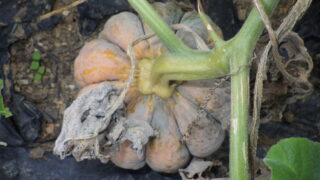
What are the differences between European pumpkins, Japanese pumpkins, and pepo pumpkins? European pumpkins are eaten in Japan, and Japanese pumpkins are eaten in the West! Were the fruits eaten by extinct animals!?

European pumpkins, Japanese pumpkins, and pepo pumpkins are all annual vining plants belonging to the Cucurbitaceae family, Cucurbita genus. Originally from the Americas, they are very popular in Japan, playing an important role in both everyday meals and Halloween celebrations. However, the three species are often confused, and their differences...
plant

Is it a myth that spices were used during the Age of Discovery to mask the smell of rotten meat? What was the real reason? Is it also a myth that they were used to improve preservation?

I originally have a science background, but I enjoy reading world history content. I came across something interesting in that context. It was the idea that spices (spices excluding stems, leaves, and flowers) don't have much antibacterial properties, and that "spices were used to mask the smell of rotten meat"...
animal

What are the differences, roles, functions, and ways to remember the stomachs of ruminants (tripe, honeycomb tripe, omasum, and abomasum)? Why did rumination evolve?

When you go to a yakiniku (Japanese barbecue) restaurant, you might see four parts of the cow's stomach (fore-stomach) listed as offal: mino, hachinosu, senmai, and giara. Because they have a distinctive taste and are internal organs, people either love them or hate them, but their chewy texture and compatibility with alcohol make them a popular choice...
plant

What's the difference between Japanese star anise (Illicium anisatum) and Japanese star anise (Illicium verum)? We'll explain how to distinguish between these similar species! Japanese star anise protects graves, while Japanese star anise protects life!?

Both Japanese star anise (Illicium anisatum) and Japanese star anise (Illicium verum) belong to the genus Illicium in the family Schisandraceae. They are evergreen plants with glossy leaves, and their most distinctive feature is their fruit: a follicle-like fruit consisting of eight follicles arranged radially. Both are considered very important plants both domestically and internationally...
plant

What are the differences between poppies, common poppies, and long-headed poppies? How do they differ from Icelandic poppies? We'll explain how to distinguish between similar species! Did humans themselves evolve the "Devil Fruit," which has both significant merits and demerits?

Poppies, including the common poppy, thick-flowered poppy, and long-headed poppy, all belong to the genus Papaver in the family Papaveraceae and are collectively known as poppies. They are very popular as ornamental plants due to their beautiful, large single flowers and are widely cultivated. However, despite being poisonous and prone to naturalization, they are difficult to identify...
game

List of meanings and origins of VALORANT character (agent) ability names

Are any of you playing VALORANT, the FPS game developed and operated by Riot Games? I recently started playing it little by little after a friend invited me. There are a lot of proper nouns in the game, and I've been having trouble remembering them all. I usually don't remember new proper nouns...
plant

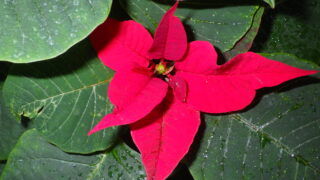
What are the differences between poinsettias, Epipactis thunbergii, and false Epipactis thunbergii? We'll explain how to distinguish between similar species! Is it a myth that poinsettias are poisonous?!

Poinsettias, Euphorbia hederacea, and Euphorbia leucocephala all belong to the Euphorbia genus of the Euphorbiaceae family. While widely cultivated for ornamental purposes, they also sometimes become naturalized. Their most striking feature is their bright red or white, conspicuous petal-like "bracts"...
plant

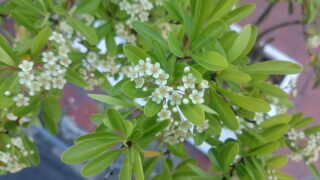
What are the differences between Pyracantha coccinea, Pyracantha japonica, and Pyracantha sulphurea? We explain how to distinguish between similar species! Is it a myth that Pyracantha causes sudden death in waxwings?

Pyracantha coccinea, Pyracantha japonica, and Pyracantha serrulata all belong to the genus Pyracantha in the Rosaceae family. They are characterized by their bright red berries that appear in winter and are frequently cultivated for ornamental purposes. In horticulture, however, this group is collectively referred to as "Pyracantha" or "Pyracantha" based on its genus name...
plant

What are the differences between Ipheion uniflorum, Ipheion leek, and Ipheion japonica? We'll explain how to distinguish between similar species! Are they edible?

All three species—Ipheion uniflorum, Allium sibiricum, and Allium sibiricum—belong to the Amaryllidaceae family, Allioideae subfamily, and share the name "nira" (leek). They are common perennial plants found in fields and urban areas. However, their confusing names can make it difficult for those unfamiliar with these three species to distinguish between them...
plant

What are the differences between Lycoris radiata (Red Spider Lily), Lycoris radiata var. alba, Lycoris radiata var. alba, and Lycoris radiata var. alba? An explanation of how to distinguish between similar species.

Lycoris radiata (red spider lily), Lycoris radiata var. alba, Lycoris radiata var. alba, and Lycoris aurea are all perennial plants belonging to the Lycoris genus of the Amaryllidaceae family. They are very familiar to Japanese people due to their toxicity and the clusters of flowers they produce in autumn. However, there are many varieties...
Sponsored Link