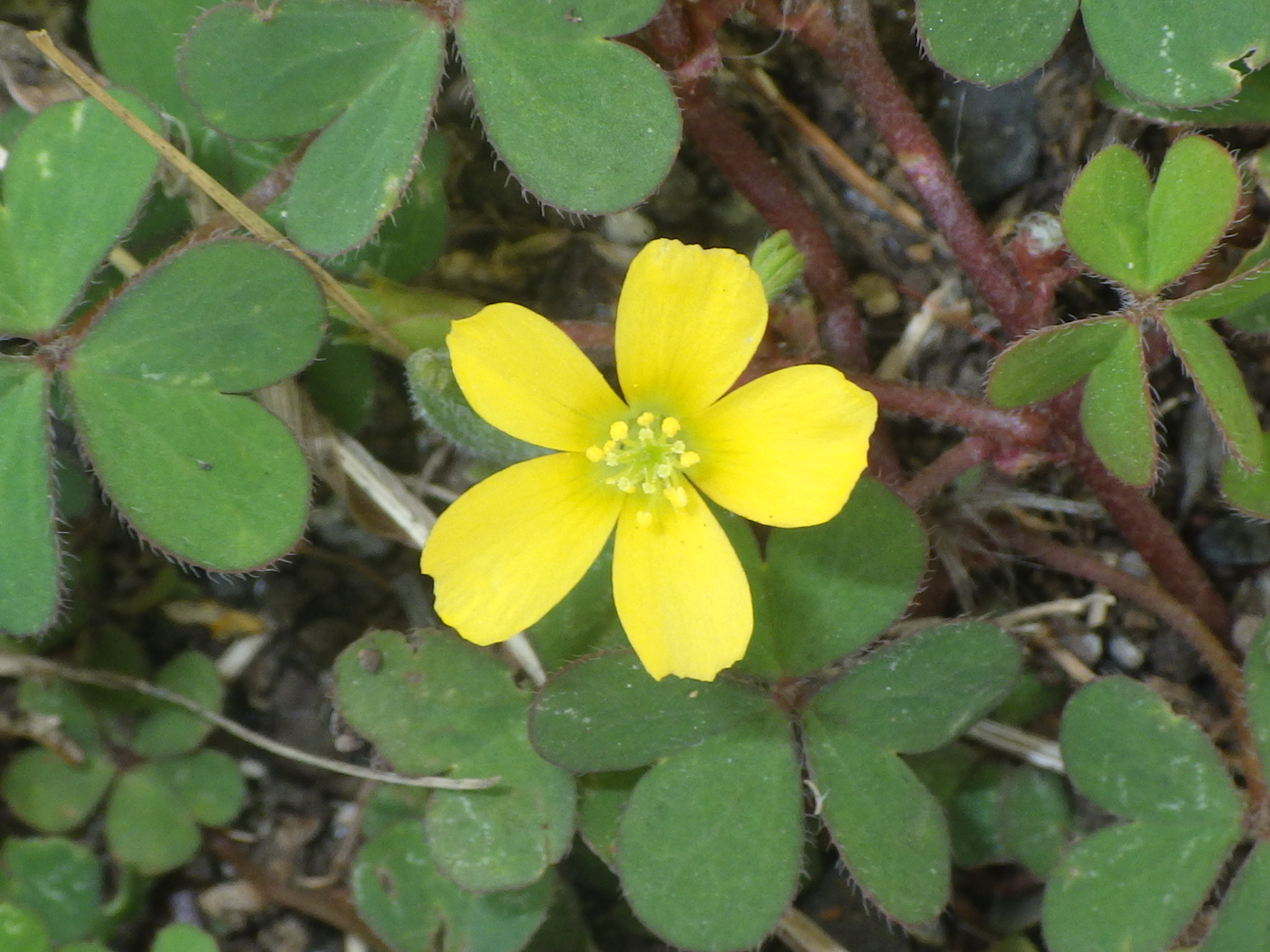
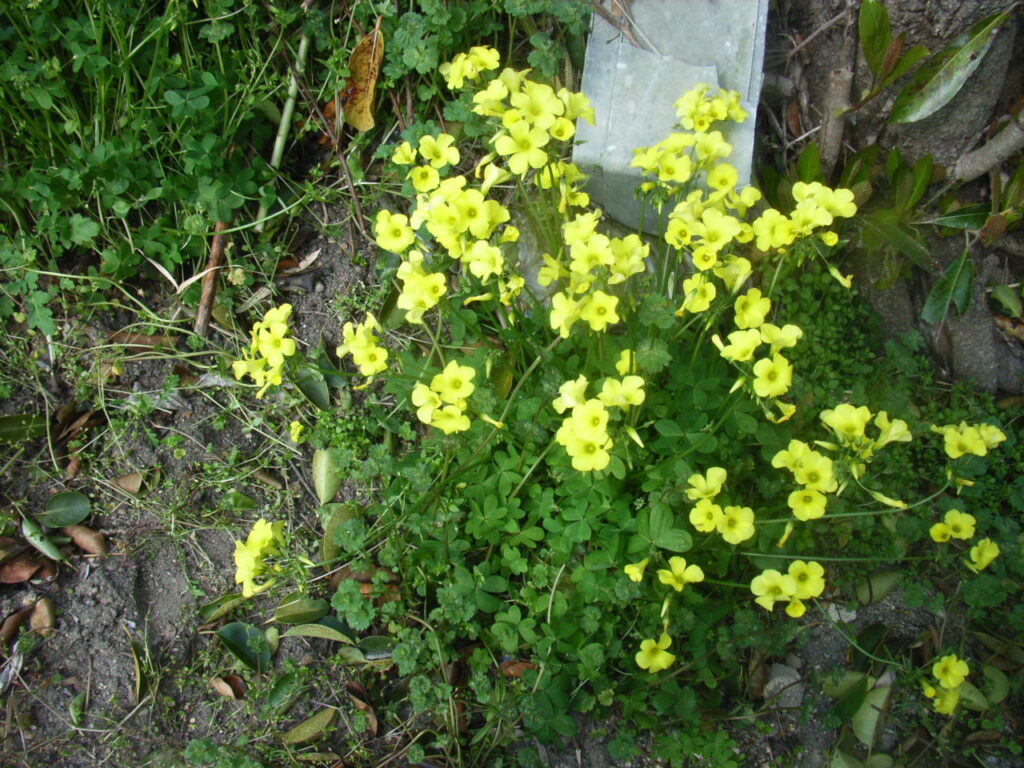
Oxalis, Oxalis corniculata, and Oxalis sulphureus all belong to the genus Oxalis in the family Oxalidaceae, and are among the yellow-flowered varieties of the vast Oxalis genus. They are extremely common species and are so hardy that they can grow even in cracks in concrete in urban areas, and have been appreciated in Japan since ancient times, even being chosen for family crests. However, with the invasion of invasive species, more and more people may be having trouble distinguishing between the three species. While Oxalis sulphureus is easy to distinguish, Oxalis and Oxalis corniculata are quite difficult to distinguish without practice, and Oxalis includes a very similar variety called "Oxalis corniculata var. japonica," which can be confusing. There are various differences, but I think they can be distinguished by the way the leaves grow. This article will explain the classification and morphology of the yellow-flowered Oxalis species.
What are Oxalis, Standing Oxalis, and Large-flowered Oxalis?
Oxalis corniculata is a perennial herb widely distributed in tropical to temperate regions of Japan, including Hokkaido, Honshu, Shikoku, Kyushu, and the Ryukyu Islands, and commonly grows along roadsides, in vacant lots, and in farmland (Kanagawa Prefecture Flora Survey Association, 2018).
Oxalis dillenii, native to North America, has naturalized in various parts of Japan (west of the Kanto region) and is a perennial plant that grows along roadsides and in vacant lots.
Oxalis pes-caprae, also known as yellow-flowered wood sorrel, is a perennial plant native to Africa that has naturalized widely in tropical and subtropical regions. It was introduced to Japan in the mid-Meiji period as an ornamental plant, and began to naturalize in southern Kyushu in 1961, and subsequently spread to central Honshu and further south.
All of these belong to the genus Oxalis in the family Oxalidaceae, and among the vast Oxalis genus, they are characterized by their obovate leaflets, rounded corners, and yellow flowers.
In the wild, they bloom all at once in the spring, especially in the morning. They are extremely hardy and can easily grow even in cracks in urban concrete.
Furthermore, because wood sorrel contains oxalic acid, it causes sourness and crystallization, and is highly resistant to damage from mammals and herbivorous insects (Mustapha, 2024). The English name for oxalic acid, "oxalic acid," is derived from the scientific name of the genus Oxalis. It was named after the fact that this acid was first isolated and extracted from the leaves of wood sorrel. However, it is also famous as the food plant of the Japanese grass blue butterfly, Zizeeria maha, which is resistant to oxalic acid.
In addition, oxalic acid has been shown to play roles in regulating and storing calcium, adjusting intracellular ion balance and pH, regulating the light environment, participating in the carbon cycle, and detoxifying toxins and heavy metals (phytoremediation).
The fact that wood sorrel can grow even on concrete in urban areas is largely due to the oxalic acid it contains, which crystallizes and sequesters cadmium (Cd), lead (Pb), and zinc (Zn), contributing to its survival in urban environments and contaminated soil.
In humans, the sour taste of oxalic acid has been highly valued and used for food and medicinal purposes, mainly in Asia (Zhong et al., 2025).
Furthermore, due to its durability, it has been used in Japan as a family crest, known as the wood sorrel crest or oxalis crest, as a symbol of prosperity and the fertility of descendants. The family crest of the Tosa Chosokabe family, including the Sengoku period warlord Chosokabe Motochika, is a prime example. It is sometimes mistaken for the leaves of white clover.
Thus, while it is a very familiar and traditional plant for Japanese people, the wide range of environmental variations in wood sorrel and the invasion of non-native species can lead to confusion in identification.
What are the differences between Oxalis, Oxalis corniculata, and Oxalis serrata?
What are the differences between Oxalis corniculata, Oxalis sulphureus, and Oxalis sulphureus var. japonica?
First, *Oxalis sulphureus* can be distinguished relatively easily (Kanagawa Prefecture Flora Survey Association, 2018).
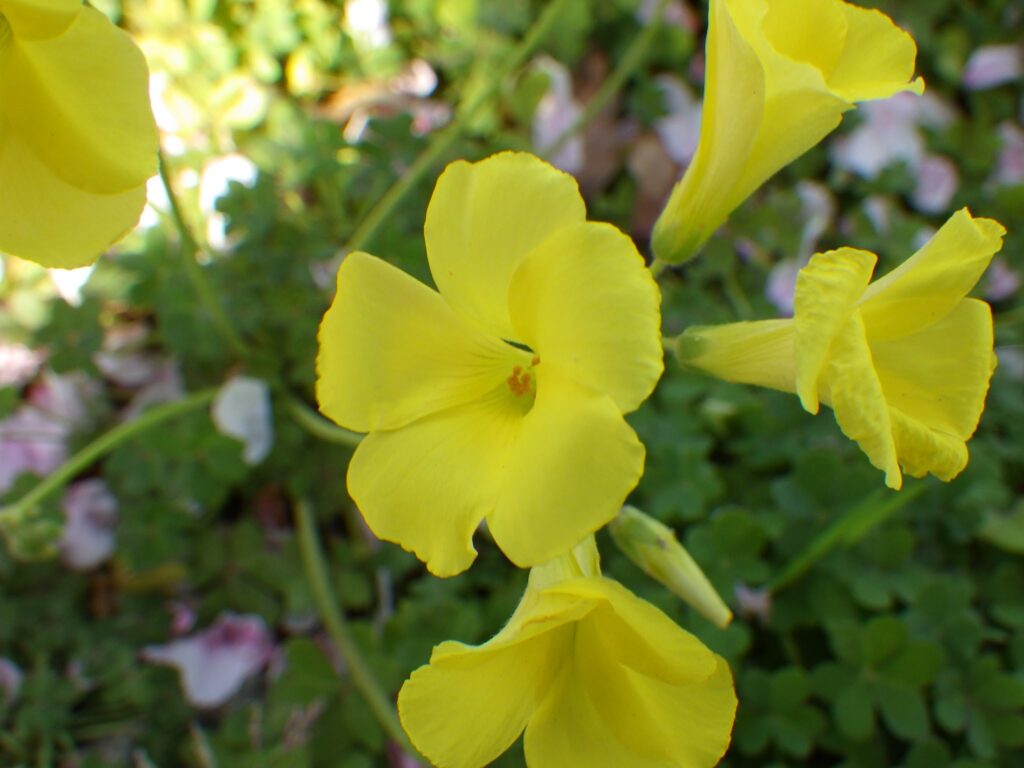
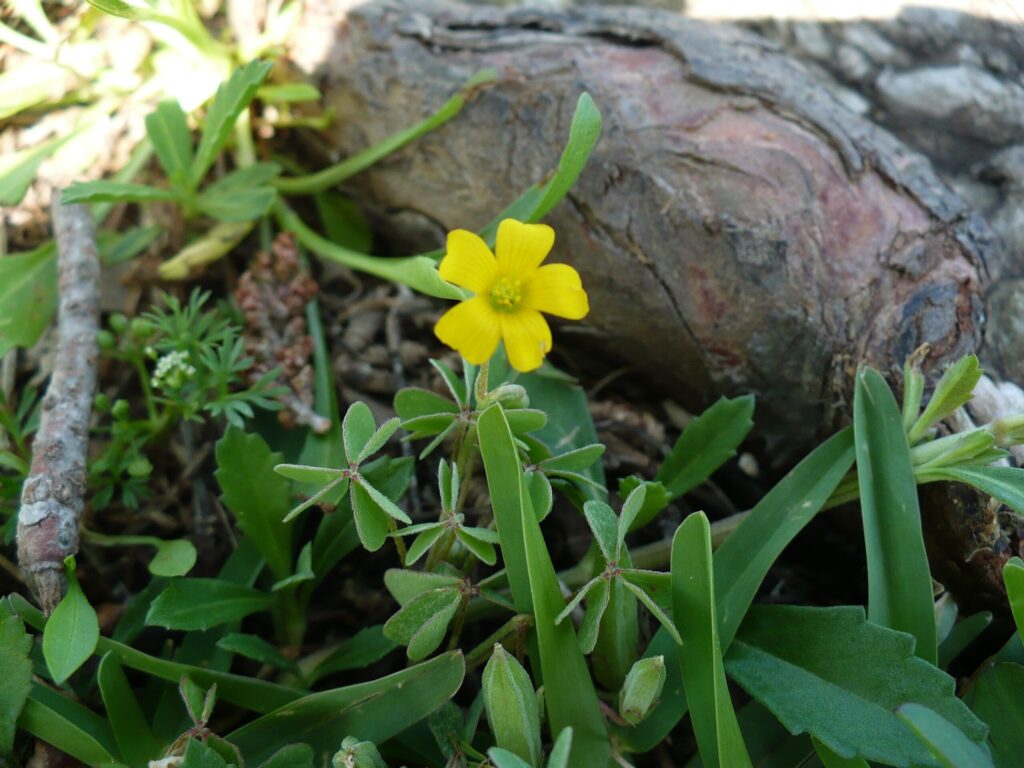
While Oxalis and Oxalis corniculata have alternate leaves and above-ground stems, and their flowers are less than 1 cm in diameter, Oxalis sulphureus lacks above-ground stems and its flowers are 2 cm or larger in diameter, these are the key differences.
However, with wood sorrel, it's normal not to see a stem if the plant hasn't fully grown.
Large-flowered wood sorrel is noticeably larger and has more upright leaves compared to wood sorrel and upright wood sorrel. This is a better way to distinguish it.
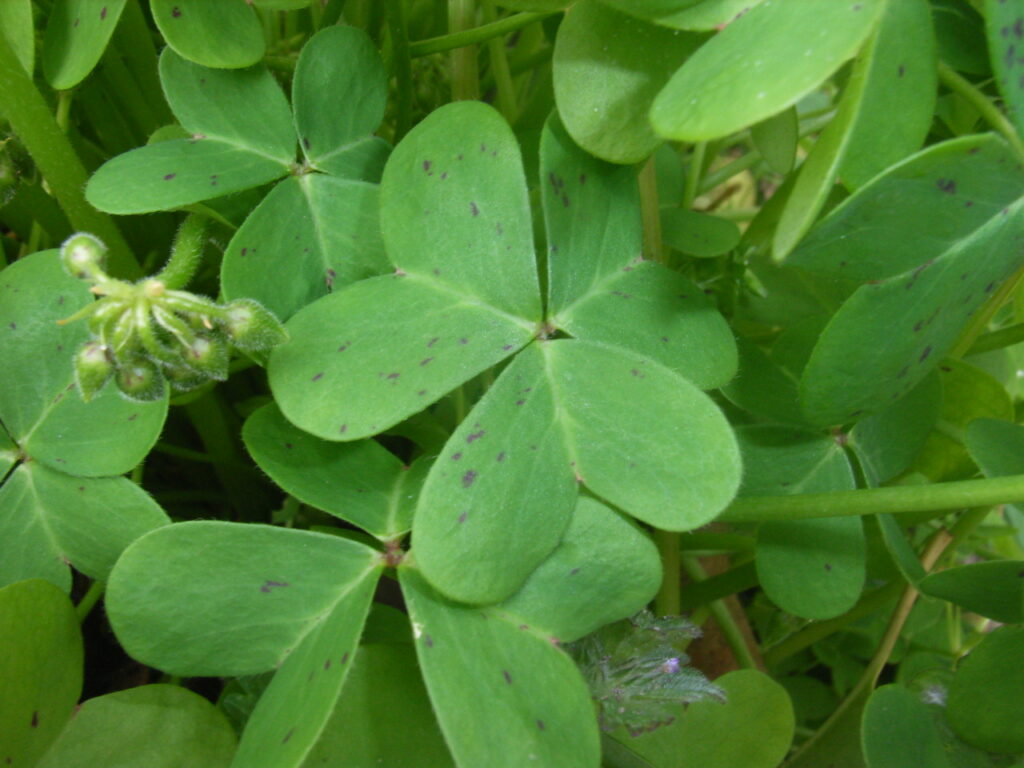
What is the difference between Oxalis (Oxalis acetosella) and Oxalis corniculata?
On the other hand, there are some rather confusing aspects between Oxalis and Oxalis corniculata (Kanagawa Prefecture Flora Survey Association, 2018).
Many people, in particular, may not know the difference between this plant and Oxalis corniculata f. erecta, a variety of Oxalis corniculata. The names "Tachikatabami" (standing wood sorrel) and "Otachikatabami" (standing wood sorrel) reflect the historical circumstances of their discovery, but they can be quite confusing for the general public.
First, regarding Oxalis corniculata, it is simply one of the ecological forms of Oxalis that grows at the edge of forests and within woodlands. It is a minor change resulting from the plant seeking light for photosynthesis, and there is nothing particularly different about it from Oxalis other than its stem being upright.
On the other hand, Oxalis corniculata is an introduced species that is distinct from Oxalis at the species level, and it is generally thought that it does not hybridize and produce seeds.
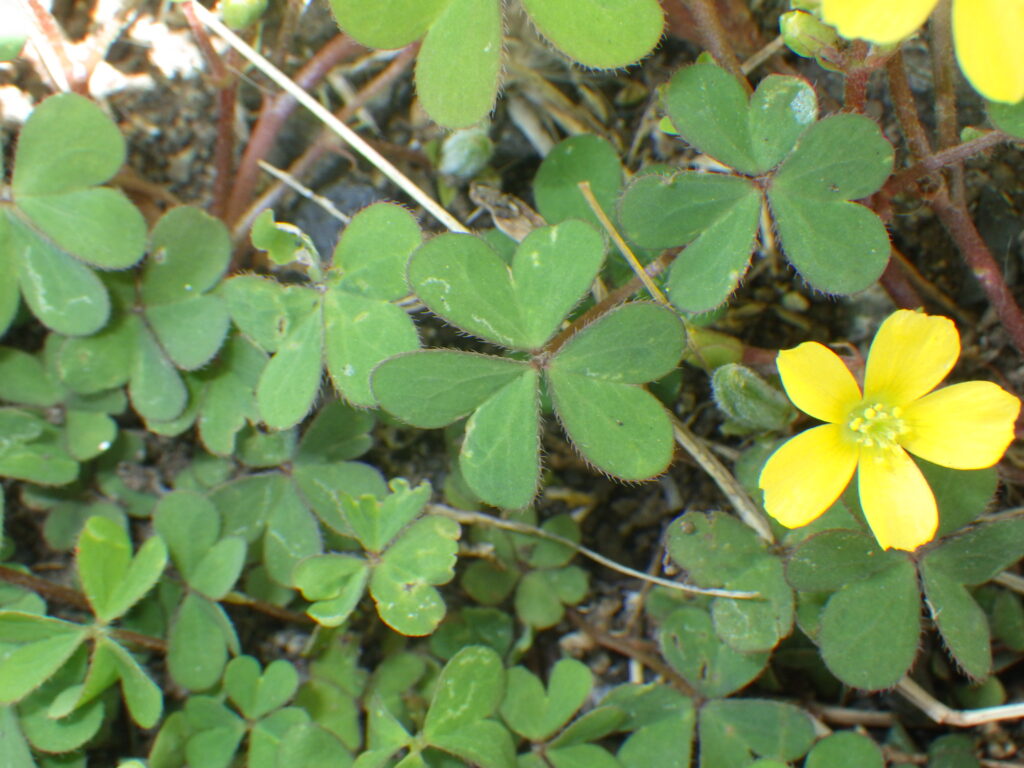
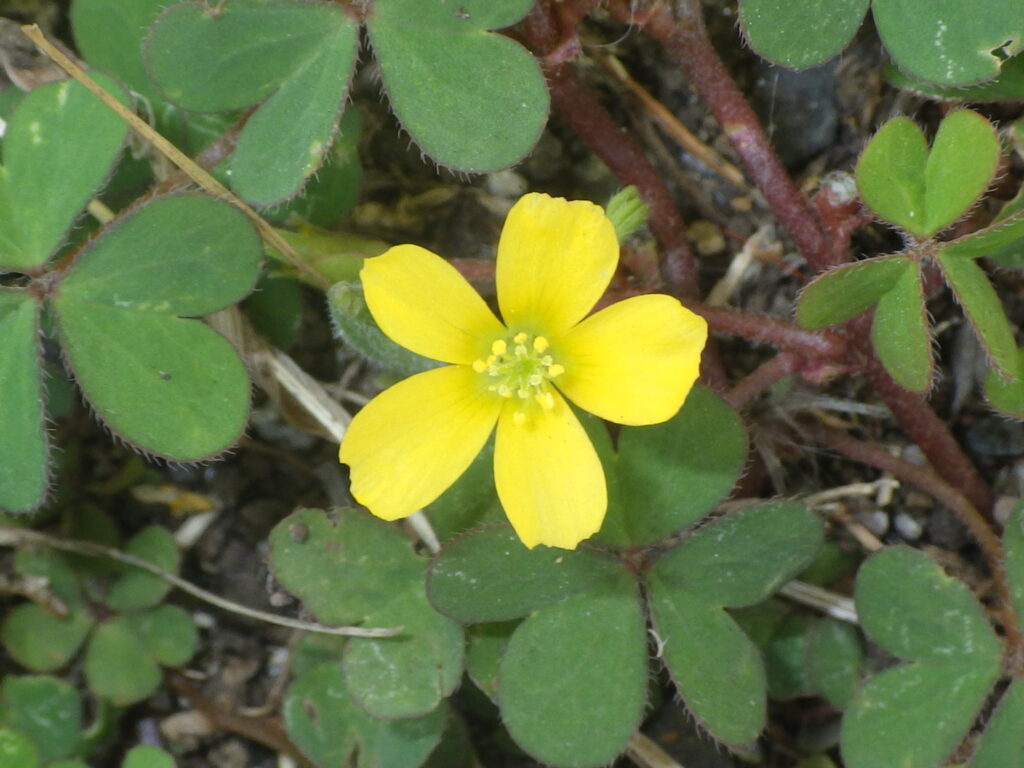
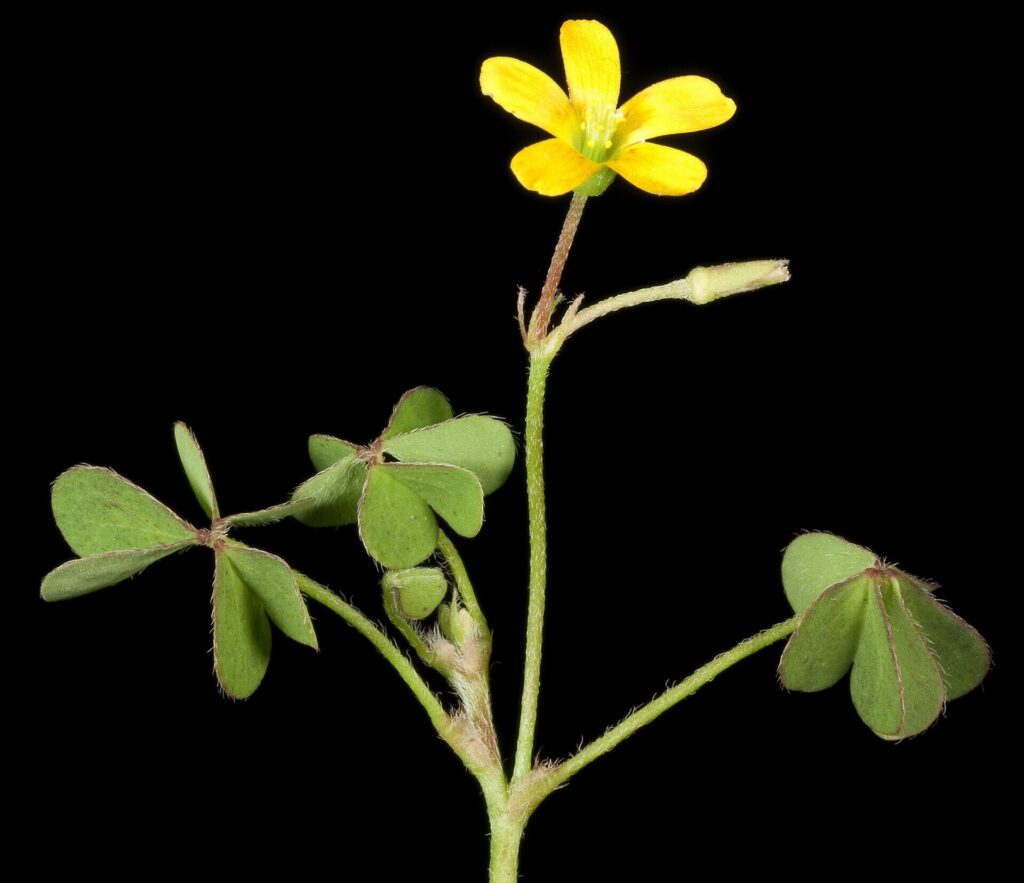
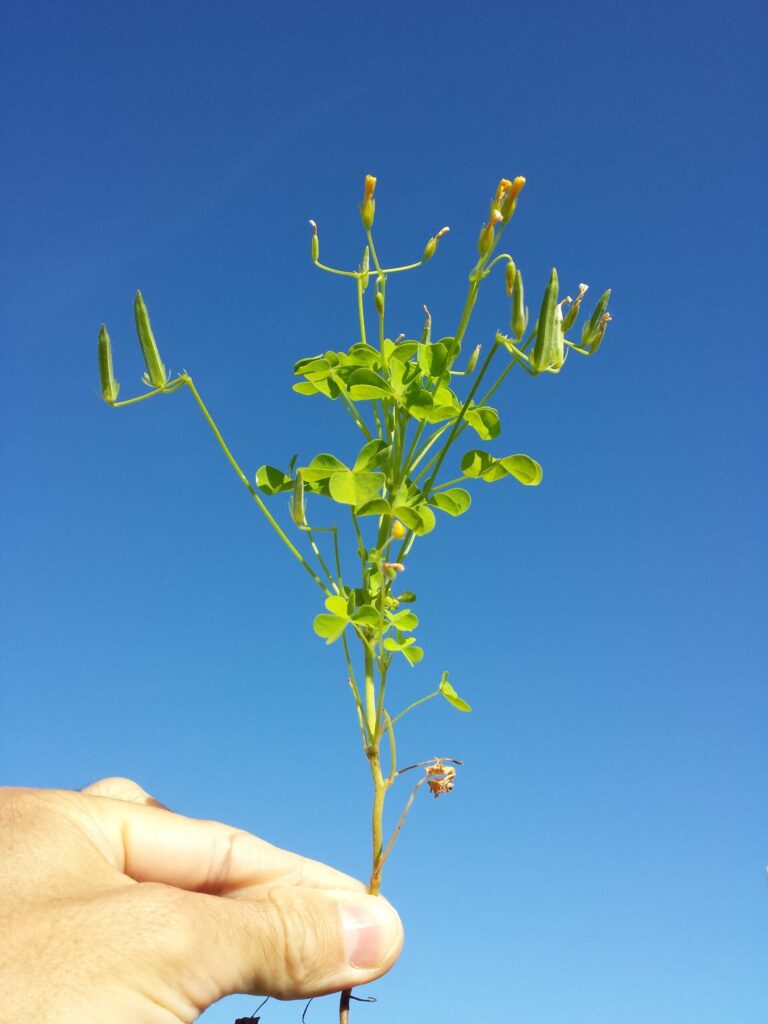
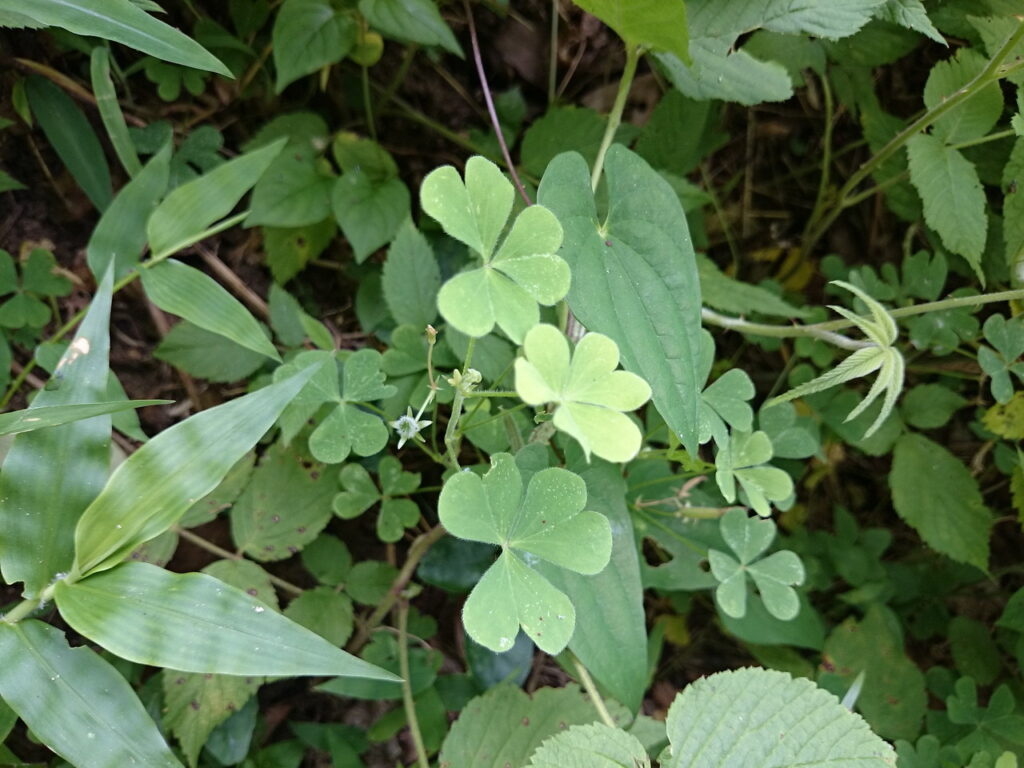
In terms of specific differences, in Oxalis corniculata and Oxalis serrata, the leaves are scattered all over the stem, the stem is generally slender, the hairs on the edges of the leaves are long and erect, and the seed ridges are not white, whereas in Oxalis corniculata, the leaves are clustered in 2-3 places on the stem, the stem thickens at each node towards the base, the hairs on the edges of the leaves are curved, and the seed ridges are white.
It's difficult to explain the descriptions in this botanical guide in simple terms, but I think it's best to assume that if only one leaf is growing from the base of one leaf, it's either Oxalis or Oxalis sulphureus, and if multiple leaves are growing from the base of one leaf, it's Oxalis gracilis.
Furthermore, the phrase "the stem thickens" refers to the fact that the stems of Oxalis corniculata are sturdy and robust.
The information about the hairs on the leaf margins might be helpful, but the degree of curvature is quite abstract, and personally, I don't really understand it clearly. Perhaps the hairs are longer and more noticeable in Oxalis and Oxalis rotundifolia.
What are the differences between Oxalis acetosella and Oxalis verna? Why is Oxalis acetosella red?
In addition to the aforementioned Oxalis corniculata, there are also varieties called Oxalis corniculata var. japonica and Oxalis corniculata var. japonica.
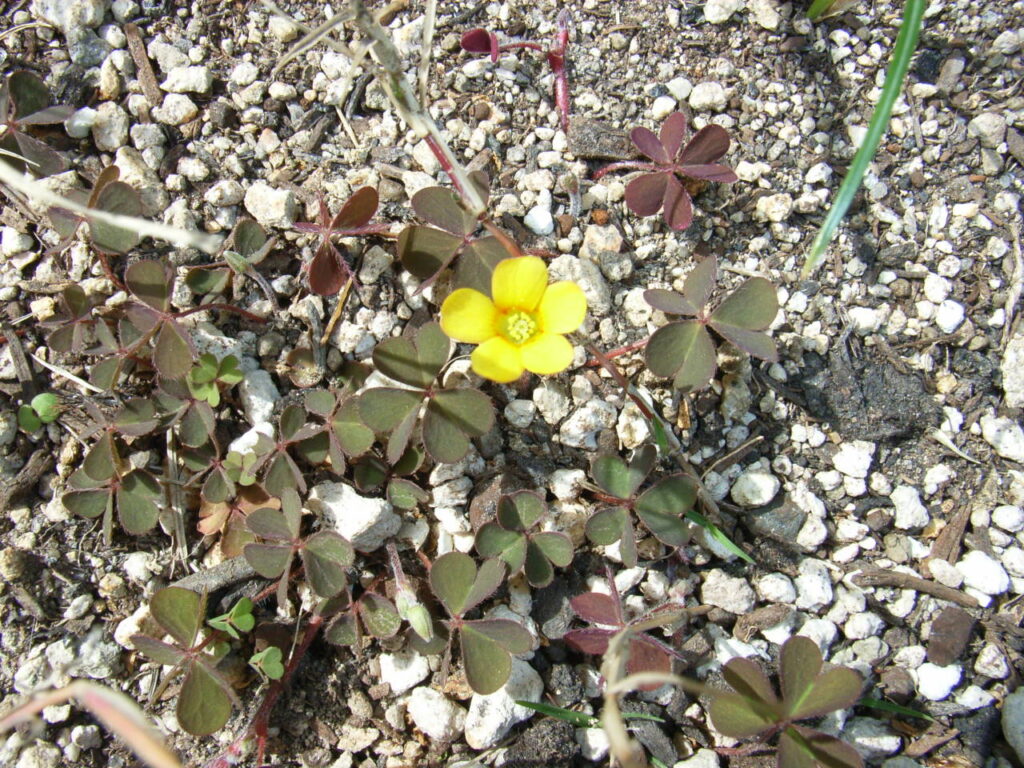
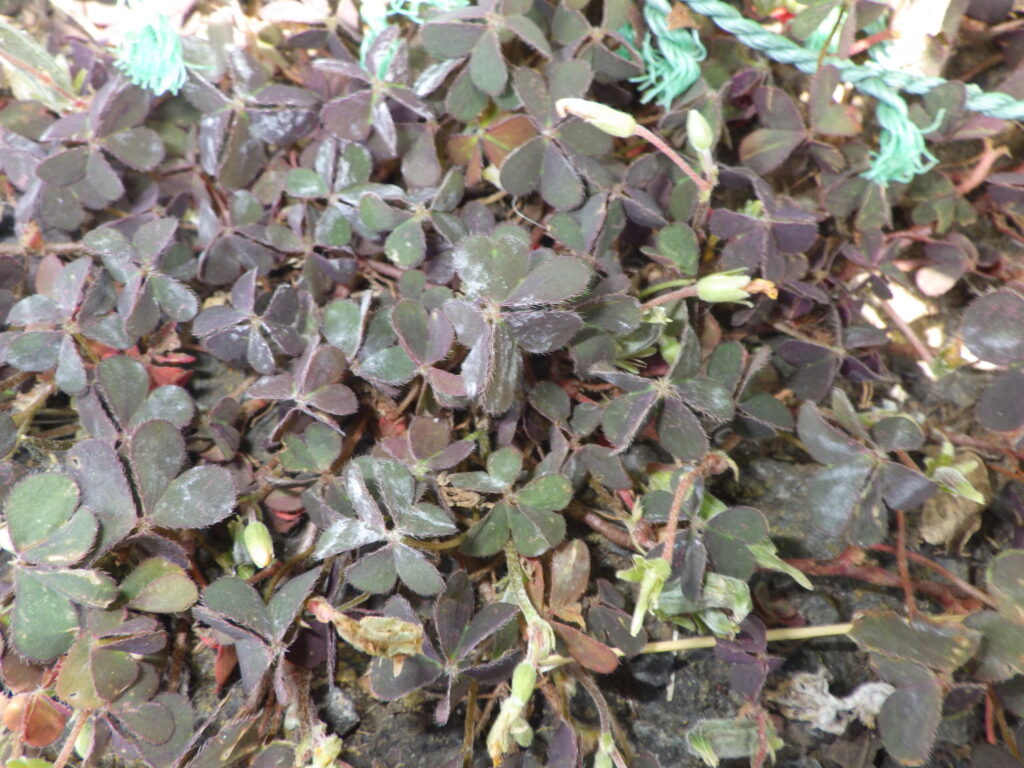
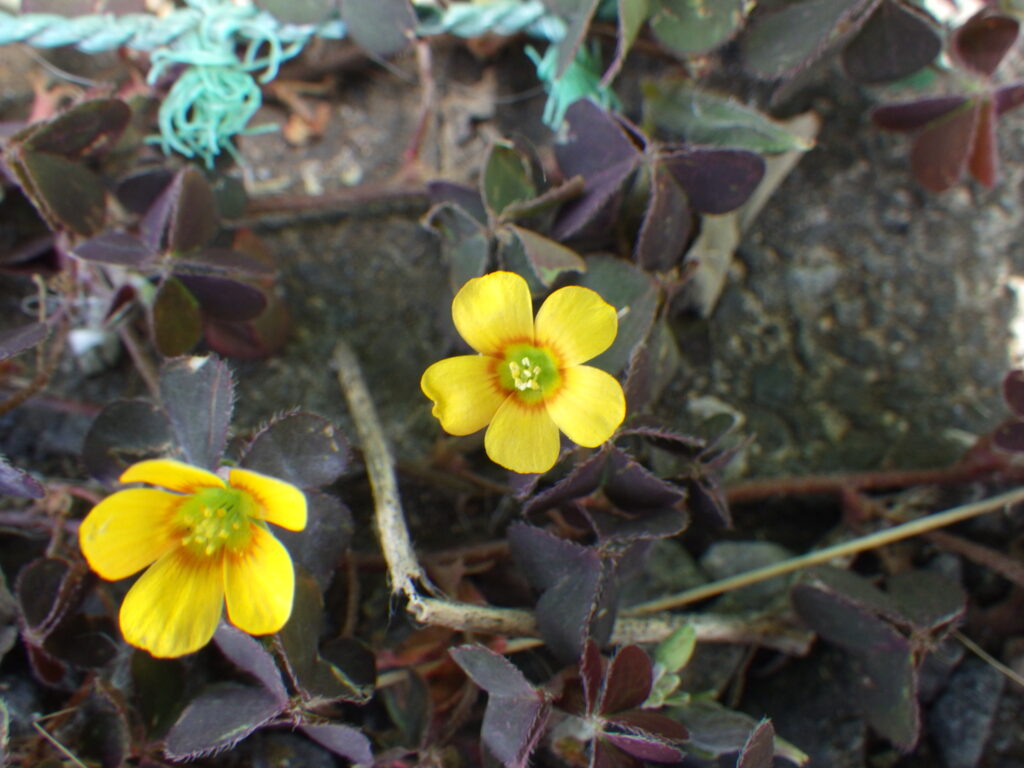
Oxalis rubrifolia is small overall, with reddish-yellow flowers and conspicuous dark reddish-purple leaves and stems.
Oxalis corniculata f. atropurpurea has lighter stems and leaves than Oxalis acetosella, with a dull greenish-purple color. The flower color is said to be intermediate between Oxalis acetosella and Oxalis acetosella, with a range of shades.
However, this variation has a gradient, and there are quite a few individuals that are difficult to distinguish between the two. I have never seen a wood sorrel that is completely red all over; most are partially green, and I am not sure whether that is called red wood sorrel or light red wood sorrel.
Recent research has shown that the reason why red wood sorrel and light red wood sorrel turn red is to adapt to the heat stress caused by the urban heat island effect (Fukano et al., 2023). In other words, the red pigment anthocyanin blocks light and acts as an antioxidant to prevent heat damage.
Considering this, it's probably not very essential to rack your brain over whether it's "red wood sorrel" or "pale red wood sorrel."
Are there any other similar species?
Many other varieties of wood sorrel (Oxalis corniculata) are known.
Oxalis corniculata f. plena is a double-flowered variety with 10 sepals and 10 petals.
Oxalis corniculata var. trichocaulon is a plant with many hairs throughout, including on the upper surface of its leaves. It is usually found scattered along the coast, but can also be found inland, and the amount of hair varies, making it difficult to distinguish from Oxalis corniculata.
Oxalis corniculata f. pleiopetala is a double-flowered variety of Oxalis corniculata that possesses the characteristics of the common wood sorrel.
A completely separate species, Oxalis stricta, is also known, distributed in Hokkaido, central Honshu, East Asia, Europe, and North America, growing along roadsides, grasslands, and forest edges in mountainous areas. It is very similar to Oxalis serrata, but differs in that its stipules are not clearly defined, it has fewer flowers, the upper surface of its leaves is hairy, its pedicels do not point diagonally downwards, and it has many ridges on its seeds.
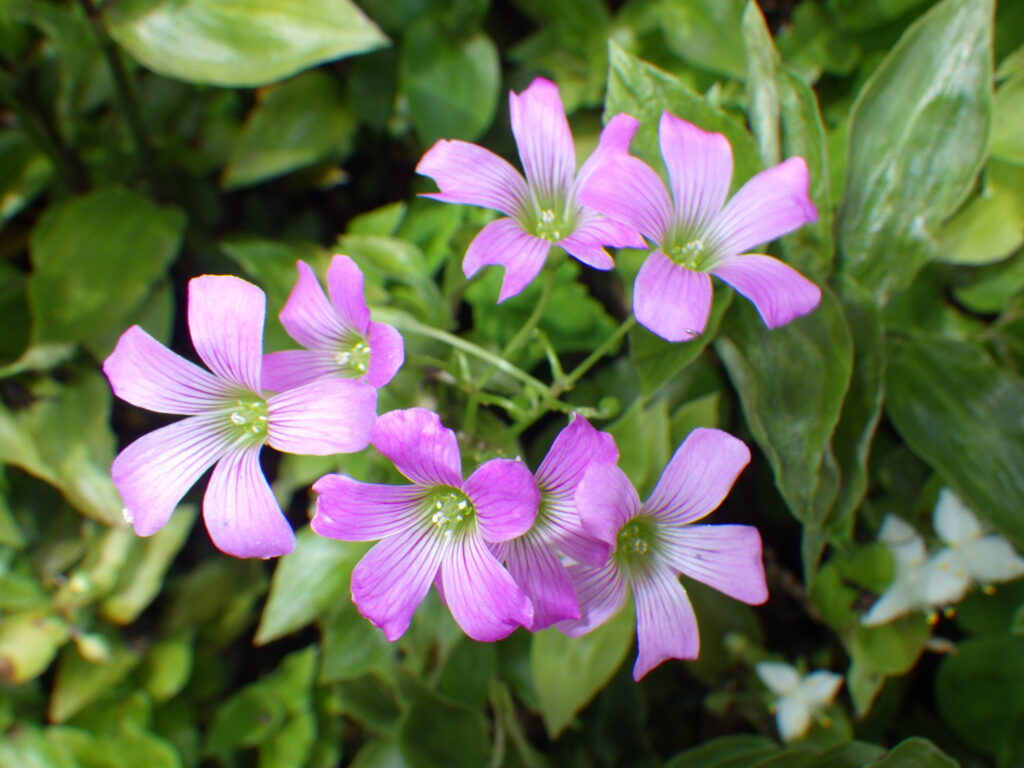
For information on Oxalis species with red flowers, please see the separate article.
References
Fukano, Y., Yamori, W., Misu, H., Sato, MP, Shirasawa, K., Tachiki, Y., & Uchida, K. (2023). From green to red: Urban heat stress drives leaf color evolution. Science Advances, 9(42), eabq3542. https://doi.org/10.1126/sciadv.abq3542
Kanagawa Prefecture Flora Survey Association. (2018). Kanagawa Prefecture Flora 2018 Electronic Edition. Kanagawa Prefecture Flora Survey Association. ISBN: 9784991053726,https://flora-kanagawa2.sakura.ne.jp/efloraofkanagawa.html
Mustapha, AR (2024). Role of oxalate in plants: a literature review. [Preprint]. ResearchGate. https://doi.org/10.13140/RG.2.2.12530.31687
Zhong, T., He, J., Zhao, H., Tan, C., Zhou, W., Wu, C., & Kang, J. (2025). Oxalis corniculata L. As a Source of Natural Antioxidants: Phytochemistry, Bioactivities, and Application Potential. Antioxidants, 14(11), 1352. https://doi.org/10.3390/antiox14111352