Japanese pepper (Zanthoxylum piperitum), Japanese sansho, and Japanese sansho are common species in Japan, with Japanese pepper still being an essential ingredient in cooking today. All three belong to the genus Zanthoxylum in the Rutaceae family, and are very similar in that they have many thorns all over the plant and odd-pinnately compound leaves consisting of an odd number of leaflets. They also share a common characteristic scent, so it can be difficult to distinguish between them . However, these three species can be reliably distinguished by observing various parts of the plant. Comparing the leaves is especially important. While Japanese pepper is used as a spice, the other two species are not commonly used in cooking due to their strong odor. Research on pollinating insects that visit the genus Zanthoxylum is insufficient, but they seem to be favored by bees, mainly honeybees. The fruit is a schizocarp that splits open when ripe, revealing the seeds. At first glance, this might seem like seed dispersal by gravity, expanding the habitat, but it is known that birds eat the seed coat as food, thus expanding the habitat in return. This article will explain the classification, pollination ecology, and seed dispersal of the genus Zanthoxylum.
- What are Japanese pepper, dog pepper, and crow pepper?
- What are the differences between Japanese pepper (Zanthoxylum piperitum), Japanese dog pepper (Zanthoxylum sibiricum), and Japanese pine (Zanthoxylum ailanthoides)?
- What are the differences in how to use Japanese pepper (Zanthoxylum piperitum), Japanese dog pepper (Zanthoxylum ailanthoides), and Japanese quince (Zanthoxylum sibiricum)?
- What is the structure of a flower?
- How is pollination done?
- What is the structure of the fruit?
- What are the seed dispersal methods?
- References
What are Japanese pepper, dog pepper, and crow pepper?
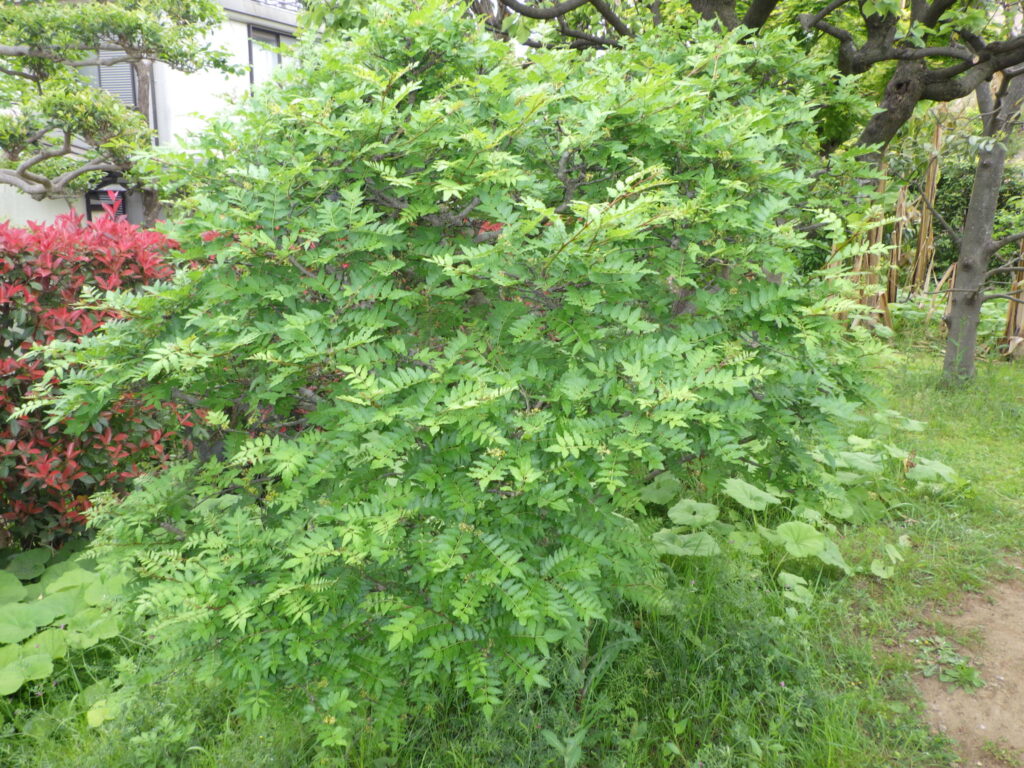
Japanese pepper (Zanthoxylum piperitum) is a deciduous shrub distributed in Hokkaido, Honshu, Shikoku, and Kyushu in Japan, as well as the Korean Peninsula. It grows in slightly damp forest edges and within forests in hilly and low mountainous areas. It is often cultivated in gardens and other places because its young leaves are used as a flavoring and its fruits as a spice.
Inuzansho (dog pepper), also known as Zanthoxylum schinifolium var. schinifolium, is a deciduous shrub distributed in Hokkaido, Honshu, Shikoku, and Kyushu in Japan; the Korean Peninsula; and China, growing in riverbeds, landslide areas, and logging sites. Its Japanese name comes from the fact that it resembles sansho pepper but has an unpleasant scent.
Zanthoxylum ailanthoides var. ailanthoides, also known as the crow's pepper, is a deciduous tree distributed in Honshu, Shikoku, Kyushu, and the Ryukyu Islands of Japan; the Korean Peninsula; China; Taiwan; and the Philippines. It grows in riverbeds, landslide areas, and logging sites. When bare ground appears, it is one of the first to invade and form pioneer vegetation. Its Japanese name comes from the fact that it is not as valuable as the sansho pepper.
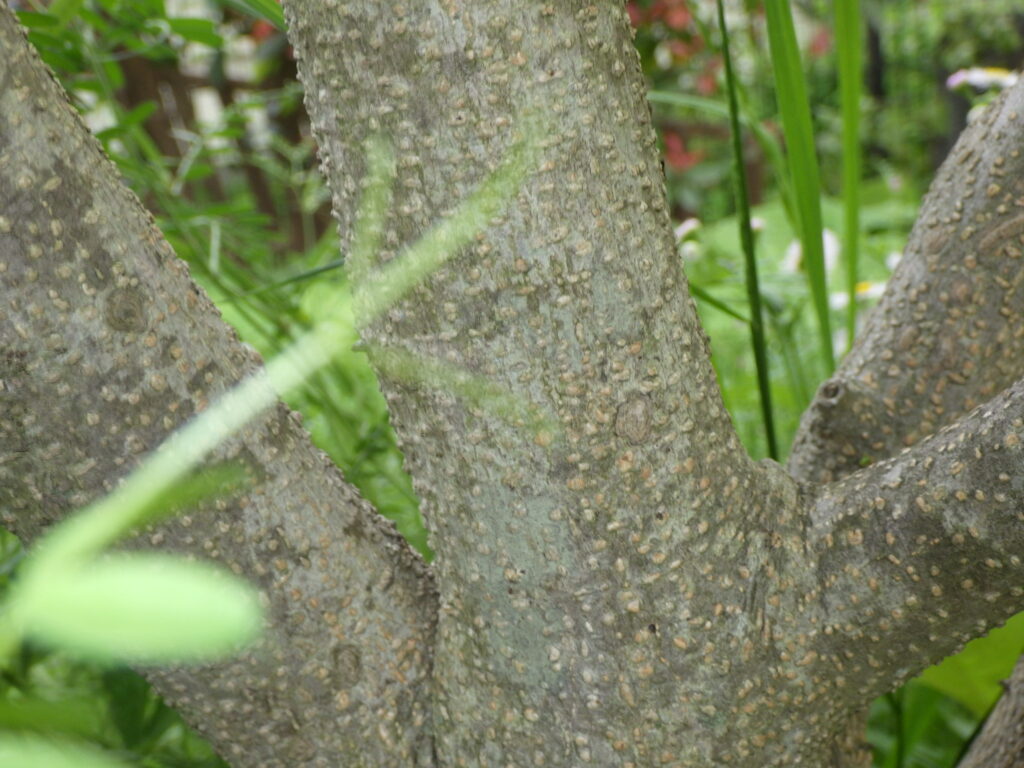
Both belong to the genus Zanthoxylum in the Rutaceae family, and are very similar in that they have many thorns all over their bodies and odd-pinnately compound leaves consisting of an odd number of leaflets. They also share the characteristic scent of Japanese pepper.
What are the differences between Japanese pepper (Zanthoxylum piperitum), Japanese dog pepper (Zanthoxylum sibiricum), and Japanese pine (Zanthoxylum ailanthoides)?
However, these three species can be reliably distinguished by observing various parts (Kanagawa Prefecture Flora Survey Association, 2018).
First, in Japanese pepper (Zanthoxylum piperitum), the thorns are arranged oppositely at the base of the leaf stalk, and the flowers lack a distinction between sepals and petals. In contrast, in Japanese sansho and Japanese sansho, the thorns are arranged irregularly on the branches, and the flowers have a clear distinction between sepals and petals.
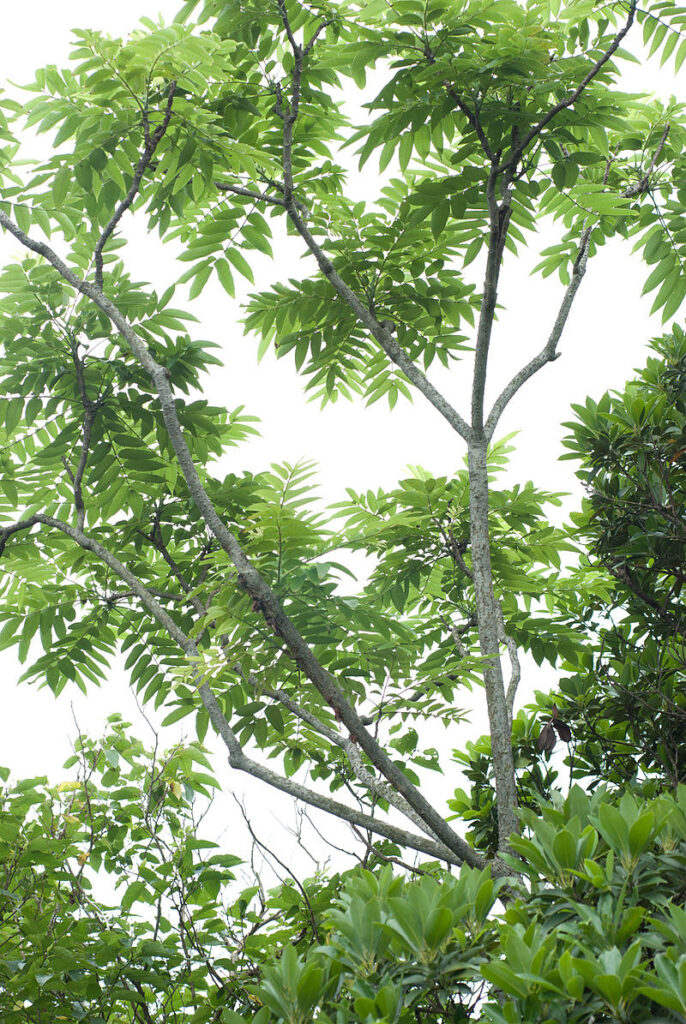
Regarding Japanese ash (Zanthoxylum piperitum) and Japanese ash (Zanthoxylum ailanthoides), the main difference is that Japanese ash is a deciduous shrub to small tree with leaflets 1-6 cm long that have oil glands in the serrations, while Japanese ash is a deciduous tree with leaflets 6-15 cm long that have oil glands across the entire leaf surface.
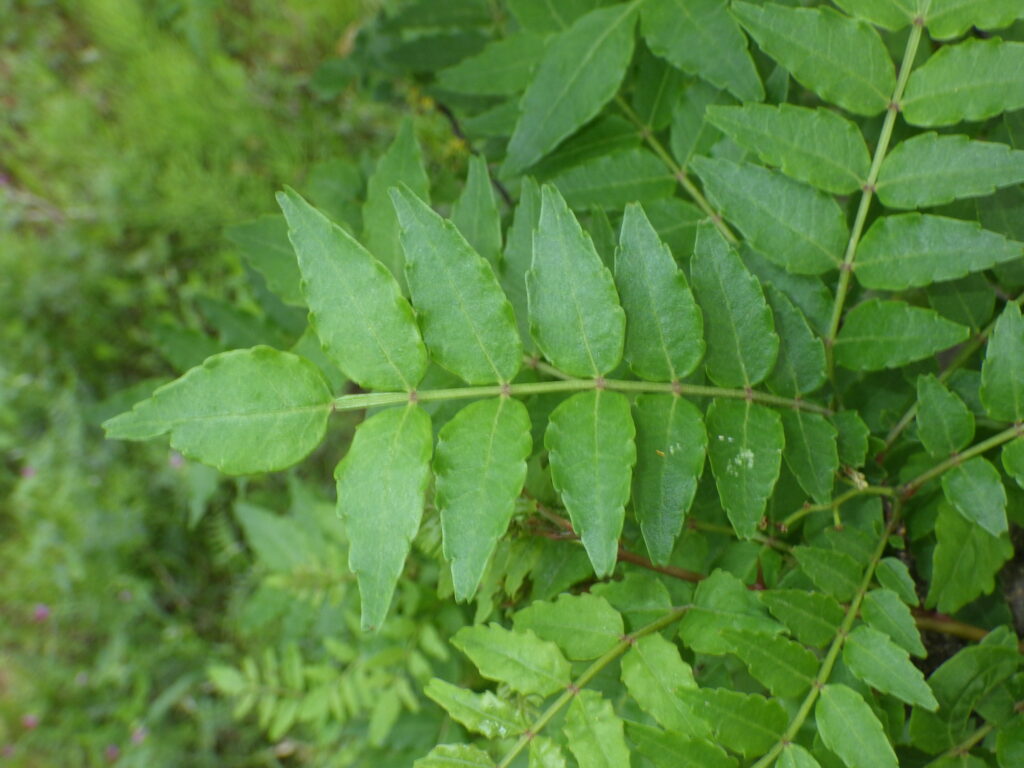
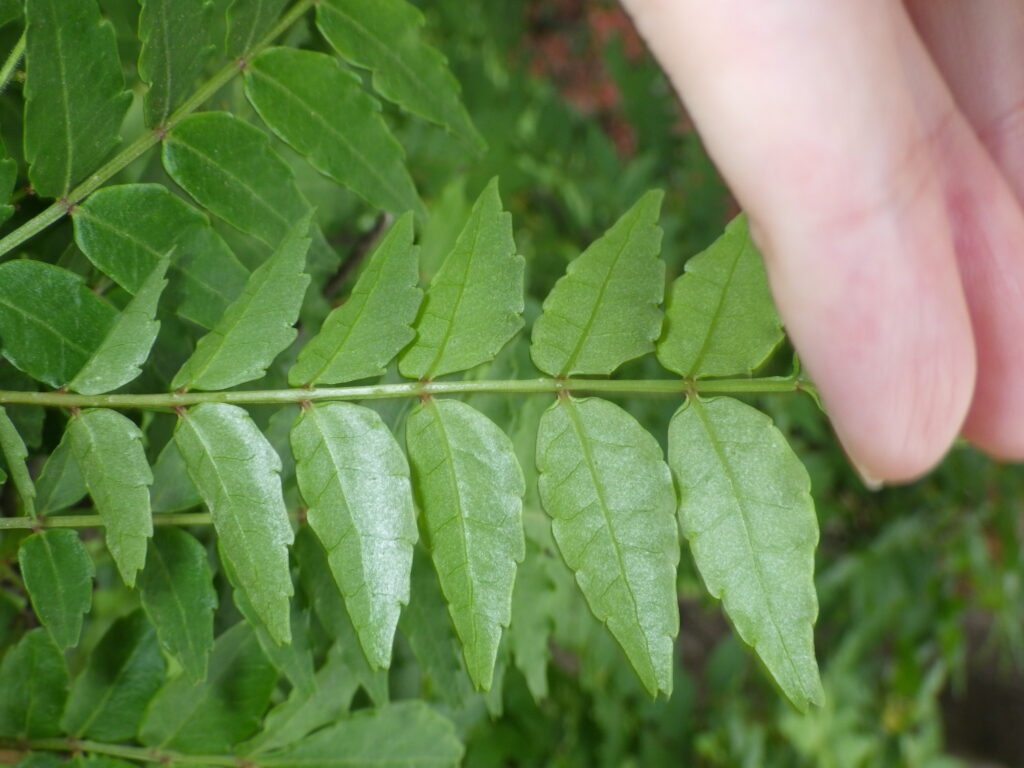
Furthermore, the leaves alone can distinguish between three species (Hayashi, 2019). In fact, this might be easier to understand.
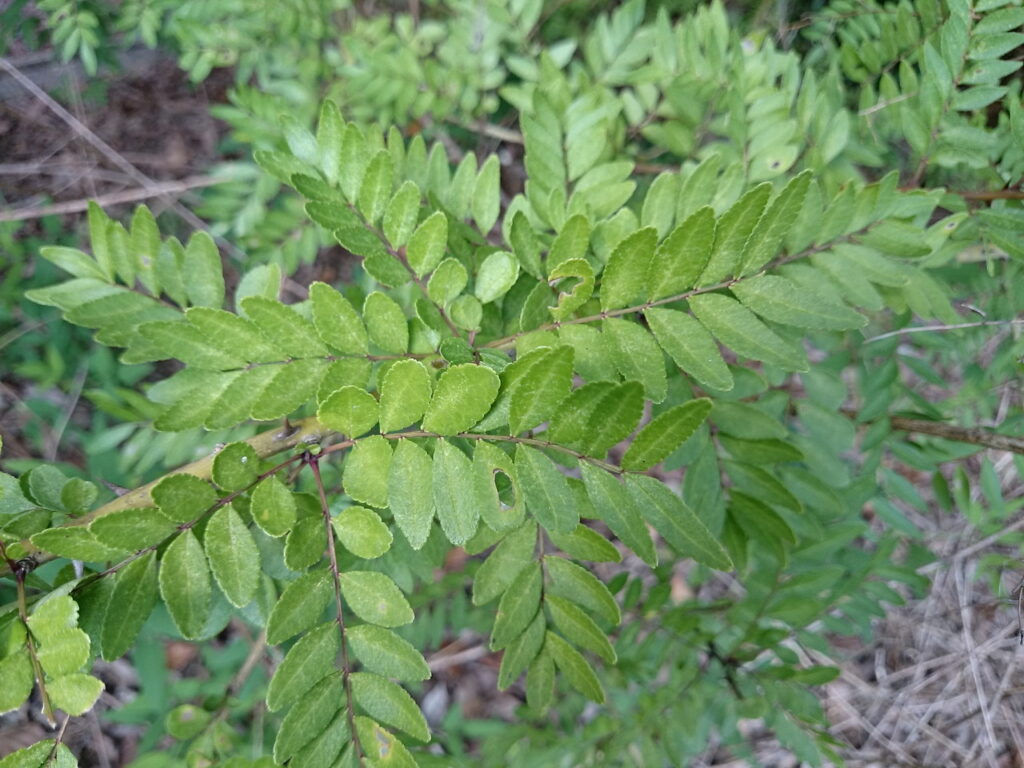
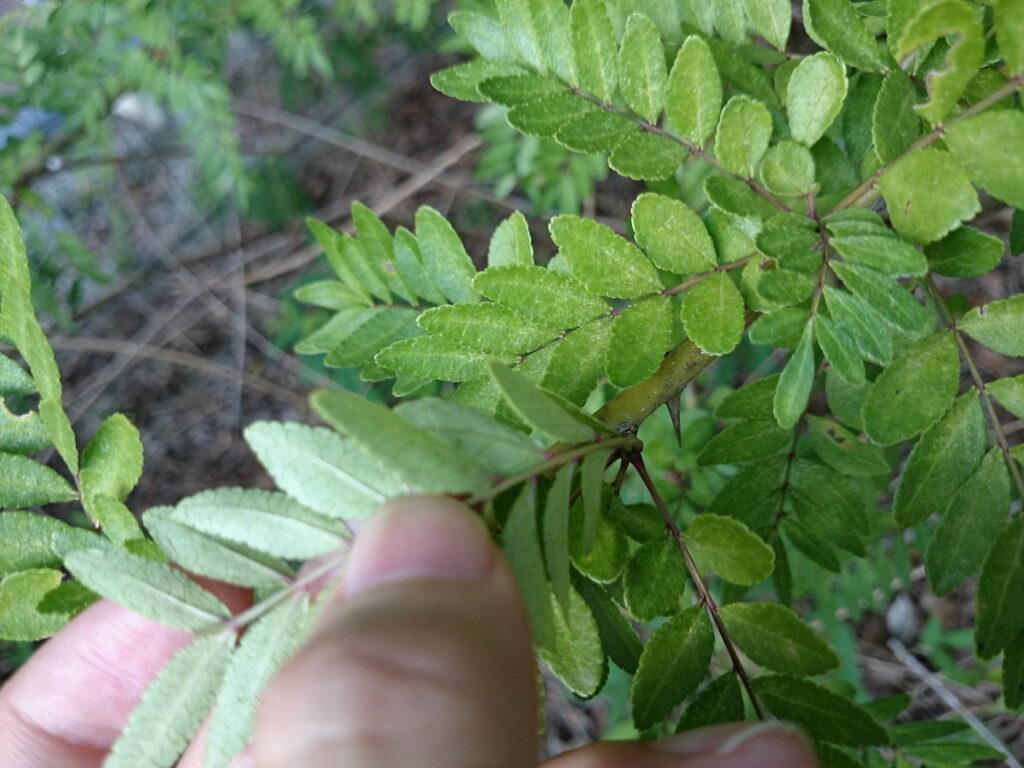
In Japanese prickly ash (Zanthoxylum piperitum), the leaflets are large and their tips extend into a tail-like shape, whereas in Japanese pepper (Zanthoxylum spp.) and Japanese dog prickly ash (Zanthoxylum piperitum), there is no such extension.
Regarding Japanese pepper (Zanthoxylum piperitum) and Japanese ash (Zanthoxylum sibiricum), Japanese pepper has thicker leaflets with indented tips and wavy edges, while Japanese ash has thinner leaflets with rounded, non-indented tips and almost no wavy edges.
In addition, among Japanese pepper species, there are known varieties such as *Zanthoxylum spp.* f. brevispinosum, which has remarkably few thorns, and *Zanthoxylum spp.* f. inerme, which has no thorns at all. Similarly, among Japanese pepper species, *Zanthoxylum inerme* var. inerme is known. Therefore, the presence or absence of thorns cannot be used to determine the species.
In addition to those introduced here, several other species are known to belong to the genus Zanthoxylum.
Zanthoxylum fauriei is rarely found where Zanthoxylum sibiricum and Zanthoxylum ailanthoides grow, and is thought to be a hybrid of the two species. It closely resembles Zanthoxylum ailanthoides, but its leaflets are 3-6 cm long and 10-15 mm wide, and its spines are 5-8 mm long (in Zanthoxylum ailanthoides, the leaflets are 1-3 cm long and 5-13 mm wide, and the spines are 4-10 mm long).
Zanthoxylum armatum var. subtrifoliatum closely resembles Japanese pepper (Zanthoxylum serrata), but it is an evergreen shrub with winged leaf stalks and 3 to 7 leaflets (Japanese pepper is a deciduous shrub with wingless leaf stalks and 11 to 19 leaflets).

What are the differences in how to use Japanese pepper (Zanthoxylum piperitum), Japanese dog pepper (Zanthoxylum ailanthoides), and Japanese quince (Zanthoxylum sibiricum)?
Are there any differences in how these three types are used?
The genus Zanthoxylum contains sanshool, a compound that gives plants a tingling, pungent taste. This compound is thought to have evolved for its antibacterial, antiseptic, and possibly insecticidal properties, but in humans, it stimulates appetite and improves gastrointestinal function. However, the other two species besides Zanthoxylum have an unpleasant odor and are therefore not commonly used in cooking in Japan.
Japanese pepper (sansho) has long been used as a spice, with its young leaves and fruit peel also being used medicinally. There are known instances of sansho fruit being found in pottery unearthed from Jomon period ruins. The wood is used to make pestles. In cooking, it is most commonly used as a condiment for grilled eel, and is used as an accent in a wide range of Japanese dishes, such as miso soup, clear soup, teriyaki fish and chicken, miso-grilled dishes, and miso-stewed dishes.
Although Japanese prickly ash (Zanthoxylum piperitum) is not currently used in Japan, there are traces of its past use in Jomon pottery impressions. After knowledge of its use as food and medicine was brought from China and the Korean Peninsula, a decoction of the seeds called "Qingjiao" and a powder of the leaves were used in traditional Chinese medicine, and crushed bark and seeds were used as a poultice. In Sichuan, China, it is called "Qinghuajiao" and is still widely used as a spice (Hizume, 2021).
Japanese bell pepper (Zanthoxylum piperitum) is not commonly used. However, there are records of many seeds of Japanese bell pepper remaining in impressions on Jomon pottery (Manabe & Obata, 2017). It is thought that this may be because 1,8-cineole, a terpene component of its essential oil, is effective in controlling stored food pests, and therefore it may have been used as an insecticide to control rice weevils.
It should be noted that "Hua Jiao" (or "Hong Hua Jiao"), a spice commonly used in Chinese dishes such as Mapo Tofu and Szechuan-style chicken, corresponds to Zanthoxylum bungeanum, and "Tang Jiao" corresponds to Zanthoxylum armatum var. armatum, both of which are different species from the three mentioned above (Hizume, 2021).
What is the structure of a flower?
Since the genus Zanthoxylum is dioecious, there are separate plants that produce male flowers and plants that produce female flowers (Mogi et al., 2000).
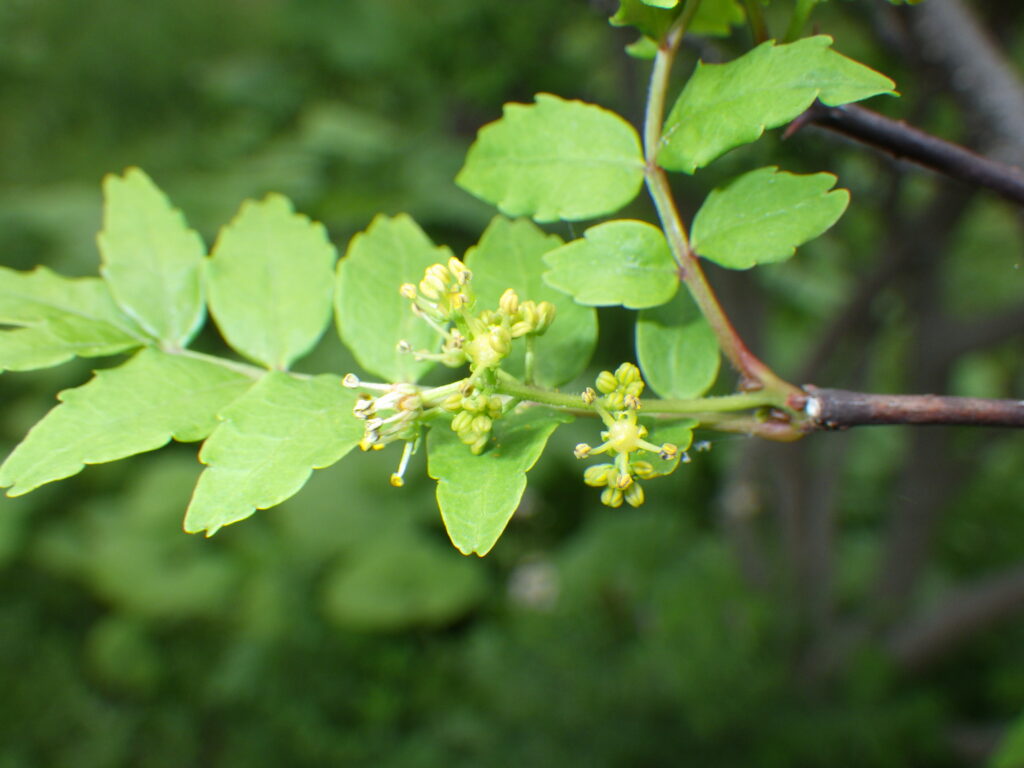
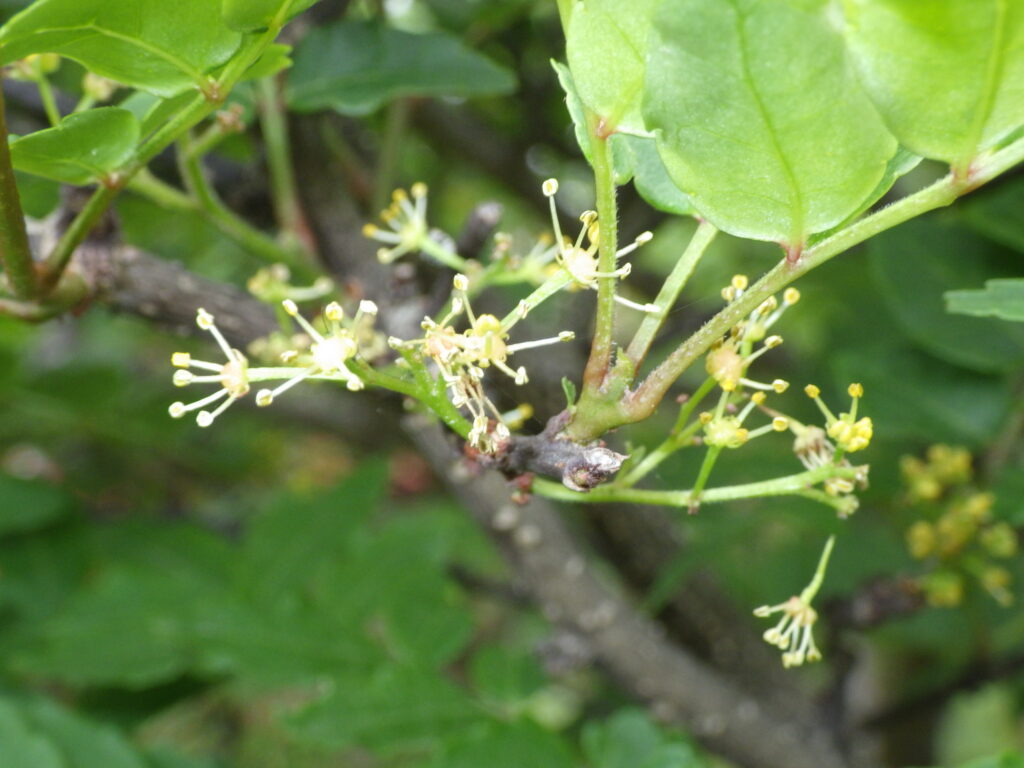
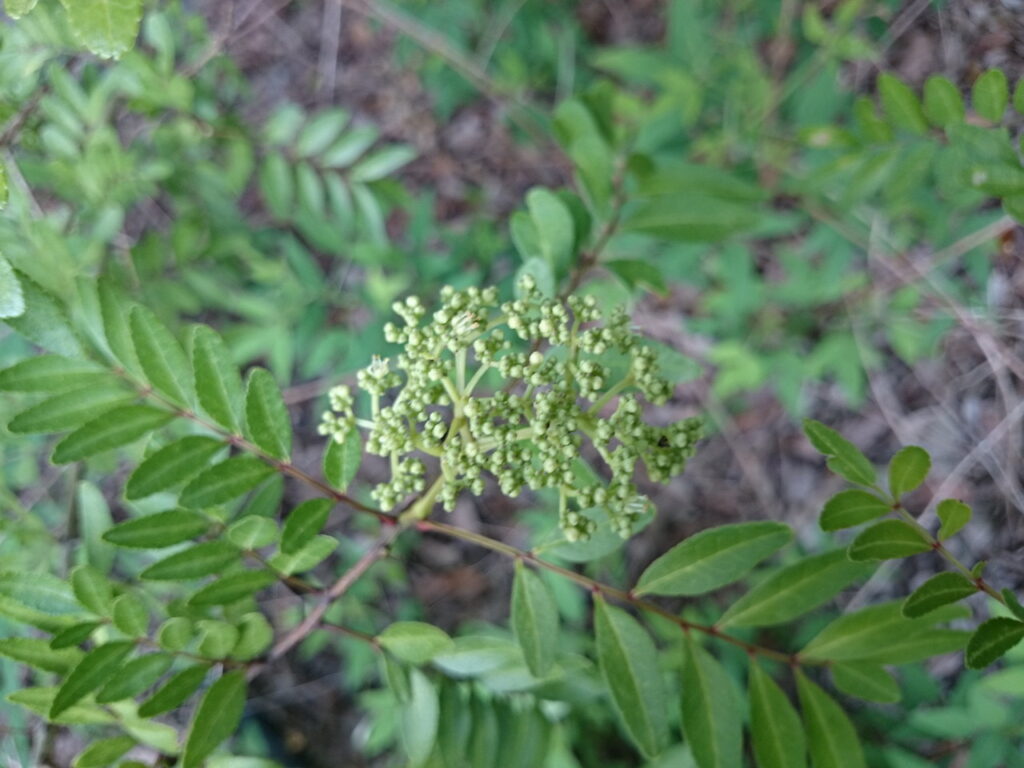
Japanese pepper (Zanthoxylum piperitum) flowers from April to May. It produces conical inflorescences 2-5 cm long at the tips of its branches, bearing small, pale yellowish-green flowers. Male flowers have 5-9 perianth segments, about 2 mm long. There are 4-8 stamens, which are longer than the perianth segments. Female flowers have 7-8 perianth segments. The ovary has two parts, and the styles are free.
Japanese prickly ash (Zanthoxylum piperitum) blooms from July to August. It produces corymbose inflorescences 3 to 8 cm long at the tips of its branches, bearing dense clusters of small, yellowish-green flowers.
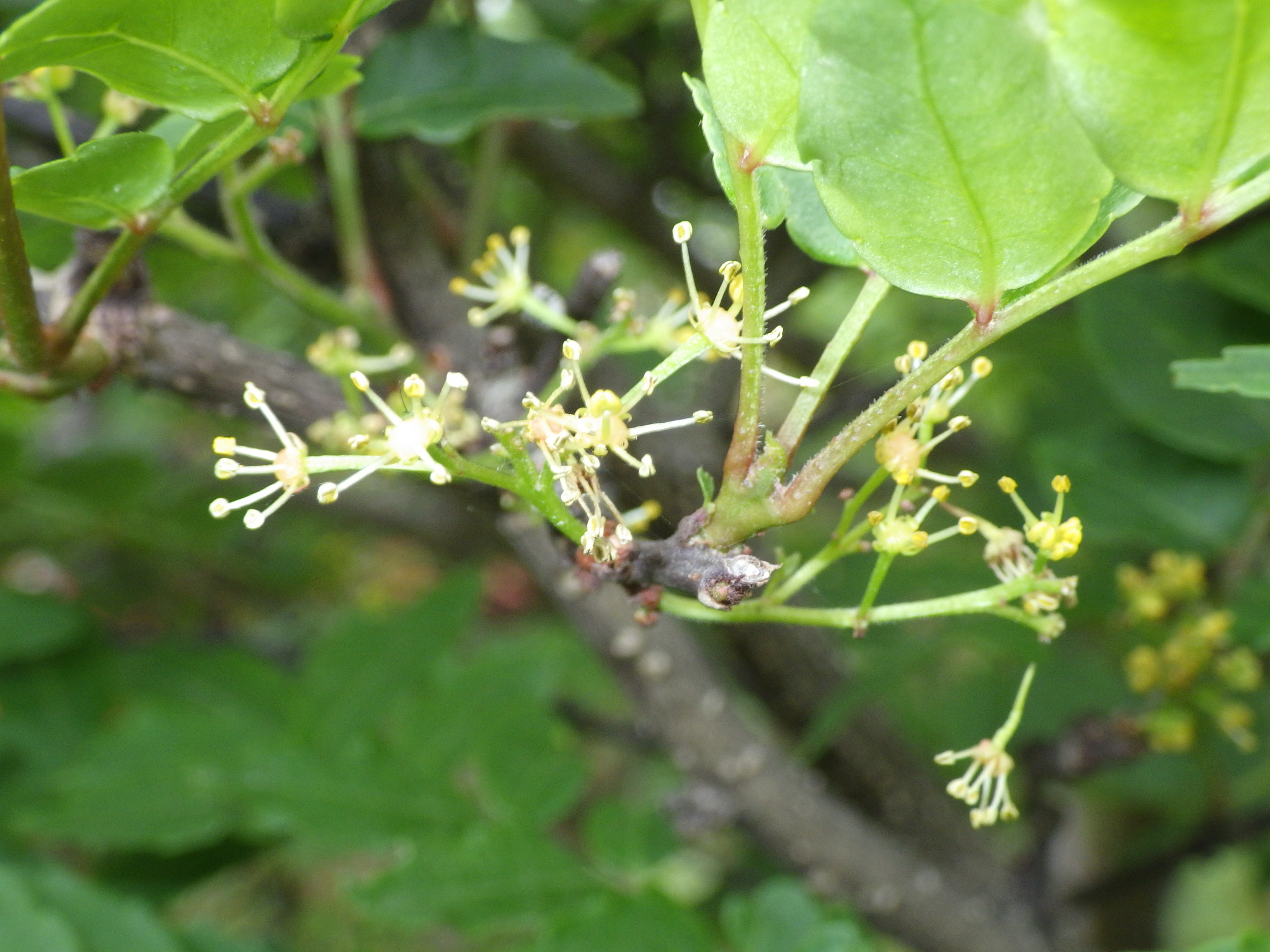
Japanese prickly ash (Zanthoxylum piperitum) blooms from July to August. It produces corymbose inflorescences 13 to 20 cm long at the tips of its branches, bearing dense clusters of small, greenish-white flowers. The petals are five in number, oblong in shape, and 2 to 2.5 mm long. Male flowers have five stamens. The ovary and style of female flowers are green. The calyx is deeply five-lobed.
Although they are similar, there are differences as mentioned above. It's also interesting to note the differences in flowering period and inflorescence between Japanese pepper (Zanthoxylum piperitum), Japanese sansho (Zanthoxylum ailanthoides), and Japanese sansho (Zanthoxylum sibiricum).
How is pollination done?
While there is a lack of research on pollinating insects, a study conducted in Nara Prefecture found that ants, wasps, and bees were the top three groups for *Zanthoxylum piperitum*, while bees accounted for almost all of the visitors to *Zanthoxylum ailanthoides* (Yokoi et al., 2008). Although no studies investigating the proportion of visitors to *Zanthoxylum piperitum* were found, there have been instances of honeybees visiting the flowers (Fujiwara and Yamaguchi, 2020). These differences are thought to be due to differences in flowering period, inflorescence, and flower structure, but the details are not yet fully understood.
What is the structure of the fruit?
The fruits of the Zanthoxylum genus are all schizocarps. Schizocarps are a type of dehiscent fruit (or fruit splitting), consisting of multiple carpels. When mature, they separate into as many schizocarps as there are carpels, and these separate from the central axis and split open. Simply put, a single fruit divides and matures.
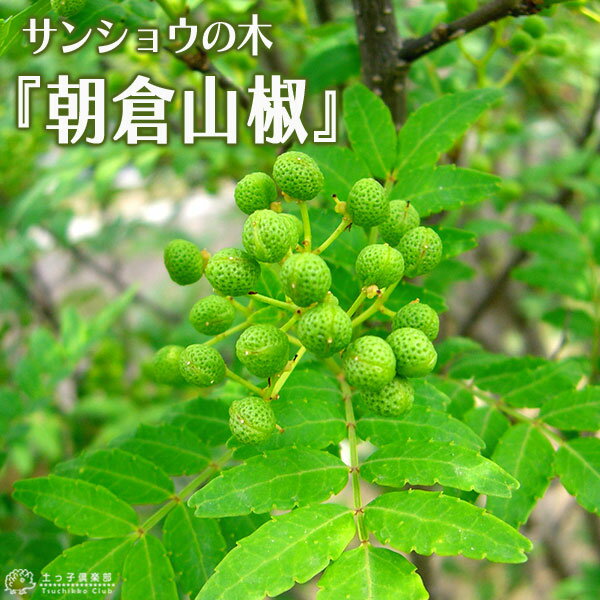
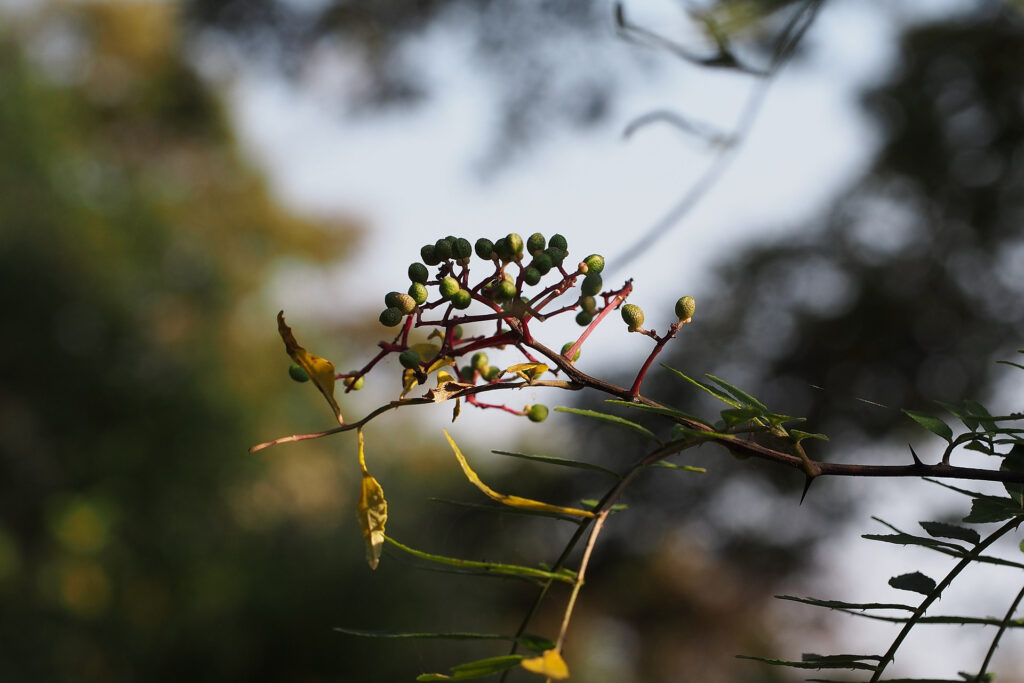
Japanese pepper (sansho) has two fruit segments. They are spherical, about 5 mm in diameter, and ripen to a reddish-brown or crimson color in September and October, splitting open to release a single seed. The seed is black, glossy, and oval-spherical, 3.5-4 mm long. The seed has a strong pungent taste.
The Japanese prickly ash (Zanthoxylum piperitum) has three fruit segments. They are spherical, 4-5 mm long, and ripen to a brown color in September and October. The seeds are 3-4 mm in diameter, black, and glossy.
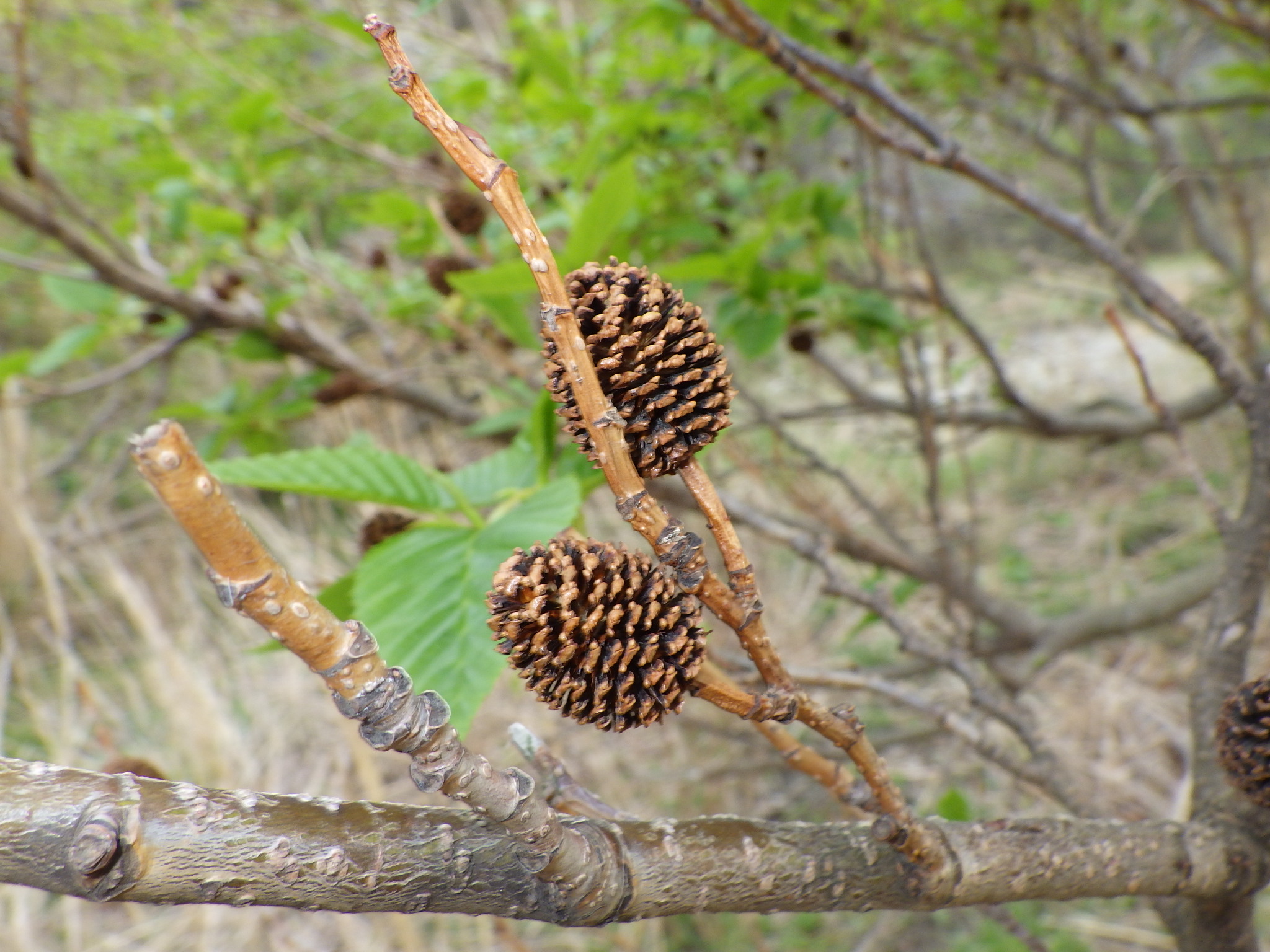
The Japanese quince (Zanthoxylum piperitum) has three schizocarps. Each schizocarp is a flattened sphere, 3-5 mm in diameter, grayish-brown, with oil glands and wrinkled. It ripens from November to January, splitting open to release a single glossy black seed. The seed is spherical, 3-4 mm in diameter.
What are the seed dispersal methods?
When the fruits of the Zanthoxylum genus ripen, they expose their seeds. This is a characteristic of plants that are often dispersed by wind or gravity, but surprisingly, Zanthoxylum species have been found to be dispersed by birds (Ueda, 1999).

Because the seed coat contains a large amount of fat, the fruit splits open and birds feed only on the seeds, using the fat for nutrition, while the remaining parts are excreted with their feces and dispersed (Sato and Sakai, 2006).
Both species are favored by crows, but in the case of Zanthoxylum piperitum, Japanese white-eyes and Daurian redstarts also eat it, and it is known that Japanese white-eyes, in particular, play an important role in seed dispersal. There are various theories about the origin of the name "Zanthoxylum piperitum," but if the name truly reflects a connection to crows, it may indicate that people in the past observed them closely. However, it is common to use the word "crow" to refer to something useless, so it may just be a coincidence.
It's interesting to wonder whether birds can perceive the spiciness of sanshool in Japanese pepper, but it's well known that birds don't perceive the spiciness of capsaicin in chili peppers, so it's likely they don't perceive sanshool either. The spiciness of Japanese pepper is present in the fruit as well as in its antibacterial, antiseptic, and insecticidal properties, and is probably also to repel mammals that don't contribute to seed dispersal, but ironically, this has made it popular among East Asians.
References
Fujiwara, Ayumi & Yamaguchi, Kikuji. 2020. Seasonal changes in flowering plants at Miyagi Gakuin Women's University: A survey of honeybee nectar and pollen source plants on the university campus. Research Report of the Institute for Living Environment Sciences 52: 19-24. ISSN: 1346-6534, https://doi.org/10.20641/00000488
Hayashi, Masayuki. 2019. Tree Leaves: Expanded and Revised Edition - Identifying 1300 Species Through Real-Life Scans. Yama-kei Publishers, Tokyo. 824pp. ISBN: 9784635070447
Hizume, Ayako. 2021. On Sichuan pepper: From a comparative perspective with Japanese pepper. Journal of Food Science and Technology of Japan 54(1): 70-72. https://doi.org/10.11402/cookeryscience.54.70
Kanagawa Prefecture Flora Survey Association. 2018. Kanagawa Prefecture Flora 2018 (Electronic Edition). Kanagawa Prefecture Flora Survey Association, Odawara. 1803pp. ISBN: 9784991053726
Manabe, Aya & Obata, Hiromi. 2017. On the uses of Zanthoxylum piperitum fruit based on its occurrence and composition. Journal of Vegetation History 26(1): 27-40. https://doi.org/10.34596/hisbot.26.1_27
Mogi, Toru; Ota, Kazuo; Katsuyama, Teruo; Takahashi, Hideo; Shirokawa, Shiro; Yoshiyama, Hiroshi; Ishii, Hidemi; Sakio, Hitoshi; and Nakagawa, Shigetoshi. 2000. Flowers Blooming on Trees: Polypetalous Flowers (Vol. 2, 2nd edition). Yama-kei Publishers, Tokyo. 719pp. ISBN: 9784635070041
Sato, Shigeho & Sakai, Atsushi. 2006. Seed dispersers of Zanthoxylum piperitum in warm temperate satoyama environments of Shikoku. Forest Applied Research 15(1): 37-40. https://doi.org/10.20660/applfor.15.1_37
Ueda, Keisuke. 1999. Unexpected Birds' Unexpected Preferences: Who Eats the Inconspicuous "Dry Fruit"?. In: Ueda, Keisuke (Ed.), Seed Dispersal: The Evolution of Mutual Aid Vol. 1: Seeds Carried by Birds (pp. 64-75). Tsukiji Shokan. ISBN: 9784806711926
Yokoi, Tomoyuki; Habe, Akifumi; Katori, Ikuo; and Sakuraya, Yasuyuki. 2008. Diversity of pollinating insect communities at Kinki University Nara Campus. Kinki University Faculty of Agriculture Bulletin 41: 77-94. ISSN: 0453-8889, http://id.nii.ac.jp/1391/00005214/