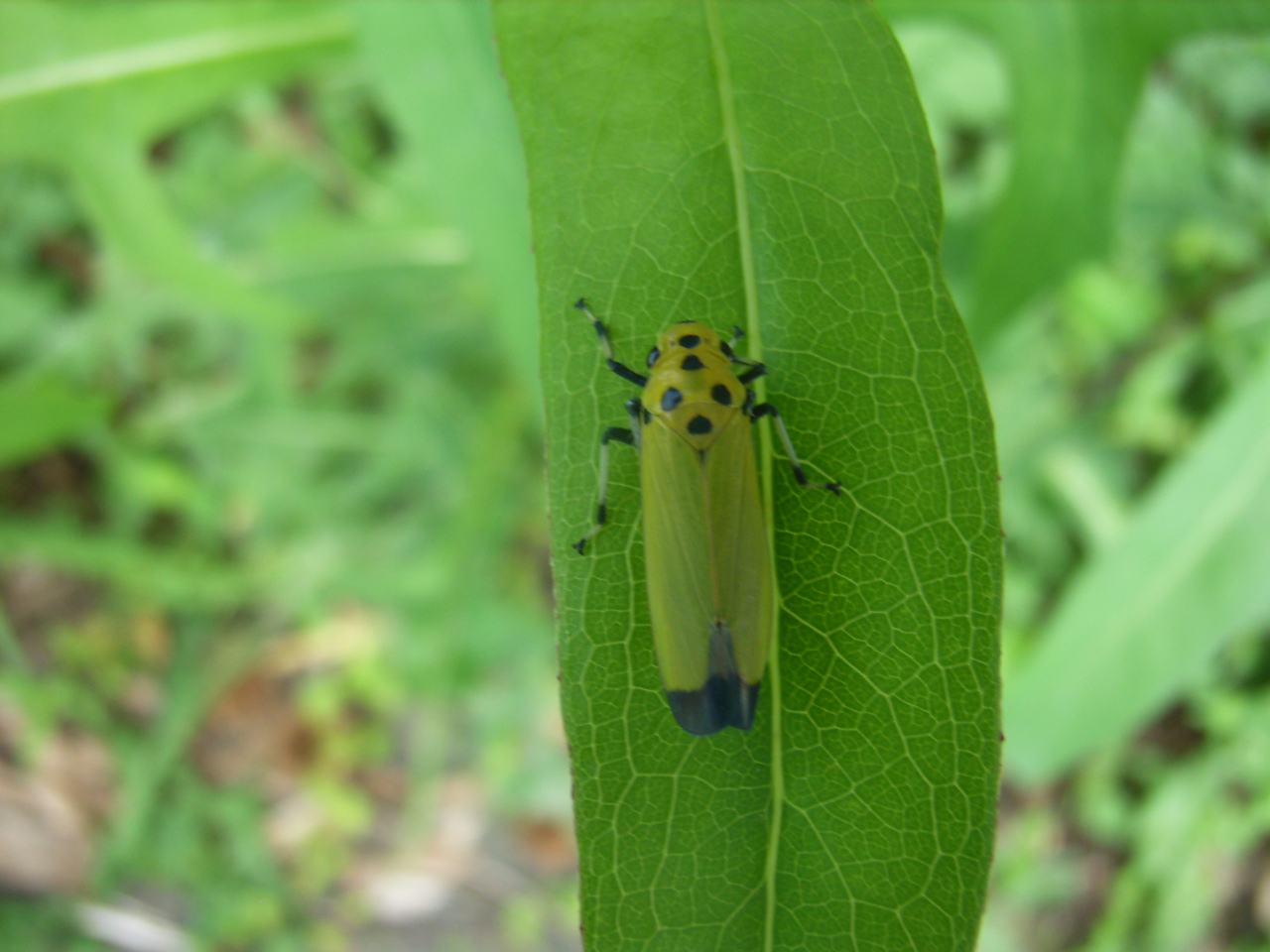
Leafhoppers are a general term for insects belonging to the family Cicadellidae, which are distributed worldwide and mainly inhabit the stems and leaves of herbaceous plants. At least 20,000 species have been described worldwide, and currently, 190 genera and 576 species are known in Japan, making them a highly diverse and thriving group. Planthoppers are closely related, but they can be easily distinguished by carefully examining their appearance. Spittlebugs are an even closer group, but their ecology is quite different, and they can also be distinguished morphologically by examining the structure of their hind legs. Like most true bugs, leafhoppers are herbivorous and survive by sucking sap from plants, so they pose little direct harm. However, species that feed on cultivated plants can cause significant damage due to their large populations. On the other hand, they are an important part of the food chain in ecosystems. The lives of leafhoppers are completely dependent on host plants and they lead very monotonous lives, but compared to closely related groups, their hind legs are longer, allowing them to crawl quickly sideways as their name suggests, and they are also active at night. The leafhoppers are also known for a unique substance called "brocosome," a hydrophobic coating used for various purposes. An interesting behavioral aspect is that in the subfamily Cicadellinae, both males and females communicate during courtship by vibrating stems. However, this is more of a means of recognizing one's own species than a female-led selection process like in birds or cicadas, and doesn't seem particularly romantic. The diversity of body color is the most striking feature when observing leafhoppers, but their evolutionary significance is lacking. Many are thought to be camouflage, but many are conspicuous. Some may function as Batesian mimicry, but this is not yet well understood. This article will explain the classification, morphology, and ecology of leafhoppers.
- What is a leafhopper? How is it different from a planthopper?
- What is the difference between a leafhopper and a spittlebug?
- What do they eat? Are they harmful? Are they useful?
- What was its life history like? It lived an incredibly monotonous life on plants!?
- What is the role of "brocosomes," substances unique to the leafhopper family?
- Romantic communication was conducted through "sounds" or "stalk vibrations"!?
- What are the roles of body shape and body color?
- What kinds of species belong to the leafhopper family? How can they be identified?
- No. 03432 Citrus leafhopper Apheliona ferruginea (Leafhopper subfamily)
- No. 03443 Austroasca vittata (Leafhopper subfamily)
- No. 03465 Bothrogonia ferruginea (Leafhopper subfamily)
- No. 03472 Large Leafhopper Cicadella viridis (Cicadella subfamily)
- No. 03479 Red Leafhopper Dayus takagii (Leafhopper subfamily)
- No. 03485 Spotted Leafhopper Diomma pulchra (Leafhopper subfamily)
- No. 03540 Evacanthus interruptus (Crested Leafhopper Subfamily)
- No. 03569 Idiocerus yanonis (Leafhopper subfamily)
- No. 03582 Kolla atramentaria (Leafhopper subfamily)
- No. 03587 Horned Owl (Ledra auditura) (Owlininae subfamily)
- No. 03588 Short-eared Owl (Ledropsis discolor) (Owlininae subfamily)
- No. 03591 Limassolla multipunctata (Leafhopper subfamily)
- No. 03644 *Naratettix zonatus* (Leafhopper subfamily)
- No. 03646 Nephotettix cincticeps (Caneliinae subfamily)
- No.03681.a A species of leafhopper, Pagaronia sp. (Subfamily Pagarinae)
- No. 03714 Penthimia nitida (Caneliinae subfamily)
- No. 03720 Planaphrodes nigricans (Canelopinae subfamily)
- No. 03751 Flat-headed Owl (Tituria angulata) (Owl subfamily)
- No. 03768 Leafhopper Xestocephalus japonicus (Leafhopper subfamily)
- No. 03776 A species of leafhopper, Ziczacella sp. (Subfamily Ziczacellinae)
- References
What is a leafhopper? How is it different from a planthopper?
From a taxonomic perspective, leafhoppers refer to insects belonging to the order Hemiptera, suborder Auchenorrhyncha, and family Cicadellidae.
The leafhoppers (Cithoptera) are a group of insects distributed worldwide, primarily inhabiting the stems and leaves of herbaceous plants. At least 20,000 species have been described globally, and currently, 190 genera and 576 species are known in Japan (Japanese Insect Catalog Editorial Committee, 2016). This makes them the second most diverse and thriving group in the order Hemiptera, after the aphid family.
What are the differences between species in the Cicadellidae family and their close relatives?
Planthoppers are closely related taxonomically and share similar habitats and ecologies, making them easily confused species.
However, in leafhoppers, the first and second antennal segments are only slightly thicker, whereas in planthoppers, the first and second antennal segments are very thick and conspicuous even from a distance (Hidaka et al., 1996).
Also, leafhoppers have heads that extend sideways, giving them a shape that resembles a "bent boomerang" when viewed from above, but planthoppers do not. However, there are exceptions, such as the lace planthopper.
It's also worth noting that planthoppers have a distinctive black spot resembling a pupil in their compound eyes, known as a "pseudopupil," but this is only a daytime feature.
From a taxonomic perspective, in leafhoppers, the simple eyes are located between the compound eyes, whereas in planthoppers, the simple eyes are located below or near the compound eyes (Ito et al., 1977).
There are other differences that can be observed by examining specimens in detail, but these will be omitted from this article.
What is the difference between a leafhopper and a spittlebug?
The spittlebugs are also very closely related to leafhoppers and look quite similar to them.
However, in the leafhoppers, the hind tibiae are long, angular with a raised line, lack large claw-like projections, and have numerous spiny hairs (often in two rows). The hind coxa are also long laterally, reaching the lateral margin of the ventral surface of the thorax and being plate-like.
In contrast, in the family Aesculitidae, the hind tibiae are short, cylindrical, and have one or two (rarely four) large claw-like projections on the outside. The hind coxa are also short, conical, and do not spread laterally.
It may be a little difficult to understand from a morphological perspective, but it's not difficult if you consider its relationship to ecology.
Because leafhoppers have long hind legs, they can "crawl" sideways, as their name suggests, walking horizontally on plants and quickly moving to the underside when disturbed. They can also jump like grasshoppers. In contrast, spittlebugs have short hind legs and cannot move in this way. The numerous spiny hairs of leafhoppers are used to coat plants with a hydrophobic substance called a "brocosome."
Also, although it's not apparent from the adults, the larvae of spittlebugs live in foamy masses or calcareous tubular nests they create on plant stems and branches. However, leafhoppers do not do this.
What do they eat? Are they harmful? Are they useful?
Like most true bugs, leafhoppers are herbivorous, primarily feeding by inserting their proboscis and stylet into the stems and leaves of herbaceous plants and sucking out xylem sap (a liquid mainly composed of water) and phloem sap (a nutrient-rich liquid produced by photosynthesis) (Hidaka et al., 1996). No species that feed on anything else have been identified.
However, it has been found that leafhoppers have a pair of symbiotic organs called "bacteriomes" on their abdomen, and that they receive essential amino acids from intracellular symbiotic bacteria (Koga, 2014; Tomizawa and Noda, 2014). This is thought to play a role in compensating for nutritional deficiencies caused by unbalanced diets.
While they can very rarely sting humans (Núñez & Aiello, 2013), there are few cases in Japan, and serious symptoms are extremely rare, so it's safe to assume that leafhoppers pose no direct harm.
However, leafhoppers that feed on cultivated plants are known to transmit diseases in addition to directly causing damage through feeding (Umetani & Okada, 2003; Emura et al., 2012). Because they are smaller than ordinary stink bugs and are more likely to be preyed upon, they employ a strategy of laying many eggs to increase their population (r-strategy), which is troublesome because they can proliferate in large numbers when the environment is suitable. Representative examples of leafhoppers that cause damage are listed below.
- The black-tipped leafhopper Nephotettix cincticeps feeds on rice plants and transmits infectious diseases such as rice dwarf disease (caused by the rice dwarf disease virus) and yellow dwarf disease (caused by phytoplasma) (Hokkyo, 1972).
- The lightning leafhopper Maiestas dorsalis (Recilia dorsalis is a synonym) feeds on rice plants (Matsumoto, 1988; Webb & Viraktamath, 2009).
- Jacobiasca formosana feeds on tea plants (Okada, 1971).
- Bothrogonia ferruginea feeds on the sap of many plants, including soybeans, peanuts, mulberry, tea plants, grapes, citrus fruits, persimmons, and figs, but in most cases, it does not cause significant damage (Ishihara, 1962; Umetani and Okada, 2003). However, in the case of mulberry, branch growth may be inhibited due to damage caused by sap feeding and egg-laying.
Hearing only these facts might lead one to emphasize only the harmful aspects to humans.
However, not all leafhoppers parasitize cultivated plants, and it is well known that they are an important food source for predators such as mirid bugs, water striders, parasitic wasps including stink bugs, spiders, and frogs (Nakasuka, 1977; Kobayashi, 1963; Handa and Sanda, 2018; Kosugi, 2003; Ono et al., 2004). These animals then become nutrients for higher-level predators such as birds and mammals.
It's also possible that certain plants are being suppressed from multiplying.
Therefore, from an ecological perspective, leafhoppers play a crucial role in the food chain, facilitating the transfer of nutrients from plants to animals. Leafhoppers are considered one of the most abundant herbivorous insects in grasslands, and in British grasslands, their population can exceed one million per hectare during the height of summer (Hamilton & Whitcomb, 2010). Similar situations are likely in Japan, and their influence cannot be ignored. While some species can be harmful, humans need to gain a deeper understanding of their importance.
What was its life history like? It lived an incredibly monotonous life on plants!?
The home range of leafhoppers is entirely dependent on their host plants (Hidaka et al., 1996). Species that are monophagous, which use only one type of plant as a host, or narrow-minded, which use several types of plants as hosts, live only in specialized environments. However, polyphagous species, which use host plants from multiple families, can live in a variety of environments.
At first glance, it might seem that being polyphagous is unilaterally advantageous, but monophagous insects are better able to cope with the unique structures and toxins of each plant species, and are also stronger in interspecies competition with polyphagous leafhoppers. Therefore, if the plants growing there are limited in variety, monophagous insects can be advantageous.
The life of that leafhopper is very monotonous.
Most of their lives are spent sucking sap from plants, and it has been found that in the case of the black-tipped leafhopper, 85% of the day is spent on sap-feeding.
Therefore, in a sense, it could be described as "a machine that simply sucks up plant sap."
However, because of their long hind legs, they can "crawl" sideways, as their name suggests, walking horizontally on plants and quickly moving to the underside when disturbed. Furthermore, they can jump like grasshoppers. This is something that their close relatives cannot do and is an example of their active behavior. These characteristics likely help them escape predators. However, in some species, when the environment stabilizes, a brachywing form appears in which the forewings and hindwings shrink and they are unable to fly.
Furthermore, they are often seen gathering around streetlights at night, and large numbers of leafhoppers appear when light traps are set up. This fact also indicates that leafhoppers actively fly and move between plants even at night, but the details of their activity at this time are difficult to study and are not well understood.
From a human perspective, their lifestyle may seem too monotonous, but compared to aphids that live similar lives, their bodies are clearly more developed, so perhaps that's not actually the case.
What is the role of "brocosomes," substances unique to the leafhopper family?
They are also known to secrete a substance unique to the leafhopper family called "brochosome." This substance is produced within the cells of a specialized glandular segment of the Malpighian duct, the main excretory organ of insects. Brochosomes are uniform, spherical particles, typically between 0.2 and 2.0 μm in diameter.

Brocosomes are released from the anus in droplets after molting, and are "oiled" all over the body by rubbing with the legs, spreading on the outer skin as a hydrophobic coating. Even after drying, brocosomes are applied to the entire body and legs by repeatedly grooming regularly.
The first thing that comes to mind is that this coating makes activities easier in the rain, but its functions are thought to be multifaceted (Rakitov, 2004).
The hydrophobic properties of brocosomes are effective not only against rain but also against their own liquid excretions. These excretions originate from the sugars in the sieve fluid, and their high viscosity can cause respiratory distress if they adhere to the spiracles, which are responsible for air intake and exit. Their viscosity would also slow down movement. Brocosomes prevent these situations.
It's also thought that these scales could serve a similar purpose to the scales of a lepidopteran spider, allowing it to escape if it gets caught in a sticky spiderweb.
Furthermore, it has been found to have functions such as protection from fungi (mold) and prevention of drying.
In some female species, not only do they store brocosomes themselves, but they also store them in their forewings before laying eggs. They have been observed rubbing the brocosomes onto the eggs with their hind legs after inserting them into plants.
The same reasons mentioned above are likely behind this use, but in addition, it is thought that when embedded in a plant, it prevents the plant from closing the wound, allowing the egg to breathe.
While this alone makes it highly versatile, recent research has shown that due to the anti-reflective properties of brocosomes, surfaces coated with brocosomes appear like leaves to the eyes of parasitic wasps and predatory insects, and are therefore also used as camouflage for eggs (Yang et al., 2017).
Romantic communication was conducted through "sounds" or "stalk vibrations"!?
Many male leafhoppers, like many other copopterans such as cicadas, are known to communicate through vocalizations (Davranoglou et al., 2020). However, although the mechanism is the same as that of cicadas, the sound is not as conspicuous, so it is generally inaudible to humans.
The vocal organ that produces this sound is also common to that found in many male copopterans, such as cicadas, and is called a "tymbal organ." It consists of a "tymbal structure" located outside the abdomen and a "tymbal muscle" located inside the abdomen (Iwamoto, 2018).
I can't go into the specifics of the pronunciation mechanism here, but simply put, sound is produced by stretching and releasing the vocal diaphragm with muscles.
This type of communication generally functions as a "courtship display," where the female selects her preferred male. Birdsong is a prime example of this.
However, it has been found that the leafhoppers of the subfamily Cicadinae and some other leafhoppers have developed a different form of "communication through vibration" (Hidaka et al., 1996; Davranoglou et al., 2020).
In the subfamily Cicadinae and some other leafhoppers , males and females communicate by vibrating their abdomens with these muscles, causing the stem to vibrate rapidly.
The interesting thing about this form of communication is that, unlike cicadas or leafhoppers with sound-producing membrane organs where it's a one-way communication from male to female, both male and female transmit vibrations to each other.
These leafhoppers have newly developed a "vibrating organ," also called the "typhlocybine organ." While they may sometimes retain both this typhlocybine organ and the sound-producing membrane organ, in the typhlocybine subfamily, the sound-producing membrane organ has degenerated and been completely replaced by the typhlocybine organ.
A unique feature of the organs of the leafhopper subfamily is that they are present in both males and females. They consist of plate-like internal projections (abdominal apodemes) on the ventral plates of the first and second abdominal segments, along with thick muscles, which vibrate the substrate, such as plant stems.
This vibrational communication occurs when males and females are facing each other at close range, as well as immediately before mating (Derlink et al., 2018). Therefore, even if it is not a one-sided courtship display by the male, it may still be considered to be used in some form of courtship display, like in other copopters.
However, it is now being suggested that a large part of the role of this vibrational communication is not courtship display, but rather "recognition of the same species."
It has been found that the frequency and intensity of vibrations differ among leafhoppers of the subfamily Cicadinae, and that they only respond to vibrations of the same frequency and intensity (Tishechkin, 2015; Derlink et al., 2018).
In other words, the meaning of communication through sound seems to have changed in leafhopper species that possess organs belonging to the subfamily Leafhopperinae.
While the exact reason isn't fully understood, in the case of the leafhopper, a major factor may be that its r-strategy allows for a very high number of breeding cycles, reducing the need for courtship displays. If they can breed frequently and produce many offspring, then carefully selecting a mate becomes a waste of time. Of course, the females simply lay eggs and leave them, so they don't have to worry about raising their young like mammals or birds.
In fact, the fact that males and females vibrate towards each other, and that there is often no difference in body color between males and females, is not characteristic of species that perform courtship displays, and experiments have shown that females do not distinguish between subtle differences in male vibrations (Hunt et al., 1992). These facts may indicate that females do not have a preference for males.
Interestingly, it has been observed that if another male is nearby a female receiving vibrations from another male, that male may also perform vibrations with the aim of disrupting the communication between the vibrating male and female (Derlink et al., 2018). However, while this could be interpreted as the disruptive male being superior to the vibrating male in the eyes of the female, it may be more natural to interpret it as simply aiming to disrupt the vibrations and stop the communication behavior.
While the term "romantic communication" might sound very romantic, in the case of the leafhopper, it can be said that this behavior is actually a result of pursuing rationality—finding the same species among many individuals—and it might be a good example of why excessive anthropomorphism is not advisable. However, in species where the males and females have clearly different colors and "sexual dimorphism" is well-developed, there remains the possibility that this has evolved into courtship behavior by males towards females.
After mating, the female inserts her pointed ovipositor into plant tissue to lay eggs. In some species, females store brocosomes in their forewings before laying eggs, and after inserting the eggs, they are observed rubbing the brocosomes onto the egg-laying site with their hind legs (Rakitov, 2004).
A single female is said to lay around 100 eggs, and in most species, their reproductive capacity allows them to go through several generations each year.
What are the roles of body shape and body color?
Leafhoppers exhibit considerable diversity in appearance and color, and their wings, in particular, can be quite colorful. What roles do these colors play?
Unfortunately, there is a lack of research from this perspective.
Generally speaking, leafhoppers that use grasses or sedges as hosts are long and slender with a streamlined shape, which is thought to help them be less visible to predators on the narrow leaves (Hidaka et al., 1996).
In terms of body color, the body and wings are often the same colors as plants, ranging from green to light brown, and their patterns are mottled or have vertical stripes, making them easily confused with plants (camouflage).
However, this alone doesn't explain everything. There are clearly some very colorful and eye-catching colors. Are there any advantages to using such colors?
While the reason is unclear, several possibilities come to mind.
First, if there is sexual dimorphism, where there is a difference in color between males and females, it is likely that the color is used by the male to attract females. As mentioned above, most leafhoppers do not exhibit sexual dimorphism, but there is a clear difference in wing color in the black-tipped leafhopper and the white-fronted leafhopper. In these species, competition among males for females is intense, and sexual selection may be at play, making the conspicuous coloration useful outweighing any disadvantages. However, there is no specific research on this.
It is also possible that some species, while non-toxic, employ "Batesian mimicry," mimicking poisonous insects. The black-tipped leafhopper (Coccinella septempunctata) has large black oval markings on its head, pronotum, and scutellum, which have been suggested to mimic the pupa of the poisonous ladybug Coccinella septempunctata (Yamazaki, 2010). At first glance, they may not look alike, but to a predator of similar size viewing it from the front, it resembles a pupa. While it is still unknown whether predators actually make this judgment, it is an intriguing hypothesis.
Furthermore, it's possible that they are actually poisonous and their coloration is a "warning color." However, while poisonous species have been identified in the closely related family Aesculitidae (Peck, 2000; Thompson & Carvalho, 2016), no poisonous species have been reported in the Cicadellidae family so far.
Coloration can have a significant impact both within and between species, but our understanding of it is still fragmentary, and further research is needed.
What kinds of species belong to the leafhopper family? How can they be identified?
Here, I will introduce the leafhoppers I have photographed so far, including specimens. If I find any misidentifications, I will change them without notice. The basic distribution is based on the Japanese Insect Catalog Editorial Committee (2016), and the morphology and ecology are based on Ito et al. (1977).
日本ではかなり種類が多いものの、研究不足でまとまった同定資料はわずかです。検索表については『絵解きで調べる昆虫1 環境アセスメント動物調査講演会 絵解き検索シリーズ総編集』の「同翅類とヨコバイ科の絵解き検索」(紙谷,2013)がありますが入手困難で図書館での複写が必要でしょう。図鑑については殆ど唯一『九州でよく見られるウンカ・ヨコバイ・キジラミ類図鑑』があるのみです(三枝ら,2013)。あとは断片的な資料で補うしかありません。ヨコバイ科まで、ヨコバイ科の亜科までの同定なら『原色日本昆虫図鑑 下 全改訂新版』で可能です(伊藤ら,1977)。ただし分類が古いのでその点は注意が必要です。『Google画像検索』で出てくる国内外の写真も必ずしも同定が正しいわけではありませんが近い仲間を調べる際には大いに参考になるでしょう。今後簡単な同定が出来るようになることを期待しています。
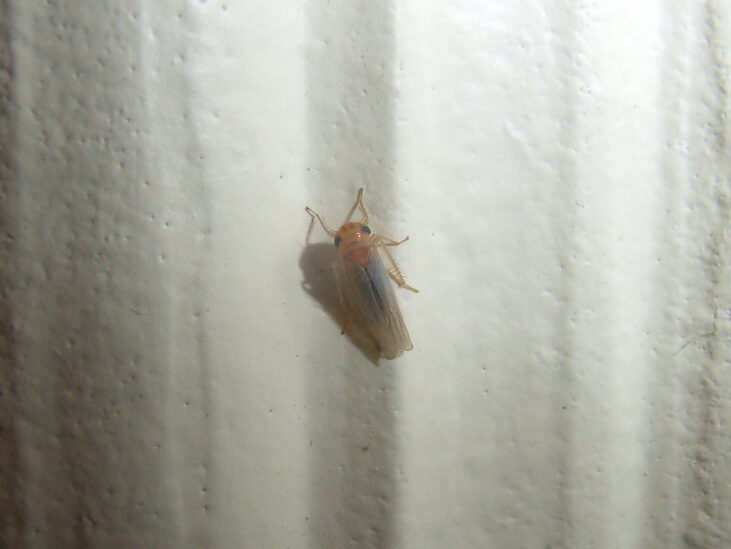
No. 03432 Citrus leafhopper Apheliona ferruginea (Leafhopper subfamily)
It is distributed in Honshu, the Izu Islands, Shikoku, Kyushu, Tsushima, the Osumi Islands, the Okinawa Islands, the Kerama Islands, and the Yaeyama Islands; as well as in China. In autumn, the adults gather on citrus fruits and suck the sap from the oil glands.
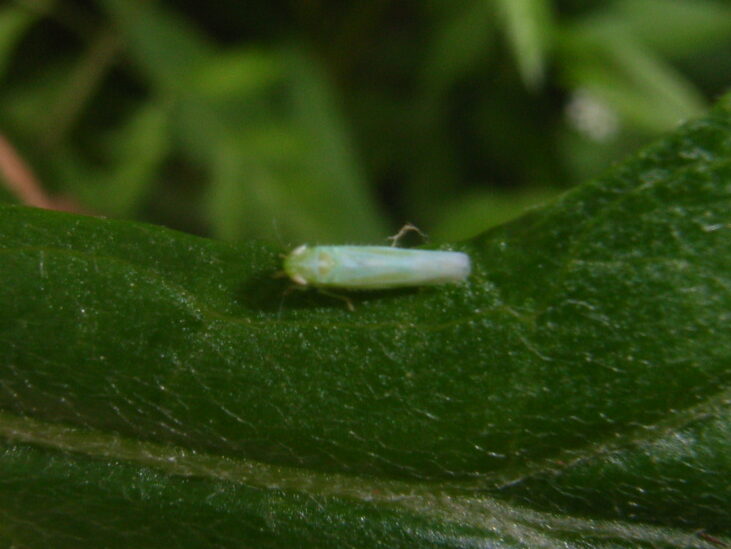
No. 03443 Austroasca vittata (Leafhopper subfamily)
It is distributed in Honshu, Kyushu, Tsushima; Korea, China, Russia, Mongolia, and the Palearctic region.
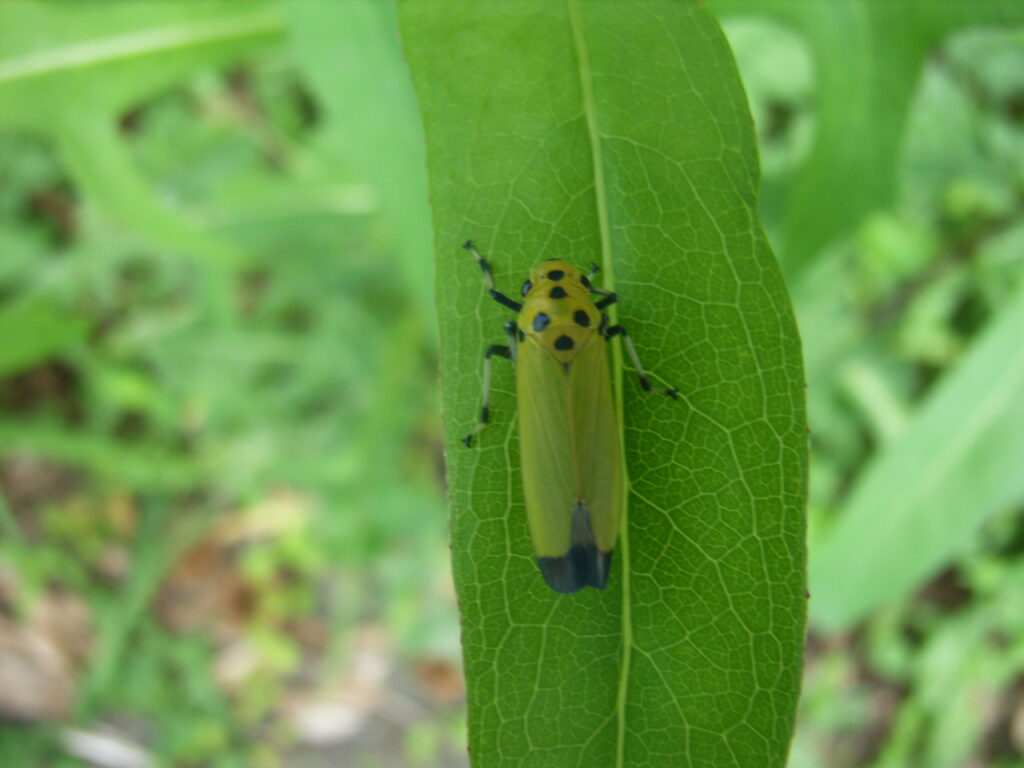
No. 03465 Bothrogonia ferruginea (Leafhopper subfamily)
It is distributed in Honshu, Shikoku, Kyushu, Tsushima, and the Osumi Islands; as well as in South Korea, China, Taiwan, Southeast Asia, and Africa (unclear). It may feed on the sap of many plants, including soybeans, peanuts, mulberry, tea plants, grapes, citrus fruits, persimmons, and figs, but in most cases, the damage is not significant enough to cause actual harm (Ishihara, 1962; Umetani and Okada, 2003). However, in the case of mulberry, branch growth may be inhibited due to damage caused by sap feeding and egg-laying. It has large black oval markings on its head, pronotum, and scutellum, which have been pointed out as mimicking the pupa of the poisonous seven-spotted ladybug Coccinella septempunctata (Yamazaki, 2010). At first glance, they may not look alike, but when viewed from the front by a predator of the same size, it resembles the pupa.
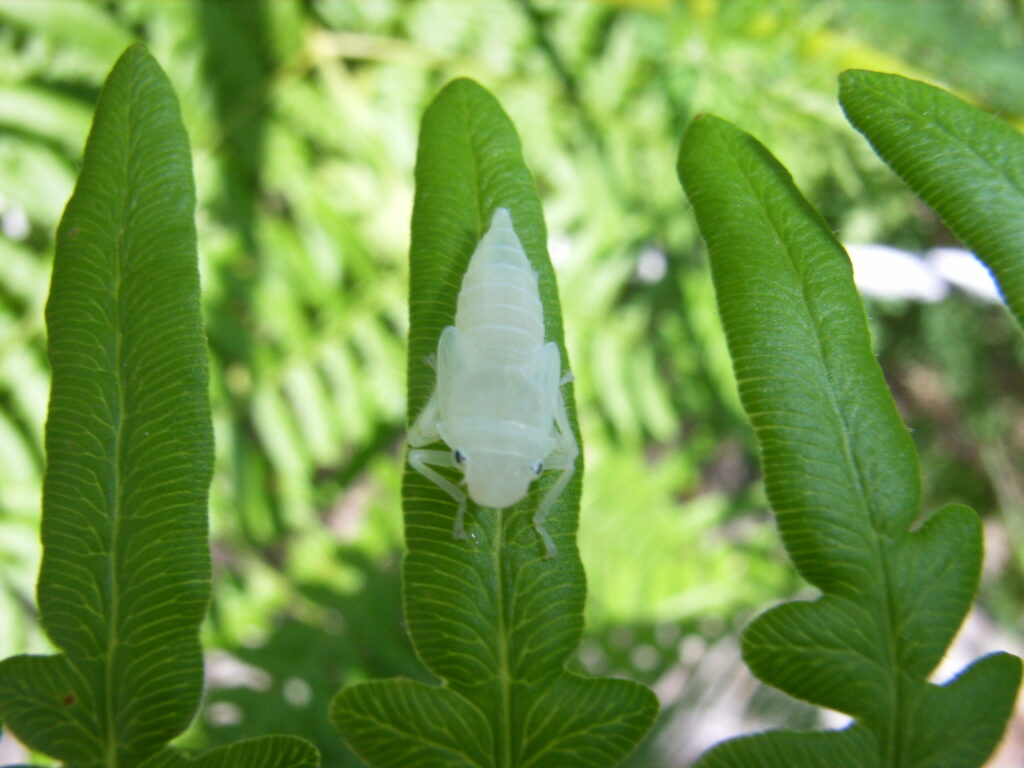
No. 03472 Large Leafhopper Cicadella viridis (Cicadella subfamily)
It is distributed in Hokkaido, Honshu, Shikoku, Kyushu, Tsushima, the Osumi Islands, South Korea, China, Russia, Vietnam, and the Palearctic region. It is common in grasslands and woodlands throughout these areas, parasitizing various plants and is known as a pest of many crops, including rice and tea plants.
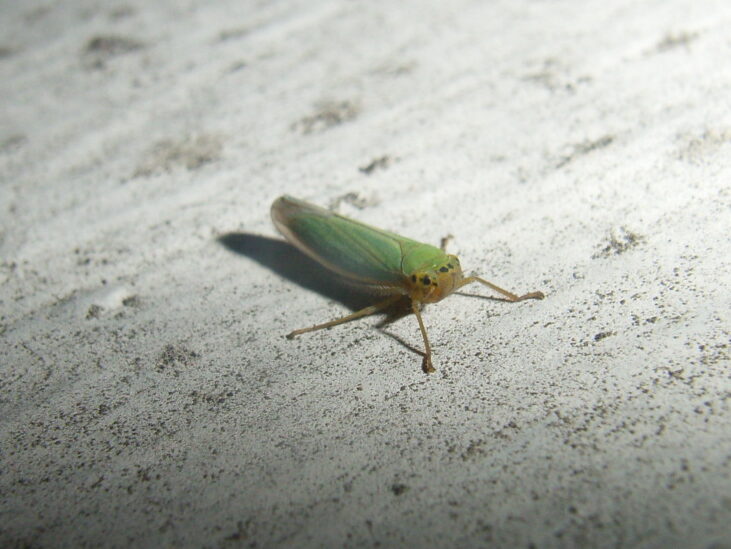
No. 03479 Red Leafhopper Dayus takagii (Leafhopper subfamily)
It is distributed across Honshu, Kyushu, Tsushima, the Osumi Islands, the Amami Islands, the Okinawa Islands, as well as in South Korea, Taiwan, and China.
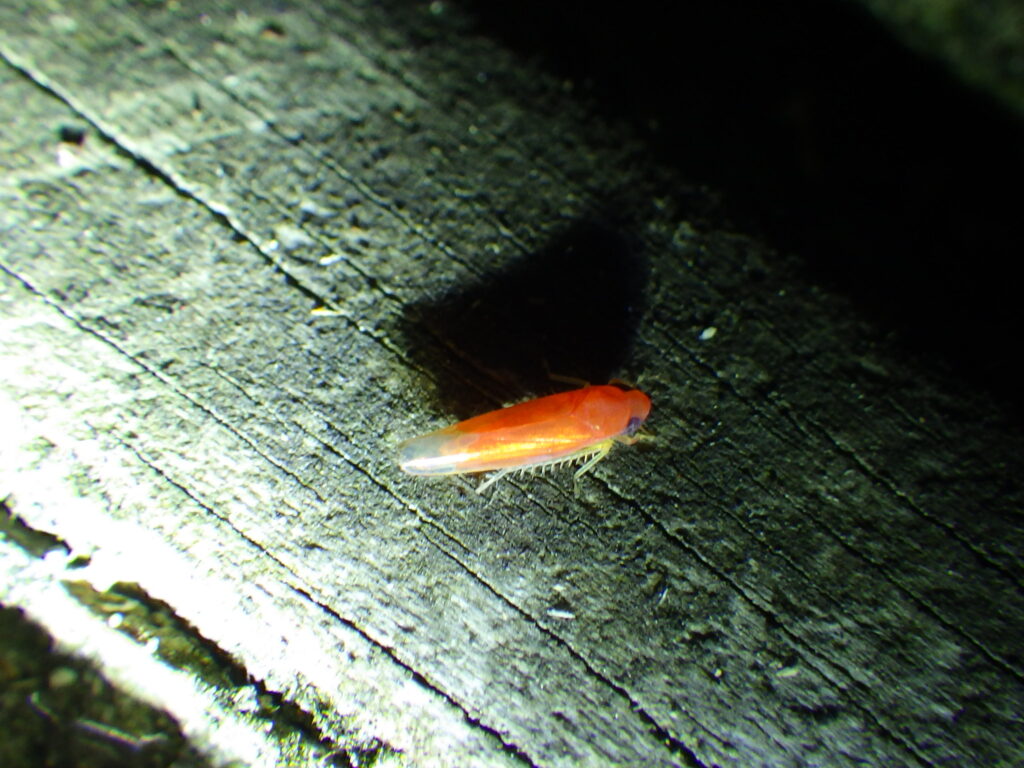
No. 03485 Spotted Leafhopper Diomma pulchra (Leafhopper subfamily)
It is distributed across Honshu, Shikoku, Kyushu, Tsushima, the Osumi Islands, the Amami Islands, the Okinawa Islands, and the Yaeyama Islands; as well as in South Korea, Taiwan, and China.
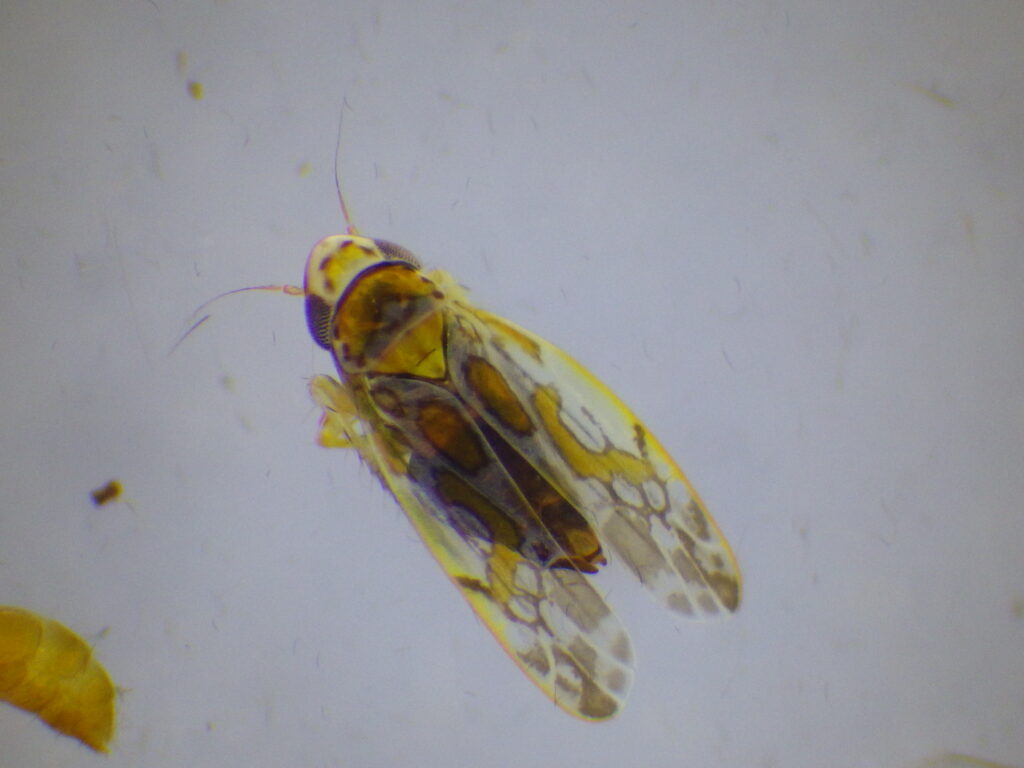
No. 03540 Evacanthus interruptus (Crested Leafhopper Subfamily)
It is distributed in the Kuril Islands, Hokkaido, Honshu, Shikoku, Kyushu, Korea, China, Russia, and the Palearctic region. It appears on Asteraceae plants in mountainous areas from July to August. The author reported the first record in Nara Prefecture (Ikeda, 2020).
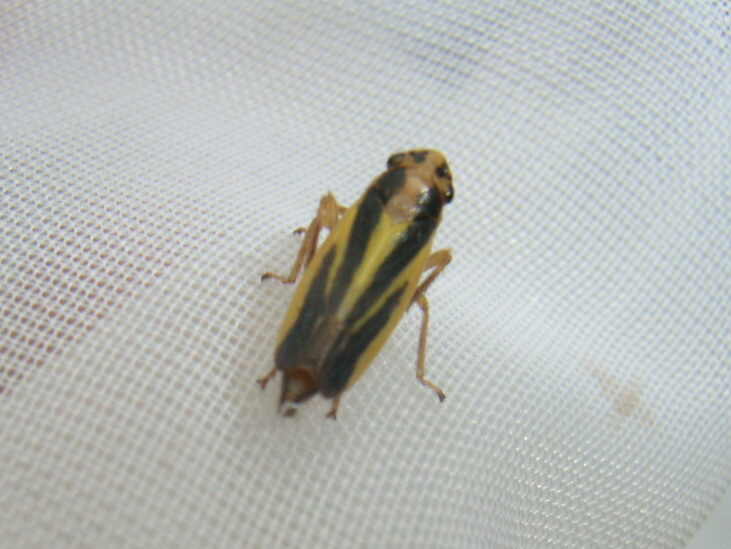
No. 03569 Idiocerus yanonis (Leafhopper subfamily)
It is distributed in Honshu, the Izu Islands, Shikoku, Kyushu, Tsushima, the Osumi Islands, the Amami Islands, and the Okinawa Islands. The author reported the first record in Nara Prefecture (Ikeda, 2020).
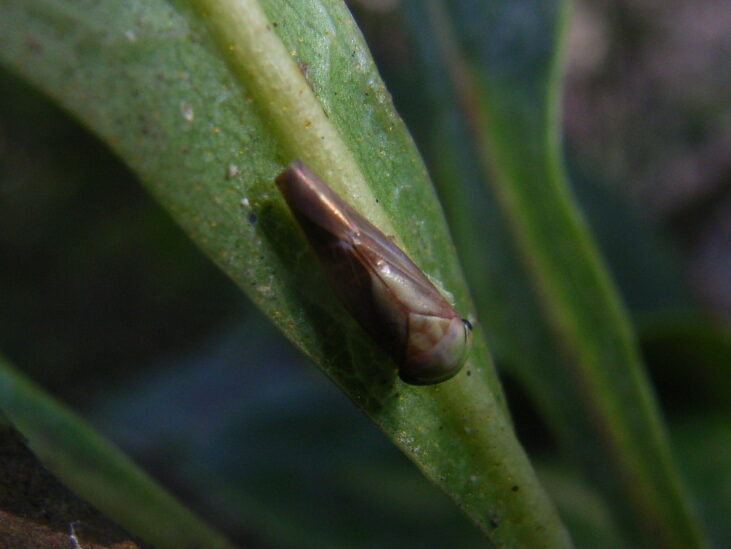
No. 03582 Kolla atramentaria (Leafhopper subfamily)
It is distributed in the Kuril Islands, Hokkaido, Honshu, Shikoku, Kyushu, Tsushima, Amami Islands, Okinawa Islands, Kerama Islands, Miyako Islands, and Yaeyama Islands; as well as in South Korea, China, Russia, and Myanmar.
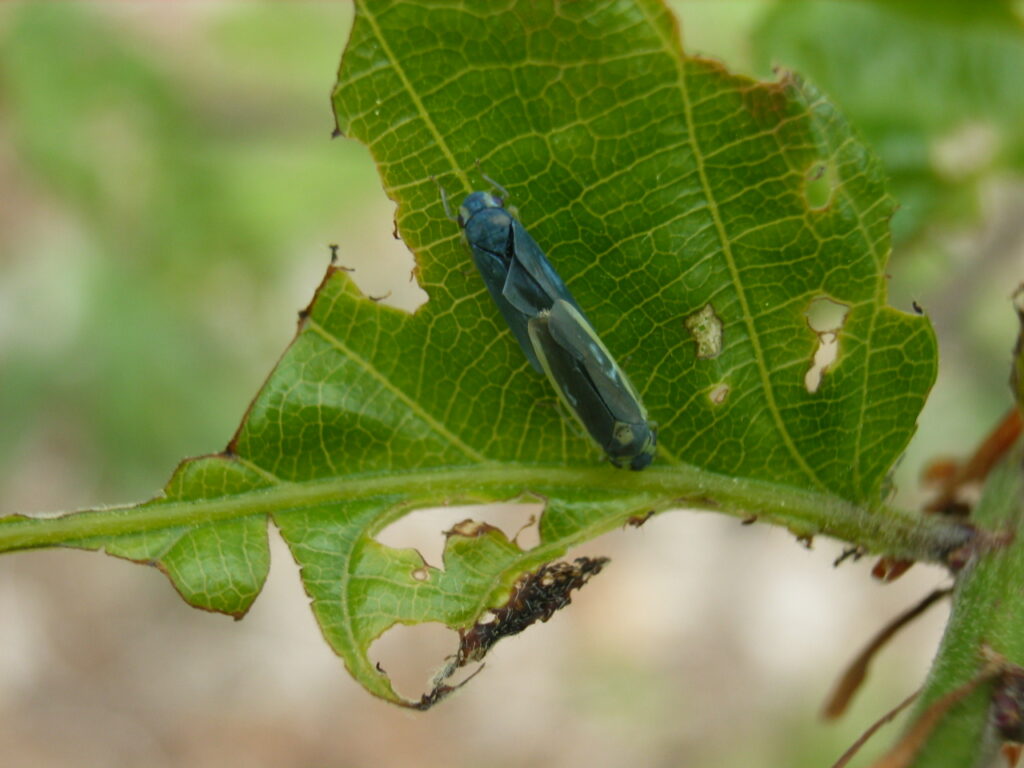
No. 03587 Horned Owl (Ledra auditura) (Owlininae subfamily)
It is distributed in Honshu, Shikoku, Kyushu, Tsushima, and the Yaeyama Islands; as well as in South Korea, China, the Russian Far East, and Taiwan. It has a pair of large ear-like projections on the posterior half of its pronotum; in males, these projections are slightly upward, but in females they are much larger and extend forward and upward. It camouflages itself by pressing its body tightly against branches to hide in the shade (Unno, 2019). Adults appear from around July, overwinter as adults, and the larvae parasitize beech family plants such as sawtooth oaks.
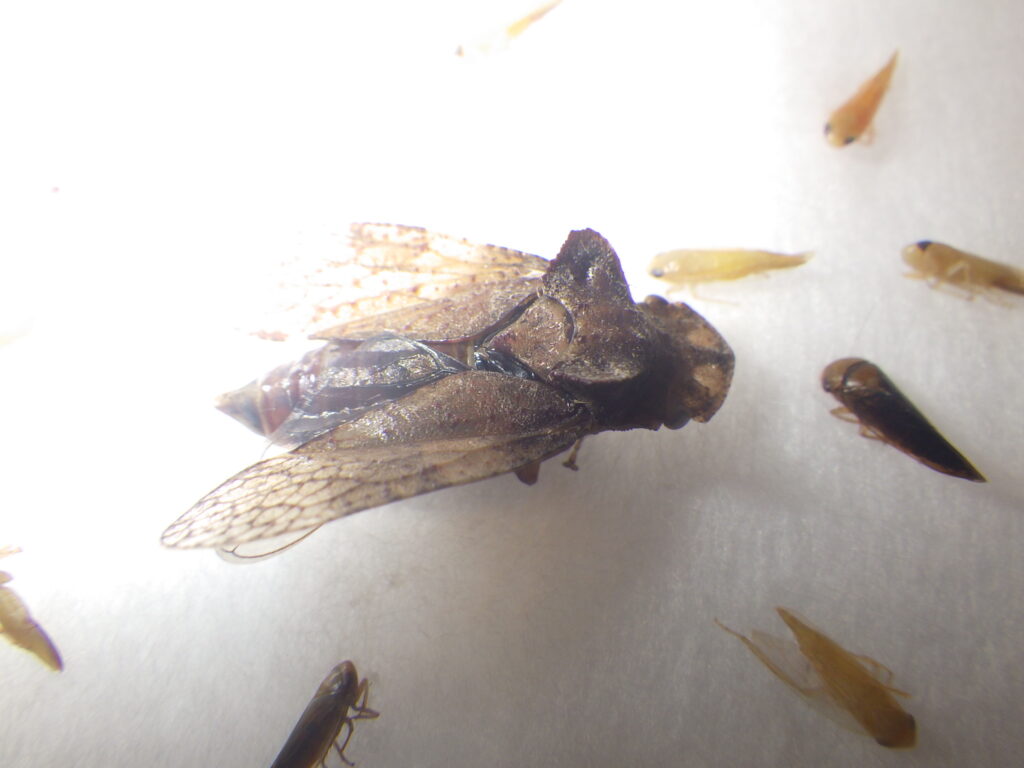
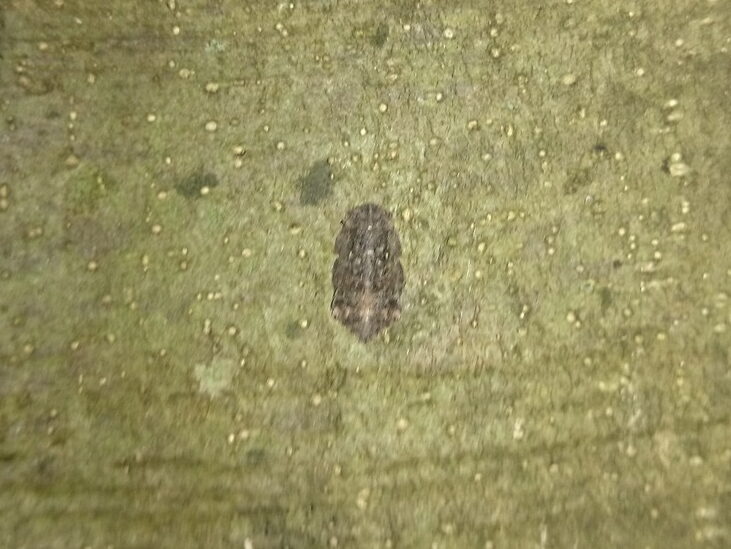
No. 03588 Short-eared Owl (Ledropsis discolor) (Owlininae subfamily)
It is distributed in Honshu, Shikoku, Kyushu, Tsushima, South Korea, China, and the Russian Far East. The head is long and protrudes forward in a bamboo-stalk shape, and the tip is not pointed. The protrusion is longer in females than in males. It camouflages itself by pressing its body tightly against branches to hide its shadow (Unno, 2019). It parasitizes Fagaceae plants such as Quercus glauca, Quercus acutissima, and Quercus serrata in plains and mountains, overwintering as a final-instar larva on tree branches, and adults emerge from around late April.
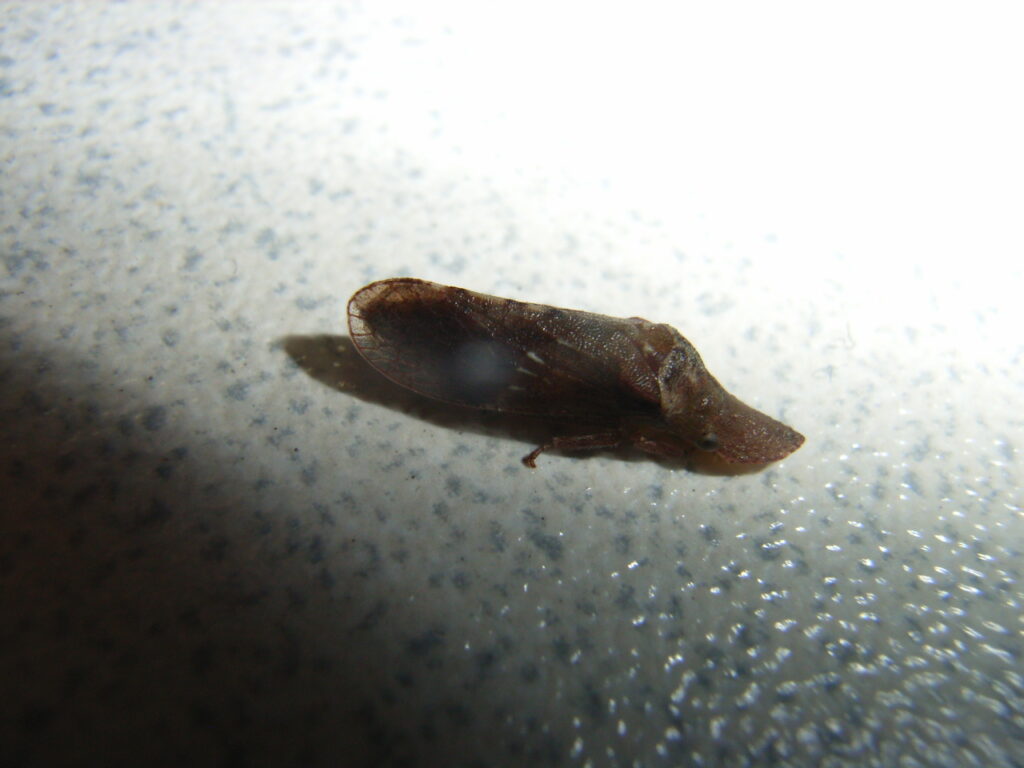
No. 03591 Limassolla multipunctata (Leafhopper subfamily)
It is distributed across Honshu, Kyushu, the Amakusa Islands, the Osumi Islands, the Amami Islands, the Okinawa Islands, the Kerama Islands, the Daito Islands, the Miyako Islands, and the Yaeyama Islands; as well as in China, Taiwan, India, and the Oriental region. It is common in broad-leaved trees and sometimes becomes a pest of mulberry and roses. Adults overwinter.
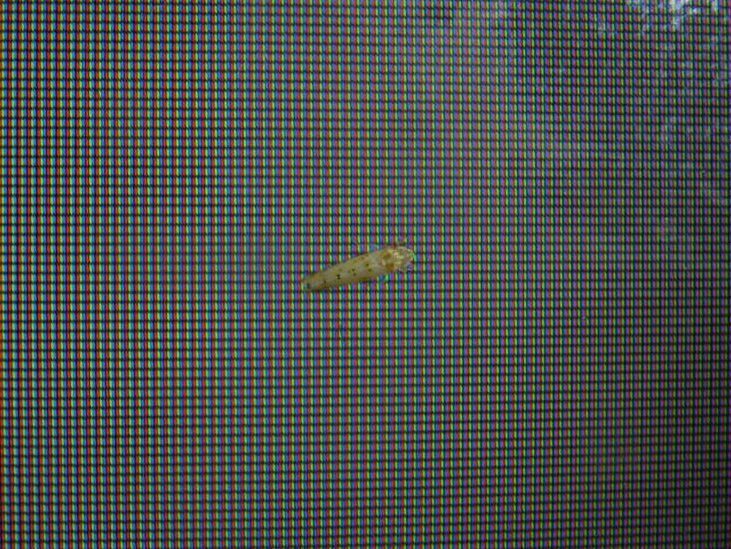
No. 03644 *Naratettix zonatus* (Leafhopper subfamily)
It is distributed in Hokkaido, Honshu, Shikoku, Kyushu, and the Yaeyama Islands; as well as in Korea, China, and Russia. It commonly inhabits various types of trees.
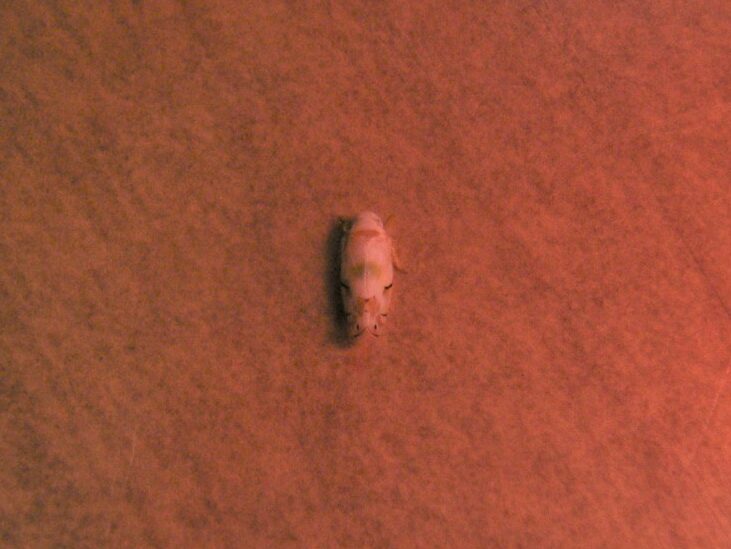
No. 03646 Nephotettix cincticeps (Caneliinae subfamily)
It is distributed across Honshu, Shikoku, Kyushu, Tsushima, the Ryukyu Islands, Taiwan, Korea, and the Philippines. In males, the wingtips (1/3) are black, while in females they are light brown. It frequently feeds on rice plants in paddy fields and transmits infectious diseases such as rice dwarf disease (caused by rice dwarf disease virus) and yellow dwarf disease (caused by phytoplasma) (Hōkyō, 1972).
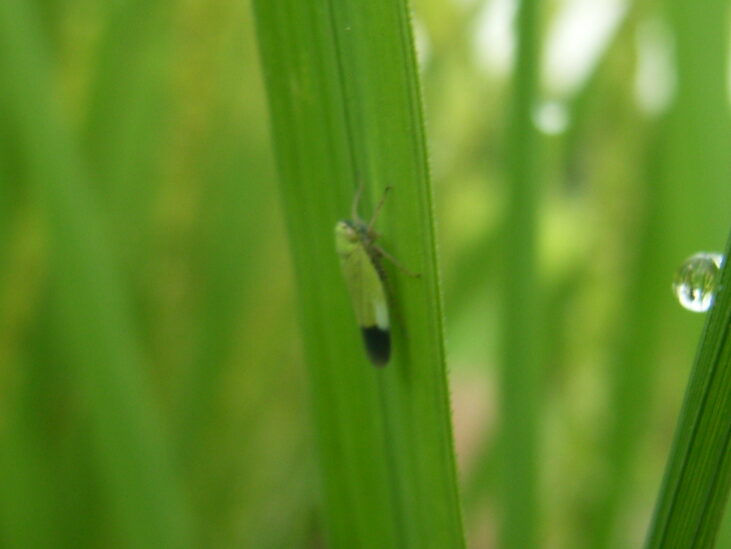
No.03681.a A species of leafhopper, Pagaronia sp. (Subfamily Pagarinae)
Previously, the mulberry leafhopper Pagaronia guttigera was thought to be widely distributed throughout Japan, but it is now believed to be distributed only in Honshu (Kanto region) (Japanese Insect Catalog Editorial Committee, 2016), and the species corresponding to the individual photographed in Nara Prefecture is unknown. Numerous species are listed in "Japanese Insect Catalog, Volume 4: Neoptera," and as of 2008, field surveys have confirmed more than 140 undescribed species (new species) from the Japanese archipelago (Hayashi, 2008).
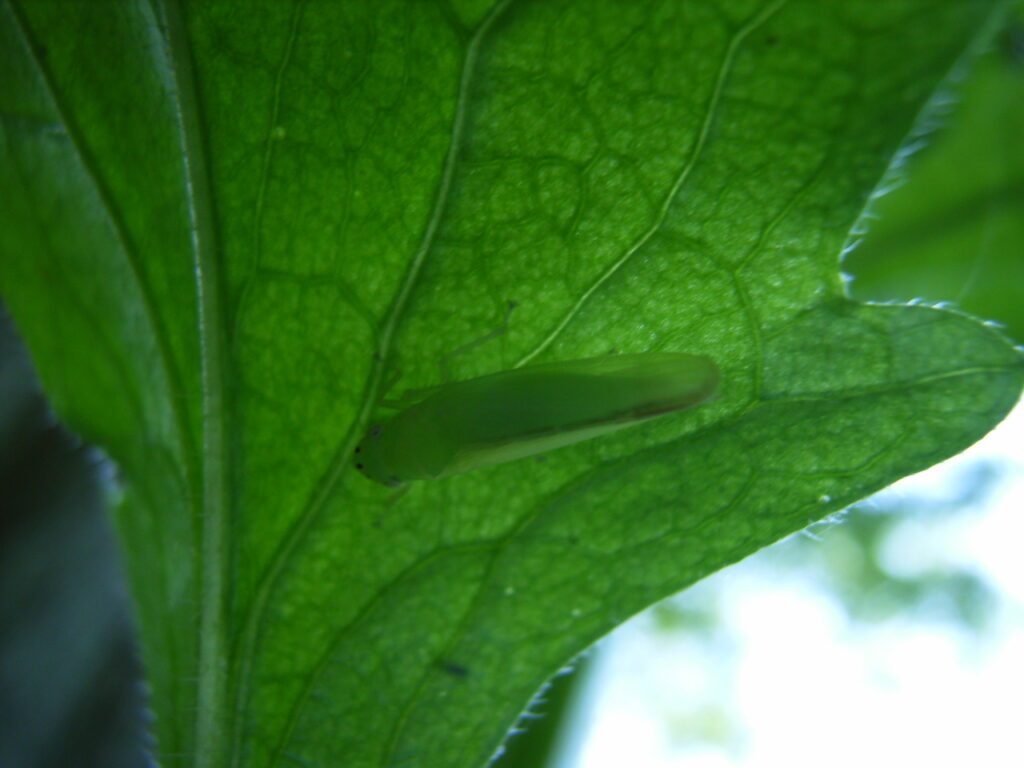
No. 03714 Penthimia nitida (Caneliinae subfamily)
It is distributed across Honshu, Shikoku, Kyushu, Tsushima; South Korea, China, the Russian Far East, and Taiwan.
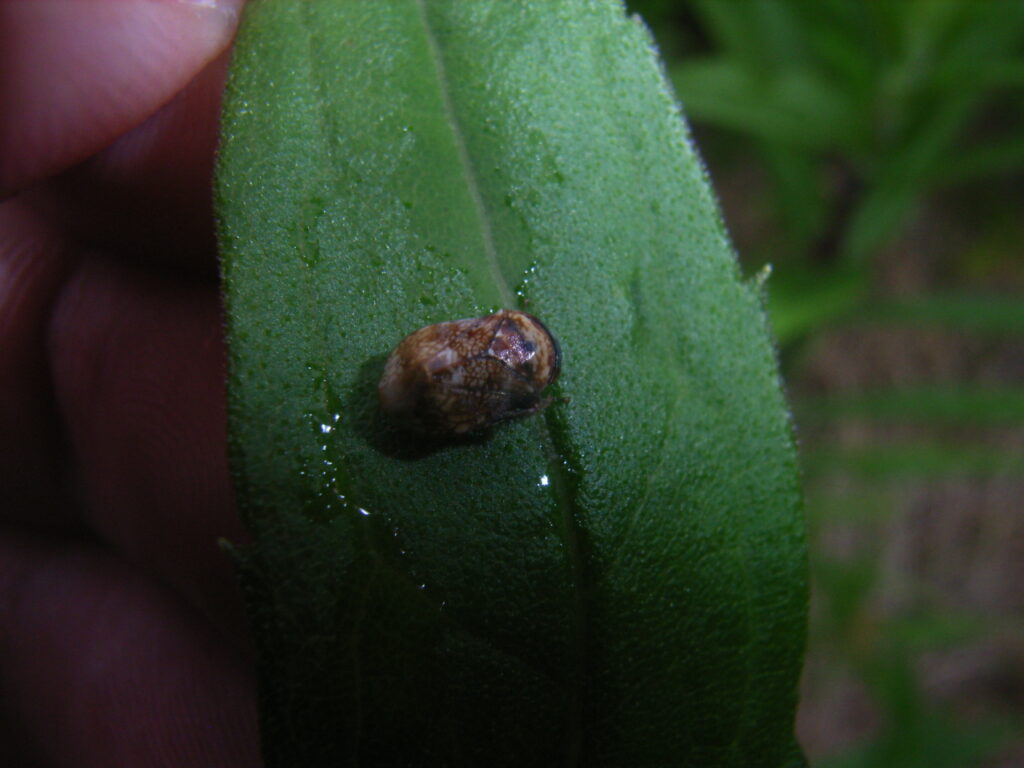
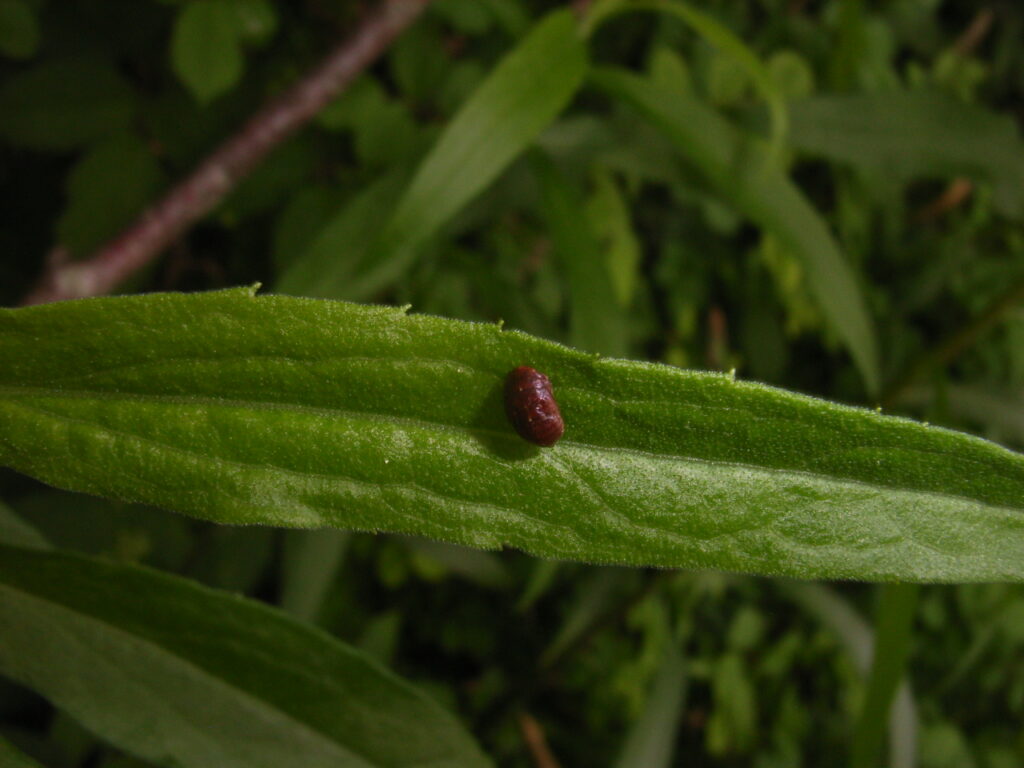
No. 03720 Planaphrodes nigricans (Canelopinae subfamily)
It is distributed in Hokkaido, Honshu, Shikoku, Kyushu, Tsushima; as well as in Korea, China, and Russia.
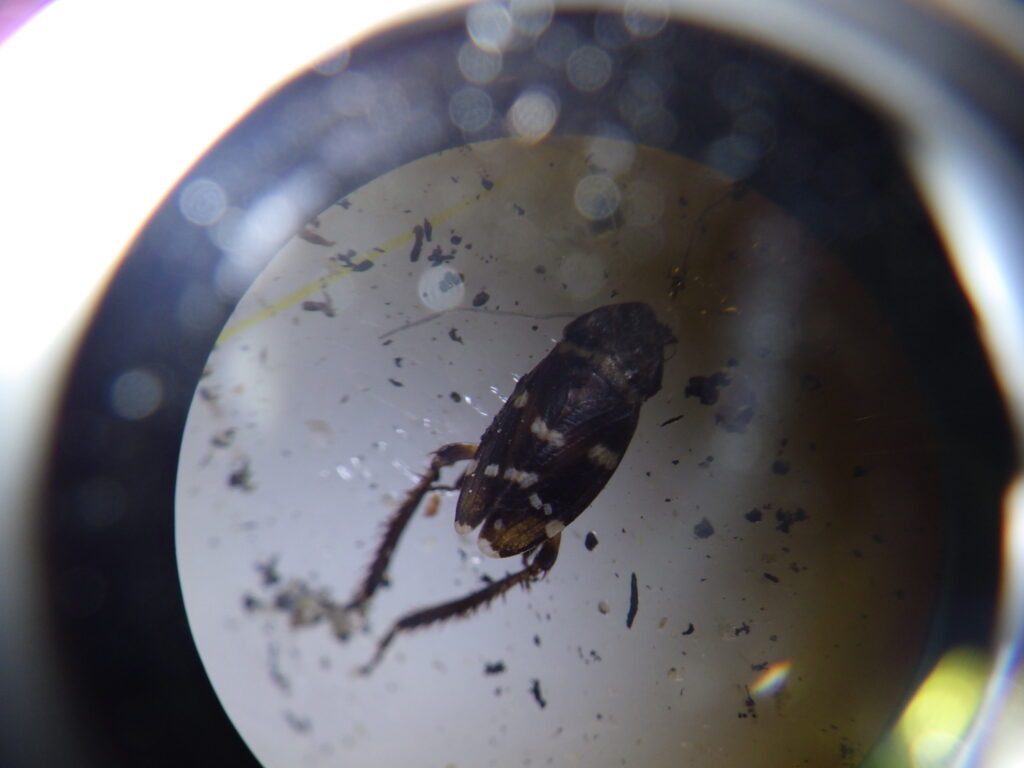
No. 03751 Flat-headed Owl (Tituria angulata) (Owl subfamily)
It is distributed in Kyushu, the Osumi Islands, the Tokara Islands, the Amami Islands, the Okinawa Islands, the Kerama Islands, the Miyako Islands, the Yaeyama Islands, and Taiwan. The body is entirely yellowish-green, and the sides of the pronotum are flattened and angular. The larva is broadly ovate and extremely flattened. It camouflages itself by clinging tightly to branches and hiding in the shade (Umino, 2019). It parasitizes broad-leaved trees such as Ficus erecta.
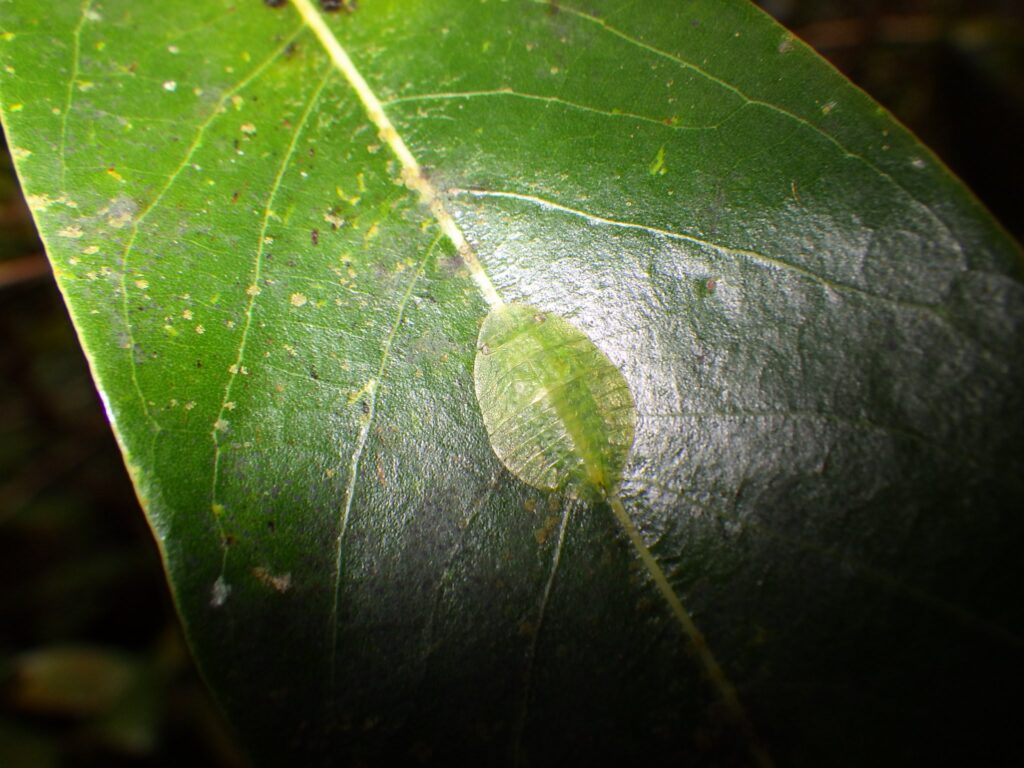
No. 03768 Leafhopper Xestocephalus japonicus (Leafhopper subfamily)
It is distributed in Hokkaido, Honshu, the Izu Islands, Shikoku, Kyushu, Tsushima, the Amami Islands, the Okinawa Islands, the Kerama Islands, the Miyako Islands, and the Yaeyama Islands; as well as in South Korea, China, and the Russian Far East.
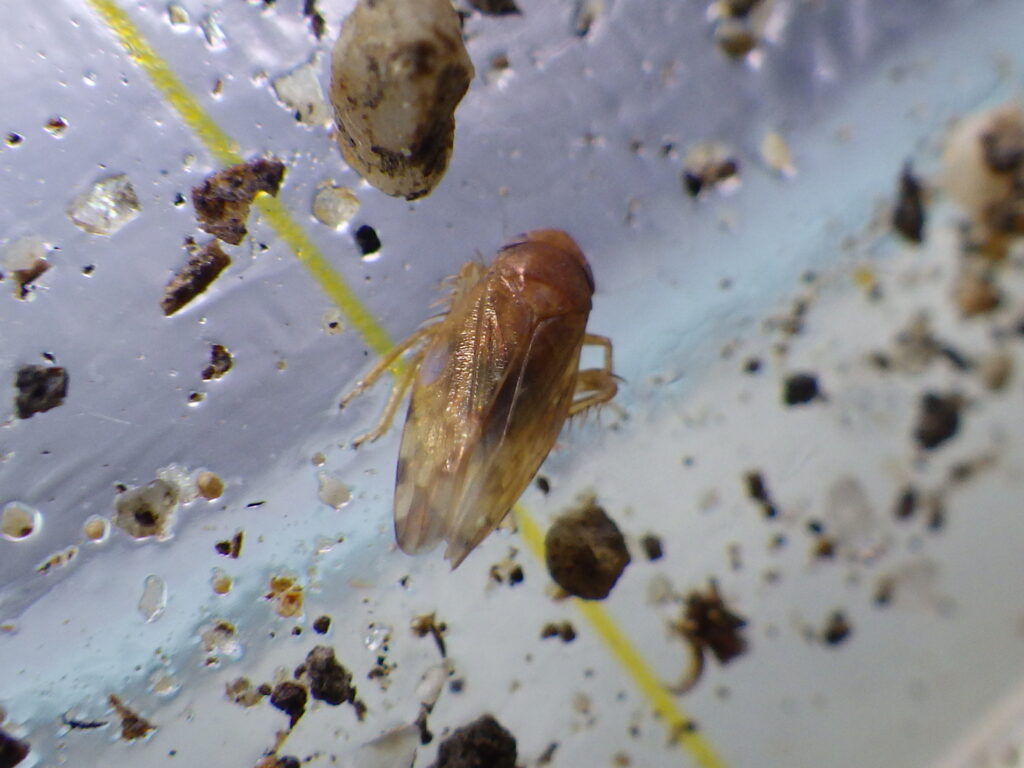
No. 03776 A species of leafhopper, Ziczacella sp. (Subfamily Ziczacellinae)
Identifying species of the genus Ziczacella requires examination of the male genitalia. Ziczacella hirayamella is distributed in Honshu, the Okinawa Islands, the Yaeyama Islands, Korea, China, and Russia. The author reported the first record from Nara Prefecture and confirmed its presence in the margins of deciduous broadleaf forests (Ikeda, 2020).
References
Davranoglou, LR, Mortimer, B., Taylor, GK, & Malenovský, I. 2020. On the morphology and evolution of cicadomorphan tymbal organs. Arthropod Structure & Development 55: 100918. https://doi.org/10.1016/j.asd.2020.100918
Derlink, M., Abt, I., Mabon, R., Julian, C., Virant-Doberlet, M., & Jacquot, E. 2018. Mating behavior of Psammotettix alienus (Hemiptera: Cicadellidae). Insect Science 25(1): 148-160. https://doi.org/10.1111/1744-7917.12379
Emura, Kaoru; Kubota, Sakae; and Hirai, Kazuo. 2012. Illustrated Ecology of Pests and Beneficial Insects in Rural Environments. Hokuryukan, Tokyo. 420pp. ISBN: 9784832608405
Hamilton, KA, & Whitcomb, RF 2010. Leafhoppers (Homoptera: Cicadellidae): a Major Family Adapted to Grassland Habitats. In JD Shorthouse, & KD Floate (Eds.), Arthropods of Canadian Grasslands (Volume 1): Ecology and Interactions in Grassland Habitats (pp.169-197). Biological Survey of Canada. ISBN: 9780968932148, https://doi.org/10.3752/9780968932148.ch8, https://scholar.archive.org/work/q4wpa6z2jfhtrc2but4nhl4wzu/access/wayback/http://biologicalsurvey.ca/assets/file/56
Hayashi, Masami. 2008. A study on the diversification of Hemiptera (suborder Ceratorhyncha) insects in the Japanese archipelago. Research Project Report of the National Institute for Advanced Studies 6: 150-151. http://id.nii.ac.jp/1586/00010988/
Hidaka, Toshitaka; Ishii, Minoru; Otani, Tsuyoshi; and Tsuneki, Yutaka. 1996. Encyclopedia of Japanese Animals, Vol. 8: Insects 1. Heibonsha, Tokyo. 188pp. ISBN: 9784582545586
Nobuhiko Hokkyo. 1972. A study on the life history and population dynamics of the black-tipped leafhopper [Doctoral dissertation, Kyoto University]. http://hdl.handle.net/2433/219854
Hunt, RE, Fox, JP, & Haynes, KF 1992. Behavioral response of Graminella nigrifrons (Homoptera: Cicadellidae) to experimentally manipulated vibrational signals. Journal of Insect Behavior 5: 1-13. https://doi.org/10.1007/BF01049154
Ishihara, T. 1962. The black-tipped leafhopper, Bothrogonia ferruginea Auct of Japan and Formosa. Japanese Journal of Applied Entomology and Zoology 6(4): 289-292. https://doi.org/10.1303/jjaez.6.289
Ikeda, Kenichi. 2020. Unrecorded species of true bugs (Hemiptera) in Nara Prefecture. Niche Life 8: 13-18. ISSN: 2188-0972, https://media.niche-life.com/series/008/Niche008_05.pdf
Ito, Shushiro; Okutani, Teiichi; and Hiura, Isamu. 1977. Illustrated Encyclopedia of Japanese Insects, Volume 2, Completely Revised New Edition. Hoikusha, Osaka. ISBN: 9784586300037
H. H. & M. T. 2018. Additional records of 14 species of wasps in Saitama Prefecture, including 10 first-time records. Bulletin of the Saitama Prefectural Museum of Natural History 12: 33-36. https://doi.org/10.24715/smnh.12.0_33
Iwamoto, Hiroyuki. 2018. The engine that produces loud noises in cicadas. Biophysics 58(5): 245-247. https://doi.org/10.2142/biophys.58.245
Matsumoto, Eiji. 1988. Ecological studies of the lightning leafhopper I. Temperature, development, oviposition, and generational progression in Kagawa Prefecture. Journal of the Japanese Society of Applied Entomology and Zoology 32(1): 1-5. https://doi.org/10.1303/jjaez.32.1
Nakasuga, Takamasa. 1977. On two species of blind bugs that feed on planthoppers and leafhoppers. Bulletin of the Kyushu Plant Protection Society 23: 85-88. https://doi.org/10.4241/kyubyochu.23.85
Japanese Insect Catalog Editorial Committee. 2016. Japanese Insect Catalog, Vol. 4: Neoptera. Kaika Shobo, Tokyo. 629pp. ISBN: 9784434218224
Núñez, ED, & Aiello, A. 2013. Leafhoppers (Homoptera: Cicadellidae) that probe human skin: A review of the world literature and nineteen new records, from Panama. Terrestrial Arthropod Reviews 6(3): 201-225. ISSN: 1874-9828, https://doi.org/10.1163/18749836-06001064
Kamitani, Satoshi. 2013. Illustrated Key to Homoptera and Cicadellidae. In: Hatsushuku, Naruhiko (Ed.), Illustrated Guide to Insects 1: Environmental Assessment Animal Survey Lecture Series, Illustrated Key Series Compilation. Bunkyo Publishing. http://kandoukon.org/sub/etoki.html
Kobayashi, Takashi. 1963. Effects of pesticide application on arthropod communities in paddy fields. Journal of the Japanese Society of Applied Entomology and Zoology 7(3): 257-258. https://doi.org/10.1303/jjaez.7.257
Koga, Ryuichi. 2014. Enabling selective diets: Diverse essential symbiotic bacteria of Hemiptera insects. Sericulture and Insect Biotechnology 83(3): 187-201. https://doi.org/10.11416/konchubiotec.83.3_187
Kosugi, Yukio. 2003. Predatory characteristics of *Cat spider* and *Asahii shrimp spider* against *Tea green leafhopper* and predation status in tea plantations. Research Report of Shizuoka Prefectural Tea Research Station 24: 9-16. https://agriknowledge.affrc.go.jp/RN/2030691498
Okada, Tadatora. 1971. Studies on the identification of *Eriocauli* species from Kyushu. Report of the Kyushu Agricultural Experiment Station 15(4): 693-735. https://agriknowledge.affrc.go.jp/RN/2010825461
Ono, T., Kido, T., & Koyama, J. 2004. Experimental analysis of predation rates of the Japanese tree frog and the Tokyo daruma frog against the black leafhopper. Bulletin of the Northern Japan Society for Plant Protection 55: 176-179. https://doi.org/10.11455/kitanihon1966.2004.176
Peck, D. C. 2000. Reflex bleeding in froghoppers (Homoptera: Cercopidae): variation in behavior and taxonomic distribution. Annals of the Entomological Society of America 93(5): 1186-1194. https://doi.org/10.1603/0013-8746(2000)093[1186:RBIFHC]2.0.CO;2
Rakitov, RA 2004. Powdering of egg nests with brochosomes and related sexual dimorphism in leafhoppers (Hemiptera: Cicadellidae). Zoological Journal of the Linnean Society 140(3): 353-381. https://doi.org/10.1111/j.1096-3642.2003.00103.x
Saegusa, Toyohira; Kamitani, Satoshi; Miyatake, Yorio; Oshirodo, Hirofumi; and Sugimoto, Mika. 2013. Illustrated Guide to Common Planthoppers, Leafhoppers, and Psyllids in Kyushu. Kaika Shobo, Fukuoka. 190pp. ISBN: 9784434184062
Thompson, V., & Carvalho, GS 2016. Abrupt geographical transition between aposematic color forms in the spittlebug Prosapia ignipectus (Fitch) (Hemiptera: Cercopidae). Psyche 2016: 3623092. https://doi.org/10.1155/2016/3623092
Tishechkin, DY 2015. Speciation in Macropsinae leafhoppers (Homoptera: Auchenorrhyncha: Cicadellidae)-the role of acoustic signal divergence and host plant shifts. Russian Entomological Journal 24(1): 7-16. ISSN: 0132-8069, https://kmkjournals.com/journals/REJ/REJ_Index_Volumes/REJ_24/REJ_24_1_007_016_Tishechkin
Tomizawa, Makoto & Noda, Hiroaki. 2014. Symbiotic bacteria and PGRP gene expressed in the symbiotic organ of the leafhopper *Cypripedium macranthos*. Sericultural and Insect Biotechnology 83(3): 231-237. https://doi.org/10.11416/konchubiotec.83.3_231
Umetani, Kenji & Okada, Toshiyuki. 2003. Encyclopedia of Japanese Agricultural Pests. National Rural Education Association, Tokyo. 1203pp. ISBN: 9784881371039
Unno, Kazuo. 2019. Field Guide to Identifying Common Insects, Revised and Expanded Edition. Seibundo Shinkosha, Tokyo. 319pp. ISBN: 9784416519127
Webb, MD, & Viraktamath, CA 2009. Annotated check-list, generic key and new species of Old World Deltocephalini leafhoppers with nomenclatorial changes in the Deltocephalus group and other Deltocephalinae (Hemiptera, Auchenorrhyncha, Cicadellidae). Zootaxa 2163(1): 1-64. https://doi.org/10.11646/zootaxa.2163.1.1
Yamazaki, K. 2010. Leafhopper's face mimics the ladybird pupae. Current Science 98(4): 487-488. https://www.researchgate.net/profile/Kazuo-Yamazaki-2/publication/290082959_Leafhopper's_face_mimics_the_ladybird_pupae/links/570c3c8b08ae2eb94223bf20/Leafhoppers-face-mimics-the-ladybird-pupae.pdf
Yang, S., Sun, N., Stogin, BB, Wang, J., Huang, Y., & Wong, TS 2017. Ultra-antireflective synthetic brochosomes. Nature Communications 8(1): 1285. https://doi.org/10.1038/s41467-017-01404-8