When you hear the word "ant," you might picture a black insect crawling on the ground. However, there are actually many unknown species of ants living underground, and among them, the Hooked Ants and Pterodactylus ants have a very unique shape with hook-shaped abdomens. While they certainly look interesting, their function remained unknown for a long time. However, with further research, it has been discovered that Hooked Ants specialize in eating insect eggs, and that the hooks on their abdomen are an adaptation for handling these eggs. In recent years, the types of insect eggs they feed on have also gradually become clearer. This article will explain the morphology and ecology of Hooked Ants and Pterodactylus ants.
Are there ants in Japan with a hook-shaped abdomen?!
What image comes to mind when you hear the word "ant"?
In Japan, the most common types of ants are the brown ant and the black garden ant, both of which are small, black, and can be seen actively moving around even on the ground.
However, it is known that there are many types of ants called "subterranean" ants that cannot be found unless the soil is dug deep into the ground.
It's rare to encounter ants like these, and many people may not even know they exist. However, such species are important for ant research, and when I was a student, I often dug up soil in rural areas of Nara Prefecture to search for ants in order to study the different ant species there. I published the results of that research in a paper (Ikeda, 2020).
By the way, among those kinds of ants, there is one that I find particularly interesting.
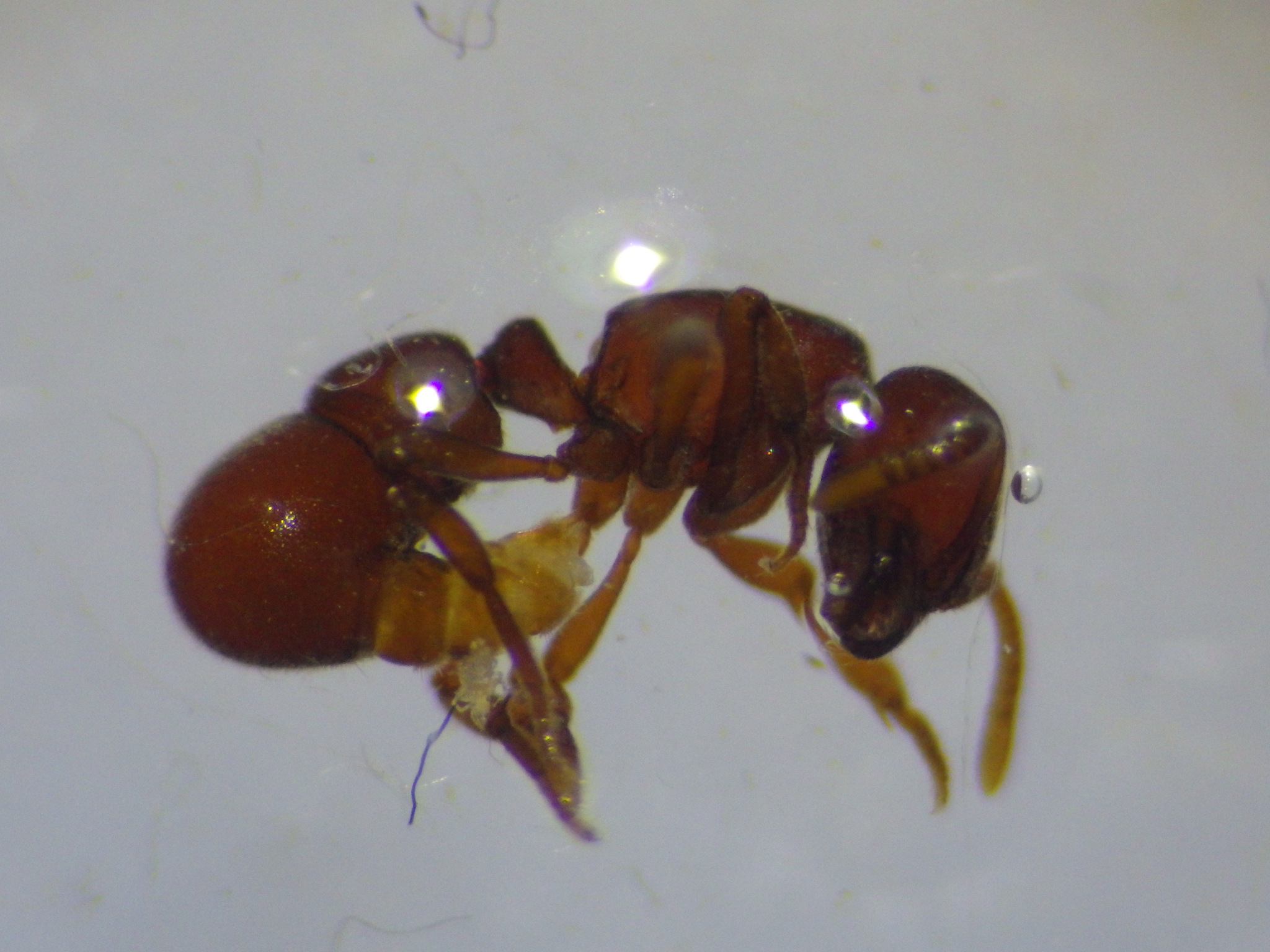
That's a type of ant called a hooked ant, a general term for ants belonging to the genus *Hooked Ants* in the family Formicidae.
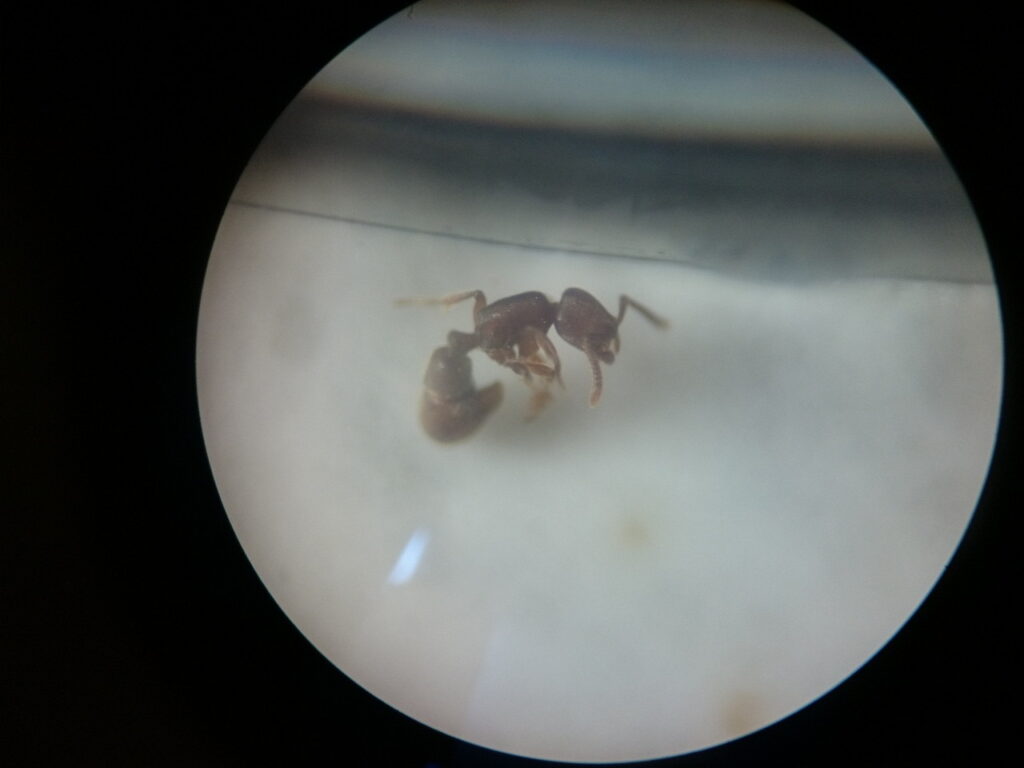
The most distinctive feature of this species of ant is its hook-shaped abdomen. This is the origin of its name, which means "hook-bellied ant." The hook is fixed, and the ant cannot straighten its abdomen backward.
Furthermore, as a result of adapting to a subterranean lifestyle, their compound eyes have degenerated, and their body color is brown instead of black like that of terrestrial species. This is because they do not need to mitigate the damage from ultraviolet rays caused by sunlight, as humans do with black hair.
This species is interesting just for its appearance, and on top of that, it's quite rare, so finding one is a real surprise.
In Japan, several species of ants named after people are known, including * Proceratium itoi*, * Proceratium watasei*, * Proceratium morisitai*, and * Proceratium japonicum*.
Although they belong to different genera, the ants * Discothyrea sauteri * and * Discothyrea kamiteta* have very similar abdominal shapes (the latter having compound eyes).
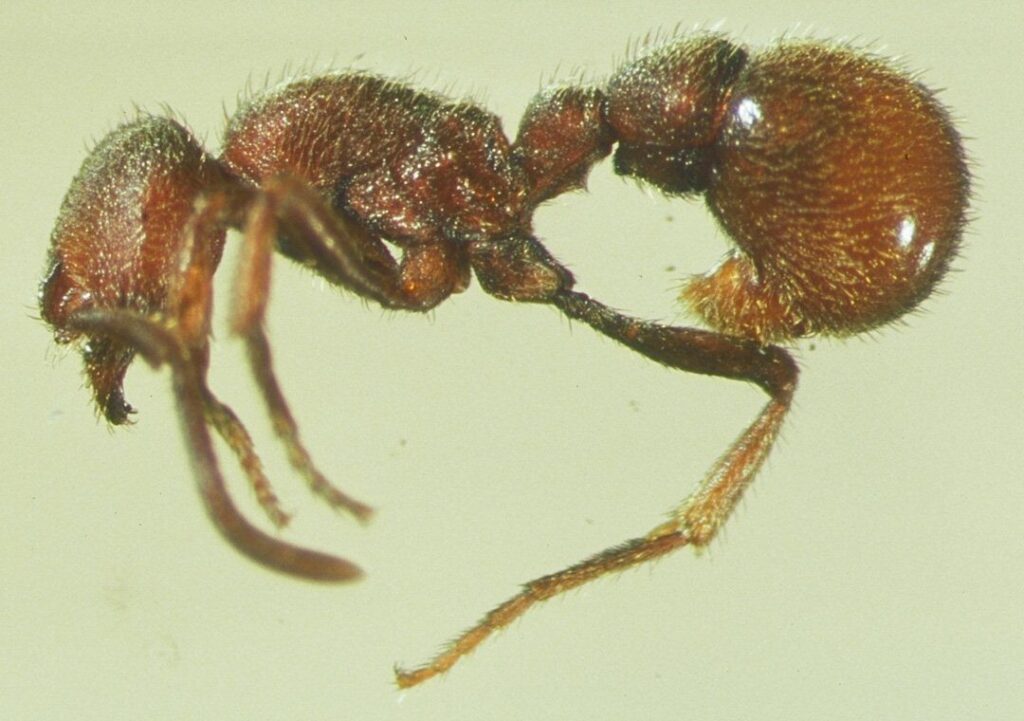
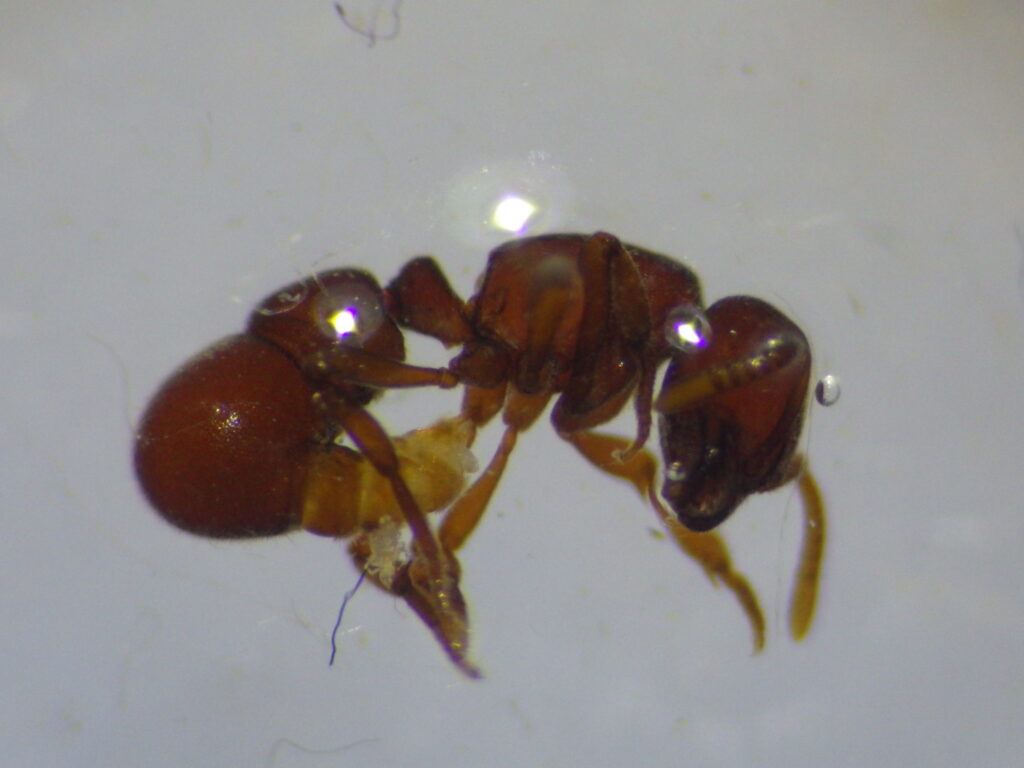
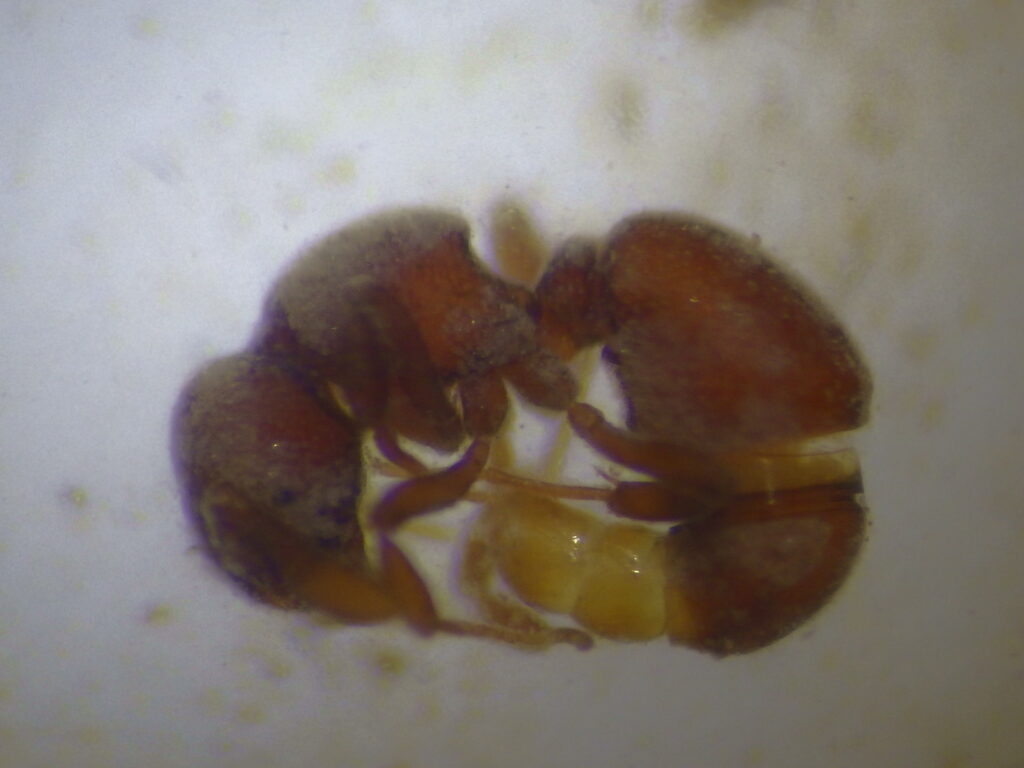
The "hooks" on its belly were for carrying insect eggs!
But what role do these "hooks" on its belly play?
The mystery of the "hook" on its belly wasn't immediately solved. This is because it lives underground, making it very difficult to study its ecology.
However, in 1957, a researcher named Brown was the first to report that a species of ant from the genus *Hypnacea*, native to North America, was storing arthropod eggs in its nest.
Mr. Brown also succeeded in raising a species called Proceratium silaceum by feeding it only spider eggs.
In other words, it has become clear that the ant species *Hydrophilus spp.* specializes in feeding on insect eggs. Isn't that surprising?
However, some people may still not understand how the "hook" on the belly is connected to the eggs.
Following this, Japanese researcher Keiichi Masuko partially reported on how ants such as the genus *Cortinarius* and *Cortinarius* handle eggs (Masuko, 1981).
According to the study, the Daruma ant stands on the floor using its middle and hind legs, and uses its two front legs and the straight end of its forelegs to hold the eggs stored in the nest. It has been observed that the ant skillfully rotates the eggs while licking their surface clean with its mouthparts.
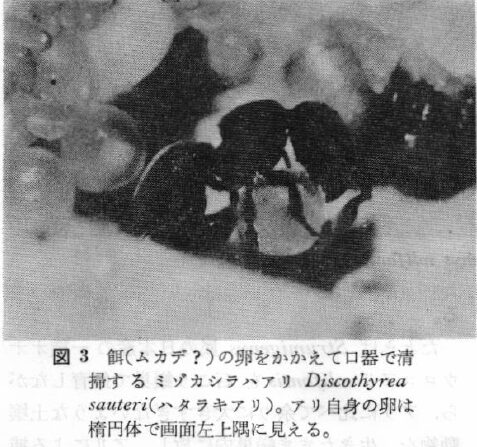
Furthermore, in the Japanese spindle ant (Rana japonica), it has been observed that when the ant cuts open the eggs with its mandibles, it not only holds the eggs with its legs but also firmly grips them by pressing the tip of its abdomen against them.
Based on these observations, it's likely that the hooks on its abdomen are used to clean or eat insect eggs.
However, they don't always handle the eggs with their belly; they might use their mandibles to hold the eggs in their mouths when transporting them.
They say they eat "insect eggs," but what kind of insects specifically?
By the way, I've been referring to them as "insect eggs," but what kind of eggs are they specifically?
In fact, this point has remained unclear for a long time.
As mentioned above, Mr. Brown, who was the first to report on egg storage in the ant species *Rhynchosoma rhodopolium*, reported in various books that "the ants feed on spider eggs!" after feeding them spider eggs "in captivity" and observing the colony's growth.
Brown's report was based solely on observations made "in captivity," and failed to verify the identity of the eggs when found in the wild. As a result, the question remains: "Do ants of the species *Hydropsyche* really feed on spider eggs in the wild?"
Therefore, Keiichi Masuko, through extremely meticulous and painstaking work, investigated the identity of the eggs of the ant species *Rhynchosoma rhodopolium* in the wild (Masuko, 2019).
The method was quite simple: they hatched 1,800 eggs from a wild ant nest. However, even though the method is simple, finding the ant nests, which are difficult to locate, and examining so many delicate eggs is no easy task.
The investigation revealed that the 1,800 eggs contained only centipedes such as Lithobius, hemipterans such as Macroscytus japonensi, and harvestmen such as Proscotolemon sauteri.
Furthermore, there were no spider eggs at all. This contradicts Brown's report.
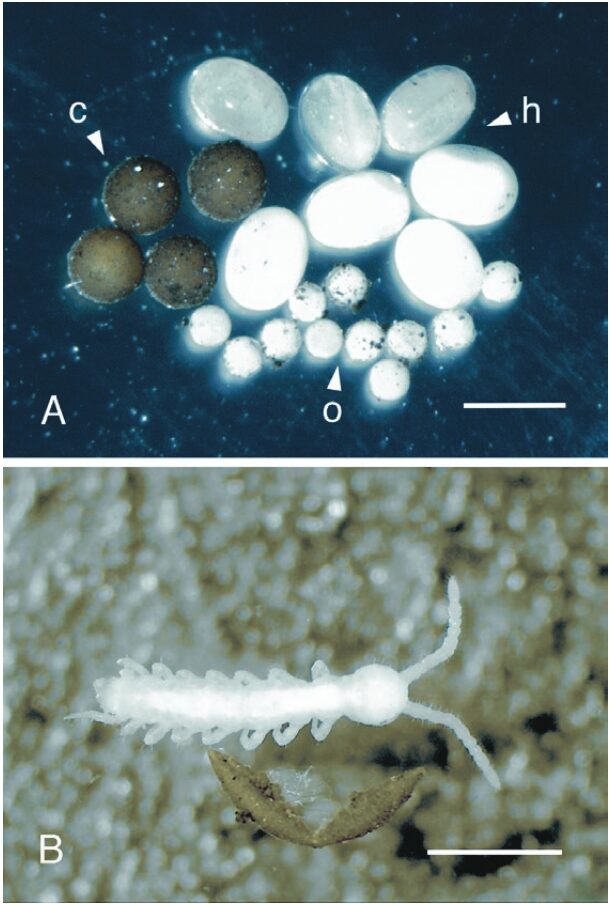
However, it would be premature to conclude from these results that all species of ant species prey exclusively on the eggs of these three groups. The ecology of ant species found in North America may differ from that of ant species found in Japan, and the four species of ant species and two species of ant species found in Japan also differ morphologically, which may also stem from the differences in the eggs they prey on.
In fact, another study has shown that the common ant *Argynnis paphia* feeds exclusively on spider eggs, and in one instance, *Argynnis spp.* collected eggs from a slightly different centipede species called * Esastigmatobius *.
This behavior may also affect other insects and ecosystems. Stone centipedes and harvestmen are carnivorous and are top predators among small animals, and while stink bugs feed on seeds, they emit a foul odor as adults, making them unaffected by most animals. However, it appears that the hooked ant regulates the populations of these insects while they are still in the egg stage.
Furthermore, while the stink bug that was preyed upon in this case left its eggs unattended after laying them, many other species in the family Pentatomidae are known to protect their eggs (subsocial behavior). These ecological differences may also be partly driving the evolution of the ant species *Rhynchosoma rhodopolium*.
While there are still many unknowns about this group, it's possible that their unique diet plays a crucial role in maintaining balance within the entire ecosystem. Though minor, they are definitely worth keeping a close eye on.
References
Ikeda, K., Kasai, H., Goda, A., Murakami, K., Ishihara, T., Nakamura, K., and Sawabatake, T. 2020. Ant fauna around Kinki University Nara Campus. Kinki University Faculty of Agriculture Bulletin 53: 46-70. ISSN: 2189-6267 https://kindai.repo.nii.ac.jp/records/20942
Masuko, Keiichi. 1981. Predatory behavior of forest floor ants: A few examples. Insects and Nature 16(3): 19-25. ISSN: 0023-3218.
Masuko, K. 2019. Predation on non-spider arthropod eggs and colony bionomics of the ant Proceratium itoi (Hymenoptera: Formicidae). Annals of the Entomological Society of America 112(4): 372-378. https://doi.org/10.1093/aesa/saz012
Japanese Ant Database Group. 2003. Complete Illustrated Guide to Japanese Ants. Gakken Co., Ltd., Tokyo. 196pp. ISBN: 9784054017924