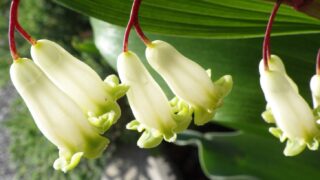
Asparagaceae

Sponsored Link
plant

What are the differences between Ophiopogon japonicus, Ophiopogon longifolius, Ophiopogon sieboldii, and Ophiopogon orchid? An explanation of how to distinguish between similar species.

Ophiopogon japonicus, Ophiopogon longifolius, Ophiopogon sieboldii, and Ophiopogon orchid all belong to the Ophiopogon genus of the Asparagaceae family (formerly Asparagaceae), and are evergreen perennial herbs often seen growing creeping along the ground in forests. Their most distinctive feature is the dark blue seeds they produce, which are easily mistaken for fruits...
plant

What are the differences between Asparagus, Asparagus, and Coprinus? An explanation of how to distinguish between similar species.

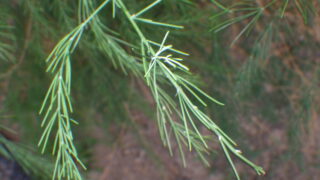
Asparagus, rhizome, and dwarf asparagus are all perennial herbs belonging to the genus Asparagus in the family Asparagaceae, and their most distinctive feature is the clusters of very thin, spine-like "leaf-like" structures. In reality, these are modified "branches" (called cladodes), and the true leaves are...
plant

What are the differences between Muscari, Grape Muscari, and Blue Muscari? An explanation of how to distinguish between similar species.

Muscari, grape muscari, and blue muscari are all perennial plants belonging to the genus Muscari in the Asparagaceae family (formerly Asparagaceae). In early spring, from March to April, they produce numerous blue, urn-shaped flowers that hang downwards in racemes, and perhaps because of their cuteness, they are very popular as ornamental plants in gardens. However...
plant

What are the differences between agave and yucca? We'll explain how to distinguish between similar species! Is it a myth that they live for 100 years? Is it a myth that they're used to make tequila?

Agave, agave, Yucca, and Yucca all belong to the Asparagaceae family (formerly known as the Asparagaceae family). They are characterized by their large size, sometimes reaching the height of a child or adult, and their monocotyledonous leaves with parallel veins. Their impressive presence and drought tolerance...
plant

What are the differences between Liriope muscari, Liriope japonica, and Liriope serrata? An explanation of how to distinguish between similar species.

Liriope muscari, Liriope japonica, and Liriope serrata are all evergreen perennial herbs belonging to the genus Liriope in the family Asparagaceae, growing in forests. They are cultivated as ornamental plants and are often confused with each other due to their similar-looking flowers and leaves. Distinguishing between them is difficult, but recording the leaf width, number of flowers, and flower stalk length can help...
Seed Plant Encyclopedia

[Seed Plant Encyclopedia #087] What are the species of the Asparagaceae family? Photo list

The Asparagaceae family, also known as the Asparagaceae family, consists of perennial herbs, woody plants, or vines. They have rhizomes or bulbs. Leaves are alternate, opposite, or whorled, and may be clustered at the base of the stem. The terminal branches may also be leaf-like (Asparagus genus, Ruscus aculeatus...).
plant

What are the differences between Polygonatum odoratum, Polygonatum sibiricum, Polygonatum humile, and Disporum sessile? What insects visit the downward-facing flowers? Polygonatum odoratum was producing flowers with only stamens due to nutrient deficiency!?

Polygonatum odoratum, Polygonatum sibiricum, Polygonatum humile, and Disporum sessile are all species that bloom in spring and are commonly found in gardens and as wildflowers, but they can be a little difficult to distinguish because they are often sold mixed together. Therefore, I have summarized the botanical distinguishing features of the Polygonatum genus. Mainly, the way the flowers grow...
Sponsored Link