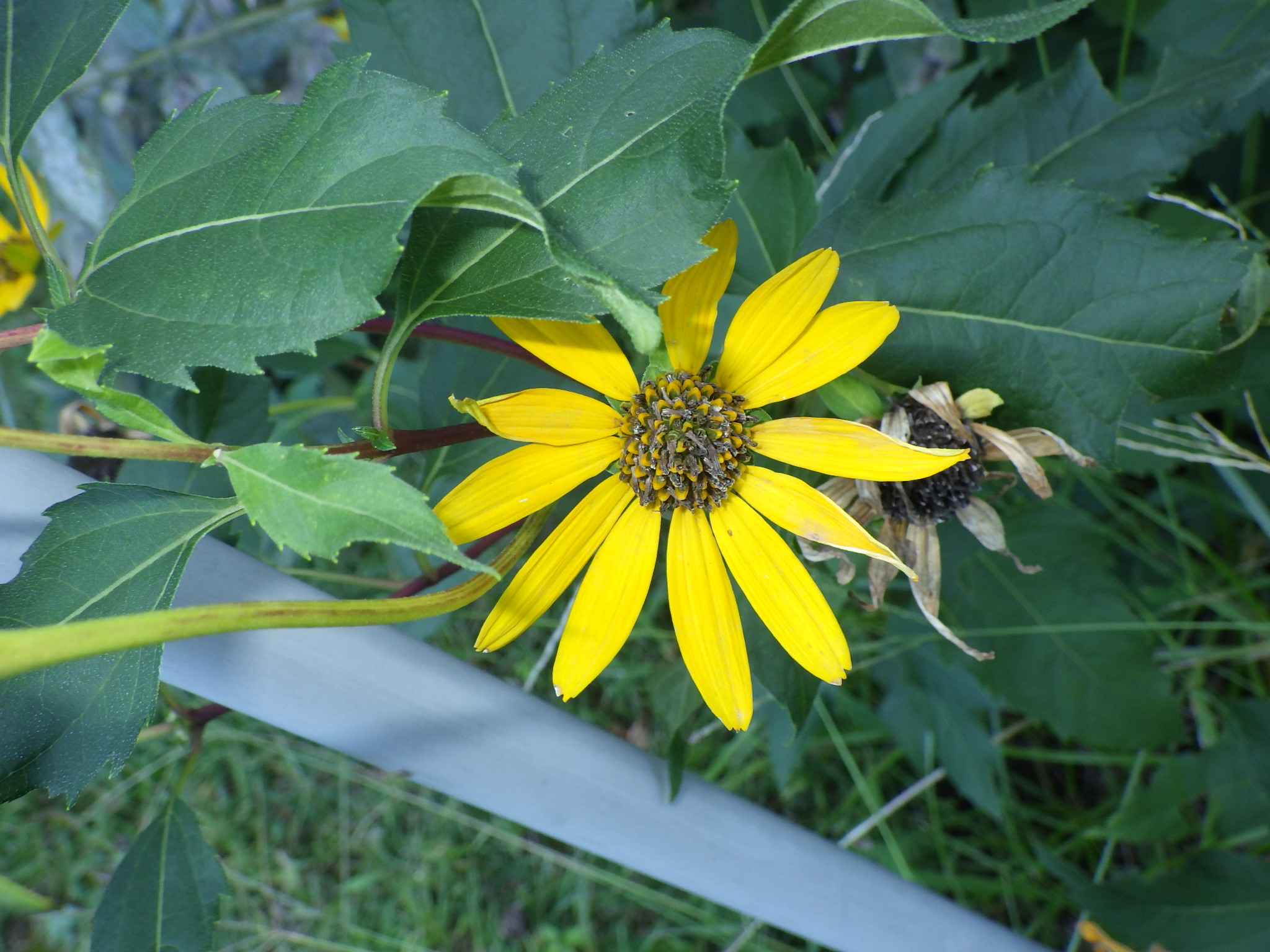
Jerusalem artichoke, Helianthus tuberosus, and Helianthus retusus all belong to the Asteraceae family. They are characterized by erect stems, scales on the receptacle, and yellow ray florets, but their appearance is so lacking in distinct features that they could be described as "The Asteraceae." Distinguishing between them is difficult if you only look at the flower heads, but Jerusalem artichoke and Helianthus tuberosus are the only ones that produce tubers, and they can be distinguished by carefully observing the leaves and the involucral bracts of the flower heads. This article will explain the classification and morphology of the genera Helianthus and Helianthus retusus.
What are Jerusalem artichokes, dog Jerusalem artichokes, and false Jerusalem artichokes?
Helianthus tuberosus, also known as the Jerusalem artichoke, is a perennial plant native to North America (Canada and the United States) that has naturalized throughout the world, including Japan (RBG Kew, 2026). It was introduced to Japan around the end of the Edo period and was widely cultivated during wartime for processing and animal feed. Although it is not widely cultivated now, it can sometimes be found growing wild in the corners of fields or at the foot of mountains (Hayashi et al., 2013).
Helianthus tuberosus var. willdenowianus, also known as the dog's Jerusalem artichoke, is a naturalized population in Japan (Kanagawa Prefecture Flora Survey Association, 2018). Currently, it is rarely distinguished from other species.
Heliopsis helianthoides, also known as false Jerusalem artichoke, is a perennial plant native to North America (Canada and the United States) that has naturalized throughout the world, including Japan.
Both belong to the broad tribe Heliantheae or Heliantheae within the Asteraceae family. They are characterized by erect stems, scales on the receptacle, and yellow ray florets, but their overall appearance lacks distinct features, making them often referred to as "The Asteraceae."
However, Jerusalem artichokes and Heterocarya erythrorhizon have the unique characteristic of producing edible tubers underground, which is rarely seen in other species and can be considered their most distinctive feature.
What Native Americans called "sun root" and cultivated was spread throughout the world after European colonization (Tapera et al., 2024). It is particularly drought-resistant and highly valued as a famine food.
In Japan, inulin was cultivated from the late Edo period onward, but it never became a major food source and doesn't seem to be a significant part of daily life. However, it plays a very important role in the production of inulin.
Inulin is not digested, is completely filtered in the glomeruli of the kidneys, and is neither secreted nor reabsorbed by the renal tubules. Therefore, it is used as an indicator substance for measuring important renal function (especially glomerular filtration rate) as "inulin clearance." It is a topic that is always covered in high school biology.
Furthermore, inulin and fructooligosaccharides contained in Jerusalem artichoke tubers are expected to improve gut and blood metabolites, thus playing a role as glucose substitutes and prebiotics (Liava et al., 2021).
However, it looks very similar to the false Jerusalem artichoke, which does not produce such tubers, and is often confused with it.
What are the differences between Jerusalem artichoke, Helianthus praecox, and false Jerusalem artichoke?
These three species can be distinguished by carefully examining their leaves and flower heads (the clusters of flowers characteristic of the Asteraceae family) (Kanagawa Prefecture Flora Survey Association, 2018).
What are the differences between Jerusalem artichoke, Helicobacter jezoensis, and false Jerusalem artichoke?
First and foremost, it's important to understand that Jerusalem artichoke and Helicobacter erythrorhizon belong to the genus Helicobacterium, while false Jerusalem artichoke belongs to the genus Helicobacterium. Therefore, there are differences in their classification.
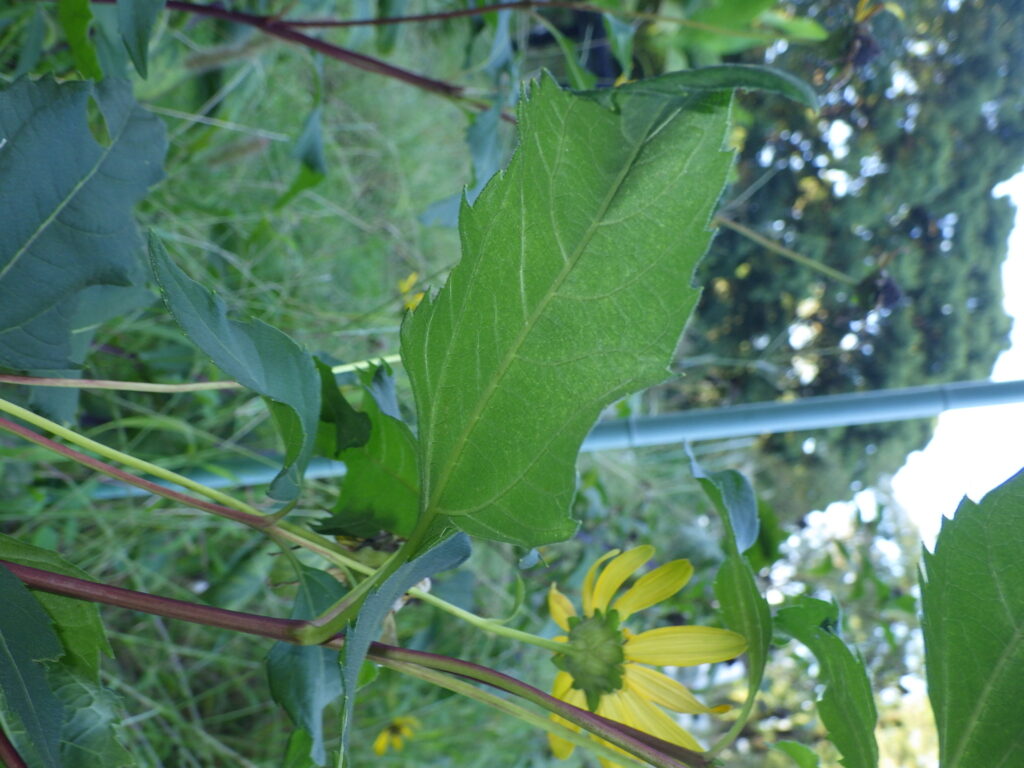
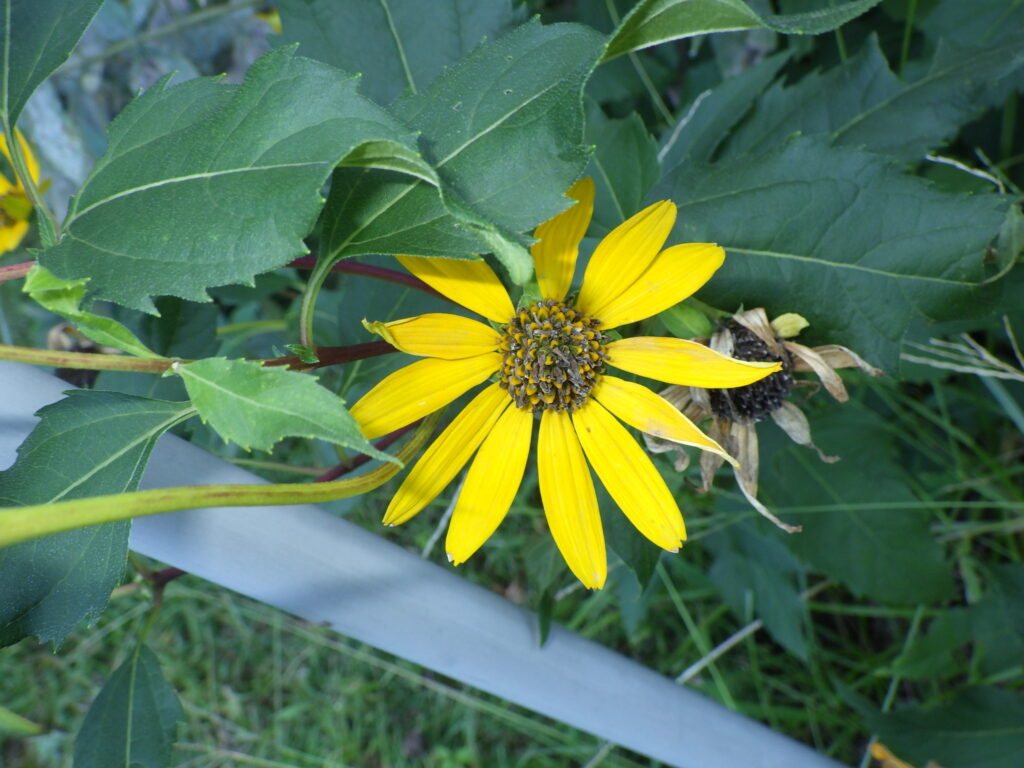
In terms of specific morphological differences, in Jerusalem artichoke and Heterocarya erythrorhizon, the lower leaves are opposite, while the upper leaves are alternate, and the fruit falls off before it is fully ripe. In contrast, in false Jerusalem artichoke, all the leaves are opposite, and the ray florets remain until the fruit is fully ripe.
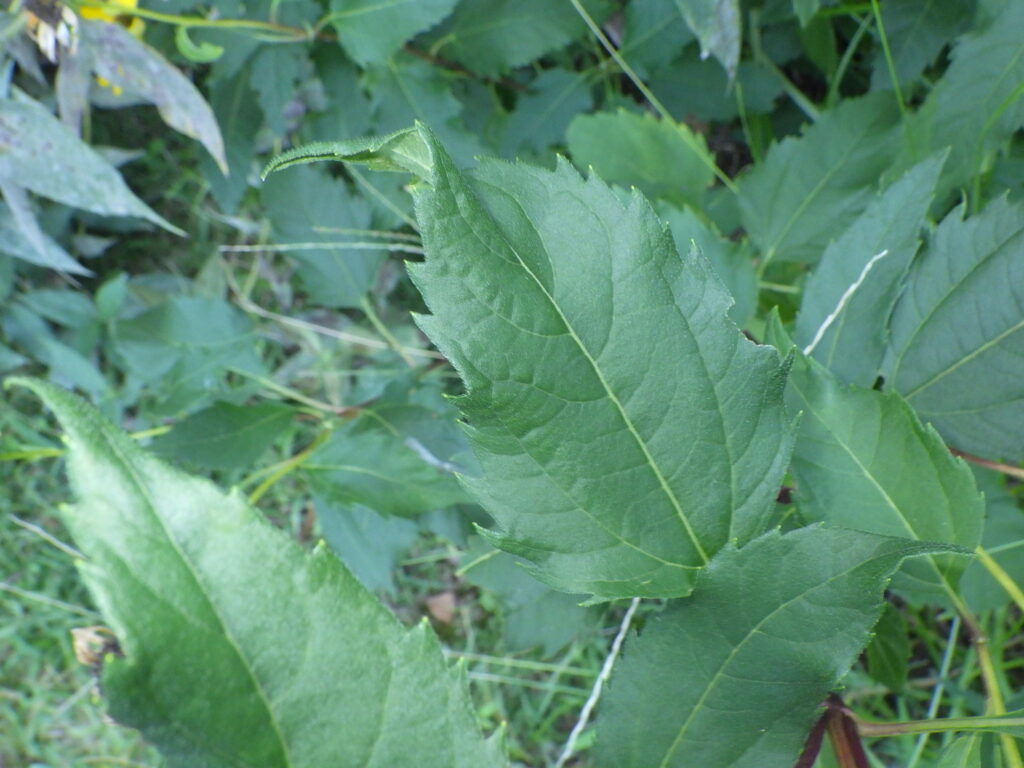
Furthermore, while the serrations on the leaves of Jerusalem artichoke and Heterocarya erythrorhizon are not very prominent, they are clearly visible in Heterocarya erythrorhizon.
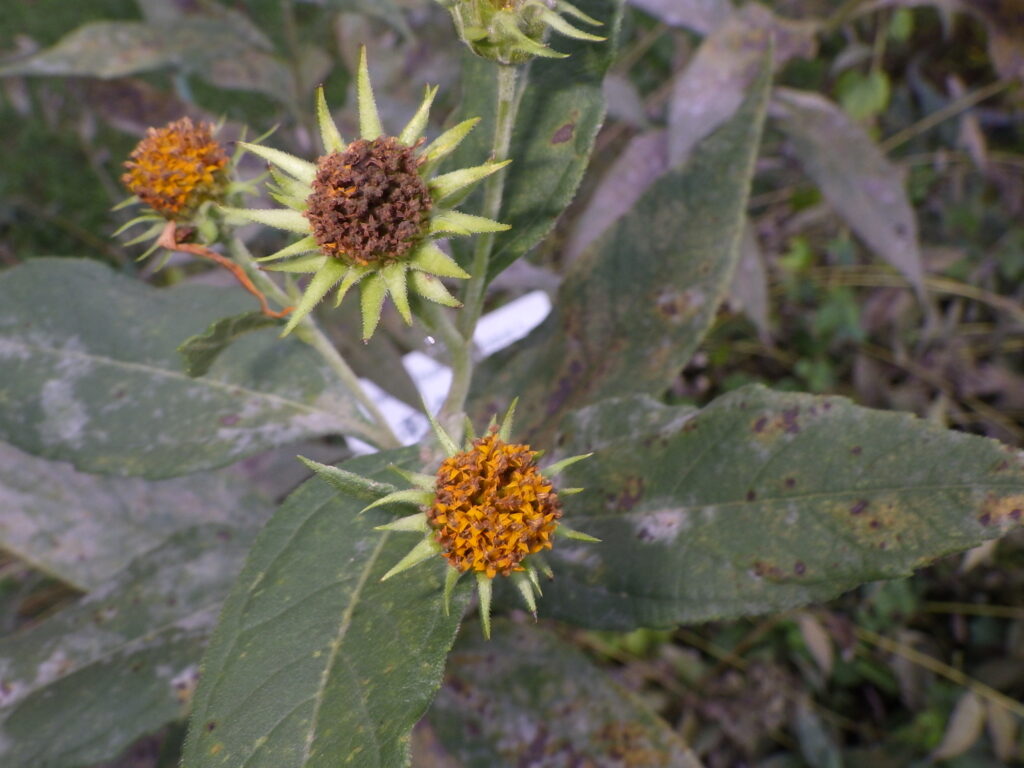
Furthermore, there is a difference between Jerusalem artichoke and Heterocarya erythrorhizon: the involucral bracts of Heterocarya erythrorhizon are arranged in multiple rows and are all herbaceous, while those of Heterocarya erythrorhizon are arranged in one or two rows and are herbaceous to membranous. However, this difference is a bit troublesome as it requires examining the leaf-like structures on the underside of the flower head.
As mentioned above, Jerusalem artichoke and Heterocarya erythrorhizon have tubers, but false Jerusalem artichoke does not.
What is the difference between Jerusalem artichoke and dog's Jerusalem artichoke?
In Japan, *Hercules jellyfish* is considered a wild variety of *Hercules jellyfish*, and has traditionally been distinguished from it. However, this distinction is not made in North America, where it is native, and it is a classification unique to Japan that is not considered a global view.
Furthermore, since it is known that intermediate individuals exist, a clear distinction is considered impossible.
Therefore, there will likely be no need to distinguish between Jerusalem artichoke and Heterocarya erythrorhizon in the future.
However, since it might have ecological significance, I'll briefly explain the difference here.
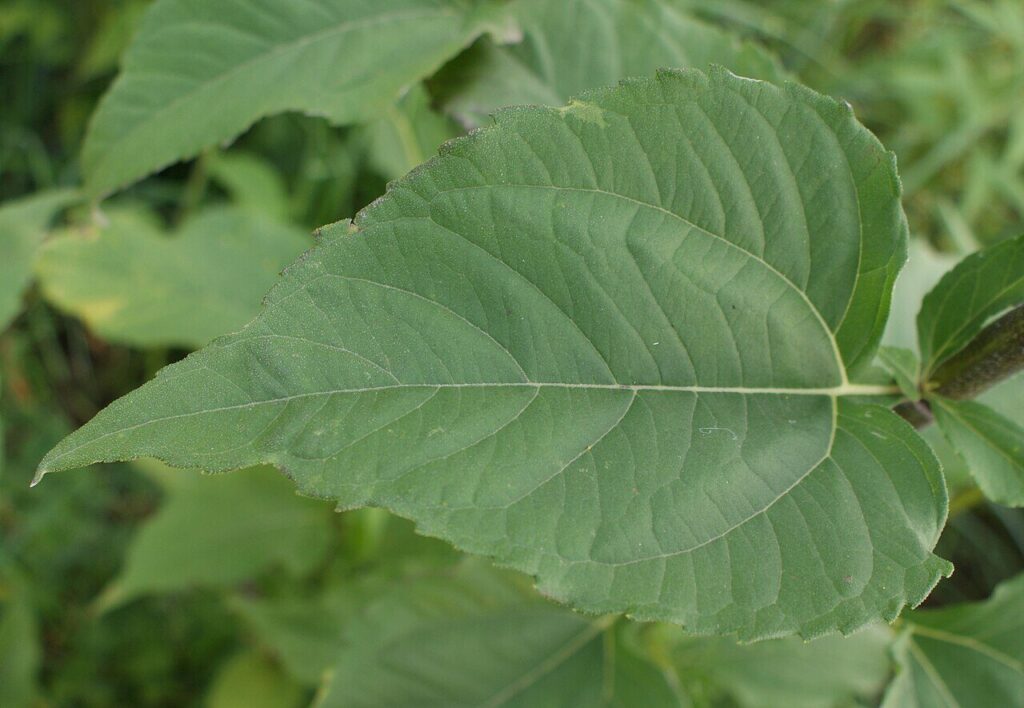
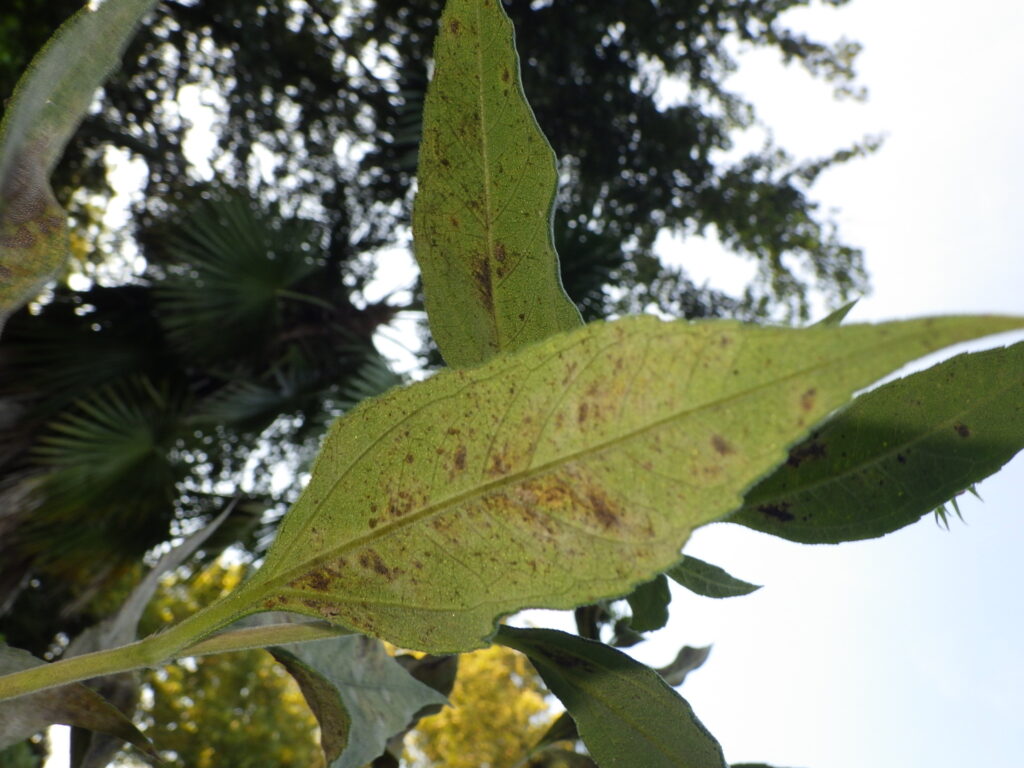
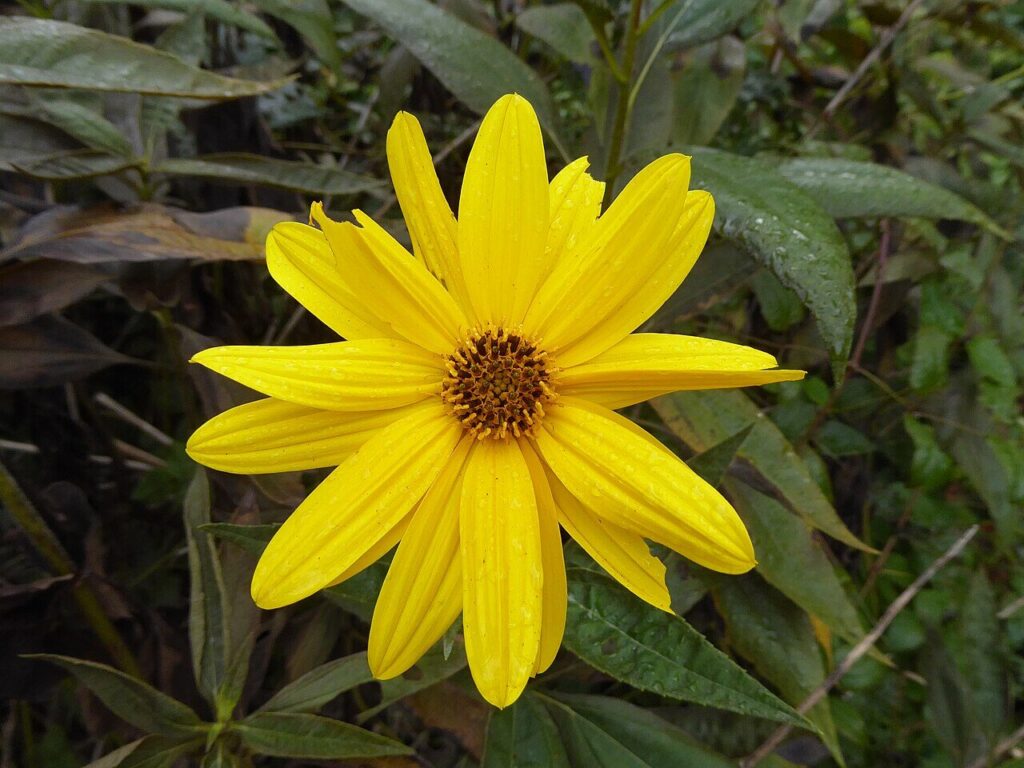
In contrast to Jerusalem artichoke, the leaves are dark green with distinct serrations, the flowers bloom in early summer with 10-20 ray florets that are three-lobed at the tip, and the tuber is large and rough. In contrast to Helicobacter erythrorhizon, the leaves are grayish-green with shallow and indistinct serrations, the flowers bloom from late summer to autumn with 8-15 ray florets that are not lobed at the tip, and the tuber is somewhat smaller, less rough, and spindle-shaped.
Are there any other similar species?
There are many species of yellow ray florets in the Asteraceae family, so caution is needed.
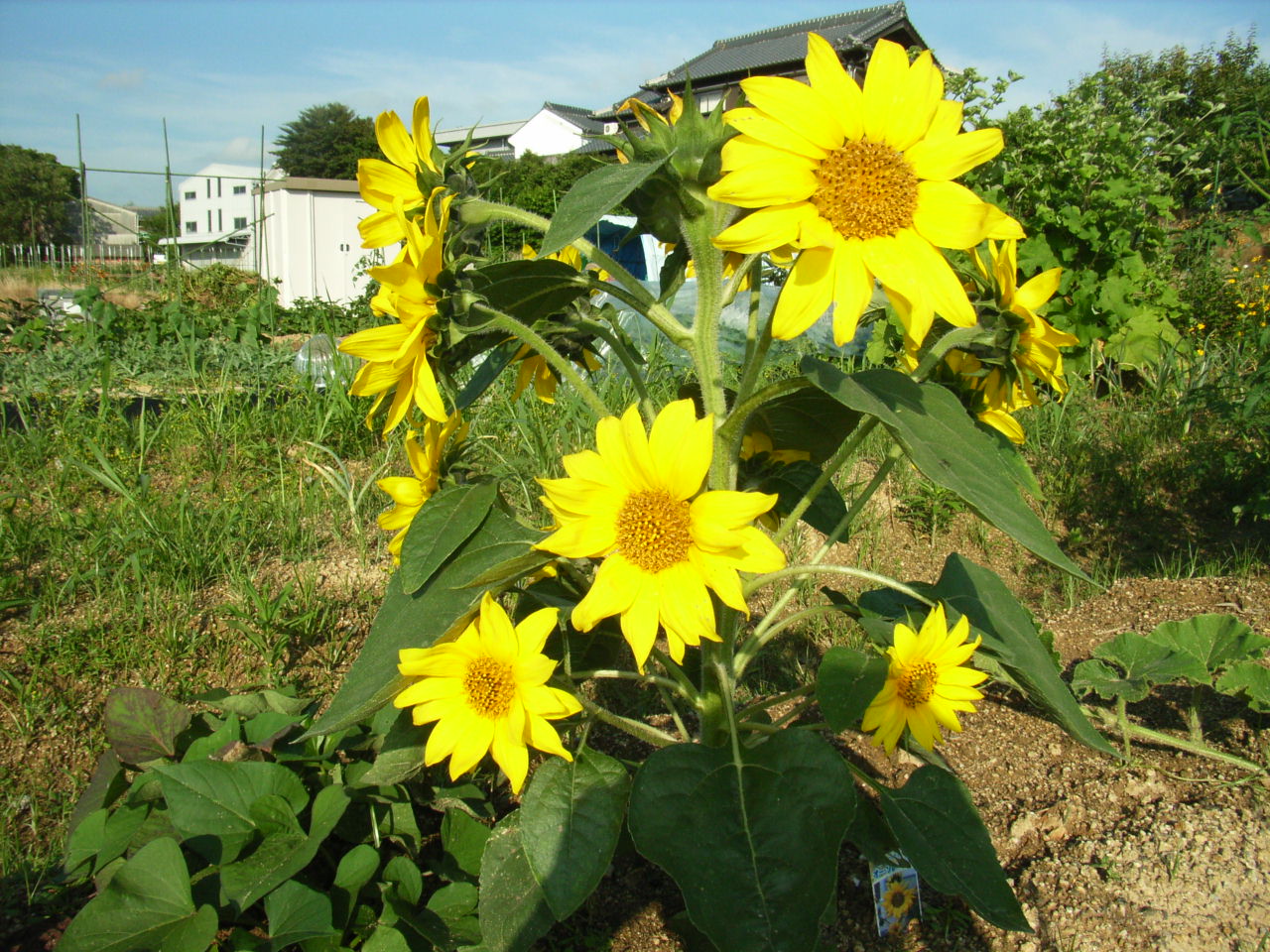
For more information on the sunflower genus, which includes Jerusalem artichokes, please see our separate article.
References
Hayashi, Yasaka, Kadota, Yuichi, and Hirano, Takahisa. (2013). Yamakei Handy Illustrated Guide 1: Wildflowers (Revised and Expanded New Edition). Yama-kei Publishers. ISBN: 9784635070195
Kanagawa Prefecture Flora Survey Association. (2018). Kanagawa Prefecture Flora 2018 Electronic Edition. Kanagawa Prefecture Flora Survey Association. ISBN: 9784991053726,https://flora-kanagawa2.sakura.ne.jp/efloraofkanagawa.html
Liava, V., Karkanis, A., Danalatos, N., & Tsiropoulos, N. (2021). Cultivation Practices, Adaptability and phytochemical composition of Jerusalem artichoke (Helianthus tuberosus L.): A weed with economic value. Agronomy, 11(5), 914. https://doi.org/10.3390/agronomy11050914
RBG Kew. (2026). The International Plant Names Index and World Checklist of Vascular Plants. Plants of the World Online. http://www.ipni.org and https://powo.science.kew.org/
Tapera, RF, Siwe-Noundou, X., Shai, LJ, & Mokhele, S. (2024). Exploring the Therapeutic Potential, Ethnomedicinal Values, and Phytochemistry of Helianthus tuberosus L.: A Review. Pharmaceuticals, 17(12), 1672. https://doi.org/10.3390/ph17121672