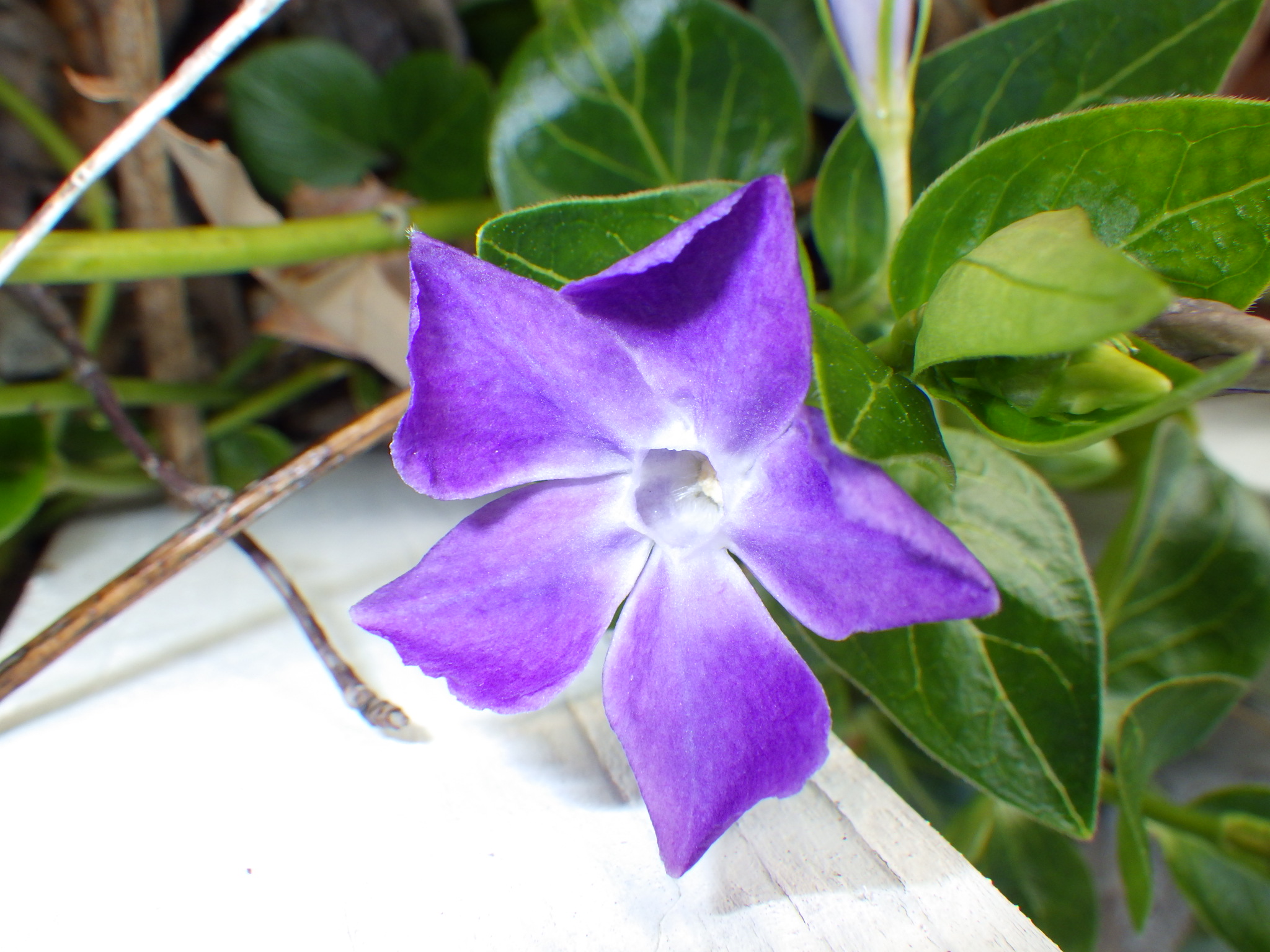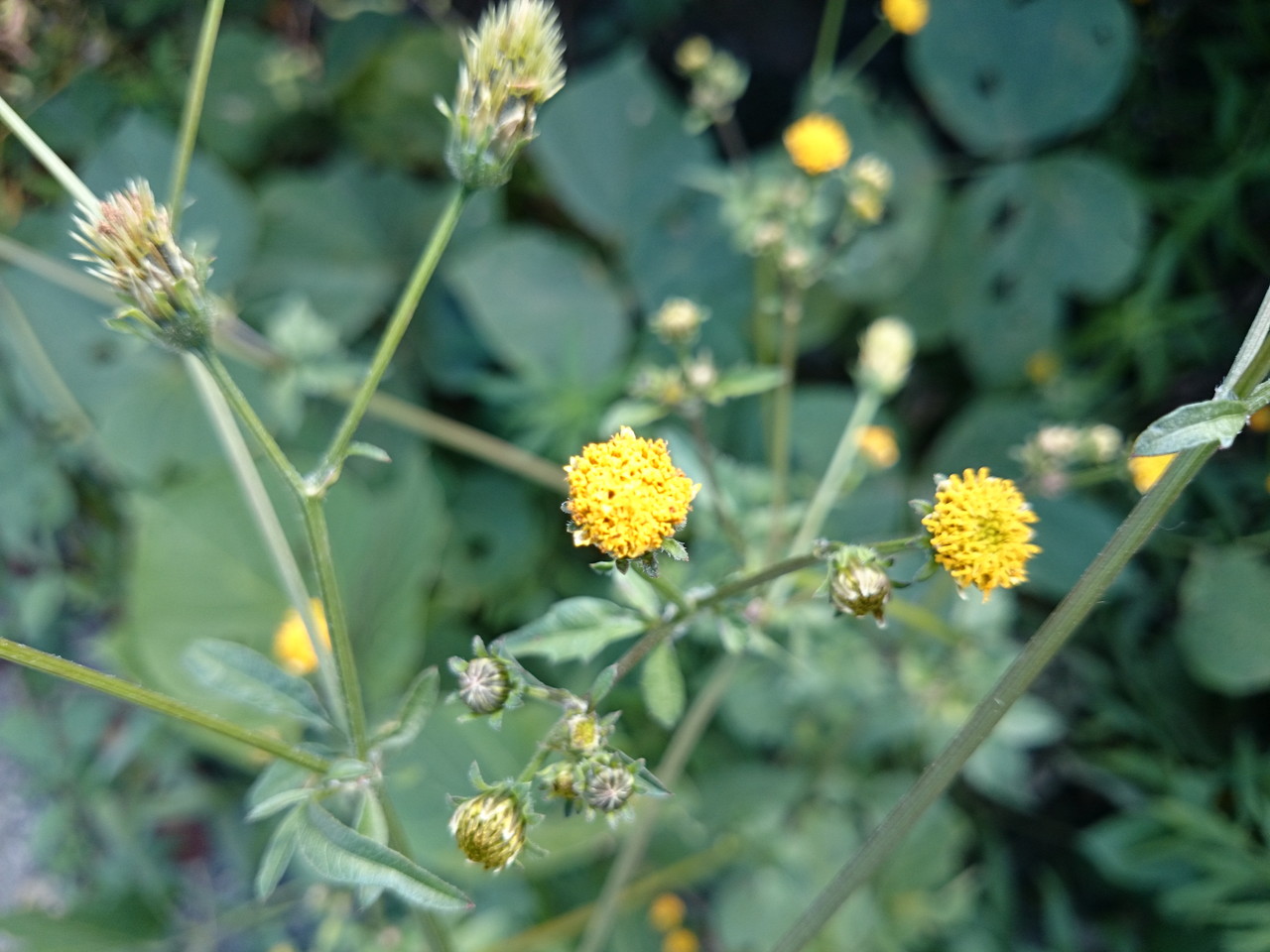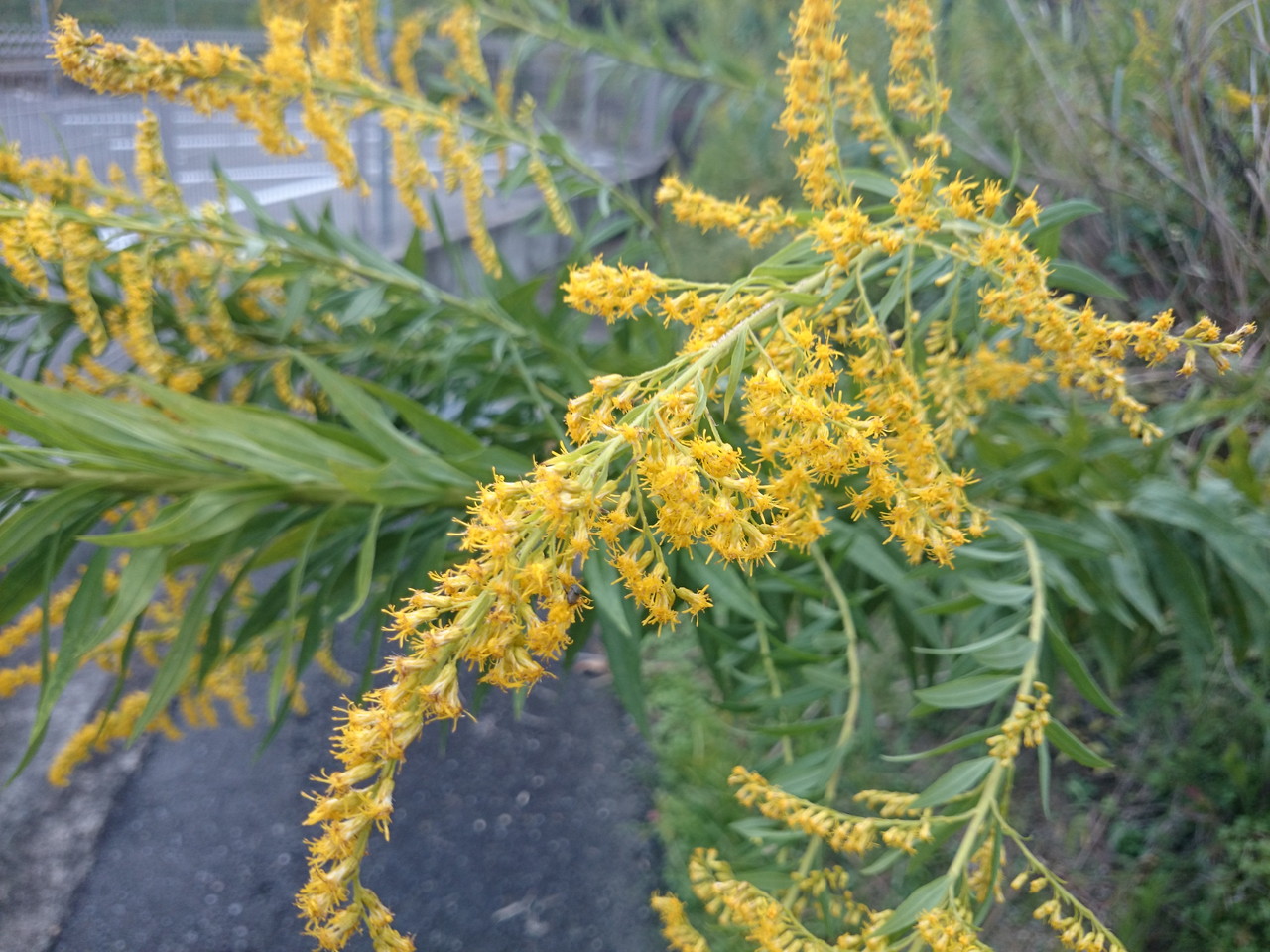
Goldenrod (Solidago altissima), autumn goldenrod (Solidago virgaurea), and mountain goldenrod (Solidago virgaurea var. alpestris) all belong to the genus Solidago in the Asteraceae family and are representative perennial plants that bloom with small yellow flowers (more accurately, flower heads) in autumn. Goldenrod (Solidago altissima) in particular is well-known because it proliferates rapidly in some regions. The three species are often confused, perhaps because some people call goldenrod (Solidago altissima) "Kirinsou" (goldenrod). However, only goldenrod (Solidago altissima) is an introduced species, and it can be easily distinguished by the size of its flower heads and the height of its stems. As for autumn goldenrod (Solidago virgaurea var. alpestris) and mountain goldenrod (Solidago virgaurea var. alpestris), it is necessary to look at the finer details, but their habitats are fundamentally different. Girinsou and autumn goldenrod are completely different species. This article will explain the classification of the genus Solidago.
What are goldenrod, autumn goldenrod, and mountain goldenrod?
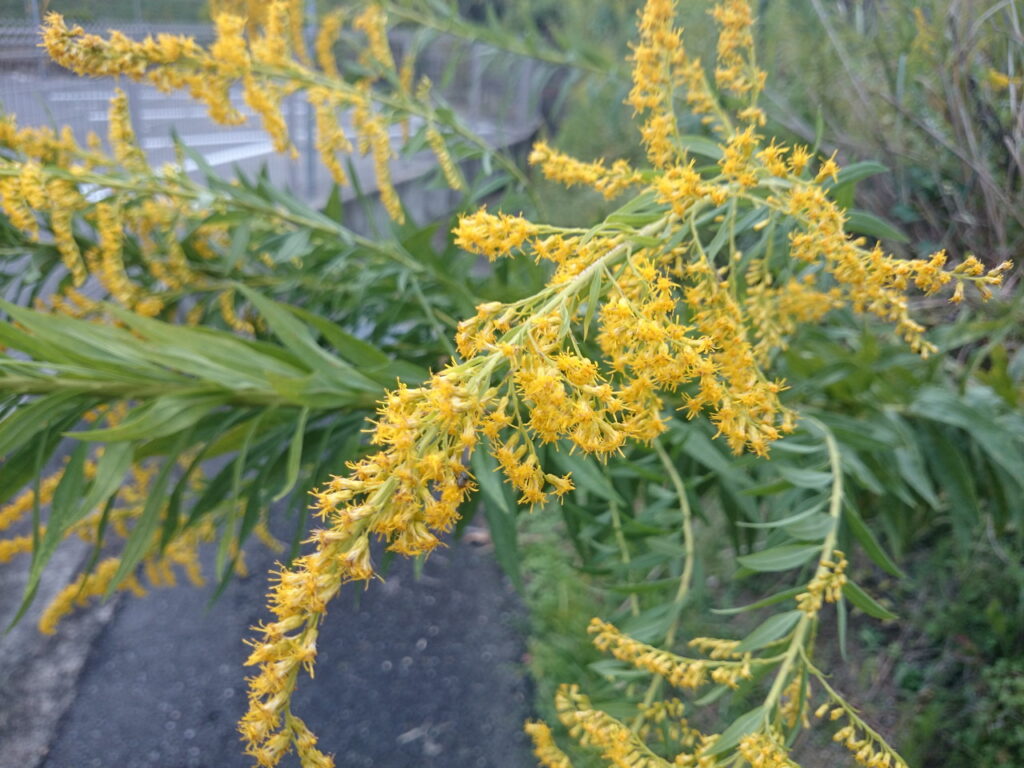
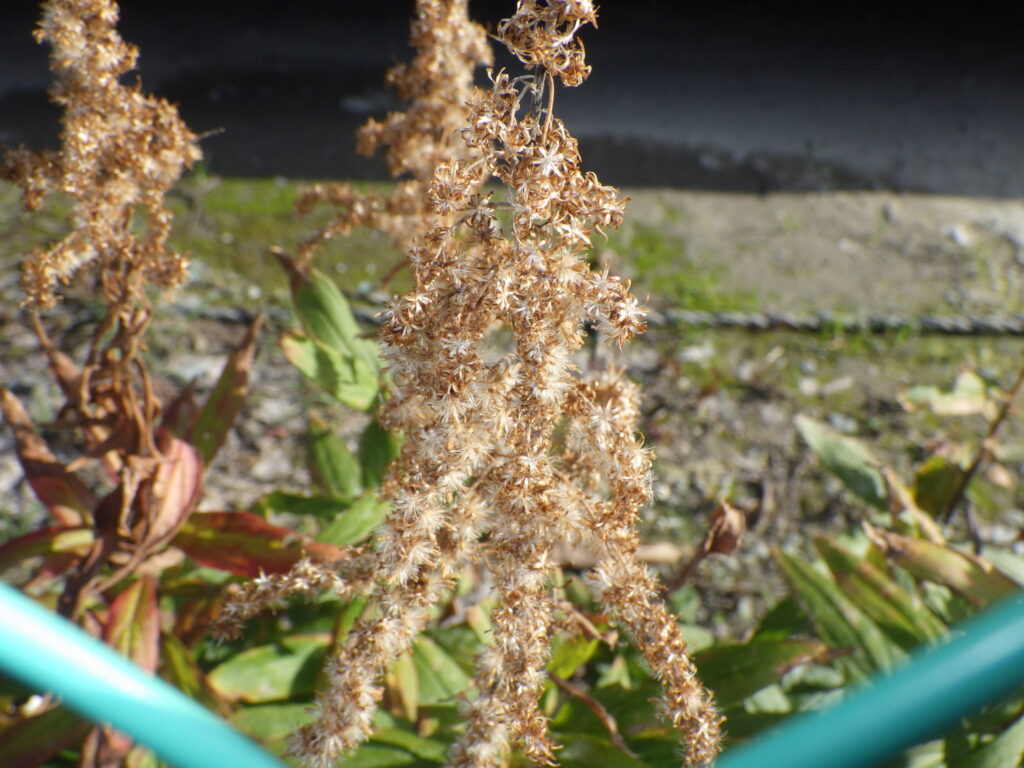
Solidago altissima, also known as tall goldenrod, is a perennial plant native to North America (Canada to Mexico). Originally cultivated as an ornamental plant in East Asia, Australia, and the Caucasus, it has naturalized and now grows in large colonies on riverbanks and in wastelands. In Japan, it began spreading from western Japan after World War II, invading and overwhelming reed colonies on riverbanks and forming large colonies on reclaimed land.
Solidago virgaurea subsp. asiatica, also known as autumn goldenrod, is a perennial herb distributed in Hokkaido, Honshu, Shikoku, and Kyushu in Japan, as well as in Korea. It grows in dry grasslands, bright forest edges, and riverbeds.
Solidago virgaurea subsp. leiocarpa, also known as the mountain goldenrod, is a perennial herb distributed in Hokkaido, central Honshu and further north in Japan, as well as in Northeast Asia, growing in grasslands and gravelly areas of the subalpine to alpine zones.
Both belong to the genus Solidago in the Asteraceae family and are representative perennial plants that bloom with small yellow flower heads in autumn. Goldenrod, in particular, proliferates rapidly in some areas, making it a very conspicuous presence, for better or for worse. This is because it secretes chemical substances that inhibit the growth of other plants, a phenomenon known as "allelopathy" (Fujii, 1990).
It is sometimes mistaken for ragweed, but it is completely different and does not cause hay fever like ragweed.
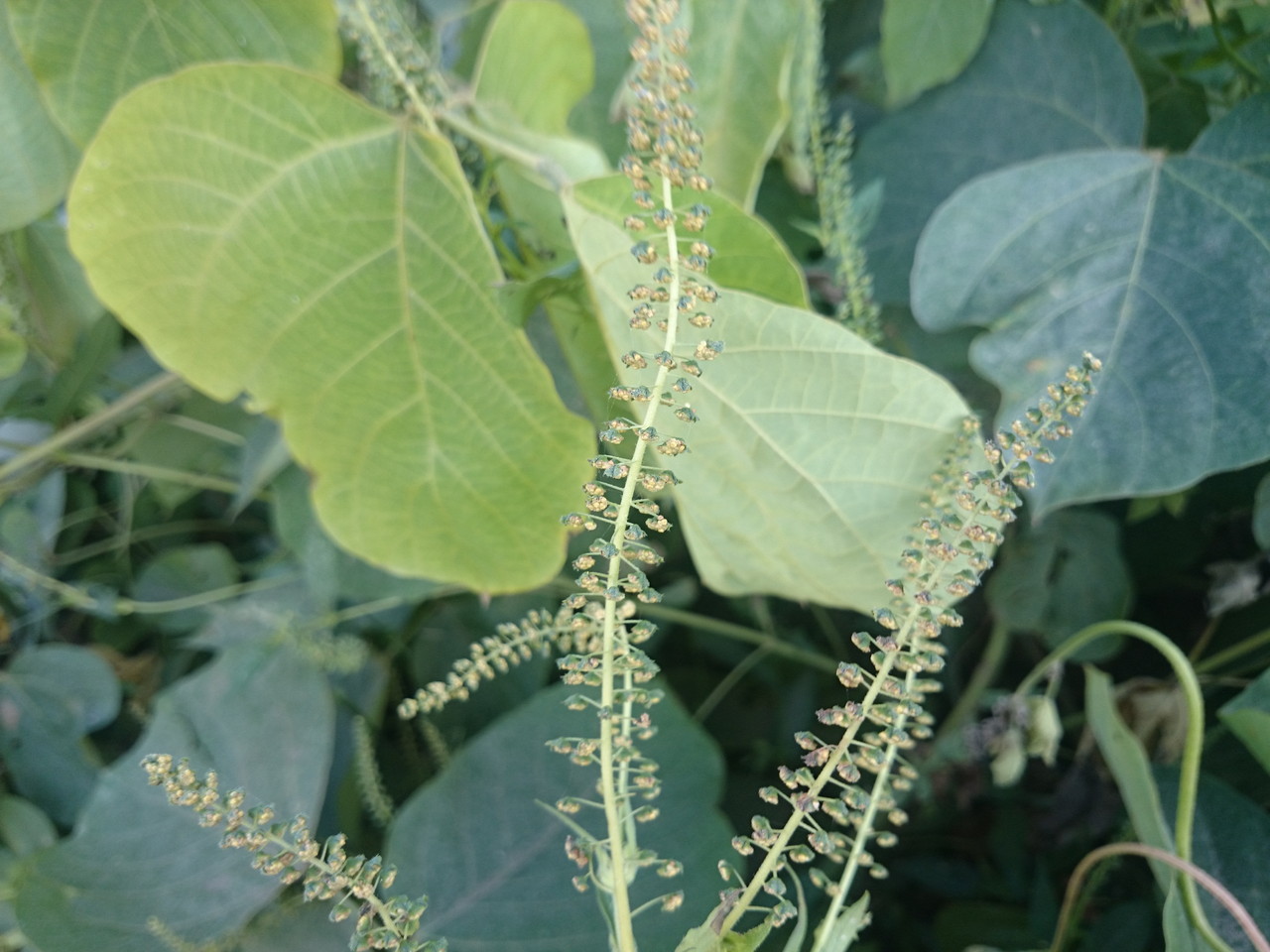
Like many plants in the Asteraceae family, the Solidago genus produces "flower heads" (capitulum inflorescences). Flower heads are commonly found in the Asteraceae family and are inflorescences (arrangements of flowers) that are clusters of flowers. As evidence of this, each flower has the structure of stamens and pistils, and is sometimes specifically called a "flora." Most people refer to flower heads as "flowers," but they are actually different.
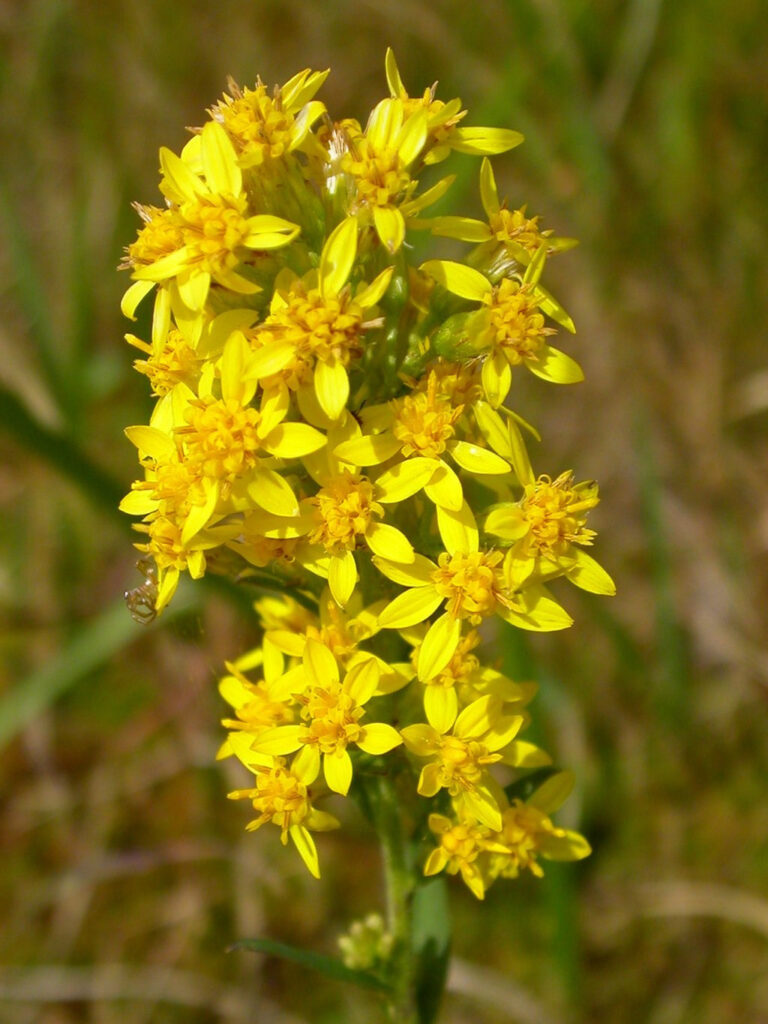
The small flowers of the Asteraceae family consist of two types: "ray florets," which have a corolla that extends widely to one side, and "disc florets," which have a tubular corolla. The combination of these florets varies depending on the species of the Asteraceae family, but in the Solidago genus, there are typically 5 to 7 ray florets and a small number of disc florets.
Some people simply call goldenrod "Kirinsou," so it's possible that many people confuse these two species.
What are the differences between goldenrod, autumn goldenrod, and mountain goldenrod?
However, there are significant differences between goldenrod (Solidago altissima) and goldenrod (Solidago virgaurea var. asiatica), and you can usually tell them apart just by looking at the flower heads.
Specifically, the flower heads of goldenrod are quite small, less than 3 mm in diameter, while those of goldenrod and mountain goldenrod are larger, measuring 6-10 mm in diameter. This difference is noticeable even in photographs.
Another difference is that while goldenrod (Solidago altissima) has stems that grow quite tall, reaching 1-2 meters in height, goldenrod (Solidago virgaurea) and mountain goldenrod (Solidago virgaurea) have stems that are less than 80 cm tall. This is as the Japanese name "Seita-awadachisou" (meaning "tall goldenrod") suggests.
These two points should be sufficient to categorize them broadly.
Regarding Solidago virgaurea and Solidago virgaurea var. alpestris, it is difficult to find significant differences because they are varieties of each other.
However, *Solidago virgaurea var. asiatica* is a form of *Solidago virgaurea* adapted to subalpine to alpine zones. Therefore, *Solidago virgaurea var. asiatica* is usually found in lowlands, while *Solidago virgaurea var. asiatica* is typically found in subalpine to alpine zones.
Morphologically, Solidago virgaurea has sparsely arranged flower heads and four rows of involucral bracts (green, leaf-like structures covering the entire flower head at the bottom), while Solidago virgaurea var. alpestris has densely arranged flower heads and three rows of involucral bracts. However, intermediate individuals also seem to exist.
There are many other species in the genus Solidago virgaurea, but most of them are temporary naturalizations from America, so we will omit them here.
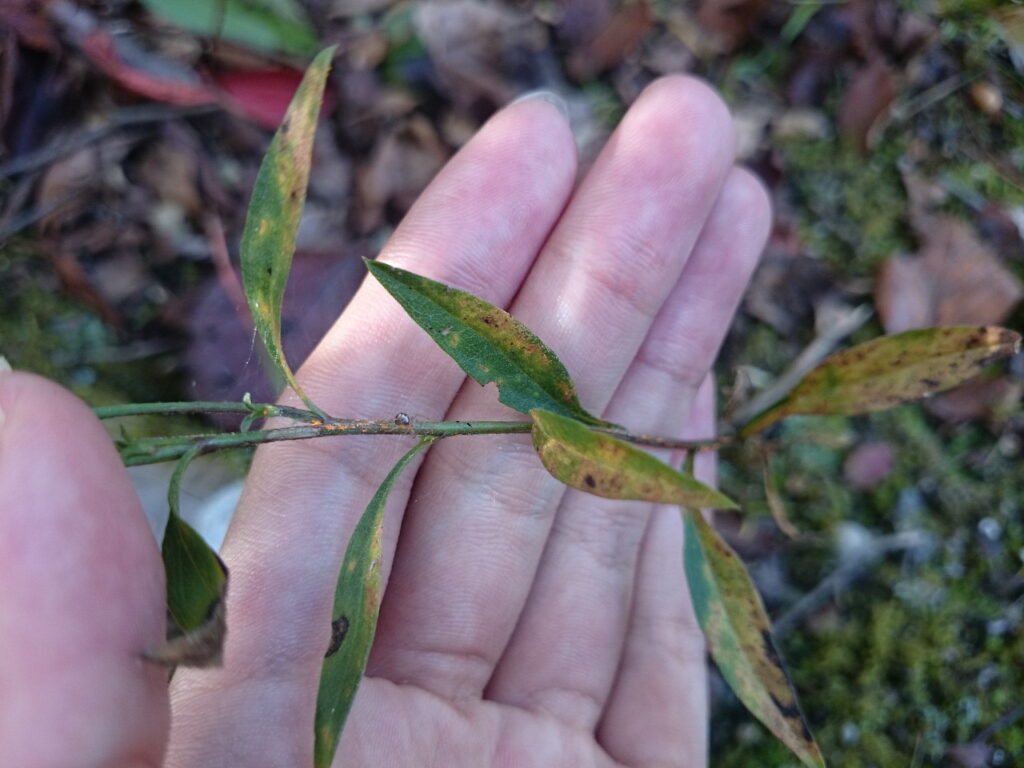
Solidago gigantea subsp. serotina is a fairly common introduced species that resembles goldenrod (Solidago altissima), but it can be distinguished by having more than 10 pairs of serrations and stems and leaves that are almost hairless (Goldenrodima altissima has fewer than 10 pairs of serrations and its stems and leaves are hairy).
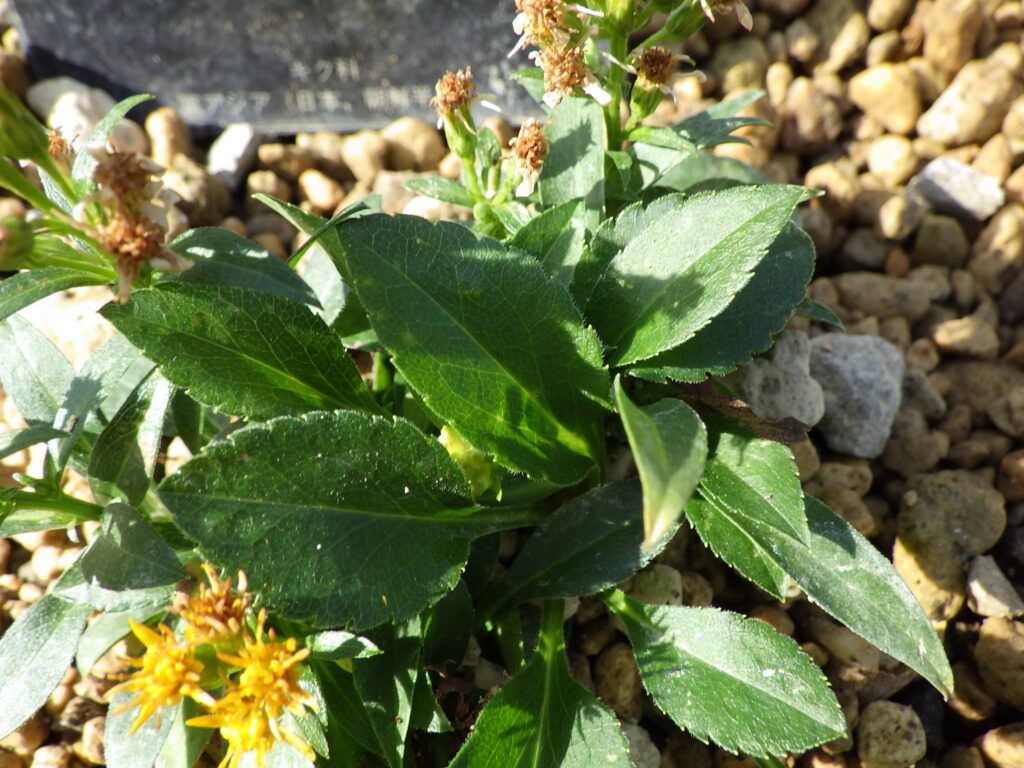
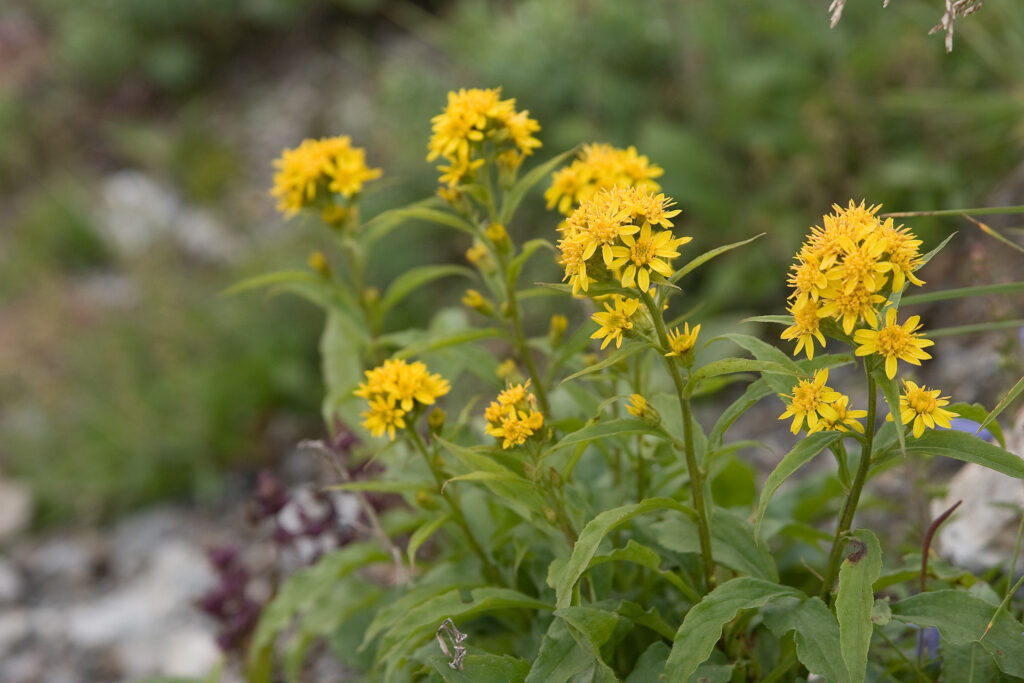
What are the differences between goldenrod (Solidago altissima), autumn goldenrod (Solidago virgaurea), and goldenrod (Solidago virgaurea)?
Goldenrod (Solidago altissima), goldenrod (Solidago virgaurea), and sedum (Solidago virgaurea) may be confused. This is probably because they both have small yellow flowers or flower heads, hence the similar names.
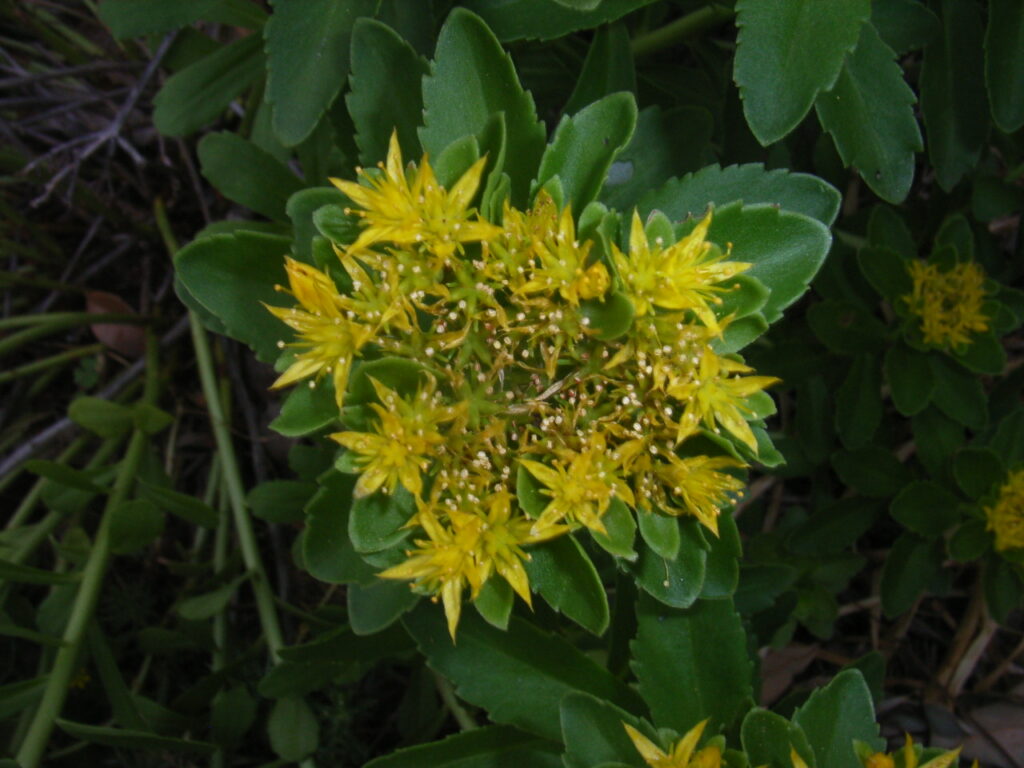
However, * Phedimus aizoon var. floribundus * belongs to the genus *Phedimus* in the family Crassulaceae, and is not in the Asteraceae family like *Solidago altissima* or *Solidago virgaurea*.
Sedum virgaureum is characterized by its thick, fleshy leaves and star-shaped yellow flowers. Upon closer observation, you will notice that it is completely different from goldenrod and autumn goldenrod.
References
Fujii, Yoshiharu. 1990. Plant allelopathy. Chemistry and Biology 28(7): 471-478. https://doi.org/10.1271/kagakutoseibutsu1962.28.471
Kanagawa Prefecture Flora Survey Association. 2018. Kanagawa Prefecture Flora 2018 (Electronic Edition). Kanagawa Prefecture Flora Survey Association, Odawara. 1803pp. ISBN: 9784991053726