Stachyurus praecox, once considered endemic to Japan, is now widely distributed throughout the country. Although there are only two species, their varieties are quite diverse, making identification difficult. While some argue that these variations are continuum and not distinguish between them, this article deliberately distinguishes between them and explains the differences in detail. Generally, they can be distinguished by recording their distribution, leaf shape, and inflorescence length. Culturally, Stachyurus praecox has been used as a substitute for teeth blackening made from galls (insect galls formed on Rhus javanica). Its Japanese name derives from this use. Although Stachyurus praecox has long been familiar in Japan, its ecology is rarely noted, yet it has some interesting aspects. It is dioecious, with separate plants bearing male and female flowers, and creates a spectacular sight by forming drooping inflorescences called spike inflorescences in early spring before the leaves appear. Research suggests that the reason for this is to attract flies, which are known for their resistance to cold, and solitary bees, which become active early in the daytime. Furthermore, another study revealed that moths that appear in early spring also visit at night. This means that insects are attracted both day and night, but which is ultimately more important for the Japanese laurel? Based on this, further research is being conducted to determine which is the more important pollinator. The results show that daytime insects play a major role in pollination, but it seems that nocturnal moths also ensure a minimum level of pollination. From these findings, it can be said that the Japanese laurel has a pollination strategy that values both day and night. The fruit is a dry berry that is dispersed by birds, but it is also eaten by raccoons and martens. This article will explain the classification, culture, history, pollination ecology, and seed dispersal of the Japanese laurel.
- There are unique varieties in each region, making identification difficult.
- What is the difference between *Kibushi* and *Nagabakibushi*?
- What are the differences between *Kibushi* and *Hachijo-kibushi*? How do they differ from other varieties?
- Were the fruits used as a substitute for teeth blackening?
- Why is *Pteris crenata* an endangered species?
- What was the structure of the drooping inflorescence?
- Did the daytime flowers provide warmth to small insects in early spring?
- Were nocturnal moths visiting the flowers at night?
- Which is more important: daytime or nighttime pollinating insects?
- Why do we rely on both daytime and nighttime visiting insects for pollination?
- Are there any differences in the pollinating insects of *Kibushi* (a type of saffron) compared to *Kibushi* (another type of saffron)?
- The fruit is a berry, and the seeds are dispersed by birds and mammals.
- References
There are unique varieties in each region, making identification difficult.
In Japan, only two species of the genus Stachyurus (family Stachyuraceae) are found: Stachyurus praecox (in the broad sense) and Stachyurus macrocarpus (in the broad sense).
Stachyurus praecox (in the broad sense) is distributed in southwestern Hokkaido, Honshu (Izu Islands), Shikoku, and Kyushu (up to Amami Oshima and Tokunoshima). It is a deciduous shrub or small tree that prefers moist and shady areas such as mixed forests, forest edges, and mountain roadsides (Mogi et al., 2000). It was traditionally considered endemic to Japan, but it has also been found on an uninhabited island in Wando County, Jeollanam-do, South Korea (Chan-Jin et al., 2021).
Stachyurus macrocarpus (in the broad sense) is an evergreen shrub distributed in the Ogasawara Islands that prefers relatively sunny areas with a dense undergrowth in shrub forests (Abe et al., 2008).
However, it is known that within the broad category of *Kibushi* (in the sense of Japanese stachys praecox), there are quite a few regionally specific varieties and cultivars, such as *Kibushi hachijoensis*. There is also the view that these should not be specifically distinguished.
Known varieties of *Stachyurus praecox* (in the broad sense) include * Stachyurus praecox* var. praecox, *Stachyurus leucotrichus* var. leucotrichus, *Stachyurus matsuzakii* var. *ovaliflius *, *Stachyurus parviflorus* var. * parviflorus *, *Stachyurus lancifolius* var. *lancifolius *, *Stachyurus microphyllus* f. microphyllus, *Stachyurus rotundifolius* f. rotundifolius, *Stachyurus bicolor* f. bicolor, and *Stachyurus marginatus* f. marginatus.
Furthermore, there are also varieties of *Kibushi* (in the broad sense).
Known varieties of *Stachyurus praecox* (in the broad sense) include *Stachyurus praecox* var. macrocarpus (critically endangered: CR) and *Stachyurus praecox* var. prunifolius (critically endangered: CR).
What is the difference between *Kibushi* and *Nagabakibushi*?
First, let's look at the differences between *Kibushi* (in the broad sense) and *Kibushi* (in the broad sense), which are treated as separate species (Ohashi et al., 2016).
While *Kibushi* (in the broad sense) is distributed from Hokkaido to Amami Oshima and has narrowly ovate or elliptical fruits measuring 0.7–1.2 cm in length, *Kibushi* (in the broad sense) is distributed in the Ogasawara Islands and has broadly ovate fruits measuring 1.2–2 cm in length.
Furthermore, as mentioned above, while *Kibushi* (in the broad sense) is a deciduous shrub that prefers forest edges, *Kibushi* (in the broad sense) is an evergreen shrub that prefers forest interiors.
As its name suggests, *Kibushi* (in the broad sense) has relatively long leaves, ranging from 7 to 14 cm. However, the leaf length of *Kibushi* (in the broad sense) also varies considerably, sometimes being about the same length, so this comparison isn't very helpful.
The broad category of *Kibushi* (long-leaved saffron) is divided into *Kibushi* and *Kibushi* species.
The main difference is that *Stachyurus praecox* is distributed in the Ogasawara Islands (Chichijima and Anijima), has thick leaves with coarse serrations, is narrowly oblong or narrowly ovate-extremely elliptic, and has few lateral veins (the number is unknown), while *Stachyurus praecox* is distributed in the Ogasawara Islands (Hahajima), has thin leaves with fine serrations, is narrowly elliptic to oblong, and has many lateral veins, ranging from 7 to 11 pairs.
What are the differences between *Kibushi* and *Hachijo-kibushi*? How do they differ from other varieties?
Many people seem to be searching for the difference between *Kibushi* and *Kibushi Hachijo*, but since there are many closely related varieties, I will explain them together.
There are many varieties of Stachyurus praecox (in the broad sense), but we will first consider Stachyurus praecox, Stachyurus kobanoensis, Stachyurus enoshimaensis, Stachyurus hachijoensis, and Stachyurus nanbanensis (Kanagawa Prefecture Flora Survey Association, 2018).
These can be broadly categorized based on several characteristics.
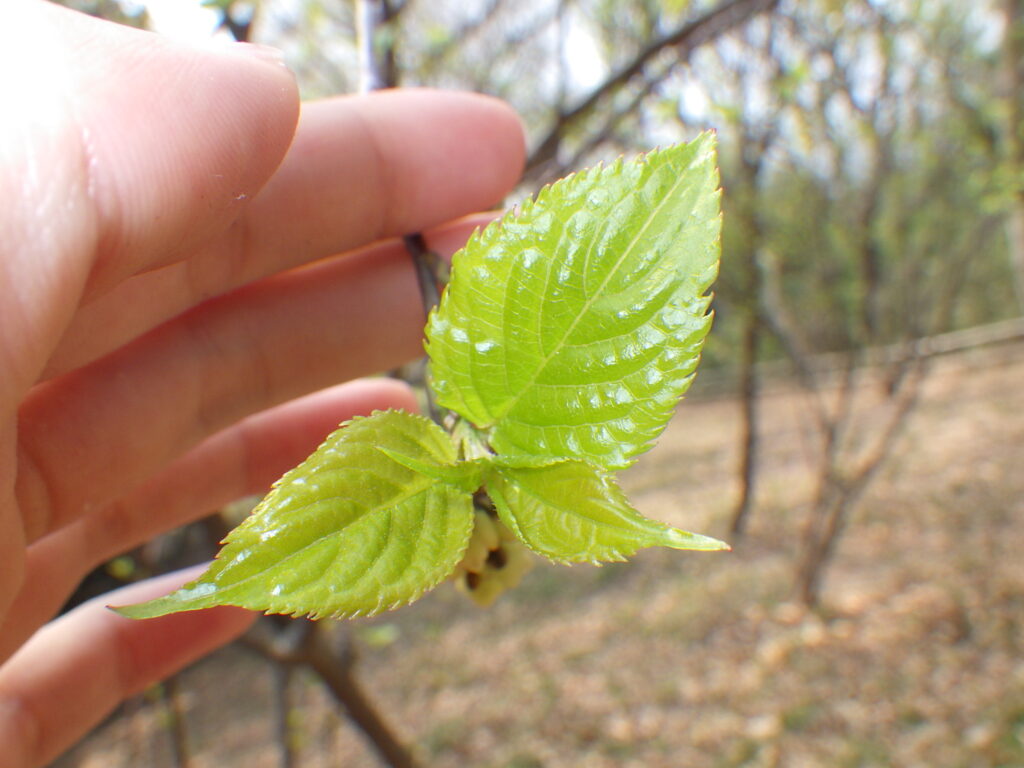
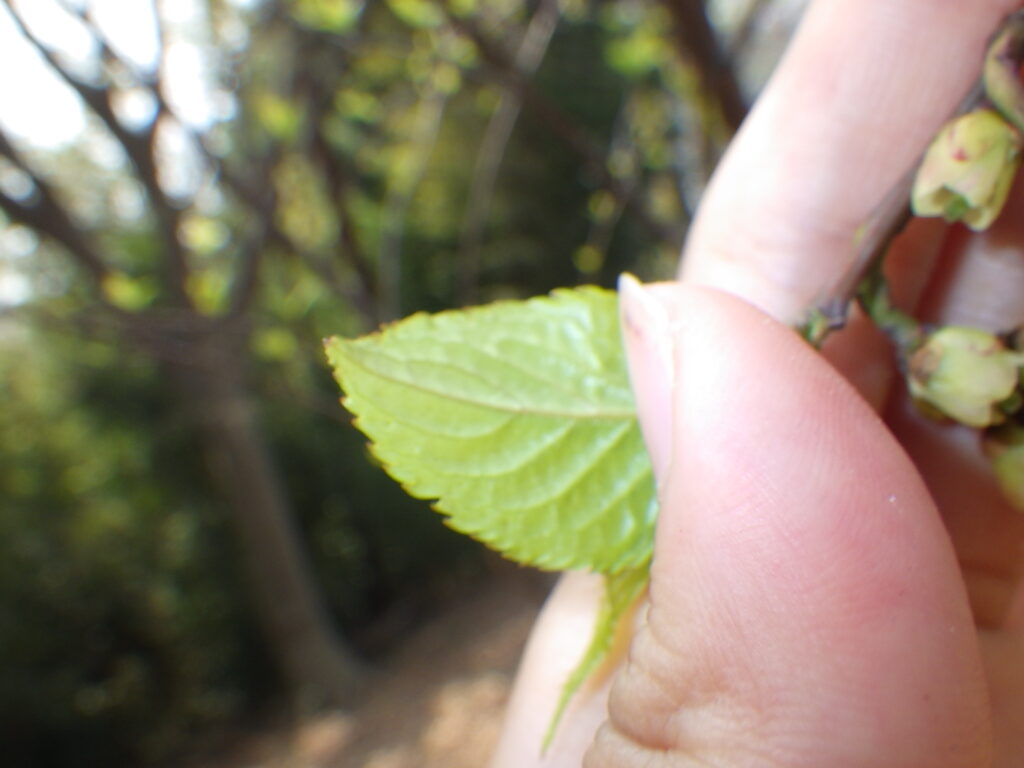
In contrast to *Stachyurus praecox* and *Stachyurus praecox var. japonica*, the leaves on the fruiting branches, along with the petioles, are 3-14 cm long and 3-5 cm wide, the inflorescences are 5-7 cm long, the flowers are somewhat sparsely arranged, about 7 mm long, the branches are slender and rounded, the lenticels are inconspicuous, the one-year-old branches are pale brown and 2-3 mm thick, the leaves are thin and dull, and the bracteoles of the inflorescence are obliquely ascending, in contrast to *Stachyurus japonica*, *Stachyurus praecox*, and *Stachyurus nanbanensis*, the leaves on the fruiting branches, along with the petioles, are 15-18 cm long and 6-7 cm wide, the inflorescences are 9 cm or longer, the flowers are densely arranged on the inflorescence, the flowers are 8-10 mm long, the branches are thick and the lenticels are prominent, the one-year-old branches are purplish-brown, 3 mm or thick and ridged, the leaves are thick and glossy, and the bracteoles of the inflorescence are recurved.
While the many items may seem complicated, for practical purposes, you can simply understand that Enoshima staghorn fern, Hachijo staghorn fern, and Nanban staghorn fern have longer inflorescences and glossier leaves than staghorn fern and Kobano staghorn fern.
Regarding *Stachyurus praecox* and *Stachyurus praecox*, *Stachyurus praecox* is widely distributed throughout Japan and its leaves are over 7 cm long, while *Stachyurus praecox* is distributed in the Tokai region of Honshu and its leaves are 3-6 cm long.
Regarding *Stachyurus japonica* and *Stachyurus japonica*, *Stachyurus japonica* is distributed in the southern Kanto region, has hairs on the sides of the midrib on the underside, and the base is rounded to slightly cordate, while *Stachyurus japonica* is distributed in the Izu Islands, has a long, narrow leaf blade, is almost hairless on the underside, and has a wedge-shaped base.
Furthermore, unlike *Stachyurus japonica* and *Stachyurus japonica*, *Stachyurus japonica* is distributed in Yamaguchi Prefecture on Honshu, the southern coast of Shikoku, Kyushu, Amami Oshima, and Tokunoshima, and the serrations on its leaves become finer towards the base of the leaf and gradually become indistinct.
We will also look at other varieties and cultivars.
Kekibushi is distributed in the Sea of Japan side of the Tohoku region and the Hokuriku region of Honshu, and is a local type that grows only in the heavy snowfall areas on the Sea of Japan side. It has dense white soft hairs on and along the veins on the underside of its leaves.
Himekibushi is distributed in western Hiroshima Prefecture and is found in granite areas; its leaves are smaller than those of Kobano-kibushi.
Malva stolonifera is distributed in Kyushu, and its leaves are nearly circular with a sharply tapering tip that extends 1-3 cm into a tail-like structure. The underside of the leaves is either hairless or covered with fine white hairs.
However, these varieties exhibit a great deal of continuity, making classification difficult in some cases, and some believe that they should not be specifically distinguished.
Nishikikibushi (red-flowered kibushi) is a horticultural variety that has been selectively bred to have red flowers.
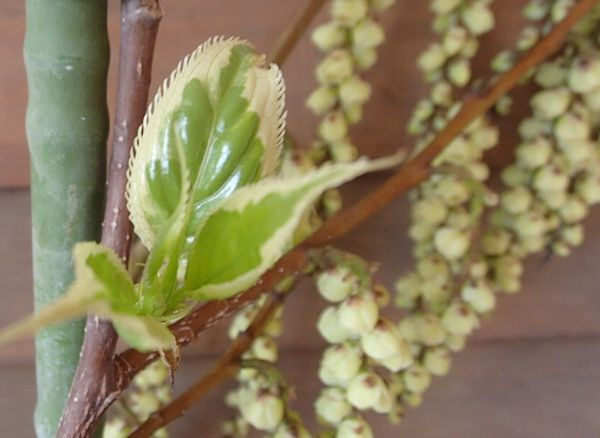
Fukurinkibushi is a horticultural variety whose leaves have yellow edges (Hiyama, 1961).
Were the fruits used as a substitute for teeth blackening?
How has the Japanese laurel tree (Kibushi) been used by humans?
The fruit has long been used in Japan as a substitute for gallnuts (also known as sumac galls, insect galls formed on the sumac tree of the Anacardiaceae family), which are famous as a dyeing material (Nagasawa, 2001; Yamamura, 2016; Fujiyoshi, 2019). This is the origin of the name "Ki-gobaishi" (木五倍子).
It is particularly used as "gobako" (gallnut powder) for teeth blackening. When gobako is mixed with "ohaguro-sui" (teeth blackening water), which is made by sealing and fermenting rice washing water with vinegar, tea juice, old iron, and sake, the tannins in the gobako react chemically with the water, making it usable as ink.
Since it was used as a substitute, its use may have been rather unremarkable, but it may have been quite important in some regions.
Although this particular use has fallen out of favor, it is still used as a plant in gardens and parks, and as a material for floral arrangements.
Why is *Pteris crenata* an endangered species?
Both *Stachyurus praecox* and *Stachyurus praecox* are listed as critically endangered (CR) on the Ministry of the Environment's Red List.
As of January 2007, 68 individuals of *Kibushi* (a type of lily) were confirmed on Chichijima Island, and the estimated number of existing individuals is less than 100.
Why did they become an endangered species?
The reasons for its extinction are attributed to two factors: extremely low seed production (only 7.4% of female plants bear fruit) and a low seedling recruitment rate of 2.4%, compared to an annual mortality rate of 13.6% (Abe et al., 2008).
However, experimental results suggest that the reason for this is not a failure in pollination, but rather a lack of resources for seed production.
Furthermore, it is said that human activity and goats brought by humans are destroying vegetation, and that rats are eating the fruit, all of which are contributing factors. Invasive plant species are also believed to be having an impact.
Considering all of this, it seems that they were already on the verge of extinction due to a lack of nutrients caused by some factor, and then human intervention, including the rats and goats that humans brought, dealt the final blow.
Furthermore, the number of *Kibushi* species is even smaller, with only 15 individuals found on Hahajima Island (Abe and Hoshi, 2008).
What was the structure of the drooping inflorescence?
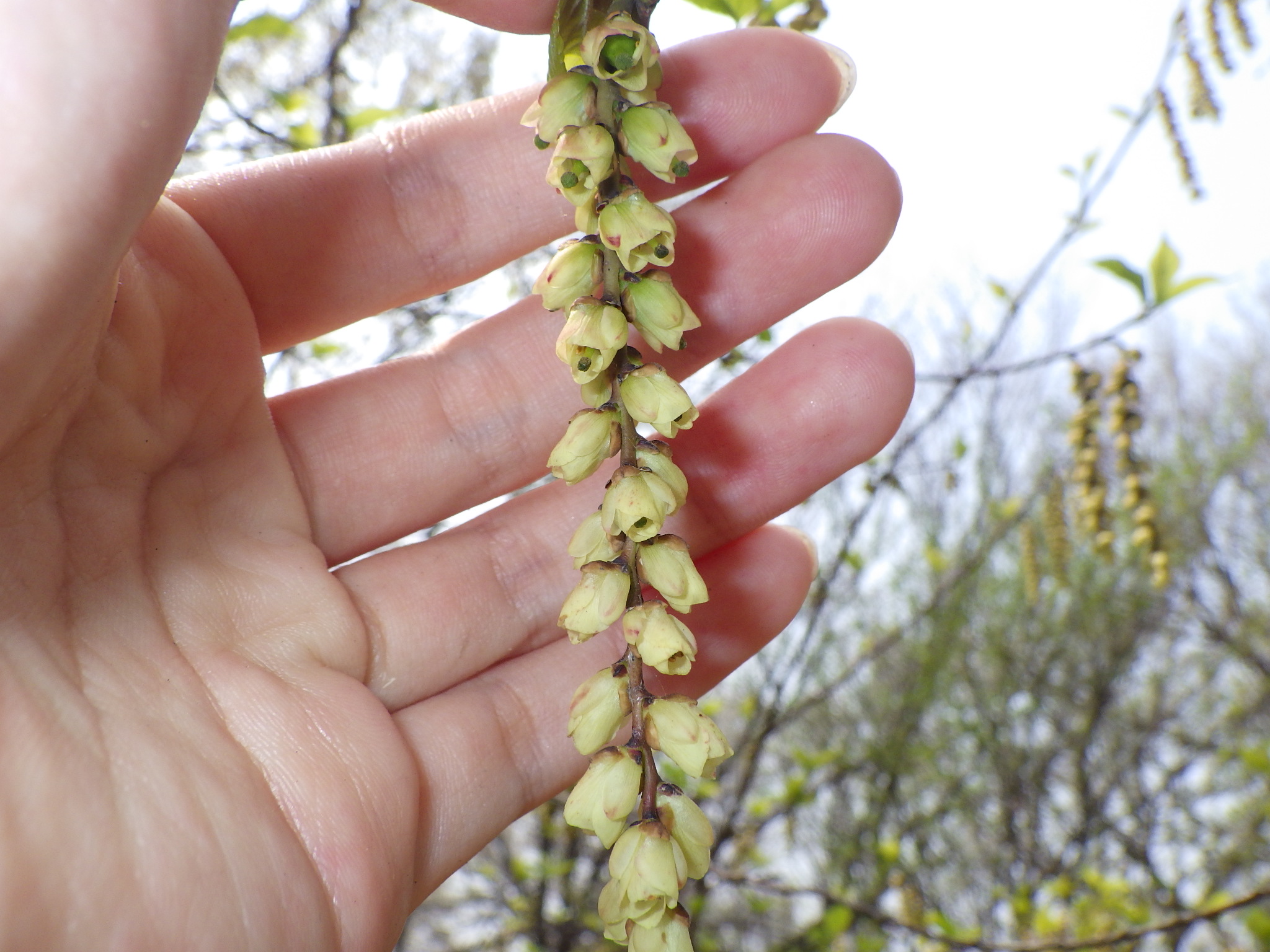
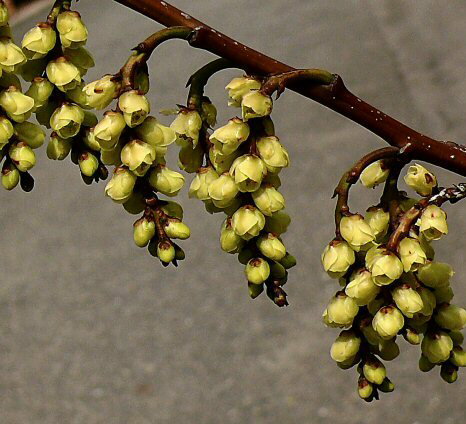
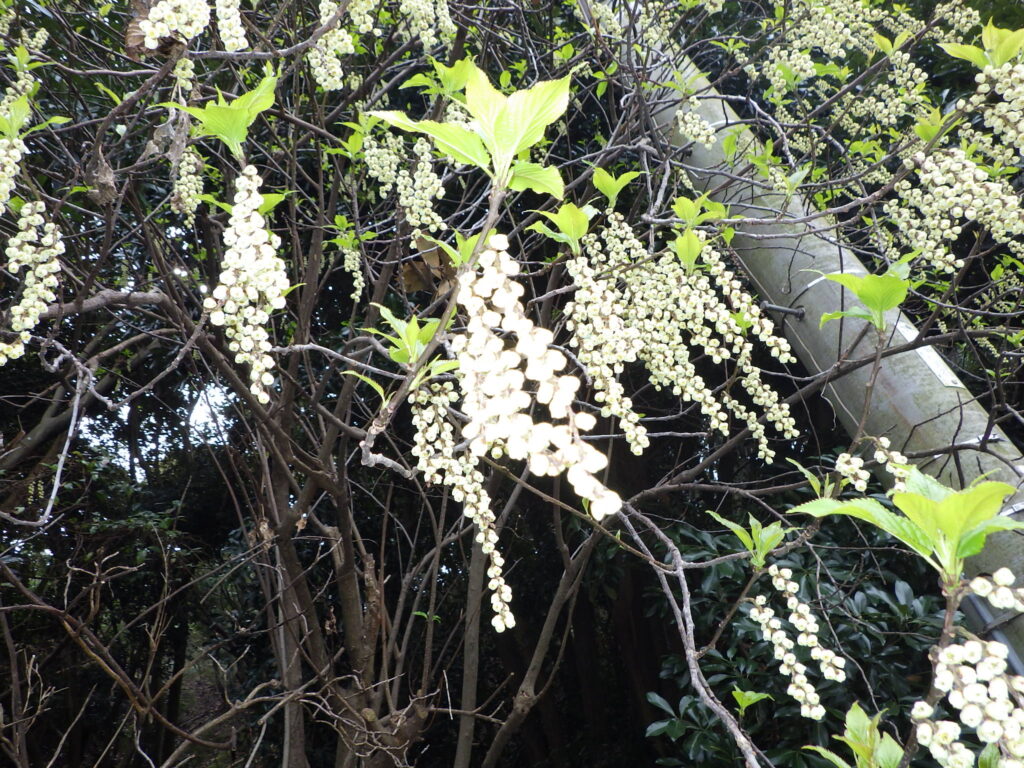
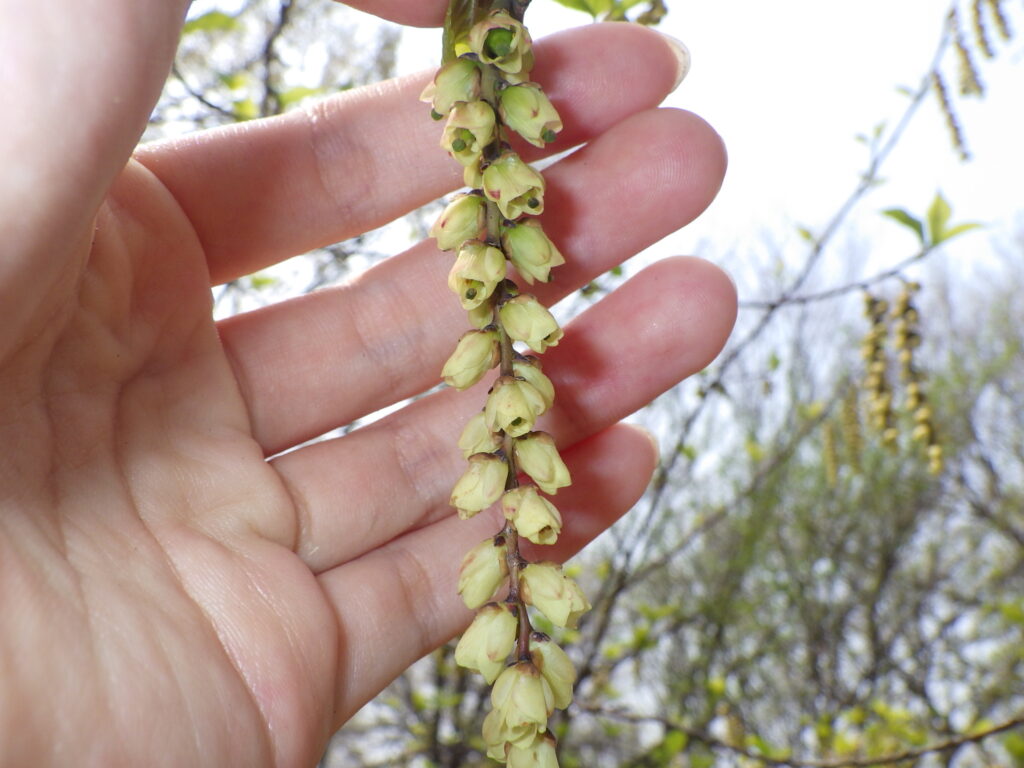
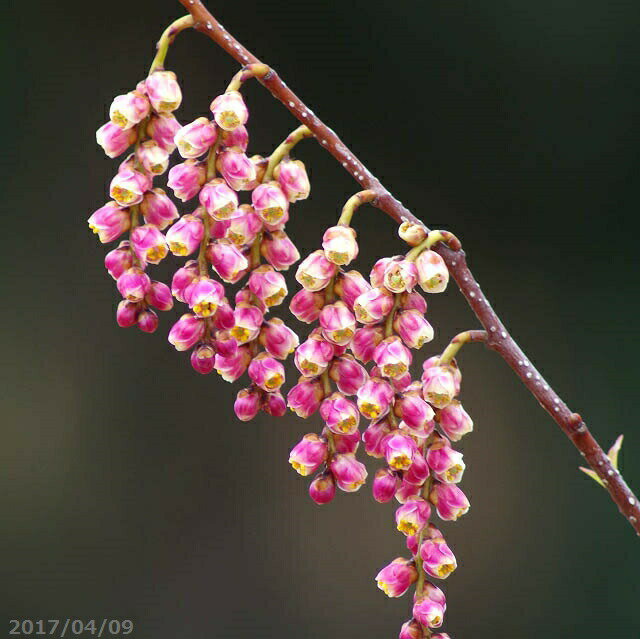
Stachyurus praecox flowers from March to April (Mogi et al., 2000). It blooms before the leaves unfold, and drooping spike-like inflorescences 4-10 cm long hang down (length varies depending on the variety).
They bloom from early spring to spring, and at this time of year, you can see them hanging down in various places along the edge of the forest, which is quite striking.
Since it is dioecious, there are male trees (male plants) and female trees (female plants). Male plants have male inflorescences (strictly speaking, hermaphrodite inflorescences as vestigial pistils remain), while female plants have female inflorescences, and the male inflorescences are longer than the female inflorescences. This is thought to be because female flowers require a lot of energy to produce seeds, while male flowers, which do not produce seeds, can allocate that energy to increasing the number of flowers. Also, the male flowers on male inflorescences are pale yellow, and the female flowers on female inflorescences are pale yellowish-green, so there is a subtle difference in color.
The structure is common, and the flowers are bell-shaped, 6-9 mm long. There are four petals. There are four sepals; the two outer ones are small, and the two inner ones are large and petal-like.
Male flowers are pale yellow, with eight stamens and a pistil that is slightly shorter than the stamens. Female flowers, on the other hand, are pale yellowish-green, with a pistil that protrudes slightly from the flower, and vestigial, short stamens.
Did the daytime flowers provide warmth to small insects in early spring?
What kinds of insects visit this flower?
In early spring, when this flower blooms, there are still few insects that have begun to appear or become active. Therefore, it can be expected that this species is resistant to cold.
In fact, a study investigating the types of insects that visit flowers on Mt. Tsukuba in Ibaraki Prefecture found that the majority were flies belonging to the genus *Hymenoptera*, families *Syrphidae*, families *Sarcophagidae*, and families *Tricholoma*, as well as small, solitary bees belonging to families such as *Apidae* and *Cetonia* (Abe, 2007).
Diptera (flies) made up the vast majority, with solitary bees being far fewer in number compared to flies.
Flies are known for their tolerance to cold, and solitary bees are known for their early activity period. Many of these species are relatively small in size. This is thought to be an adaptation to the fact that the flowers are small and bell-shaped, and that the insects that visit them are either similarly small in size or have proboscises of a certain length that can be inserted into the small flowers.
Furthermore, the Japanese laurel (Kibushi) blooms profusely in the forest edges where it receives plenty of sunlight, even during the still-cold season. This makes it highly visible, and the warmer temperatures likely attract insects as well. It's a very strategic approach.
Were nocturnal moths visiting the flowers at night?
While such research exists, other studies investigating insects that visit *Kibushi* at night have yielded different results (Ikenoue, 2003; Ikenoue and Kanai, 2010).
This study investigates which moths visited the flowers of various plants in southwestern Japan over a 24-year period. Stachyurus praecox is treated as one of the species included in the study.
According to these results, flies and bees like those mentioned above do not visit at night, but rather moths, mainly from the Noctuidae and Geometridae families, which appear in early spring.
Moths are most commonly seen in the early evening, just after dark, and their visits for nectar feeding continue until dawn. Ikenoue and Kanai (2010) also have a photograph of a moth called Orthosia carnipennis visiting the site.
Which is more important: daytime or nighttime pollinating insects?
As you can see, the two studies show different results. While both are undoubtedly factual, the question remains: which type of pollination is more important? However, since these studies were conducted separately, a direct comparison is difficult.
To answer this question, research was conducted in Takedao, Hyogo Prefecture and the Ashiu Research Forest of Kyoto University, where daytime and nighttime pollinating insects were examined again, and their proportions were also considered (Funamoto & Sugiura, 2021).
Furthermore, two populations were prepared: one in which the inflorescences were covered with bags for a week during the day to prevent pollination, and another in which the inflorescences were covered with bags at night to prevent pollination. By comparing the seed production of these two populations, an investigation was conducted to determine whether daytime or nocturnal pollinating insects are more important.
The results were roughly the same as in the study conducted at Mt. Tsukuba, although there were more small, solitary bees among the daytime visiting insects. The nocturnal visiting insects were all nocturnal moths, which is also consistent with the study conducted in southwestern Japan. The number of daytime and nocturnal visiting insects over a period of 1-2 days was approximately 20-40 individuals, and the ratio appears to be roughly the same.
Moths carry pollen to their proboscis, while small bees and hoverflies carry pollen by attaching it to various parts of their bodies, such as their heads, thoraxes, and legs.
Based solely on these results, one might conclude that the pollination effect of daytime-visiting insects and nighttime-visiting insects is the same.
However, bagging experiments yielded different results.
Populations that restricted nocturnal pollinating insects and allowed daytime pollination to occur produced significantly more seeds than populations that restricted daytime pollinating insects and allowed nocturnal pollination to occur.
In other words, this means that daytime pollinating insects (small bees and hoverflies) contribute more significantly to the pollination of *Stachyurus praecox*.
However, since nocturnal insects (moths) also contributed to seed production to some extent, their pollination effect was not entirely zero.
Ultimately, although a bias was confirmed, it seems that increasing the opportunities for pollination by allowing it to occur both day and night is important for the strategy of the Japanese laurel.
Why do we rely on both daytime and nighttime visiting insects for pollination?
Why does the Japanese laurel (Kibushi) rely on both daytime and nighttime pollinating insects for pollination?
One reason for this is that the activity of pollinating insects in early spring is unpredictable.
Another study has shown that small bees are ectothermic, meaning they only forage on warm, sunny days and do not visit flowers when the ambient temperature is below 13°C. On the other hand, nocturnal moths are endothermic, meaning they can fly even when the ambient temperature is below 10°C.
Therefore, in early spring when temperatures fluctuate drastically, it's wise to rely on a variety of insects for pollination, rather than solely on bees.
While the Japanese laurel (Kibushi) begins to bloom before small bees become active, nocturnal moths are already active around this time. The fact that the flowering period is not perfectly timed to coincide with the activity of small bees may be evidence that nocturnal moths are also considered important.
Regarding the difference in color between male and female flowers, the details are not yet fully understood. There may be some unknown strategy at play.
Are there any differences in the pollinating insects of *Kibushi* (a type of saffron) compared to *Kibushi* (another type of saffron)?
So, what kinds of insects visit the Japanese wood lily (Pteridium delicatulum)?
While thorough research hasn't been conducted on *Kibushi* var. *longifolius*, it may differ from *Kibushi* var. *kibushi*, which prefers damp and shady conditions, as it seems to prefer relatively sunny areas with a dense undergrowth. Furthermore, there may be issues specific to the Ogasawara Islands.
In the case of Chichijima, there appear to be no suitable daytime pollinating insects (Abe et al., 2008). Therefore, nocturnal moths are thought to be the main pollinators.
The fruit is a berry, and the seeds are dispersed by birds and mammals.
The fruit is a hard, dry berry. It is oval-spherical in shape, 7-12 mm in diameter, and ripens to a yellowish-brown color from July to October.
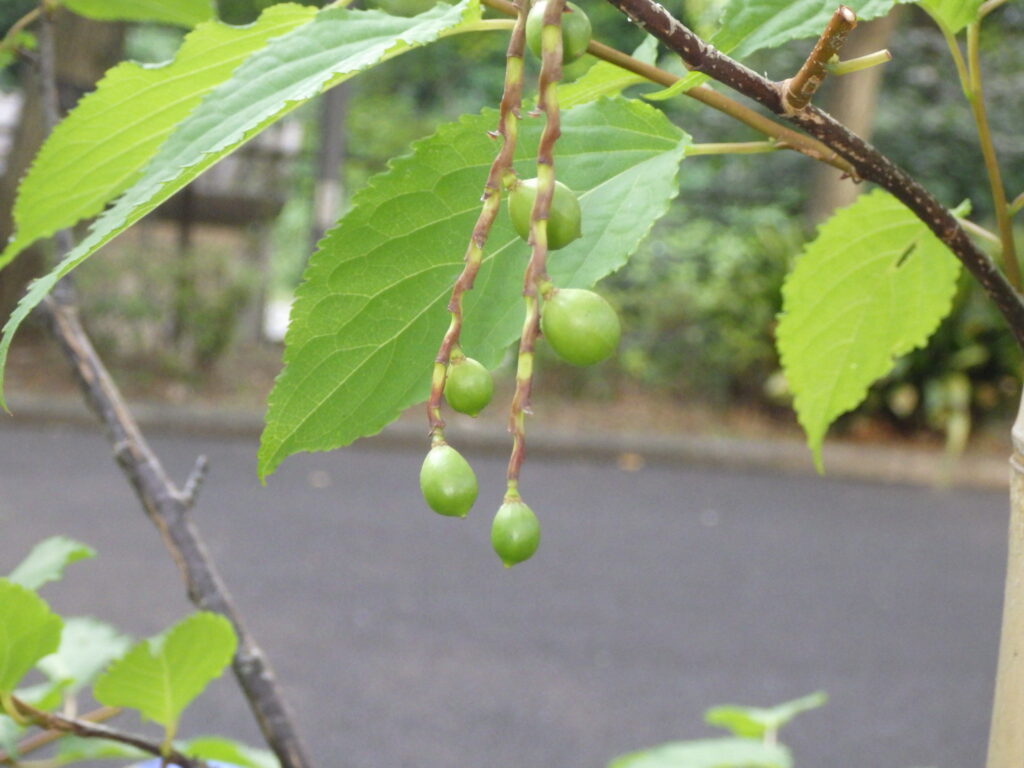
It is generally believed that the seeds of this fruit are dispersed by birds eating them. Japanese research has shown that germination is promoted (dormancy is broken) when the seeds are treated with moisture and acid (Abe & Matsunaga, 2007). This means that germination only occurs when the seeds are eaten by birds, stimulated by stomach acid, and have adequate humidity.
If scattered seeds germinate immediately in unsuitable locations, there is a risk that the small seedlings will not survive the winter. Therefore, it is believed that such dormancy-breaking triggers are in place. The physiological lifespan of a seed is at least two years, and in environments unsuitable for germination, the seeds survive in the soil for a longer period as a viable seed bank, waiting for the right time.
In fact, although the specific species is unknown, seeds of the Japanese laurel (Kibushi) have been found in bird droppings (Hirata et al., 2006), and in another study, seeds of the Japanese laurel were found in the droppings of the great tit (Parus major) (Fujita & Takahashi, 2009). It is still not well understood, but it is likely that many other types of birds are also fond of it.
However, a combination of various studies has revealed that mammals such as the raccoon dog (Nyctereutes procyonoides) and the marten (Martes melampus) also enjoy it (Sasaki & Kawabata, 1994; Kusui & Kusui, 1999; Kato et al., 2000; Tsuji et al., 2014; Takatsuki, 2018; Takatsuki et al., 2018).
In particular, raccoons in mountainous areas tend to eat the dried, old fruits of the Japanese quince (Kibushi) plant during the winter, and it is said that it has become one of the most important foods during the cold season (Sasaki & Kawabata, 1994). Referring to various papers, Japanese quince is also listed as one of the "fruits that are frequently detected" in papers that examine the diet of raccoons (Takatsuki, 2018).
It may seem strange that this fruit, which doesn't turn red even when ripe and is dry and lacks moisture, is popular with both birds and mammals. However, several fruits like this exist, and generally, they differ in their composition, such as being high in lipids. In the case of the Japanese quince (Kibushi), the tannins rapidly decrease once it falls to the ground, and the seeds are said to contain a lot of fat (Kusui & Kusui, 1999). This is a clear adaptation for mammals.
In other words, both birds and mammals are considered important, but their relative importance remains unclear.
References
Abe, T. 2007. Sex expression and reproductive biology of Stachyurus praecox (Stachyuraceae). Bulletin of the Forestry and Forest Products Research Institute 6(3): 151-156. ISSN: 0916-4405, https://agriknowledge.affrc.go.jp/RN/2030752128
Tetsuto Abe and Yoshio Hoshi. 2008. Discovery of a new population of the endangered species *Stachyurus praecox* from Haha-jima Island, Ogasawara Islands, and the species characteristics and habitat revealed therein. Conservation Ecology Research 13(2): 219-223. https://doi.org/10.18960/hozen.13.2_219
Abe, T., & Matsunaga, M. 2007. Germination characteristics of a pioneer shrub, Stachyurus praecox (Stachyuraceae). Bulletin of the Forestry and Forest Products Research Institute 6(3): 145-149. https://dl.ndl.go.jp/pid/9366413
Abe, T., Wada, K., & Nakagoshi, N. 2008. Extinction threats of a narrowly endemic shrub, Stachyurus macrocarpus (Stachyuraceae) in the Ogasawara Islands. Plant Ecology 198: 169-183. https://doi.org/10.1007/s11258-007-9393-7
Chan-Jin, OH, Soon-Ho, SHIN, Ji-Woong, CHO, Hyoun-Woo, KIM, Sang-Sub, HAN, Ji-Won, KIM, & Chung, JM 2021. Stachyurus praecox (Stachyuraceae), first report in Korea. Korean Journal of Plant Taxonomy 51(4): 372-377. https://doi.org/10.11110/kjpt.2021.51.4.372
Fujiyoshi, Masaaki. 2019. The use of plant dyes in environmental education: Harvesting time and the effect of ultraviolet light on dyed fabrics. Environmental Education 28(3): 52-57. ISSN: 0917-2866, https://doi.org/10.5647/jsoee.28.3_52
Fujita, K., & Takahashi, T. 2009. Ecological role of the Great Tit Parus major as a seed disperser during winter. Ornithological Science 8(2): 157-161. https://doi.org/10.2326/osj.8.157
Funamoto, D., & Sugiura, S. 2021. Relative importance of diurnal and nocturnal pollinators for reproduction in the early spring flowering shrub Stachyurus praecox (Stachyuraceae). Plant Species Biology 36(1): 94-101. https://doi.org/10.1111/1442-1984.12299
Hirata, Reiko; Hata, Kunihiko; and Sone, Koichi. 2006. Seed dispersal to coniferous plantations by fruit-eating birds. Journal of the Japanese Forestry Society 88(6): 515-524. https://doi.org/10.4005/jjfs.88.515
Hiyama, K. 1961. Miscellaneous Notes from the Makino Herbarium (4). Journal of the Japanese Society of Plant Science 36(4): 125-128. ISSN: 0022-2062, https://doi.org/10.51033/jjapbot.36_4_4643
Ikenoue, Toshiyuki. 2003. An example of overnight observation of moths visiting the flowers of *Kibushi*. *Yūgatō* (Moth Trap Lamp) 173: 81-84. ISSN: 0387-5695
Ikenoue, Toshiyuki & Kanai, Hiroo. 2010. Nocturnal moth flower-visiting activity. Journal of the Botanical Society of Japan 85(4): 246-260. ISSN: 0022-2062, https://doi.org/10.51033/jjapbot.85_4_10230
Kanagawa Prefecture Flora Survey Association. 2018. Kanagawa Prefecture Flora 2018 (Electronic Edition). Kanagawa Prefecture Flora Survey Association, Odawara. 1803pp. ISBN: 9784991053726
Kato, Chie; Nasu, Yoshiaki; and Hayashida, Kosuke. 2000. Characteristics of fruits of plants dispersed by raccoons. Tohoku Forest Science Journal 5(1): 9-15. https://doi.org/10.18982/tjfs.5.1_9
Kusui, Haruo & Kusui, Yoko. 1999. Tree seeds of temperate forests carried by martens. In: Ueda, Keisuke (Ed.), Seed Dispersal: The Evolution of Mutual Aid Vol. 2: Forests Created by Animals (pp. 37-50). Tsukiji Shokan. ISBN: 9784806711933
Mogi, Toru; Ota, Kazuo; Katsuyama, Teruo; Takahashi, Hideo; Shirokawa, Shiro; Yoshiyama, Hiroshi; Ishii, Hidemi; Sakio, Hitoshi; and Nakagawa, Shigetoshi. 2000. Flowers Blooming on Trees: Polypetalous Flowers (Vol. 2, 2nd edition). Yama-kei Publishers, Tokyo. 719pp. ISBN: 9784635070041
Nagasawa, Takeshi. 2001. Cultural History of Things and People 101: Plant Folklore. Hosei University Press, Tokyo. 312pp. ISBN: 9784588210112
Ohashi, Hiroyoshi; Kadota, Yuichi; Murata, Hitoshi; Yonekura, Koji; and Kihara, Hiroshi. 2016. Wild Plants of Japan (Revised New Edition, Vol. 3 Rosaceae to Meliaceae). Heibonsha, Tokyo. 604pp. ISBN: 9784582535334
Sasaki, H., & Kawabata, M. 1994. Food habits of the raccoon dog Nyctereutes procyonoides viverrinus in a mountainous area of Japan. Journal of the Mammalogical Society of Japan 19(1): 1-8. https://doi.org/10.11238/jmammsocjapan.19.1
Takatsuki, Shigeki. 2018. Characteristics of fruits used by raccoons—a review. Mammalian Science 58(2): 237-246. https://doi.org/10.11238/mammalianscience.58.237
Takatsuki, S., Miyaoka, R., & Sugaya, K. 2018. A comparison of food habits between Japanese marten and raccoon dog in Western Tokyo with reference to fruit use. Zoological Science 35(1): 68-74. https://doi.org/10.2108/zs170116
Tsuji, Y., Yasumoto, Y., & Takatsuki, S. 2014. Multi-annual variation in the diet composition and frugivory of the Japanese marten (Martes melampus) in western Tokyo, central Japan. Acta Theriologica 59: 479-483. https://doi.org/10.1007/s13364-014-0181-1
Yamamura, Hiromi. 2016. A History of Cosmetics in Japan: Shifts in Aesthetics. Yoshikawa Kobunkan, Tokyo. 221pp. ISBN: 9784642058278