Cornus kousa, Cornus florida, and Cornus kousa var. serrata are three commonly planted trees with flowers that have distinctive white bracts that resemble petals. Their white bracts are similar, and their leaf shapes are also alike, which can lead to confusion. However, these three species can be distinguished solely by the shape and color of their leaves. Recording both the upper and lower surfaces of the leaves is a sure way to ensure identification. While the white bracts of the flowers are similar, closer inspection reveals subtle differences in shape, making identification easy. Furthermore, the fruit of Cornus florida differs significantly in shape from the others. Of these three species, research is progressing on Cornus kousa and Cornus florida, and their ecology is becoming clearer. Their flat, open flowers with white bracts attract various insects, but it has been found that Cornus kousa is frequently visited by beetles, while Cornus florida is frequently visited by bees. This difference may reflect the differences in their evolutionary paths, specifically between Asia and America. Furthermore, regarding the fruit, while the flowering dogwood (Cornus florida) has drupe fruits, the Japanese dogwood (Cornus kousa) exhibits specialization, with its fruit being an aggregate fruit formed by the fusion of small drupe fruits. Because it is juicy and contains a lot of water, it is sometimes eaten by humans. Based on various studies, it appears that the seeds of the flowering dogwood drupe are dispersed by birds, while the seeds of the Japanese dogwood aggregate fruit are dispersed by mammals. This fact is also thought to reflect differences in the regions over which they evolved. This article will explain the classification, pollination ecology, and seed dispersal of Japanese dogwood, flowering dogwood, and Japanese dogwood.
- Three types of trees with flowers featuring prominent white bracts that are suitable for planting.
- What are the differences between Cornus kousa, Cornus florida, and Cornus kousa var. japonica?
- What are the differences between the two subspecies of Cornus kousa, Cornus tomentosa and Cornus serrata?
- What is the structure of a flower?
- While both the flowers of the Japanese dogwood and the flowering dogwood attract various insects, there are differences in their tendencies!
- Were there two types of fruits: drupes and aggregate fruits formed by the fusion of small drupes?
- The Japanese dogwood (Cornus kousa) has evolved from "bird dispersal via drupe" to "mammal dispersal via aggregate fruit"!?
- References
Three types of trees with flowers featuring prominent white bracts that are suitable for planting.
Cornus kousa subsp. kousa, also known as Japanese dogwood (Cornus kousa subsp. kousa), is a deciduous tree distributed in Honshu, Shikoku, and Kyushu in Japan, as well as in Korea, growing in mountain forests and grasslands (Mogi et al., 2000). It is also somewhat commonly cultivated as a garden tree, park tree, and street tree (Hayashi, 2014). The subspecies Cornus kousa subsp. chinensis is distributed in Okinawa and China, and its leaves are not wavy.
The flowering dogwood (Cornus florida), also known as American dogwood, is a deciduous tree distributed in North America and Mexico, growing in deciduous forests, mixed forests, and pine forests (Flora of North America Committee, 2016). In Japan, it is commonly cultivated as a garden tree, street tree, and park tree (Hayashi, 2014).
Cornus hongkongensis, also known as evergreen dogwood, is distributed in China, Laos, and Vietnam, growing in forests, valleys, slopes, riverbanks, and roadsides (Wu et al., 2005). In horticulture, it is written as "evergreen dogwood." In Japan, it is somewhat rare as a garden tree, but it is said to be increasing in recent years, perhaps because it retains its green leaves all year round and can be enjoyed for its autumn foliage (Hayashi, 2014). The leaves are 5-10 cm long, with the widest point almost in the center.
Both belong to the Cornaceae family, genus Cornus, and are commonly cultivated. Their flowers have well-developed white bracts (bracts that enclose the inflorescence) that resemble petals. Their leaves are also similar in shape, so they may sometimes be confused with each other.
What are the differences between Cornus kousa, Cornus florida, and Cornus kousa var. japonica?
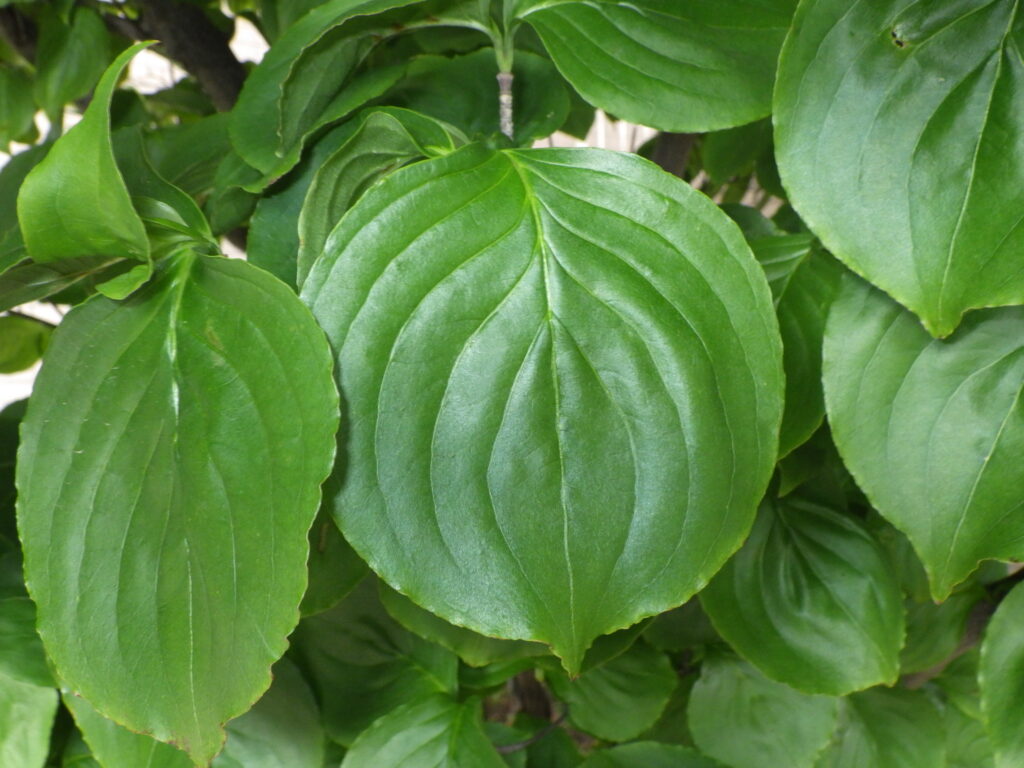
However, these three species can be distinguished solely by their leaves (Hayashi, 2014).
Japanese dogwood and flowering dogwood are deciduous trees, so their leaves are not glossy, but evergreen Japanese dogwood is an evergreen small tree, so its leaves have a distinct gloss.
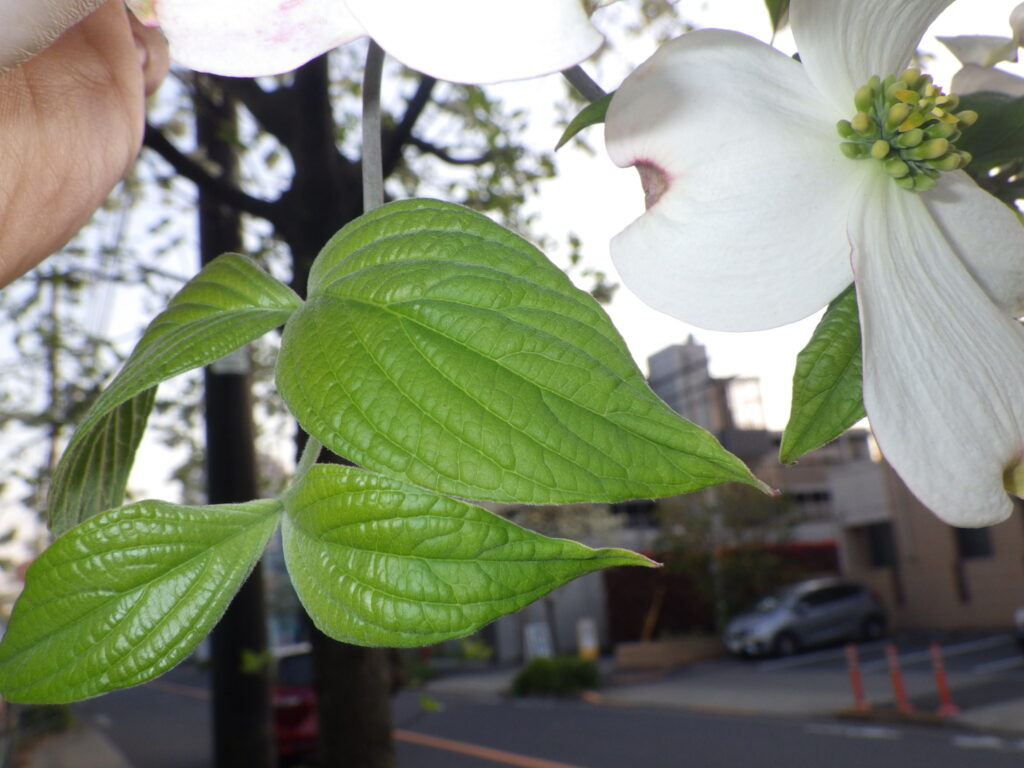
The main difference between Cornus kousa and Cornus florida is that Cornus kousa leaves are relatively small, measuring 5-10 cm, with fewer wrinkles on the upper surface and a greenish underside, while Cornus florida leaves are larger, measuring 8-15 cm, with more wrinkles on the upper surface and a powdery white underside.
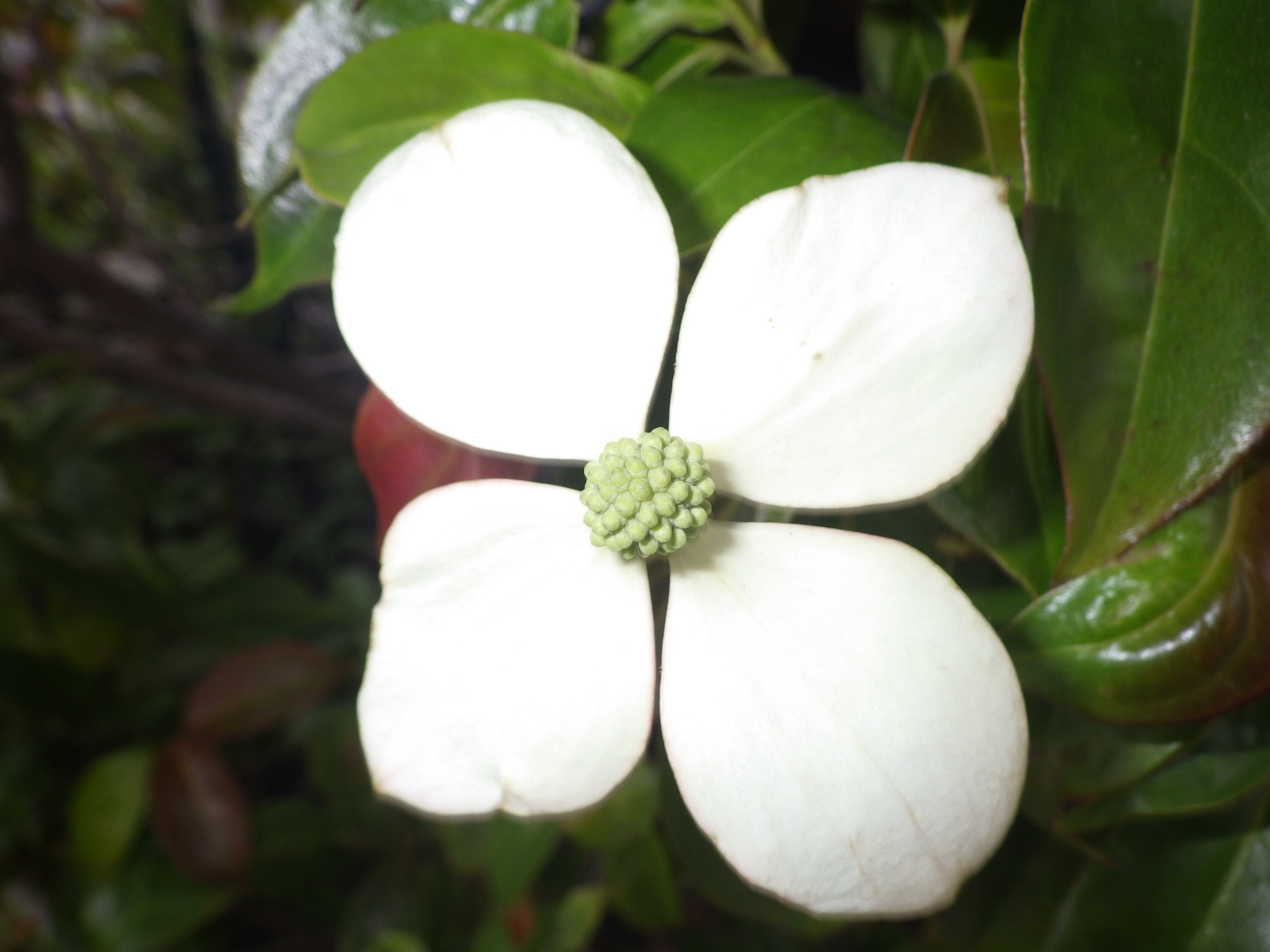
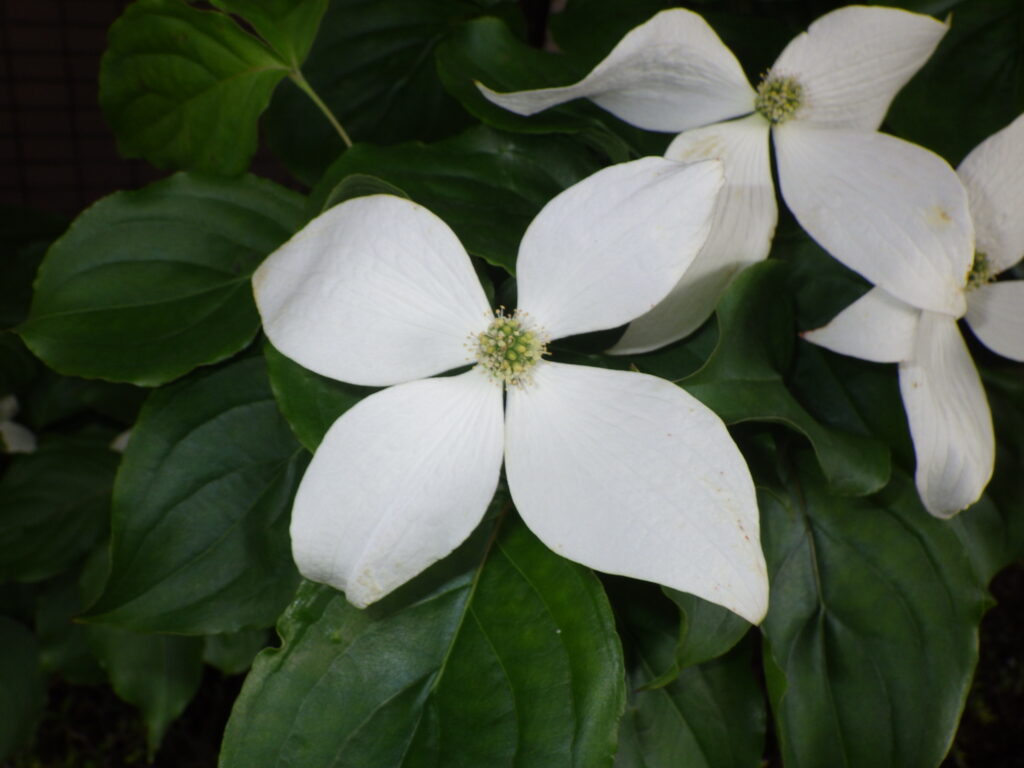
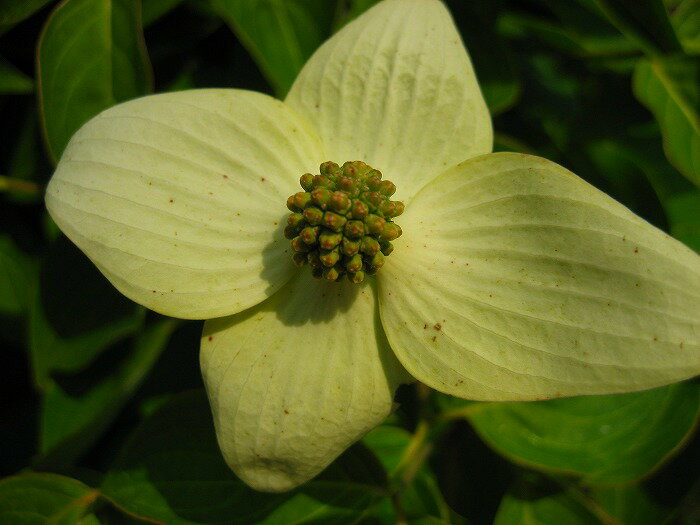
There are also differences in the flowers. The involucral bracts, which look like white petals, have notched tips in the flowering dogwood, are rounded and not notched in the Japanese dogwood, and have tail-like extensions at the tips in the Japanese dogwood.
Furthermore, while the flowering period for dogwood (Cornus florida) is from March to June, that of Japanese dogwood (Cornus kousa) and Japanese dogwood (Cornus serrata) is from May to July. In urban areas, they bloom in succession.
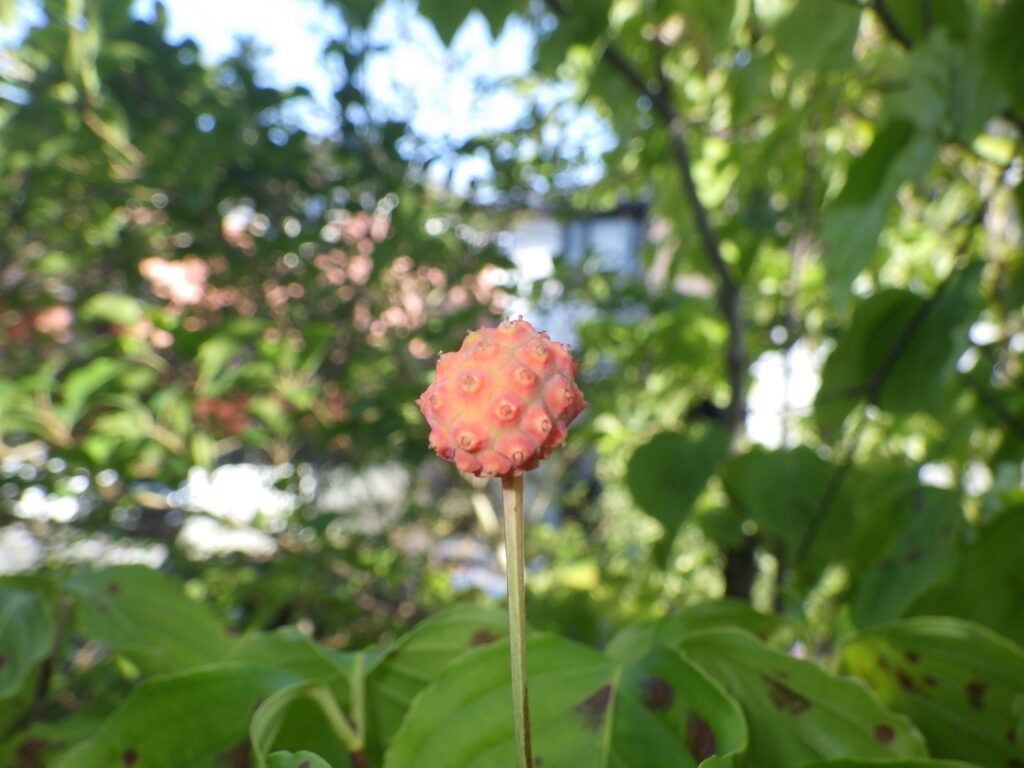
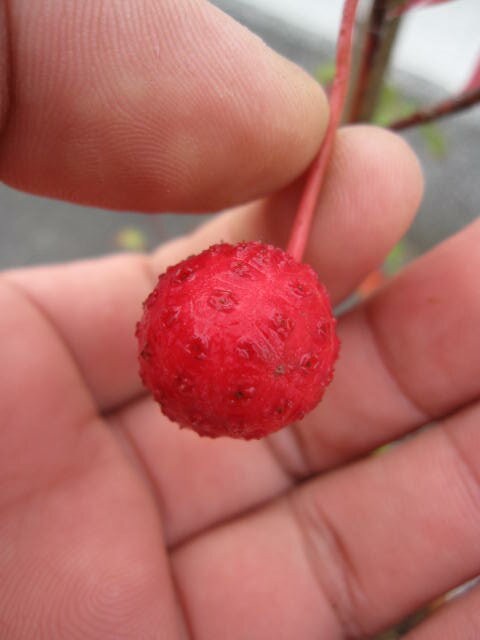
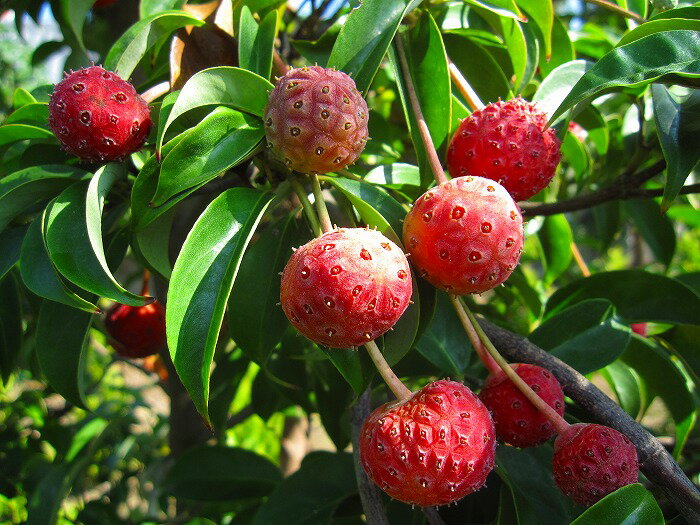
The fruits are completely different in shape. In the flowering dogwood, the individual fruits are oval-shaped drupes, but in the Japanese dogwood and the Japanese red dogwood, the fruits are aggregate fruits formed by the fusion of many small drupes, resulting in a spherical shape.
Another difference is that the bark of the Japanese dogwood (Cornus kousa) peels off in a scaly pattern, while that of the flowering dogwood (Cornus florida) cracks in a net-like pattern.
In addition, there is the evergreen small tree, Cornus capitata, which is sometimes grouped together with Cornus hongkongensis as "evergreen dogwood" in horticulture. However, its leaves are softer and less glossy than those of Cornus hongkongensis, and the underside of the leaves is more whitish.
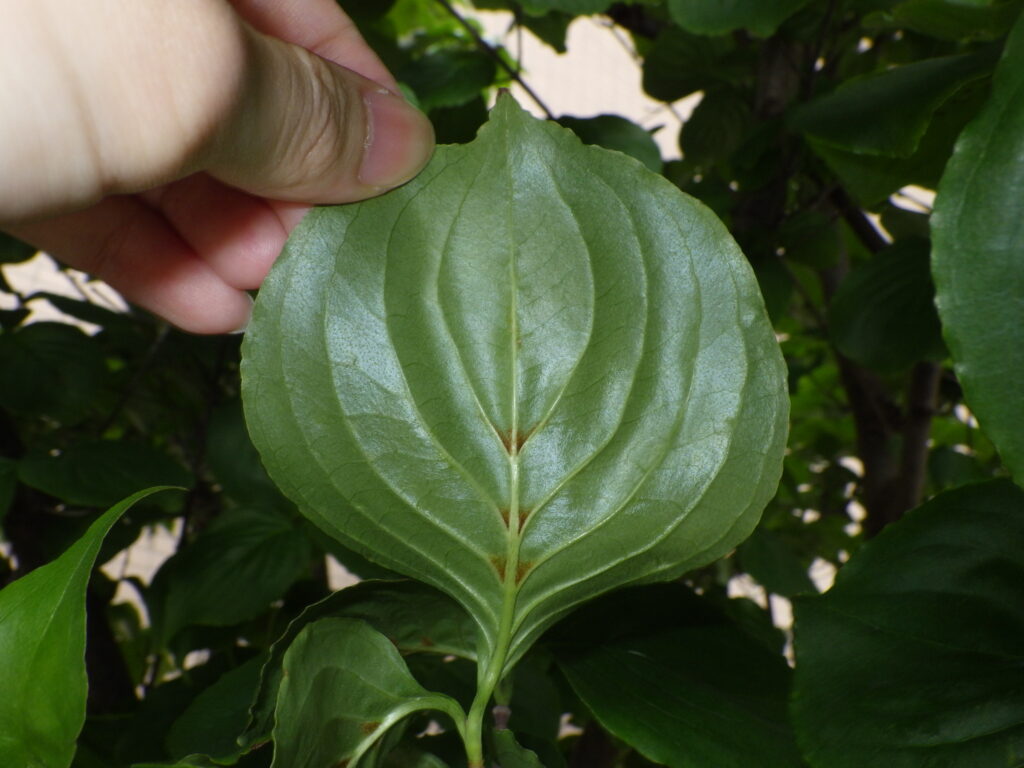
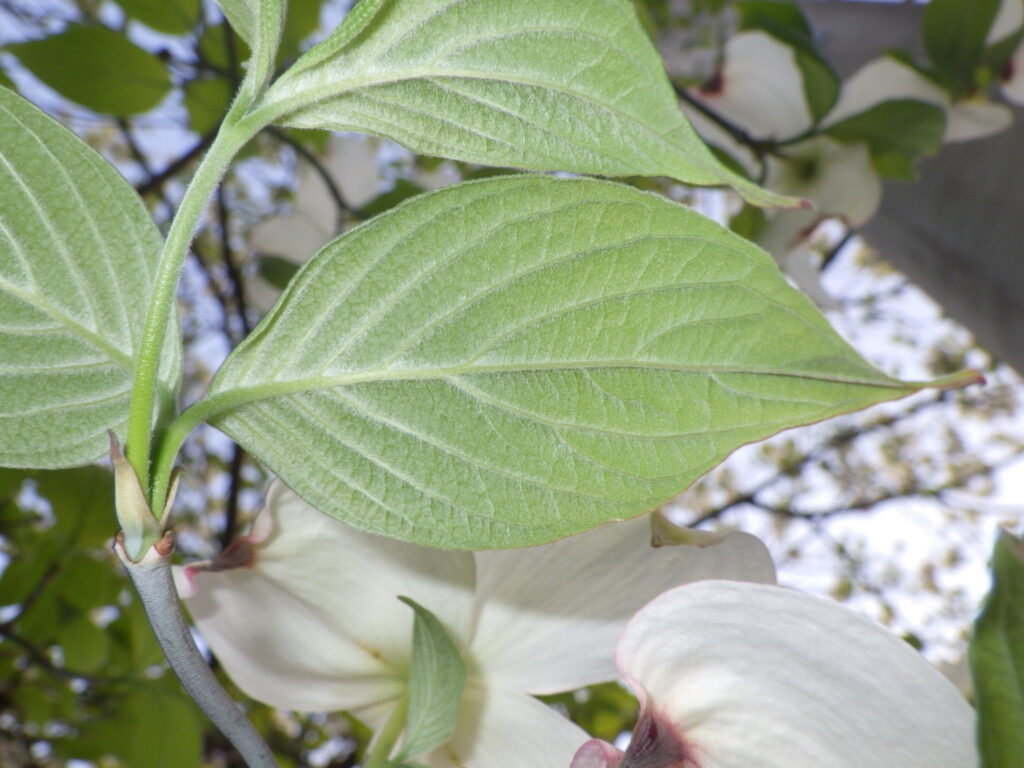
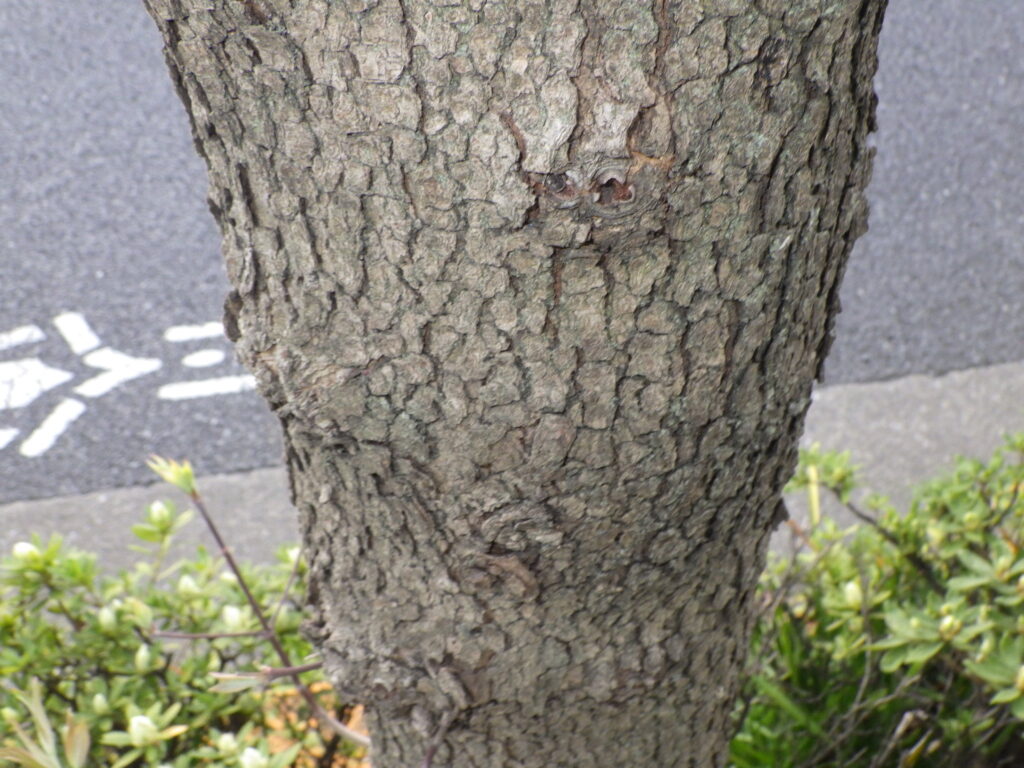
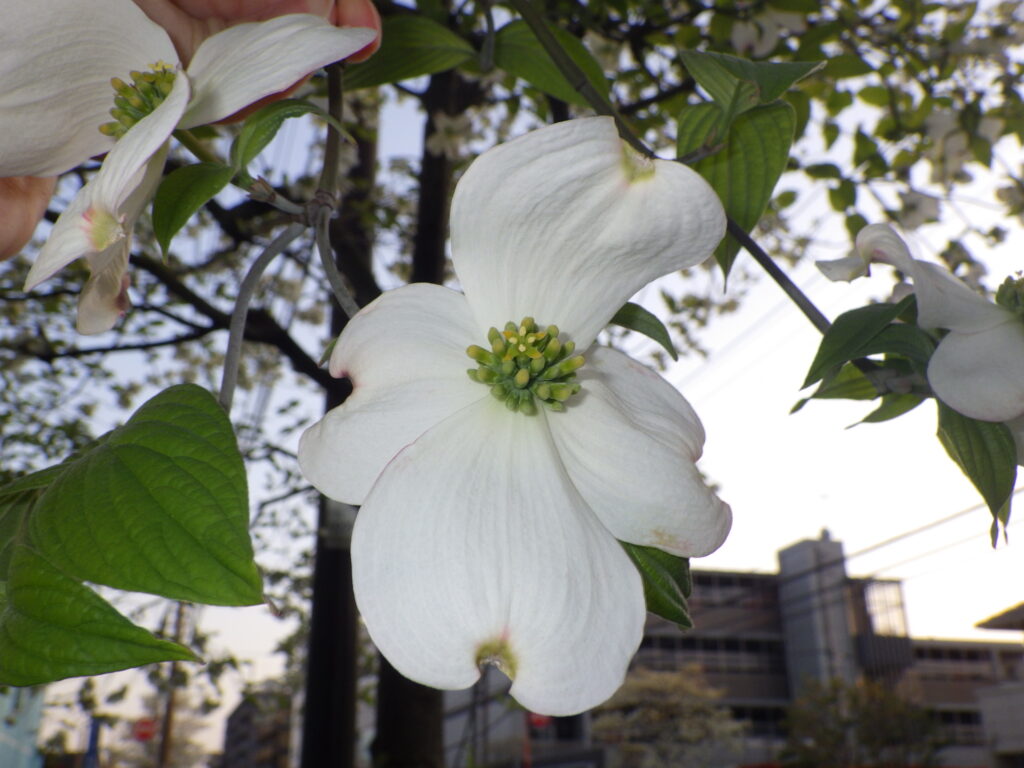
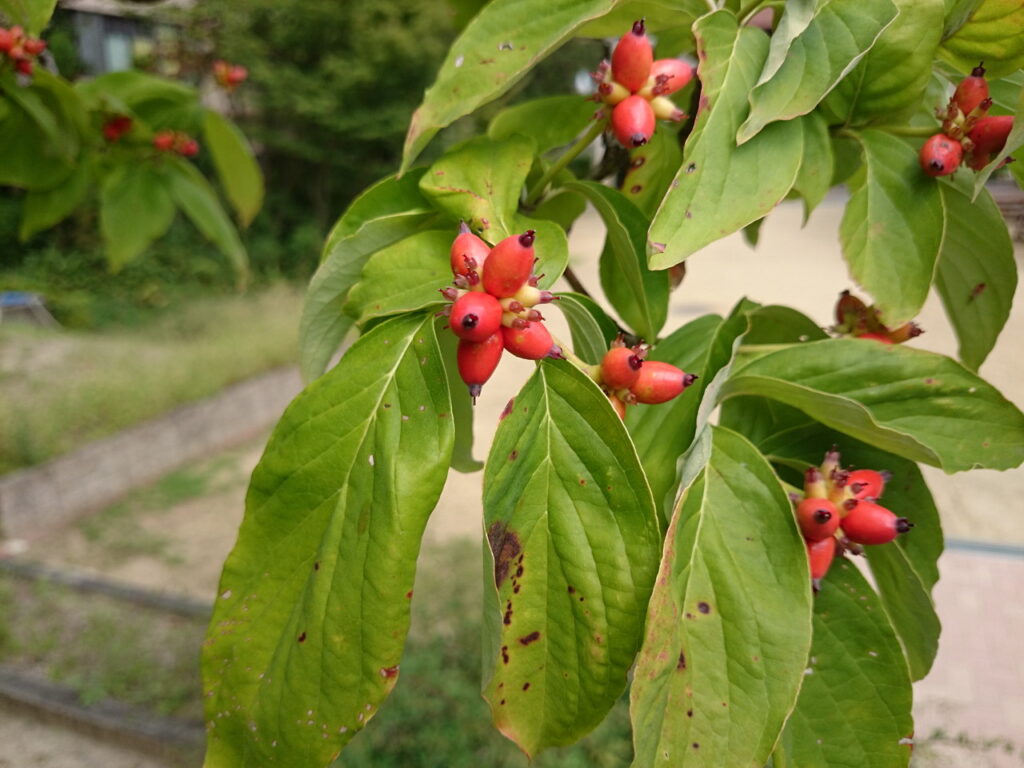
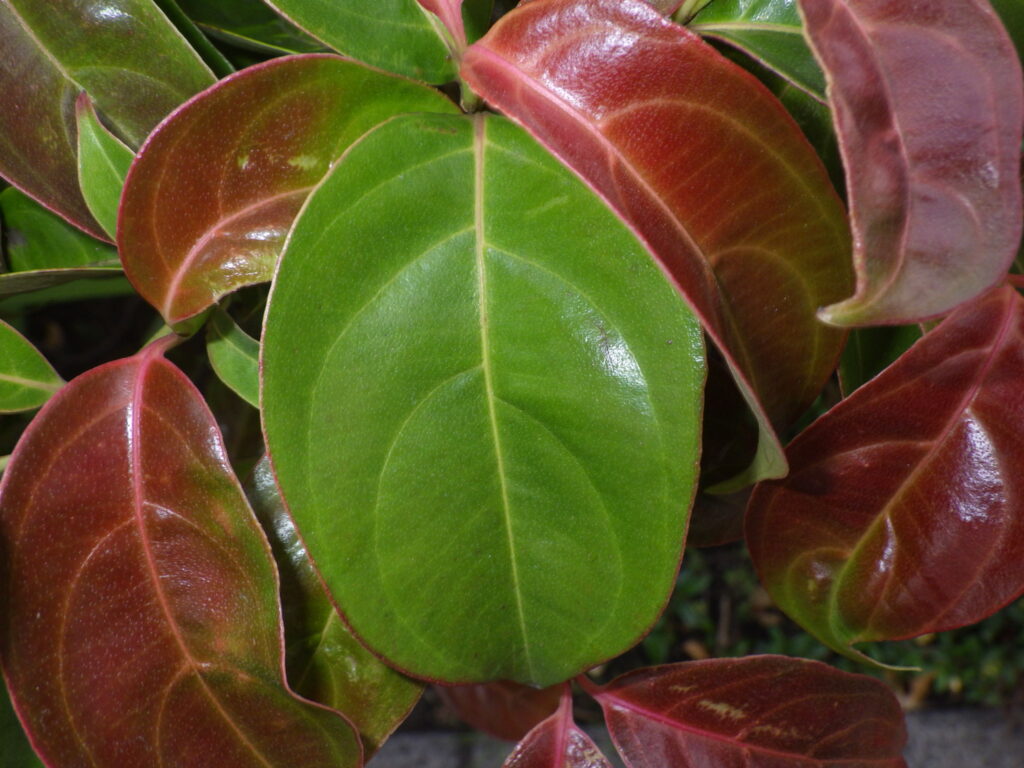
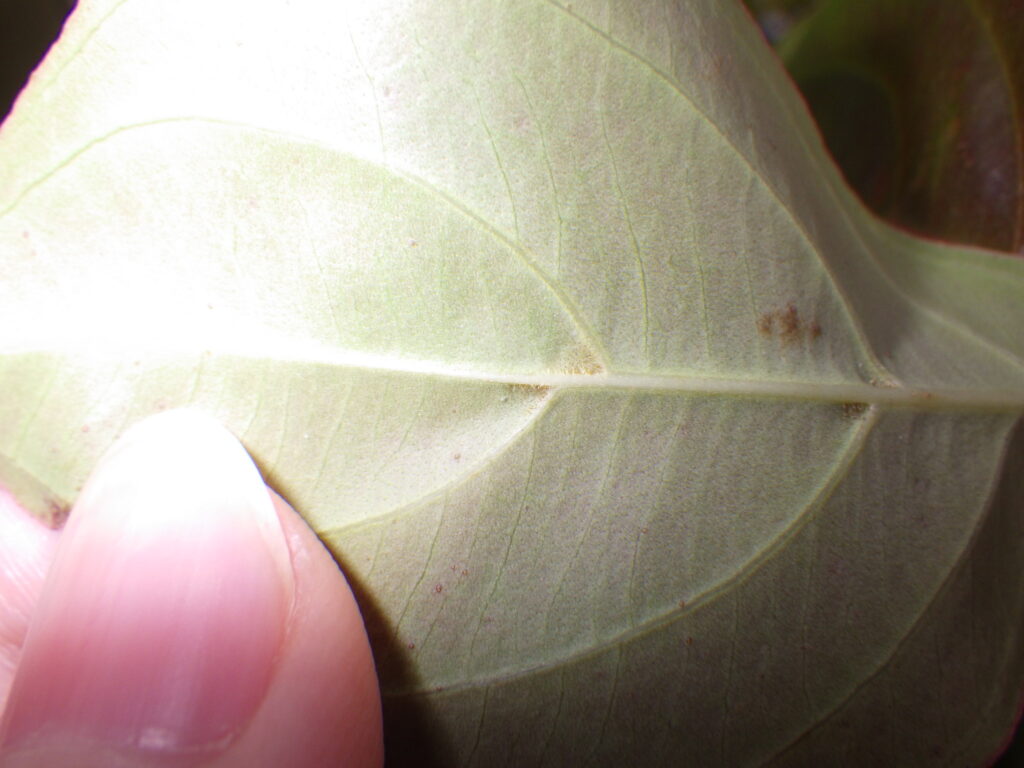
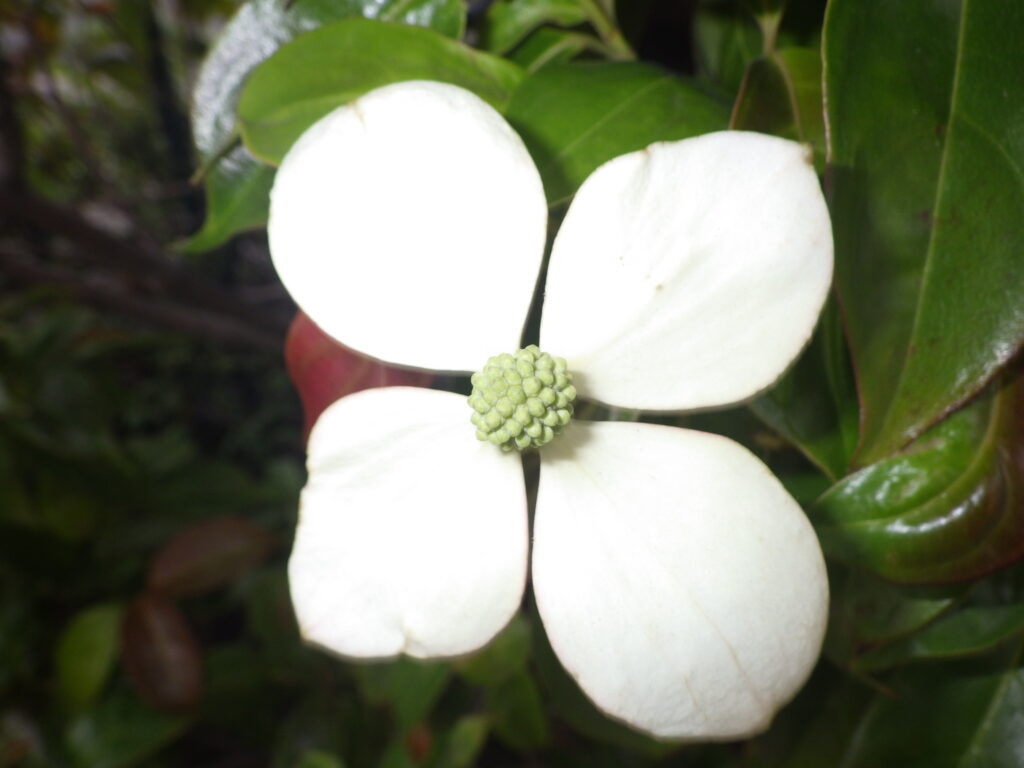
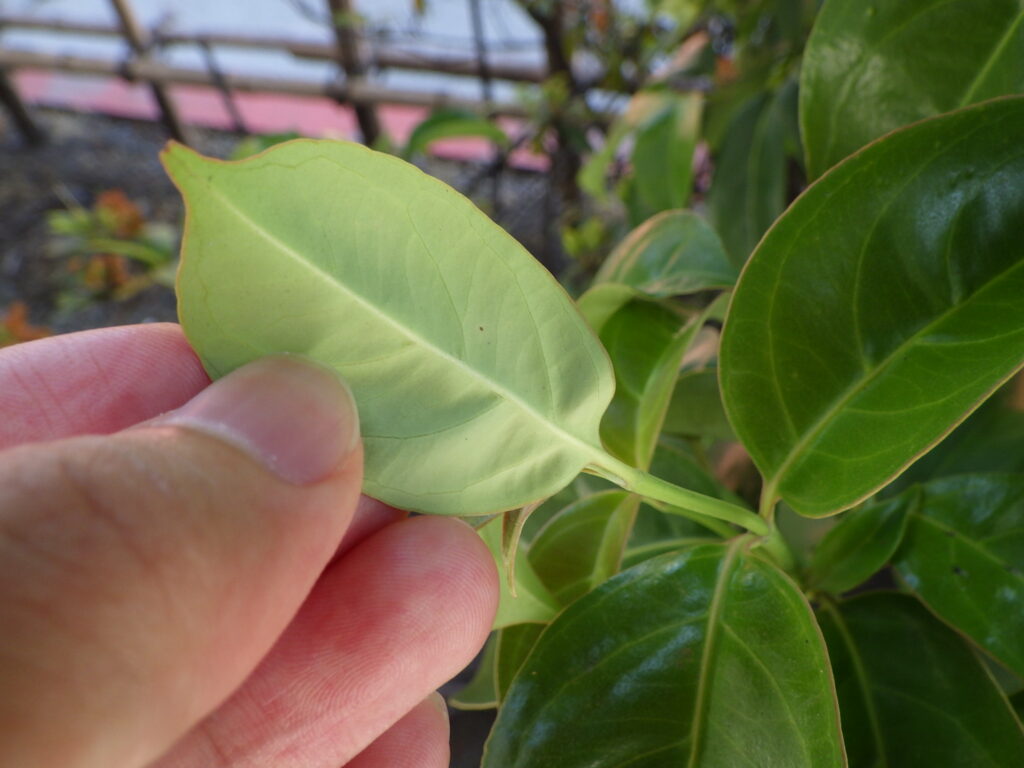
What are the differences between the two subspecies of Cornus kousa, Cornus tomentosa and Cornus serrata?
Although not widely known, there are subspecies of Cornus kousa.
Hayashi (2014) states that "the subspecies Cornus hongkongensis and Cornus melanotricha are planted, and the former is known for the cultivar 'Gekko' which has abundant flowers, while the latter has slightly narrower leaves and reddish young leaves."
However, this book lacks comparative photographs of leaves and contains somewhat vague descriptions. Most Japanese literature does not mention subspecies.
Upon checking the plant catalog of its native habitat , " Flora of China " (Wu et al., 2005), I found that the distinguishing features are clearly described in English. The distinguishing features are as follows:
Cornus kousa subsp. hongkongensis... leathery leaves. Brown trichomes do not grow between the lateral and midribs on the underside of the leaves, and brown or white hairs grow on the underside of young leaves.
Cornus melanotricha subsp. …… Slightly leathery leaves. Brown trichomes grow between the lateral and midribs on the underside of the leaf, and the underside of the leaf is basically hairless.
Another known cultivated variety is 'Gekko'.
Based on this description, it seems that the plants I was photographing were a mix of Cornus kousa and Cornus serrata. However, I have yet to spot an individual that appears to be the cultivated variety 'Gekko', so I would like to continue to gather more information.
What is the structure of a flower?
While the basic structure of flowers varies considerably among different species of the Cornus genus, the three species Cornus kousa, Cornus florida, and Cornus kousa share a common characteristic: they form a "capitulum" inflorescence, which consists of numerous densely packed, pedicelless flowers surrounded by bracts that resemble petals. The shape of the bracts differs slightly among the different species.
The flowering period of Cornus kousa is from May to July (Mogi et al., 2000). It flowers after the leaves have unfolded. The involucral bracts are ovate or oblong-ovate, 3-8 cm long. In the center of the involucral bracts, a capitulum is formed, bearing 20-30 small, pale green flowers in a dense cluster. Each flower has four petals and four stamens, and one pistil.
The flowering dogwood (Cornus florida) blooms from March to June (Flora of North America Committee, 2016). The involucre consists of four bracts surrounding the inflorescence, which are white or red with a brown or white hard spot at the tip, obovate to obcordate, 2-6 cm long and 1-4.5 cm wide, with a rounded to notched apex. The capitulum is flat at the top, 1-2 cm in diameter, bearing 15-30 flowers, with two pairs of low-lying leaves at the base. The peduncle is 10-20 mm long. The hypanthium is appressed with hairs. The sepals are 0.5-0.8 mm long. The petals are cream-colored or yellowish-green, 3-3.5 mm long.
The flowering period of Cornus kousa var. japonica is from April to June in China (Wu et al., 2005), but from June to August in Japan. The involucral bracts are yellow or white, broadly elliptic to obovate, 1.6–4 cm long and 1.3–2 (–4.2) cm wide, sparsely to distinctly glossy. It has a capitulum inflorescence, and the calyx tube of the flower is 0.7–1.3 mm, shallowly 4-lobed, rarely 5-lobed. The petals are elliptic to ovate, 1.5–4.2 mm long and 0.8–1.1 mm wide, sometimes slightly fused at the base. The stamens are cylindrical, 0.5–1.5 mm, sparsely covered with white trichomes or glossy.
While both the flowers of the Japanese dogwood and the flowering dogwood attract various insects, there are differences in their tendencies!
Since the flowers of Cornus kousa, Cornus florida, and Cornus kousa var. serrata are very similar, one might assume that the insects that visit their flowers for pollination are almost the same.
Generally, flat white flowers are a common combination of color and shape used to attract insects with short mouths, as they offer nectar and pollen. These flowers are frequently visited not only by bees but also by flies and beetles.
In some groups of the Cornus genus, the bracts, rather than the petals, perform this function.
A US study that examined insects visiting the flowers of Cornus kousa and Cornus florida confirmed that various types of insects, including bees, flies, beetles, true bugs, and lepidoptera, do visit both flowers (Rhoades et al., 2011). Of these, true bugs and lepidoptera are unlikely to contribute significantly to pollination. The same trends are observed as with typical flat white flowers.
However, surprisingly, when comparing the results of the Japanese dogwood and flowering dogwood flowers, there were differences in the types of insects that visited them.
While dogwood trees always had the presence of bees from the families Halictidae and Halictidae, with bees being the primary pollinators, Japanese dogwood trees were also frequently visited by Halictidae, but the most frequent visitors were beetles from the families Scarabaeidae, Cerambycidae, and Cantharidae.
The tendency of beetles to visit the flowers of Cornus kousa is particularly pronounced. For example, there were 0 individuals of the Scarabaeidae family on Cornus florida compared to 129-399 individuals on Cornus kousa, 1-8 individuals of the Cerambycidae family on Cornus florida compared to 17-231 individuals on Cornus kousa, and 0 individuals of the Canthariidae family on Cornus florida compared to 67-150 individuals on Cornus kousa. In addition, there is a small record in Japanese research of a longhorn beetle called *Suginoakanetorakamikiri* visiting Cornus kousa (Saito, 1987).
These results suggest that both species rely on a variety of insects for pollination, including those with short mouths, but that Cornus kousa is more specialized in beetle pollination, while Cornus florida is more specialized in bee pollination.
Why did these differences occur?
While not fully understood, another study by the same researchers who conducted this research has shown that the composition and arrangement of volatile components in the flowers of Cornus kousa and Cornus florida differ.
The dogwood tree (Cornus kousa), distributed in Japan, Korea, and China, and the flowering dogwood (Cornus florida), distributed in Canada, the United States, and Mexico, may have diverged due to differences in their insect fauna and competing flora, resulting in variations in their "scent."
Were there two types of fruits: drupes and aggregate fruits formed by the fusion of small drupes?
There are two types of fruits in the genus Cornus: those with "drupes" like the flowering dogwood, and those with aggregate fruits (drupes-type polycarps in the family Cornaceae) where the drupes transform into "small drupes" and are encased in a pseudopericle derived from the receptacle.
A drupe is a type of fruit with a juicy, water-rich mesocarp, in which the endocarp becomes woody, forming a pit (fruit kernel) (Shimizu, 2001). Imagine a plum fruit for a better understanding.
Microdrupes refer to individual drupes that have evolved to form an aggregate fruit.
The fruit of the Japanese dogwood (Cornus kousa) is an aggregate fruit formed by the fusion of small drupes. The aggregate fruit is spherical, 1-1.5 cm in diameter, and contains 1-5 seeds (Mogi et al., 2000). It ripens red in September and October. The seeds are 3-6 mm in diameter and vary in shape and size.
The fruit of the flowering dogwood is a drupe, usually red, rarely yellow, black when dry, spreading apart, with a circular cross-section, 13–18 mm long and 6–9 mm wide (Flora of North America Committee, 2016). The pit is 10–12 mm long and 4–7 mm wide, oval-shaped and smooth.
The fruit of Cornus kousa is an aggregate fruit formed by the fusion of small drupes. When ripe, it is red or yellowish-red, spherical, 1.5–2.5 cm in diameter, nearly glabrous or covered with fine, slightly white trichomes, and the pedicel is 4–8 (–10) cm long (Wu et al., 2005).
Within the genus Cornus, drupes are known to be more primitive, while aggregate fruits are a derived characteristic (Eyde, 1988).
The Japanese dogwood (Cornus kousa) has evolved from "bird dispersal via drupe" to "mammal dispersal via aggregate fruit"!?
These fruits ripen to a red color and are juicy, suggesting that they are clearly eaten by animals and dispersed by them. However, while the drupes of the flowering dogwood are low in moisture, the aggregate fruits of the Japanese dogwood and the scaly-flowered Japanese dogwood are considerably juicier and fleshy.
Regarding the Japanese dogwood (Cornus kousa), it has been eaten by humans since ancient times and is very sweet, used for eating fresh or making fruit wine (Kasai, 2019). According to someone who actually ate it, "It has a thick, viscous sweetness. There are seeds inside that feel on the tongue. It's difficult to swallow. After fully savoring the sweetness, you spit it out with gusto" (Tanaka, 2011). One blog described comparing the taste of the Japanese dogwood (Cornus kousa) and the Japanese dogwood (Cornus kousa), finding them to be the same (Tashiro Co., Ltd., 2018).
On the other hand, there are accounts online of people actually eating dogwood, and they say it tasted bad (Kawabata, 2018).
These facts suggest that there are differences in the animals used for seed dispersal between Cornus kousa, Cornus controversa, and Cornus florida.
Numerous studies have analyzed the feces of wild animals to determine what kinds of fruits they eat, and it seems possible to infer differences from this data.
There are records of black bears, martens, raccoons, and foxes eating dogwood seeds (Koike and Masaki, 2008). Japanese macaques rarely eat fallen fruit, and even when they do eat fruit still attached to the tree, they chew it open along with the seeds, so they are not considered to be important seed dispersers (Toge, 2016). Birds rarely visit the trees, and they have not been observed swallowing the seeds.
On the other hand, there are no records of mammals eating dogwood seeds (Koike & Masaki, 2008), but in birds, a Japanese study found 34 dogwood seeds in droppings over a two-month period (Takatsuki, 2021), and numerous studies in North America have also shown that birds eat them (McDonnell & Stiles, 1983; Skeate, 1987; White & Stiles, 1992).
These results suggest that dogwood trees (Cornus florida) have evolved bird dispersal through drupe fruits, while Cornus kousa (Cornus kousa) has evolved mammalian dispersal through aggregate fruits.
Regarding the fruits, the difference in distribution areas between Cornus kousa, which is found in Japan, Korea, and China, and Cornus florida, which is found in Canada, the United States, and Mexico, may have led to a change in the animals that rely on for seed dispersal. Although no records were found for Cornus kousa var. serrata, it is thought to have undergone a similar evolution to Cornus kousa, and we look forward to future research on this topic.
References
Eyde, RH (1988). Comprehending Cornus: puzzles and progress in the systematics of the dogwoods. The Botanical Review, 54, 233-351. https://doi.org/10.1007/BF02868985
Flora of North America Committee. (2016). Flora of North America (Vol. 12 Magnoliophyta: Vitaceae to Garryaceae). Oxford University Press. ISBN: 9780190643720
Hayashi, Masayuki. (2014). 1100 Tree Leaves Identified by Scanning Actual Specimens. Yama-kei Publishers. ISBN: 9784635070324
Kanagawa Prefecture Flora Survey Association. (2018). Kanagawa Prefecture Flora 2018 Electronic Edition. Kanagawa Prefecture Flora Survey Association. ISBN: 9784991053726,https://flora-kanagawa2.sakura.ne.jp/efloraofkanagawa.html
Kasai, Ai. (2019). A Pictorial Guide to Street Trees, Park Trees, and Garden Trees You See on Walks (Revised Edition). Soeisha/Sanseido Shoten. ISBN: 9784866590028
Kawabata, J. (2018, December 18). Tree Encyclopedia (Dogwood). The warmth of trees, the warmth of the forest. https://www.jugemusha.com/jumoku-zz-hanamizuki.htm
Koike, Shinsuke & Masaki, Takashi. (2008). A literature review of woody plant fruit utilization by three species of carnivorous plants south of Honshu. Journal of the Japanese Forestry Society, 90 (1), 26-35. https://doi.org/10.4005/jjfs.90.26
Takatsuki, Seiki. (2021). Seed dispersal by birds to persimmon trees on the Azabu University campus. Azabu University Journal, 32, 1-9. http://id.nii.ac.jp/1112/00005374/
McDonnell, MJ, & Stiles, EW (1983). The structural complexity of old field vegetation and the recruitment of bird-dispersed plant species. Oecologia, 56 (1), 109-116. https://www.jstor.org/stable/4216868
Mogi, Toru; Ota, Kazuo; Katsuyama, Teruo; Takahashi, Hideo; Shirokawa, Shiro; Yoshiyama, Hiroshi; Ishii, Hidemi; Sakio, Hitoshi; and Nakagawa, Shigetoshi. (2000). Flowers Blooming on Trees: Polypetalous Flowers (Vol. 2, 2nd edition). Yama-kei Publishers. ISBN: 9784635070041
Rhoades, PR, Klingeman, WE, Trigiano, RN, & Skinner, JA (2011). Evaluating pollination biology of Cornus florida L. and C. kousa (Buerger ex. Miq.) Hance (Cornaceae: Cornales). Journal of the Kansas Entomological Society, 84 (4), 285-297. https://doi.org/10.2317/JKES110418.1
Saito, Akira. (1987). Studies on chemical control of cedar wood-boring insects. Research Report of Yamagata Prefectural Forestry Experiment Station, 17, 23-41. https://agriknowledge.affrc.go.jp/RN/2030370400
Shimizu, Takemi. (2001). Illustrated Dictionary of Botanical Terms. Yasaka Shobo. ISBN: 9784896944792
Skeate, ST (1987). Interactions between birds and fruits in a northern Florida hammock community. Ecology, 68 (2), 297-309. https://doi.org/10.2307/1939261
Tanaka, Kiyoshi. (2011). 100 Trees You Should Know: Trees that Support Japanese Life. Shufunotomo Co., Ltd. ISBN: 9784072784976
Toge, Akito. (2016). Evolution of aggregate fruit characteristics and seed dispersers in Cornus kousa (Cornus kousa), a member of the Cornaceae family. Primate Research Supplement, 32, 56. https://doi.org/10.14907/primate.32.0_56_2
Wu, ZY, Raven, PH, & Hong, DY (Eds.). (2005). Flora of China (Vol. 14 Apiaceae through Ericaceae). Science Press, and Missouri Botanical Garden Press. ISBN: 9781930723412
White, DW, & Stiles, EW (1992). Bird dispersal of fruits of species introduced into eastern North America. Canadian Journal of Botany, 70 (8), 1689-1696. https://doi.org/10.1139/b92-208
Tashiro Co., Ltd. (October 9, 2018). Comparing the taste of dogwood berries. Tashiro's Blog. https://greentashiro.co.jp/blog/1001/