Malvaceae

Sponsored Link
plant

What are the differences between Hibiscus syriacus, Hibiscus mutabilis, and Confederate Rose? An explanation of how to distinguish between similar species.

Hibiscus syriacus, Hibiscus mutabilis, and Confederate rose are all members of the Hibiscus genus in the Malvaceae family and are trees frequently cultivated in horticulture for ornamental purposes. Their most distinctive feature is the large, beautiful red to white flowers they produce, but they are often confused with each other. These are primarily Hibiscus syriacus and Hibiscus mutabilis...
plant

What are the differences between Styrax japonica, Pink Chime, and Styrax obassia? What are the differences between Styrax japonica, Deutzia crenata, Symplocos chinensis, and Stewartia pseudocamellia? We explain how to distinguish between similar species.

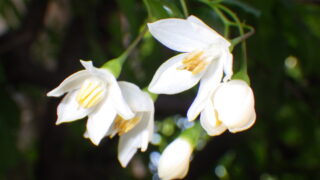
Styrax japonica, Pink Chime, and Styrax obassia all belong to the Styrax genus of the Styracaceae family and are common plants often found in gardens. Morphologically, a distinguishing feature is that the flower stalks grow downwards, and the flowers bloom facing downwards. However, some people may not know how to distinguish between them...
plant

What are the differences between Ardisia japonica, Ardisia crenata, Ardisia crenata, and Citrus tachibana? We explain how to distinguish between similar species! Is the idea that they "fix nitrogen with their leaves" a myth?!

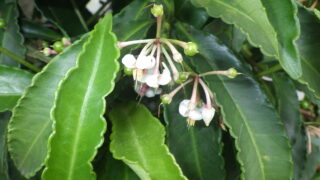
Ardisia japonica, Ardisia crenata, Ardisia japonica, and Ardisia trifoliata all belong to the genus Ardisia in the family Primulaceae. They grow wild in evergreen forests, but because they bear red, spherical fruits in autumn and winter, they are widely cultivated as ornamental shrubs, along with plants like Ardisia crenata (a member of the Chloranthaceae family). In Japan...
plant

What are the differences between Primula japonica, Primula sieboldii, and Primula japonica? An explanation of how to distinguish between similar species.

Primroses, Japanese primroses, and Japanese primroses are all perennial plants native to Japan, belonging to the genus Primula in the family Primulaceae. Their flowers are similar in shape and are usually pink, leading to confusion among the three species. However, distinguishing them is relatively easy by examining the shape of their leaves. However...
plant

There are differences between Abutilon and Abutilon humilis! What are the differences between Abutilon humilis and Abutilon variegata? We explain how to distinguish between similar species.

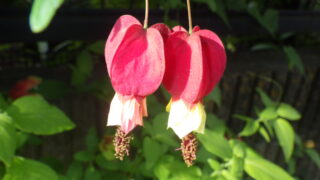
In horticulture, the term "Abutilon" is frequently used, usually referring to a specific species rather than just one. However, it's become somewhat confusing: in horticulture, it refers to three species—Abutilon humilis, Abutilon leucocephala, and Abutilon variegata—while in academic contexts, it refers to all members of the genus Abutilon, including Abutilon humilis and Abutilon leucocephala...
plant

What are the differences between the Japanese linden (Tilia japonica) and the large-leaved linden (Tilia japonica)? What are the differences between the Japanese linden (Tilia japonica) and the Indian linden (Tilia japonica)? We'll explain how to distinguish between similar species! What is the secret to attracting so many bees? Is it the scent? What is the role of the bracts on the fruit?

Both the Japanese linden (Tilia japonica) and the large-leaved linden (Tilia japonica) are deciduous trees belonging to the genus Tilia in the Malvaceae family. Although they have different origins, they are both cultivated in cities throughout Japan, and their leaf shapes are very similar, so someone who has never seen them might not be able to distinguish between them. However, the size of the leaves, as well as the petioles...
plant

What are the differences between dock, long-leaved dock, rough dock, and Ezo dock? How do you distinguish them from sorrel? We'll explain how to tell similar species apart! Did they rely on wind for pollination? Seed dispersal methods were more diverse than you might imagine!

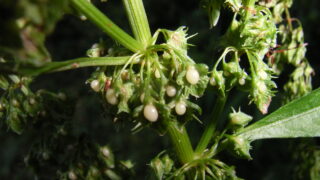
Rumex japonicus, Rumex longifolius, Rumex crispus, and Rumex japonicus all belong to the genus Rumex in the family Polygonaceae. Originally, only Rumex japonicus was found in Japan, but multiple species have invaded and become extremely common weeds. They also share a common preference for disturbed soil, and are often found growing together...
plant

What's the difference between okra and tororo aoi (flower okra)? How to distinguish between similar species! What are the uses? Bees love the flowers! What happens to unripe okra if left unattended?

Okra and Abelmoschus manihot both belong to the Malvaceae family, and are used by humans due to the viscous nature of parts of their bodies. Morphologically, they share similarities: their leaves are palmate with 3-9 lobes, their flowers have a protruding "column" (a fused structure of stamens and pistils), and their corollas are white...
Seed Plant Encyclopedia

[Seed Plant Encyclopedia #093] What are the species of the Pontederiaceae family? Photo list

The family Pontederiaceae consists of emergent, submerged, or floating aquatic plants, which are annual or perennial. The leaves are opposite, linear, or with clearly separated petioles and blades, and the blades are linear, orbicular, or scalyptus-shaped with entire margins. The flowers are terminal, arranged in conical, umbel-like, or spike-like inflorescences, or in pairs...
plant

What are the differences between Aucuba japonica, Aucuba japonica var. serrata, and Aucuba japonica var. japonica? We explain how to distinguish between similar species! Only fungus gnats were visiting the inconspicuous flowers!? Only bulbuls were eating the fruit!?

Aucuba japonica is distributed in evergreen broad-leaved forests of East Asia and is a very common plant in Japan, even in urban areas, where it's rare to go a day without seeing it. Several varieties of Aucuba japonica are known, and they are often classified into Aucuba japonica (in the narrow sense), Aucuba japonica var. nangokuensis, and Aucuba japonica var. dwarf. The differences between them are not easily discernible from their names alone...
Sponsored Link