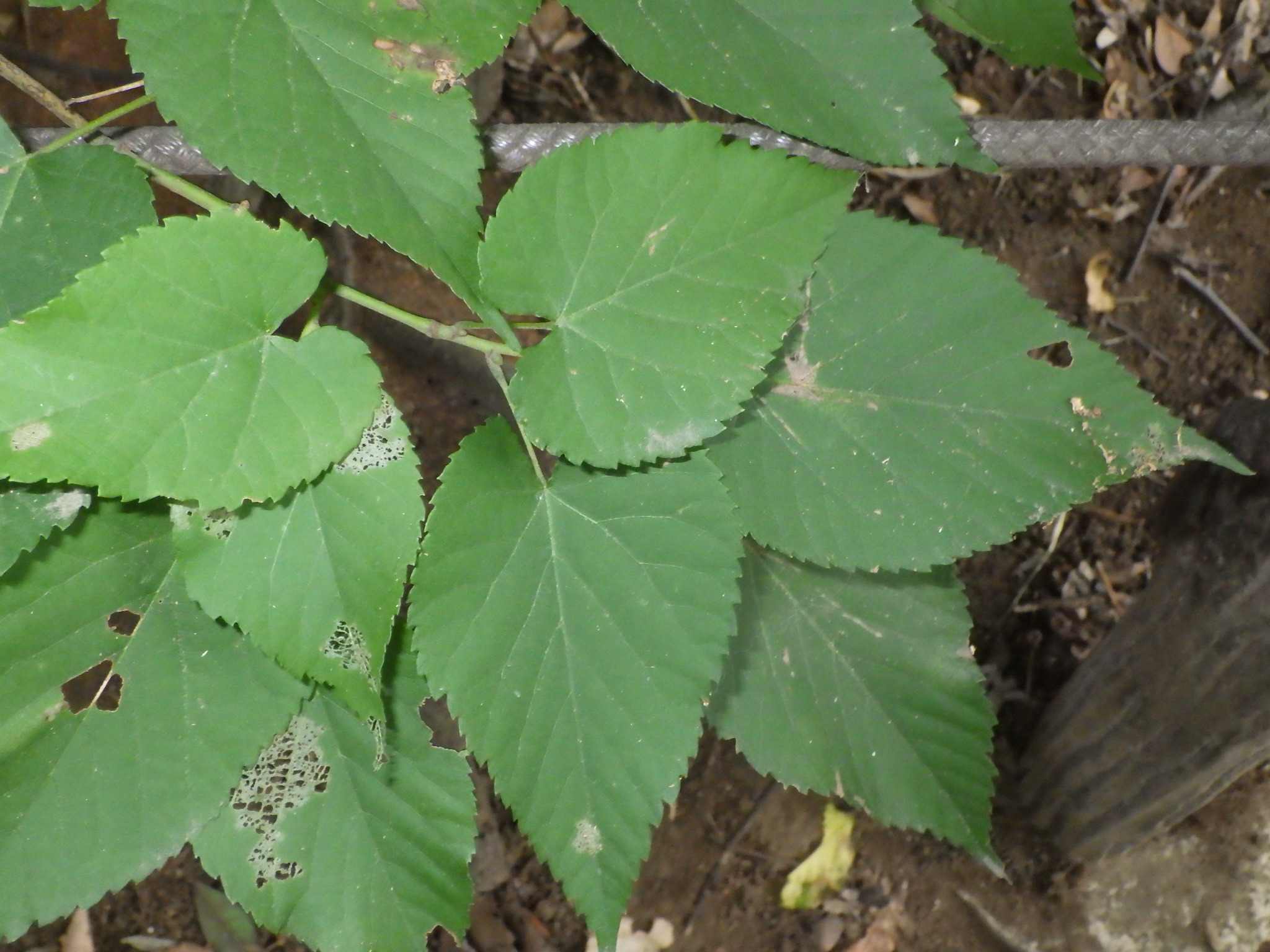
Both the Bodhi tree (Tilia japonica) and the large-leaved Bodhi tree (Tilia maximowicziana) are deciduous trees belonging to the genus Tilia in the Malvaceae family. Although they have different origins, they are both cultivated in cities throughout Japan, and their leaf shapes are very similar, so those who have never seen them may not be able to distinguish them. However, there are significant differences not only in the size of the leaves but also in the length of the petioles. A closely related species in the same genus is the Japanese linden (Tilia japonica), but this can be distinguished by the brown hairs in the vein axils on the underside of the leaves and the shape of the flowers. They are often confused with the Indian Bodhi tree due to their names, but the Indian Bodhi tree belongs to the Moraceae family and has completely different leaf and flower shapes. Originally, the tree under which Gautama Siddhartha (Buddha) attained enlightenment was the Indian Bodhi tree, but because the Indian Bodhi tree does not grow in Japan, this species was imported from China as a substitute for planting in temples, resulting in the names being reversed. The inflorescences of the Bodhi tree and the large-leaved Bodhi tree hang downwards, and the flowers are small and white, but they have a strong scent that seems to attract many bees. The fruit is a nut, and there are bracts at the base of the inflorescence. When it falls, it rotates, moving away from the mother tree and thus dispersing the seeds. This article will explain the classification, morphology, pollination ecology, and seed dispersal of linden and large-leaved linden.
- What are the linden tree and the large-leaved linden tree?
- What are the differences between the Japanese linden (Tilia japonica), the large-leaved linden (Tilia japonica), and the Japanese linden (Tilia japonica)?
- What is the difference between a linden tree and an Indian linden tree?
- What is the difference between a linden tree and a large-leaved linden tree?
- What are the varieties of the large-leaved linden tree?
- What is the structure of a flower?
- How is pollination done?
- What is the structure of the fruit?
- What are the seed dispersal methods?
- References
What are the linden tree and the large-leaved linden tree?
The Bodhi tree (Tilia miqueliana) is a deciduous tree distributed in China (Wu et al., 2007). In Japan, it is cultivated mainly in temples as a substitute for the sacred Indian Bodhi tree.
Tilia mandshurica, also known as the large-leaved linden tree, is distributed in Hokkaido, the Tohoku and Hokuriku regions of Honshu, and the northern part of the Kanto region of Japan. It is a deciduous tree that grows in deciduous forests in mountainous areas (Mogi et al., 2000). It is sometimes cultivated as a park tree or street tree in colder regions.
Both are deciduous trees belonging to the genus Tilia in the Malvaceae family. Although they have different origins, they share the commonality of being cultivated in cities across Japan. Their names are also similar, and those who have never seen them may not be able to distinguish between them. They also share the characteristic of having leaves that can be heart-shaped, and a venation pattern called "palmate venation," where the veins spread out from the base of the petiole throughout the leaf.
What are the differences between the Japanese linden (Tilia japonica), the large-leaved linden (Tilia japonica), and the Japanese linden (Tilia japonica)?
Before discussing the differences between the two species, it's worth noting that the same genus includes a plant called Tilia japonica (Japanese linden tree). Tilia japonica is endemic to Japan, distributed across Hokkaido, Honshu, Shikoku, and Kyushu, and is a deciduous tree that grows from mountain ridges to streams.
What are the differences between the Japanese linden tree (Tilia japonica), the large-leaved linden tree (Tilia japonica), and the Japanese linden tree (Tilia japonica)?
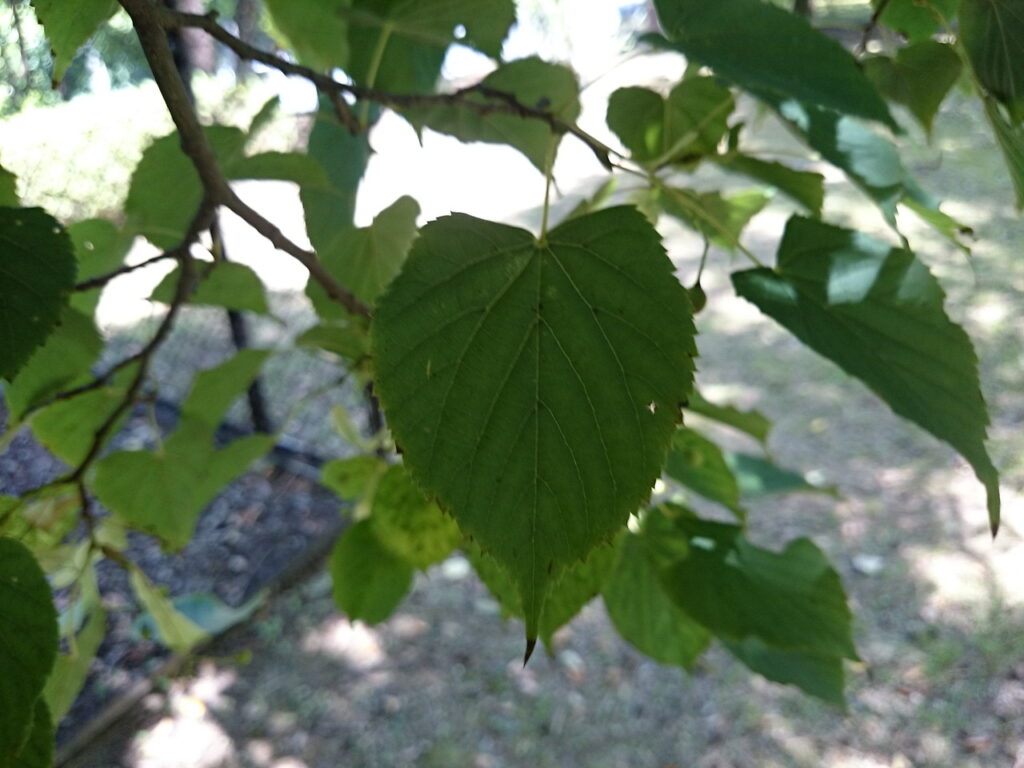
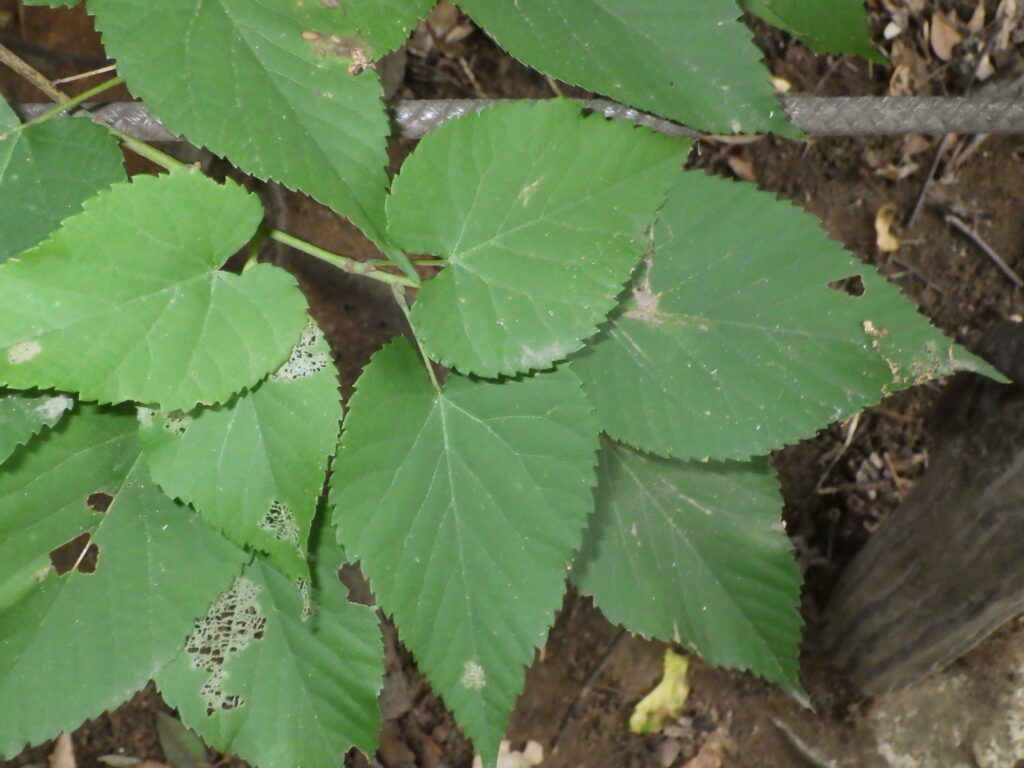
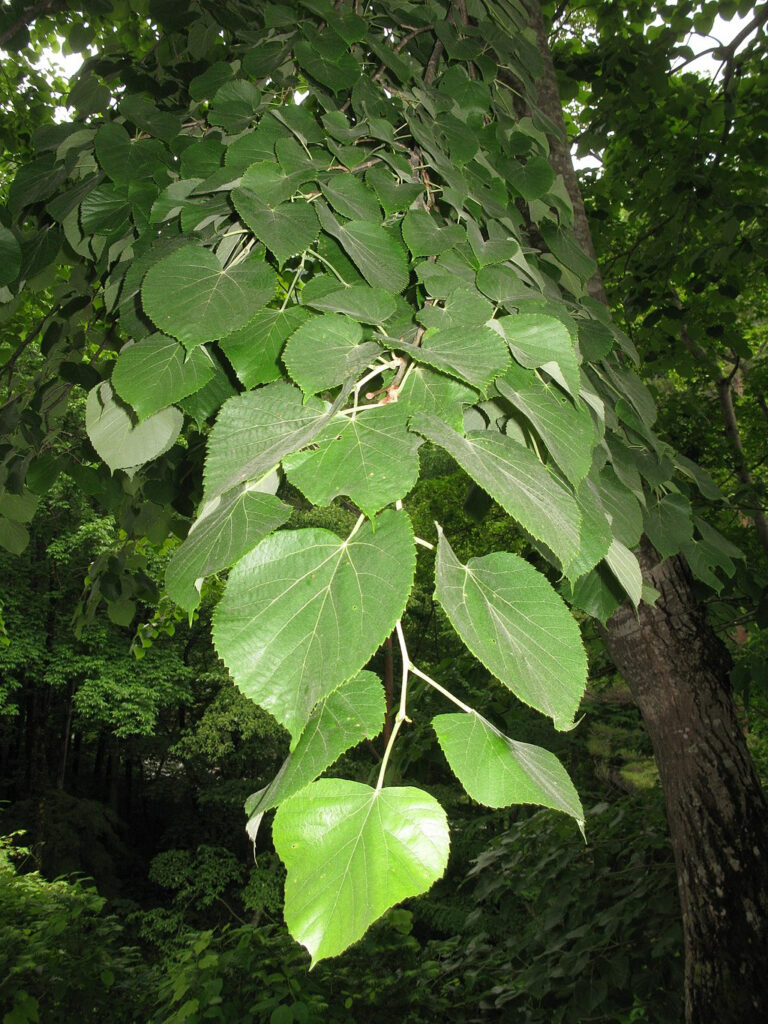
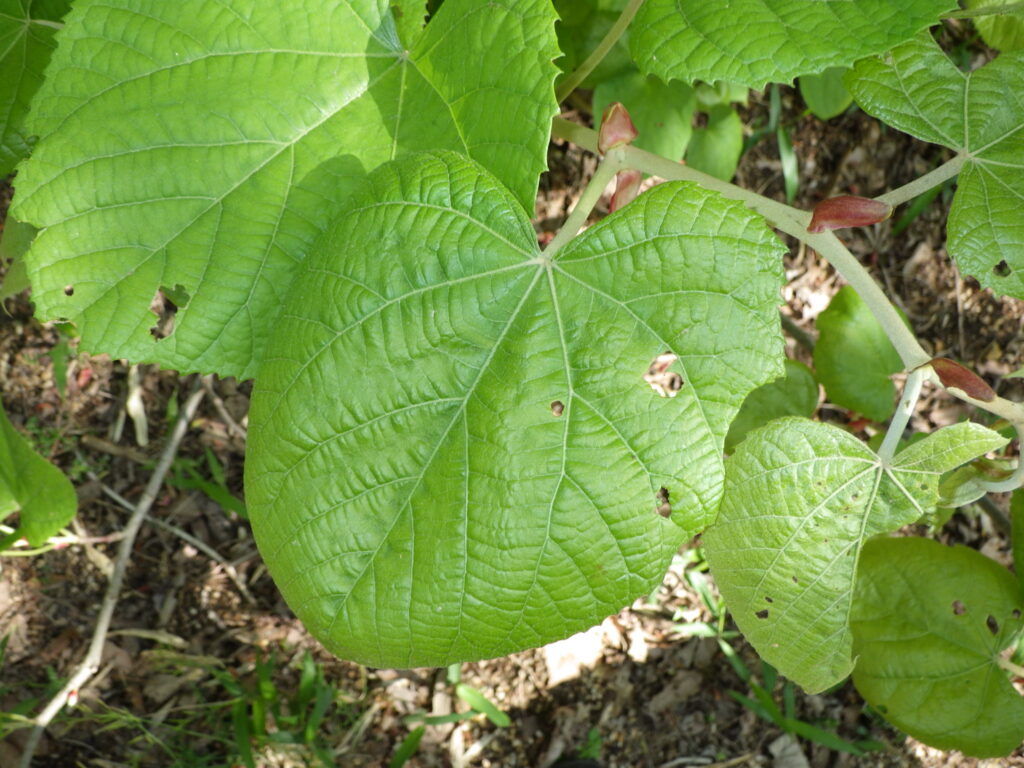
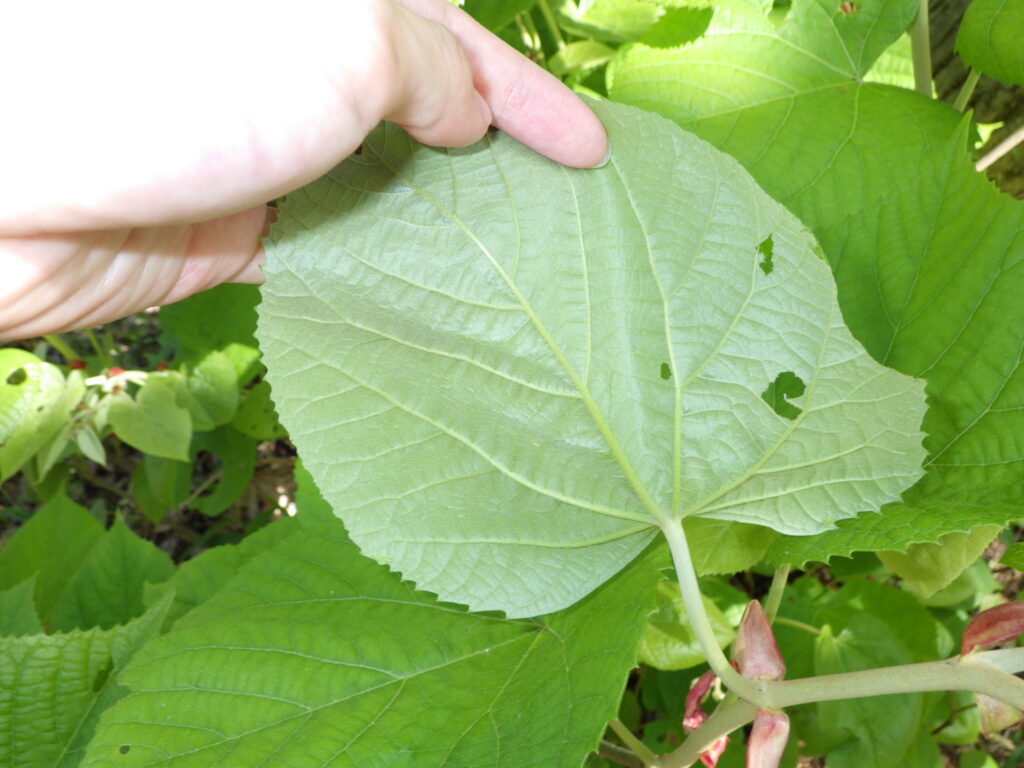
First, the leaf shape differs: in the linden tree, the leaves are distorted heart-shaped with few wrinkles on the upper surface, while in the Japanese linden, they are triangular to heart-shaped, and in the large-leaved linden, the upper surface of the leaves is very wrinkled (Hayashi, 2019).
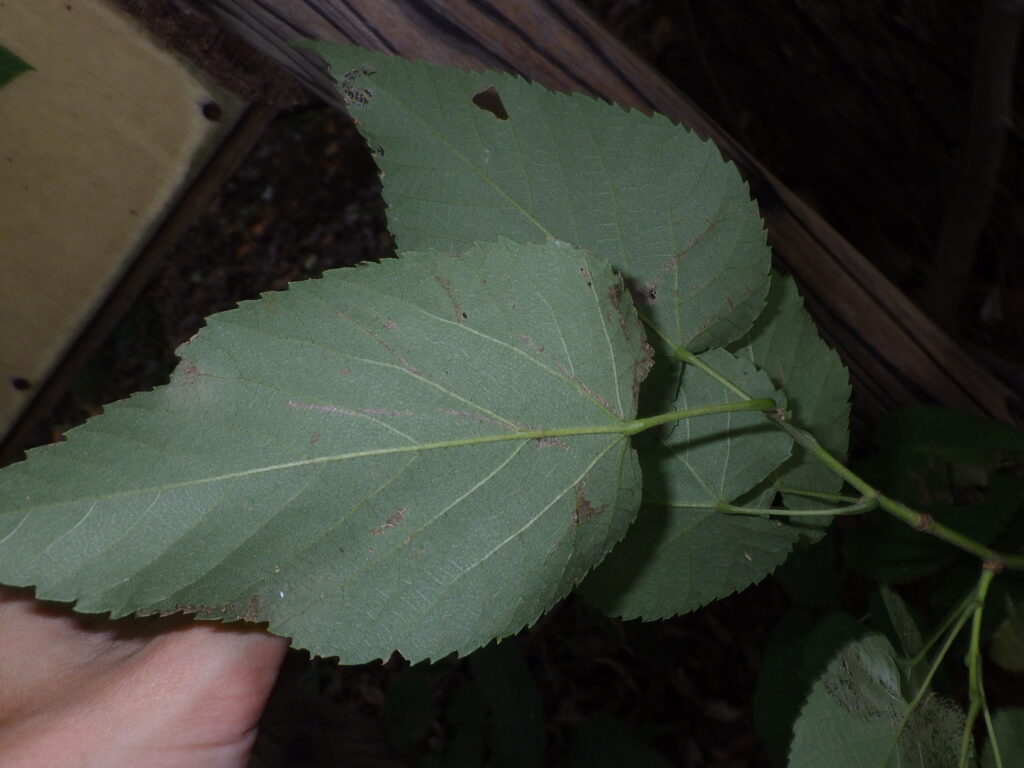
In linden trees, there are clusters of brown hairs in the vein axils on the underside of the leaves, and these are particularly noticeable at the base of the petiole, where the leaves appear to be covered in brown hairs. This is absent in Japanese linden trees, and while it is common in large-leaved linden trees, it remains light brown.
The most distinctive feature is the flowers: in the linden tree, the stamens clearly protrude outward from the petals, while in the Japanese linden and large-leaved linden, the stamens are not as long and curve inward.
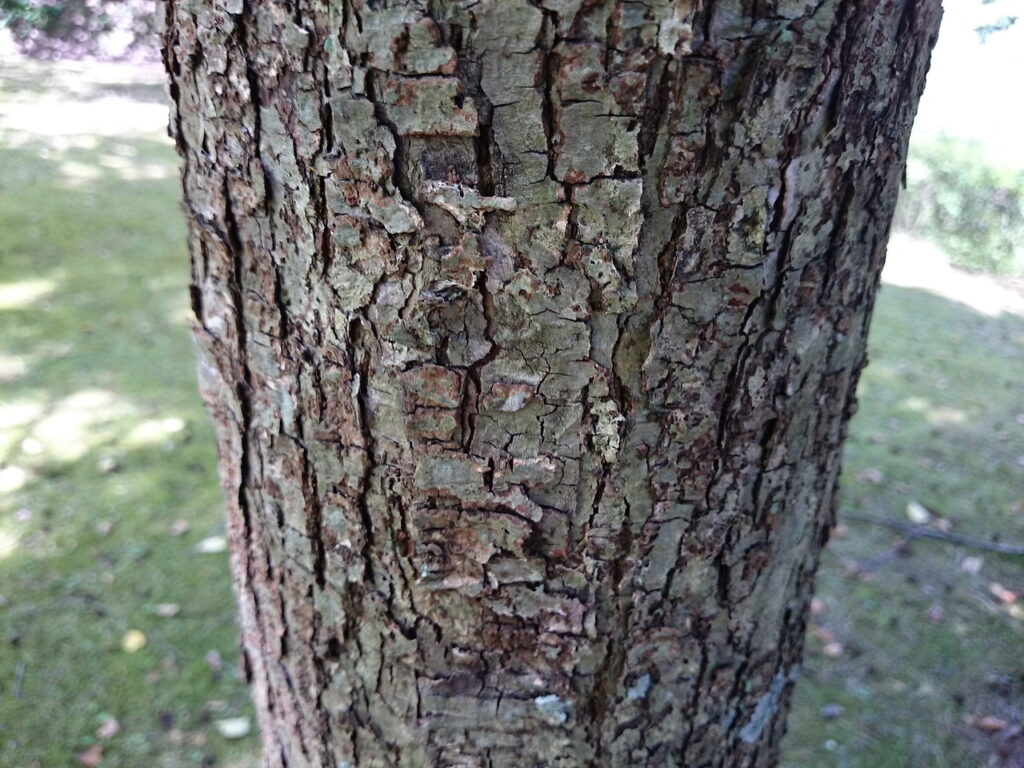
What is the difference between a linden tree and an Indian linden tree?
The Indian fig tree (Ficus religiosa) is another species that is often mistaken for the fig tree due to its name. The Indian fig tree is a semi-deciduous tree distributed from India to Southeast Asia.
The Indian fig tree is taxonomically completely different from the common fig tree (Tilia japonica). As mentioned above, the common fig tree belongs to the genus Tilia, while the Indian fig tree belongs to the genus Ficus in the family Moraceae.
Therefore, there are many differences. First, regarding the leaves, the Indian fig (Ficus lyrata), like other fig species, has thick, entire leaves with very long, tail-like tips that can extend more than a third of the leaf blade, whereas the leaves of the linden tree (Tilia japonica) and other Tilia species are thinner, serrated, and while the tips are tail-like, they are quite short.
The flowers differ further; the Indian fig tree, like many fig species, produces special flowers called "syconium" or "syconium" that resemble fruits, while the linden tree and other Tilia species have typical open flowers.
While the Indian linden tree, like its relatives the banyan tree and the fig tree, can become a "strangler fig," the fact that this doesn't happen with the Tilia genus is a significant advantage.
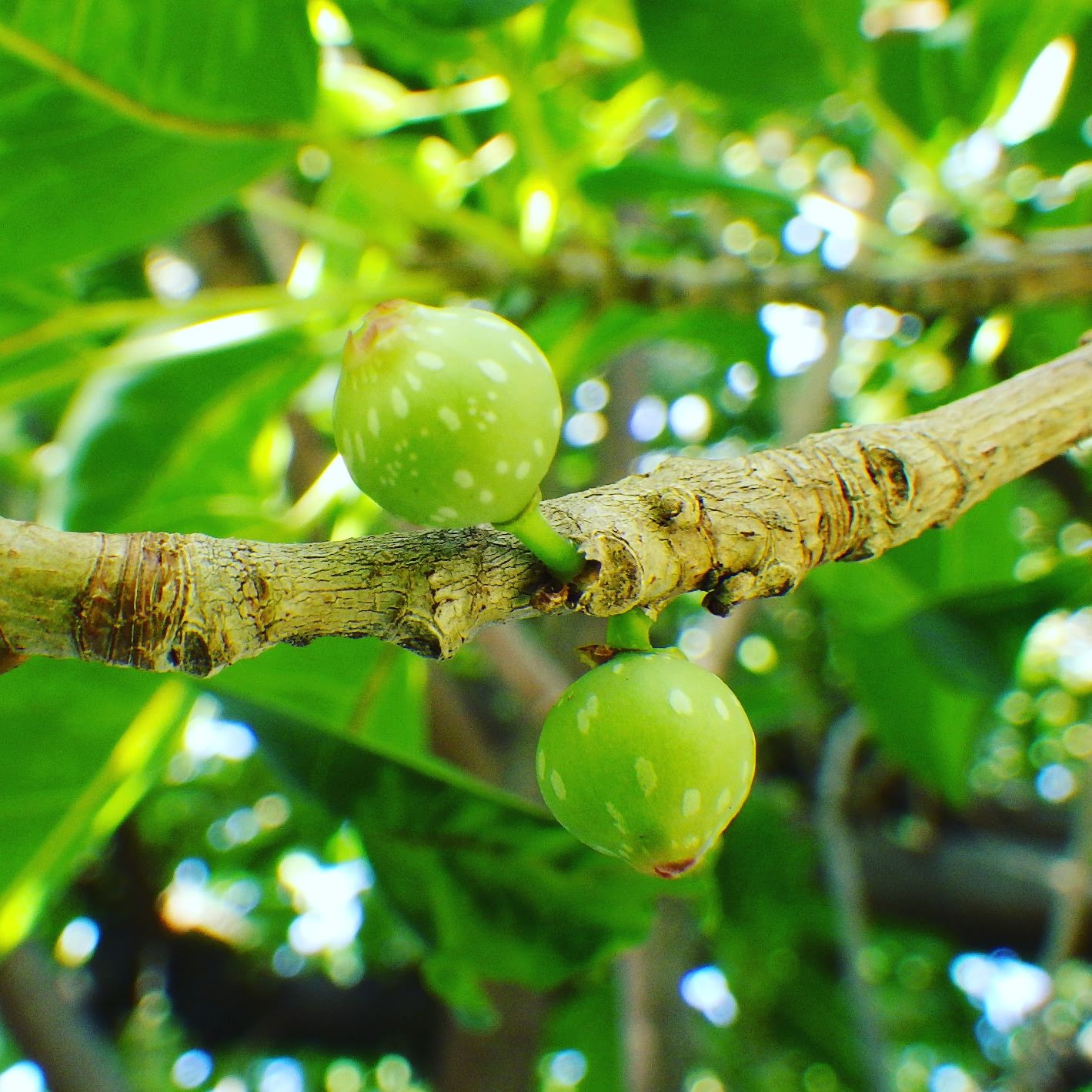
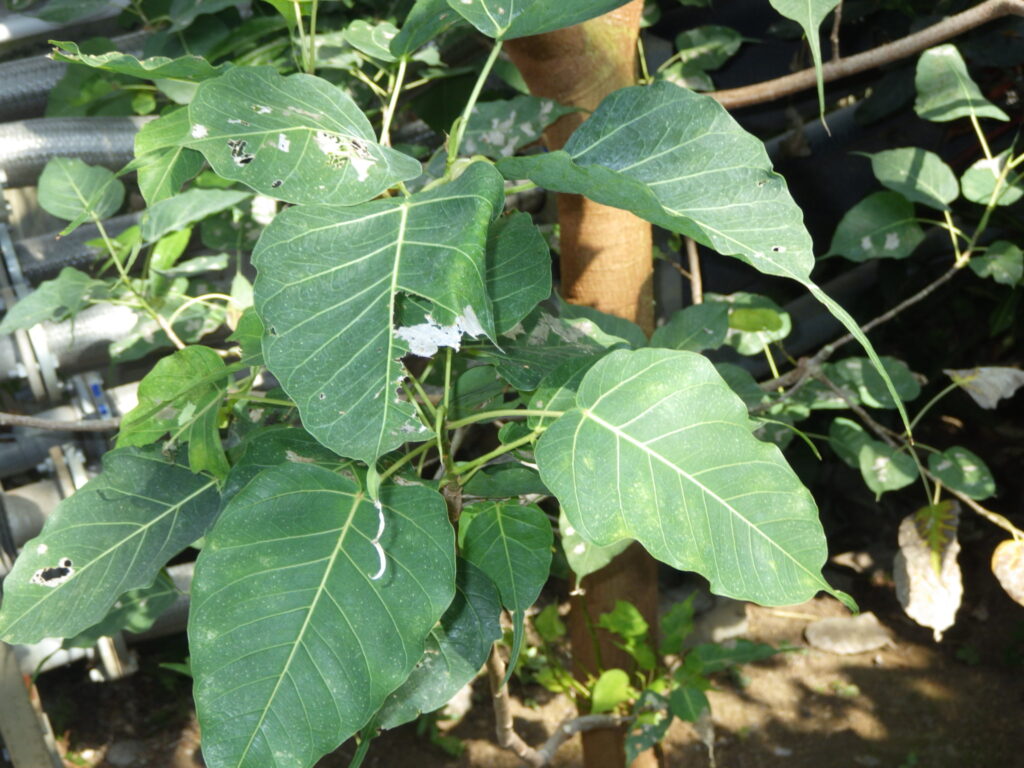
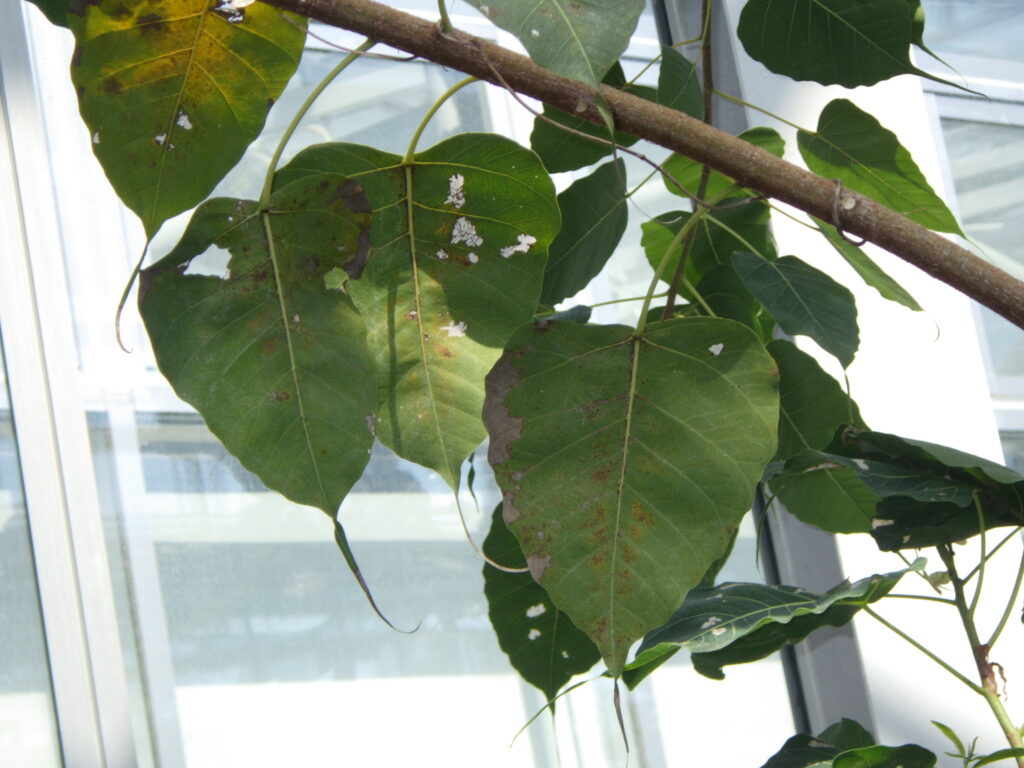
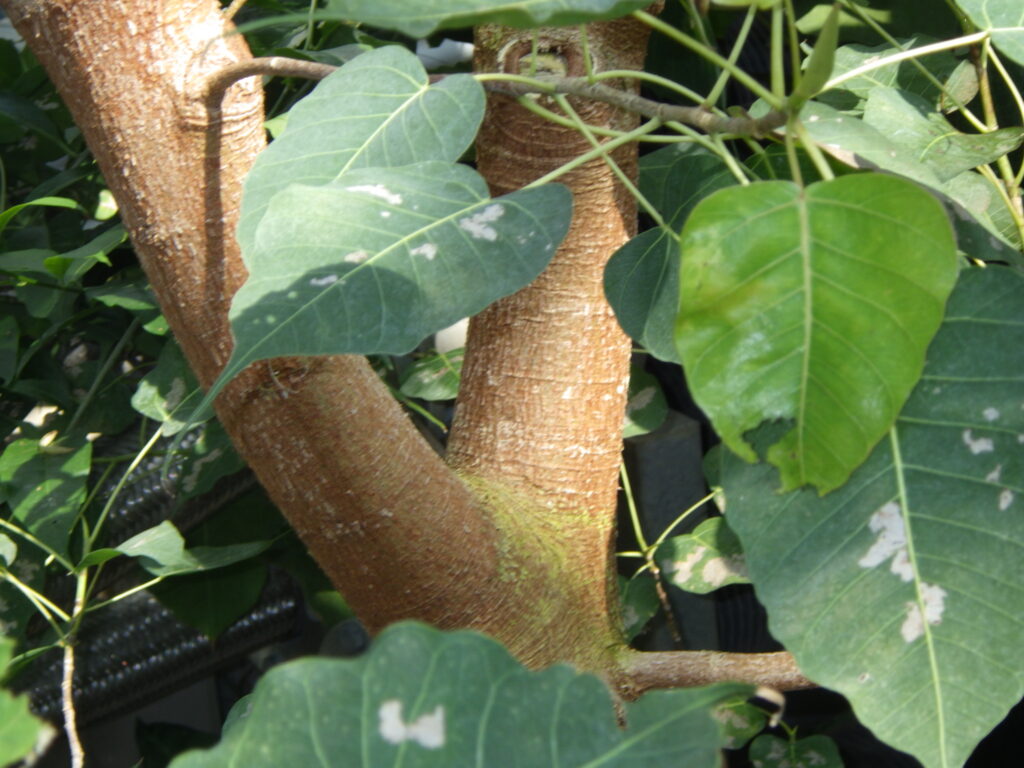
So why do they have such similar names despite being so different?
The Japanese word for linden tree, Bodhiju, is written with the kanji characters "菩提樹," where "Bodhi" is a transliteration of a Sanskrit word meaning the state of enlightenment attained by Buddha. It originates from the fact that it was the tree under which Gautama Siddhartha (Shakyamuni), the founder of Buddhism, attained enlightenment, although originally that tree was the Indian linden tree (Iwasa, 1982; Tsumega, 1990; Kurita, 2008).
However, since the Indian fig tree is native to the tropics and does not grow in Japan, fig trees imported from China were used as a substitute for planting in temples. This resulted in the confusing situation of the Japanese names being reversed. There is a theory that it was Eisai, the founder of the Rinzai school of Zen Buddhism, who brought them back (Kurita, 2008). If so, this would have been during the Southern Song dynasty in China and the Heian period in Japan.
However, it's unclear why the "Bodhi tree" was chosen from among the many plants. Perhaps it was simply because its leaves resembled those of a tail (Tsumaga, 1990), but this explanation is not very convincing and remains unclear in my research.
It is also considered a sacred tree in Hinduism (Iwasa, 1982).
What is the difference between a linden tree and a large-leaved linden tree?
There are many differences between the Japanese linden tree and the large-leaved linden tree (in the broad sense) (Hayashi, 2019).
First, as mentioned above, the Bodhi tree (Ficus microcarpa) is native to China and is mainly planted around temples, while the large-leaved Bodhi tree (Ficus serrata) grows wild in Japan. Therefore, wild specimens are likely to be large-leaved Bodhi trees. However, since large-leaved Bodhi trees are also sometimes planted, it may be difficult to distinguish them from planted specimens.
In terms of morphological differences, as the name suggests, the leaf blade size of the Japanese linden is 5-10 cm, while that of the large-leaved linden is considerably larger, at 7-18 cm.
A more striking difference is the length of the petioles: while those of the common linden tree are only 2-4 cm long, those of the large-leaved linden tree are 4-7 cm long, making them noticeable even from a distance. I think this is a good difference, as there is no overlap between the two species.
While the leaves of the Japanese linden tree (Tilia japonica) are triangular to heart-shaped, those of the large-leaved linden tree (Tilia maximowicziana) are round to heart-shaped.
Furthermore, while the large-leaved linden has clusters of light brown hairs in the vein axils on the underside of its leaves, the common linden lacks this feature.
While the flowers of the Japanese linden (Tilia japonica) tend to be yellowish-brown, those of the large-leaved linden (Tilia maximowicziana) are usually white to pale yellow. However, the morphological differences are minimal, making it difficult to use this distinction for species identification.
In addition, there is a known species called Tilia mandshurica var. mandshurica, which is distributed in the Chugoku region and Oita Prefecture of Japan, as well as the Korean Peninsula, Northeast China, and Russia (Siberia). However, although this species has stellate hairs covering the entire underside of its leaves, like Tilia maximowicziana, it completely lacks the light brown hair clusters in the vein axils on the underside of the leaves that are present in Tilia maximowicziana.



What are the varieties of the large-leaved linden tree?
Two varieties of the large-leaved linden (in the broad sense) are known.
The underside of the leaves of Tilia maximowicziana (in the narrow sense) is densely covered with stellate hairs, giving it a whitish appearance.
The underside of the leaves of Linden moss var. yesoana has sparse stellate hairs and is somewhat green.
What is the structure of a flower?
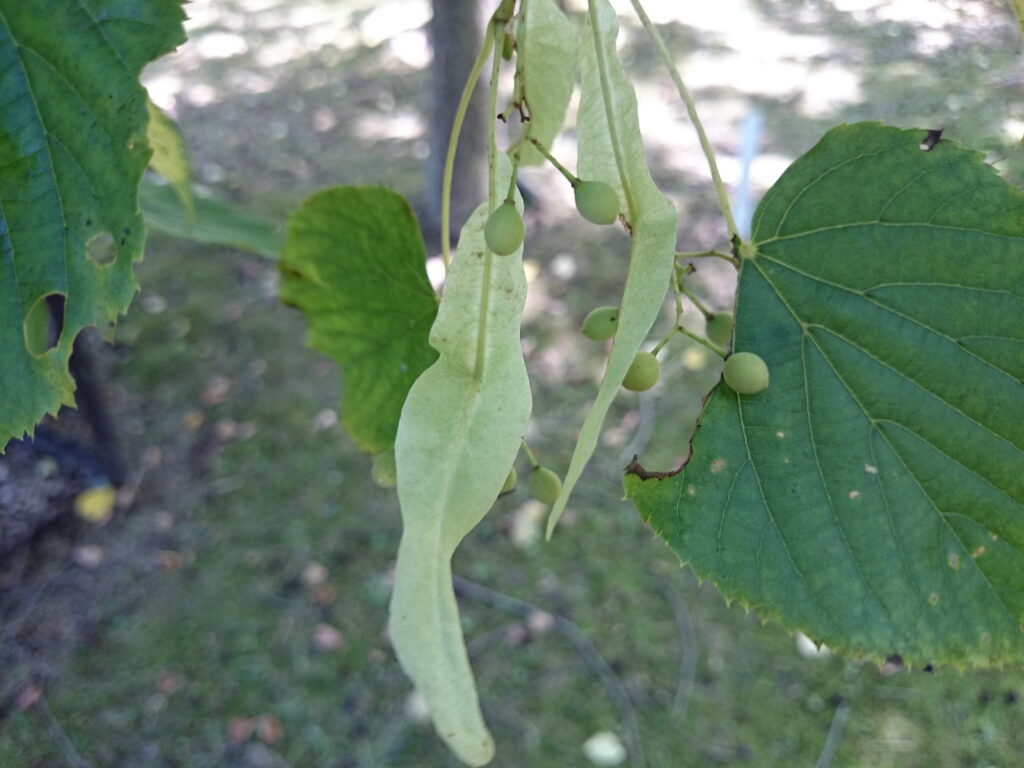
Like many other species in the Tilia genus, the flowers of the Japanese linden (Tilia japonica) and the large-leaved Japanese linden (Tilia japonica) hang down in drooping cymose inflorescences, bearing numerous small white to yellow flowers. While the shape of the flowers themselves is not particularly unusual, the presence of bracts at the base of the inflorescence is distinctive. These are used during fruit development.
The linden tree blooms in June. Bracts are borne in the leaf axils at the tips of the branches, and cymose inflorescences hang down from near the center of the bracts, bearing 3 to 12 (up to 20) flowers. The cymose inflorescences are 6 to 10 cm long. The bracts have short petioles (sometimes sessile), are spatulate in shape, 5 to 8 (up to 12) cm long, have a blunt apex, and a narrowly cuneate base, with stellate hairs on both surfaces and densely covering the underside. The flowers are pale yellow and fragrant. The pedicels are 4 to 6 cm long, and the pedicels are 8 to 12 mm long. The sepals are 5 to 6 mm long. The petals are slightly longer than the sepals. There are 5 stamens and 5 staminodes.
The large-leaved linden tree flowers from June to July. It hangs down cymose inflorescences 6-10 cm long from the sides of the base of the petioles, bearing more than ten pale yellow flowers at the end. Narrowly oblong involucral bracts are fused to the axis of the inflorescence. The involucral bracts are 5-8 cm long when in flower, densely covered with stellate hairs on both sides, and have short stalks 2-5 mm long at the base. There are five sepals, lanceolate in shape, 6-7 mm long, with pointed tips, and densely covered with long hairs on the inner surface and stellate hairs on the back. There are five pale yellow petals, narrowly oblong in shape, about 8 mm long, with slightly blunt tips. There are many stamens, about 5 mm long, and they are free. Inside the petals are five staminodes, which are spatulate, petal-like, and shorter than the petals. The ovary has five chambers, each containing two ovules, and the style is slender and elongated, with the stigma shallowly divided into five lobes.
How is pollination done?
The linden tree (Tilia japonica) and the large-leaved linden tree (Tilia maximowicziana) have fragrant flowers and produce abundant nectar, clearly indicating that they are insect-pollinated, just like other members of the Tilia genus.
In literature, there are records of the beetle Ceresium sinicum visiting linden trees (Ikeda, 2016). There are also records of European honeybees visiting (Sasaki, 2010), but since European honeybees are an invasive species, they would not contribute to pollination in the wild.
On the internet, the Kyoto University Museum database contains specimens of a species of mud dauber wasp and a species of ancient bumblebee collected from a linden tree (Kyoto University Museum, 2023), and one blog features a photograph of a yellow-breasted bumblebee visiting the tree (waiwai, 2010).
In literature, there are records of bumblebees such as the Japanese bumblebee (Bombus ignitus) and the small bumblebee (Bombus spp.) frequently visiting the Japanese linden tree (Tilia japonica) (Mizui, 1993). There are also records of European honeybees visiting the tree, and honey made from its single-flower nectar is sometimes sold (Sasaki, 2010; Masaka et al., 2013). Although European honeybees are an introduced species, they do provide benefits to humans.
In summary, while longhorn beetles are an exception, it seems that many types of bees are attracted to these flowers. The reason why, despite the flowers not having any special structure, is not fully understood, but the secret likely lies in their scent. A Chinese study detected a total of 70 volatile components in the flowers of winter linden (T. cordata), linden, and silver linden (T. tomentosa), and identified 43 aromatic compounds (Bao & Shen, 2022). These may be what strongly attracts bees.
What is the structure of the fruit?
The fruits of the Japanese linden (Tilia japonica) and the large-leaved linden (Tilia japonica) are also nuts, as is common with many other species in the Tilia genus. A nut is a fruit in which a hard, woody pericarp encloses a single seed and does not split open.
However, the unique feature is the presence of bracts at the base of the inflorescence; in the large-leaved linden, the flowers eventually elongate to a length of 6-10 cm when they develop into fruits.
The linden tree's nuts are spherical, 7-8 mm in diameter, hard, and densely covered with fine, stellate hairs on their surface.
The nuts of the large-leaved linden tree are spherical or oval in shape, 10-15 mm long, with five ridges, and densely covered with short, grayish-white hairs. They mature around October and contain a single seed without splitting open.
What are the seed dispersal methods?
The genus Tilia is dispersed by wind through its bracts (Manchester, 1994), and this is thought to be the case for Tilia japonica and Tilia maximowicziana as well (Azuma & Yasuda, 1989; Nonoda et al., 2008).
However, unlike many wind-dispersed plants where the fruit or seeds fall to the ground and are then carried away by the wind, in the genus Tilia, the inflorescence below the bracts is separated, and the distorted bracts, caught in the wind's resistance, rotate as they fall, slowly moving through the air and away from the mother tree.
In other words, it can be said that this is a seed dispersal method very similar to that of samaras of genera such as maple, hornbeam, cypress, fir tree, and tulip tree (Johnson, 1988; Azuma & Yasuda, 1989). This seed dispersal method seems to be possible precisely because it is a tall tree.
References
Azuma, A., & Yasuda, K. (1989). Flight performance of rotary seeds. Journal of Theoretical Biology, 138 (1), 23-53. https://doi.org/10.1016/S0022-5193(89)80176-6
Bao, W., & Shen, Y. (2022). Dynamic Changes on Floral Aroma Composition of the Three Species from Tilia at Different Flowering Stages. Horticulturae, 8 (8), 719. https://doi.org/10.3390/horticulturae8080719
Hayashi, Masayuki. (2019). Tree Leaves: Expanded and Revised Edition - Identifying 1300 Species Through Real-Life Scans. Yama-kei Publishers. ISBN: 9784635070447
Ikeda, Dai. (2016). Additional records of *Tetsuirohimekamikiri* from Hyogo Prefecture. *Kiberihamushi*, 38 (2), 48. ISSN: 1884-9377, https://www.konchukan.net/pdf/kiberihamushi/Vol38_2/kiberihamushi_38_2_48.pdf
Iwasa, Shunkichi. (1982). Sketches of Tropical Crops (VIII): Religious Trees. Tropical Forestry, 63, 33-36. https://doi.org/10.32205/ttf.0.63_33
Johnson, WC (1988). Estimating dispersibility of Acer, Fraxinus and Tilia in fragmented landscapes from patterns of seedling establishment. Landscape Ecology, 1, 175-187. https://doi.org/10.1007/BF00162743
Kurita, W. (2008). This Month's Tree: The Linden. Green Power, 353, 3. ISSN: 0389-0988, https://doi.org/10.11501/12524798
Kyoto University Museum. (July 1, 2023). Insects - Natural History Specimens. Kyoto University Museum website. https://www.museum.kyoto-u.ac.jp/collection/Konchu/html/index_Konchu.html
Manchester, SR (1994). Inflorescence bracts of fossil and extant Tilia in North America, Europe, and Asia: patterns of morphologic divergence and biogeographic history. American Journal of Botany, 81 (9), 1176-1185. https://doi.org/10.1002/j.1537-2197.1994.tb15612.x
Masaka, K., Sato, T., & Tanahashi, Ikuko. (2013). Actual utilization of tree nectar sources by beekeeping: Diversity and regional characteristics in Hokkaido. Journal of the Japanese Forestry Society, 95 (1), 15-22. https://doi.org/10.4005/jjfs.95.15
Tsumega, Kaneo. (1990). National Flowers of the World. Hoikusha. ISBN: 9784586507917, https://doi.org/10.11501/13645920
Mizui, Norio. (1993). Ecological studies on seed propagation of deciduous broad-leaved trees. Research Report of Hokkaido Forestry Experiment Station, 30, 1-67. ISSN: 0910-3945, https://agriknowledge.affrc.go.jp/RN/2030500320
Mogi, Toru; Ota, Kazuo; Katsuyama, Teruo; Takahashi, Hideo; Shirokawa, Shiro; Yoshiyama, Hiroshi; Ishii, Hidemi; Sakio, Hitoshi; and Nakagawa, Shigetoshi. (2000). Flowers Blooming on Trees: Polypetalous Flowers (Vol. 2, 2nd edition). Yama-kei Publishers. ISBN: 9784635070041
Nonoda, S., Shibuya, M., Saito, H., Ishibashi, S., & Takahashi, M. (2008). Invasion and growth process of broad-leaved trees in fir plantations and the effects of thinning. Journal of the Japanese Forestry Society, 90(2), 103-110. https://doi.org/10.4005/jjfs.90.103
Sasaki, Masami. 2010. The World of Flowers as Seen by Bees: Nectar-Producing Plants of the Four Seasons and Gifts from Honeybees. Kaiyusha. ISBN: 9784905930273
waiwai. (June 19, 2010). Linden tree and bumblebee. Cat's Days. http://nekobiyori.cocolog-nifty.com/days/2010/06/post-4d5a.html
Wu, ZY, Raven, PH, & Hong, DY (Eds.). (2007). Flora of China (Vol. 12 Hippocastanaceae through Theaceae). Science Press, and Missouri Botanical Garden Press. ISBN: 9781930723641

