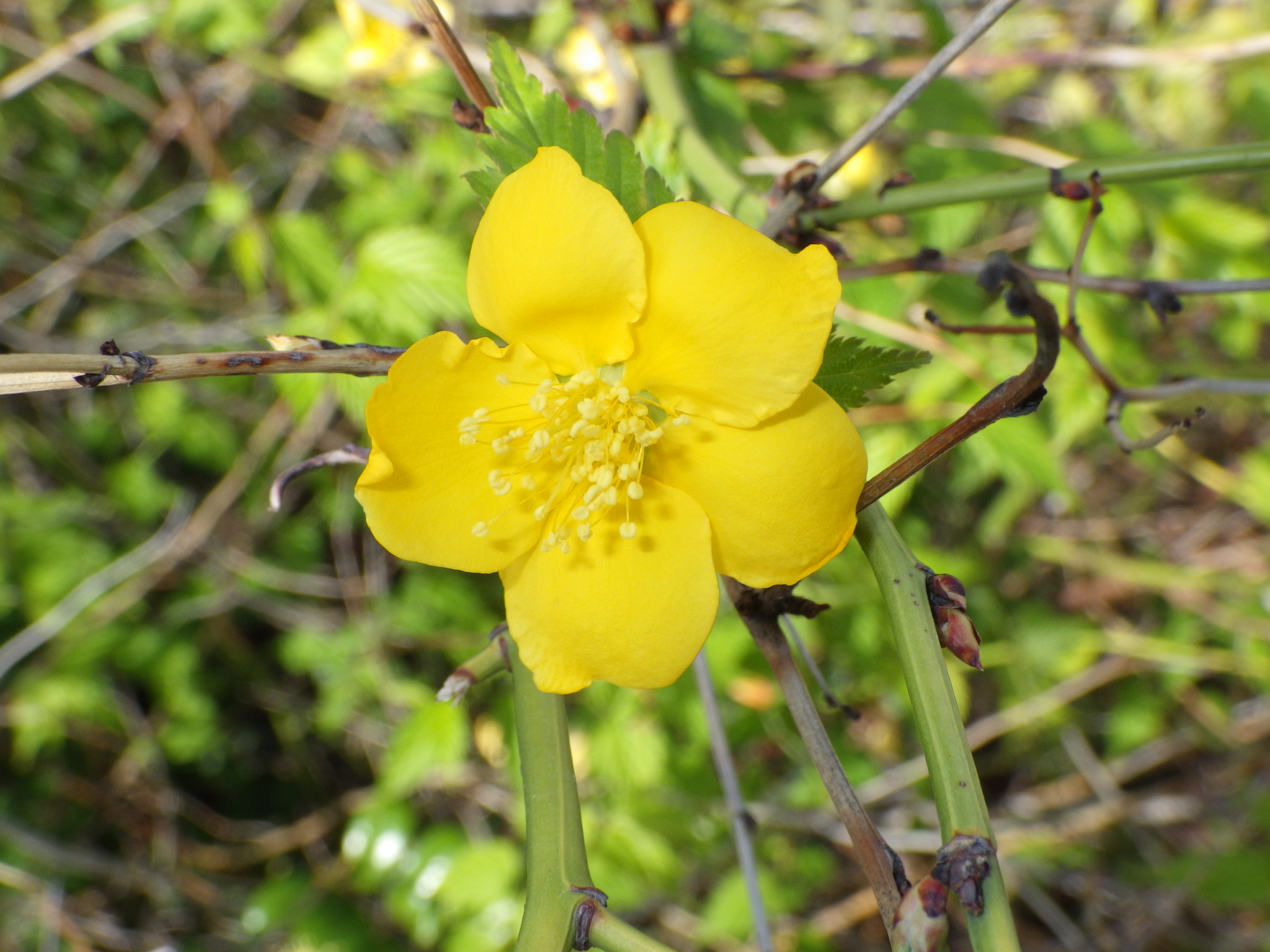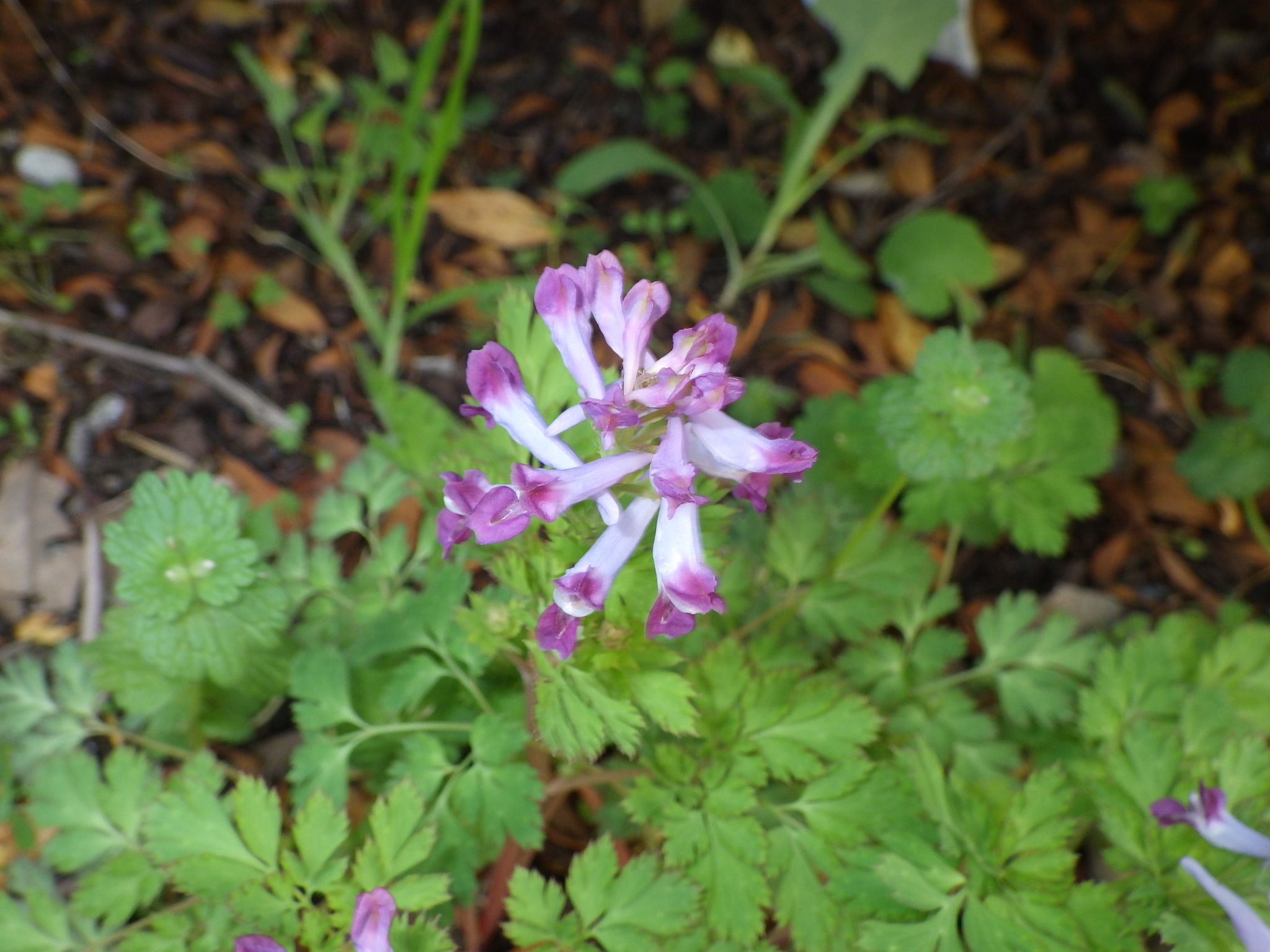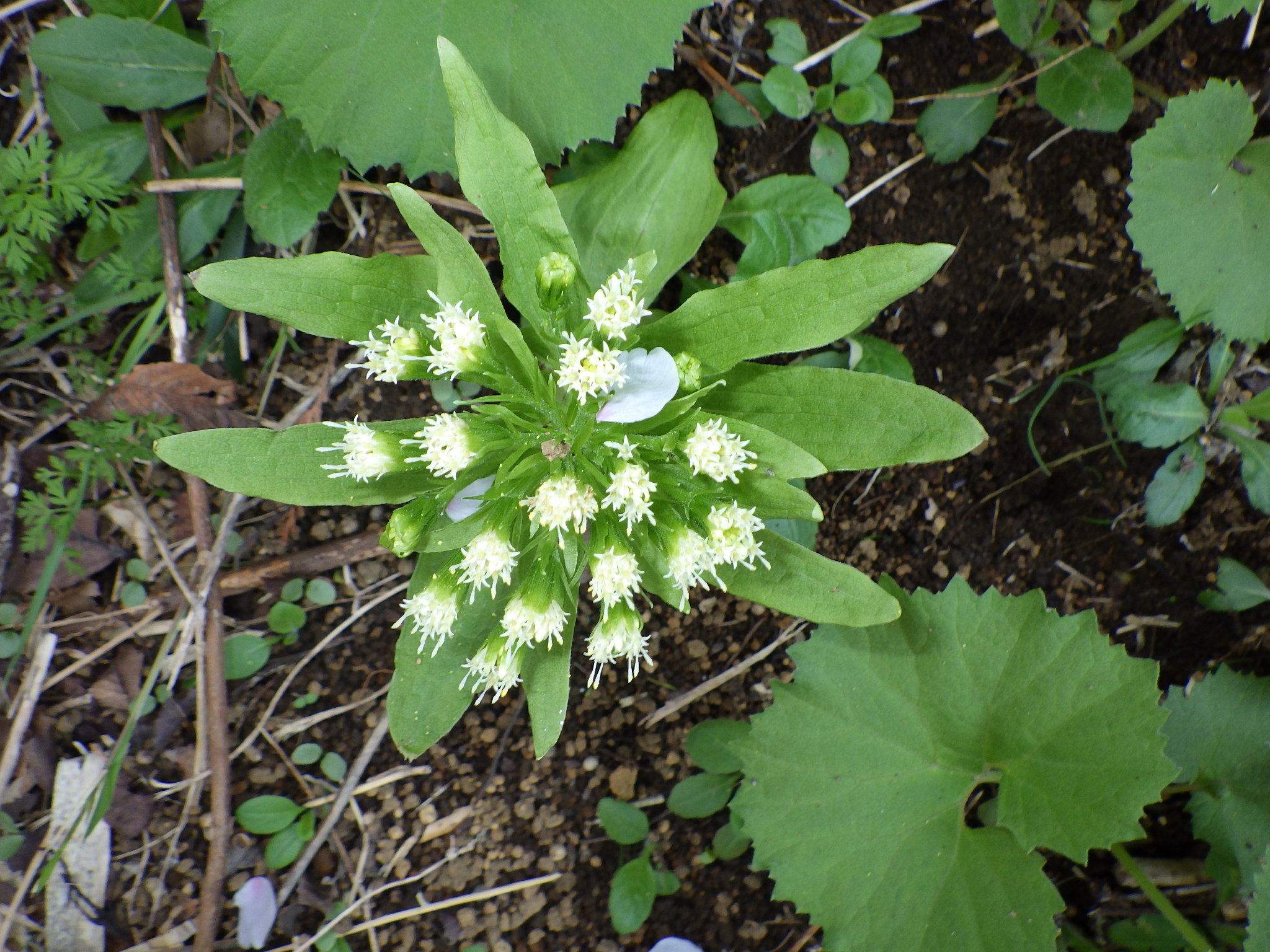
Butterbur, Farfugium japonicum, and Farfugium spectabile all belong to the Asteraceae family and are very similar in that they have heart-shaped to kidney-shaped leaves, and are also edible. In Japan, both have been used since ancient times, so some people may confuse them. However, although they belong to the same Asteraceae family, they are quite different in terms of classification, and the shapes of their flowers are completely different. As their names suggest, butterbur has dull leaves, while Farfugium japonicum has glossy leaves, which can also be used to distinguish them. You can also see the difference between Farfugium japonicum and Farfugium spectabile by comparing their body sizes. However, please note that Farfugium japonicum has various closely related species, varieties, and cultivars. This article will explain the classification and morphology of the genera Butterbur and Farfugium japonicum.
What are butterbur, leopard plant, and large leopard plant?
Fuki (butterbur), also known as Petasites japonicus subsp. japonicus, is a perennial herb distributed in Honshu, Shikoku, Kyushu, and the Ryukyu Islands of Japan; as well as in Korea and China. It grows in collapsed areas and forest edges in the oak and beech forest zones. In Japan, its flower stalks have been cultivated for food since ancient times (Kanagawa Prefecture Flora Survey Association, 2018).
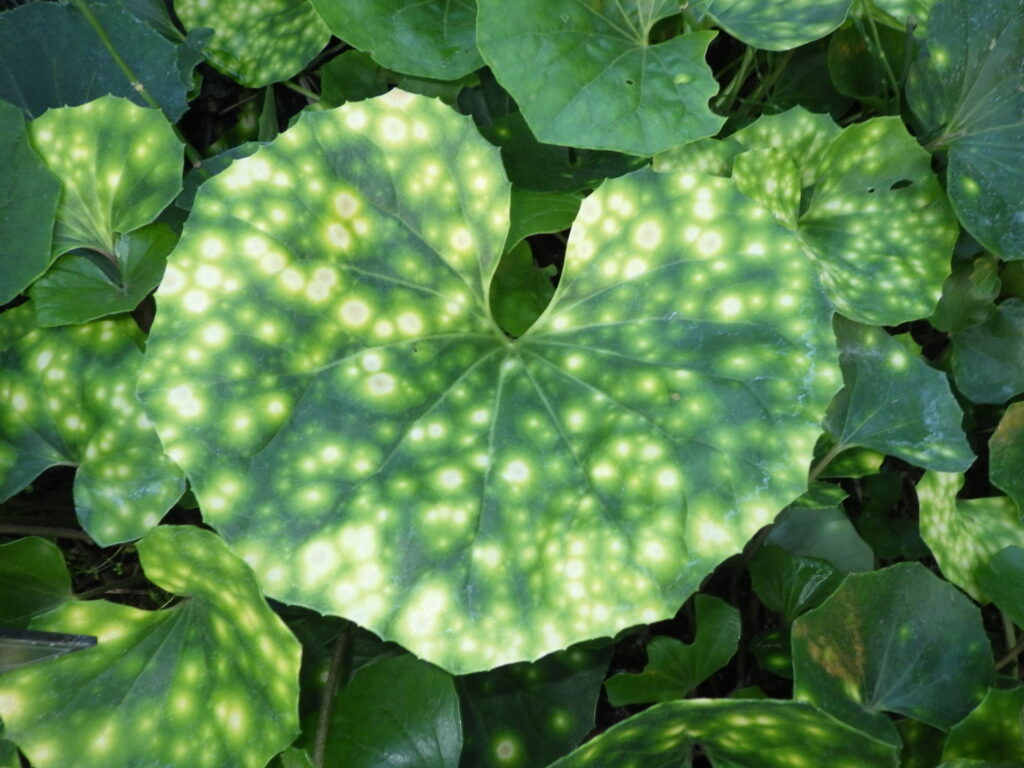
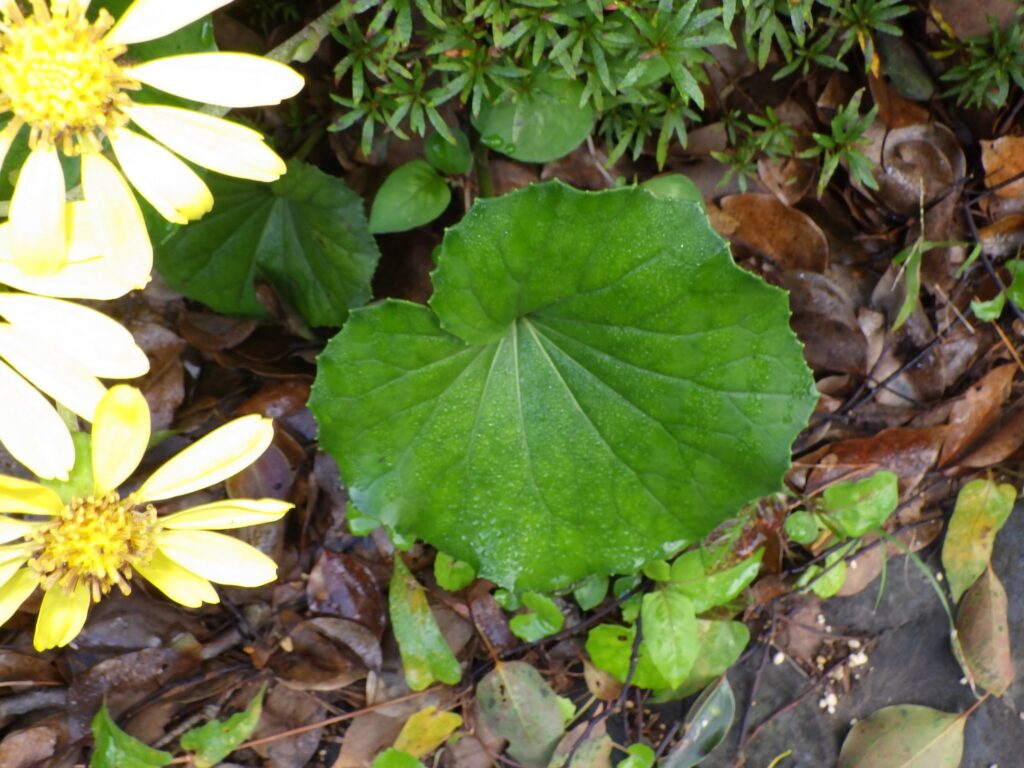
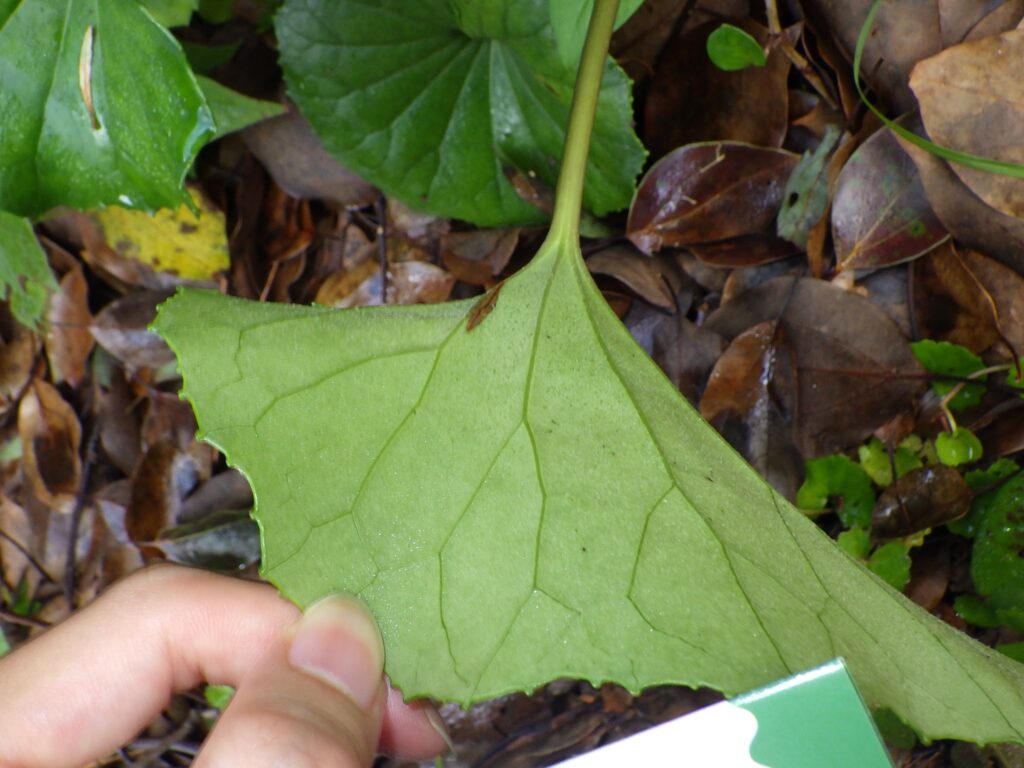
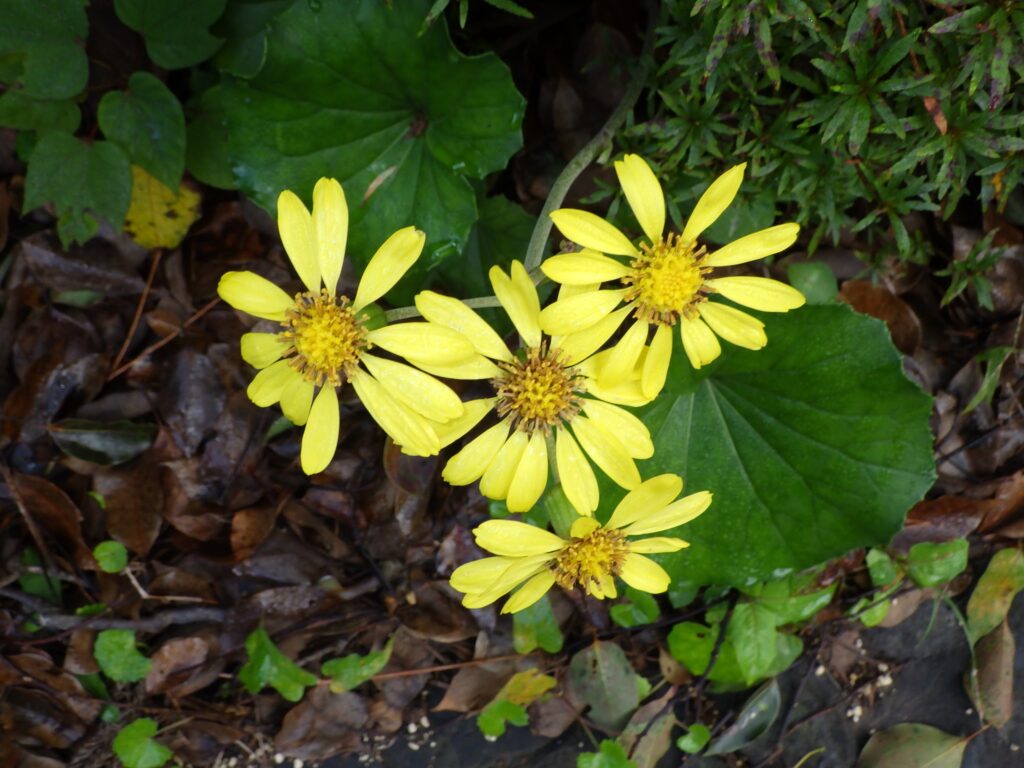
Farfugium japonicum var. japonicum, also known as Tsuwabuki, is a perennial herb distributed in Honshu (south of Fukushima Prefecture), Shikoku, and Kyushu in Japan; as well as in Korea and China. It grows in shady rocky areas along the coast and at the edges of forests. In Japan, it has been cultivated for ornamental purposes since ancient times, and varieties have been improved since the Edo period. In the past, the leaf stalks were sometimes eaten as a wild vegetable after removing the bitterness.
Farfugium japonicum var. giganteum, also known as large-flowered leopard plant, is a perennial herb that grows along the coast and is distributed in Kyushu, Japan. In Japan, it is sometimes cultivated for ornamental purposes.
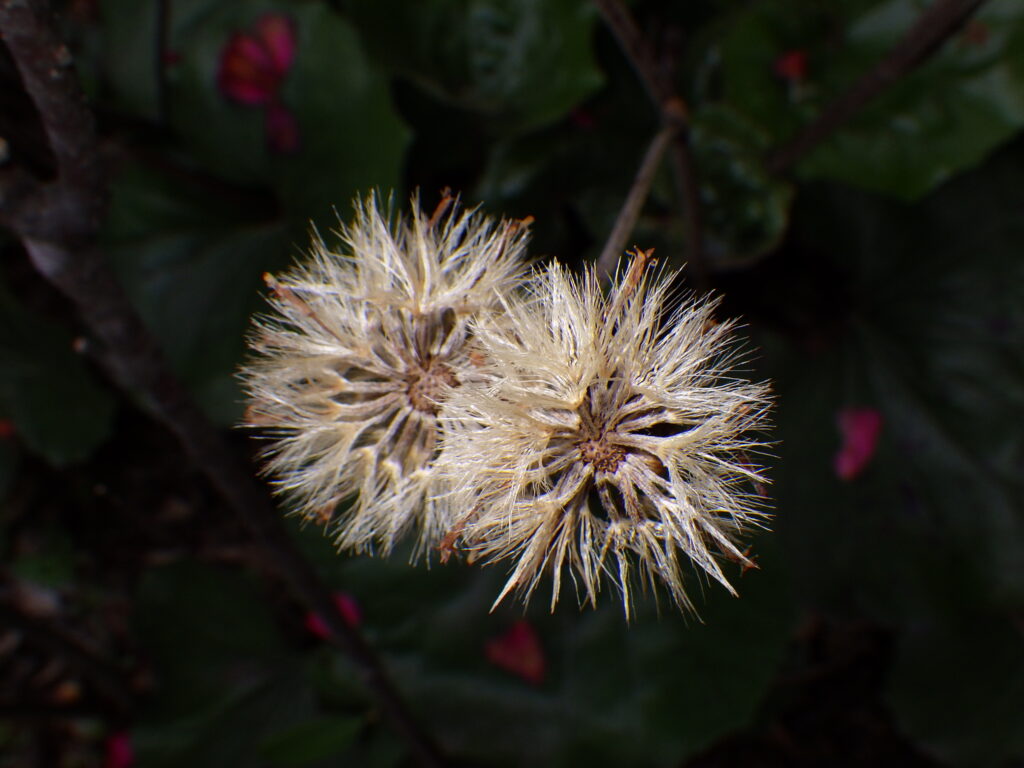
Both belong to the Asteraceae family and are very similar in that they have heart-shaped to kidney-shaped leaves, and the name "Tsuwabuki" (meaning "farfugium") comes from the fact that its leaves resemble those of the butterbur (Fuki). They also share the characteristics of having achenes (achenes) with pappus hairs and dispersing their habitats by wind.
You often see both of them growing along roadsides, even in urban areas.
From a human use perspective, both are edible, and in particular, the flower stalks of butterbur in early spring are called "fukinotou" and are eaten as wild vegetables or cultivated.
Tsukudani, also known as "kyarabuki" or "kyara-ni," is usually made using butterbur, but sometimes leopard plant (Tsuwabuki) is used instead.
Therefore, some people may not be able to tell the difference.
What are the differences between butterbur, leopard plant, and large leopard plant?
However, as can be seen from the fact that butterbur belongs to the genus Petasites, while Farfugium japonicum and Farfugium sieboldii belong to the genus Farfugium, there is a considerable difference in classification, even though they belong to the same Asteraceae family (Kanagawa Prefecture Flora Survey Association, 2018).
The easiest difference is in the leaves.
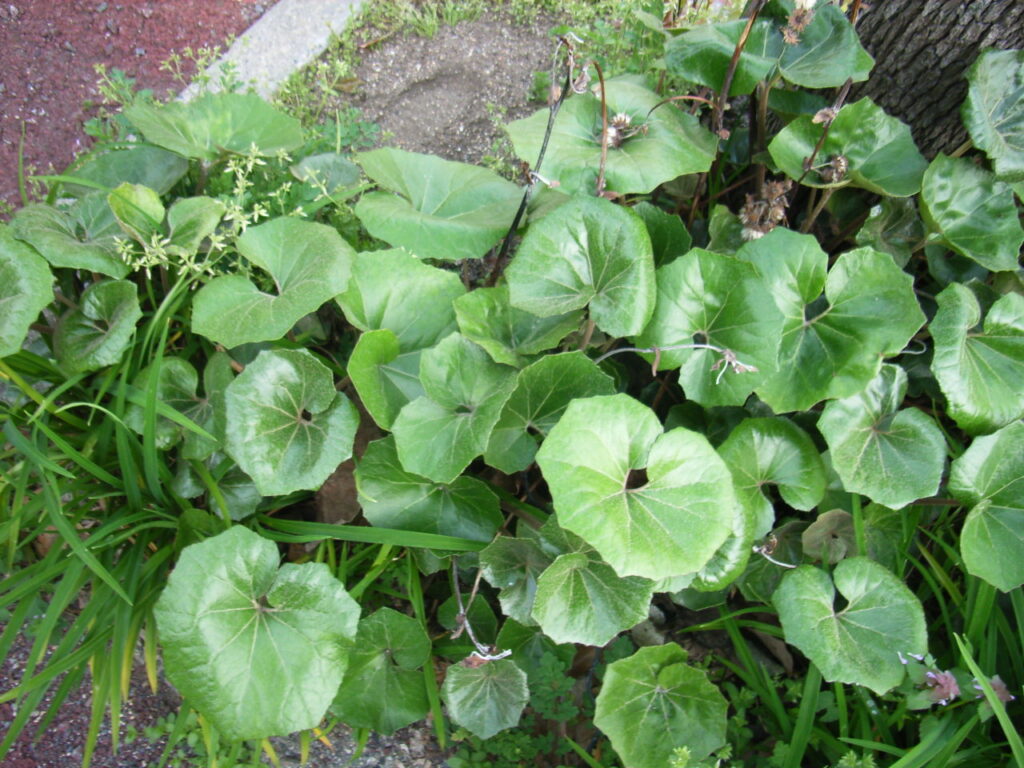
While butterbur leaves are not glossy and have a soft texture, leopard plant and large-leaved leopard plant have glossy leaves and a firm texture.
The Japanese name "Tsuwabuki" is thought to originate from the fact that its leaves are glossy, hence the name "glossy butterbur."
This difference stems from the fact that butterbur is deciduous (it loses its leaves in winter), while leopard plant and large-leaved leopard plant are evergreen (they retain their leaves even in winter).
Not only that, but there are also clear differences in the flowers (or the "flower heads," which are clusters of flowers characteristic of the Asteraceae family).
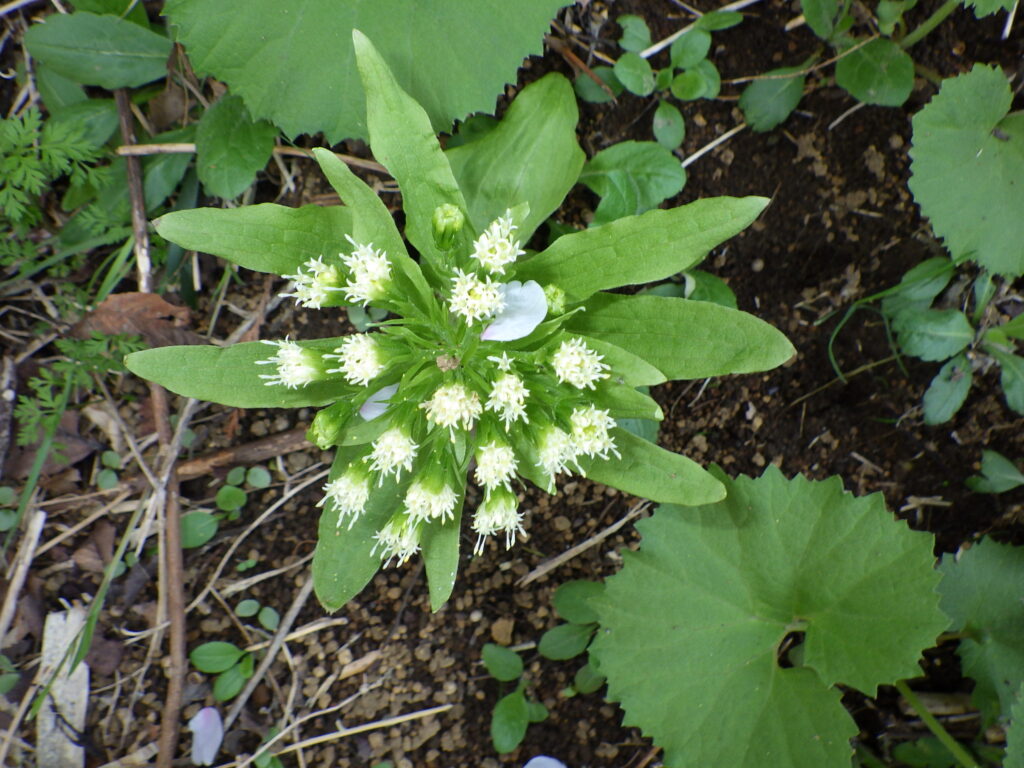
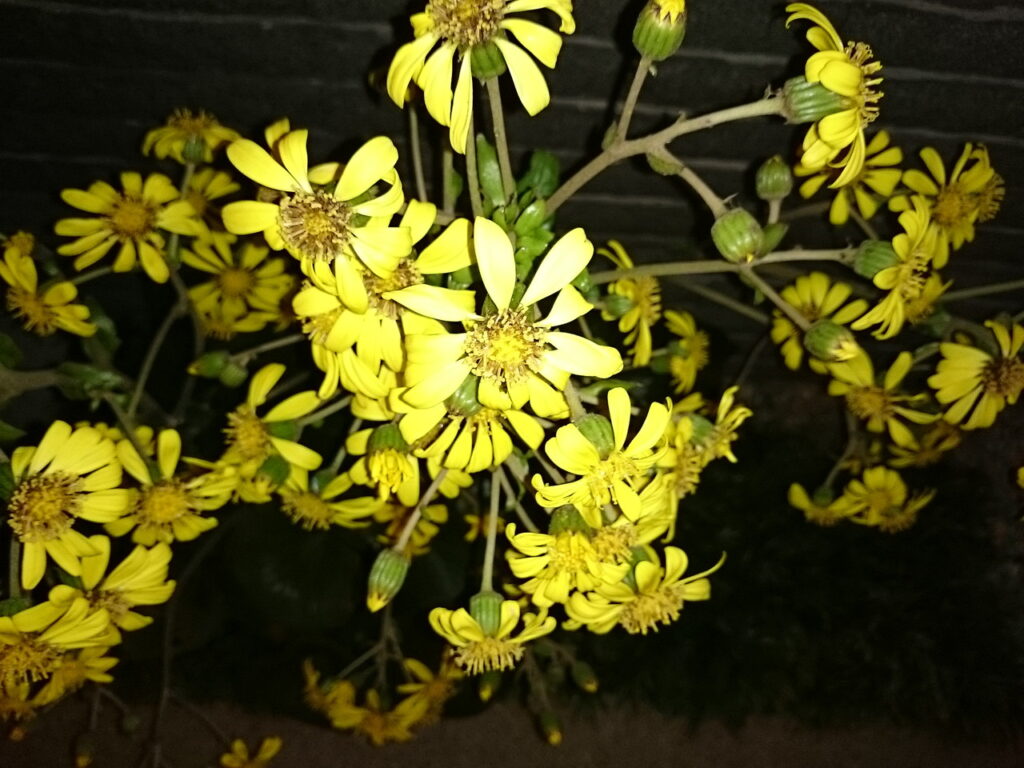
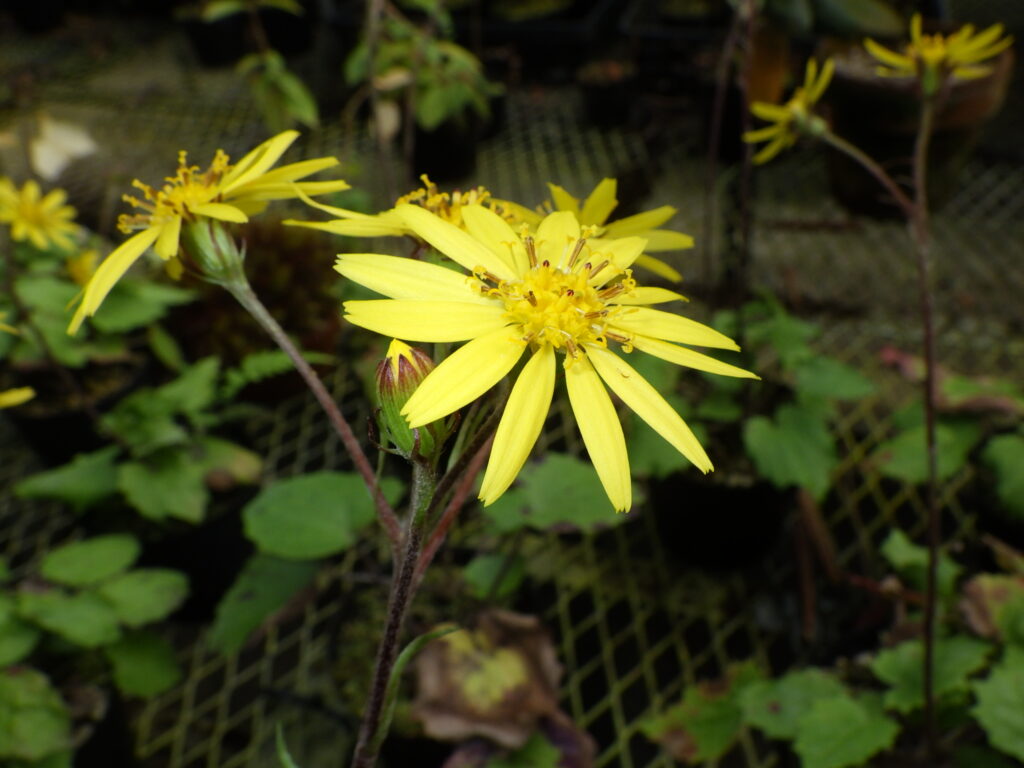
While butterbur (Fuki) only produces yellowish-white tubular florets, leopard plant (Tsuwabuki) and large-flowered leopard plant (Ootsuwabuki) differ in that they have a single row of yellow female ray florets around the periphery of the flower head, with numerous bisexual tubular florets clustered in the center.
It's a bit difficult to explain in words, but essentially, while *Farfugium japonicum* and *Farfugium spectabile* have prominent yellow parts that resemble petals, *Fuki* does not.
Next, regarding the difference between Farfugium japonicum and Farfugium umbellatum, since Farfugium japonicum and Farfugium umbellatum are varieties of the same species, there are not many significant differences in their basic structure (Okuno, 2017).
However, as the names suggest, while Farfugium japonicum has leaf blades 4-15 cm long and flower stalks about 30-80 cm tall, Farfugium spectabilis has leaf blades 30 cm long and flower stalks that can grow to over 1 meter tall.
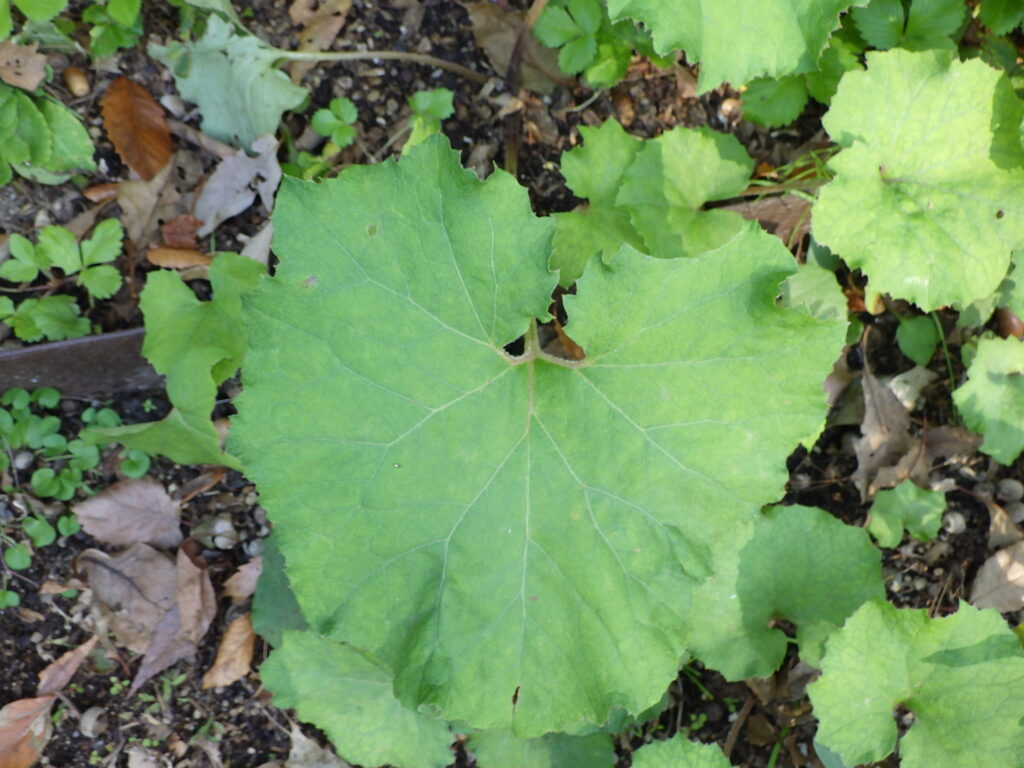
Are there any other similar species?
A subspecies of butterbur, *Petasites japonicus *, is known to exist on the Sea of Japan side of central Honshu and northward, as well as in Hokkaido, where it is larger (Kanagawa Prefecture Flora Survey Association, 2018).
There are quite a large number of varieties and cultivars of Farfugium japonicum (Okuno, 2017).
Farfugium ryukyuense var. luchuense is distributed on Amami Oshima, Okinawa Island, and Iriomote Island, growing in mountain streams, and its leaves have evolved from oval to fan-shaped to adapt to the stream environment.
'Aureo-maculatum', also known as 'Tenboshi' in horticulture, is a plant with star-shaped markings on its leaves.
Farfugium japonicum f. eligulatum lacks ray florets in its flower heads.
Farfugium japonicum f. luteofuscus is characterized by its ray florets being turmeric-colored.
Yaeyamabuki f. plenum is characterized by the central tubular florets being replaced by ray florets.
Farfugium japonicum f. tubiflorum is characterized by its ray florets being coiled into a tube-like structure.
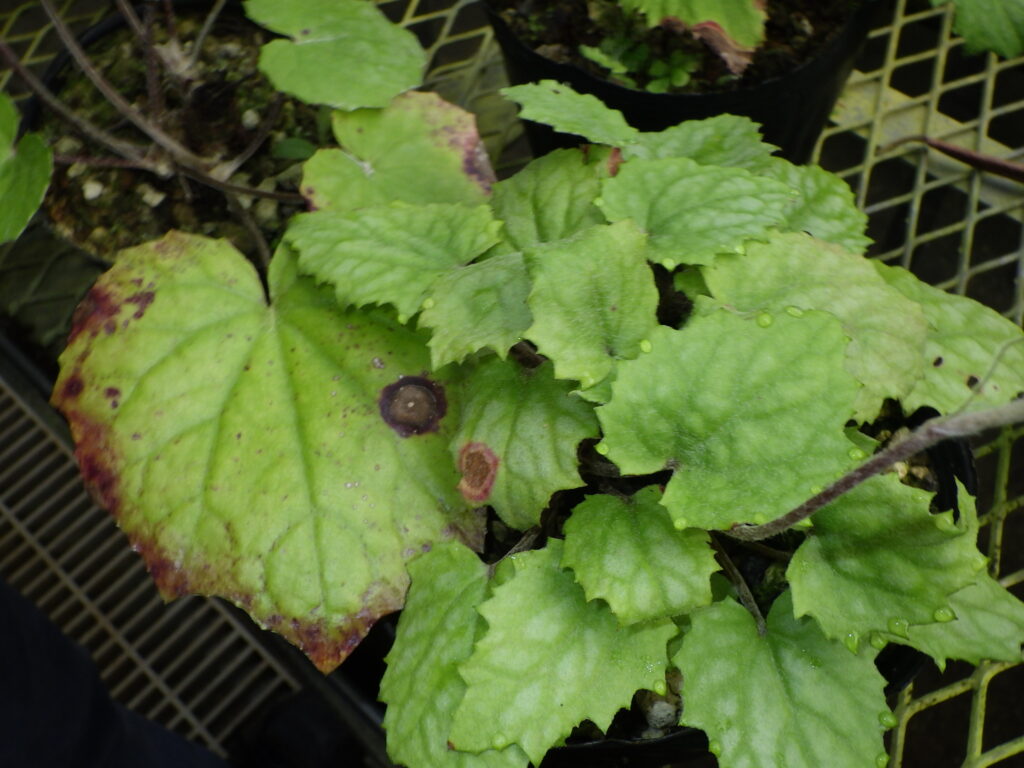
Farfugium hiberniflorum is a completely different species from Farfugium japonicum, and can be distinguished by its thin leaf blade, slightly sharply pointed leaf tip, and sharply double-serrated leaf margin.
Furthermore, * Farfugium tatewakii * is a presumed hybrid of *Farfugium japonicum* and *Farfugium kantsuwagi*. While it resembles *Farfugium japonicum* in appearance, it has prominent serrations on the leaf margins. However, it has not yet been formally named according to current classification. If it is a hybrid, it would likely take the form of * Farfugium x tatewakii *.
For the differences between this and Kerria japonica, please see the separate article.
References
Kanagawa Prefecture Flora Survey Association. 2018. Kanagawa Prefecture Flora 2018 (Electronic Edition). Kanagawa Prefecture Flora Survey Association, Odawara. 1803pp. ISBN: 9784991053726
Okuno, Hajime. 2017. *Tsuwabuki* (Farfugium japonicum): Cultivation Management, Breeding, History, and Diverse Varieties. Seibundo Shinkosha, Tokyo. 239pp. ISBN: 9784416517666