Both Lythrum salicaria and Lythrum sibiricum belong to the genus Lythrum in the family Lythraceae, and are perennial herbs commonly found in waterside areas and wetlands. They are often planted in biotopes, and their flower shapes are almost identical, so some people may have trouble distinguishing between the two species. However, they can be reliably distinguished by examining the hair-like projections on the entire plant, as well as the shape of the leaves. Self-pollination is possible, but insect pollination also occurs, with bees playing a significant role. This article will explain the classification, morphology, and ecology of the genus Lythrum.
What are Lythrum salicaria and Lythrum anceps?
Lythrum anceps, also known as Misohagi, is a perennial herb that grows near water and is distributed in Hokkaido, Honshu, Shikoku, and Kyushu in Japan, as well as in Korea (Kanagawa Prefecture Flora Survey Association, 2018).
Lythrum salicaria, also known as Ezo misohagi, is a perennial herb that grows in wetlands and is distributed in Hokkaido, Honshu, Shikoku, and Kyushu in Japan; as well as in Eurasia, North Africa, and Australia. It is not native to the Americas but has been introduced as an invasive species. The first recorded instance in North America was in 1814, and it is thought to have been brought in likely by being mixed in with ship ballast (Flora of North America Editorial Committee, 2021). It has been selected as one of the "World's 100 Worst Invasive Alien Species."
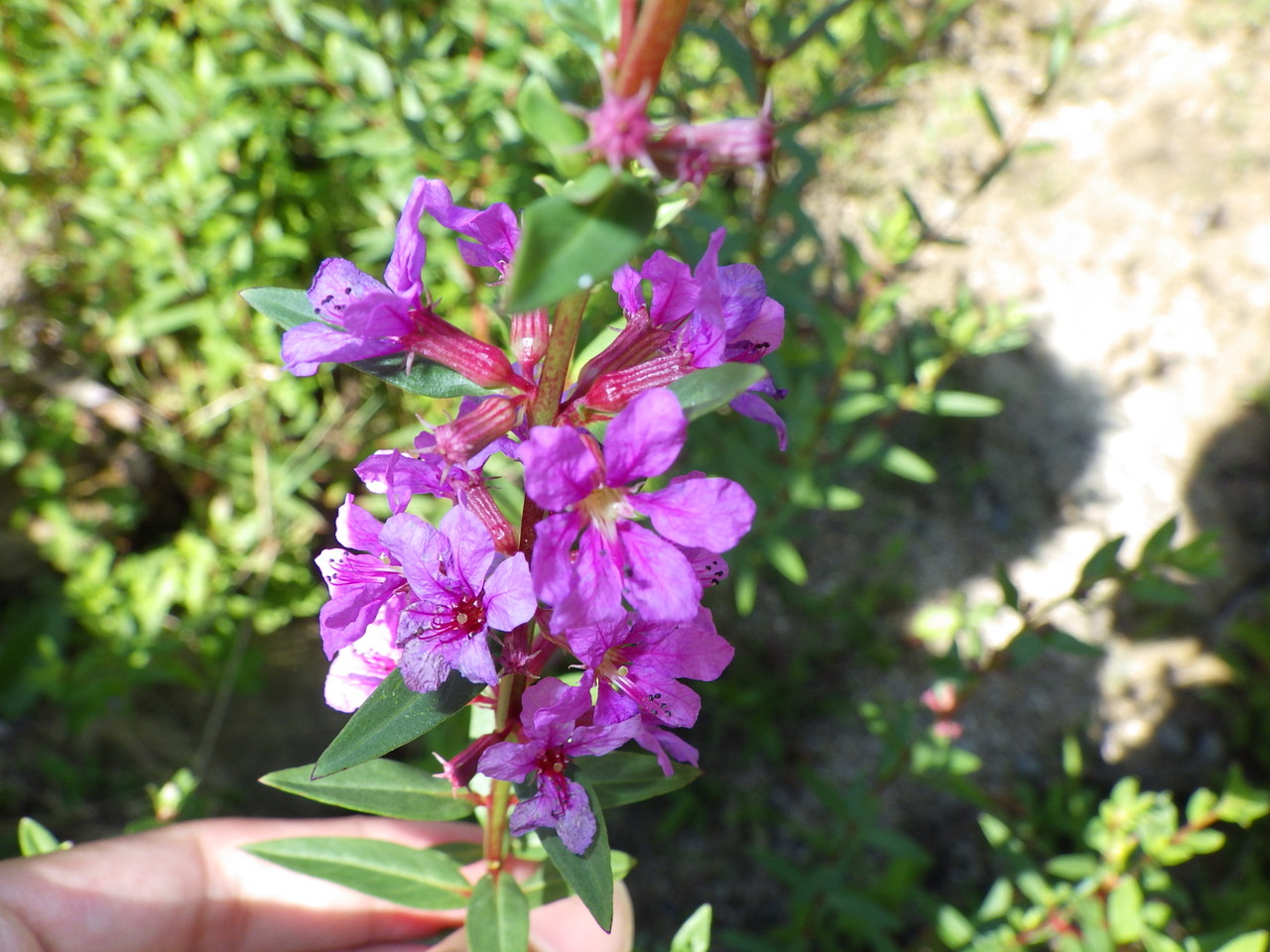
Both belong to the genus Lythrum in the family Lythraceae, and are perennial plants commonly found near water and in wetlands. The flowers have 4 to 6 petals and are a deep pink color. They are quite showy for a native species, and are often seen planted in biotopes and other similar areas.
There are two theories about the origin of the Japanese name for loosestrife (Misohagi): one is that it resembles bush clover (Hagi), and there was a custom of pouring water over a branch with flowers on it as a purification ritual during the Obon festival, hence the name Misogi-hagi (purification bush clover); the other is that it grew in ditches, hence the name Mizo-hagi (ditch bush clover).
Other common features include entire leaves that are arranged oppositely or in whorls, and stems that have four ridges (or corners).
However, some people may not be able to distinguish between the two.
What is the difference between Lythrum salicaria and Lythrum anceps?
Distinguishing between Lythrum salicaria and Lythrum anceps is relatively easy.
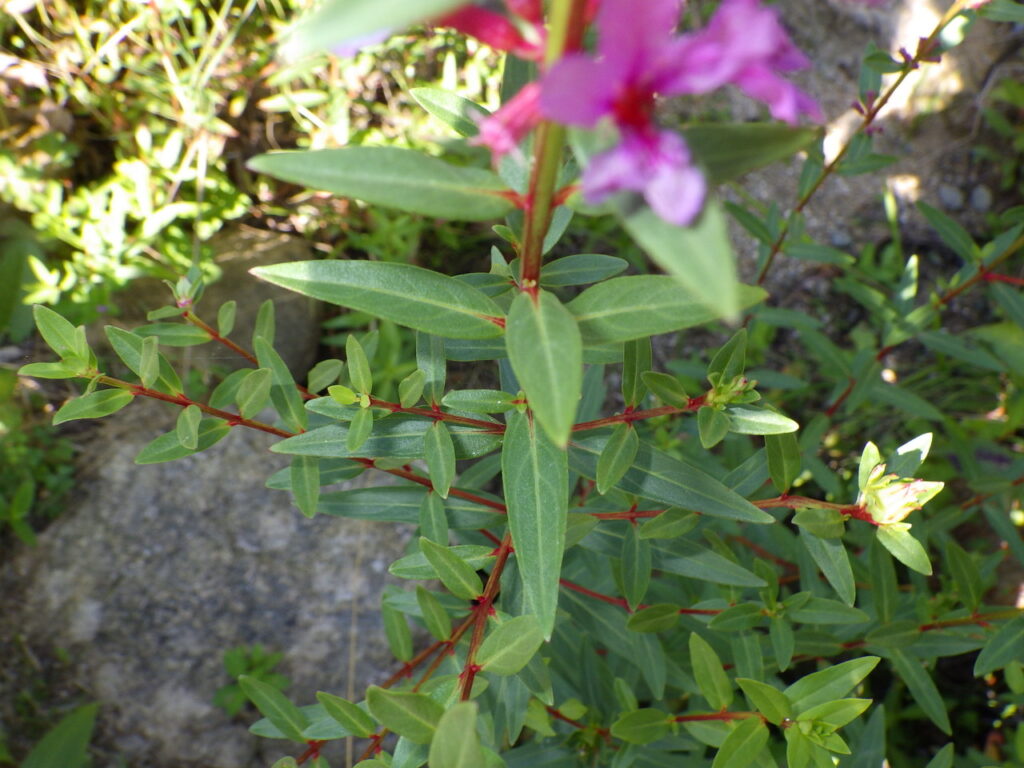
In contrast to Lythrum salicaria, the entire plant is hairless, with smooth leaves and stems, and the leaves are sessile and hardly clasp the stem. In contrast, Lythrum salicaria has dense hair-like projections all over the plant, making it rough, and its leaves are long-lanceolate with rounded bases, sessile, and partially clasp the stem.
Looking at the photos, you'll clearly get the impression that *Lythrum salicaria* has something resembling hairs. However, if you look at the leaves, *Lythrum salicaria* does not have petioles.
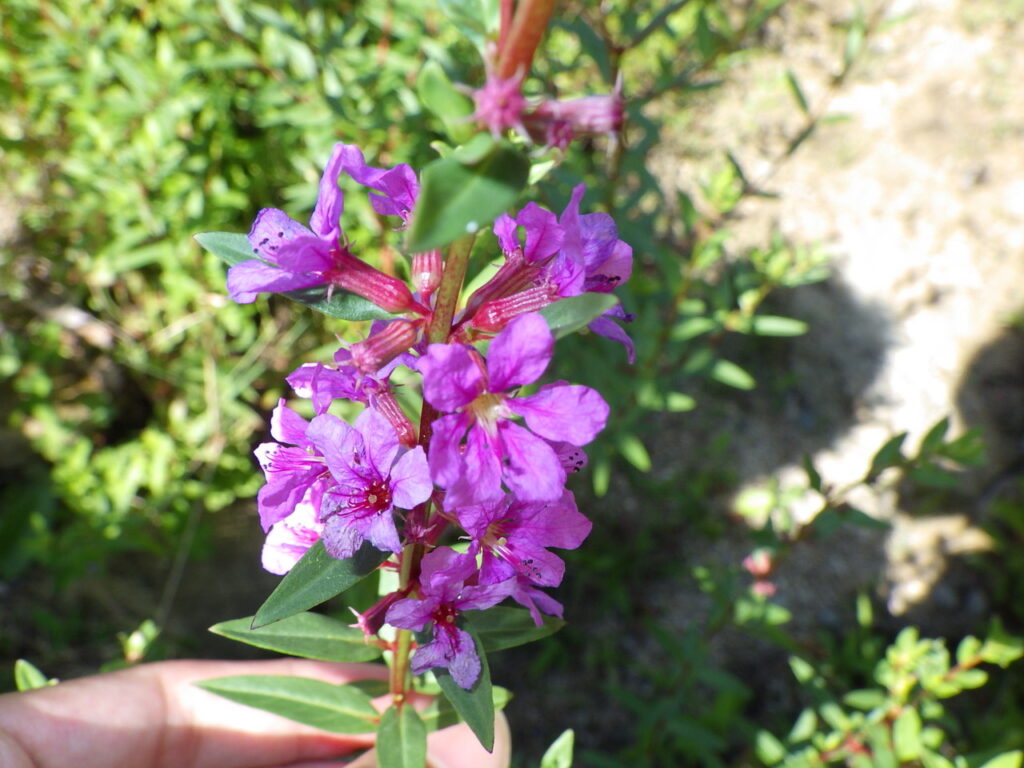
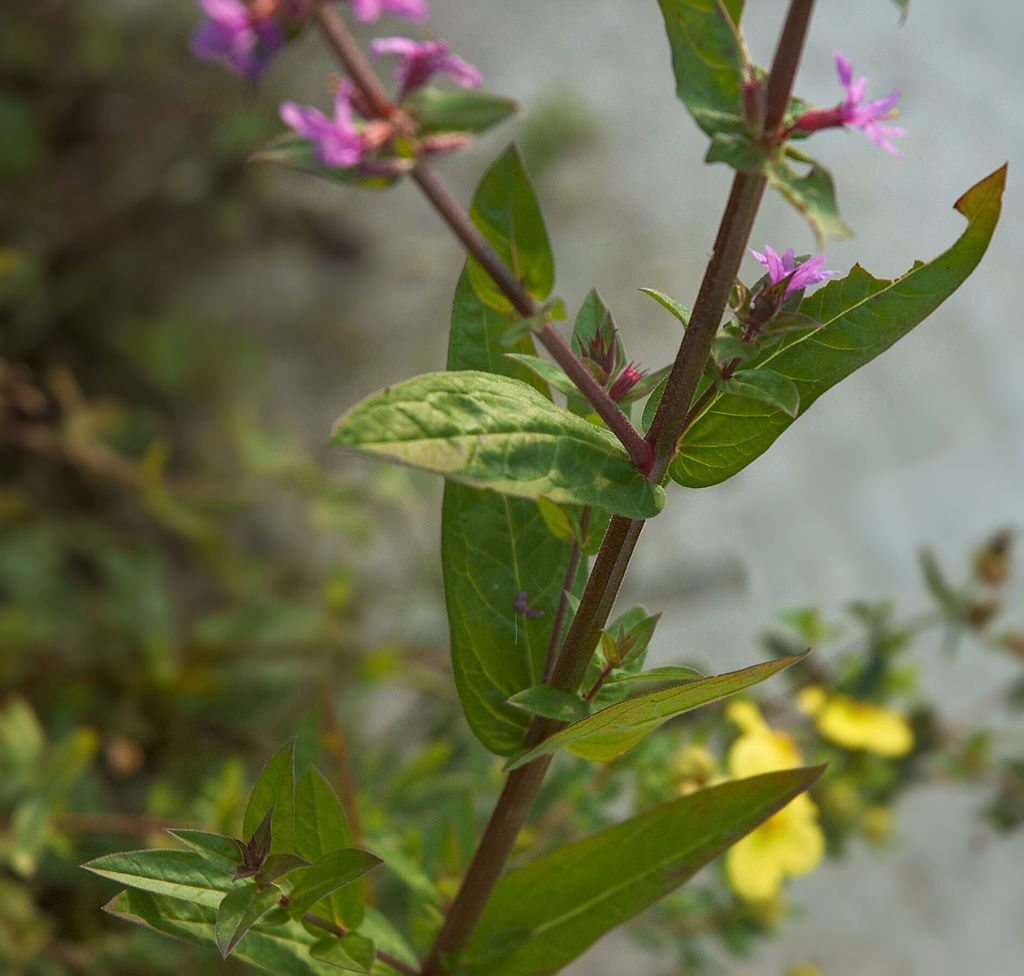
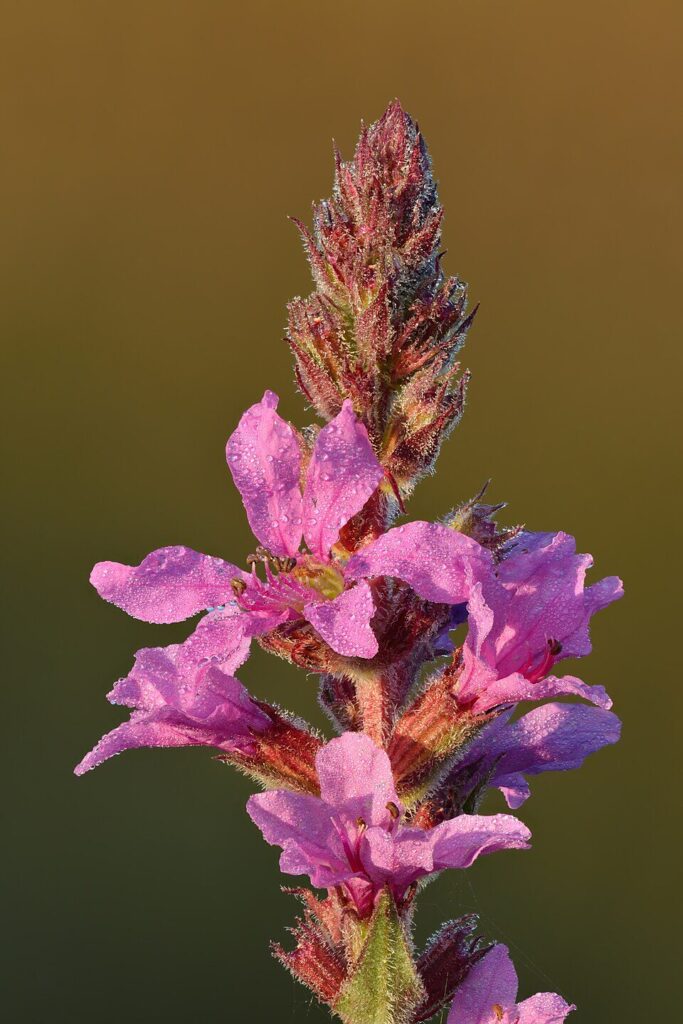
Are there any other similar species?
There are only three species of the genus Lythrum found in Japan, and there are few similar-looking species.
Lythrum hyssopifolia is native to tropical America and grows along roadsides and in wetlands. However, it is easily distinguishable by its broadly linear leaves, which are 0.5-2 cm long, its flowers which do not form inflorescences but grow solitary in the leaf axils, and its pale flower color. It is not very common.
How is pollination done?
As you can tell from their showy flowers, both are insect-pollinated.
Records show that various insects, including the long-nosed hoverfly, the common skipper, the narrow-nosed bee, and the broad-nosed bee, have visited the flowers of the loosestrife plant (Kato & Miura, 1996).
While Lythrum salicaria is self-compatible and self-pollinates, it has been found that cross-pollination by insects increases seed production (Geerts & Adedoja, 2021).
In the United States, honeybees account for 90% of the insects that visit flowers, while in South Africa, the Cape honeybee (Apis mellifera capensis) and the monarch butterfly (Danaus chrysippus) are particularly prominent (Geerts & Adedoja, 2021).
However, since this research was not conducted in the plant's native habitat, there is a lack of research on which insects pollinate it in Japan.
References
Flora of North America Editorial Committee. 2021. Flora of North America (Vol. 10 Magnoliophyta: Proteaceae to Elaeagnaceae). Oxford University Press, Oxford. 488pp. ISBN: 9780197576076
Geerts, S., & Adedoja, O. 2021. Pollination and reproduction enhance the invasive potential of an early invader: the case of Lythrum salicaria (purple loosetrife) in South Africa. Biological Invasions 23(9): 2961-2971. https://doi.org/10.1007/s10530-021-02549-w
Grabas, G., & Laverty, T. 1999. The effect of purple loosestrife (Lythrum salicaria L.; Lythraceae) on the pollination and reproductive success of sympatric co-flowering wetland plants. Ecoscience 6(2): 230-242. https://doi.org/10.1080/11956860.1999.11682524
Kanagawa Prefecture Flora Survey Association. 2018. Kanagawa Prefecture Flora 2018 (Electronic Edition). Kanagawa Prefecture Flora Survey Association, Odawara. 1803pp. ISBN: 9784991053726
Kato, M., & Miura, R. 1996. Flowering phenology and anthophilous insect community at a threatened natural lowland marsh at Nakaikemi in Tsuruga, Japan. Contributions from the Biological Laboratory, Kyoto University 29(1): 1-48. ISSN: 0452-9987, http://hdl.handle.net/2433/156114