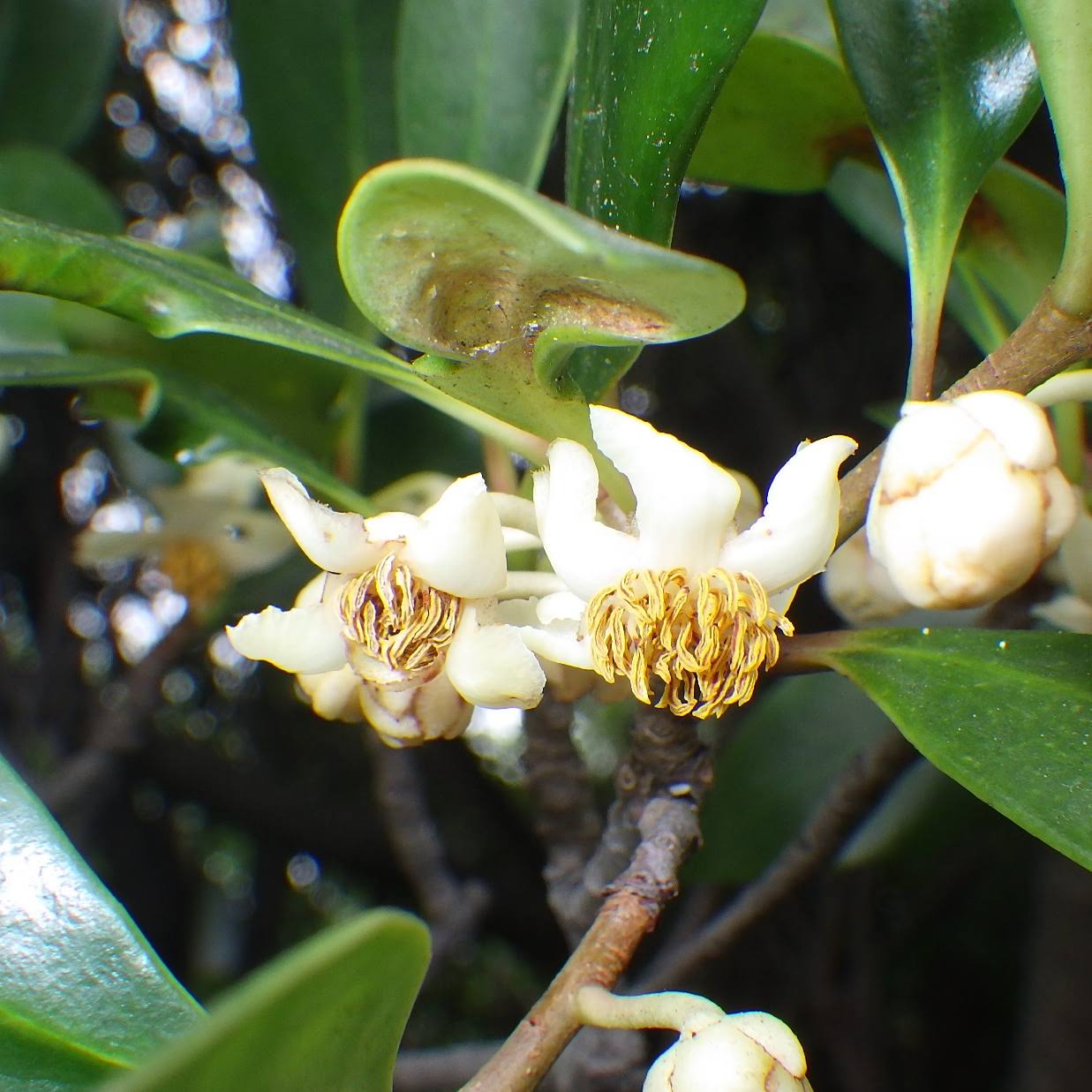
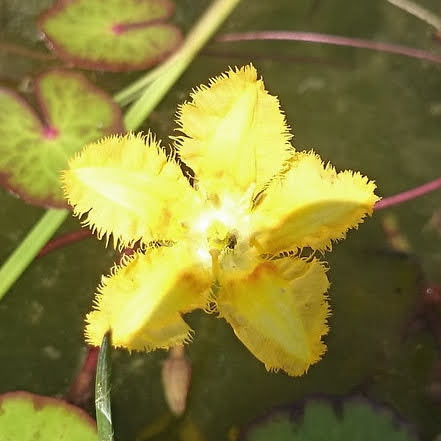
Zephyranthes candida and false saffron are widely cultivated in gardens for ornamental purposes, but there may be confusion regarding their Japanese names. The biggest difference is that the inside of the perianth lobes of Zephyranthes candida are white, while those of false saffron are bright pink. False saffron may seem similar to saffron, as its name "false saffron" suggests, but the flower color of saffron is completely different. This name originates from the Edo period, when it was imported and mistaken for saffron due to the scarcity of botanical records. While most flowers in the Zephyranthes genus are self-pollinating, false saffron is known to attract many beetles in Mexico. The fruit is a capsule and is likely dispersed by gravity. This article will explain the classification, origin of the names, and pollination ecology of Zephyranthes candida and false saffron.
- Two species of the Zephyranthes genus, native to Central and South America, are popular as ornamental plants.
- What is the difference between Zephyranthes candida and false saffron?
- What is the difference between saffron and false saffron?
- Are nearly 90% of the beetles that visit pink flowers?
- Are the fruits capsules dispersed by gravity?
- References
- Source
Two species of the Zephyranthes genus, native to Central and South America, are popular as ornamental plants.
Zephyranthes candida, also known as rain lily, is a cold-hardy evergreen perennial plant native to the La Plata River basin in Argentina, Uruguay, and Paraguay, as well as Chile and Peru. It was introduced to Japan in 1871-72 as an ornamental plant, and some have become naturalized (Tsukamoto, 1994).
Zephyranthes carinata, also known as false saffron, is native to Mexico and Guatemala, but has spread from the southern United States to Costa Rica, the Antilles, and South America (Fernández-Alonso & Groenendijk, 2018). In Japan, it is widely cultivated and some varieties have become naturalized.
Both belong to the genus Zephyranthes in the family Amaryllidaceae, and a common characteristic is that their bulbs contain toxins such as lycorine (Tsukamoto, 1994; Mutsuga et al., 2001).
What is the difference between Zephyranthes candida and false saffron?
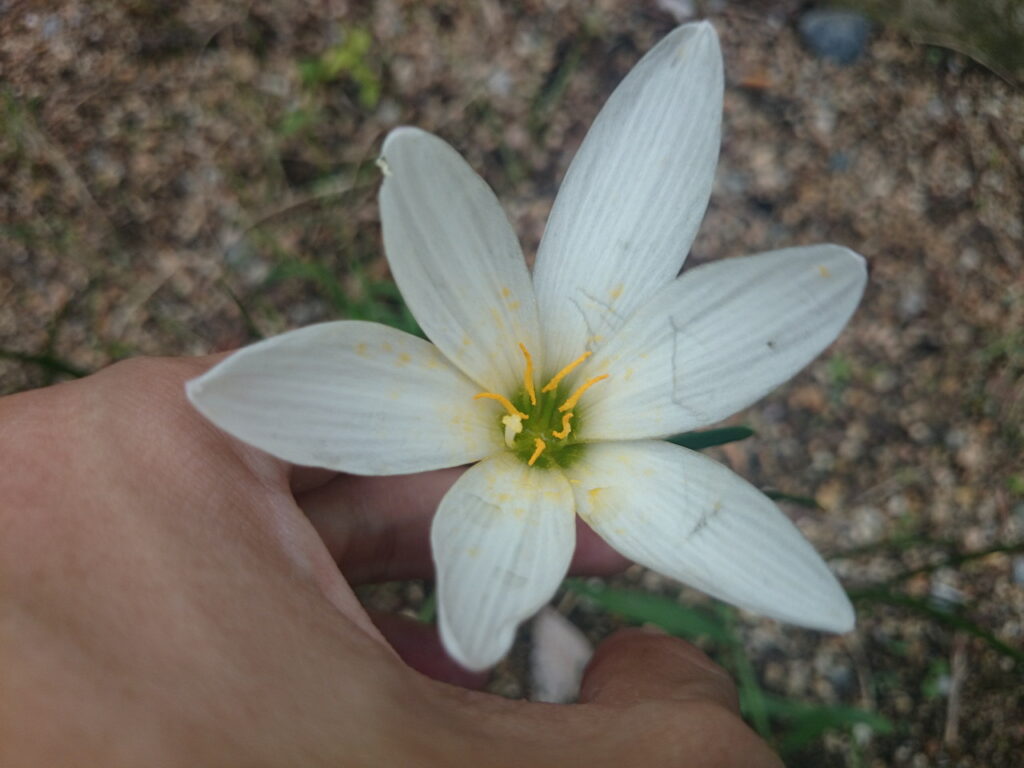
Although both have similar shapes, the clear difference between the two species is that the inside of the perianth lobes is white in Zephyranthes candida, while in false saffron it is bright pink. Also, the stamens of false saffron are slightly longer.
Zephyranthes candida blooms from July to September, bearing flowers 4-5 cm in diameter on 20-30 cm tall stalks that face upwards. The perianth lobes are 6-lobed, white on the inside and pale pink at the base of the outer surface.
False saffron flowers bloom from June to October, producing relatively large flowers about 6 cm in diameter, which also face upwards. The perianth lobes are 6-lobed and, unlike those of Zephyranthes candida, are a vivid pink color (Tsukamoto, 1994).
They belong to the same genus, Zephyranthes, in the Amaryllidaceae family, but if they are in bloom, you would hardly mistake them for each other.
However, there are several closely related species. The following article provides more information about closely related members of the genus Zephyranthes.

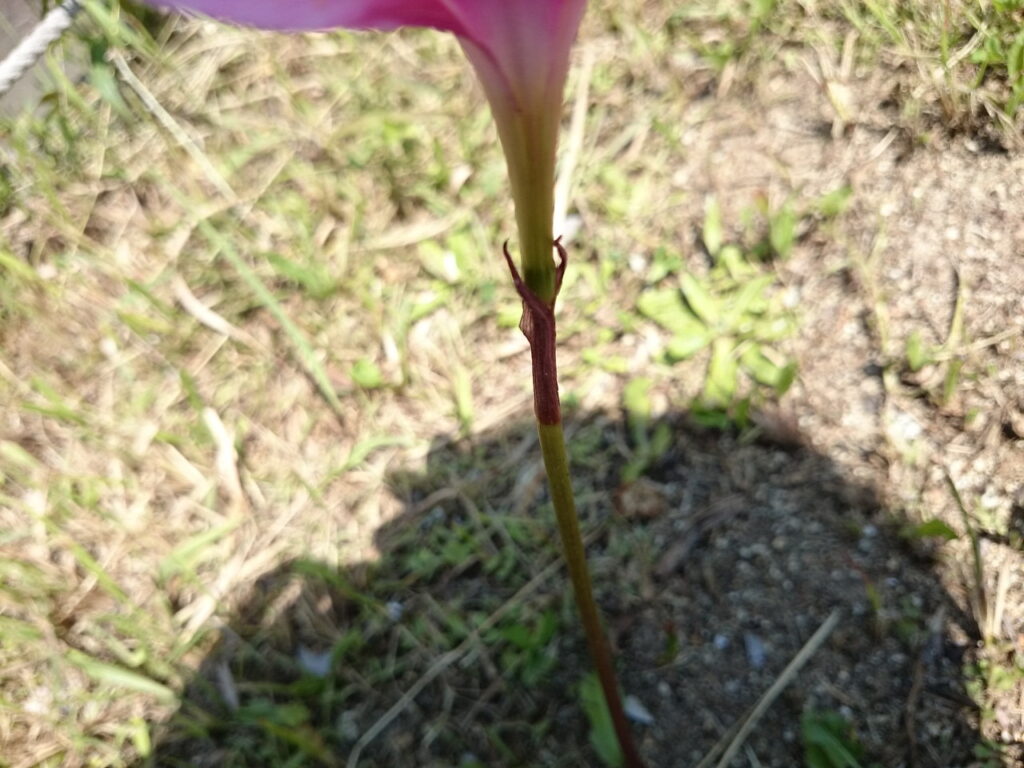
What is the difference between saffron and false saffron?
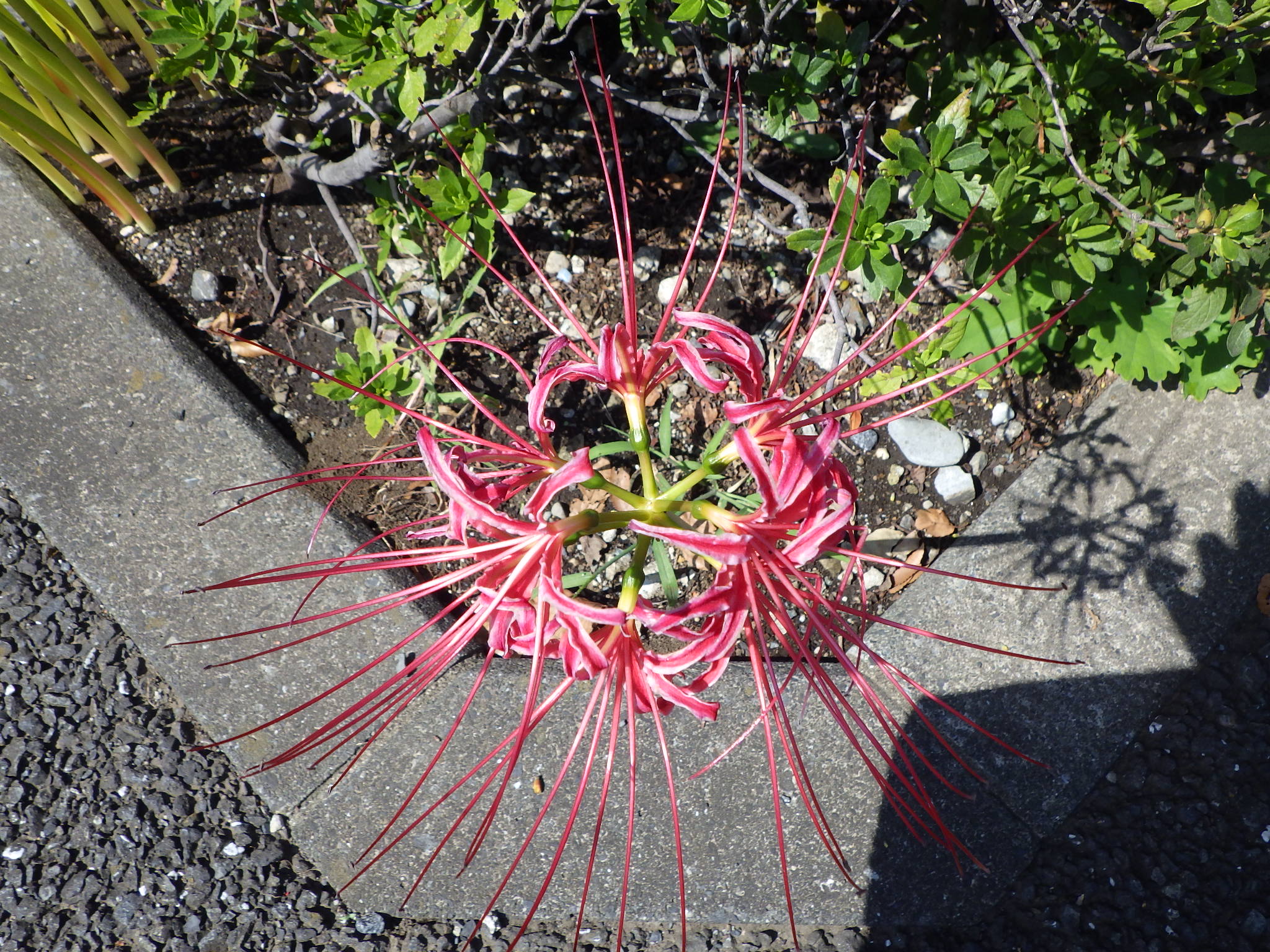
The Japanese name for false saffron is "saffron-like," which is a Japanese name for something resembling saffron. Why is that?
This stems from the fact that it was long mistaken for saffron in Japan. The first sighting of false saffron in Japan is believed to have been in 1845 during the Edo period, when Noda Seika, a plant expert specializing in the identification of introduced plants, cultivated bulbs that had been mixed in with pineapple cultivation soil. At that time, false saffron was mistakenly identified as the same species as saffron, and it wasn't until the Meiji era that it became clear that they were different species (Isono, 2007).
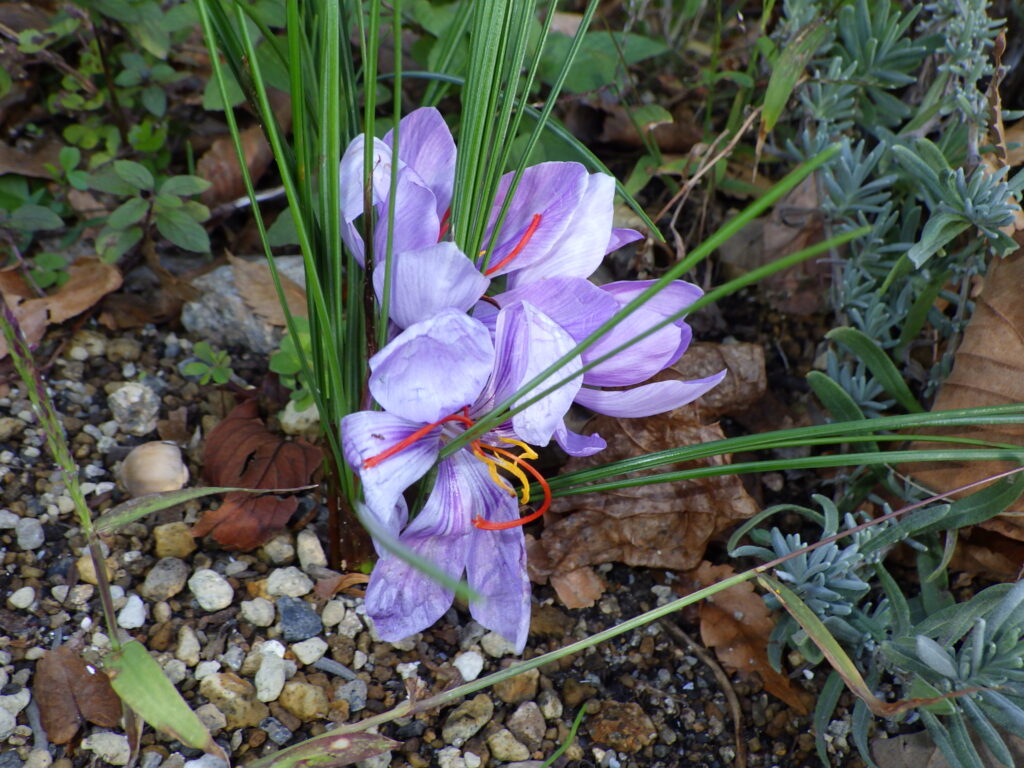
Actual saffron belongs to the iris family and is a completely different classification. Furthermore, its flowers are pale purple with red pistils. However, the overall shape and the fact that its anthers are yellow are somewhat similar, and it's possible that during the period of national isolation, it was difficult to properly distinguish between them with limited information (see the article below for more information on saffron).
On the other hand, the name Tamasudare is said to come from the fact that its small white flowers resemble "jewels" and the way its leaves are clustered together resembles a "bamboo blind."
Are nearly 90% of the beetles that visit pink flowers?
It is believed that 80% of the Zephyranthes genus, to which Zephyranthes candida and Zephyranthes saffron belong, produces seeds through self-pollination.
However, attracting insects to obtain pollen from other individuals is also important in order to eliminate genetic bias. Therefore, research is being conducted to determine which insects visit false saffron.
According to research from Mexico, the plant's native habitat, 86% of the insects that visit it are beetles called Soldier Beetles, while 12% is visited by bees (Argueta-Guzmán et al., 2013). This might be surprising, as its striking appearance might suggest that butterflies or other insects would be more likely to visit. While not yet fully studied, it's possible that the bees are attracted by the pollen.
Are the fruits capsules dispersed by gravity?
All species in the genus Zephyranthes have capsules as their fruit.
The capsules of Zephyranthes candida are subglobose, about 1.2 cm in diameter. When ripe, they split into three sections, releasing black seeds.
The capsule of the false saffron is subglobose. When mature, it splits into three sections. The seeds are black, with 3 to 5 black seeds in each chamber.
Although the exact methods of seed dispersal are not fully understood, it is believed that closely related species with nearly identical seed shapes are dispersed over short distances by gravity, wind, or animal feeding (Fernández-Alonso & Groenendijk, 2004).
References
Argueta-Guzmán, M. P, Barrales-Alcalá, D. A, Galicia-Pérez, A., Jordan, G., & Mandujano MC 2013. Sistema reproductivo y visitantes florales de Zephyranthes carinata Herb (Asparagales: Amaryllidaceae). 100-117. ISSN: 0526-717X, https://biblat.unam.mx/hevila/Cactaceasysuculentasmexicanas/2013/vol58/no4/1.pdf
Fernández-Alonso, JL, & Groenendijk, JP 2004. A new species of Zephyranthes Herb. sl (Amaryllidaceae Hippeastreae), with notes on the genus in Colombia. Revista de la Academia Colombiana de Ciencias Exactas, Físicas y Naturales 28(107): 177-186. ISSN: 0370-3908, http://hdl.handle.net/10261/33396
Isono, Naohide. 2007. Chronological Table of Horticultural Plants Introduced to Japan Before the Meiji Era. Keio University Hiyoshi Journal, Natural Sciences 42: 27-58. ISSN: 0911-7237, https://koara.lib.keio.ac.jp/xoonips/modules/xoonips/detail.php?koara_id=AN10079809-20070930-0027
Mutsuga, M., Kojima, K., Nose, M., Inoue, M., & Ogihara, Y. 2001. Cytotoxic activities of alkaloids from Zephyranthes carinata. Natural Medicines 55(4): 201-204. ISSN: 1340-3443, https://dl.ndl.go.jp/pid/10759797
Tsukamoto, Yotaro. 1994. Encyclopedia of Horticultural Plants, Compact Edition. Shogakukan, Tokyo. 3710pp. ISBN: 9784093051118
Source
This article is a significantly expanded version of a piece originally published in the following book.