Japanese shallots (rakkyo), wild shallots (yamarakkyo), and thread shallots (itorakkyo) all belong to the genus Allium in the Amaryllidaceae family and share the common feature of having the word "rakkyo" in their Japanese names. Rakkyo is eaten as pickled shallots, while wild shallots and thread shallots are well-known as wild and cultivated species in Japan. In addition to having bulbs and reddish-purple flowers, they are sometimes confused with each other because they can either grow wild or be cultivated . However, they can be clearly distinguished by carefully observing the shape of their flowers and leaves. Yellow thread shallots are now considered a different species from thread shallots, but are confused due to outdated classifications. The shape of their flowers is clearly different. This article will explain the classification of Japanese shallots (rakkyo), wild shallots (yamarakkyo), and thread shallots.
What are Japanese shallots, mountain shallots, and itorakkyo?
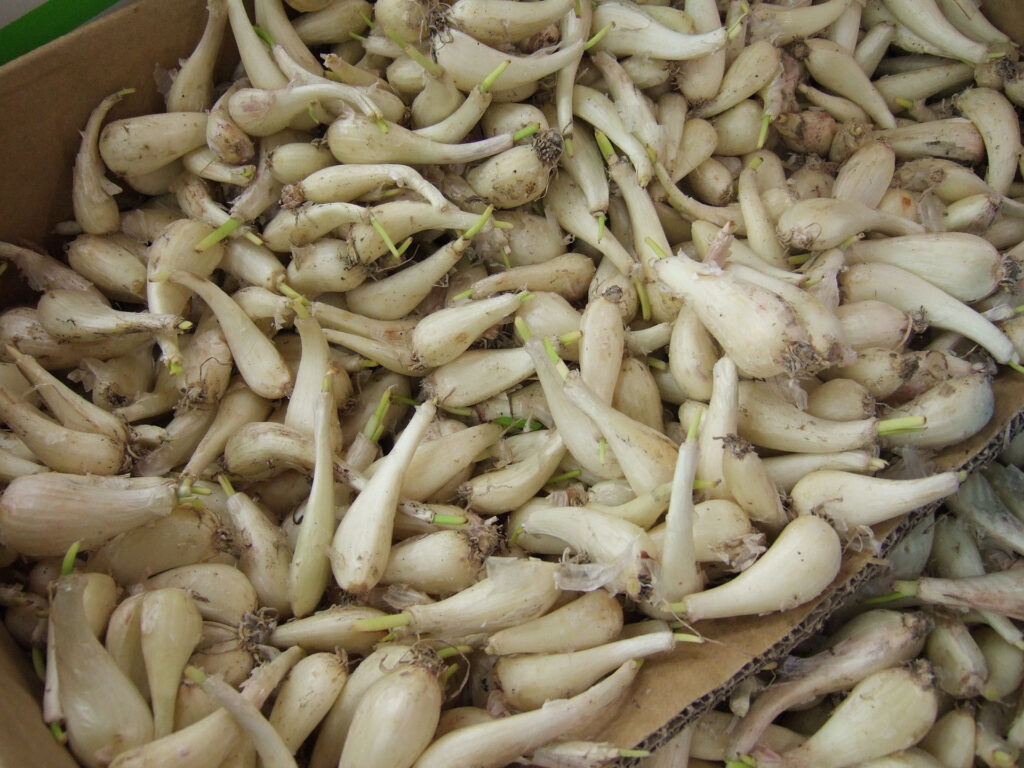
Rakkyo (Allium chinense), also known as Japanese shallot, is a perennial plant native to China and cultivated in East Asia. Its bulb is used for medicinal and culinary purposes. It is unknown when it was introduced to Japan, but the earliest reliable evidence distinguishing it from chives is found in the "Shinsen Jikyo," a dictionary compiled by the monk Shōjū between 898 and 901 (Heian period) (Fujii, 1985). In Japan, it was originally used medicinally and also prepared in various ways, but currently, it is mostly used as "rakkyo-zuke," a pickled shallot in sweet and sour vinegar. It has escaped cultivation in areas around fields and in urban areas.
Allium thunbergii, also known as mountain scallion, is a perennial herb distributed in Honshu (south of Akita Prefecture), Shikoku, and Kyushu in Japan; the Korean Peninsula; China; and Taiwan. It grows in mountain grasslands and on embankments. The white-flowered variety is Allium thunbergii f. albiflorum.
Allium virgunculae var. virgunculae, also known as thread chives, is a perennial herb found only on Hirado Island in Nagasaki Prefecture, Japan. Related varieties include Allium koshikiense var. koshikiense, found on Koshiki Island in Kagoshima Prefecture, and Allium yakushimense var. yakushimense, found on Yakushima Island in Kagoshima Prefecture.
All of them belong to the genus Allium in the Amaryllidaceae family and share the commonality of having the word "rakkyo" (Japanese shallot) in their Japanese names.
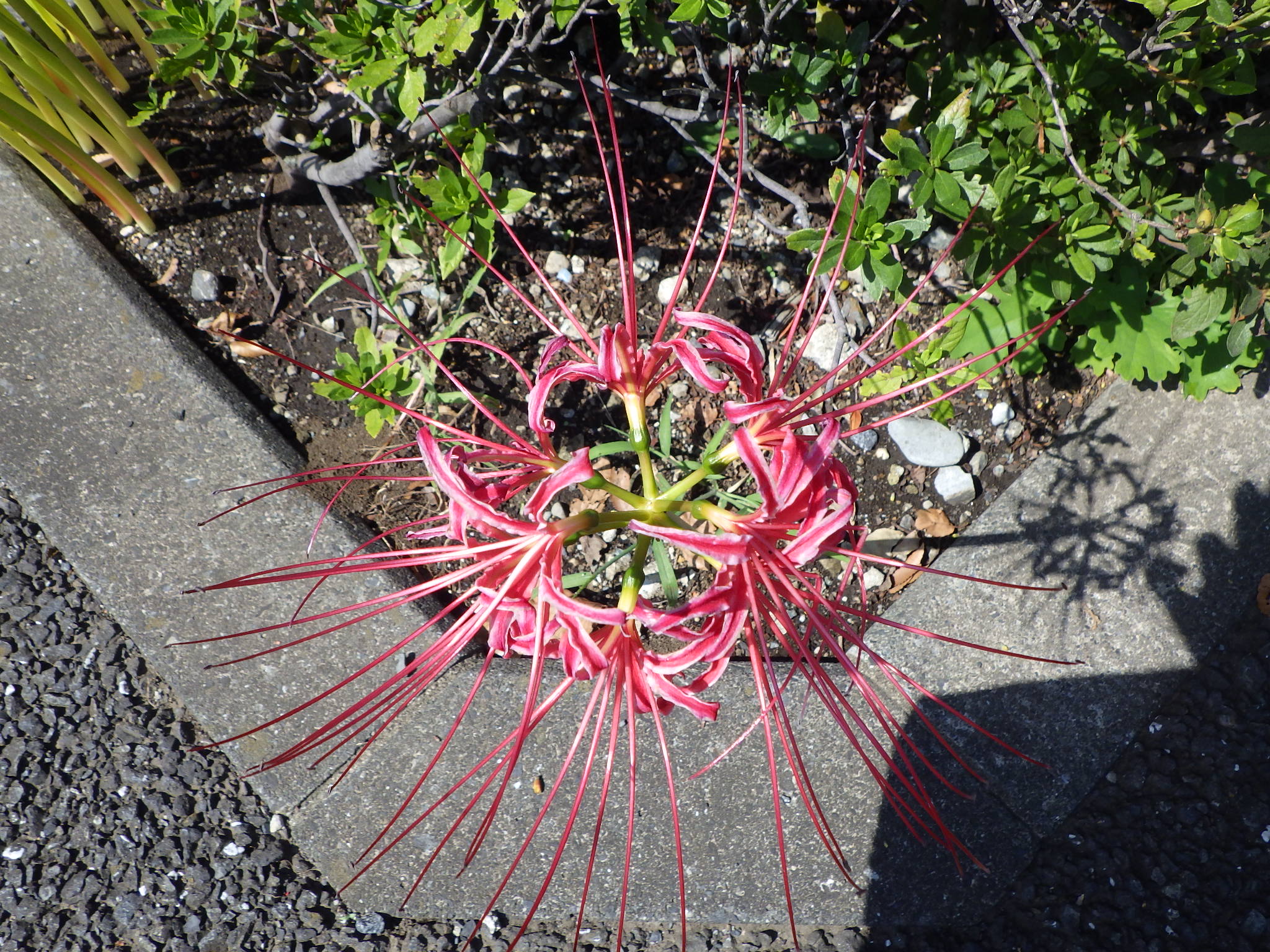
Morphologically, it belongs to the genus Allium, and unlike other Amaryllidaceae plants, it shares the characteristic of having separate perianth segments, or only short and fused at the base.
Furthermore, these three species, within the Allium genus, share several key characteristics: they all produce narrow, oval-shaped bulbs (a type of bulb formed by numerous thickened leaves that store nutrients and overlap around the stem to form a spherical shape) underground; their leaves are broadly linear; and their flowers are reddish-purple.
Therefore, many people may confuse them and not know how to distinguish between them.
What are the differences between Japanese shallots (rakkyo), wild shallots (yamarakkyo), and thread shallots (itorakkyo)?
These three species can be distinguished by observing their leaves and flowers (Wu & Raven, 2000; Kanagawa Prefecture Flora Survey Association, 2018).
First, there is a difference in that the pedicels of the flowers of the Japanese shallot (rakkyo) are long, measuring 20-30 mm in length, while those of the mountain shallot (yamarakkyo) and thread shallot (itorakkyo) are short, measuring 12-15 mm in length.
The term "small floral pattern" might be a bit technical and difficult to understand, but in this context, you can think of it as the elongated part connecting the flower to the plant body.
Due to the difference in the length of the flower stalks, the inflorescence of wild garlic and itorakkyo (a type of wild garlic) will appear more compact and densely flowered.
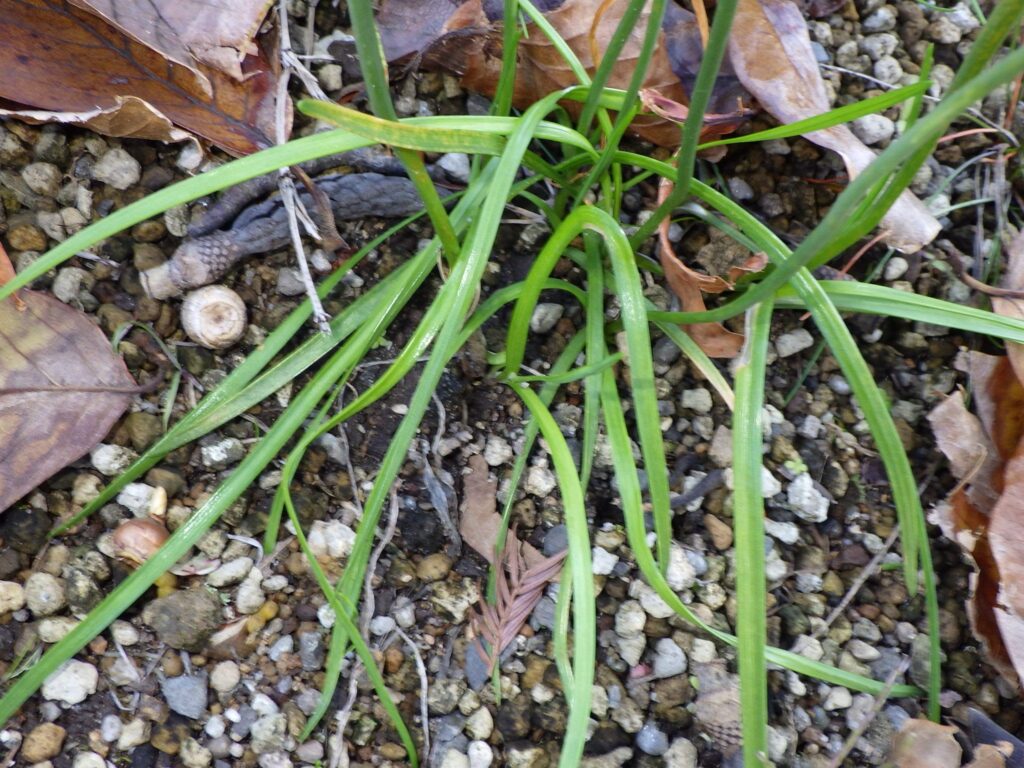
Regarding wild onion and italian onion, the difference is that wild onion has flat leaves that are 2-4 mm wide and have three corners, while italian onion has cylindrical leaves that are very narrow, only 1-2 mm wide. This is as the names suggest.
Also, since wild garlic has more flowers than itarakkyo (a type of wild garlic), it appears to bloom even more densely.
The above methods should help you distinguish between them, but there may be times when you cannot identify the flowers of Japanese shallots (rakkyo) and wild shallots (yamarakkyo).
Even in that case, you can distinguish them by the fact that shallot leaves are 1-3 mm wide and have 3-5 corners.
One unique characteristic of Japanese shallots, not found in other varieties, is that their leaves wither in summer, remain green from autumn to winter, and their bulbs have a thin, membranous outer layer, but this should only be considered as a reference. Note that wild shallots and thread shallots are not commonly eaten (although they are likely edible). Their names likely stem from their similar appearance.

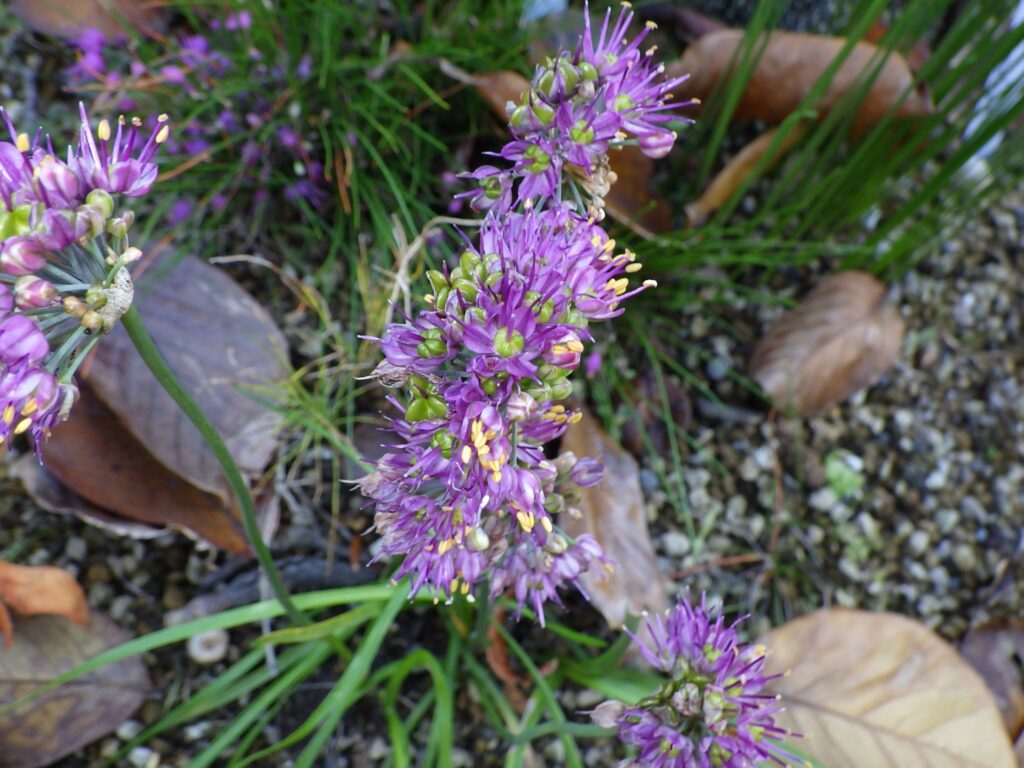
ネギやニンニクと同じ仲間の🌸「イトラッキョウ」🌸ですが、こちらは長崎県の
— Sakuya Konohana Kan (@SakuyaismU) November 17, 2017
平戸島に自生する固有種です。ほそ~いほそ~い花茎と、淡い紫色の花がとても
かわいらしいです😊 #咲くやこの花館 #イトラッキョウ pic.twitter.com/u2sVZv9fBO
What is the difference between Itorakkyo and Ki-itorakkyo?
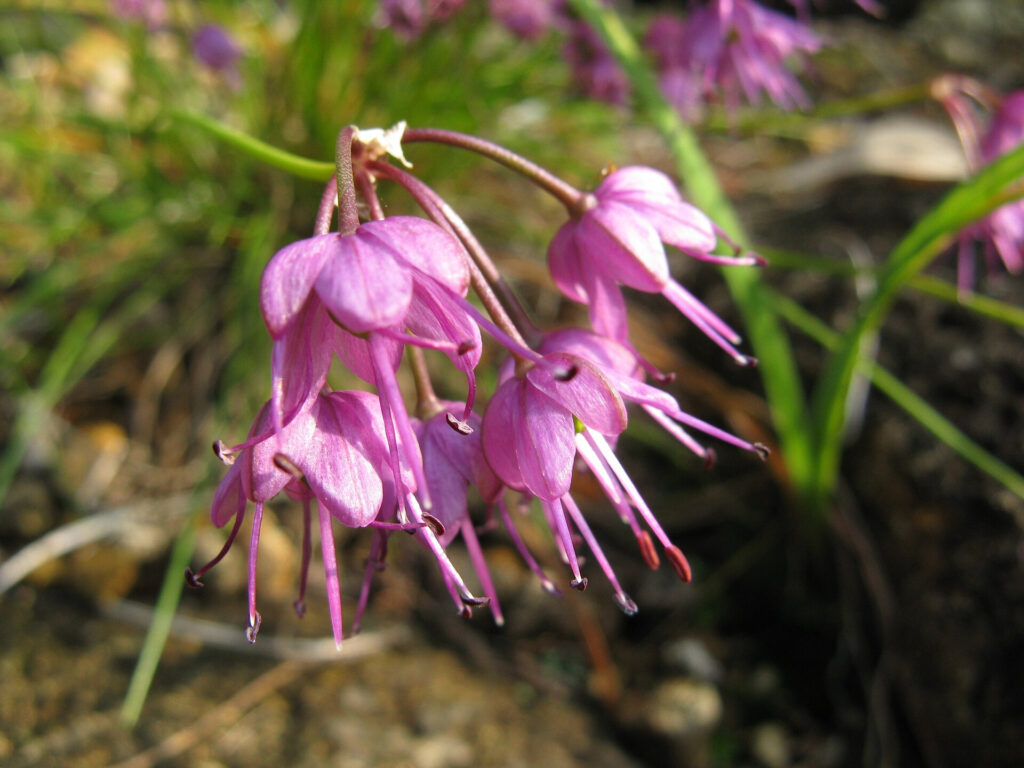
When you search for "Itorakkyo" on the internet, Google Search suggests a different species called "Kiiitorakkyo (紀伊糸辣韮) Allium kiiense," and many articles based on an outdated classification that states "Kiiitorakkyo is a type of Itorakkyo" appear in the search results. Perhaps because of this, many photos of Kiiiitorakkyo are also found that are presented as Itorakkyo. However, these are incorrect, and they have been treated as separate species since 2009 (Takahashi & Hotta, 2009).
The specific differences are that in *Allium schoenoprasum*, the flowers open upwards and the inner perianth segments are flat, while in *Allium schoenoprasum*, the flowers open vertically or diagonally downwards and the inner perianth segments are boat-shaped.
Regarding their distribution, *Allium thunbergii* is found only on Hirado Island in Nagasaki Prefecture, while *Allium schoenoprasum* is distributed throughout the Kii Peninsula.
The morphological differences between the related varieties, *Allium schoenoprasum*, *Allium koshikiense*, and *Allium yakushimaense*, are minor and will be omitted here. Those interested in more details should refer to research papers.
Are there any other similar species?
The genus Allium (or onion) includes a vast number of species that are commonly eaten. Please see the separate article for details on those species.
References
Fujii, Yoshiyoshi. 1985. The introduction and spread of Japanese shallots. Research Bulletin of the Faculty of Agriculture, Tottori University 37: 159-168. https://repository.lib.tottori-u.ac.jp/records/4006
Kanagawa Prefecture Flora Survey Association. 2018. Kanagawa Prefecture Flora 2018 (Electronic Edition). Kanagawa Prefecture Flora Survey Association, Odawara. 1803pp. ISBN: 9784991053726
Takahashi, H., & Hotta, M. 2009. A taxonomic revision of the Allium virgunculae complex (Alliaceae). Acta Phytotaxonomica et Geobotanica 60(2): 79-86. https://doi.org/10.18942/apg.KJ00005878344
Wu, ZY, & Raven, PH (Eds.). 2000. Flora of China (Vol. 24 Flagellariaceae through Marantaceae). Science Press, Beijing, and Missouri Botanical Garden Press, St. Louis. 431pp. ISBN: 9780915279838