Lindera obtusiloba, Lindera umbellata, Lindera japonica, Lindera umbellata, and Lindera umbellata are representative species of the Lindera genus, and are five deciduous shrubs with entire leaves that commonly grow in Japanese forests. Identifying them requires considerable practice, but they can be distinguished by carefully examining the leaves, leaf arrangement, and buds. They were mainly used for extracting fragrances and oils, but such uses have decreased, and they are now more famous as garden trees. All species are dioecious, with flowers blooming in early spring, and the perianth segments are generally glossy and yellowish-green. Of the five species introduced, only Lindera umbellata does not self-pollinate, but recent research has revealed that this is because it is a clonal plant. Pollination methods by insects have been studied in detail for Lindera obtusiloba and Lindera umbellata, and it has been found that 70% of the flowers are visited by beetles, with the remainder by bees and flies. However, the flowering periods of the two species differ slightly, which seems to affect the proportion of visiting insects as well. It has become clear that the beetles, which make up the majority of the population, not only feed on pollen but also use the area as a meeting place for males and females. The fruits are dispersed by birds. This article will explain the classification, culture, pollination ecology, and seed dispersal of the genus Lindera.
- Five deciduous shrubs with entire leaves that commonly grow in Japanese forests
- What are the differences between Aburachan, Kuromoji, Yamakoubashi, Dankoubai, and Shiromoji?
- What are the differences in how they are used?
- They have a common sheen and are yellowish-green flowers.
- Only *Lindera umbellata* was a cloned plant!?
- 70% of the insects that visit the flowers of Lindera obtusiloba and Lindera umbellata are three species of beetles!?
- Were beetles visiting flowers in search of a partner?!
- Are the female flowers mimicking the male flowers?
- The fruit is a berry and is dispersed by birds.
- References
- Source
Five deciduous shrubs with entire leaves that commonly grow in Japanese forests
Lindera praecox var. praecox is distributed in Honshu, Shikoku, and Kyushu in Japan, as well as in China. It is a deciduous shrub that grows in hilly areas and the foothills of lower mountainous regions, along streams in valley forests in mountainous and hilly areas (Yoneyama, 1992; Wu et al., 2008a). It is known to particularly prefer damp places such as valleys (Tokumoto et al., 2019). Planted trees can also be seen. The Japanese name "Abura-chan" comes from the fact that the fruit, wood, and bark are rich in oil, and the oil was extracted and used for lighting. "Chan" refers to bitumen (a black, sticky substance such as natural asphalt, tar, and pitch), and also refers to a paint mixed with oil.
Lindera umbellata var. umbellata is a deciduous shrub distributed in Honshu (Pacific coast from Tohoku to Tokai, Kinki, and Chugoku regions), Shikoku (partially), and Kyushu (northern part) of Japan; and in China, growing in forests in mountainous and hilly areas. Its Japanese name, "Kuromoji," is said to derive from the black, character-like markings or black spots on its green bark caused by lichens (there are various theories). While var. umbellata has leaves 5-10 cm long, there is also a variety called Large-leaved Kuromoji var. membranacea, which has leaves 7-14 cm long and is distributed in Hokkaido and the Sea of Japan side from Tohoku to Kinki.
Lindera glauca is a deciduous shrub distributed in Honshu (west of the Kanto region), Shikoku, and Kyushu in Japan; the Korean Peninsula; and China. It grows in relatively dry forests in mountainous and hilly areas. Its Japanese name, "Yamakobashi," comes from the pleasant fragrance emitted when its branches are broken.
Lindera obtusiloba is a deciduous shrub distributed in Honshu (Kanto region, west of Niigata Prefecture), Shikoku, and Kyushu in Japan; the Korean Peninsula; and northeastern China. It grows in mountainous deciduous forests and forest edges. Its Japanese name, "Dankoubai," comes from the fact that its fruit, leaves, and wood smell like sandalwood (Santalum album), and its flowers resemble those of the plum blossom.
Lindera triloba is a deciduous shrub distributed in Honshu (west of the Chubu region), Shikoku, and Kyushu in Japan, growing in low mountains. It is known to particularly prefer dry places such as ridges (Tokumoto et al., 2019). Its Japanese name, "Shiromoji," comes from the fact that its bark is whitish, in contrast to the dark bark of Lindera umbellata (Kuromoji).
All of these species belong to the genus Lindera in the family Lauraceae, and they share the common characteristics of having alternate leaves and commonly growing in Japanese forests. Furthermore, they lack distinctive features such as serrated leaves, making them a difficult group to distinguish. They are dioecious, have umbel-shaped inflorescences enclosed by bracts, three-merous flowers, nine stamens, and two-chambered anthers, among other subtle similarities.
What are the differences between Aburachan, Kuromoji, Yamakoubashi, Dankoubai, and Shiromoji?
However, by observing various characteristics, it is possible to distinguish between the five species.
From a plant taxonomic perspective, they can be broadly classified as follows (Kanagawa Prefecture Flora Survey Association, 2018).
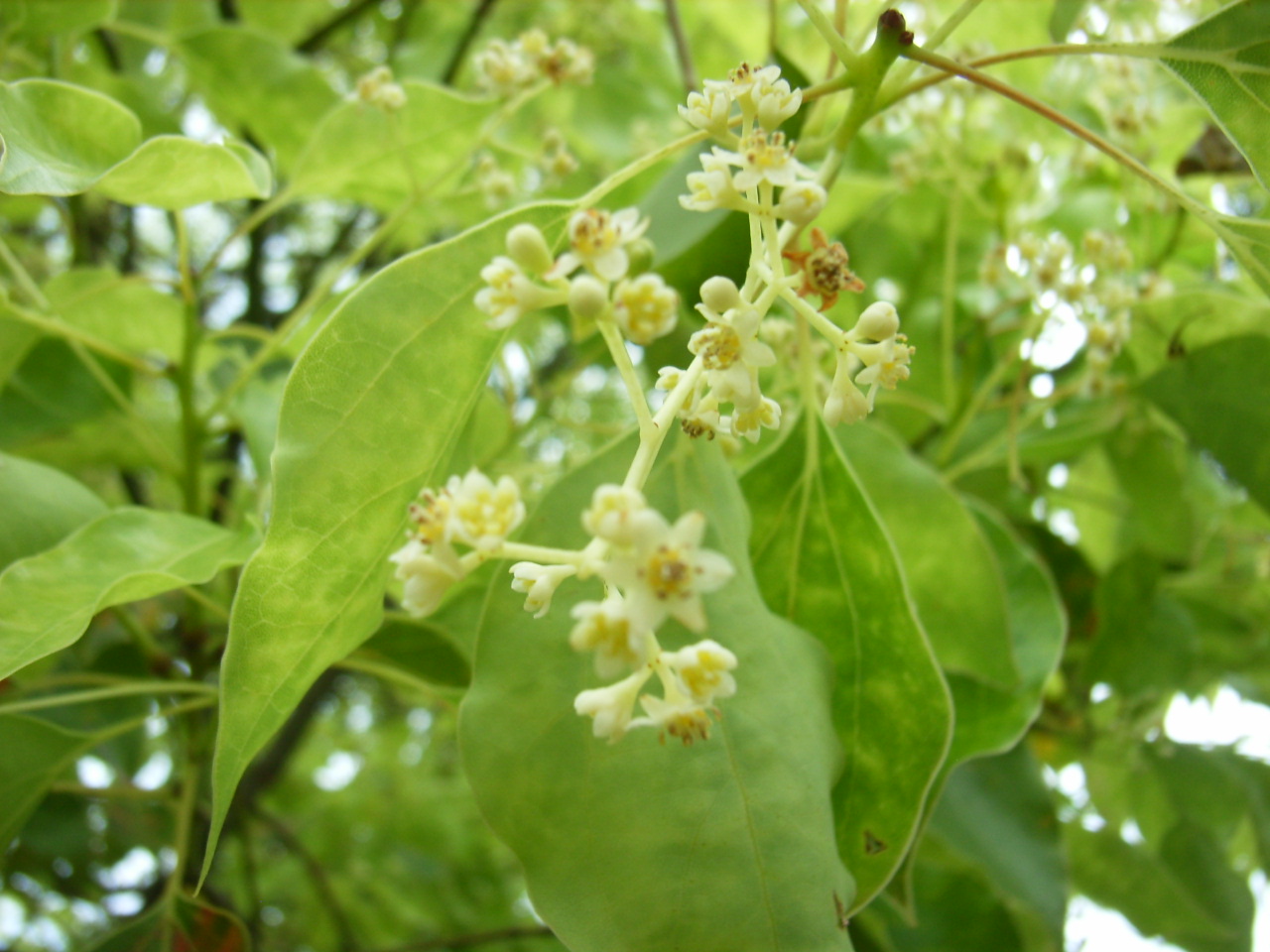
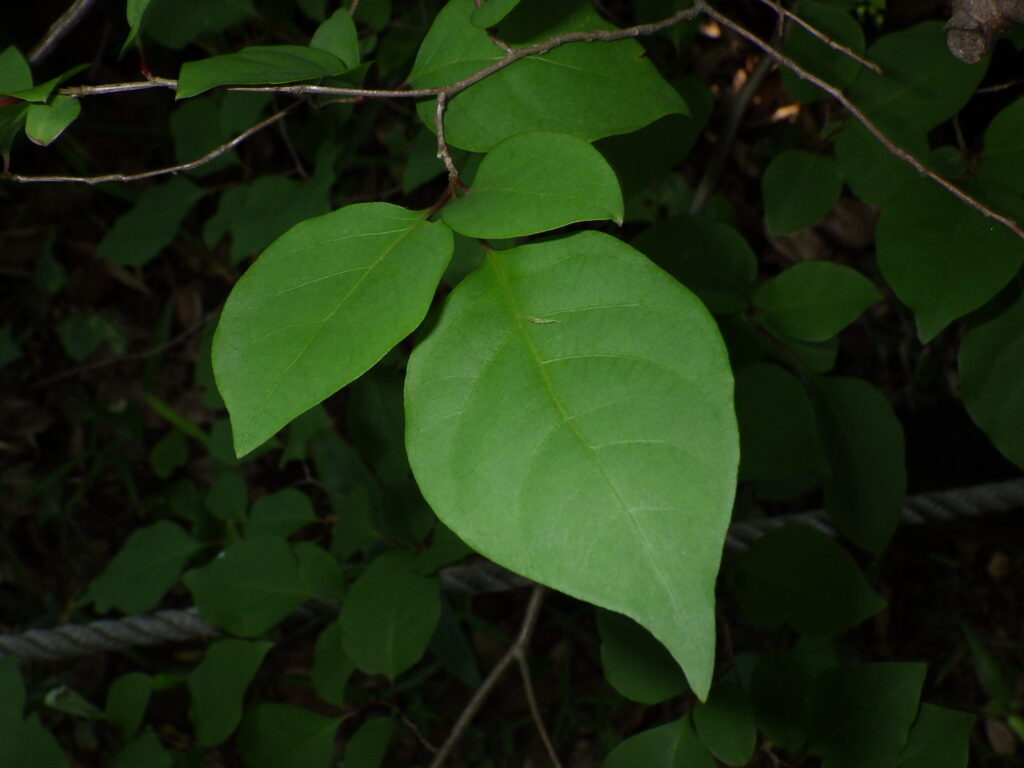
Firstly, in Lindera obtusiloba, Lindera umbellata, and Lindera japonica, the leaf veins are pinnate and the leaves have no incisions, whereas in Lindera umbellata and Lindera umbellata, the leaf veins are 3-veined and the leaves are lobed into 3 rows.
The difference between Lindera obtusiloba and Lindera umbellata is that in Lindera obtusiloba, the tips of the three rows of lobes are short and rounded, the incisions between them are shallow, and there are some heart-shaped undivided leaves mixed in, while in Lindera umbellata, the tips of the three rows of lobes are long and pointed, the incisions between them are deep, and there is a rounded gap at the base.
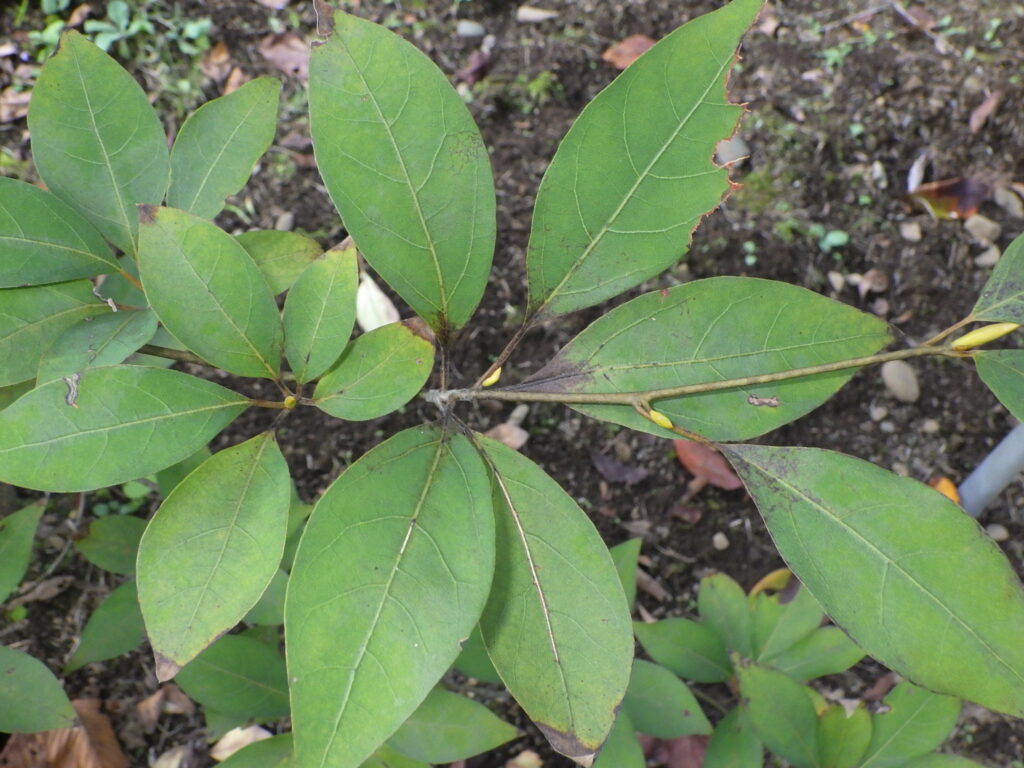
Regarding the remaining three species, in Kuromoji, there is a terminal bud but the lateral buds are not well developed, the inflorescence buds are attached to the base of the terminal bud, and the leaves are clustered at the top of the branches. In contrast, in Aburachan and Yamakoubashi, there is no terminal bud but the lateral buds are well developed, the inflorescence buds are attached to the leaf axils, and the leaves are normally arranged alternately on the branches.
The main difference between Lindera obtusiloba and Lindera umbellata is that Lindera obtusiloba loses its leaves in winter, and its fruit is about 15 mm in diameter, while Lindera umbellata retains its leaves even in winter, which fall before spring buds emerge, and its fruit is 5-8 mm in diameter.
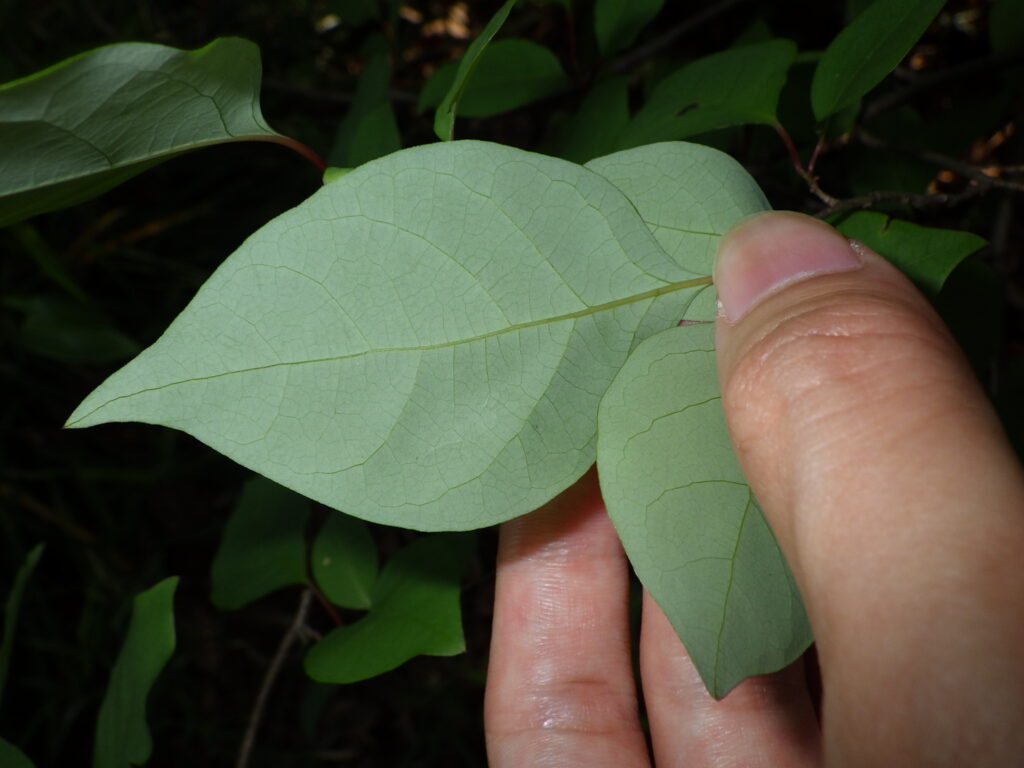
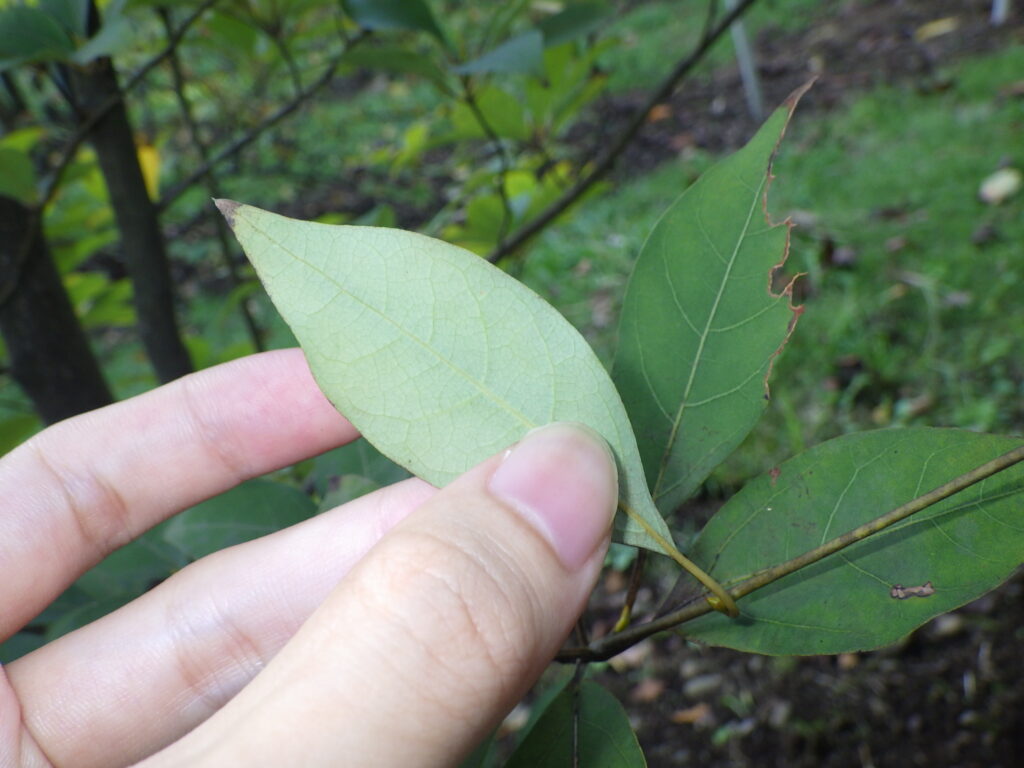
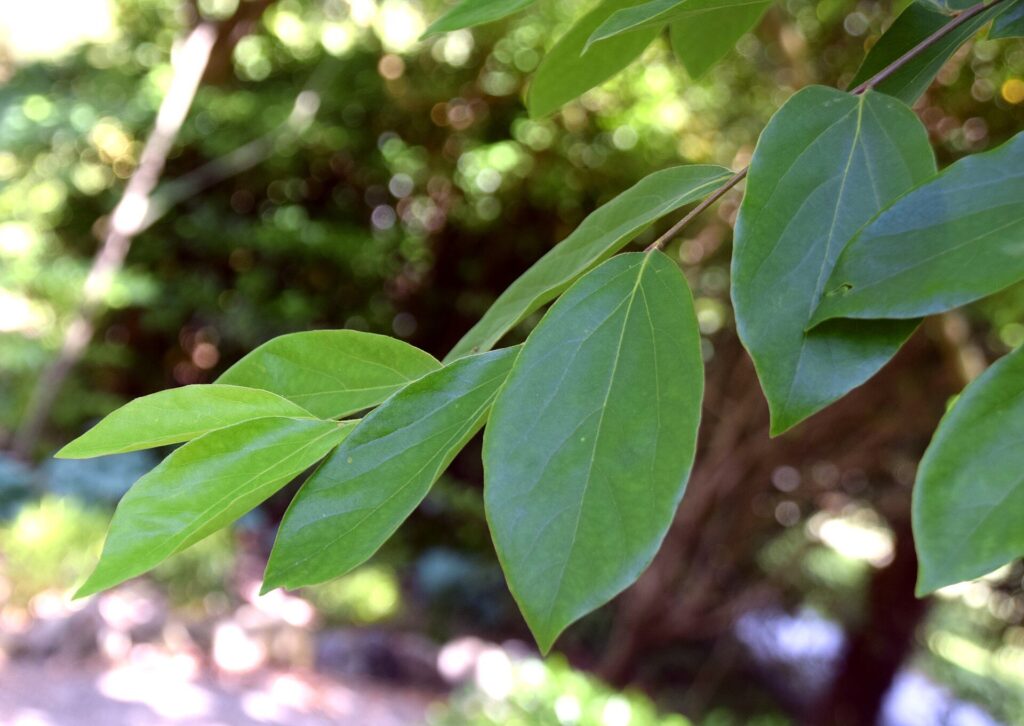
In practical terms, *Lindera obtusiloba*, *Lindera umbellata*, and *Lindera japonica* can also be distinguished by their leaves (Hayashi, 2014).
Regarding the leaves, while Lindera obtusiloba and Lindera umbellata clearly have petioles, Lindera japonica has almost no petioles.
Furthermore, while Lindera obtusiloba has pointed leaf tips that grow quite long and petioles that are 1-2.5 cm long, Lindera umbellata also has pointed leaf tips, but the tips do not grow as long and the petioles are shorter, at 0.8-2 cm.
As mentioned above, the difference between *Lindera umbellata* and *Lindera oblonga* is distinguished by the length of the leaf blade, but intermediate forms between the two also exist, and no other differences have been confirmed, making differentiation difficult.
In addition, other species of the Lindera genus in Japan include Lindera sericea var. sericea, which closely resembles Lindera sericea but has hairy leaves; Lindera lancea, which closely resembles Lindera sericea but is smaller and has dense reddish-brown hairs on its flower stalks; Lindera erythrocarpa, whose leaf blade base flows into the petiole; and Lindera aggregata, which has leaves with three veins and entire margins.
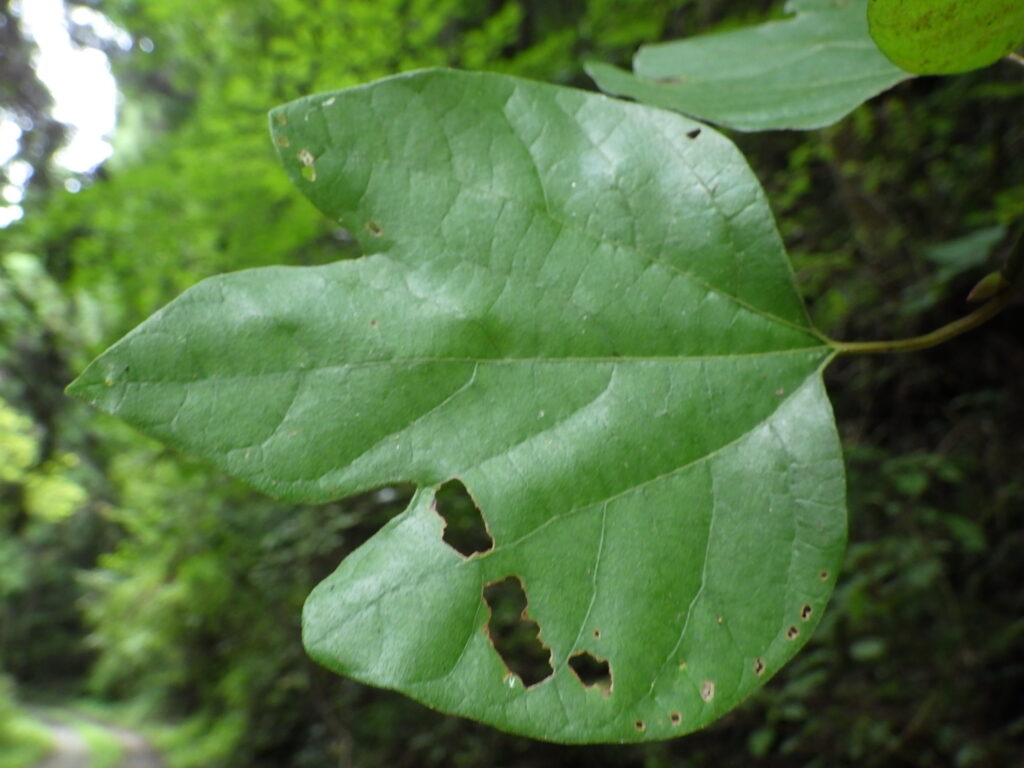
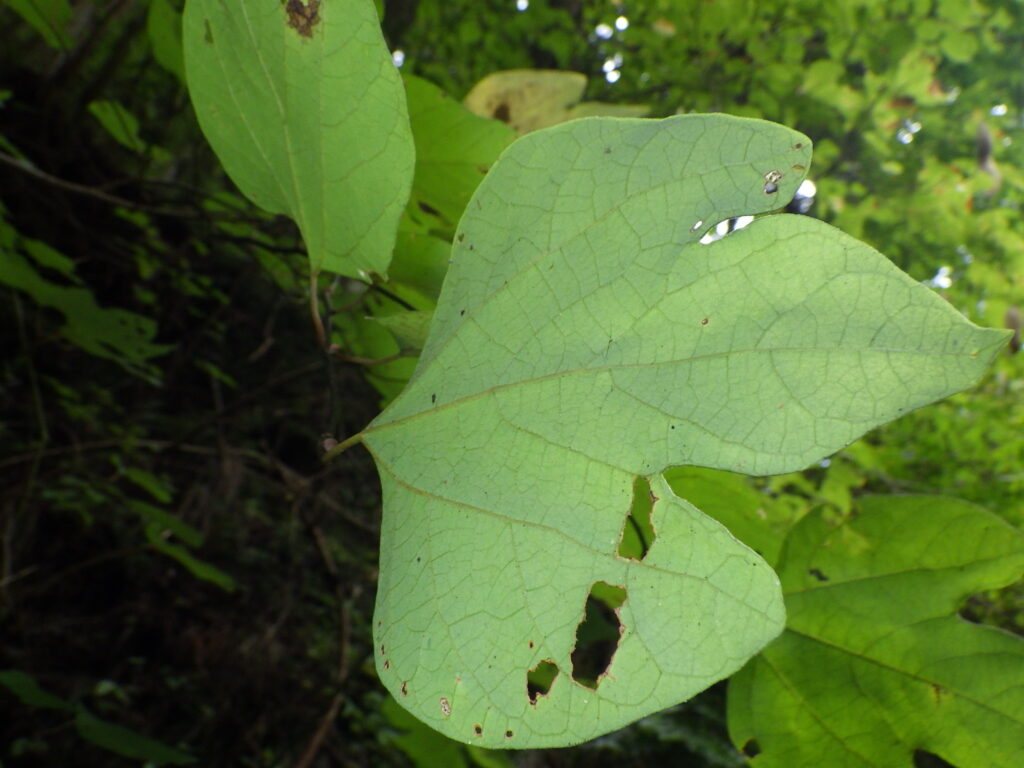

What are the differences in how they are used?
What are the differences in how they are used?
As its name suggests, the Japanese spicebush (Lindera obtusiloba) was used to extract oil from its fruit and branches, which was used as lamp oil and firewood. It is also said to have been used as hair oil by women in the Korean Peninsula. Nowadays, it is primarily used as a garden tree.
Kuromoji is well-known as a representative material for toothpicks, and the name "Kuromoji" has become synonymous with toothpicks. Toothpicks made from Kuromoji are considered high-quality and are often included with confectionery toothpicks. Kuromoji oil, extracted by steam distillation of the branches and leaves, was hardly extracted by the 1970s, but it was once exported to Europe as a fragrance unique to Japan. It is also used as a garden tree.
It is said that the branches of the Japanese spicebush (Lindera umbellata) emit a pleasant fragrance when broken, but its use is limited to that; it is primarily used as a garden tree.
The wood of the Japanese spicebush (Lindera obtusiloba) is also fragrant, so it is used for toothpicks and crafts. Oil can be extracted from its seeds, and in Korea, the seed oil is used for hair care. It is also used as a garden tree.
White spicebush (Lindera umbellata) is tough and was used for walking sticks and other crafts. Oil can also be extracted from its seeds, and the extracted oil was used as fuel for lamps and other devices. While not as strong as that of black spicebush (Lindera umbellata), its branches and leaves have a distinctive fragrance, and essential oil can be extracted through steam distillation. It is also used as a garden tree.
Unfortunately, its use has decreased recently, but you'll still encounter it quite often as a garden tree.
They have a common sheen and are yellowish-green flowers.
Since all members of the genus Lindera are dioecious, they are divided into female plants, which have female flowers with pistils and vestigial stamens (staminodes), and male plants, which have male flowers with stamens.
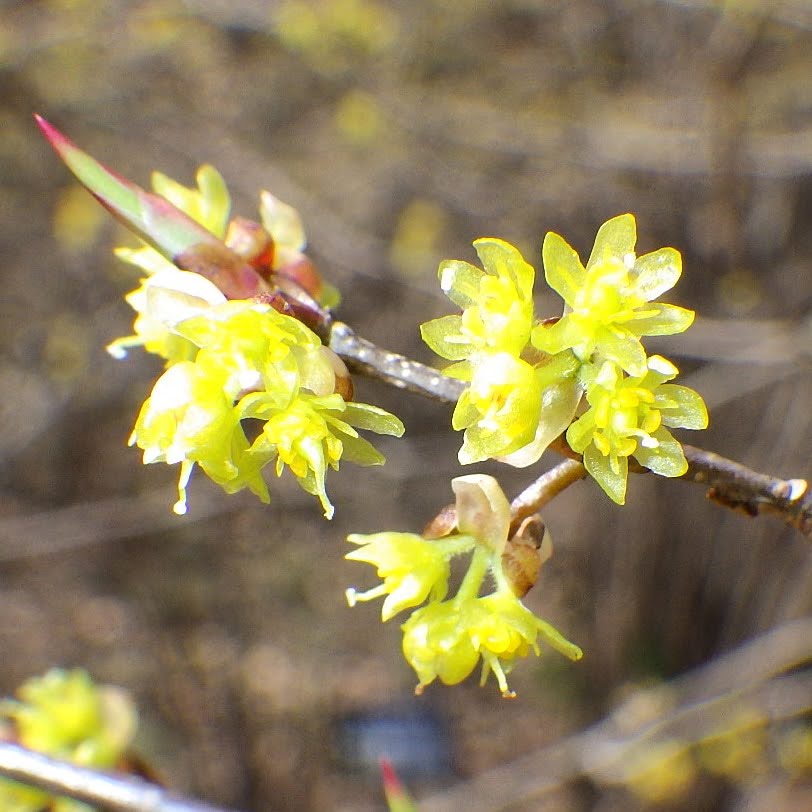
The flowers bloom in early spring, and the inflorescence is an umbel enclosed by bracts. The perianth segments are basically glossy and yellowish-green, and there are 6 segments in total (trimerous), with 9 stamens in the male flowers and 9 staminodes in the female flowers. The anthers are 2-chambered. Yellow glands surround the filaments of the male flowers and the ovary of the female flowers.
On the other hand, while the flowers of Lindera obtusiloba and Lindera umbellata bloom before the leaves appear, like cherry blossoms, Lindera umbellata, Lindera japonica, and Lindera obtusiloba bloom simultaneously, which is a striking contrast.
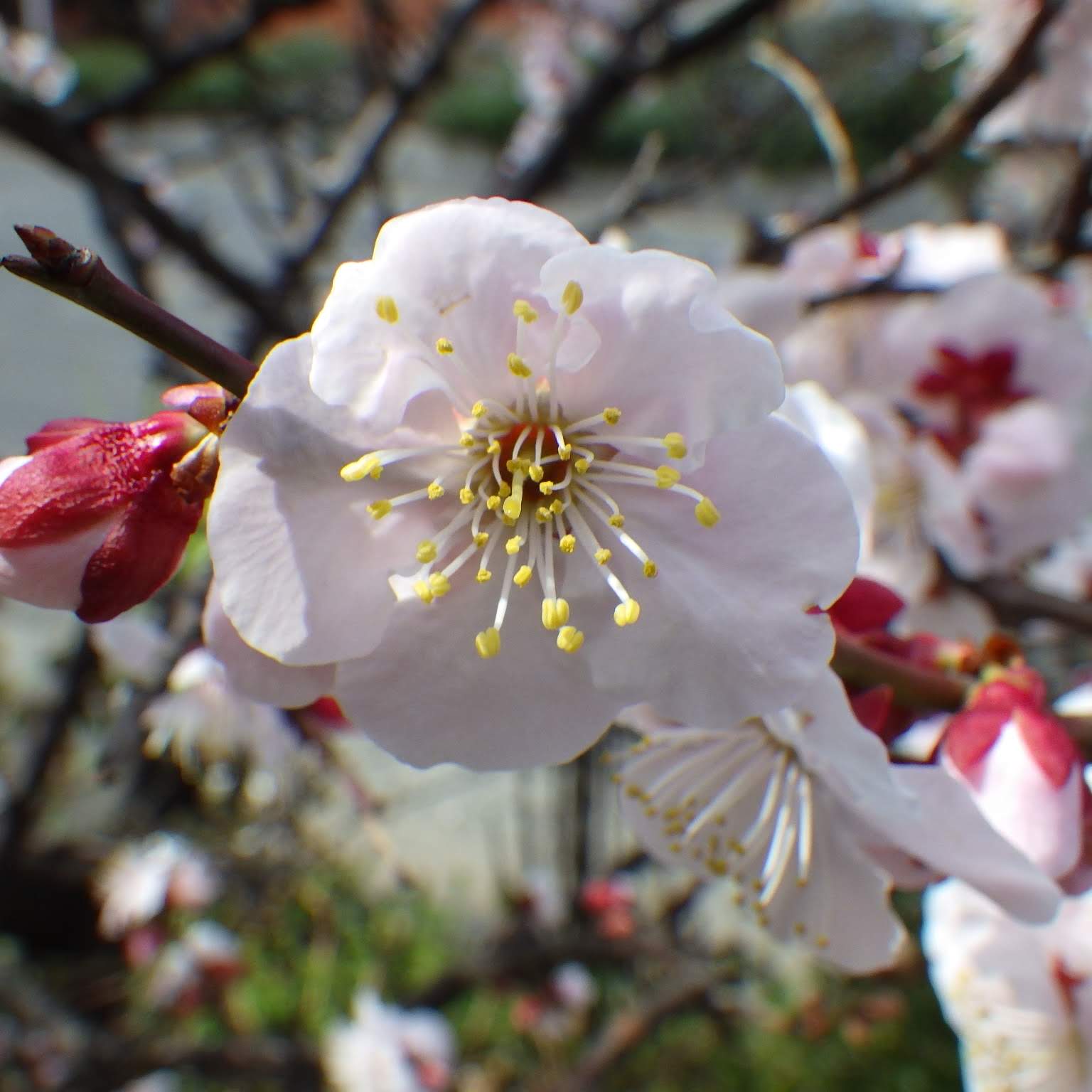
In Lindera obtusiloba, the flowering period is from March to April, and before the leaves unfold, small, somewhat translucent yellow flowers bloom in clusters in an umbel-like shape. Male flowers have broadly oval perianth segments, with the outer segments about 2 mm long and the inner segments about 1.7 mm long. They are glabrous or have white hairs on the outer surface, and some have dense hairs on the inner surface. Female flowers have dense hairs on the pedicels, with broadly oval perianth segments, with the outer segments about 1.5 mm long and the inner segments about 1.2 mm long.
Kuromoji flowers in April, blooming simultaneously with the unfolding of the leaves. Small, yellowish-green flowers grow in clusters, and the flower stalks are hairy. The male flowers have oval-shaped perianth segments about 3 mm long, while the female flowers have slightly smaller perianth segments. Both fall off after flowering. The staminodes are smaller than the glands.
Japanese spicebush (Lindera umbellata) flowers in April. It is dioecious, but only female plants exist, and it bears fruit without male plants. Several short pedicels densely covered with silky hairs extend from between the newly unfolding leaves, bearing small, pale yellow flowers. The flowers are broadly oval, about 1.5 mm long, and fall off after flowering. The ovary and style of the female flower protrude from the perianth segments.
In Lindera obtusiloba, the flowering period is from March to April, with small yellow flowers clustered in an umbel-like shape before the leaves unfold. The inflorescence is sessile. The male inflorescence is larger than the female inflorescence and has more flowers. The male flowers themselves are also larger. The pedicels are 1.2 to 1.5 cm long and densely covered with pale brown hairs. The perianth segments are oval-shaped, about 3.5 mm long in male flowers and about 2.5 mm long in female flowers, and both fall off after flowering.
In Lindera obtusiloba, the flowering period is typically from March to April, with yellow flowers blooming before the leaves open. The male inflorescence has more flowers than the female inflorescence. Male flowers are yellow, with perianth segments about a mm long. Female flowers are slightly smaller, with a white stigma protruding from the pistil.
While there are some slight differences, you can generally consider them to be the same type of flower.
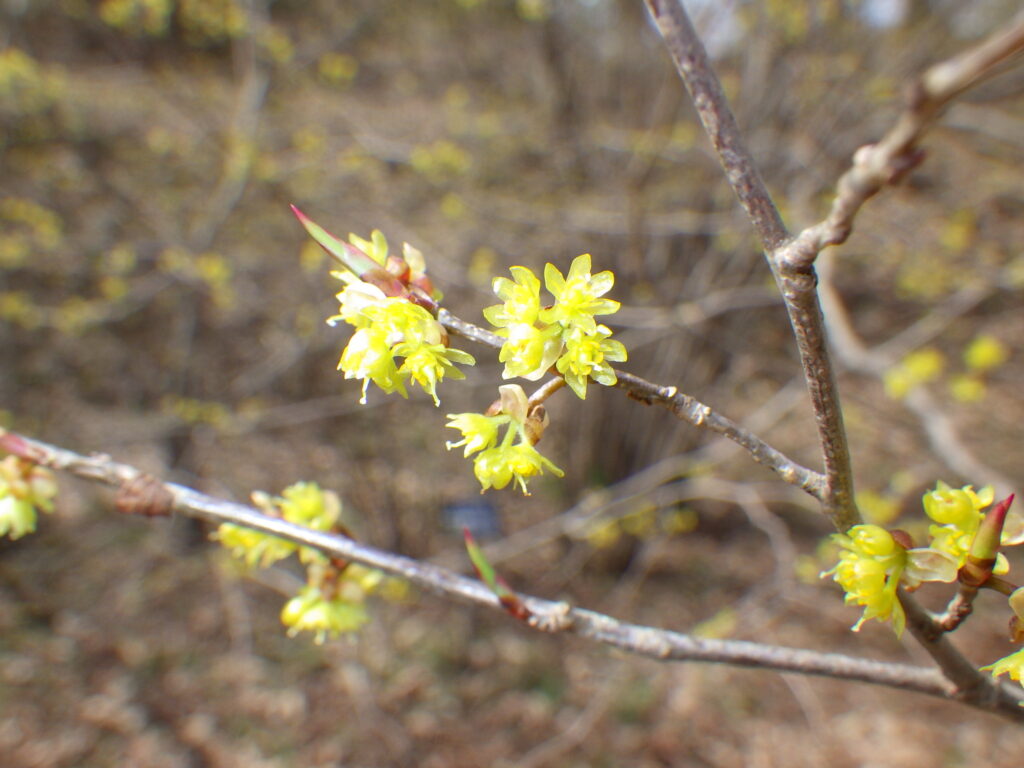
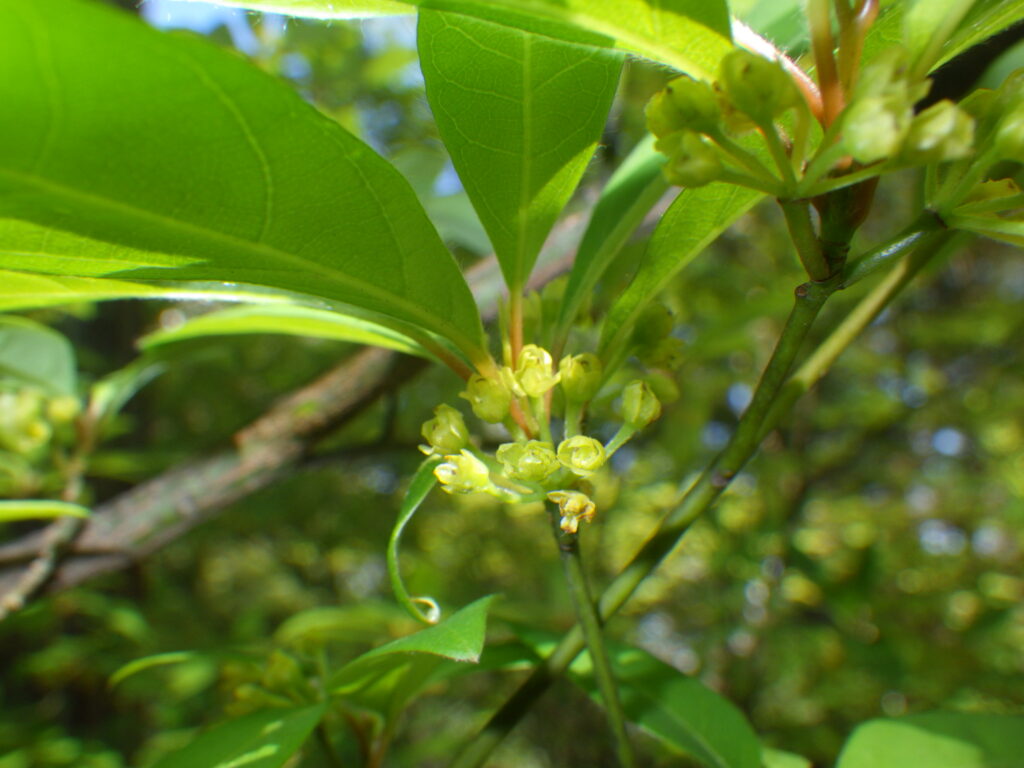

Only *Lindera umbellata* was a cloned plant!?
However, there is one exception. Can you guess which one it is?
That's Japanese spicebush (Lindera umbellata). Despite being dioecious (having separate male and female plants), Japanese spicebush only has female plants and produces fruit without any male plants.
What does this mean? In relation to this, there is an interesting study conducted jointly by Osaka City University, Osaka Prefecture University, and Gifu University in Japan (Nakamura et al., 2021).
In this study, we collected samples of parent plants and seeds of Lindera obtusiloba, Lindera umbellata, Lindera japonica, and Lindera umbellata from Tohoku (Miyagi) to Kyushu (Kumamoto) and detected numerous single nucleotide polymorphisms (SNPs) in their DNA sequences.
As a result, it was revealed that only in *Lindera umbellata* was the seed genotype an exact copy of that of the mother tree, and that there was almost no variation among samples from across Japan.
In other words, all the Japanese spicebush trees were clones. Why is this the case?
In China, the sex ratio is highly skewed, with female plants being dominant, and it is believed that genetic diversity is maintained through sexual reproduction by a small number of male plants.
It is known that Lindera obtusiloba was introduced to Japan during the prehistoric Pleistocene epoch. It is likely that only female plants invaded at that time and reproduced through parthenogenesis, resulting in all of them becoming clones. This explains why only female Lindera obtusiloba plants are found in Japan.
Plants that exist as a single clone over such a wide area are known as "megaclones."
The impact of the megaclonal nature of *Lindera umbellata* on its ecology is not yet fully understood, but it is certainly very interesting.
70% of the insects that visit the flowers of Lindera obtusiloba and Lindera umbellata are three species of beetles!?
Genetic diversity is maintained in the Lindera genus other than Lindera obtusiloba. This means that pollination is carried out by insects. What kind of insects visit them?
Of these, *Lindera obtusiloba* and *Lindera umbellata* have been studied in detail in Japan. Both species bloom before their leaves appear, and although there are slight differences in their habitat preferences, they can sometimes coexist in the same area.
Although the flowering periods of Lindera obtusiloba and Lindera umbellata are stated above as being the same, a closer look reveals that Lindera obtusiloba blooms about two weeks earlier than Lindera umbellata. The flowering period for each plant lasts approximately two weeks.
Furthermore, male flowers produce nectar and pollen, while female flowers only produce nectar. Logically, insects should prefer to visit male flowers because they offer more rewards.
Therefore, there may be differences in the types of pollinating insects that visit the flowers of Lindera obtusiloba and Lindera umbellata, specifically between the male and female flowers of each species.
A survey was conducted to investigate the types of pollinating insects that visit the flowers, and it was found that, surprisingly, beetles are particularly fond of visiting both male and female flowers of Lindera obtusiloba (Tokumoto et al., 2019). Specifically, three species— Aphthona perminuta, Meligethes flavicollis, and Anaspis marseuli —accounted for more than 751 TP3T. These are known to be beetles that become active from early spring.
On the other hand, while many insects visited both the male and female flowers of the Lindera obtusiloba plant, the three species *Tsubunomihamushi*, *Muneakachibikeshikisui*, and *Kurofunagatahanananomi* accounted for less than 62% of the visits. Instead, other beetles and flies were more numerous.
This is likely because the flowering of *Lindera obtusiloba* is delayed by about two weeks, leading to increased activity of other insect species besides the three mentioned, and consequently, a slightly higher proportion of them visiting the area.
The change in flowering time could be seen as an effect of preventing competition, or it could simply be a result of adapting to the most preferred habitat. Interpreting this result is difficult, but it is an interesting difference between the two species.
Were beetles visiting flowers in search of a partner?!
By the way, what do the beetles that visit the Lindera obtusiloba and Lindera umbellata do?
One might naturally assume that, like most flowers, they are coming to feed on pollen.
However, while we often observed them feeding on pollen from Lindera obtusiloba, we also discovered that they frequently engaged in mating behavior on the flowers of Lindera praecox.
This is also related to the fact that the flowering of Lindera obtusiloba is delayed by about two weeks. It is thought that this is due to the life cycle of beetles that are active in early spring, mating when Lindera praecox is in bloom during the still-cold period, and then visiting Lindera obtusiloba and other plants' flowers when it gets a little warmer and the flowers begin to bloom.
But why are only beetles visiting? This study doesn't explicitly state the mechanism, but it's likely that because these flowers bloom in early spring, they are valuable and conspicuous to beetles that are active in early spring. Additionally, flowers with a strong sheen tend to collect light and become warmer, so perhaps the flowers of Lindera obtusiloba and Lindera umbellata also create warmth, and the beetles are drawn to it, which may then lead to pollination and mating behavior.
Mating through flower visits like this is also known to occur in other beetle species.
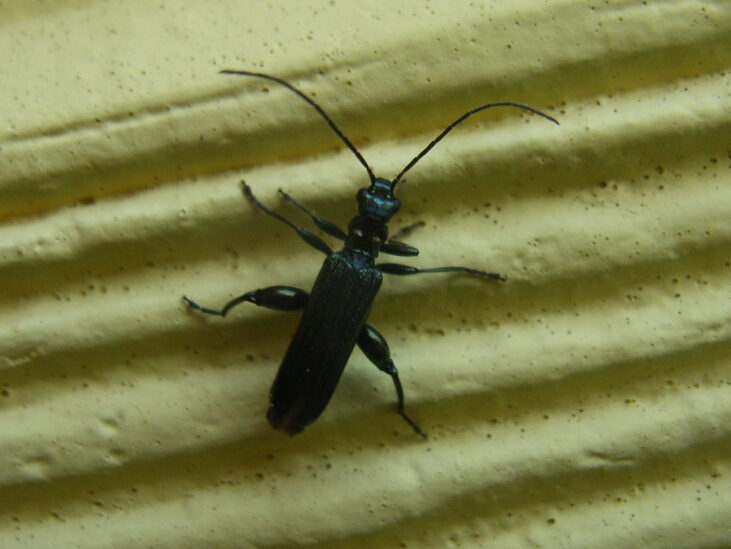
However, since flies are also active during this time of year, the abundance of beetles is certainly a strange result. Further research may shed more light on this.
Are the female flowers mimicking the male flowers?
So, were there any differences in the pollinating insects that visited male and female flowers?
While the total number of insects visiting male flowers was higher, the proportion of different species of pollinating insects remained largely unchanged for Lindera obtusiloba, and for Lindera umbellata, there was a decrease in the number of two species, *Sapium erythrostictum* and *Platanthera japonica*, but there were no changes for other insects.
The fact that insects are visiting female flowers indicates that pollination is occurring properly, but why do insects visit female flowers, which offer less reward?
This is thought to be because the Lindera obtusiloba plant uses "mimicry" by making its female flowers look exactly like the male flowers.
As mentioned above, female flowers retain staminodes, which are vestigial stamens that do not produce pollen. Although these may seem to have no purpose, it is thought that they remain to deceive insects.
This type of mimicry of female flowers is called "intersexual mimicry," and it is a clever strategy known in various plants, including akebia.
The fruit is a berry and is dispersed by birds.
All plants in the genus Lindera have berries.
The berries of Lindera obtusiloba are spherical, about 15 mm in diameter, and ripen to a yellowish-brown color. When ripe, they split irregularly. As the name suggests, these fruits contain a lot of oil (however, this is common to many species in the Lindera genus).
The berries of the Japanese spicebush (Lindera umbellata) are spherical, about 5 mm in diameter, and ripen to black in September or October.
The berries of the Japanese honeysuckle are spherical, about 7 mm in diameter, and ripen to black in October and November.
The berries of the Japanese spicebush (Lindera obtusiloba) are spherical, about 8 mm in diameter, and ripen from red to dark purple in September and October.
The berries of the Japanese spicebush (Lindera umbellata) are spherical, 10-12 mm in diameter, and ripen to a yellowish-brown color in autumn. When ripe, they split open irregularly.
It is thought that birds disperse the seeds because passing through their digestive tracts increases their germination rate (Tokumoto et al., 2019), but it is still unclear how the differences in the characteristics of the fruits of each species are related.
References
Hayashi, Masayuki. 2014. 1100 Tree Leaves Identified Through Real-Life Scans. Yama-kei Publishers, Tokyo. 759pp. ISBN: 9784635070324
Kanagawa Prefecture Flora Survey Association. 2018. Kanagawa Prefecture Flora 2018 (Electronic Edition). Kanagawa Prefecture Flora Survey Association, Odawara. 1803pp. ISBN: 9784991053726
Nakamura, M., Nanami, S., Okuno, S., Hirota, SK, Matsuo, A., Suyama, Y., … & Itoh, A. 2021. Genetic diversity and structure of apomictic and sexually reproducing Lindera species (Lauraceae) in Japan. Forests 12(2): 227. https://doi.org/10.3390/f12020227
Tokumoto, Y., Matsushita, M., Kishimoto-Yamada, K., Nikkeshi, A., Isogimi, T., & Nakagawa, M. 2019. Floral visitors and reproductive success in two sequentially flowering Lindera shrubs (Lauraceae) of central Japan. Journal of Forest Research 24(1): 42-51. ISSN: 1341-6979, https://doi.org/10.1080/13416979.2018.1542764
Wu, X., Raven, PH, & Hong, D. (Eds.). 2008. Flora of China (Vol. 7 Menispermaceae through Capparaceae). Science Press, Beijing, and Missouri Botanical Garden Press, St. Louis. xii, 499pp. ISBN: 9781930723818
Yoneyama, K. 1992. Aburachan (Lindera obtusiloba) in the foothills of Mt. Hakusan. Hakusan 19(4): 2-5. ISSN: 0388-4732, https://www.pref.ishikawa.lg.jp/hakusan/publish/hakusan/documents/hakusan19-4.pdf
Source
This article is a significantly expanded version of a piece originally published in the following book.