Daphne odora and pepper tree both belong to the genus Daphne in the family Thymelaeaceae, and share the characteristics of wrinkled, distorted leaves and fragrant flowers. While they may seem similar, Daphne odora is only cultivated, while pepper tree only grows wild, and there are several morphological differences, making them easy to distinguish. Differences between Daphne odora, lilac, gardenia, and rhododendron have also been studied, but they are not very similar as plants, only having somewhat similar names. The reason why the fragrance of the flowers evolved is undoubtedly for insects, but unfortunately, there is insufficient research on which insects they are for. This article will explain the classification, morphology, and ecology of Daphne odora and pepper tree.
What are Daphne odora and Pepper Tree?
Daphne odora, also known as daphne, rinchoge, zuiko, or shichiriko, is an evergreen shrub native to southern China and Vietnam. It was introduced to Japan during the Muromachi period and is cultivated as an ornamental plant.
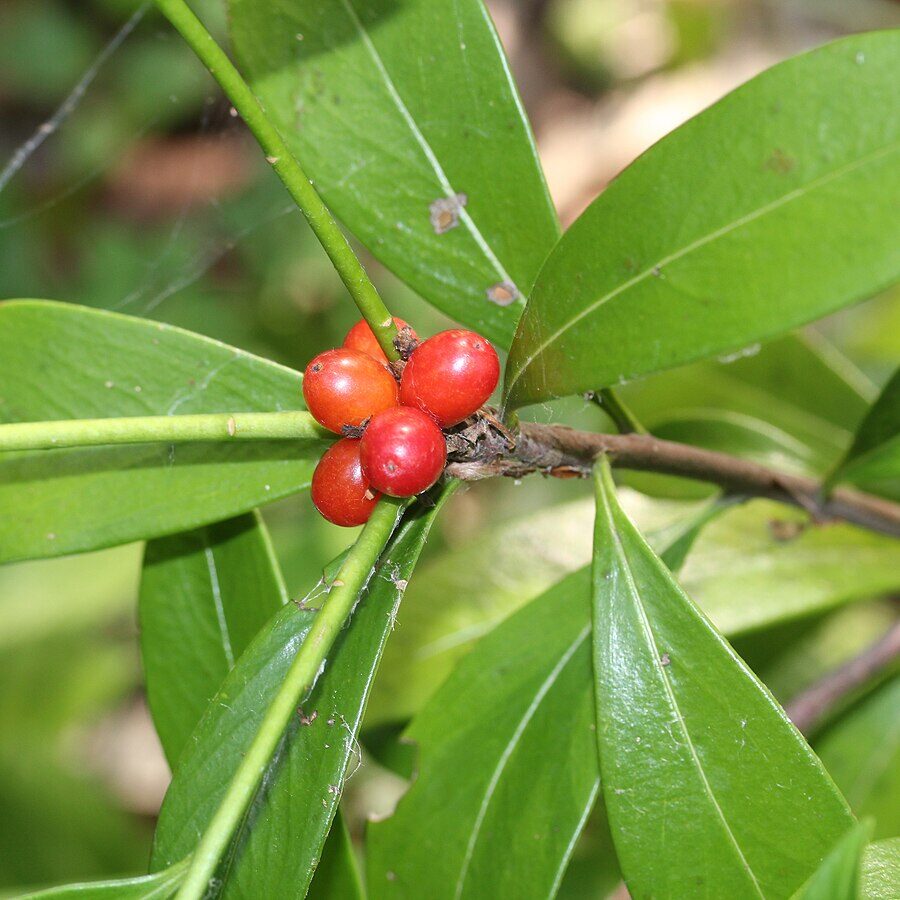
Daphne kiusiana, also known as the pepper tree, is an evergreen shrub distributed in the warm temperate zones of southern Kanto to Okinawa in Japan, as well as in southern China, Taiwan, and Korea. It grows in evergreen forests in mountainous and hilly areas. Its Japanese name comes from the fact that its fruit is extremely spicy, like pepper.
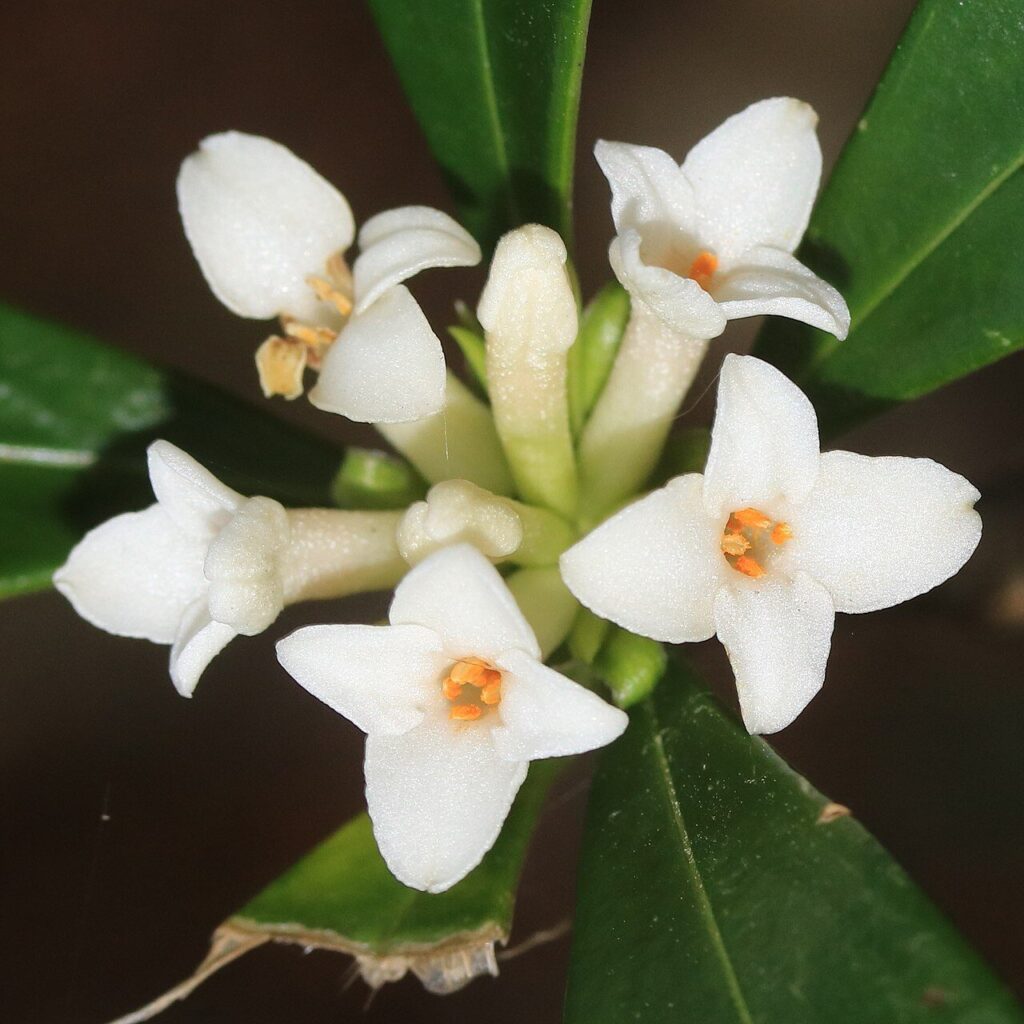
All of these plants belong to the genus Daphne in the family Thymelaeaceae. They share the characteristics of having wrinkled, distorted leaves, emitting a pleasant fragrance in spring (March-April), and producing flowers with four-lobed, fleshy calyxes (with reduced petals). Their fruits are also berries.
Daphne, in particular, is frequently seen planted in gardens when walking around town, and can be said to be a flower that signals the arrival of spring. Its Japanese name comes from the fact that it has a pleasant scent like the agarwood (jinko) combined with the fragrance of cloves.
While not many Daphne species are cultivated, the Daphne genus has many varieties, and some people seem curious about the differences between it and the pepper tree (Daphne odora).
What is the difference between Daphne odora and pepper tree?
There are several differences between Daphne odora and Pepper tree (Hayashi, 2019; Yamashita, 2010).
First, it's important to understand that daphne is an introduced species and does not grow wild; it is only cultivated in gardens for ornamental purposes. In contrast, pepper trees are native species and only grow wild; they are not typically cultivated for ornamental purposes.
There are also morphological differences.
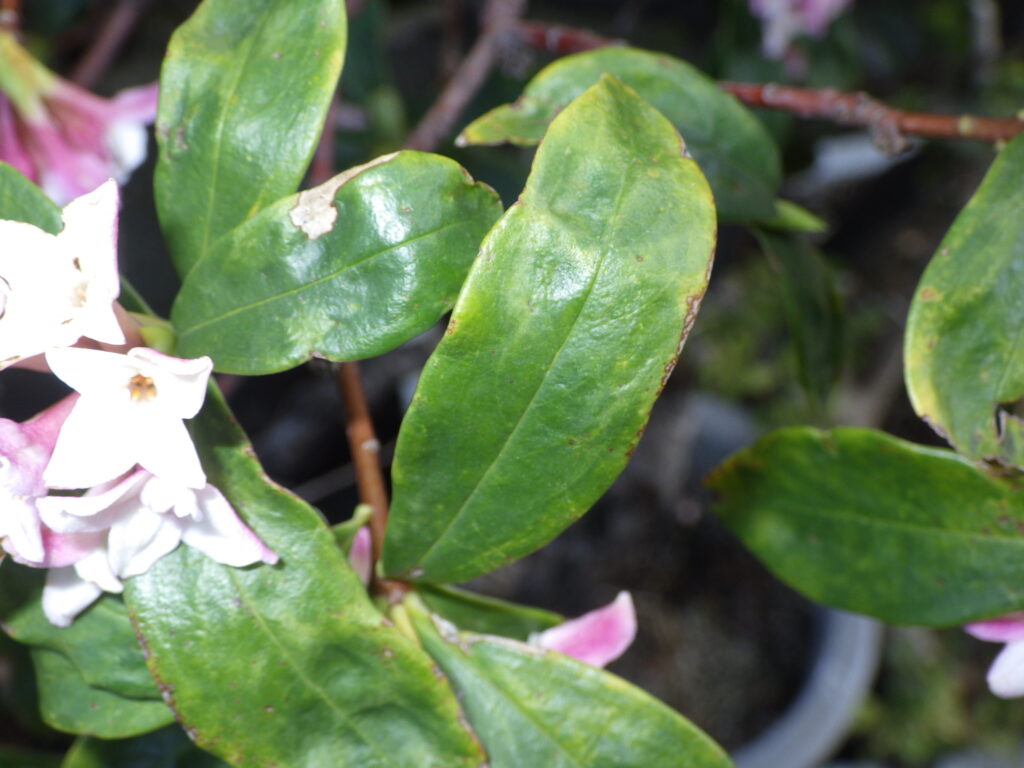
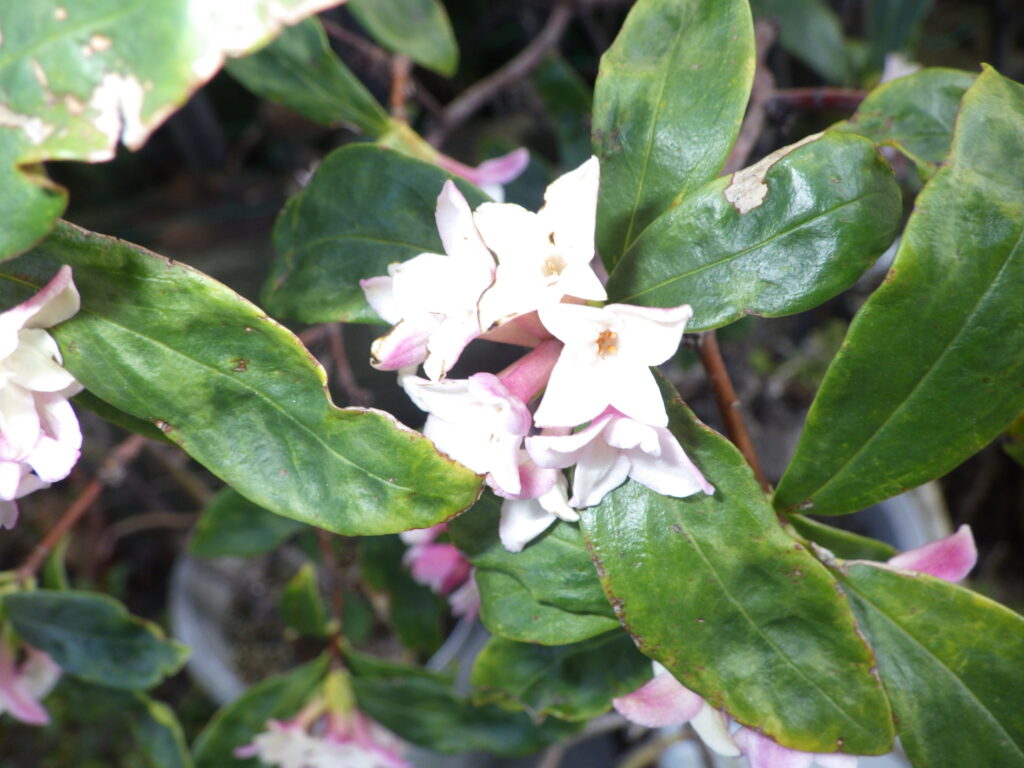
Daphne has blunt leaf tips and thick leaves overall, while pepper has sharply pointed leaf tips and thinner leaves overall.
Furthermore, regarding the flowers, while they lack petals and have sepals, the outer surface of the sepals of Daphne odora is hairless, whereas that of Pepper tree (Daphne odora) is hairy.
Daphne odora is dioecious, but most of the plants in Japan are male and female, with very few females. In contrast, pepper trees are mostly monoecious, with females being found only occasionally.
This should be enough to distinguish them. The Daphne genus also includes other species such as Daphne odora, Daphne sieboldii, and Illicium anisatum, but they look quite different, so we will omit them here.
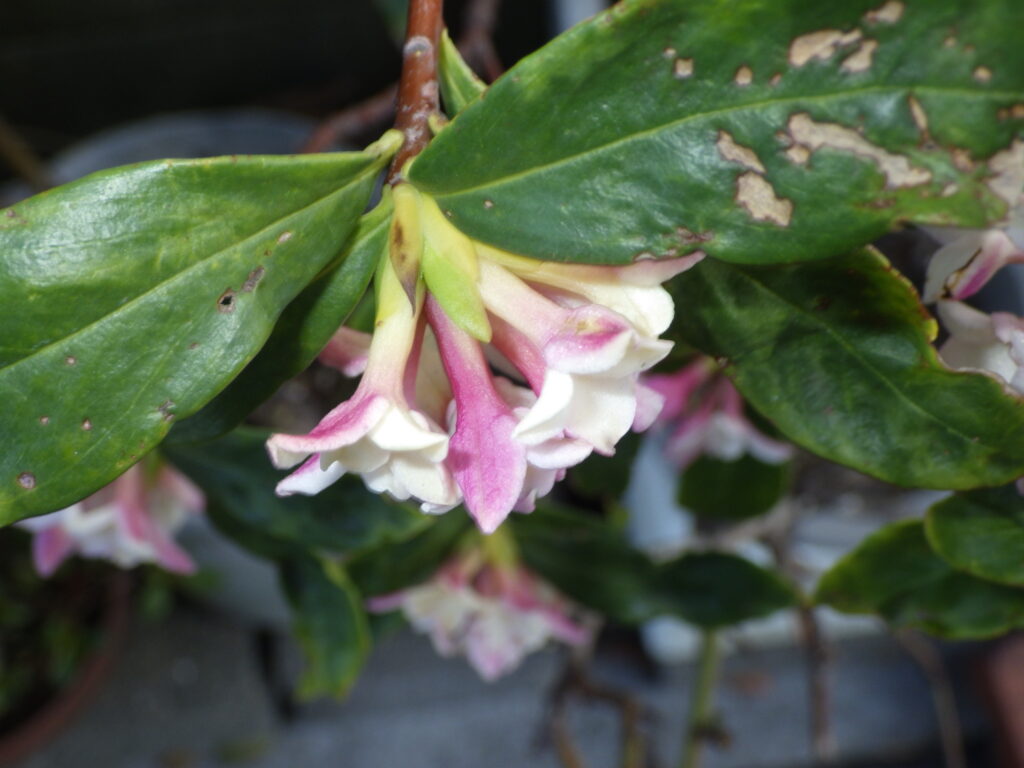
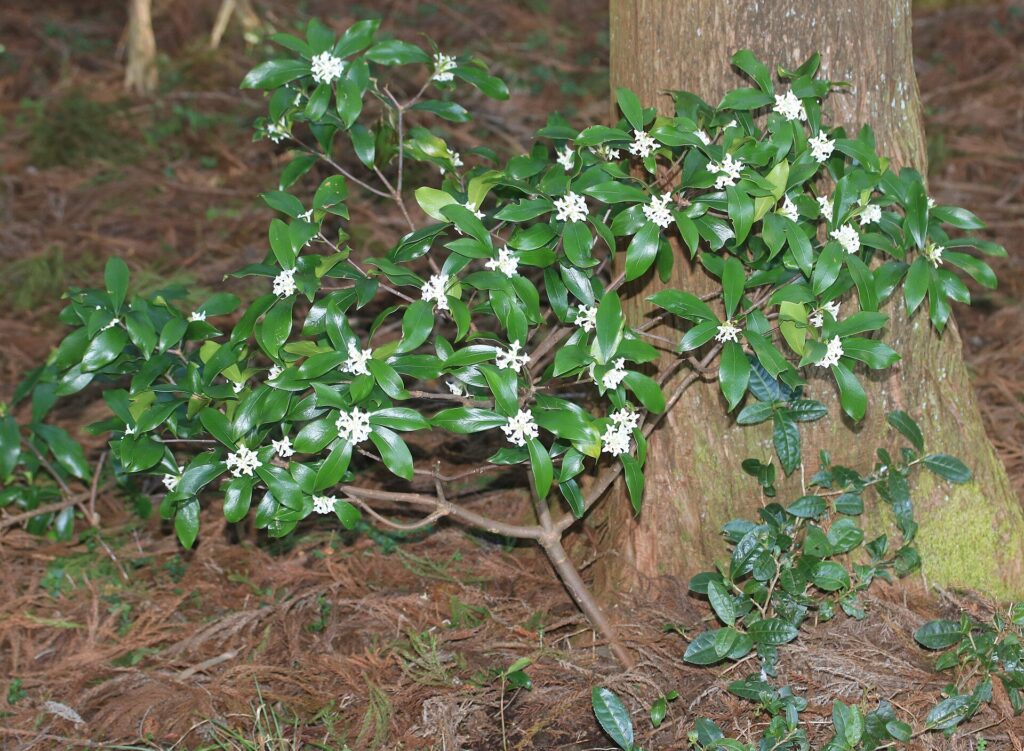
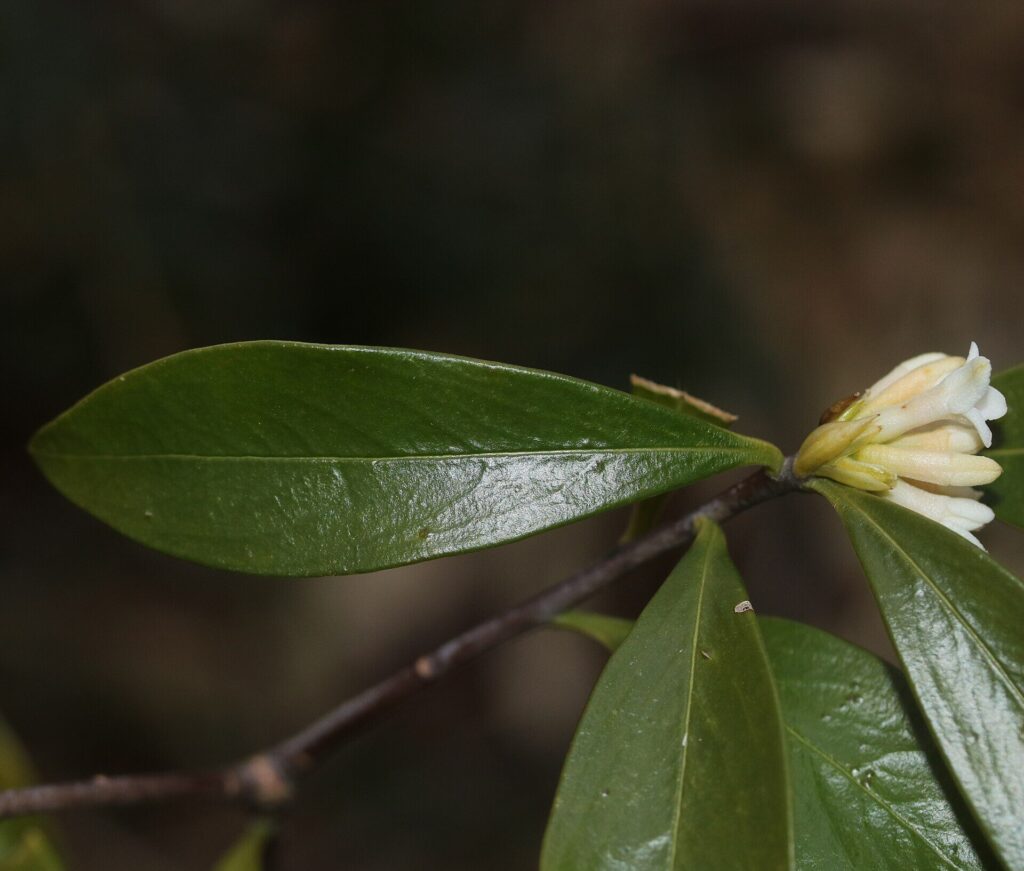
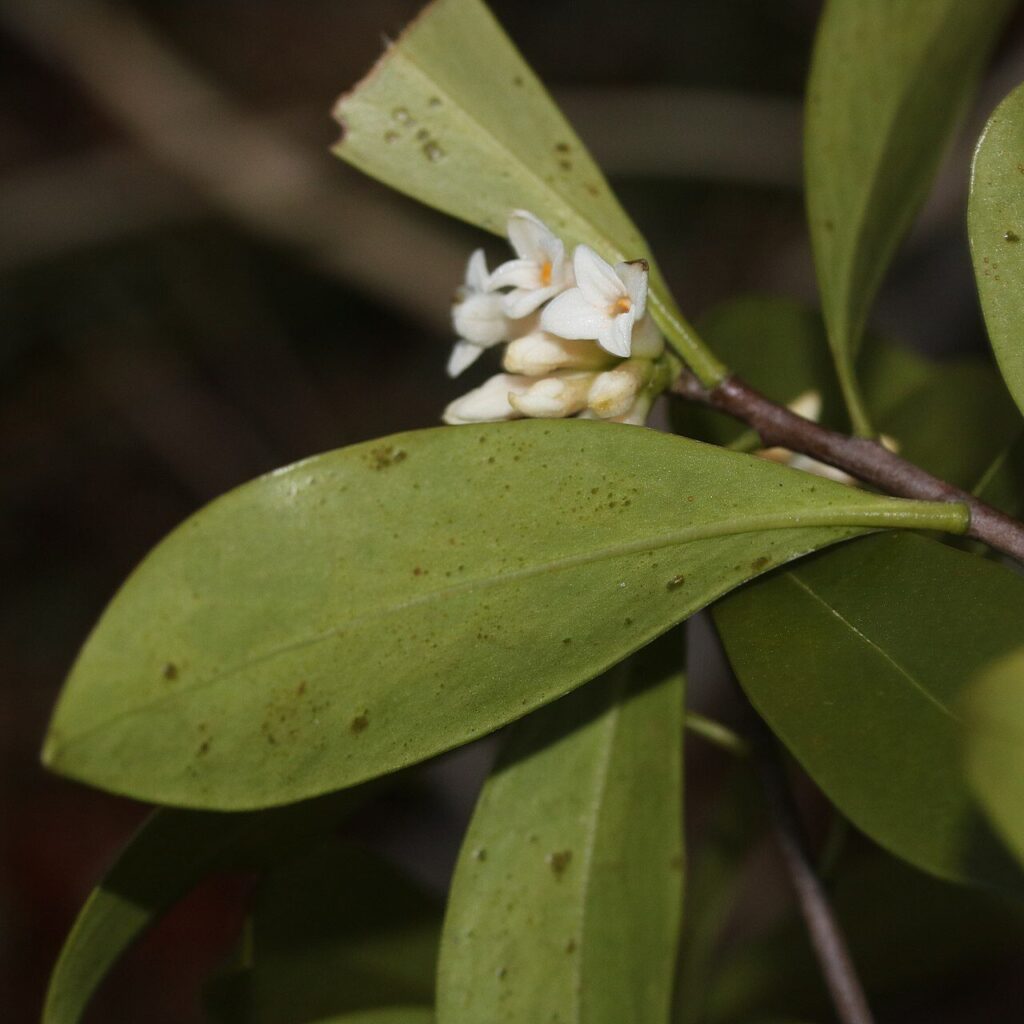
What is the variety of daphne?
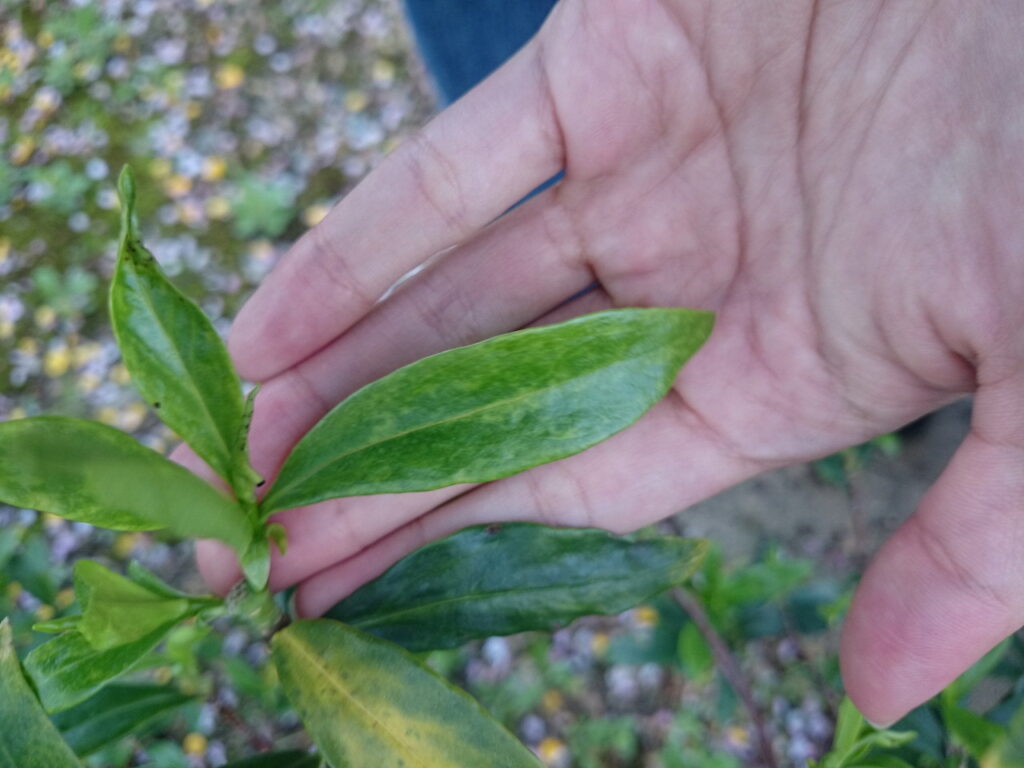
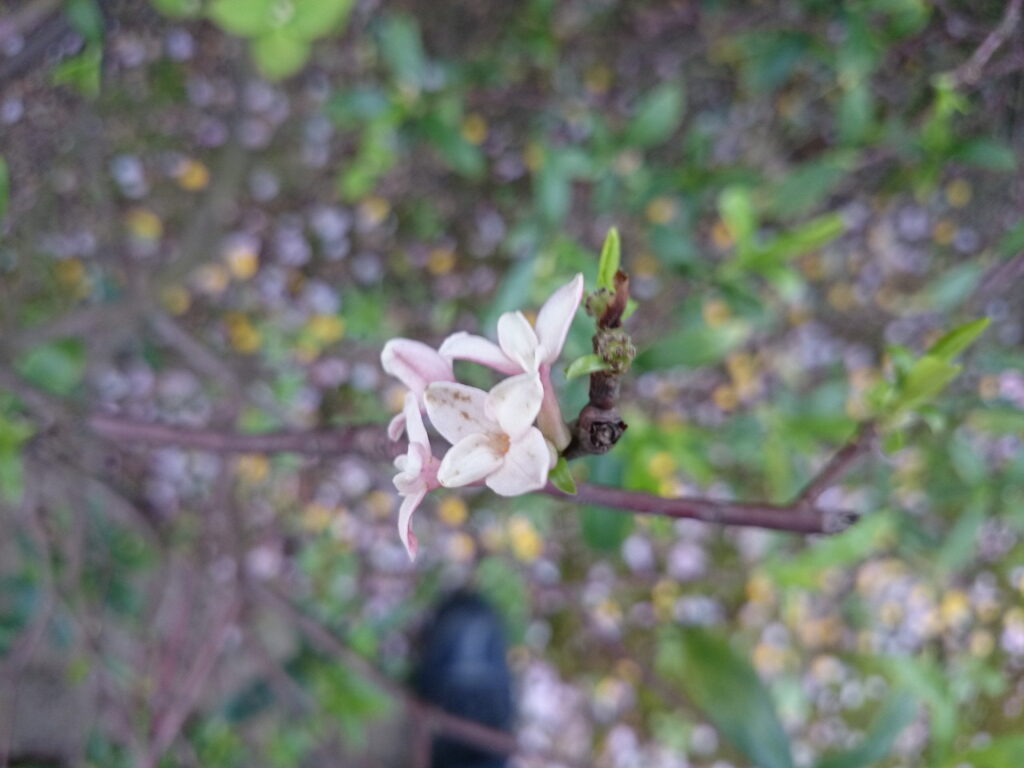
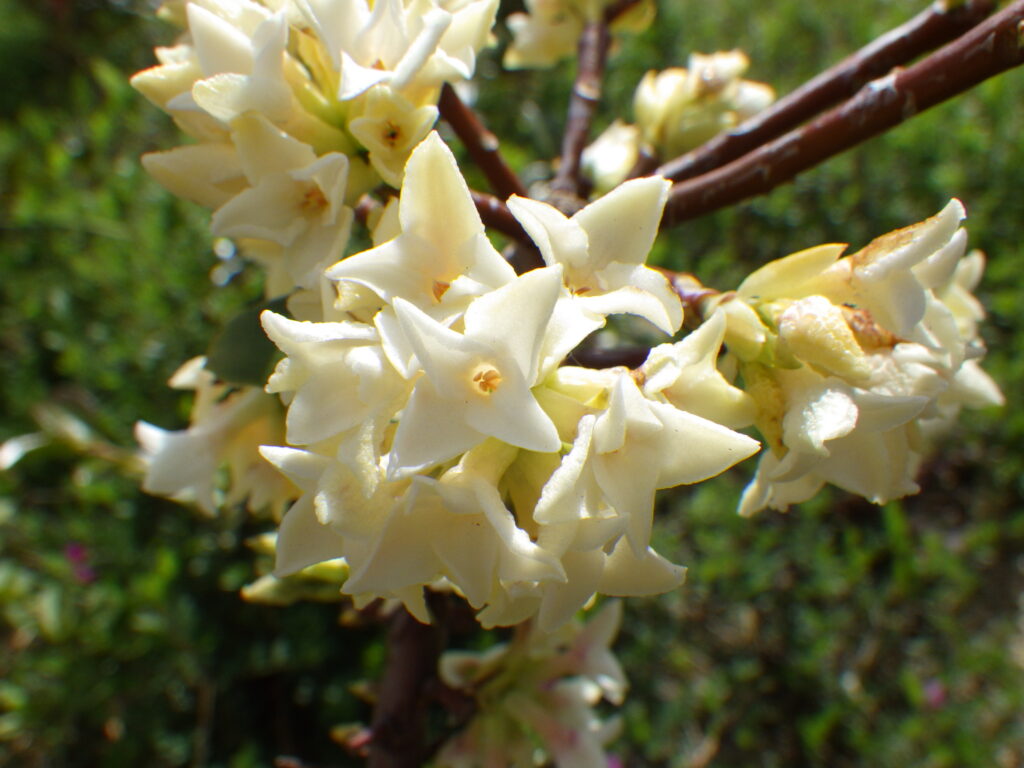
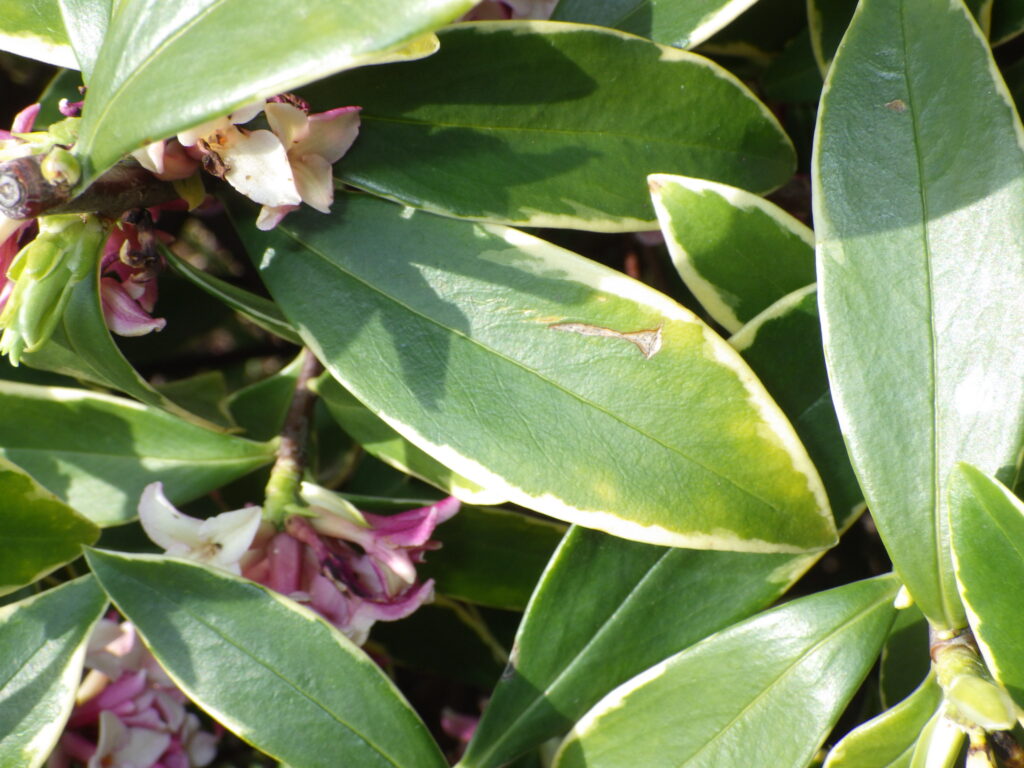
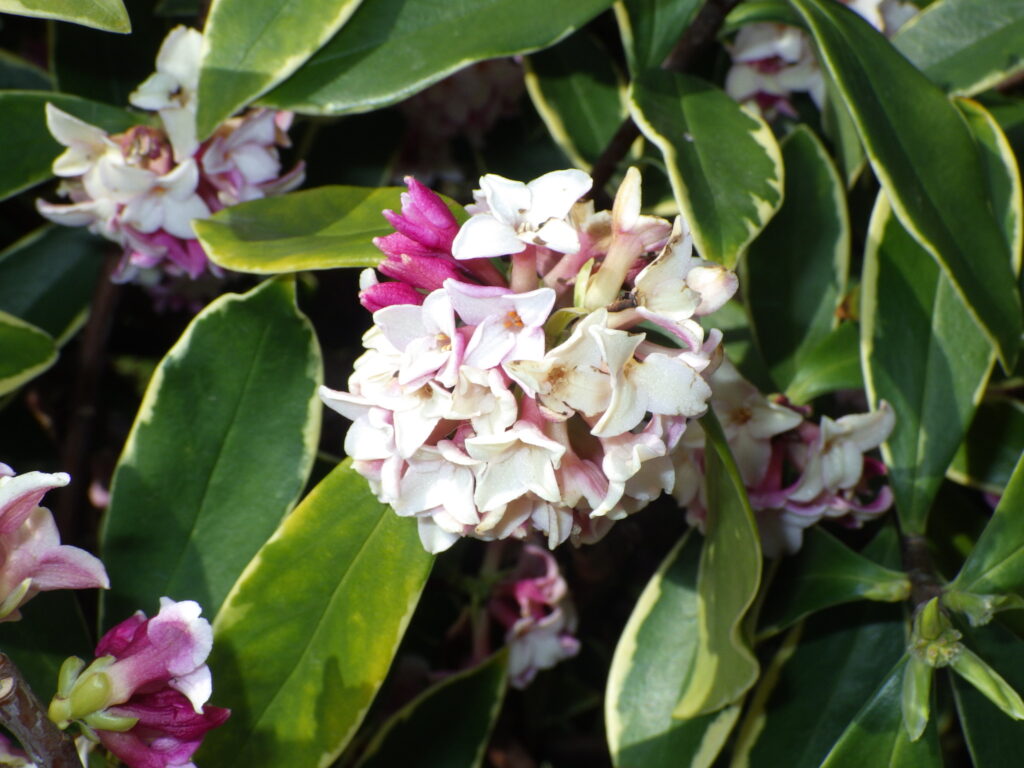
Cultivars of Daphne include 'Shirobana-jinchouge' (white-flowered Daphne) f. alba, which has white flowers; 'Usuiro-jinchouge' (pale-colored Daphne) f. rosacea, which has light-colored flowers; and 'Marginata' (marginal-edged Daphne), which has white markings on both sides of its leaves.
What are the differences between daphne, lilac, white jasmine, gardenia, and rhododendron?
It seems that people often search for the differences between daphne and other plants such as lilac, white jasmine, gardenia, and rhododendron.
These types may not seem very similar to those familiar with them, but their similar names might cause confusion. I'll briefly explain them.
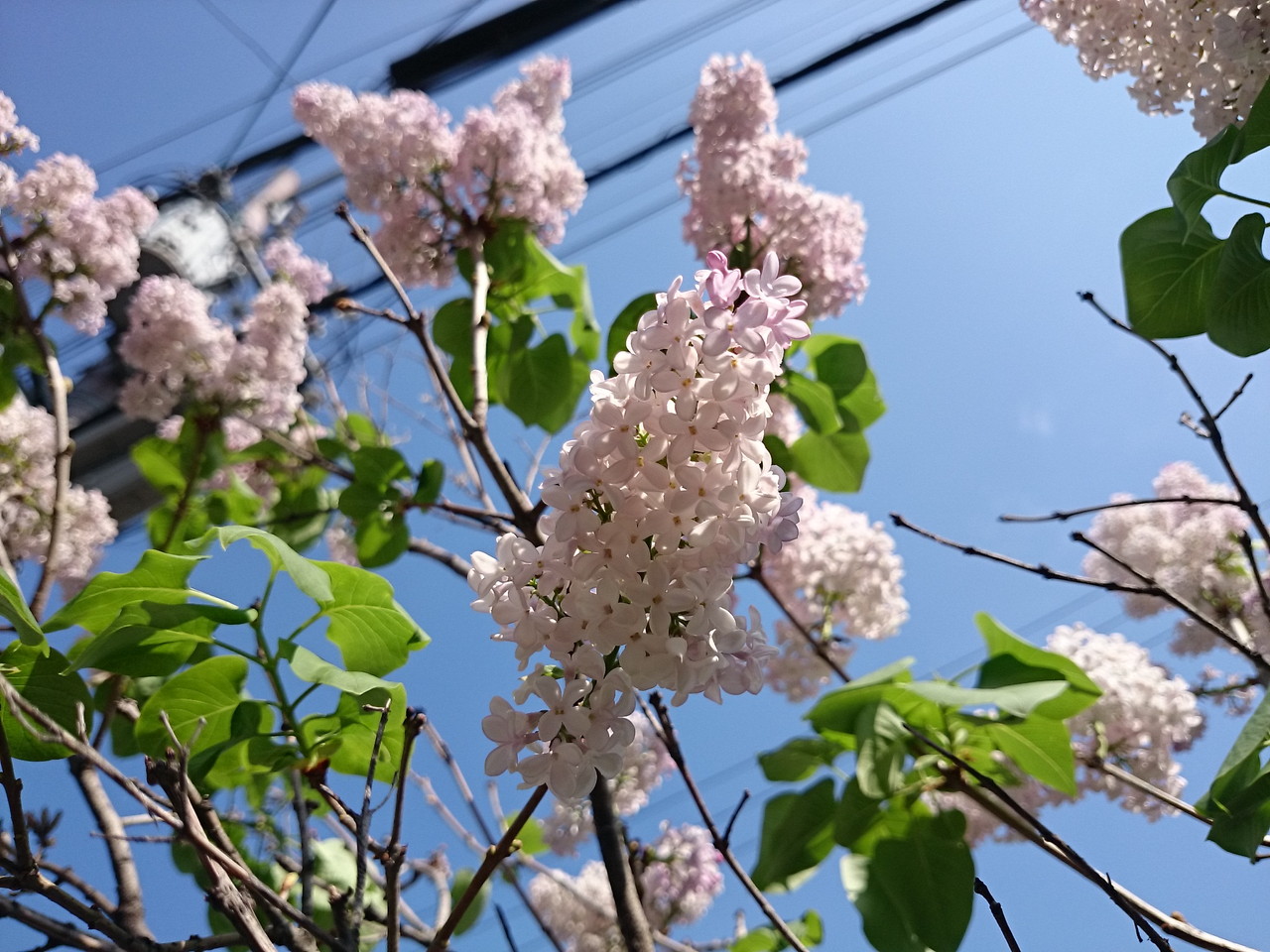
Lilac, a member of the Oleaceae family, has the standard Japanese name Murasaki-hashidoi (紫丁香花・洋丁香). The kanji characters are similar, which may lead to confusion, but its leaves are spade-shaped and its flowers are purple.
The white jasmine (Serissa japonica), a member of the Rubiaceae family, is named for its clove-shaped white flowers. It may be confused with the other species because they share the same "chouge" (butterbur) name, but it has a calyx, five corolla lobes, and its leaves are clearly smaller than the flowers.
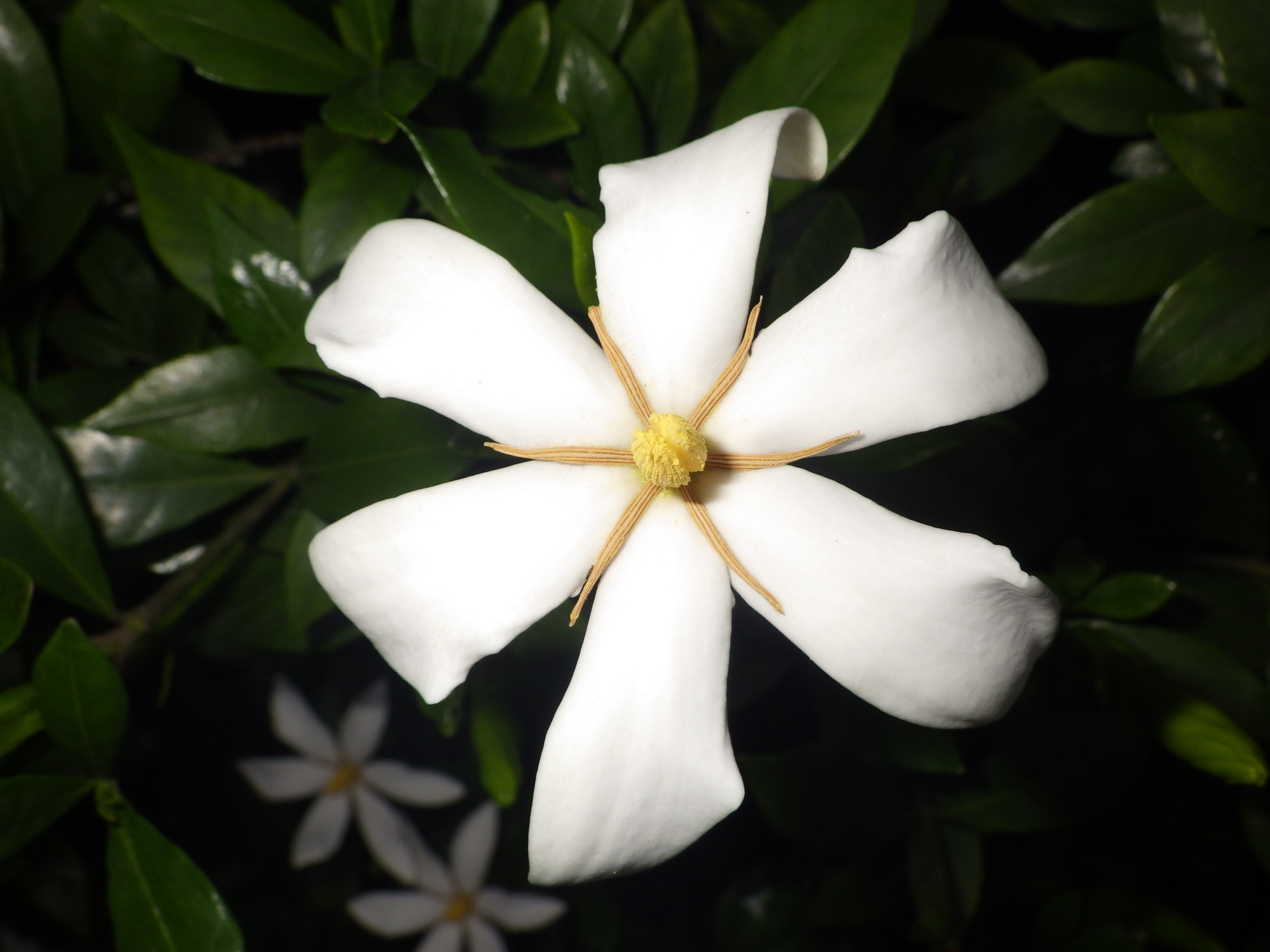
Gardenia, a member of the Rubiaceae family, is known as the "summer gardenia" in horticulture and is sometimes referred to as one of the "three great fragrant trees" along with the spring daphne and the autumn osmanthus. This may be why it is being searched for, but gardenias have pointed leaf tips, thin leaves overall, a strong gloss, and noticeably larger flowers.
I'm not sure why rhododendrons, which belong to the Ericaceae family, are being searched for, but as the classification suggests, they have fused petal flowers like azaleas, and their leaves are whorled and large.
What is the purpose of the daphne scent?
The Thymelaeaceae family is widely known for emitting strong fragrances. It is said that the flowers of the daphne plant contain 145 different compounds, including 30 hydrocarbons, 39 esters, 20 aldehydes, 8 ketones, 21 alcohols, 7 phenols, 10 acids, and 10 other compounds (Watanabe et al., 1983).
What is the purpose of this smell?
It is believed that this is primarily released to attract insects (Cardona et al., 2024).
Unfortunately, there is a lack of research on which insects are attracted to this scent.
Surveys of related species overseas have shown that they are pollinated by diurnal Hymenoptera and Diptera insects (Rodríguez-Pérez & Traveset, 2011). In Japan, there are records of Daphne miyabeana being pollinated by small wasps (Sakata & Nakahama, 2018).
However, it remains unclear whether such a strong scent is necessary solely to attract these species.
Recently, there have been records of it attracting nocturnal hawk moths (Cardona et al., 2024). Many flowers that attract hawk moths are known to be white and have a strong scent, so it is possible that it has evolved to attract both diurnal and nocturnal insects. Unfortunately, there is insufficient research on common Japanese plants such as daphne and pepper. We look forward to future developments.
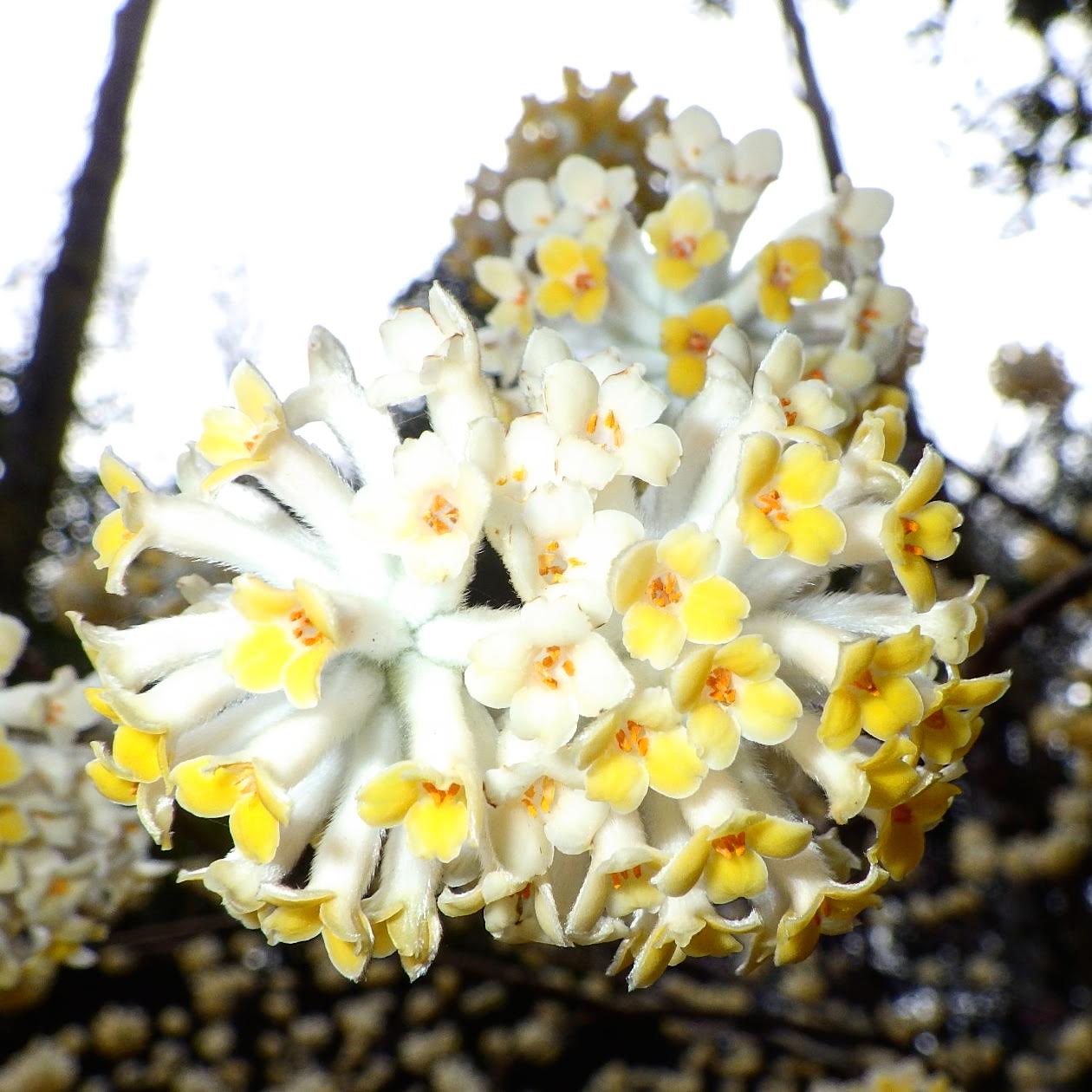
Research has also been conducted on other members of the same Thymelaeaceae family, such as Edgeworthia chrysantha and Ganpi.
References
Cardona, C., Ferriol, P., & Llorens, L. 2024. Flower scent, pollinators, and effects of proximity between plants on fruit set of the rare, threatened, and endemic Daphne rodriguezii. Plant Species Biology 40(2): 136-147. https://doi.org/10.1111/1442-1984.12496
Hayashi, Masayuki. 2019. Tree Leaves: Expanded and Revised Edition - Identifying 1300 Species Through Real-Life Scans. Yama-kei Publishers, Tokyo. 824pp. ISBN: 9784635070447
Rodríguez-Pérez, J., & Traveset, A. 2011. Influence of reproductive traits on pollination success in two Daphne species (Thymelaeaceae). Journal of Plant Research 124: 277-287. https://doi.org/10.1007/s10265-010-0373-y
Sakata, Y., & Nakahama, N. 2018. Flexible pollination system in an unpalatable shrub Daphne miyabeana (Thymelaeaceae). Plant Species Biology 33(4): 239-247. https://doi.org/10.1111/1442-1984.12212
Yamashita, Naoko. 2010. Plants of the genus Daphne with unique characteristics in their leaves and flowers. Research Information of the Kansai Branch of the Forestry and Forest Products Research Institute 96: 3. ISSN: 1348-9775, https://www.ffpri.go.jp/fsm/research/pubs/joho/documents/res_info_096.pdf
Watanabe, I., Yanai, T., Awano, KI, Kogami, K., & Hayashi, K. 1983. Volatile components of Zinchoge flower (Daphne odora Thunb.). Agricultural and Biological Chemistry 47(3): 483-490. https://doi.org/10.1080/00021369.1983.10865668