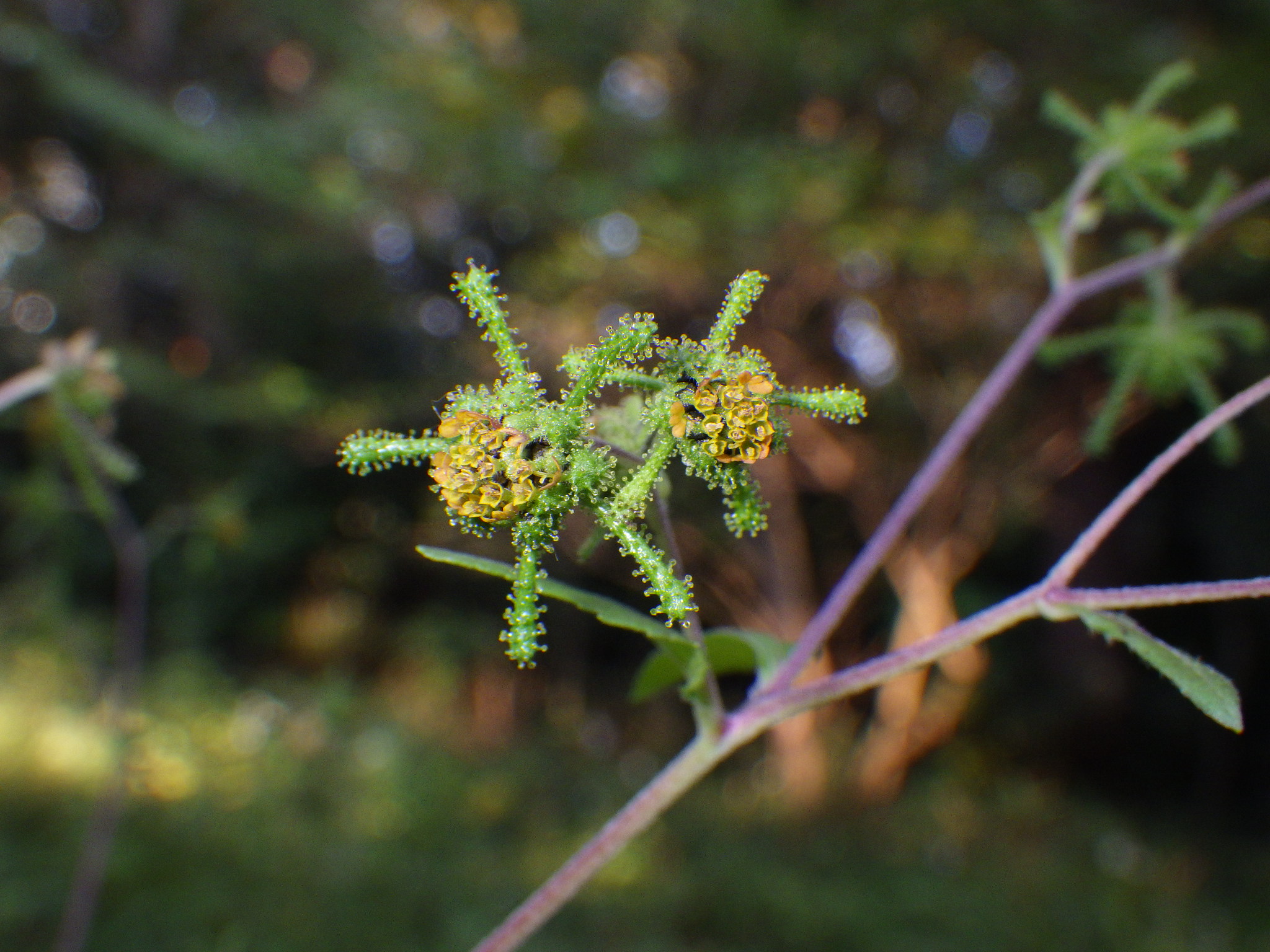
Both *Xanthium strumarium* and *Xanthium humile* belong to the genus *Xanthium* in the Asteraceae family. Their most distinctive features are their small, yellow ray florets and the presence of stalked glandular hairs on their involucral bracts. While not particularly common, both species grow in open areas, and *Xanthium strumarium* in particular was used by the Japanese as a fermented food in ancient times. However, distinguishing between them can be difficult, and some people may confuse them with *Xanthium strumarium*. *Xanthium strumarium* and *Xanthium humile* can be distinguished by the amount of hair and glandular hairs present. Although their names are similar, their flowers and fruits are completely different. It is known that the mucus-secreting involucral bracts of the *Xanthium strumarium* genus adhere to animals, allowing for seed dispersal through animal contact.
What are Menamomi and Komenamomi?
Sigesbeckia pubescens, also known as Menamomi, is an annual plant distributed in Hokkaido, Honshu, Shikoku, and Kyushu in Japan; as well as in Korea and China. It grows in fields and on road embankments in the areas of Castanopsis and Quercus and the lower part of the Beech zone (Kanagawa Prefecture Flora Survey Association, 2018). One theory suggests that it was introduced from China during the Yayoi period (Matsubara, 2021).
Sigesbeckia glabrescens, also known as Komenamomi (small porcupine roe or small female vegetable roe), is an annual plant that grows in fields and bare ground, distributed from Hokkaido, Honshu, Shikoku, and Kyushu in Japan, as well as from Korea to China.
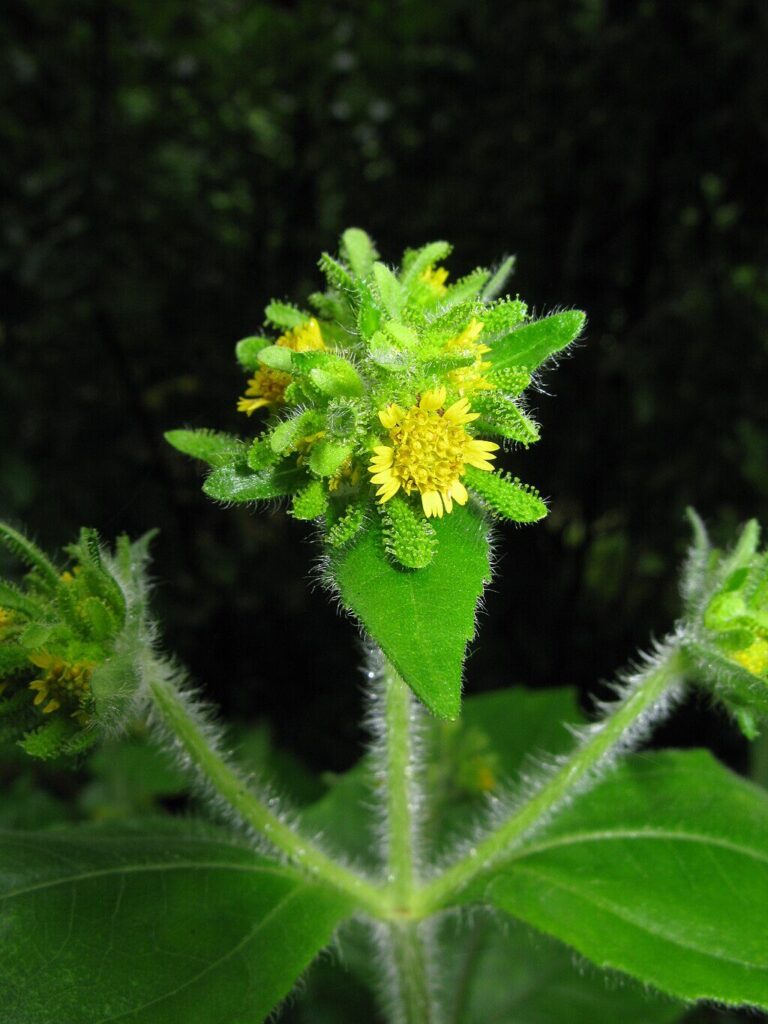
All of these species belong to the genus Menamomi in the Asteraceae family. Their most distinctive features are their small, yellow ray florets, and their spreading involucral bracts, which are stalked and covered with glandular hairs, and which fall off along with the achenes.
In short, the flowers and fruits are covered in sticky hairs. The involucral bracts are a characteristic feature of the Asteraceae family and refer to the green, leaf-like parts that surround the flower head, which is a cluster of flowers.
Neither of these two species grows everywhere, but you can occasionally see them growing in open areas. However, the methods for distinguishing between them may not be widely known.
Furthermore, at least since the Ming Dynasty in China, the unripe fruits of the cocklebur were mixed with rice koji, adzuki beans, and other medicinal herbs, kneaded by hand (called "saimomi"), and then fermented to be used as a tonic called "shinkiku" (Okutsu, 2018; Matsubara, 2021). It was named in contrast to the chrysanthemum species Xanthium strumarium subsp. sibiricum, which was also used in shinkiku, and some people may still confuse them today.
What is the difference between Menamomi and Komenamomi?
Although *Menamomi* and *Komenamomi* are similar, they can be distinguished by two main points (Kanagawa Prefecture Flora Survey Association, 2018).
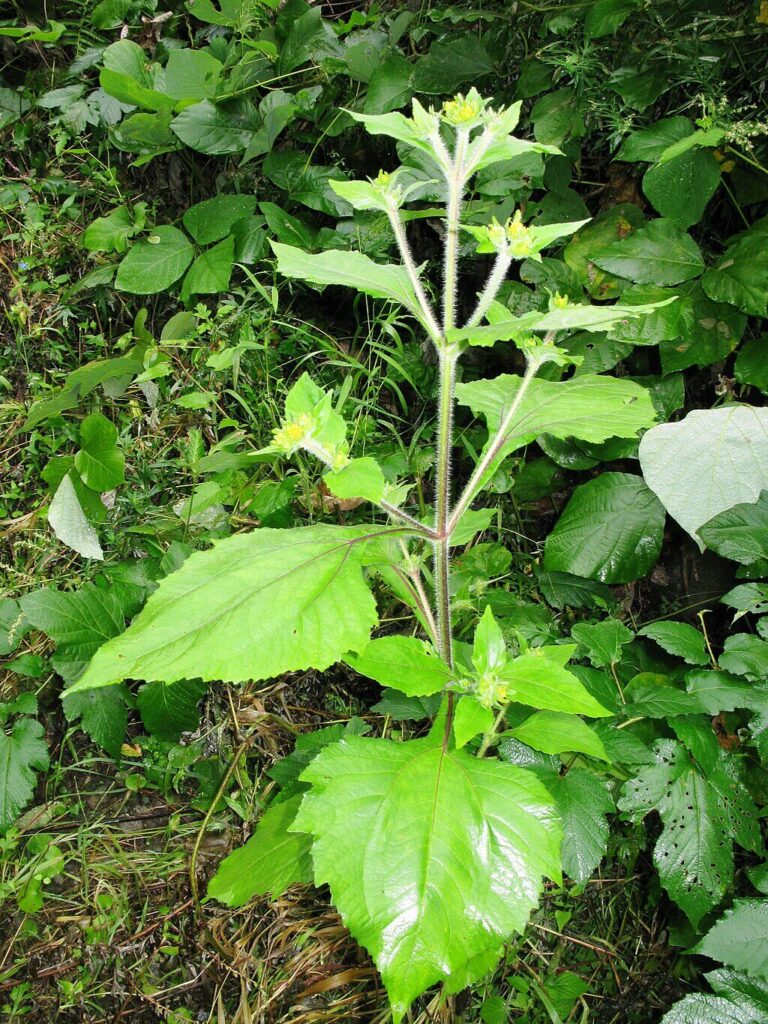
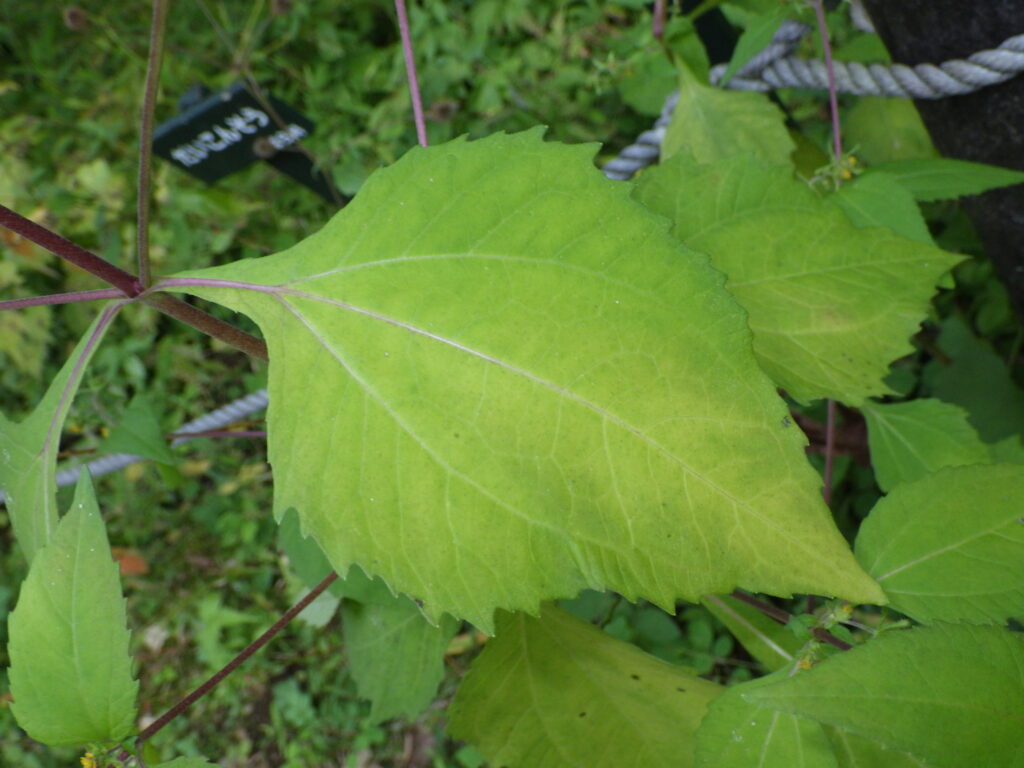
In *Menamomi*, the stems and leaves are densely covered with long hairs, and the flower stalks have stalked glands, whereas in *Komenamomi*, the stems and leaves have short hairs, and the flower stalks do not have stalked glands.
While both species have glandular hairs on their involucral bracts, it's important to note that in *Campanula punctata*, these hairs do not extend to the pedicels.
These two points are the main distinguishing features, but there is also a difference in that the achenes of *Menamomi* are 2.5-3.5 mm long, while those of *Komenamomi* are 2 mm long.
Generally, *Campanula punctata* is more common and can be seen more often than *Campanula punctata*.
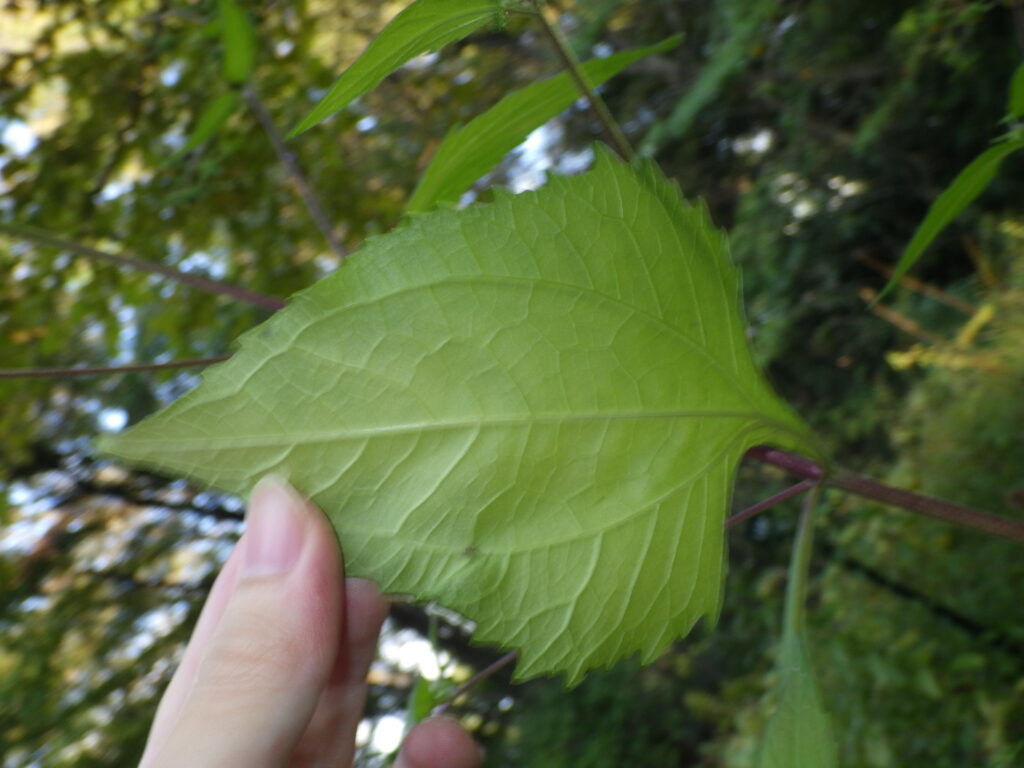
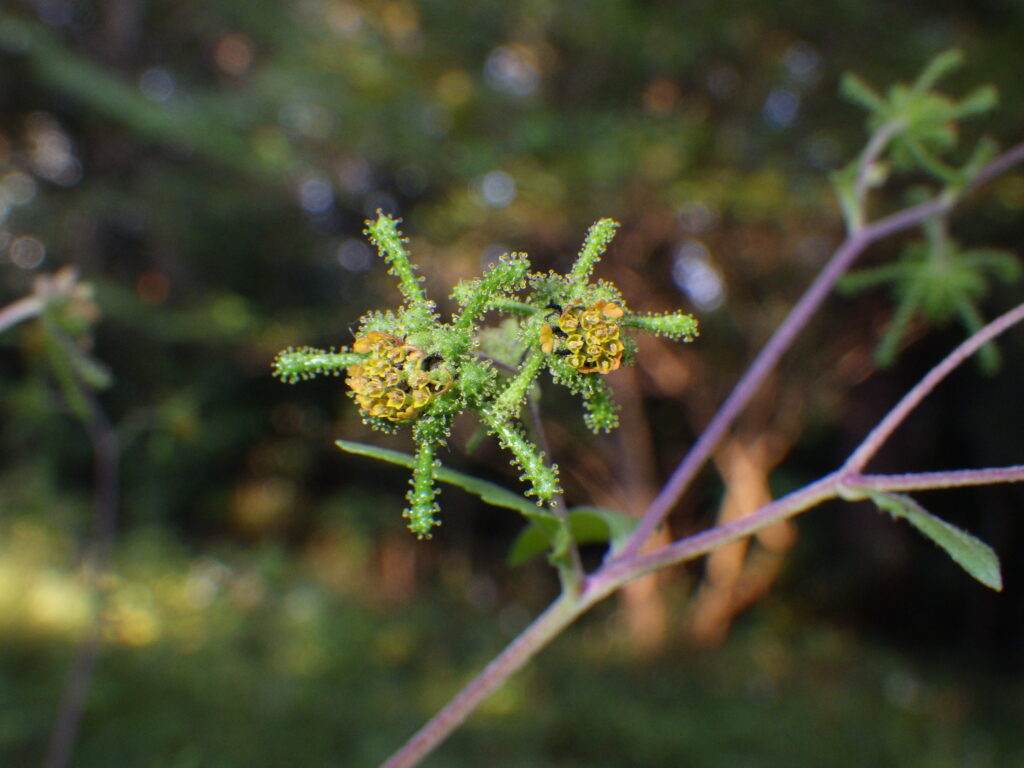
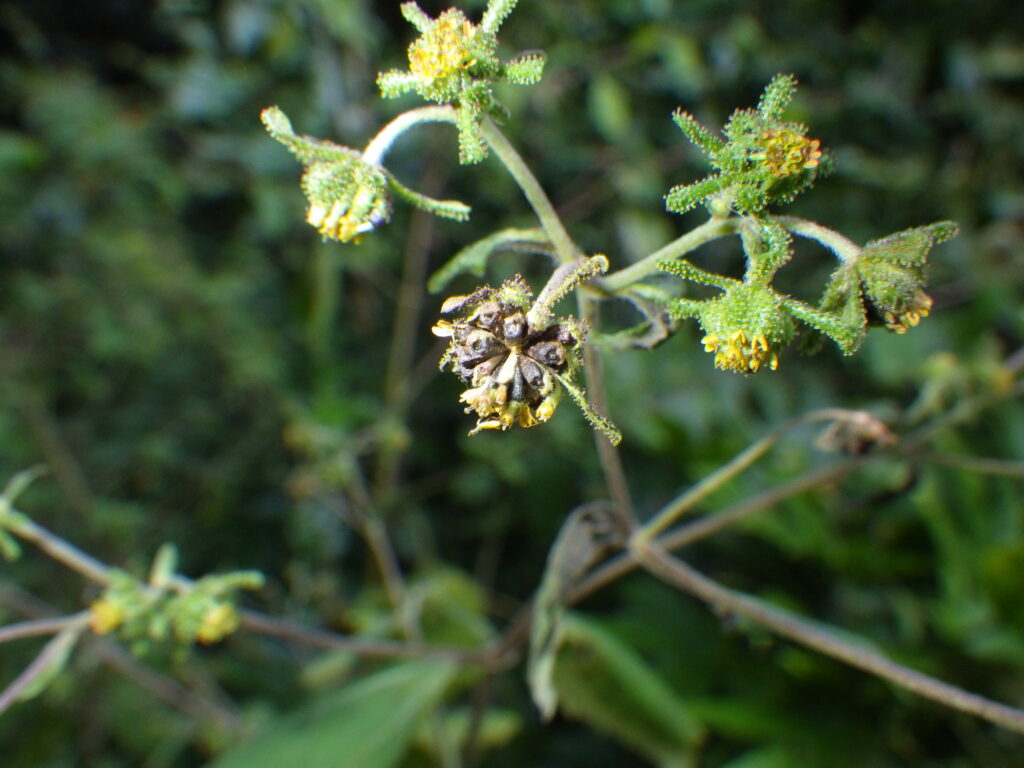
What is the difference between Menamomi and Onamomi?
Menamomi and Onamomi are named as a pair because they were both used in the production of sacred koji, suggesting they are related by sex. However, they are actually different species and are not related by sex. They are separate species, and both are monoecious (having both male and female flowers on the same plant).
While they share similarities in terms of usage and belonging to the Asteraceae family, they are quite different in other respects, to the point where they can hardly be considered alike.
First, regarding the flowers, in Menamomi, the petals turn yellow to attract insects through insect pollination, and the male and female flower heads grow together, whereas in Onamomi, the petals do not turn yellow and are inconspicuous through wind pollination, and the male flower heads grow on short inflorescences emerging from the leaf axils, while the female flower heads grow in clusters at the base of the male inflorescences.
Regarding the fruits, both are dispersed by animal attachment, making them so-called "burrs," but the difference is that Menamomi attaches to animals with mucus, while Onamomi attaches to animals with hard, hook-shaped spines.
It should be noted that the "cocklebur" commonly seen in Japan today is not the species Xanthium strumarium subsp. sibiricum, but rather the introduced species Xanthium orientale subsp. orientale.
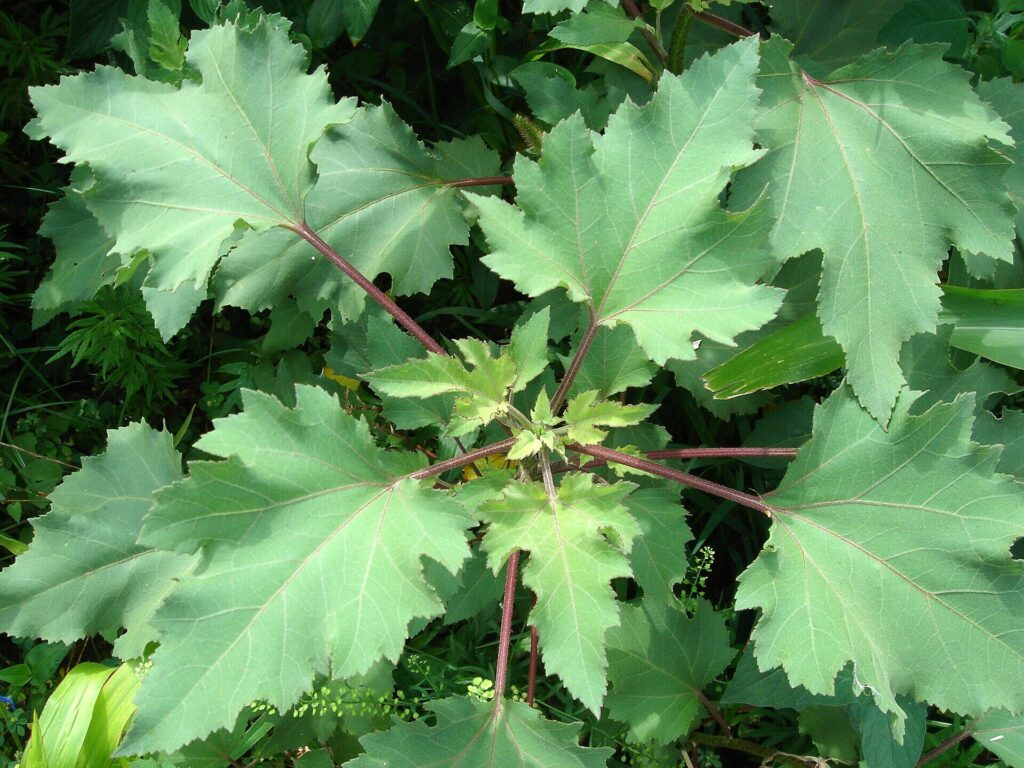
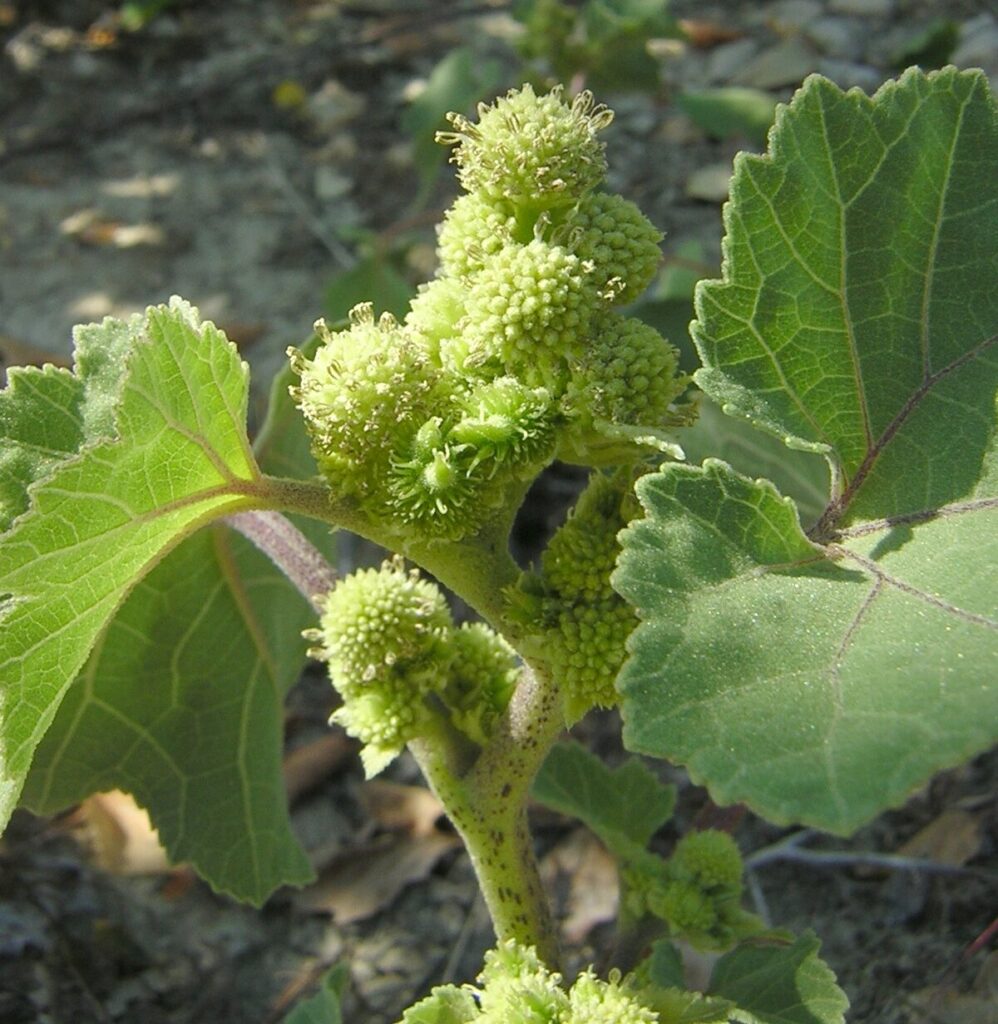
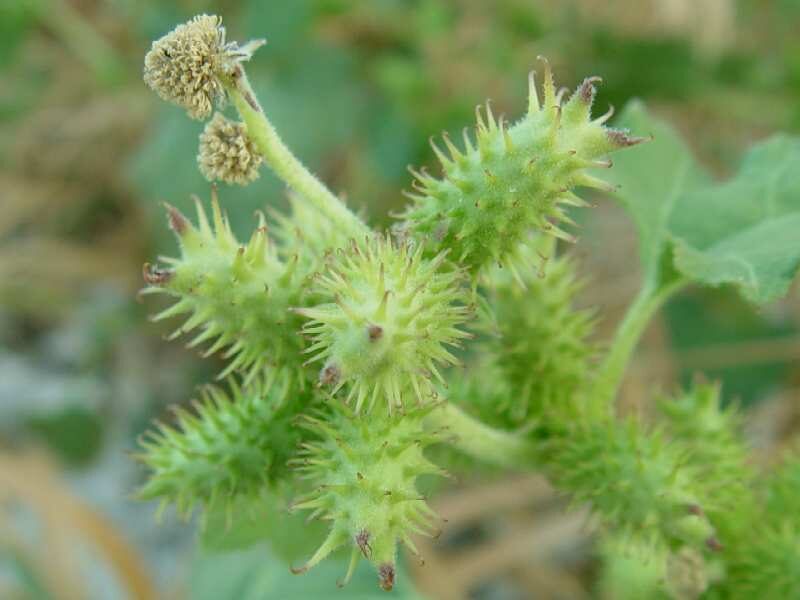
What are the seed dispersal methods?
In the genus *Menamomi*, the involucral bracts have stalked glandular hairs, and in *Menamomi*, these glandular hairs even extend to the pedicels.
What is the role of these glandular hairs?
Although not often pointed out in domestic literature, research on related species has revealed that glandular hairs attach to animals passing by and disperse over long distances, indicating animal-attached dispersal (Heinrich et al., 2002).
Unlike burdock, which has hooks on the fruit itself to attach to animal hairs, the involucral bracts secrete a sticky mucus, and these bracts fall off along with the achene, allowing for seed dispersal.
Furthermore, studies examining the components of the mucus secreted by glandular hairs have shown that it mainly contains sesquiterpenes and other high molecular weight terpenes. Although not yet proven, it has been suggested that the mucus not only provides stickiness but may also protect against herbivorous insects and pathogens. The glandular hairs on the flower stalks of Menamomi may have such a role.
However, it is still unknown what specific animals the spores attach to, and what advantages they offer compared to physical methods of dispersal such as burdock, which rely on animal attachment. This remains a subject for future research.
References
Heinrich, G., Pfeifhofer, HW, Stabentheiner, E., & Sawidis, T. 2002. Glandular hairs of Sigesbeckia jorullensis Kunth (Asteraceae): morphology, histochemistry and composition of essential oil. Annals of Botany 89(4): 459-469. https://doi.org/10.1093/aob/mcf062
Kanagawa Prefecture Flora Survey Association. 2018. Kanagawa Prefecture Flora 2018 (Electronic Edition). Kanagawa Prefecture Flora Survey Association, Odawara. 1803pp. ISBN: 9784991053726
Matsubara, Tetsuro. 2021. Plants are all medicinal herbs (Part 21): Menamomi: Fresh and dried leaves prevent colds, rheumatism, and arteriosclerosis. Modern Agriculture 100(9): 260-263. ISSN: 0289-3517, https://gn.nbkbooks.com/?p=40215
Okutsu, Kayu. 2018. An unknown herbal medicine: "Shen Ko" (神麹). Journal of the Japan Society for Biotechnology 96(8): 476.
ISSN: 0919-3758, https://www.sbj.or.jp/wp-content/uploads/file/sbj/9608/9608_biomedia_5.pdf

