Both *Lamium purpureum* and *Lamium purpureum* are herbaceous plants belonging to the genus *Lamium* in the Lamiaceae family. In horticulture, they are called "Lamium," and because *Lamium purpureum* is also known as "Lamium purpureum," they are often confused in search results. However, biologically they are completely different species, not only in the color of their corollas, but also in the shape of their leaves and flowers. They bear some resemblance to *Lamium purpureum*, but again, the shape of their leaves and calyxes are different. This article will explain the classification and morphology of the *Lamium* genus cultivated in horticulture.
What are Lamium, Lumpurea, and Yellow Lamium?
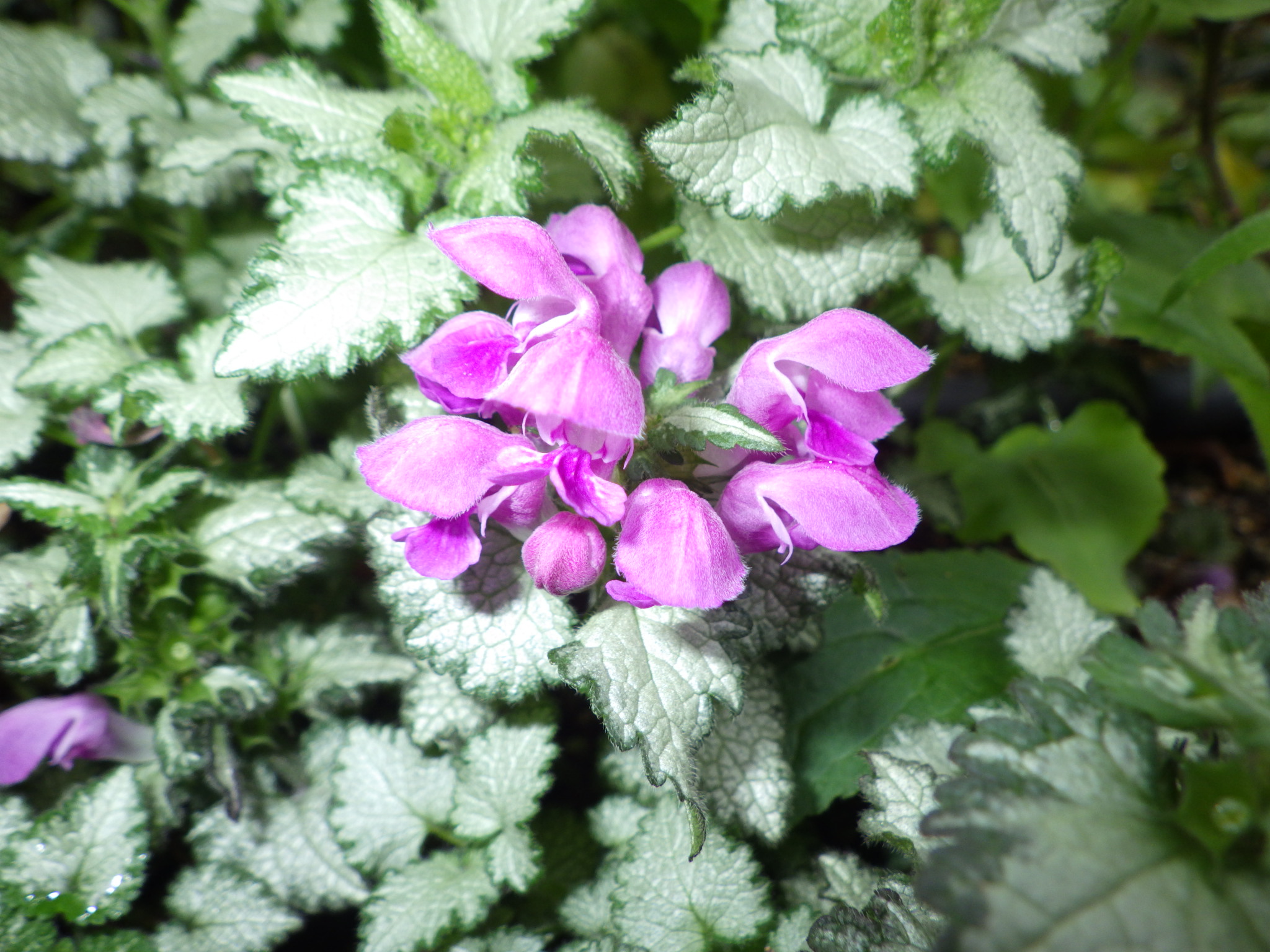
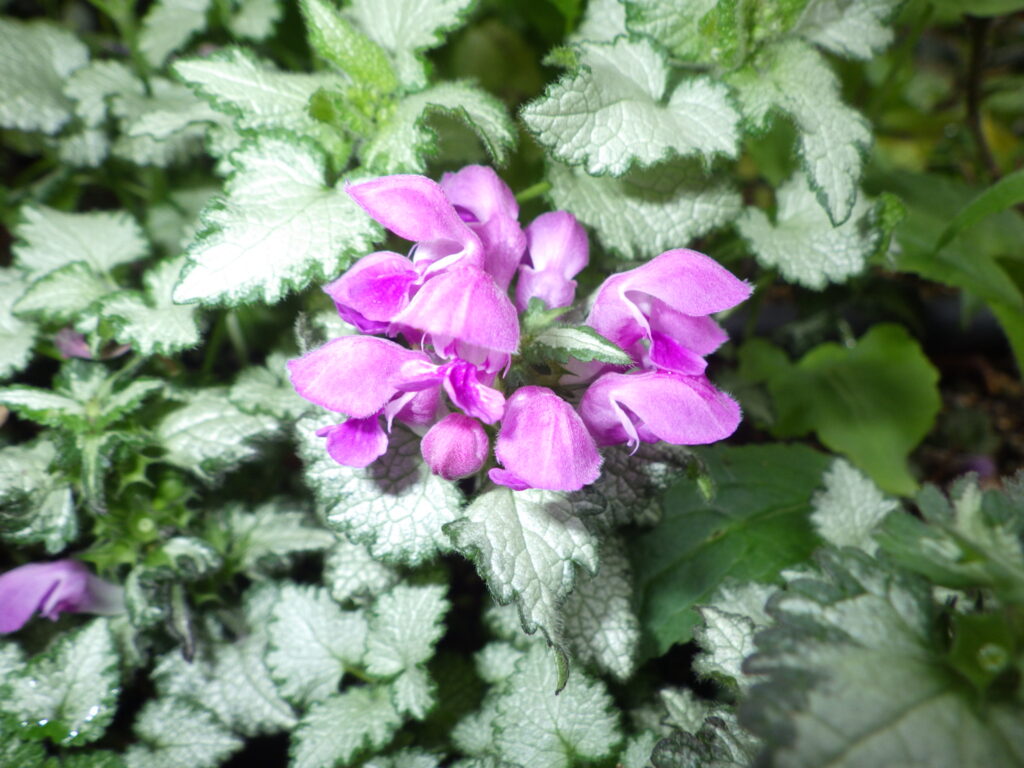
Lamium maculatum, also known as climbing dwarf dwarf grass, is a perennial plant distributed in Europe (excluding Northern Europe), western Russia, the Caucasus, Turkey, and China. It has been introduced to the United Kingdom and the United States, and in Japan, it is cultivated as an ornamental plant (RBG Kew, 2025).
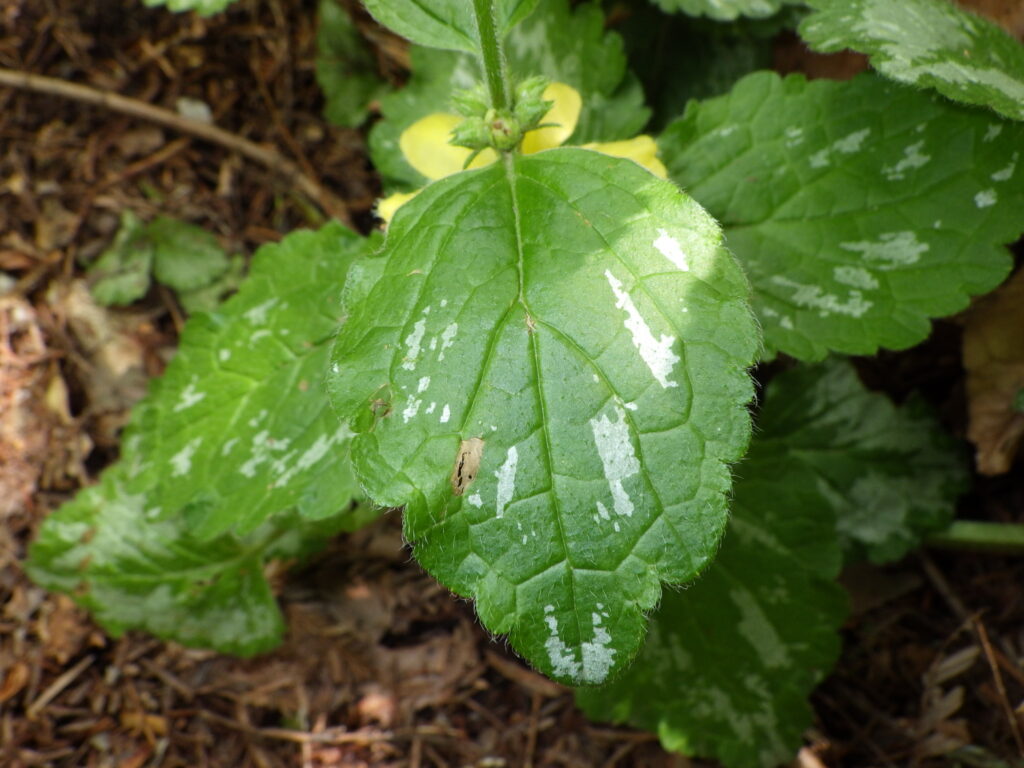
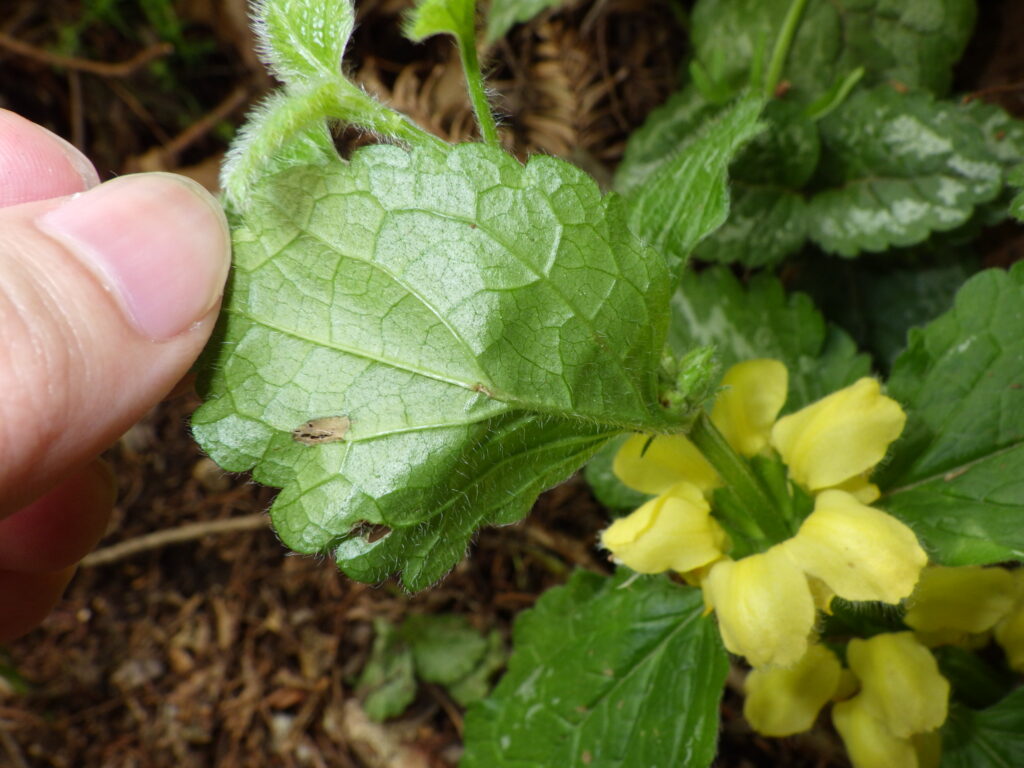
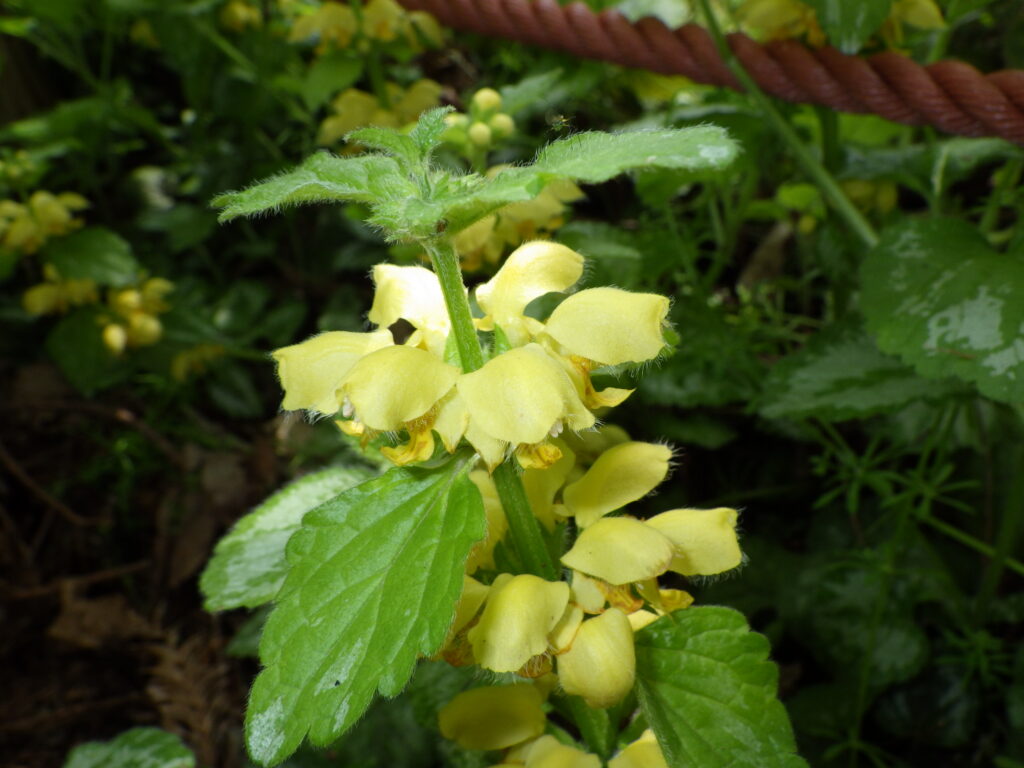
Lamium galeobdolon, also known as yellow deadnettle or clover, is a perennial plant distributed in Europe, western Russia, the Caucasus, Turkey, and Iran. It was introduced to the United States and cultivated in Japan for ornamental purposes and as ground cover, with some escaping and becoming naturalized (Shimizu, 2001).
All of these are herbaceous plants belonging to the genus Lamium in the Lamiaceae family.
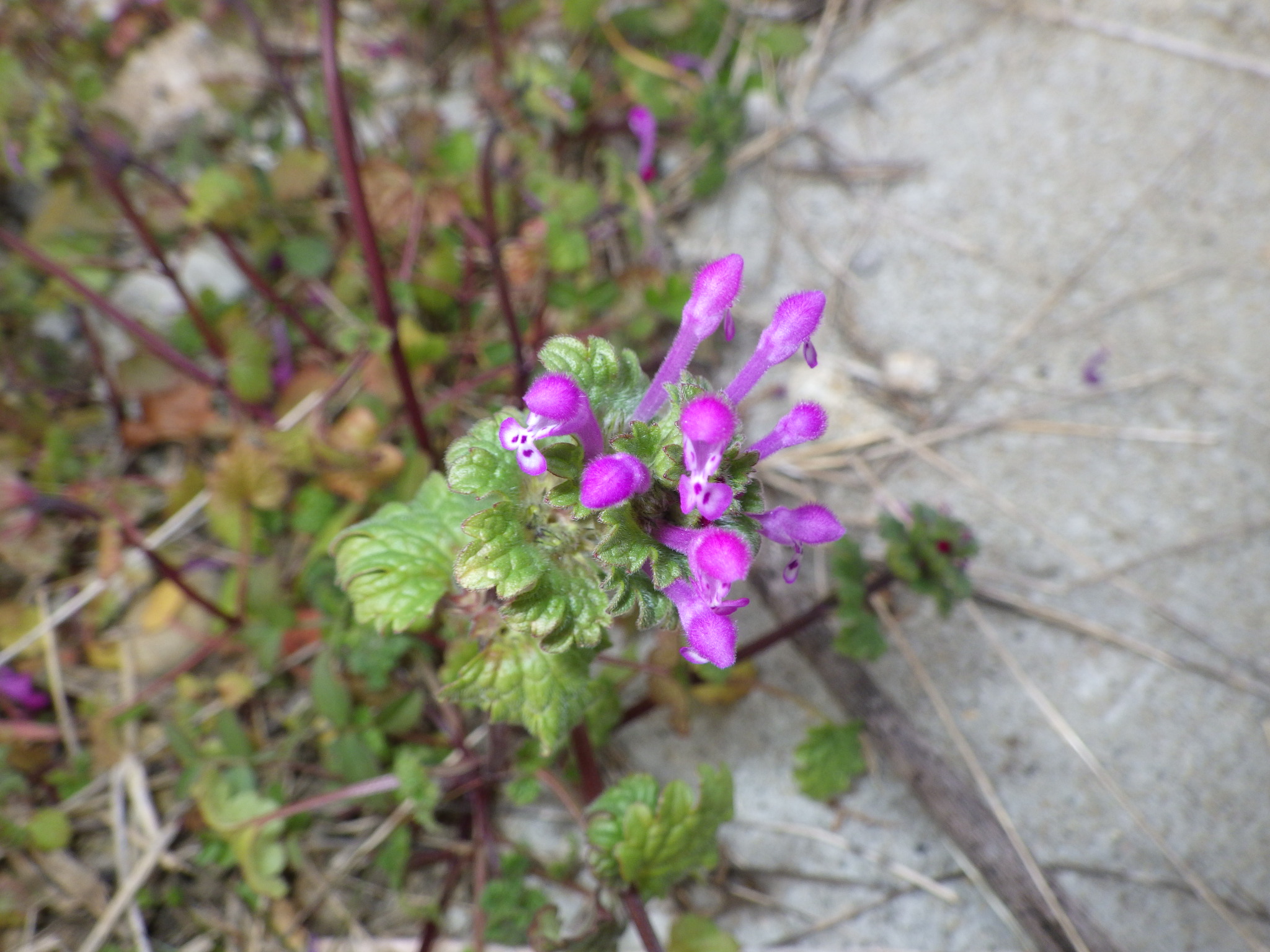
Morphologically, they share several common features: the upper lip of the corolla is helmet-shaped with its tip curving forward; the lower lip is three-lobed and curves backward; the entire throat area is swollen; and the corolla tube protrudes from the calyx tube, making it visible from the outside.
Furthermore, among the Lamium genus, it produces creeping stems and blooms with large, pretty flowers in early spring, so you can sometimes see it being cultivated for ornamental purposes in towns and cities.
Lamium originally refers to the genus Lamium, and is a general term that includes wild species such as Lamium album, Lamium purpureum, and Lamium amplexicaule. However, in horticulture, it is usually limited to Lamium purpureum and Lamium purpureum.
In gardening, many websites present *Lamium amplexicaule* and *Lamium purpureum* as if they were simply different varieties.
Furthermore, since yellow dwarf
Those unfamiliar with these terms might get confused.
What is the difference between *Lamium amplexicaule* and *Lamium purpureum*?
However, *Lamium amplexicaule* and *Lamium purpureum* are distinct species (Spencer, 2002; Reznicek et al., 2011).
Firstly, the color of the corolla of the flowers is distinctly different: the corolla of *Lamium amplexicaule* is purple, while that of *Lamium purpureum* is yellow.
Furthermore, while the hairs on the upper part of the corolla (upper lip) are short in *Lamium amplexicaule*, they are clearly longer in *Lamium purpureum*. This can be clearly seen in photographs.
There are also differences in the leaves.
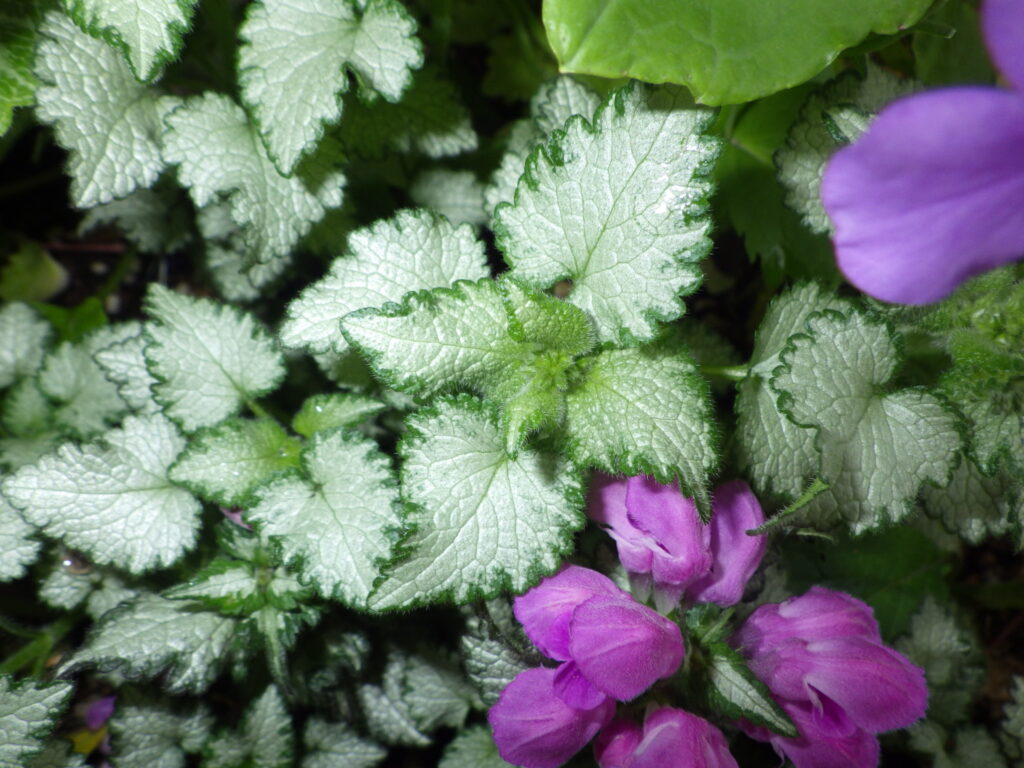
In *Lamium amplexicaule*, the leaves are wrinkled and the tips are somewhat tail-like, whereas in *Lamium purpureum*, the leaves are less wrinkled and the tips are not as elongated.
Another difference is that the anthers of *Lamium amplexicaule* are hairy and tufted, while those of *Lamium purpureum* are hairless, but few people would bother to notice this difference.
In addition, two well-known horticultural varieties of Lamium amplexicaule are 'Beacon Silver', in which the leaves are white except for the leaf margins, and 'Sterling Silver', in which the entire leaf, including the leaf margins, is white.
Among the horticultural varieties of yellow henbit, 'Harmann's Pride', which has many silvery-white variegations, is well known.
Are there any other similar species?
Many species of the Lamium genus are known to grow wild in Japan, but most have small corollas and do not resemble each other very much.
Lamium album var. barbatum has a large corolla and is somewhat similar to yellow lamium and creeping lamium, but it lacks stolons, its leaf tips are more tail-like than those of creeping lamium, and its calyx is sharper.
References
Spencer, R. 2002. Lamiaceae. In: R. Spencer (Ed.), Horticultural Flora of South-eastern Australia: The identification of garden and cultivated plants (Vol. 4. Flowering plants. Dicotyledons. Part 3). University of New South Wales Press, 576pp. ISBN: 9780868406848, https://hortflora.rbg.vic.gov.au/taxon/ada11ab0-5340-11e7-b82b-005056b0018f
RBG Kew. 2025. The International Plant Names Index and World Checklist of Vascular Plants. Plants of the World Online. http://www.ipni.org and https://powo.science.kew.org/
Reznicek, AA, Voss, EG & Walters, BS 2011. Michigan Flora Online. University of Michigan. https://mifloradev.lsa.umich.edu/flora-demo/#/genus/Lamium
Shimizu, K., Morita, H., & Hirota, S. 2001. Illustrated Guide to Naturalized Plants of Japan: 600 Species of Plant Invaders (Revised). National Rural Education Association, Tokyo. 553pp. ISBN: 9784881370858