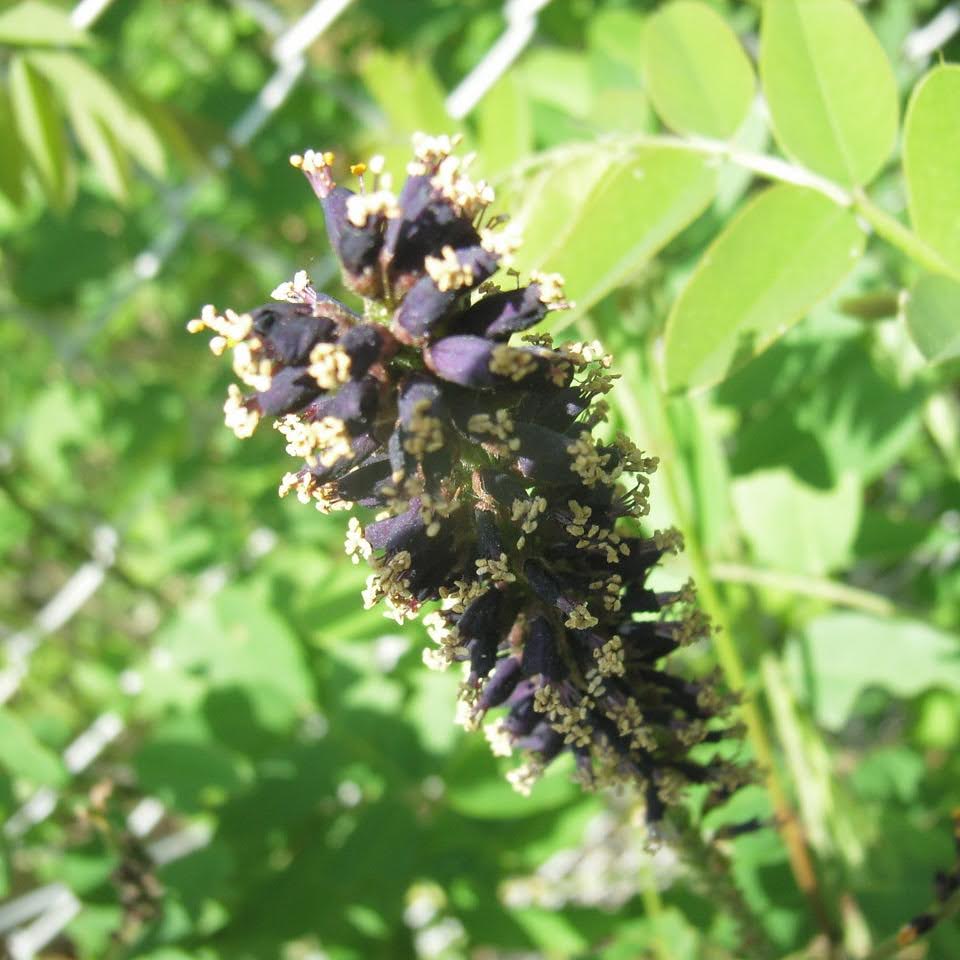
Japanese wax tree (Rhus sylvestris), Japanese lacquer tree (Rhus verniciflua), and Japanese lacquer tree (Rhus trichocarpa) all belong to the Rhus genus and are relatively common even in urban areas. They are similar species often seen in gardens and along roadsides, characterized by their odd-pinnately compound leaves. Distinguishing between them is difficult, and careful observation of the leaves is essential. The number of leaflets and the amount of hair are important clues, so be sure to record them. Japanese wax trees (Rhus sylvestris) are used for Japanese candles, and Japanese lacquer trees (Rhus trichocarpa) are used for lacquerware, demonstrating their long history of use in Japan. The rash caused by Japanese lacquer is a type of allergic contact dermatitis caused by urushiol, which is a malfunction of the human body . However, it is possible that the Japanese lacquer trees intentionally target this reaction. The flowers are inconspicuous and not very noticeable, but they are quite popular with insects, perhaps due to their high pollen content. The fat-rich fruits seem to be a persistent favorite of some birds, such as crows. Furthermore, there is an evolutionary secret to the autumn foliage, with the theory that the contrast makes the fruits stand out. This article will explain the classification, history, pollination ecology, and seed dispersal of Japanese lacquer trees (Rhus trichocarpa).
- What are Japanese wax tree, Japanese lacquer tree, and Japanese lacquer tree?
- What are the differences between Japanese wax tree (Rhus sylvestris), Japanese lacquer tree (Rhus trichocarpa), Japanese lacquer tree (Rhus verniciflua), and Japanese lacquer tree (Rhus trichocarpa)?
- Are there any other similar species?
- How are the lacquer trees used? Japanese wax trees (Rhus succedanea) are used for making Japanese candles, while lacquer trees (Rhus urushi) are used for lacquering.
- Why does poison ivy cause a rash?
- What is the structure of a flower?
- While pollinating insects are under-researched, many of them seem to be primarily attracted to pollen!
- Why are fruits so oily? That bird that loves fat is a big fan!?
- Did the genus *Rhus* change color in the red "to make its fruit more conspicuous"?!
- References
- Source
What are Japanese wax tree, Japanese lacquer tree, and Japanese lacquer tree?
Toxicodendron succedaneum, also known as the Japanese wax tree (Toxicodendron succedaneum), is a deciduous tree distributed in Honshu (west of the Kanto region), Shikoku, Kyushu, and the Ryukyu Islands in Japan; as well as in China, Taiwan, Malaysia, and India. It is commonly found growing wild in warm mountainous areas, especially along coastal regions.
Toxicodendron sylvestre, also known as Japanese wax tree (Toxicodendron sylvestre), is a deciduous small tree that grows in lowlands and mountainous areas and is distributed in Honshu (west of the Kanto region), Shikoku, Kyushu, and the Ryukyu Islands in Japan; as well as in China and Taiwan.
Toxicodendron vernicifluum, also known as lacquer tree, is native to China and India. In Japan, it is cultivated for lacquer harvesting and has escaped cultivation in hilly areas.
Toxicodendron trichocarpum, also known as mountain lacquer tree, is a deciduous shrub distributed in Hokkaido, Honshu, Shikoku, and Kyushu in Japan; the Kuril Islands; Korea; and China. It is commonly found in mountainous areas and rarely in lowland hills.
Both belong to the Anacardiaceae family, genus Rhus, and are known as pioneer species that commonly grow in gardens and along roadsides, characterized by their odd-pinnately compound leaves. However, they are very similar and are often confused. Another commonality is that they are dioecious, meaning they have separate male and female plants.
What are the differences between Japanese wax tree (Rhus sylvestris), Japanese lacquer tree (Rhus trichocarpa), Japanese lacquer tree (Rhus verniciflua), and Japanese lacquer tree (Rhus trichocarpa)?
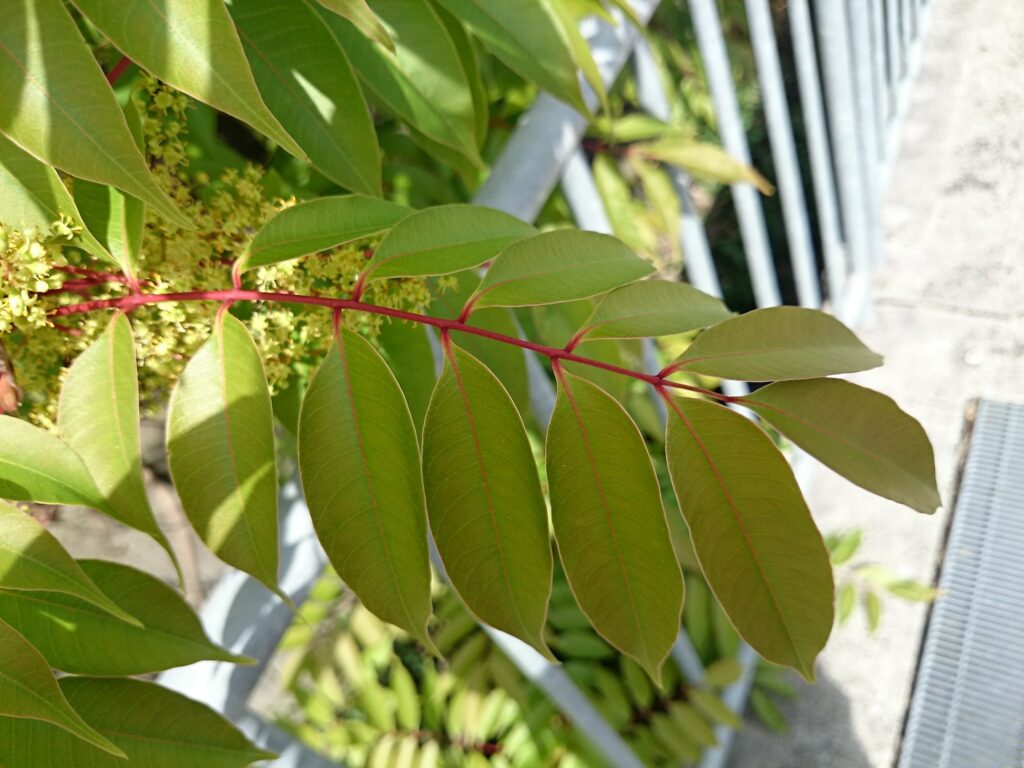
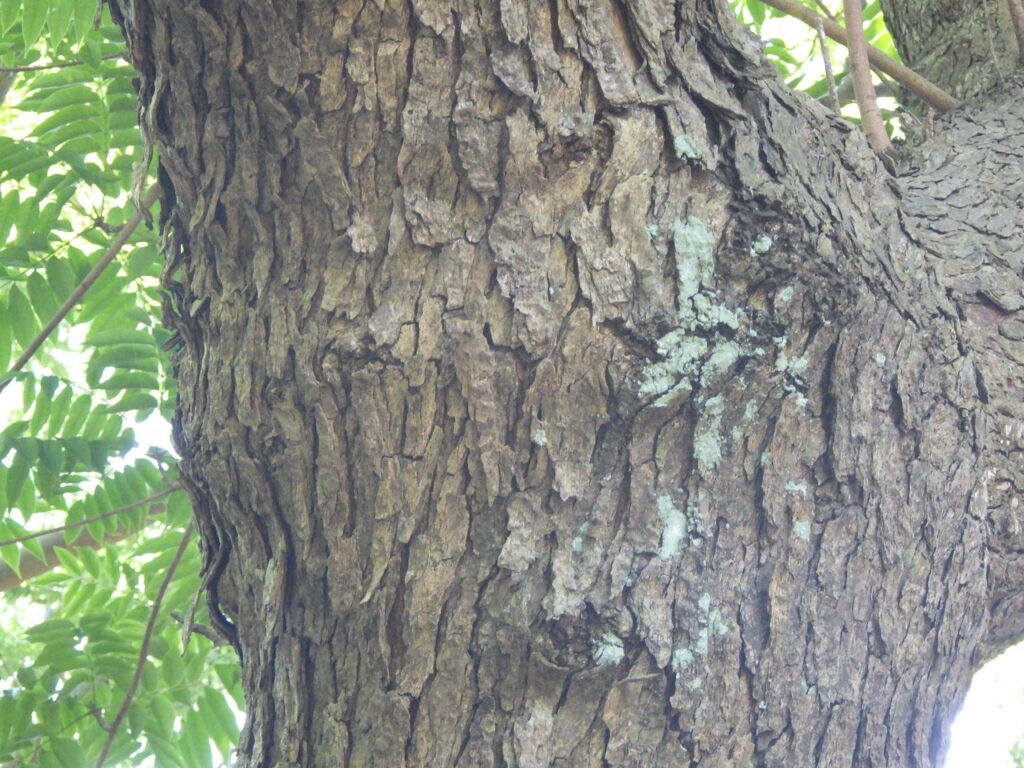
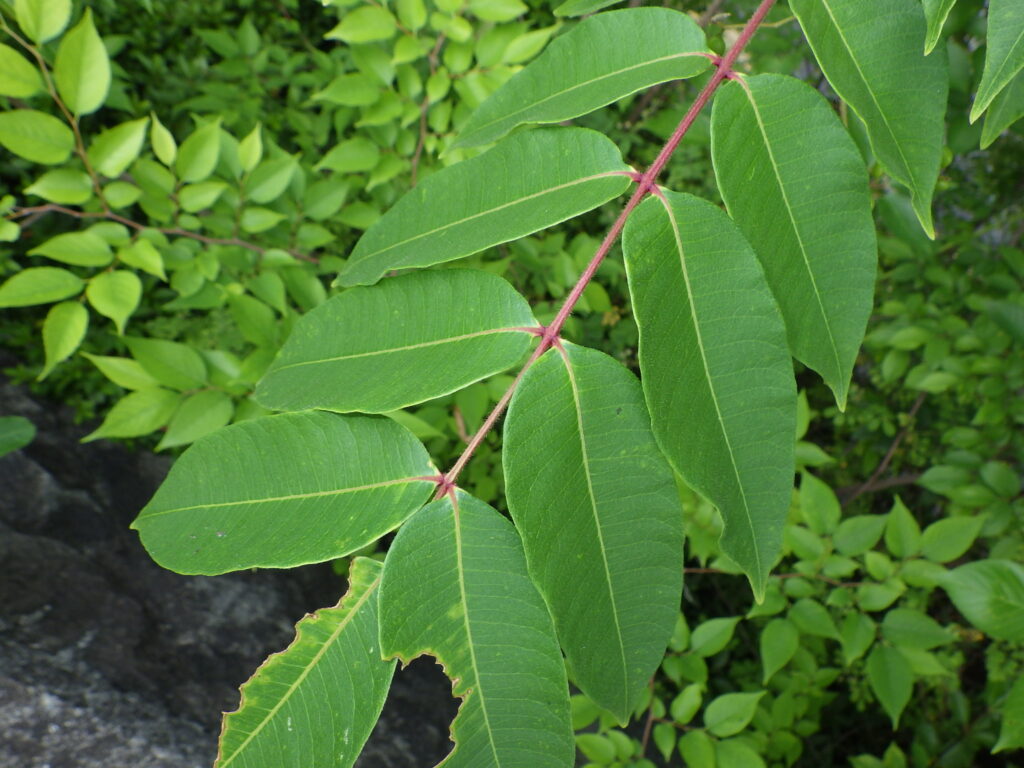
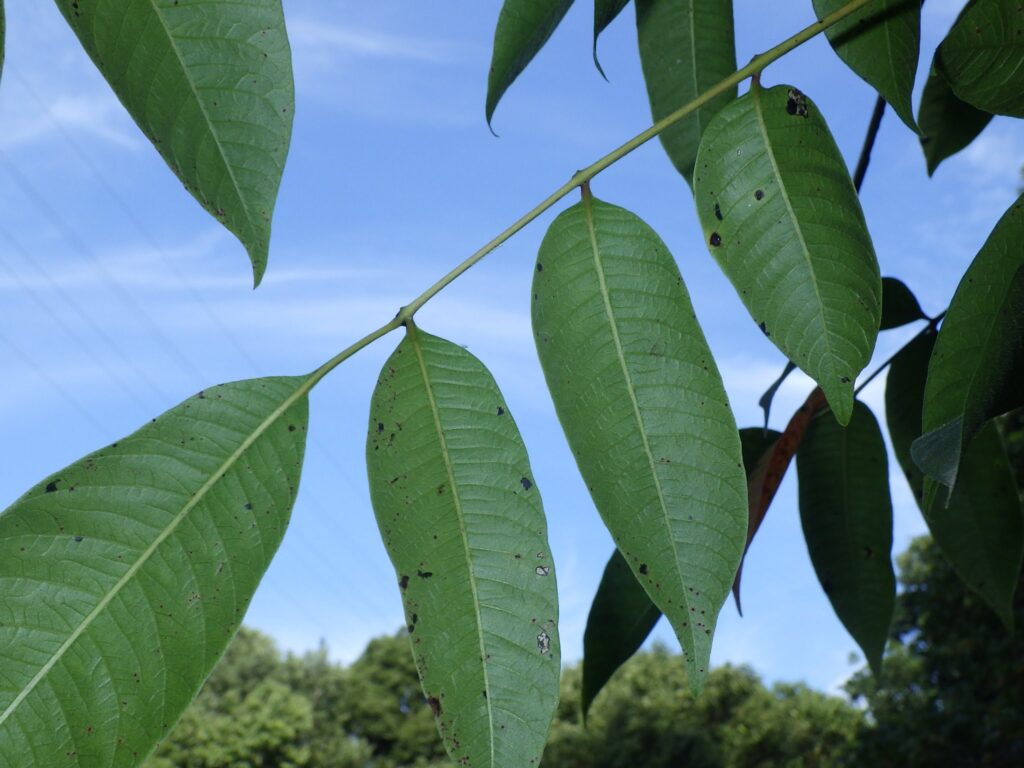
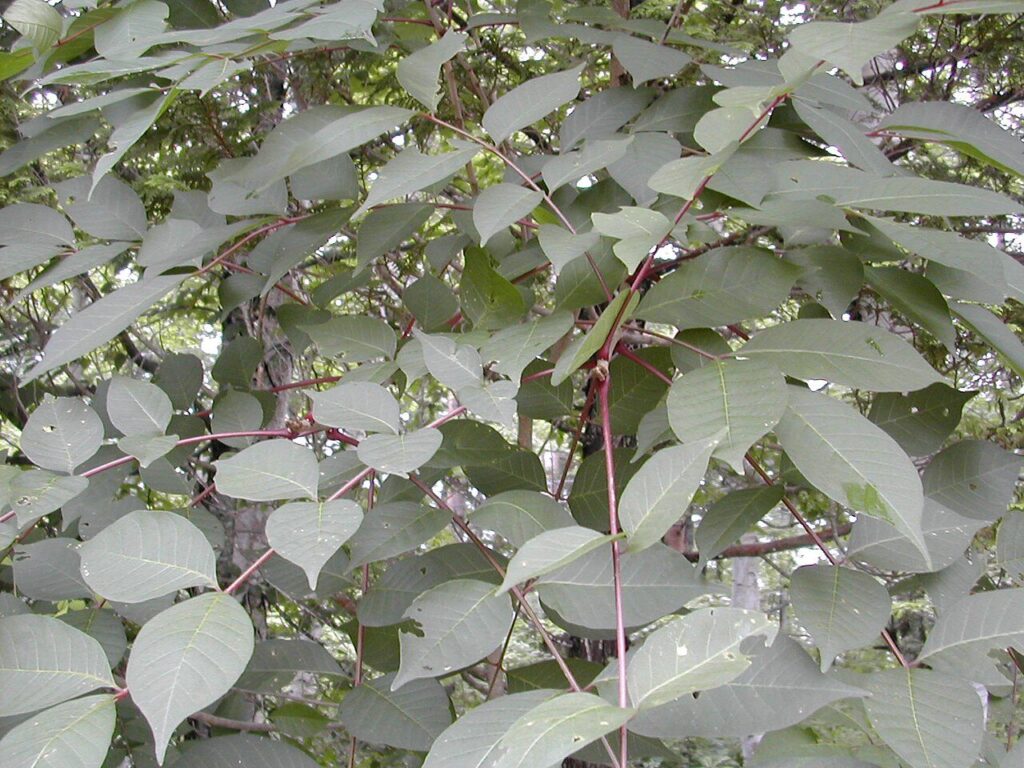
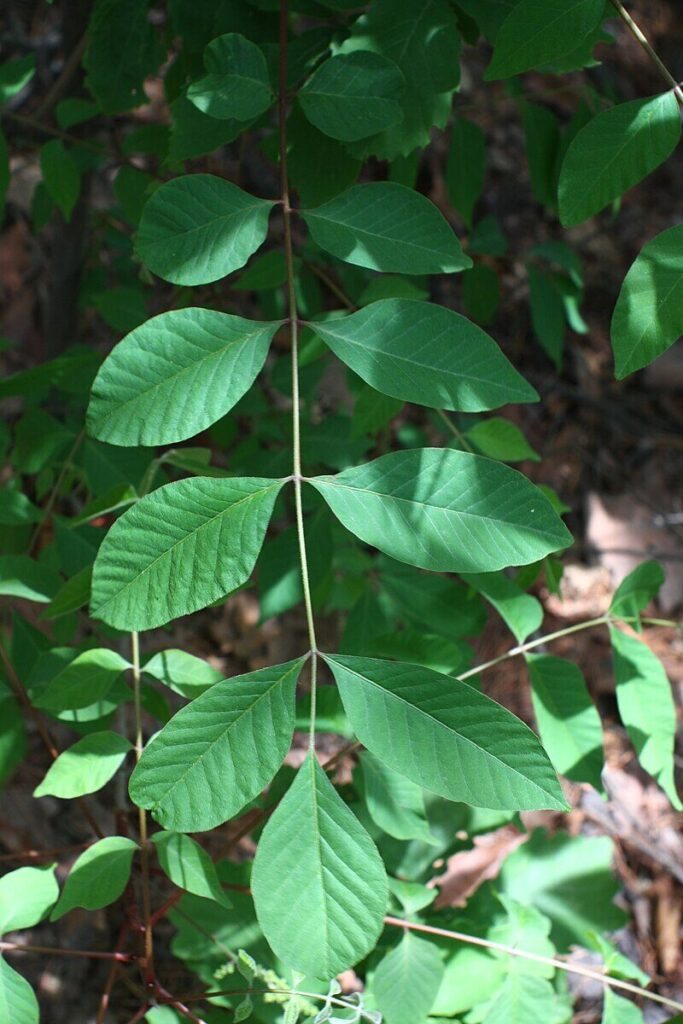
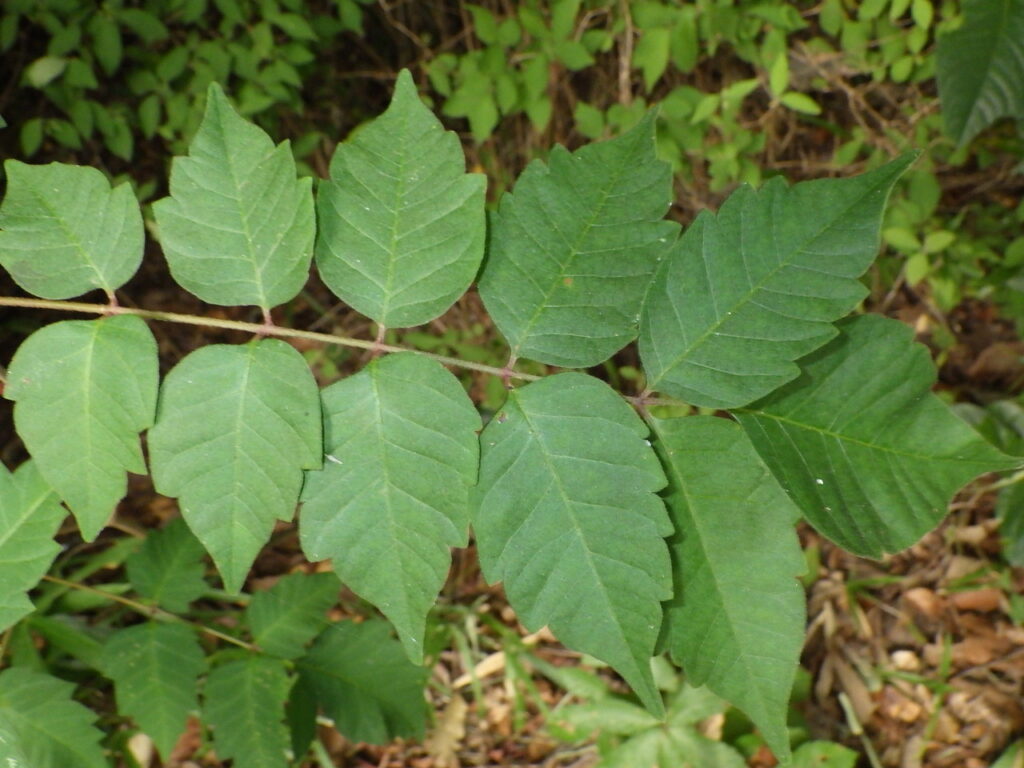
However, by carefully observing the leaves, they can be clearly distinguished as follows (Hayashi, 2014; Kanagawa Prefecture Flora Survey Association, 2018).
First, the leaflets of the Japanese lacquer tree (Urushi) are large, about 15 cm long, and usually number only 4 to 5 pairs. On the other hand, the leaflets of the other three species are somewhat smaller, about 10 cm long, and usually number 4 to 8 pairs. It's also worth noting that the Japanese lacquer tree is originally a cultivated species, so it's less commonly seen compared to the other three wild species.
Regarding the remaining three species, in the case of Rhus succedanea, the plant body and leaves are hairless (although some individuals rarely have hairs on their winter buds), the underside of the leaves appears white due to lipids, and the lateral veins are less prominent compared to Rhus sylvestris. On the other hand, in Rhus sylvestris and Rhus trichocarpa, the plant body and leaves are hairy, and the underside of the leaves is not white.
The differences between Rhus sylvestris and Rhus lacquerus are that in Rhus sylvestris, the lateral veins of the leaflets are numerous and prominent, generally with long and short veins alternating, and the fruit lacks bristles, while in Rhus lacquerus, the lateral veins of the leaflets are few in number, the lowest pair of veins in the compound leaflets are generally slightly smaller than the others, and the fruit has bristles.
You might get confused between Japanese rhododendron and lacquer tree because both have hairless fruits, but Japanese rhododendron has hairs on both sides of its leaflets, while lacquer tree has hairless fruit only on the upper surface of its leaflets.
Identifying the species based on the redness of the leaf stalk is probably not possible, as while Japanese lacquer tree and poison ivy tend to have reddish stalks, there are exceptions.
Although sumac is also in the Anacardiaceae family, it belongs to a different genus and can be easily distinguished by the wings that appear between the leaflets on the leaf axis.
Are there any other similar species?
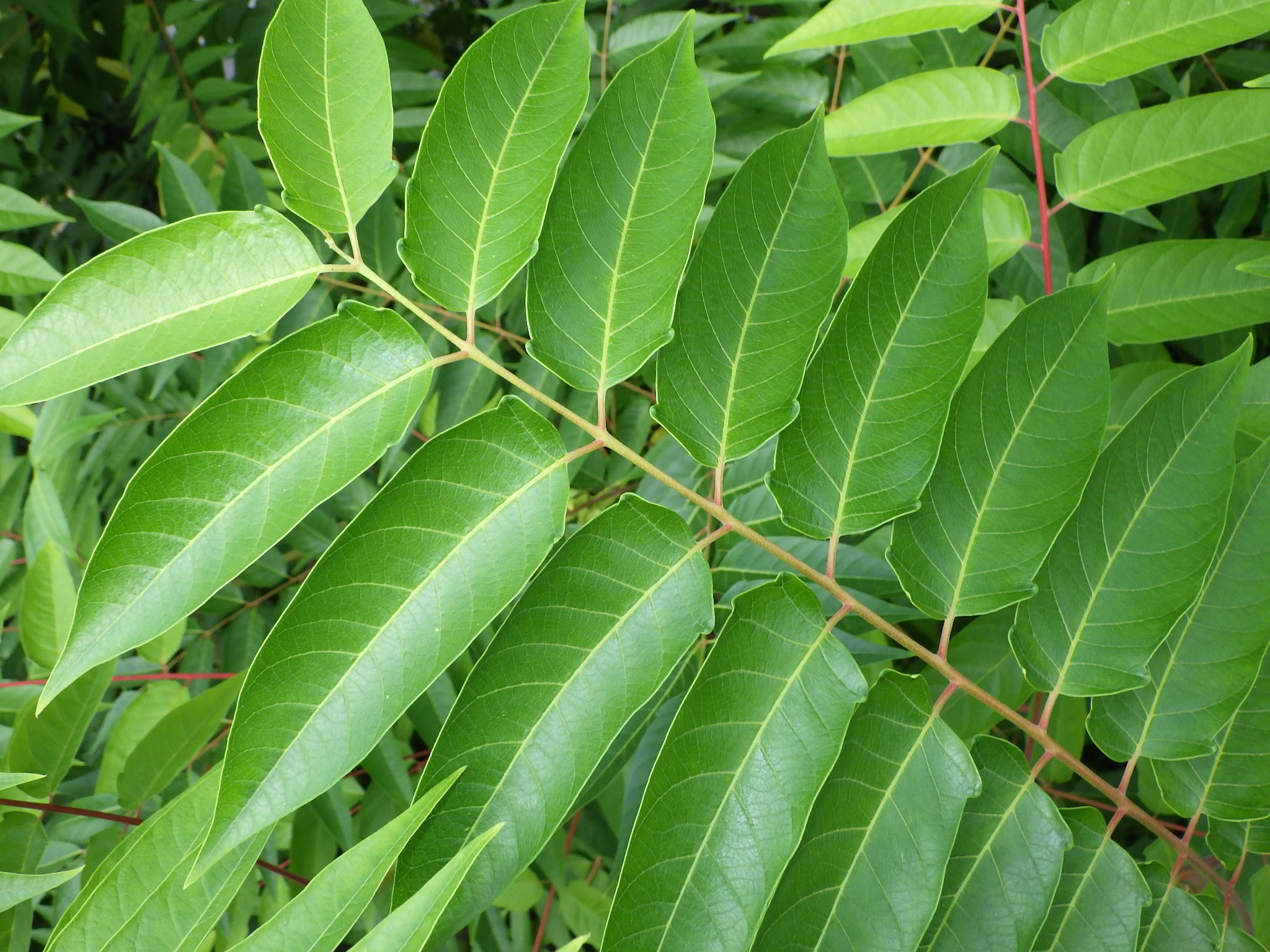
Ailanthus altissima, also known as "Urushi," is a species whose Japanese name includes the word "urushi" (lacquer tree), and it shares similarities with other species, such as having odd-pinnately compound leaves.
However, Ailanthus altissima belongs to the Simaroubaceae family and is classified differently, resulting in several differences. Please see the separate article for more details.
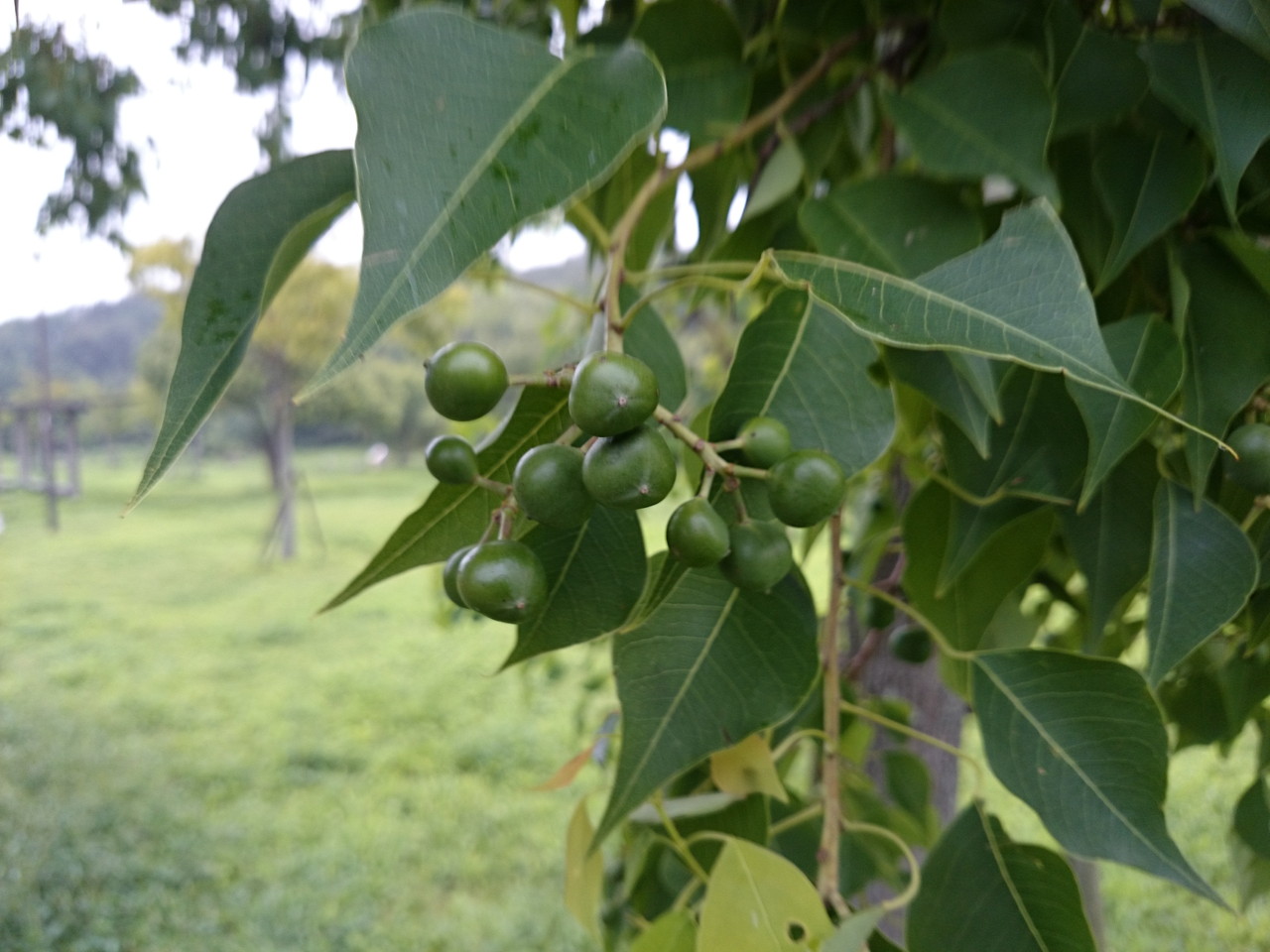
There is a species called Chinese tallow tree (Triadica sebifera) that has a similar name to the Japanese wax tree (Rhus succedanea). While it is similar in that its seeds contain fat and turn into wax, it belongs to the Euphorbiaceae family and the shape of its leaves, flowers, and fruits are all different. Please see the separate article for more details.
How are the lacquer trees used? Japanese wax trees (Rhus succedanea) are used for making Japanese candles, while lacquer trees (Rhus urushi) are used for lacquering.
The fruit of the Japanese wax tree (Rhus succedanea) contains a lot of fat. For this reason, it was used to make Japanese candles, and was specifically called "haze wax."
Western candles are made by using a cotton wick and pouring beeswax, animal fat, or paraffin into a mold and letting it harden, while Japanese candles are made by using a wick taken from a rush plant and washi paper as a core, and then applying layers of wood wax taken from the Japanese wax tree.
The origins of Japanese candles are said to date back to the Nanboku-cho period, as they appear in the Taiheiki (a historical chronicle) around 1375. Production peaked during the Edo period and the late Edo period. At that time, Japanese candles were mainly consumed by a small number of merchants and samurai, and were not available to ordinary people.
Urushi lacquer is harvested by damaging the bark to obtain raw lacquer. The drying and hardening of lacquer occurs through the oxidative polymerization of urushiol by the action of laccase and oxygen. Once hardened, lacquer is resistant to heat, moisture, acid, alkali, alcohol, and oil, and also has anti-corrosion and insect-repellent properties, so it was used for lacquering and for tableware and furniture. Currently, due to the widespread use of plastics and other materials, production areas are limited.
It is believed that lacquer painting was already being practiced during the Jomon period. The wild lacquer trees found in the mountains of Japan today are remnants of those planted by humans (Nōshiro, 2007).
Why does poison ivy cause a rash?
All plants in the Anacardiaceae family contain urushiol, and inflammation occurs when an allergic reaction occurs to this substance. The degree of inflammation varies from person to person; symptoms may appear only on the area where the lacquer sap came into contact, or the inflammation may occur throughout the body (Nōshiro, 2007). In most cases, blisters and itching occur, which are most severe in the first week and usually disappear within two to three weeks.
The strength of these plants varies depending on the species of the Anacardiaceae family; among the Japanese species, lacquer trees (Rhus javanica) are considered the strongest, while sumac trees (Rhus javanica) are the weakest.
This allergic reaction (not limited to urushiol) normally occurs in response to large parasites, but it occurs when the human body mistakenly identifies urushiol (Palm et al, 2012).
But if that's the case, is this kind of "rash" intentionally caused by the plant?
This is a very difficult question, but it is a possibility. In fact, it is known that Japanese lacquer tree (Rhus trichocarpa) is an unpalatable plant for Japanese deer (Ishida et al., 2012).
If that's the case, then it could be said that poison ivy and its relatives even utilize the malfunction of the mammalian immune system.
On the other hand, it also possesses strong antifungal properties (Kim et al., 1997), so it's possible that it evolved for this purpose as well.
What is the structure of a flower?
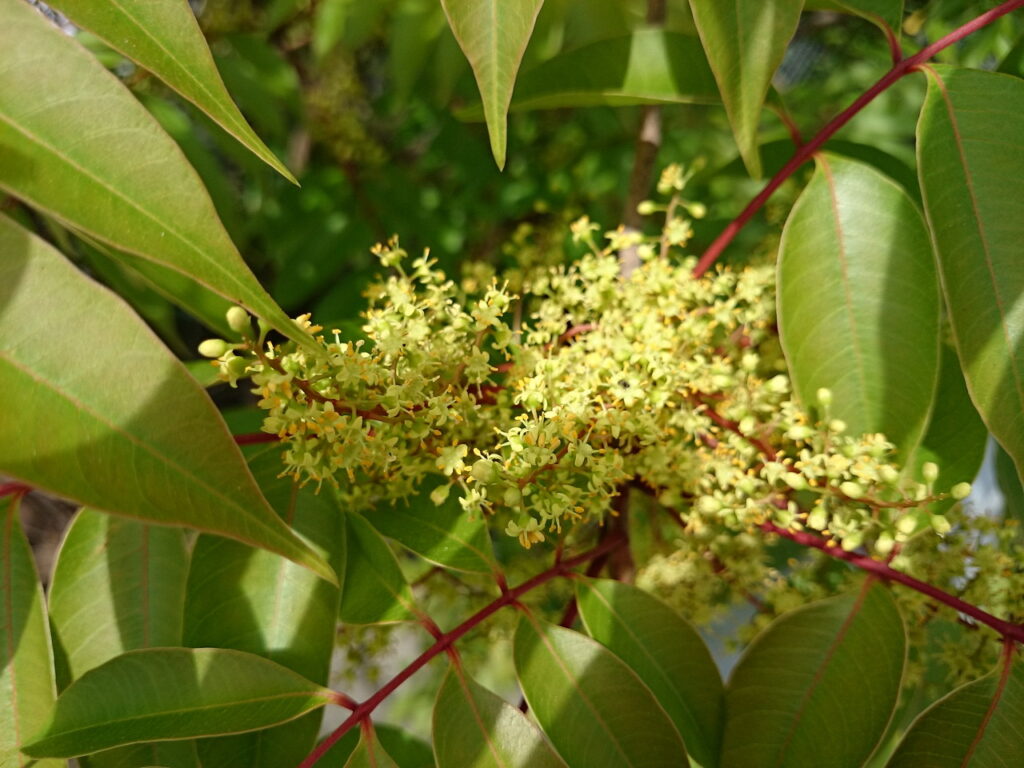
The Japanese wax tree (Rhus succedanea) flowers from May to June (Mogi et al., 2000). It bears numerous small, yellowish-green flowers in a conical shape. The inflorescence is 5-10 cm long. The petals are 5 in number, about 2 mm long, and curve backward.
Japanese wax tree (Rhus japonica) flowers from May to June. It bears numerous small, yellowish-green male or female flowers in a conical shape. The inflorescence is 8-15 cm long and has curved, spreading hairs. There are more flowers in the male inflorescence than in the female inflorescence. The petals are 5 in number, oval-shaped, and about 2 mm long. The petals of the male flowers are recurved, and the stamens protrude from the outside of the flower.
Japanese lacquer tree (Rhus trichocarpa) flowers from May to June. It bears numerous small, yellowish-green flowers in a conical shape. The inflorescence is 15-30 cm long, and the axis of the inflorescence is densely covered with coarse hairs. The petals are five in number, narrowly oblong, and about 2 mm long. The petals of the male flowers are recurved, and the stamens protrude outside the flower. The ovary of the female flower is densely covered with bristles. The style protrudes outside the flower, and the stigma is three-lobed.
The lacquer tree (Urushi) is also very similar to the three species mentioned above, and overall there isn't much difference. The fact that the petals of the male flowers are curved back might be to make the pollen more visible.

While pollinating insects are under-researched, many of them seem to be primarily attracted to pollen!
Although I couldn't find any literature on insects that visit Japanese wax trees, internet searches confirmed records of the seventeen-spotted flower beetle, the green flower beetle, the red longhorn beetle, the common blue butterfly, and the small bumblebee visiting the tree.
When we also investigated the insects that visit the flowers of the Japanese wax tree, we could not find any comprehensive studies, and the only records we found were of bees such as the Japanese honeybee (Fujiwara et al., 2014), the genus *Hymenoptera* (Miyamoto, 1960), and the *Hymenoptera japonica* (Ichikawa and Ohara, 2009).
Interestingly, however, there are records of a fly called *Hisamatsu wasp-like hoverfly*, which mimics the potter wasp so closely that even humans could mistake it for the real thing (Ichikawa and Ohara, 2009). It is unclear whether this is a common occurrence, but the existence of a fly that mimics a wasp to feed on nectar suggests that there may be a complex ecosystem surrounding this flower.
Detailed research has been conducted on poison ivy, and it has been found that two types of insects visit its flowers: the majority are nonsocial wasps, flies, and beetles, and a small number are social bees (Matsuyama et al., 2008; Matsuyama at al., 2009).
In summary, it seems that the entire genus *Rhus* attracts a large number of bees, flies, and beetles seeking pollen.
By the way, since the genus Rhus is dioecious (having separate male and female plants), isn't there a risk that the insects that visit the plants will be biased towards the male flowers, which contain pollen that is a rich source of protein, and thus pollination will not be successful?
Research on poison ivy has shown that some social bees do indeed visit only male flowers, resulting in insufficient pollination (Matsuyama et al., 2009). However, the vast majority of other non-social bees, flies, and beetles visit without regard for this, and thus seem to achieve at least minimal pollination.
The mechanism behind this is explained as follows: social bees are sensitive to the amount of reward and tend to favor male flowers, while non-social bees, beetles, and flies do not strongly distinguish between different amounts of reward and will visit flowers even if only for nectar, thus visiting both male and female flowers without bias.
Although not mentioned in this study, it is also possible that female flowers deceive insects by making them mistakenly believe they are male flowers, in other words, by "mimicry." Such instances are commonly observed in other plants and are known as "intersexual mimicry."
Why are fruits so oily? That bird that loves fat is a big fan!?
While there are differences in the presence or absence of bristles, the fruits of the Rhus genus are generally drupe-like, flattened fruits with a large amount of fat in the flesh. As mentioned above, this is why they were used as a raw material for Japanese candles, but who uses them in nature?
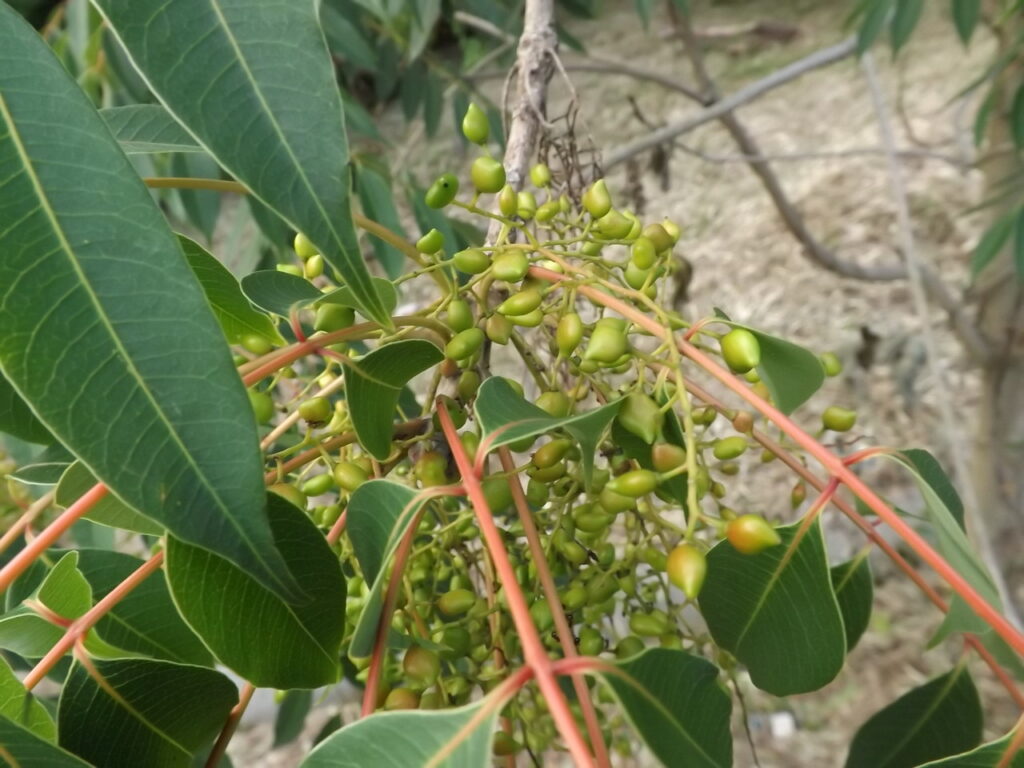
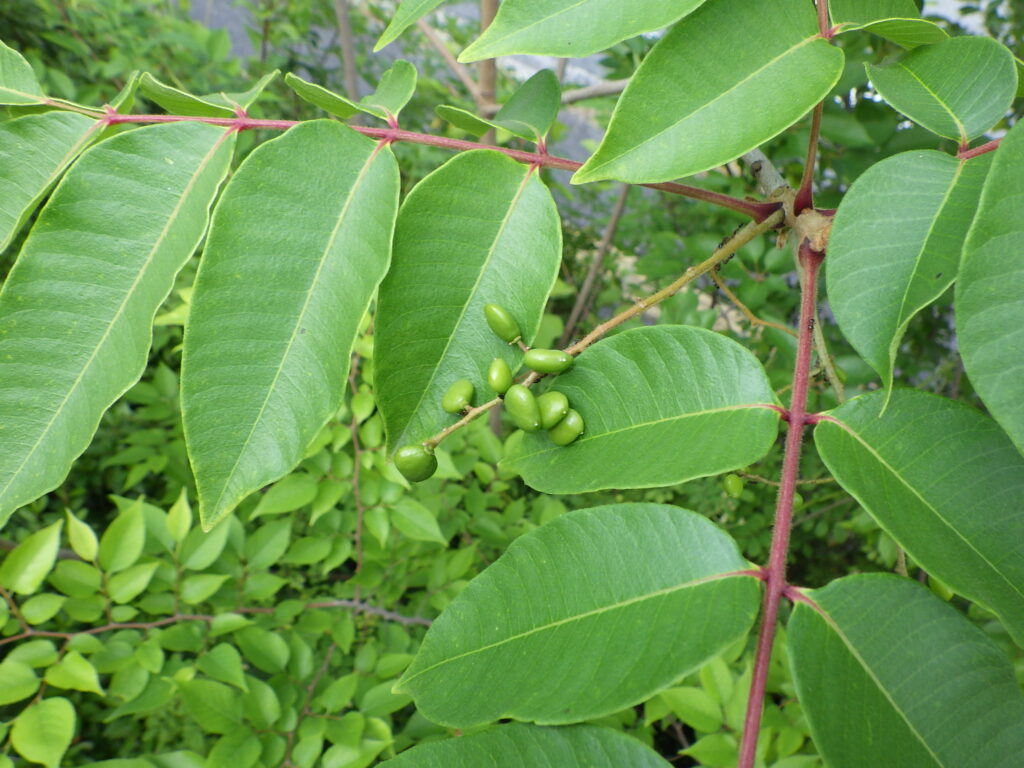
Research has shown that these fruits are eaten by birds, which then disperse the seeds.
However, when it comes to fruit, humans tend to prefer sweeter fruits, but why do they have these particular shapes and components?
While this isn't fully understood, it's possible that by altering the composition, nutrients like nitrogen and lipids (which serve as energy sources) are added, differentiating the fruit from those of other plants. This might also influence the types of birds that prefer it.
In fact, a bird that particularly prefers the genus Rhus has been identified (Ueda, 1999). That bird is the crow. In a study in Osaka Prefecture, by examining pellets and droppings regurgitated by crows, it was found that approximately 64% of the seeds were from the genus Rhus. Crows seem to prefer fatty fruits to sweet ones.
Another study in Japan that directly observed animals eating the fruit of the Japanese rhododendron using binoculars found that five species—the pale thrush, thrush, brown-eared bulbul, Daurian redstart, and shrike—consumed the fruit. The pale thrush and thrush, in particular, spend long periods of time on the rhododendron and are thought to contribute to seed dispersal (Sato and Sakai, 2001). The bird considered to contribute the most to seed dispersal is the thrush, which, unlike the pale thrush, does not have a winter territory and therefore defecates over a wide area.
The reason why young trees of the genus Rhus can sometimes be found even in small green spaces is thought to be due to seed dispersal by birds that like fat.
Did the genus *Rhus* change color in the red "to make its fruit more conspicuous"?!
An interesting hypothesis has been proposed regarding the fruits of the genus Rhus (Kamitani, 1999; Lev-Yadun, 2022).
One theory suggests that the red leaves of the Rhus genus turn red in early autumn because the contrast makes the fruits more conspicuous, attracting birds to eat them. This is known as the foliar fruit flags hypothesis.
Some argue that female plants that have actually produced fruit change color earlier than immature trees or male plants.
However, there are counterarguments to this hypothesis, such as the lack of any factual basis for it, and the significant disadvantages of the leaves changing color prematurely. Furthermore, plants with wind-dispersed fruits also frequently change color, which would likely confuse birds.
However, experiments have shown that the artificial red color created around the fruit has an effect of attracting birds, so it is now thought that this effect may exist, albeit very limited.
Even the colorful autumn leaves that adorn the seasons may actually play a more important role for some plants than simply shedding their leaves!
References
Fujiwara, A., Nishihiro, J., & Washitani, I. 2014. Ecosystem service evaluation of Japanese honeybees in a Satoyama nature restoration project area: Flower resource utilization and colony development. Conservation Ecology Research 19(1): 39-51. ISSN: 1342-4327, https://doi.org/10.18960/hozen.19.1_39
Hayashi, Masayuki. 2014. 1100 Tree Leaves Identified Through Real-Life Scans. Yama-kei Publishers, Tokyo. 759pp. ISBN: 9784635070324
Ichikawa, Toshihide and Ohara, Kenji. 2009. Adult behavior of *Hyperva* and *Hyperva* (Diptera, Syrphidae). Bulletin of the Faculty of Agriculture, Kagawa University 61(114): 1-10. ISSN: 0368-5128, http://id.nii.ac.jp/1731/00003525/
Ishida, H., Kuroda, Y., Hashimoto, Y., Sawada, Y., Ema, K., and Hattori, Y. 2010. The impact of Japanese deer on species diversity and species composition in warm temperate deciduous secondary forests. Conservation Ecology Research 15(2): 219-229. https://doi.org/10.18960/hozen.15.2_219
Kanagawa Prefecture Flora Survey Association. 2018. Kanagawa Prefecture Flora 2018 (Electronic Edition). Kanagawa Prefecture Flora Survey Association, Odawara. 1803pp. ISBN: 9784991053726
Kim, MJ, Kim, CJ, & Kwak, SS 1997. Antifungal activity of urushiol components in the sap of Korean lacquer tree (Rhus vernicifera Stokes). Korean Journal of Plant Resources 10(3): 231-234. https://koreascience.kr/article/JAKO199711920278770.page
Lev-Yadun, S. 2022. The phenomenon of red and yellow autumn leaves: Hypotheses, agreements and disagreements. Journal of Evolutionary Biology 35(10): 1245-1282. https://doi.org/10.1111/jeb.14069
Matsuyama, Shuhei; Osawa, Naoya; and Sakimoto, Michinori. 2008. Reproductive ecology of *Rhus trichocarpa*: The role of dioecious inflorescences and generalist pollinators in reproductive success. Abstracts of the Annual Meeting of the Ecological Society of Japan 55: P3-078. https://www.esj.ne.jp/meeting/abst/55/P3-078.html
Matsuyama, S., Osawa, N., & Sakimoto, M. 2009. Generalist pollinators in the dioecious shrub Rhus trichocarpa Miq.(Anacardiaceae) and their role in reproductive success. Plant Species Biology 24(3): 215-224. https://doi.org/10.1111/j.1442-1984.2009.00258.x
Miyamoto, S. 1960. Flower-visiting behavior of 14 species of flower wasps of the family Carangidae: Ecological studies of flower wasps of Japan XIV. Konchu (Japanese Journal of Insects) 28(2): 65-86. ISSN: 0915-5805, https://dl.ndl.go.jp/pid/10649907
Mogi, Toru; Ota, Kazuo; Katsuyama, Teruo; Takahashi, Hideo; Shirokawa, Shiro; Yoshiyama, Hiroshi; Ishii, Hidemi; Sakio, Hitoshi; and Nakagawa, Shigetoshi. 2000. Flowers Blooming on Trees: Polypetalous Flowers (Vol. 2, 2nd edition). Yama-kei Publishers, Tokyo. 719pp. ISBN: 9784635070041
Noshiro, Shuichi. 2007. Urushi (Japanese lacquer tree). Forest Science 50: 39-41. https://doi.org/10.11519/jjsk.50.0_39
Palm, NW, Rosenstein, RK, & Medzhitov, R. 2012. Allergic host defences. Nature 484(7395): 465-472. https://doi.org/10.1038/nature11047
Sato, Shigeho & Sakai, Atsushi. 2001. Predation process of the fruit of Rhus sylvestris by birds. Forest Applied Research 10(1): 63-67. ISSN: 1342-9493, https://doi.org/10.20660/applfor.10.1_63
Kamitani, Tomohiko. 1999. The two-color display strategy of fruits. In: Ueda, Keisuke (Ed.), Seed Dispersal: The Evolution of Mutual Aid Vol. 1 Seeds Carried by Birds (pp. 52-64). Tsukiji Shokan. ISBN: 9784806711926
Ueda, Keisuke. 1999. Unexpected Birds' Unexpected Preferences: Who Eats the Inconspicuous "Dry Fruit"?. In: Ueda, Keisuke (Ed.), Seed Dispersal: The Evolution of Mutual Aid Vol. 1: Seeds Carried by Birds (pp. 64-75). Tsukiji Shokan. ISBN: 9784806711926
Source
This article has been significantly expanded from the content included in the following book.