chemistry

Sponsored Link
animal

[Real-life experience] How to find bed bugs and the complete procedure for eradicating them! A thorough explanation of bite marks, eggs, and their life cycle.

Recently, bed bugs appeared in my apartment. Bed bugs (Cimex lectularius) are indoor pests belonging to the genus Cimex in the family Cordycepsidae, order Hemiptera. In Japan, after World War II, effective insecticides were used to combat them...
plant

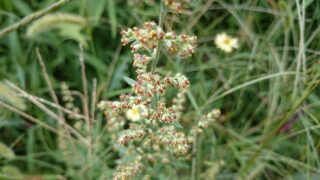
What are the differences between mugwort, wormwood (Artemisia princeps), bitter wormwood, and male wormwood? We'll explain how to distinguish between similar species! Did you know that mugwort is used not only in rice cakes but also in moxibustion and medicine?

Artemisia princeps, Artemisia japonica, Artemisia urticaria, and Artemisia japonica are all members of the Artemisia genus in the Asteraceae family, and are extremely common perennial herbs that dominate small vacant lots from urban areas to mountainous fields. In addition to having a cottony, fluffy underside to its leaves, it belongs to the Asteraceae family...
plant

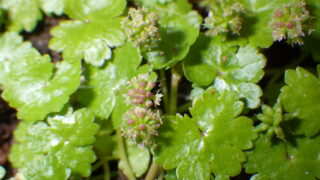
What are the differences between *Hydrocotyle japonica*, *Hydrocotyle sibthorpioides*, *Hydrocotyle japonica*, and *Hydrocotyle maximowiczii*? We'll explain how to distinguish between similar species! What insects visit these tiny flowers?

Hydrocotyle sibthorpioides, Hydrocotyle japonica, Hydrocotyle kobus, and Hydrocotyle sibthorpioides all belong to the genus Hydrocotyle in the family Araliaceae. These perennial herbs creep along the ground in slightly shaded areas of forests and other woodlands, and are notable for their small, nearly orbicular simple leaves. However, their flowers and fruits are small and inconspicuous...
animal

What are the differences between cochineal, lac, and shellac, insects we actually eat every day? Is it true that they are found in large quantities in red foods and lipstick? Are they dangerous? Why are they used?

In Japan, except in some regions, eating insects is extremely rare, and it's safe to say that it's almost unheard of among younger generations, especially in urban areas. While some advocate for insect consumption as a way to prepare for food shortages, cries of "Absolutely not!" are heard, mainly on social media. Even though I work with insects, I still...
plant

Is it a myth that spices were used during the Age of Discovery to mask the smell of rotten meat? What was the real reason? Is it also a myth that they were used to improve preservation?

I originally have a science background, but I enjoy reading world history content. I came across something interesting in that context. It was the idea that spices (spices excluding stems, leaves, and flowers) don't have much antibacterial properties, and that "spices were used to mask the smell of rotten meat"...
animal

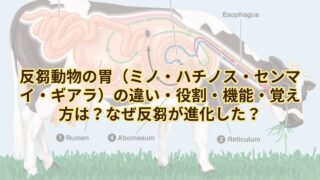
What are the differences, roles, functions, and ways to remember the stomachs of ruminants (tripe, honeycomb tripe, omasum, and abomasum)? Why did rumination evolve?

When you go to a yakiniku (Japanese barbecue) restaurant, you might see four parts of the cow's stomach (fore-stomach) listed as offal: mino, hachinosu, senmai, and giara. Because they have a distinctive taste and are internal organs, people either love them or hate them, but their chewy texture and compatibility with alcohol make them a popular choice...
plant

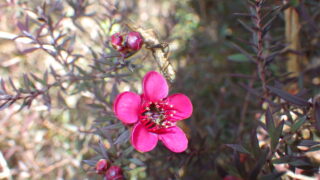
What are the differences between Manuka (Leptospermum scoparium) and waxflower? We'll explain how to distinguish between similar species! Does Manuka honey really have health benefits?

Both Leptospermum scoparium and waxflower belong to the Myrtaceae family and are cultivated for ornamental purposes or used as branches in flower arrangements, as they are part of the "native flowers" or "wildflowers" collectively known as "native flowers" or "wildflowers" native to Australia. Furthermore, in the case of Leptospermum scoparium, some varieties...
plant

What's the difference between Japanese star anise (Illicium anisatum) and Japanese star anise (Illicium verum)? We'll explain how to distinguish between these similar species! Japanese star anise protects graves, while Japanese star anise protects life!?

Both Japanese star anise (Illicium anisatum) and Japanese star anise (Illicium verum) belong to the genus Illicium in the family Schisandraceae. They are evergreen plants with glossy leaves, and their most distinctive feature is their fruit: a follicle-like fruit consisting of eight follicles arranged radially. Both are considered very important plants both domestically and internationally...
plant

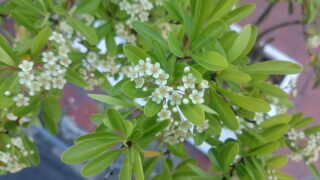
What are the differences between Pyracantha coccinea, Pyracantha japonica, and Pyracantha sulphurea? We explain how to distinguish between similar species! Is it a myth that Pyracantha causes sudden death in waxwings?

Pyracantha coccinea, Pyracantha japonica, and Pyracantha serrulata all belong to the genus Pyracantha in the Rosaceae family. They are characterized by their bright red berries that appear in winter and are frequently cultivated for ornamental purposes. In horticulture, however, this group is collectively referred to as "Pyracantha" or "Pyracantha" based on its genus name...
plant

What are the differences between Japanese madder, European madder, and Indian madder? An explanation of how to distinguish between similar species.

Japanese madder (Akane), European madder (Akane serrata), and Indian madder (Akane serrata) all belong to the genus Rubiaceae, and are well-known for their roots being used primarily for red dyeing. The color "akane-iro" (madder red) is derived from the plant "akane," and is also frequently used in personal names, even though its use has declined...
Sponsored Link