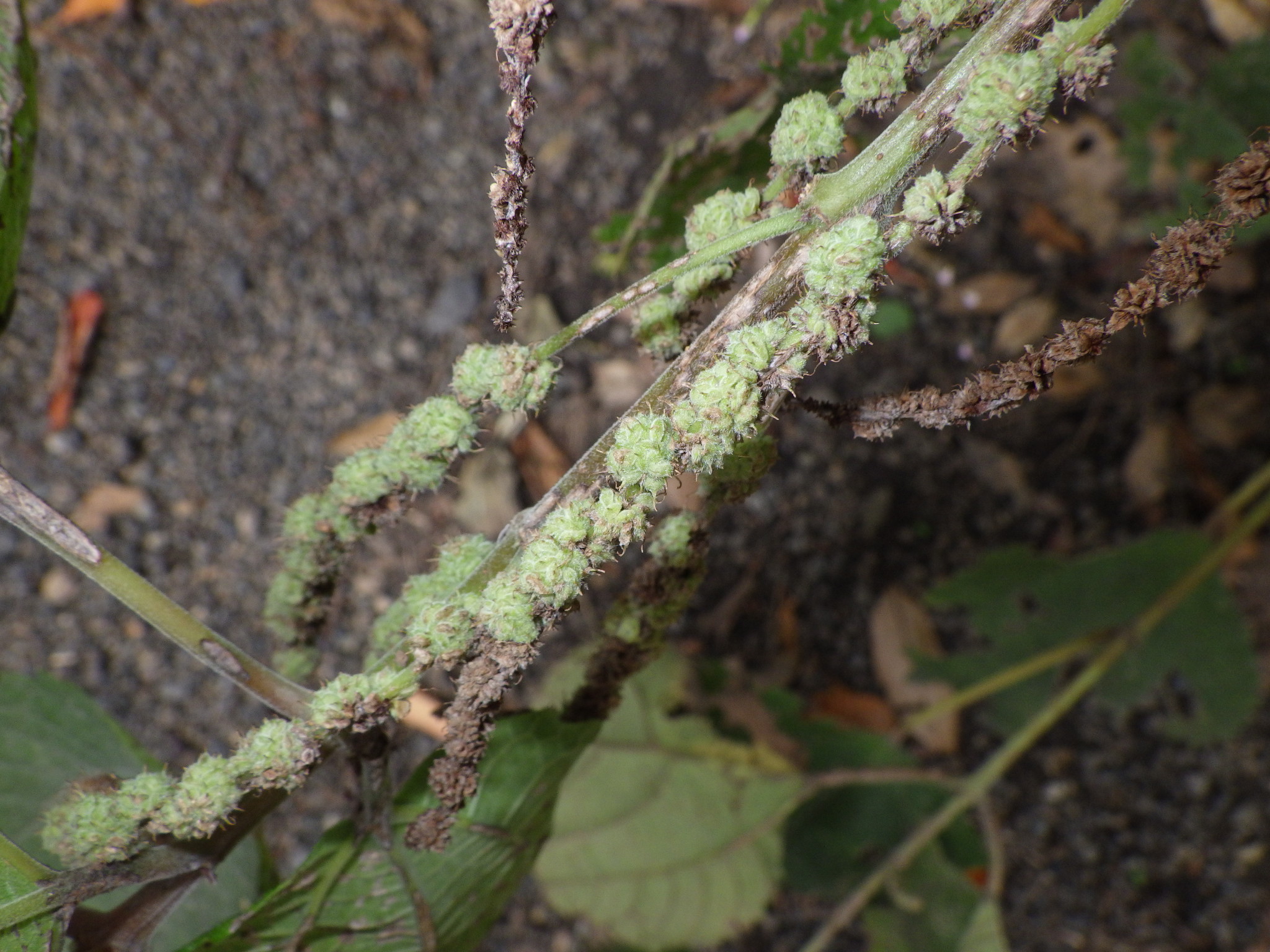
Both Simaroubaceae and Ailanthus altissima belong to the Simaroubaceae family and are deciduous trees that are sometimes cultivated in Japan. Ailanthus altissima, in particular, is known for its rapid growth and increasing naturalization worldwide. However, they share similarities such as having odd-pinnately compound leaves, so those who have never seen them may not be able to tell the difference. However, the two species belong to different genera, and there are significant differences in their leaflets, flowers, and fruits. The "disc-shaped glandular dots" on the leaves of Ailanthus altissima are extrafloral nectaries. Ailanthus altissima is similar in name and leaf shape to the Rhus genus, which includes lacquer trees and sumac, but there is a difference in the presence or absence of disc-shaped glandular dots. This article will explain the classification and morphology of the Simaroubaceae family.
What is Ailanthus altissima (Japanese laurel)?
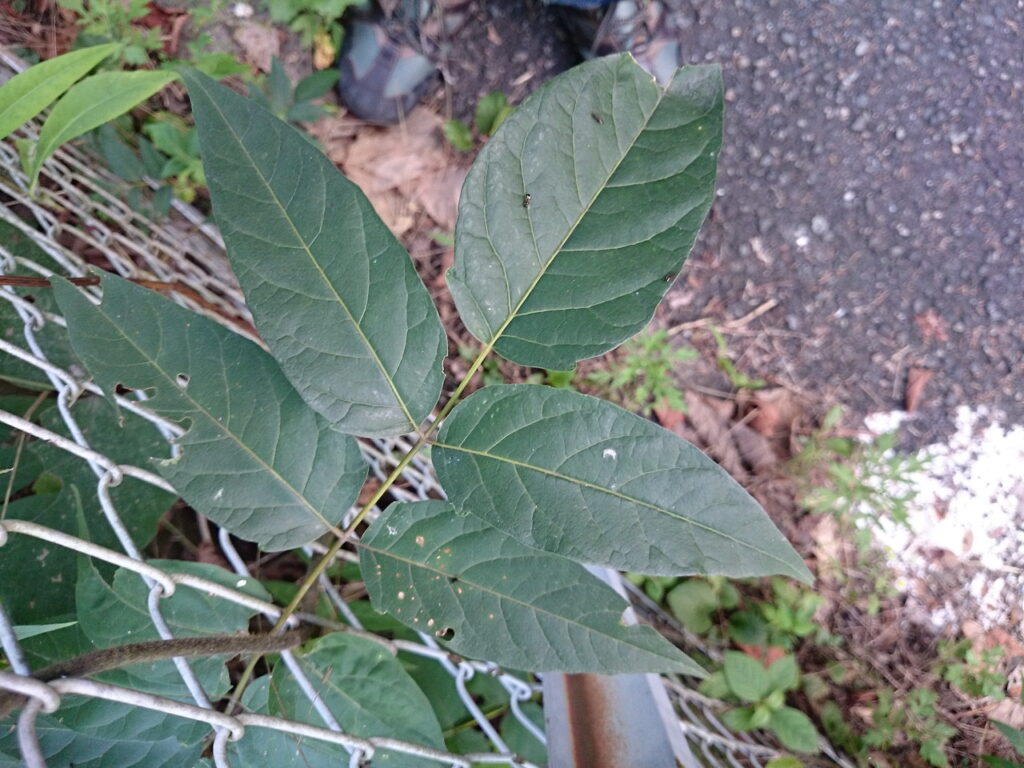
Picrasma quassioides, also known as bitter tree, is a deciduous tree distributed in Hokkaido, Honshu, Shikoku, Kyushu, and Okinawa in Japan; the Korean Peninsula; China; and the Himalayas. It grows in deciduous forests from the oak and chestnut zones to the lower beech zone. It is sometimes cultivated as a garden tree.
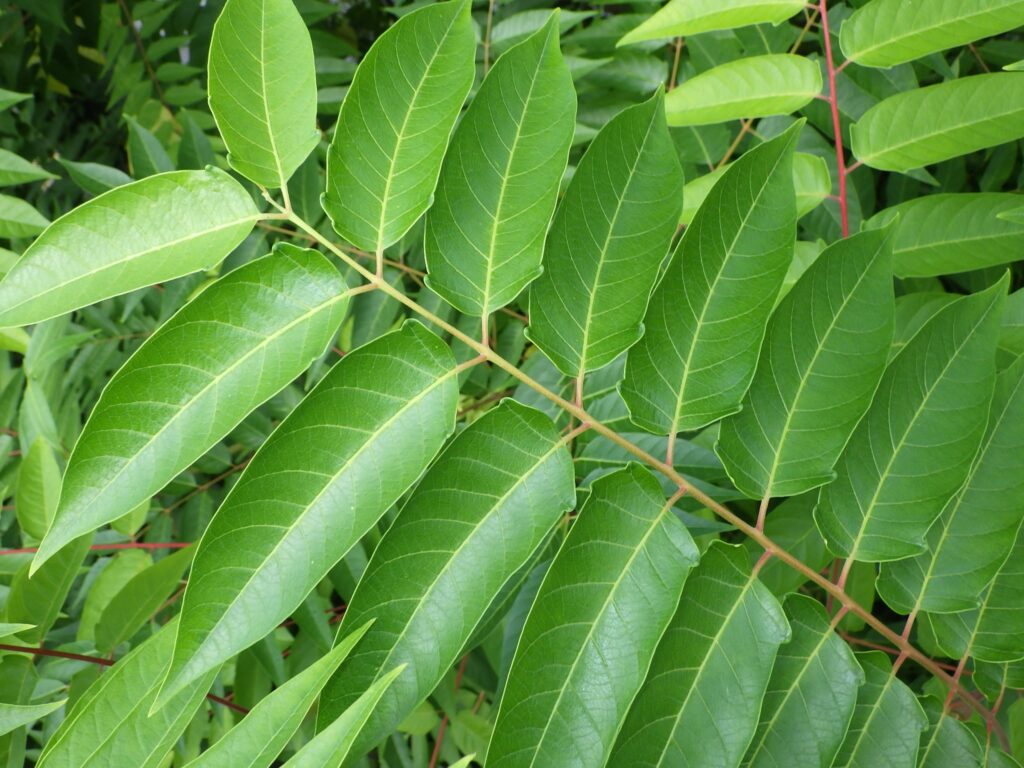
Ailanthus altissima, also known as the garden lacquer tree, is also called the "sacred tree." Native to China, it is widely planted in parks and along streets in Japan and has naturalized from Hokkaido to Kyushu. It is also known as the food source for the moth Samia cynthia pryeri and was once cultivated for silkworm farming. It has naturalized not only in Japan but also throughout Eurasia, Africa, and the Americas.
Both belong to the Simaroubaceae family and are deciduous trees that are sometimes planted in Japan. Ailanthus altissima, in particular, is known for its rapid growth and is becoming increasingly naturalized worldwide.
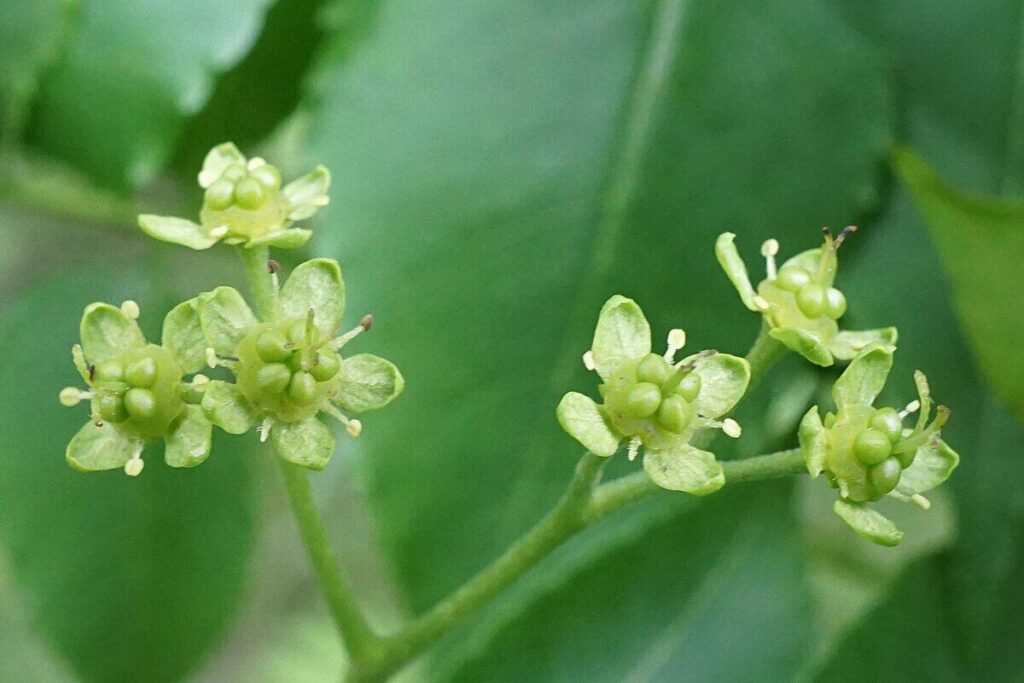
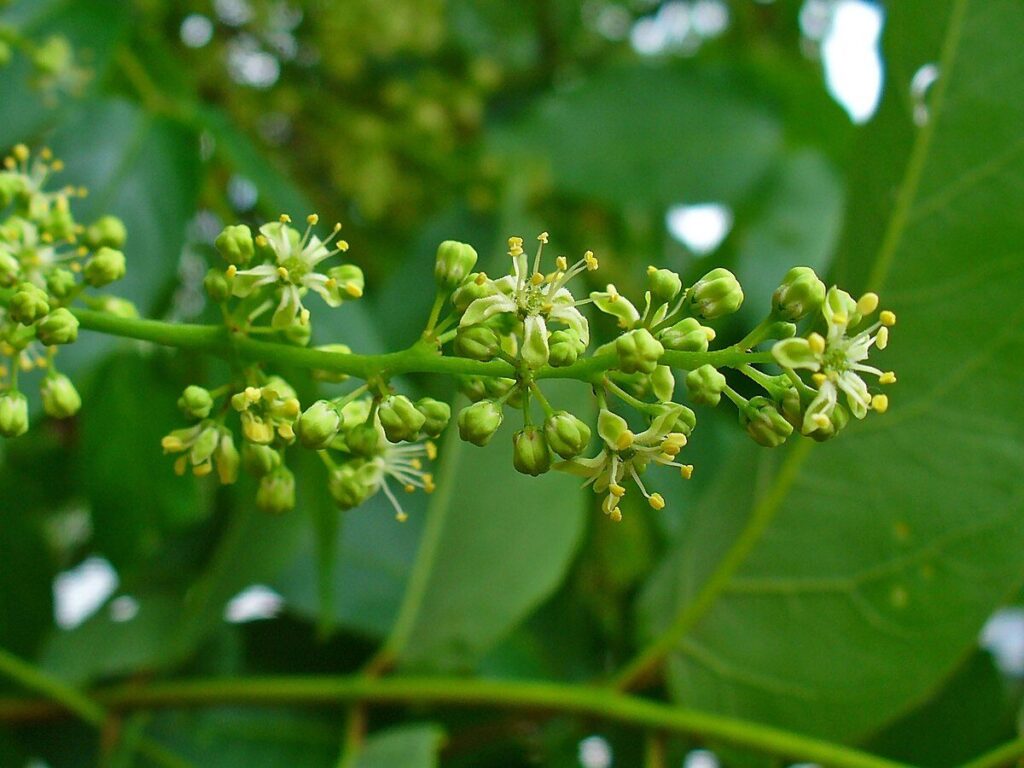
Its most distinctive features are that it is dioecious (having separate male and female plants) and has odd-pinnately compound leaves (rarely even-pinnately compound leaves). The flowers are inconspicuous and have green petals. Therefore, it may be difficult to identify.
What is the difference between *Bittergreen* and *Ailanthus altissima*?
The differences between *Pachypodium* and *Ailanthus altissima* lie in various aspects (Kanagawa Prefecture Flora Survey Association, 2018; Hayashi, 2019). This can be expected from the fact that *Pachypodium* belongs to the genus *Pachypodium*, while *Ailanthus altissima* belongs to the genus *Ailanthus altissima*.
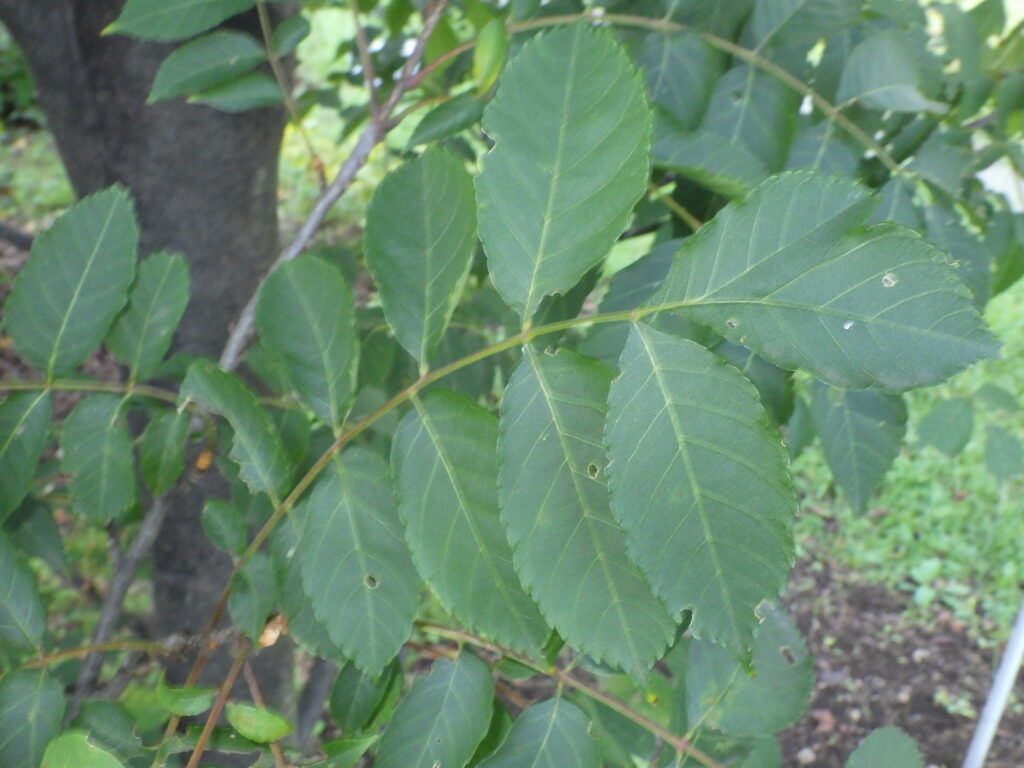
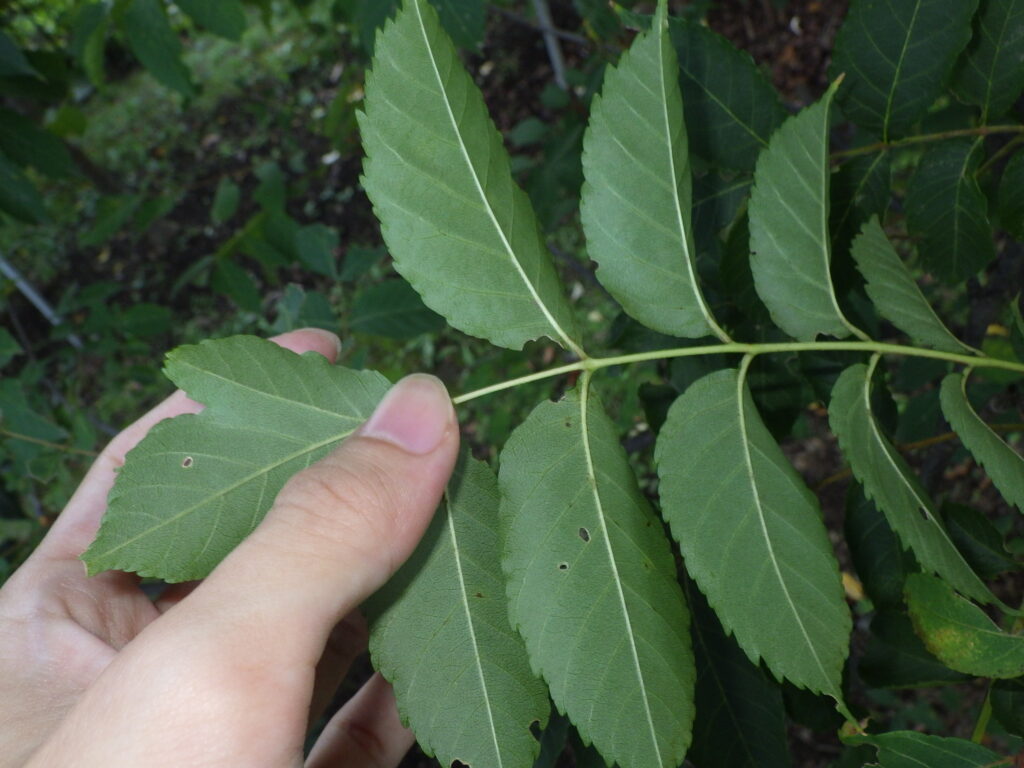
First, there are significant differences in the leaflets.
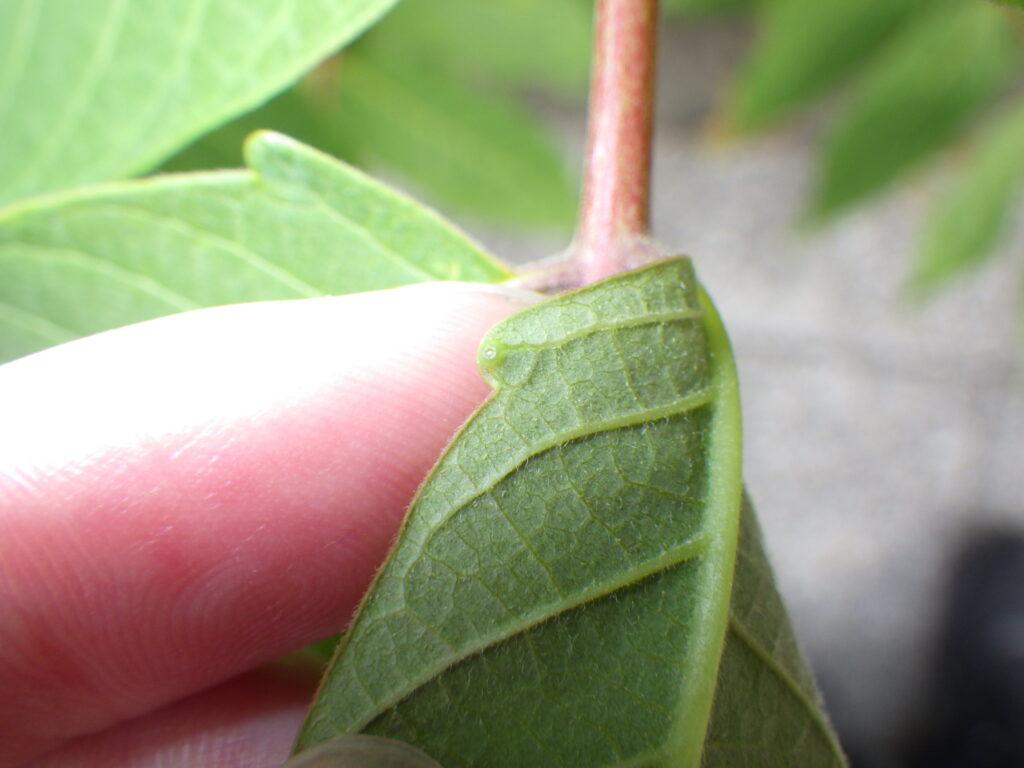
While *Pachypodium* lacks any special structure in its leaflets, *Ailanthus altissima* has a "disc-shaped glandular dot" on the leaf margin at the base (leaf leg) of the underside of the leaflet.
The presence of these glandular dots causes the base of the leaflets of Ailanthus altissima to be slightly swollen and irregularly shaped. This can be easily identified by looking at the leaf from above, even if the glandular dots are not visible.
The disc-shaped glandular dots on the leaves of the tree of Ailanthus altissima are a type of extrafloral nectary and have a unique shape, which can be helpful in distinguishing it from other similar species. Although we call them "glandular dots," recent research has shown that they do not actually have pores or tubes, but rather secrete nectar from fissures in the tissue (Poljuha et al., 2023).
These extrafloral nectaries are known to secrete nectar, attracting carnivorous insects such as ants, wasps, and spiders (Staab et al., 2017). Of the total 75% individuals, ants were observed, and it is thought that the plant protects itself from herbivorous insects by attracting primarily aggressive ants. Incidentally, there are also other extrafloral nectaries at the base of the petioles and petioles.
Regarding the flowers, there is a difference in that *Pachypodium* has four flat petals, while *Ailanthus altissima* has five petals that curl up into a tube.
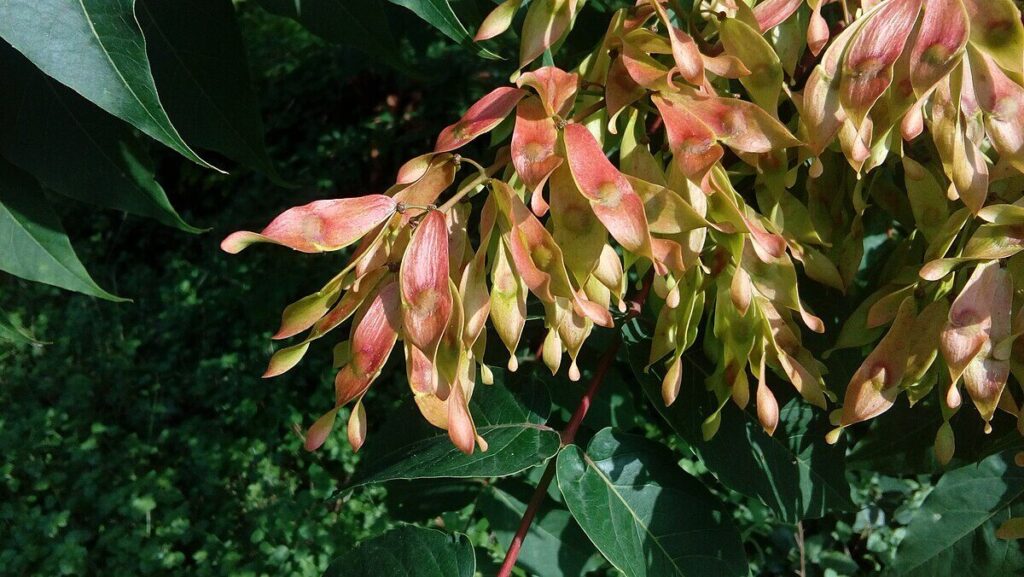
Regarding the fruits, there is a difference between the two: in the case of the Japanese quince (Picranopteris spp.), the fruit is a drupe without wings and the seeds are dispersed by animal feeding, while in the case of the tree of heaven (Ailanthus altissima), the fruit is a samara and the seeds are dispersed by wind.
As its Japanese name suggests, the leaves of the Japanese quince (Nigaki) are bitter, but distinguishing it from poisonous plants is also necessary, so this might be a distinction for more experienced gardeners.
Another characteristic of the Ailanthus altissima tree is that when you tear its leaves, they emit a sesame-like smell.


What are the differences between Ailanthus altissima, Rhus lacquerus, and Rhus succedanea?
Since the name "Ailanthus altissima" (Japanese lacquer tree) includes the word "urushi" (lacquer tree), many people may wonder how it differs from other members of the Anacardiaceae family, such as Toxicodendron vernicifluum (Japanese lacquer tree) and Toxicodendron succedaneum (Japanese wax tree).
Indeed, the leaves of plants in the genus Rhus, such as lacquer trees and sumac, are odd-pinnately compound leaves and look quite similar at first glance.
However, as mentioned above, the "disc-shaped glandular dots" at the base of the leaflets on Ailanthus altissima are unique and not found in other members of the genus Rhus.
Therefore, the irregular shape of the leaflet base is not observed in the genus Rhus.
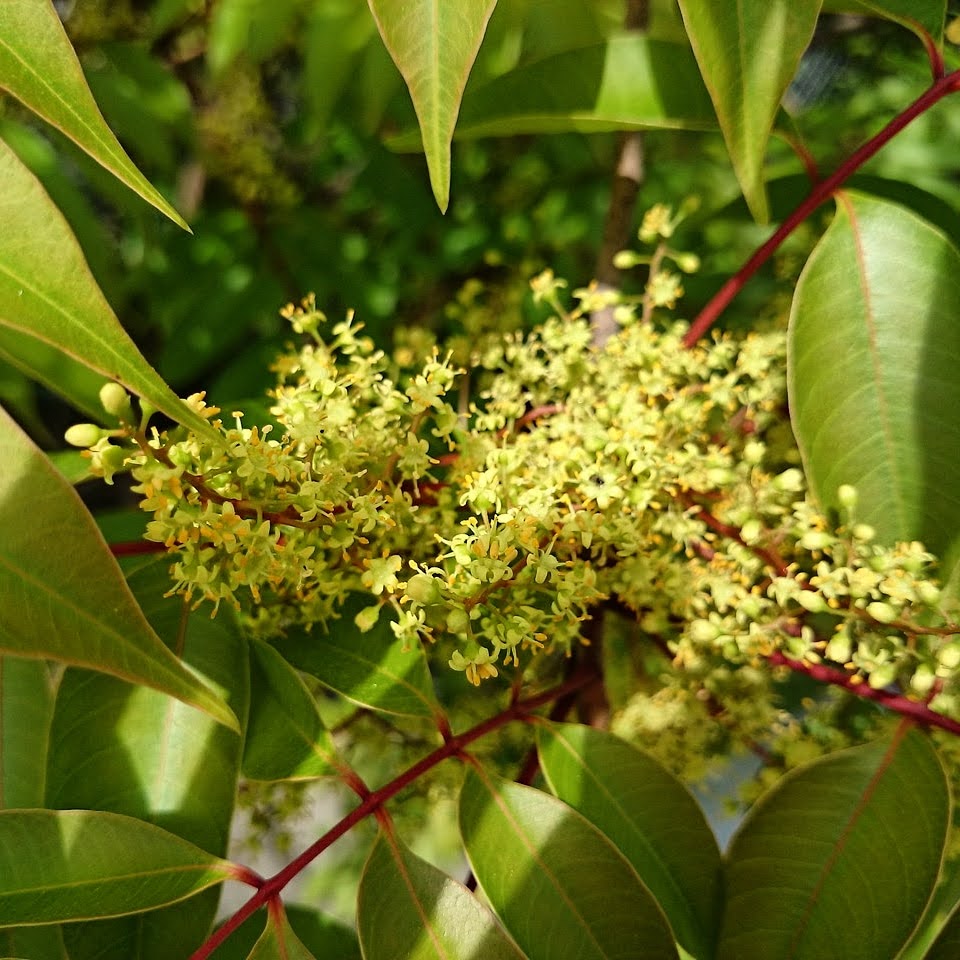
The shape of the flowers is also slightly different, although it is difficult to confirm because they are small. As for the fruit, as mentioned above, Ailanthus altissima has samaras, while the Rhus genus has drupes which are rich in fat, so they are completely different.
Furthermore, unlike the lacquer tree (Rhus genus), the tree of the same name does not cause a rash.
For more information on the genus Rhus, including the differences between lacquer trees (Toxicodendron vernicifluum) and sumac trees (Toxicodendron succedaneum), please see our separate article.
References
Hayashi, Masayuki. 2019. Tree Leaves: Expanded and Revised Edition - Identifying 1300 Species Through Real-Life Scans. Yama-kei Publishers, Tokyo. 824pp. ISBN: 9784635070447
Kanagawa Prefecture Flora Survey Association. 2018. Kanagawa Prefecture Flora 2018 (Electronic Edition). Kanagawa Prefecture Flora Survey Association, Odawara. 1803pp. ISBN: 9784991053726
Poljuha, D., Uzelac, M., Ferri, TZ, Damijanić, D., Šimunić, M., Korovljević, H., … & Sladonja, B. 2023. Morphology of extrafloral nectaries of Ailanthus altissima (Mill.) Swingle (Simaroubaceae). Periodicum Biologorum 125(1-2): 27-34. ISSN: 0031-5362, https://doi.org/10.18054/pb.v125i1-2.24852
Staab, M., Methorst, J., Peters, J., Blüthgen, N., & Klein, AM 2017. Tree diversity and nectar composition affect arthropod visitors on extrafloral nectaries in a diversity experiment. Journal of Plant Ecology 10(1): 201-212. https://doi.org/10.1093/jpe/rtw017