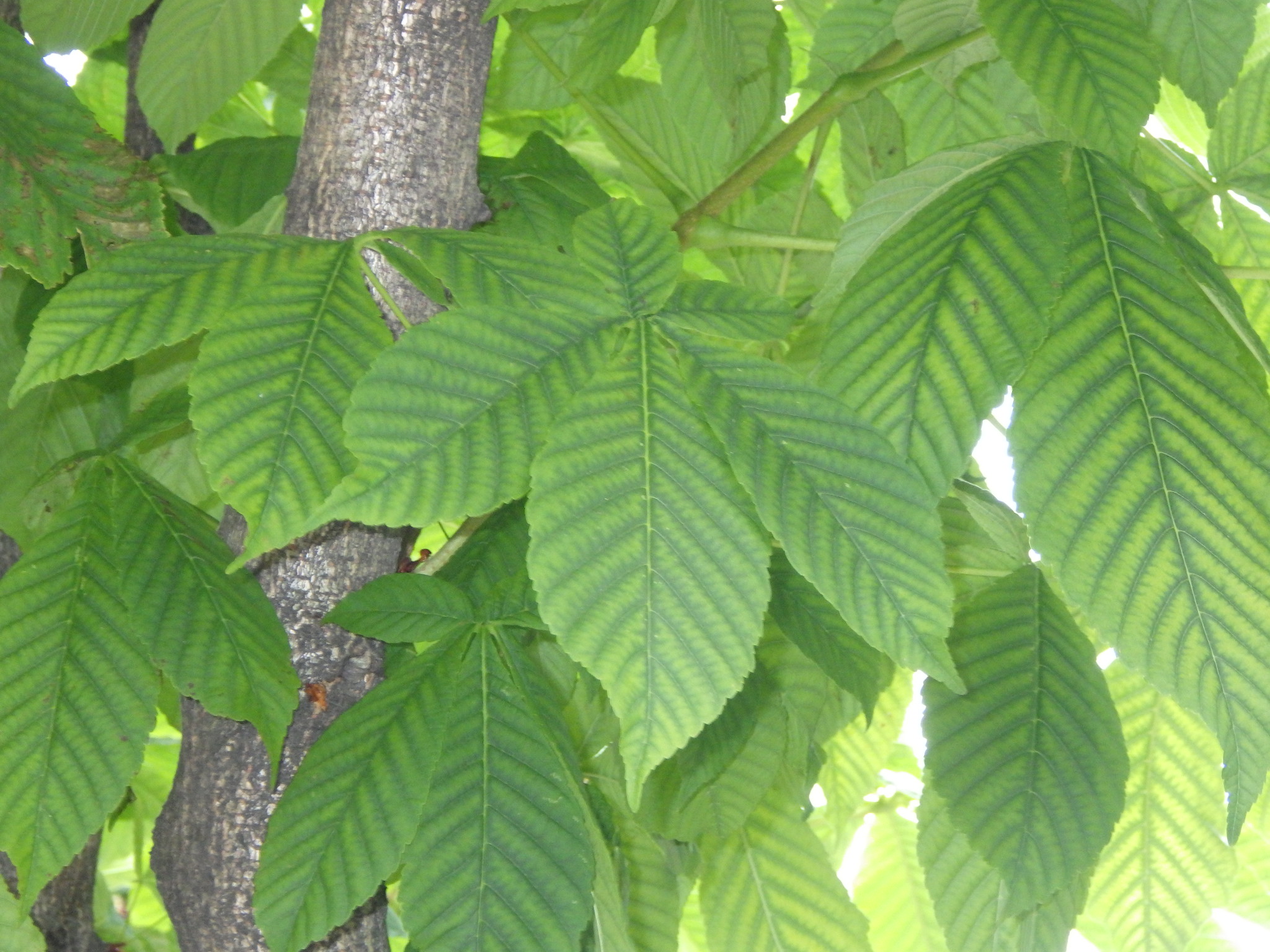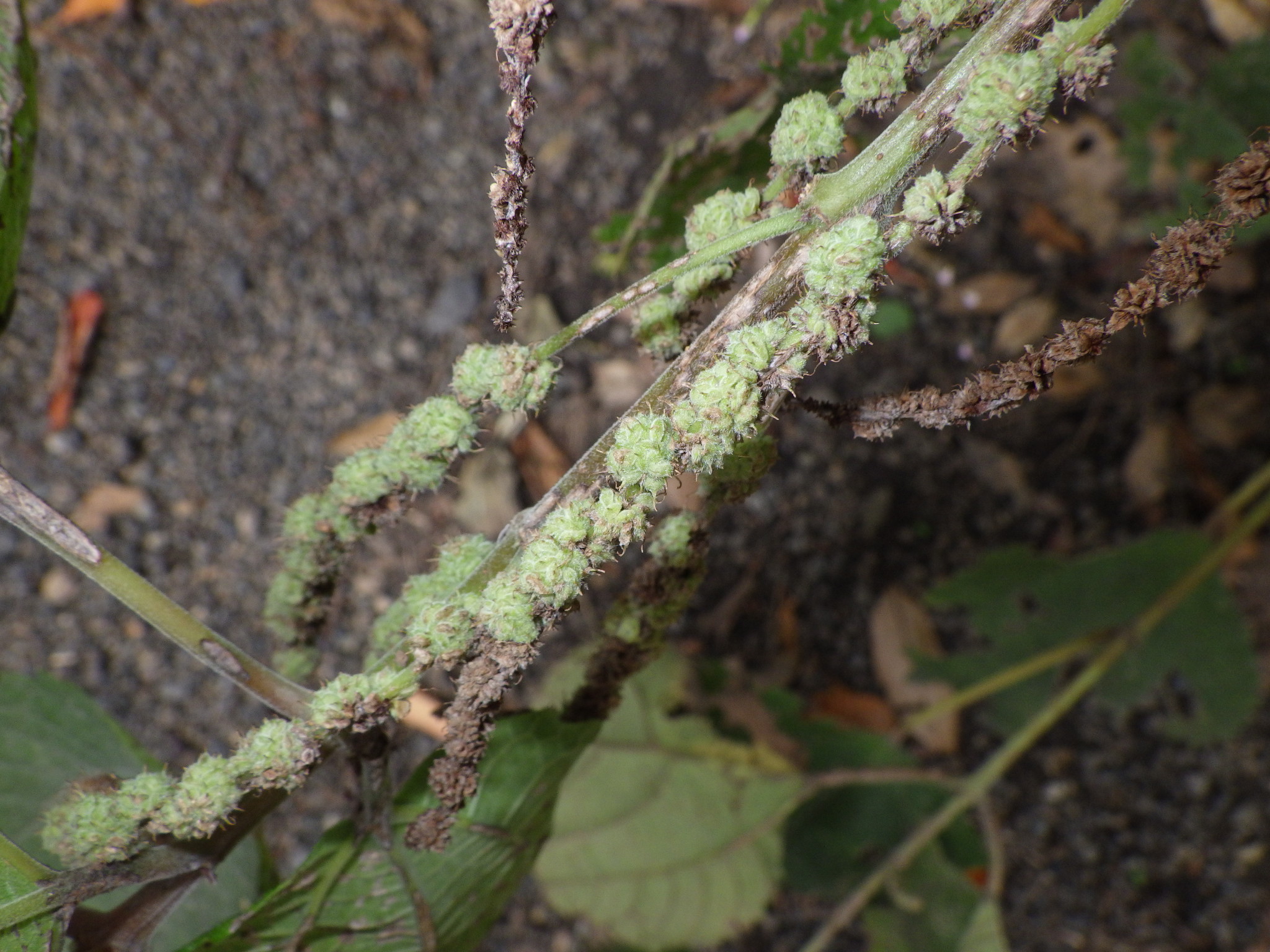
Boehmeria japonica, Boehmeria nivea, Ramie, and Urtica dioica are all members of the Urticaceae family and share the characteristic of having leaves with fine veins and serrations. They are common herbaceous plants that grow in mountains and fields. Boehmeria japonica and Ramie are also well-known for their use as fibers. However, because the classification of the Urticaceae family is complex and the flowers lack distinctive features, they are often confused. There are many closely related species and hybrids, so it is not possible to show a perfect method of distinction here, but if we limit ourselves to these four species, we can distinguish them by observing the stems, leaves, and flowers comprehensively. This article will explain the classification and morphology of some well-known species of the Urticaceae family.
What are Boehmeria nivea, Ramie, and Nettle?
Boehmeria japonica var. longispica, also known as Japanese ramie, is a perennial herb that grows in mountainous and wild areas, distributed from Hokkaido to Kyushu in Japan, as well as in Korea and eastern China.
Boehmeria nivea var. concolor f. nipononivea, also known as kusamao or choma (though this may include the other variety, Nanban-karamushi var. nivea), is a perennial herb distributed throughout Honshu, Shikoku, Kyushu, and the Ryukyu Islands in Japan, as well as in eastern and southern Asia, growing along roadsides and forest edges. Its scientific name in Chinese botanical guides is Boehmeria nivea var. tenacissima (Wu et al., 2003).
Ramie (Boehmeria nivea var. candicans) is a variety of ramie cultivated for fiber in China and other regions. It is not found in Japan.
Nettle (Urtica thunbergiana) is a perennial plant that grows in forest edges and is distributed in Honshu, Shikoku, and Kyushu in Japan, as well as in Korea.
All of these plants belong to the Urticaceae family and share the characteristic of having leaves with prominent fine veins and serrations. They are common herbaceous plants that grow in mountains and fields.
Of these, the bast fibers obtained from the stem bark of ramie and Boehmeria nivea are known to be extremely strong, similar to hemp. In China, ramie was used for fiber production, while in Japan, before the Edo period, fibers were produced from Boehmeria nivea and Boehmeria japonica.
In Japan, ramie has been mentioned since the "Nihon Shoki," a chronicle compiled during the Nara period, and has been used as a raw material for thread, cloth, and clothing.
Although the fiber itself is strong, its production volume has decreased due to competition from other fibers and synthetic fibers, making mass production difficult. In Japan, the use of ramie has shifted from kale to ramie, and it is still produced only in Showa Village in the Aizu region of Fukushima Prefecture.
In Japan, the beetle * Paraglenea fortunei* may be more well-known than the ramie plant itself. Ramie was introduced to Japan by being attached to ramie plants, but its host plants are diverse, and it now inhabits nettle family herbs, including wild ramie.
Although opportunities to use them have decreased, these plants are still common wildflowers and include some that have historically played an important role in supporting Japan. However, perhaps due to the complex classification of the Urticaceae family, they are often confused.
While you might see descriptions on the internet stating that "ramie = Japanese ramie = ramie" is incorrect depending on your classification system. At least in Japan, they are treated as separate species. (However, due to the large and complex variations, some worldwide consider them to be the same species rather than separate into varieties (RBG Kew, 2024).)
What are the differences between Boehmeria japonica, Ramie, and Urtica dioica?
The Urticaceae family has many species, and in addition to other species and hybrids besides the four mentioned above, there is considerable variation even within each species, making identification difficult. Therefore, even if the four species mentioned above can be distinguished, accurate identification is not possible, and further detailed examination is necessary.
However, for this example, let's focus on four well-known varieties to get a general idea of their differences.
First, as can be seen from their scientific names, the four species are broadly classified into two groups: Boehmeria japonica, Boehmeria nivea, and Ramie, which belong to the Boehmeria genus, and Urticaria, which belongs to the Urticaria genus (Kanagawa Prefecture Flora Survey Association, 2018).
One difference between Boehmeria nivea, Boehmeria japonica, and Ramie is that they do not have stinging hairs, while Urticaria has them.
This is simple: nettles have thorns that hurt when they sting you.
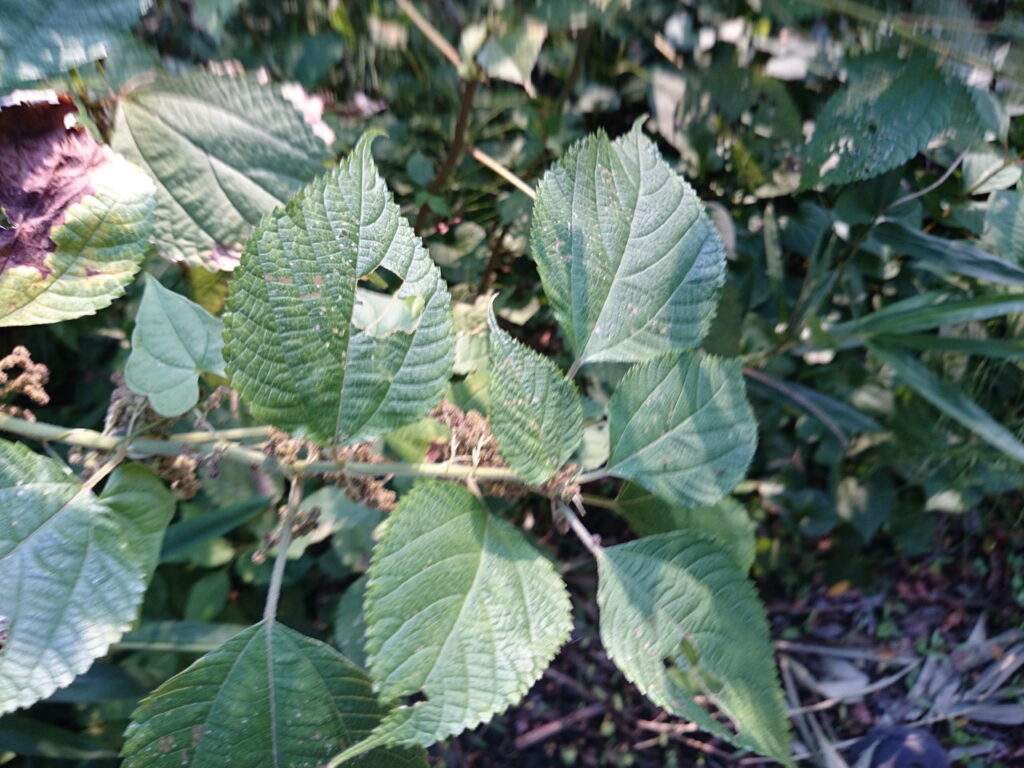
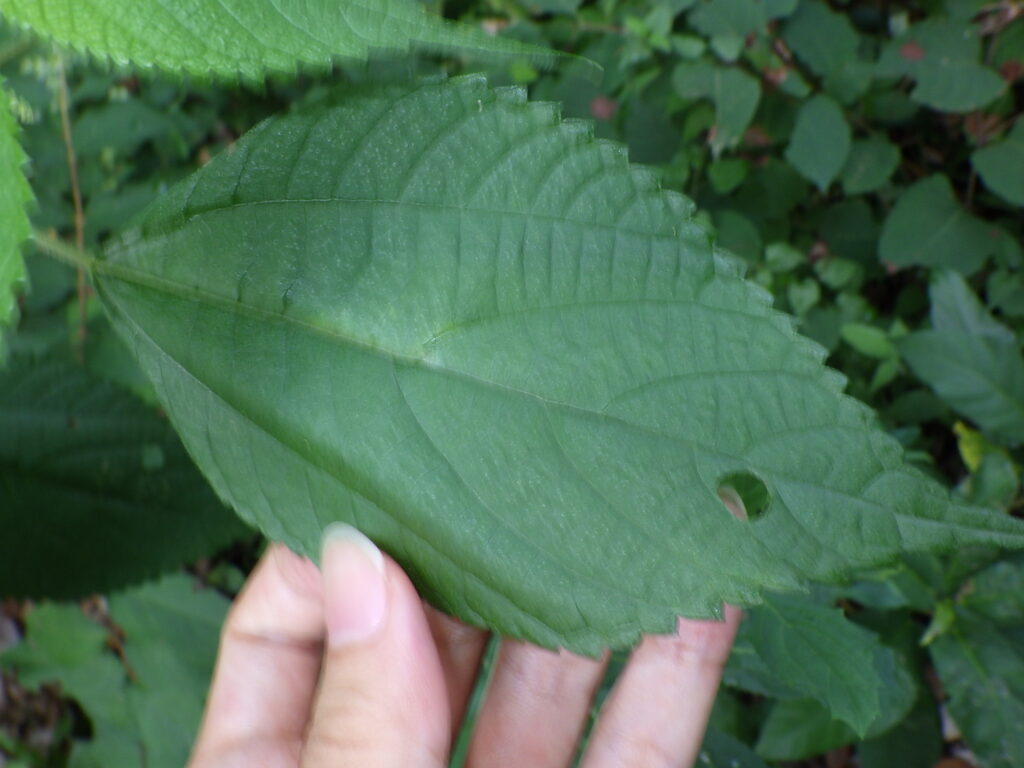
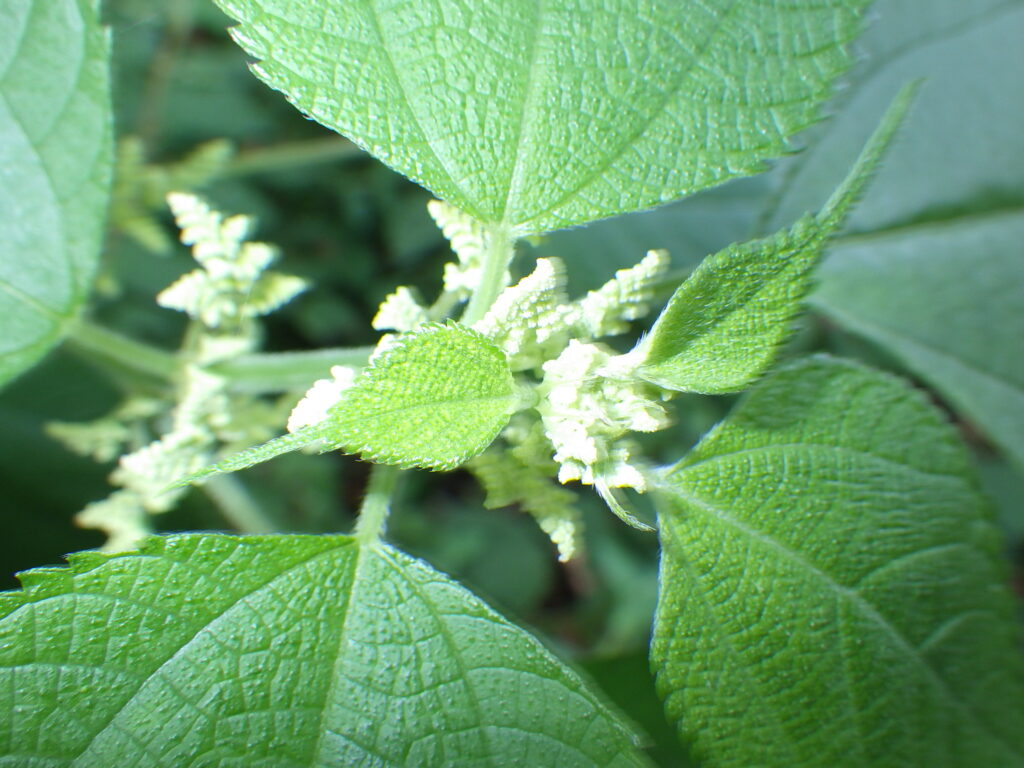
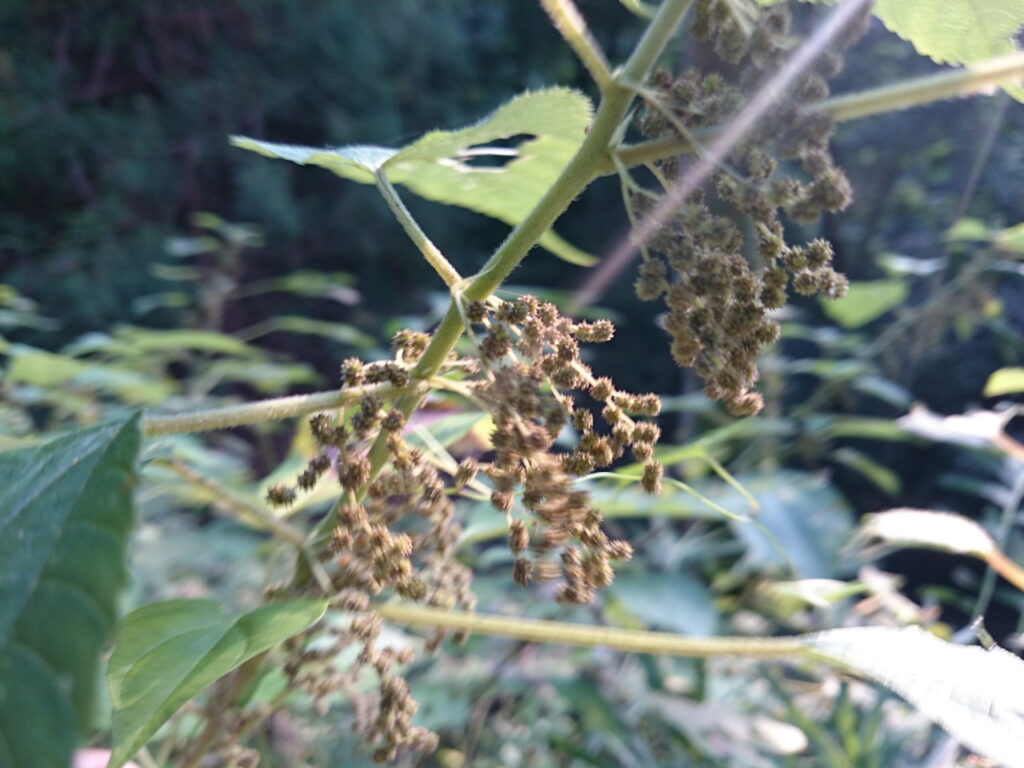
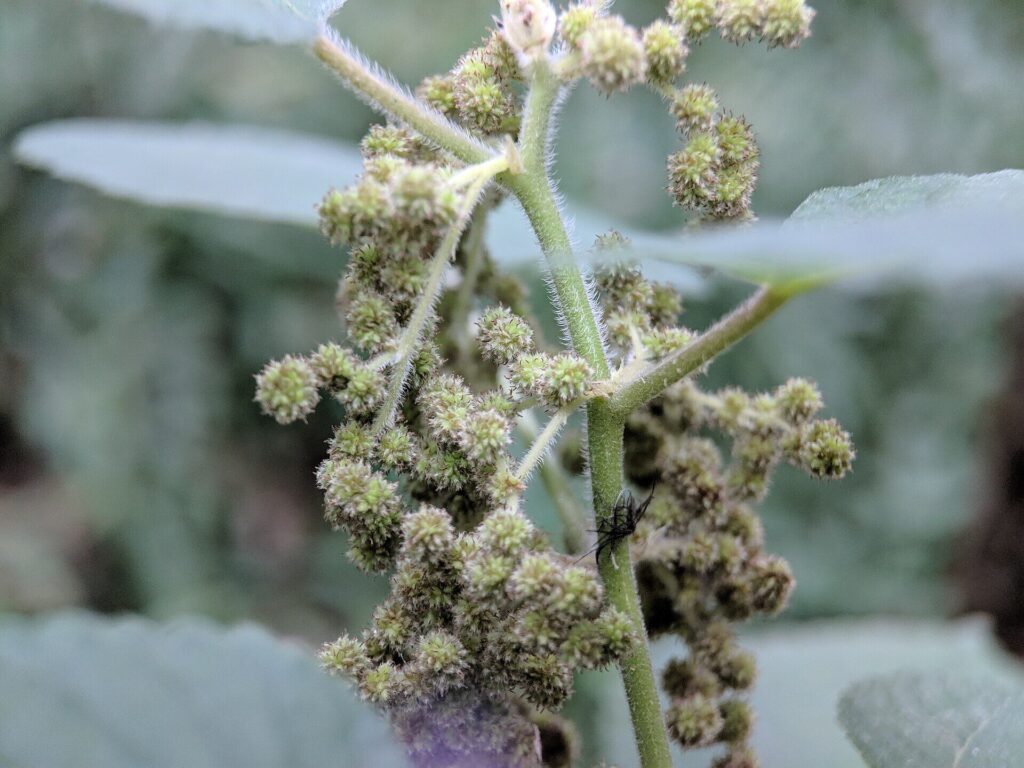
Regarding the remaining three species, the difference lies in the fact that Boehmeria japonica has opposite leaves and the base of the inflorescence branches is unbranched, while Boehmeria nivea and Ramie have alternate leaves and the inflorescence branches branch from the base, forming a cymose inflorescence.
While these two points are considered important for classification, differences can also be observed in the flowers. In Boehmeria japonica, the pistils of the female flowers are long and conspicuous, while in Boehmeria nivea and Ramie, the pistils of the female flowers are short and inconspicuous.
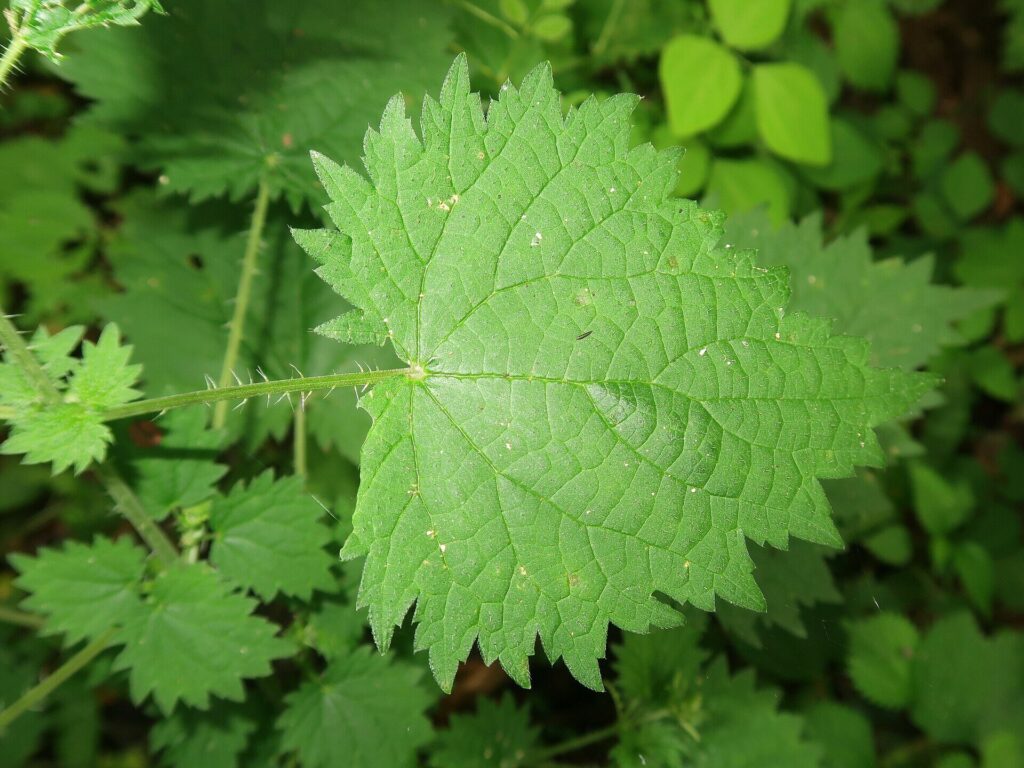
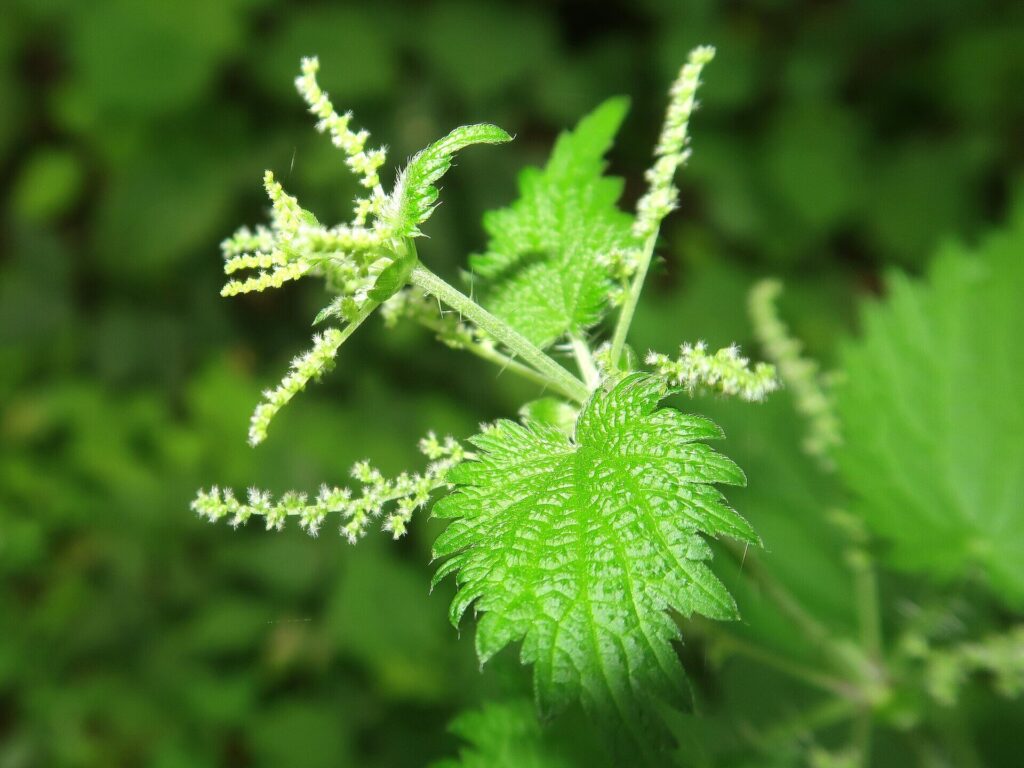
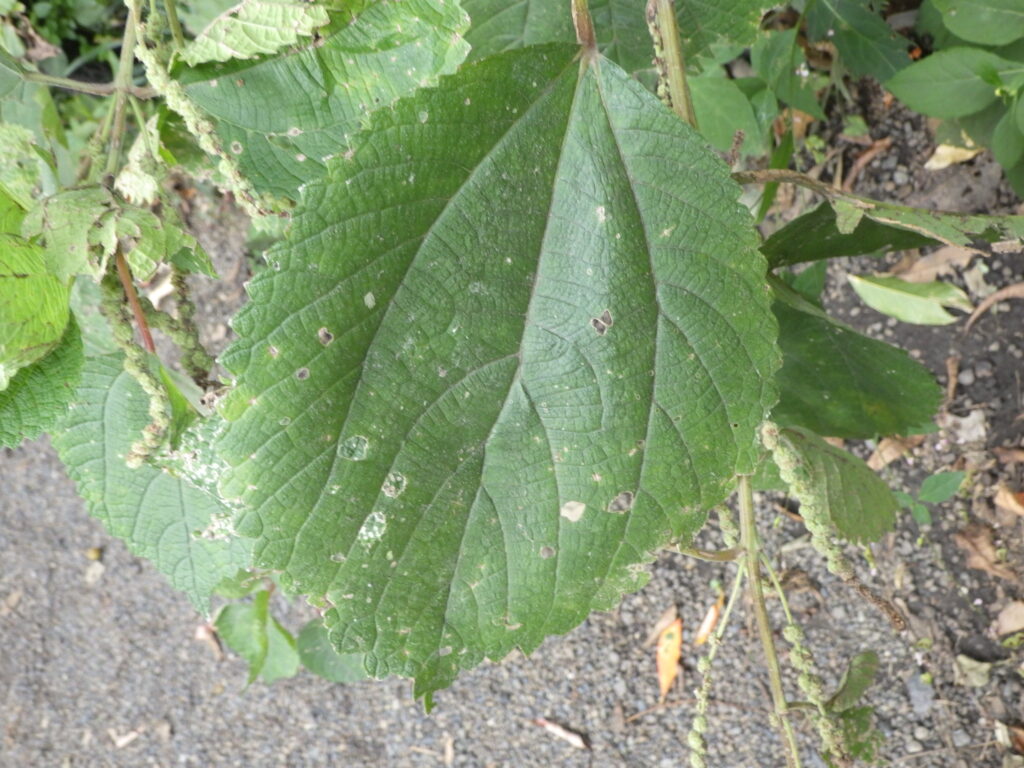
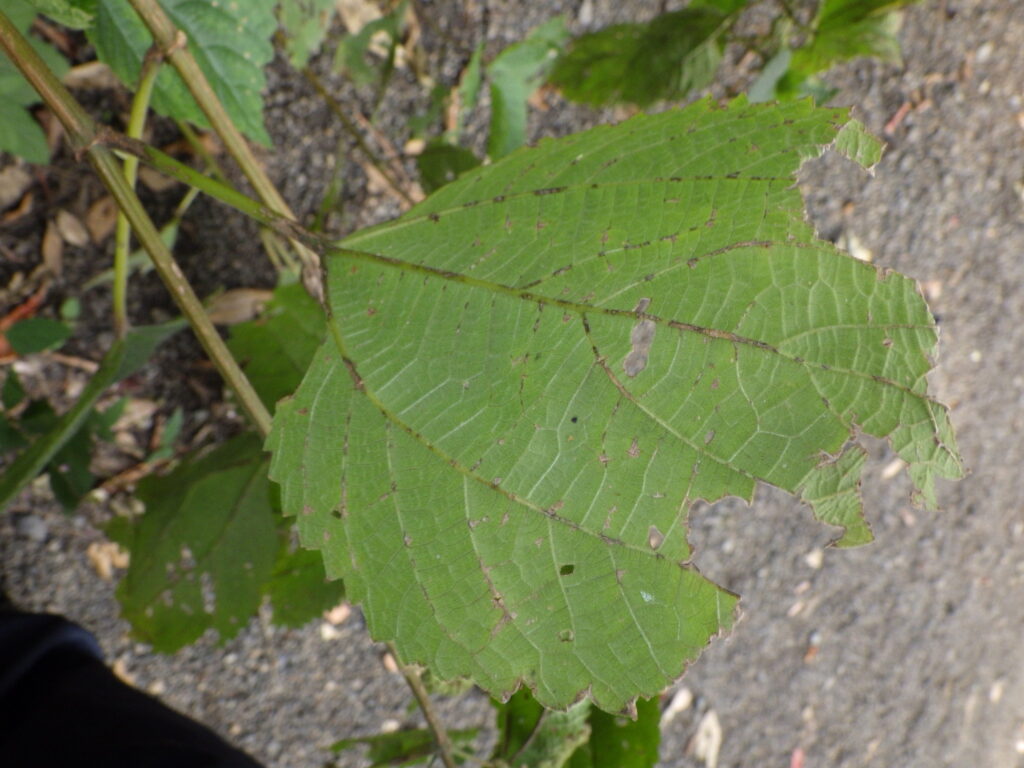
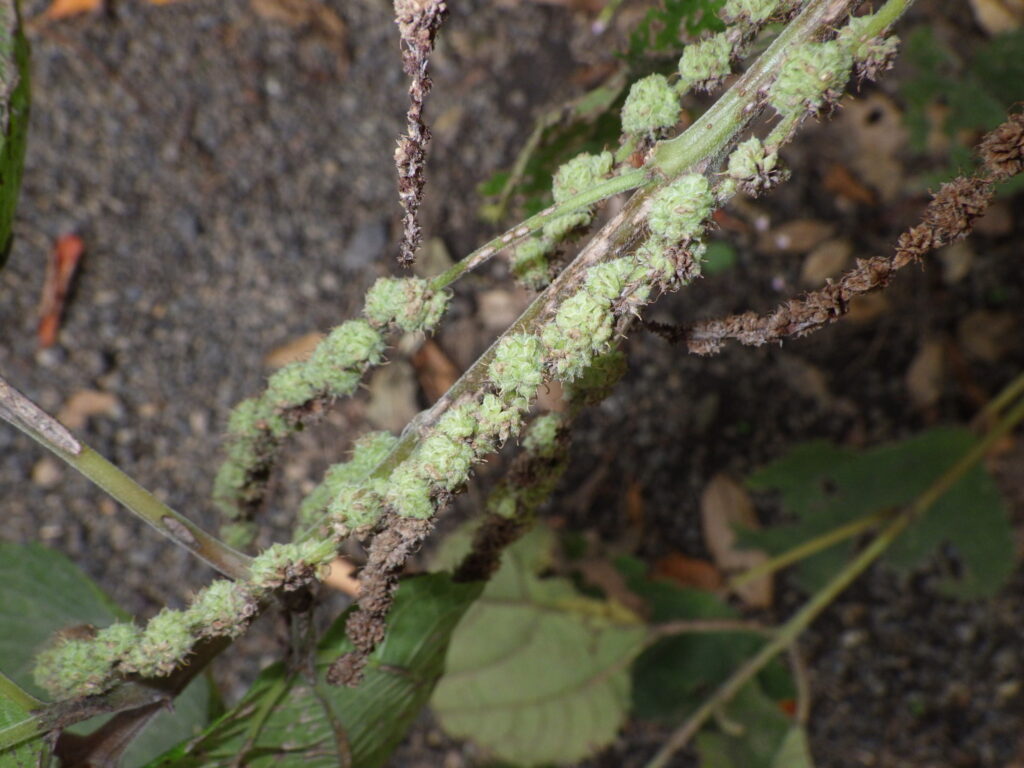
What is the difference between ramie and Japanese ramie? What is the difference between Japanese ramie and Nanban ramie?
The difference between ramie and kale is only at the varietal level, and not a significant difference.
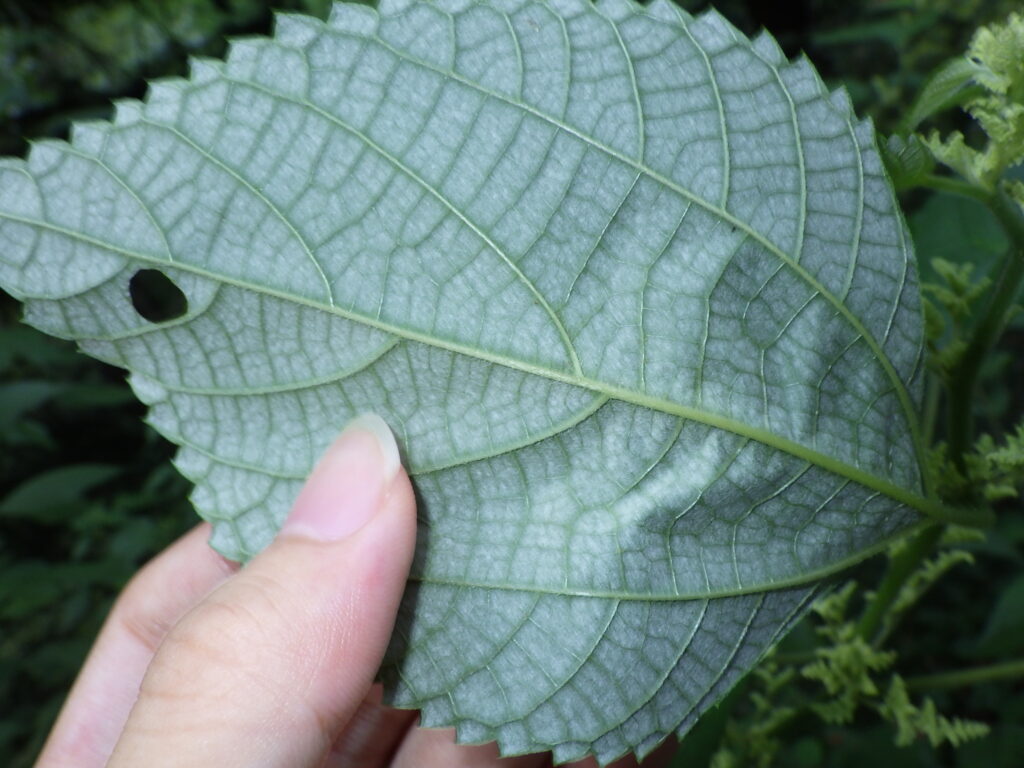
Specifically, in Boehmeria japonica, while white downy hairs are present on the underside of the leaves, they are limited to the leaves at the top of the stem, and the hairs on the stem and petioles tend to be appressed. In contrast, in Ramie, snow-white downy hairs are present on the underside of the leaves even at the bottom of the stem, and the upper part of the stem and petioles are densely covered with coarse, spreading hairs.
For practical purposes, simply checking the hairs on the stem should suffice.
However, the characteristic of having snow-white downy hairs on the underside of the leaves at the bottom of the stem, and dense, coarse, spreading hairs on the upper part of the stem and petioles, is actually exactly the same as that of another variety, Boehmeria nivea.
The difference between Boehmeria nivea and Boehmeria ramie is that ramie is considered a larger cultivated variety, but my research has not been able to confirm a specific size requirement for it to be classified as ramie.
Ramie does not grow wild in Japan, at least not in the wild. If you see a specimen in the wild with "snow-white downy hairs on the underside of the stem, including the lower leaves, and dense, coarse, spreading hairs on the upper part of the stem and petioles," it is likely to be Boehmeria nivea. Incidentally, Boehmeria nivea is also a variety that was originally cultivated but escaped cultivation and became naturalized.
One variety of ramie is Boehmeria nivea var. concolor f. concolor, which retains its green underside instead of turning white.
Another known variety is Boehmeria nivea var. viridula, which is distributed in Okinawa and has white undersides to its leaves but lacks downy hairs.
While the current Japanese classification system divides them as described above, there is a global view that does not divide them as precisely as described (RBG Kew, 2024).
References
Kanagawa Prefecture Flora Survey Association. 2018. Kanagawa Prefecture Flora 2018 (Electronic Edition). Kanagawa Prefecture Flora Survey Association, Odawara. 1803pp. ISBN: 9784991053726
RBG Kew. 2024. The International Plant Names Index and World Checklist of Vascular Plants. Plants of the World Online. http://www.ipni.org and https://powo.science.kew.org/
Wu, ZY, Raven, PH, & Hong, DY (Eds.). 2003. Flora of China (Vol. 5 Ulmaceae through Basellaceae). Science Press, Beijing, and Missouri Botanical Garden Press, St. Louis. ISBN: 9781935641056