Both Neolitsea sericea and Quercus acuta are evergreen trees belonging to the Neolitsea genus that are naturally distributed in Japan. Therefore, you may often see them in the wild, but you might confuse them because their leaf shapes are very similar. However, you can definitely distinguish them by examining the whiteness of the underside of the leaves and the color of the fruit. In terms of uses, Neolitsea sericea has been used for its oil and wood, while Quercus acuta has not been of much use to humans, as its name suggests. Despite these differences, Neolitsea sericea and Quercus acuta also have quite different flowering cycles. Both species have flower shapes and are dioecious (having separate male and female plants), but the flower colors are contrasting: Neolitsea sericea has white flowers, while Quercus acuta has red flowers. Furthermore, Neolitsea sericea blooms in autumn (October-November), while Quercus acuta blooms in early spring (March-April). Therefore, one might expect there to be differences in the pollinating insects required for pollination, but surprisingly, research on Yakushima Island found not much difference. Unfortunately, this study is part of a larger survey and does not focus specifically on Neolitsea sericea or Quercus acuta. A systematic study of these two species has not yet been conducted, so it's difficult to say for sure. However, I have seen images on the internet of large bees visiting Neolitsea sericea flowers. This may be related to the fact that Neolitsea sericea blooms in autumn. This article will discuss the classification, history, culture, and pollination ecology of Neolitsea sericea and Quercus acuta.
- Two species of evergreen trees commonly found in mountainous areas, characterized by their entire margins and three prominent veins.
- What is the difference between *Neolitsea sericea* and *Quercus acuta*?
- Is the Japanese white oak useful, but the Japanese evergreen oak not?
- The structure of the flowers is similar, but their colors and ecology are contrasting?
- They have different colors and behaviors, yet they attract almost the same insects?
- The fruit is a berry and the seeds are dispersed by birds.
- References
Two species of evergreen trees commonly found in mountainous areas, characterized by their entire margins and three prominent veins.
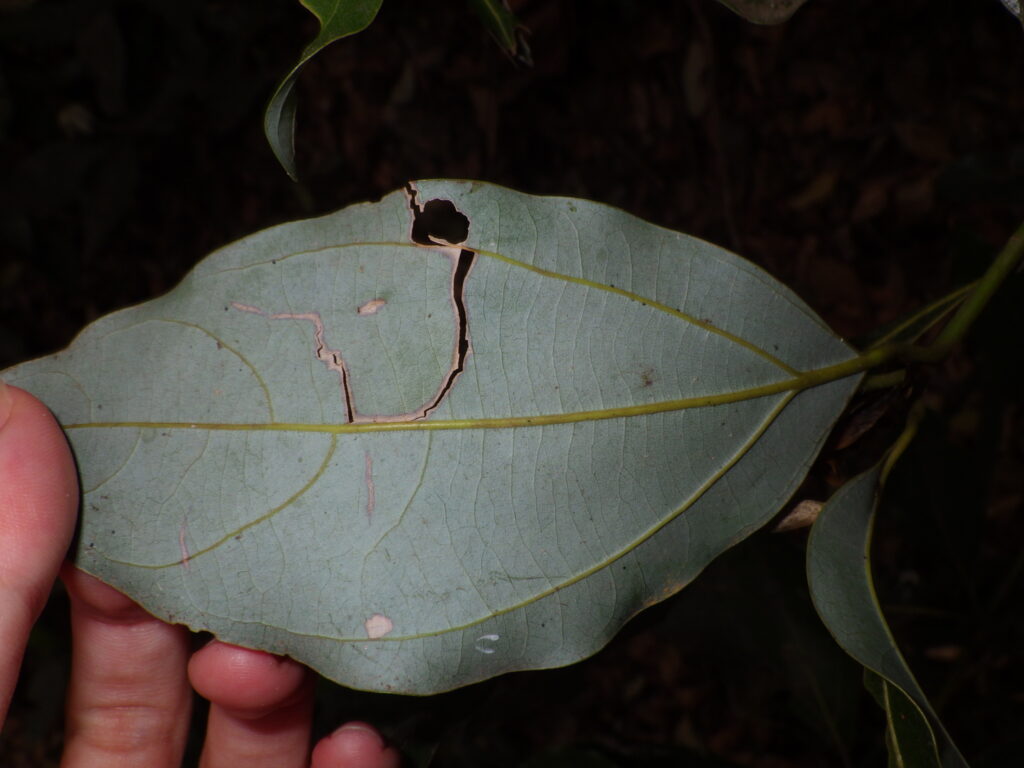
Neolitsea sericea, also known as Shirodamo, is an evergreen tree distributed in Honshu (west of Miyagi and Yamagata prefectures), Shikoku, Kyushu, and the Ryukyu Islands in Japan; the southern Korean Peninsula; China; and Taiwan. It inhabits relatively humid areas in warm mountainous regions (Mogi et al., 2000; Wu et al., 2008). Its Japanese name comes from the fact that the underside of its leaves is white.
On the other hand, Neolitsea aciculata, also known as the Japanese dog oak (Inugashi), is distributed in Honshu (west of the southern Kanto region), Shikoku, Kyushu, and the Ryukyu Islands in Japan; the southern part of the Korean Peninsula; and Taiwan. It is an evergreen tree that inhabits somewhat dry mountainous areas. Its Japanese name comes from the fact that it is considered inferior to the oak (Kashi) in terms of wood quality, and although it resembles it, it is useless.
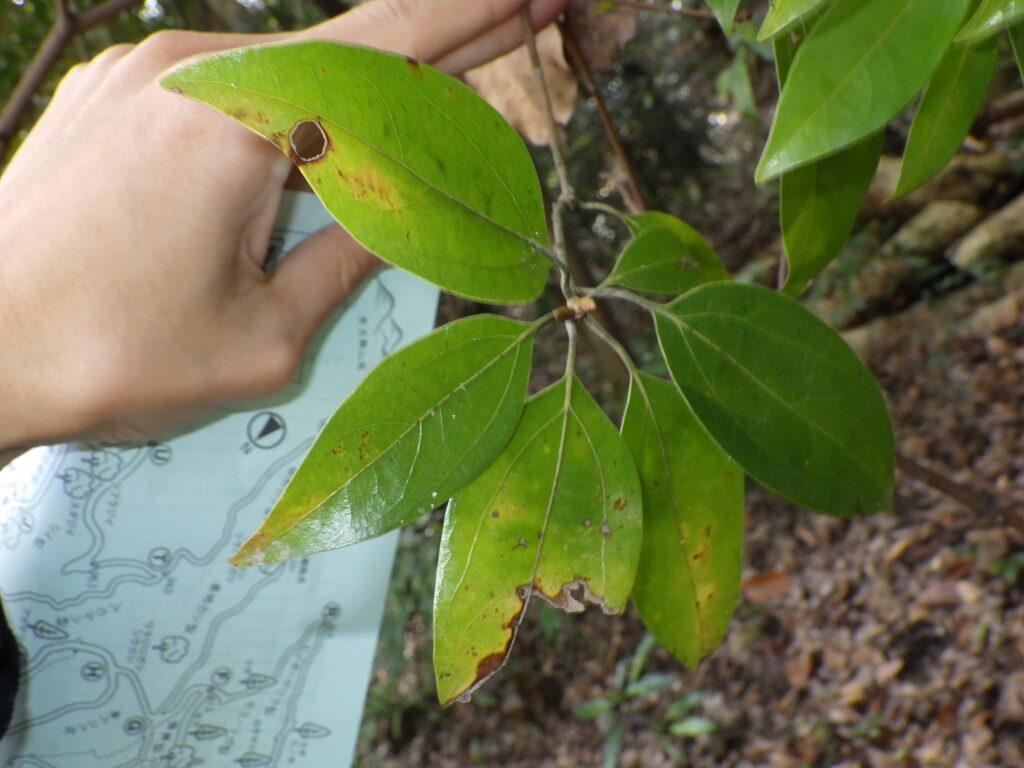
Both *Neolitsea sericea* and *Quercus acuta* are evergreen trees belonging to the genus *Neolitsea* in the family Lauraceae, and are naturally distributed in Japan. They are dioecious (having separate male and female plants), and both have oval-shaped leaves with entire margins and three prominent veins, which is a good way to distinguish them from plants of other families and genera. However, these characteristics are common to both species and cannot be used to distinguish them. Since both are often seen in the wild, people may sometimes confuse them.
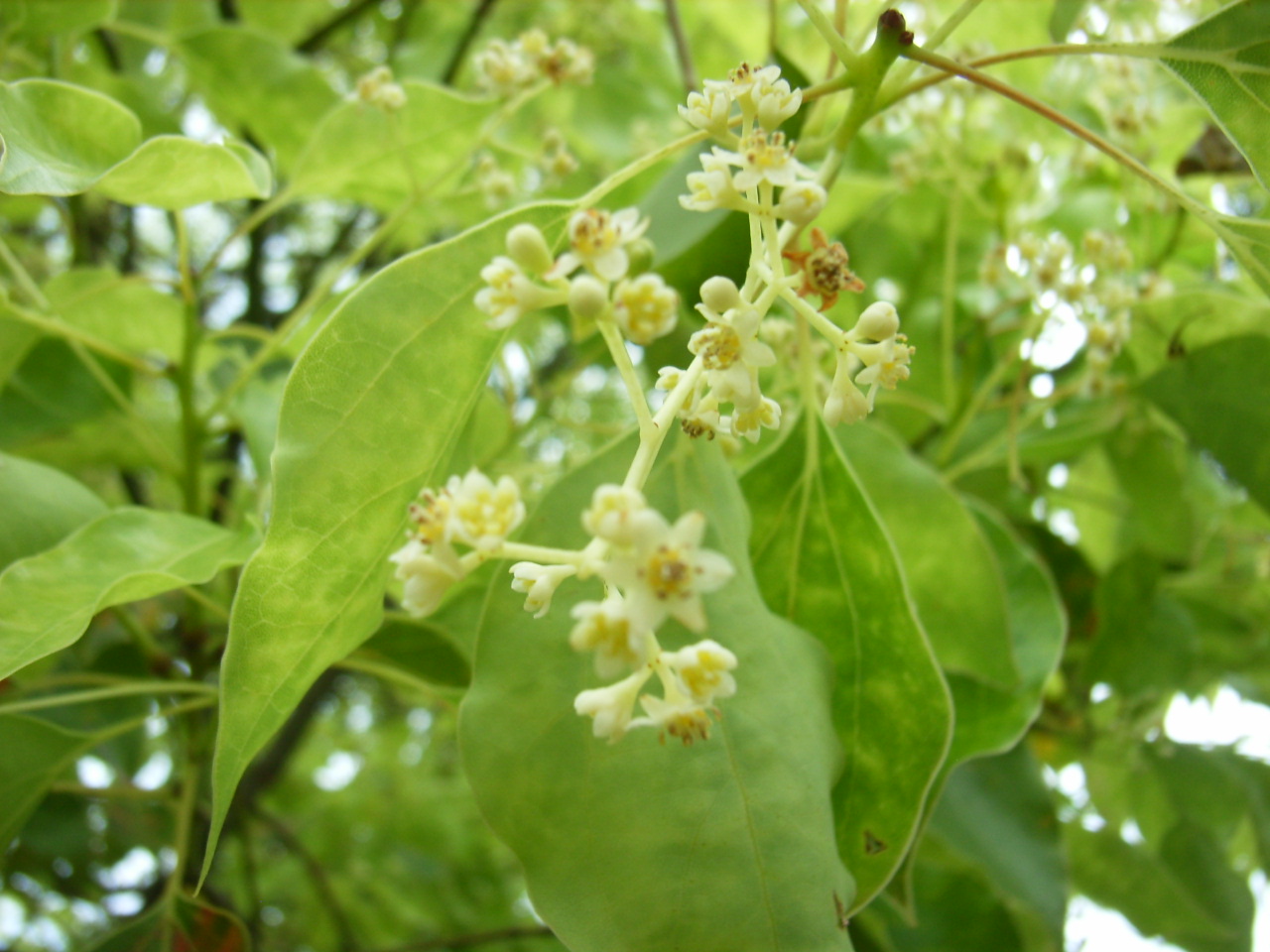
What is the difference between *Neolitsea sericea* and *Quercus acuta*?
However, by examining the morphology and ecology of the leaves, flowers, and fruits, the two species can be reliably distinguished.
Regarding the leaves, *Neolitsea sericea* has oblong leaves 8-18 cm long with a strikingly white underside, while *Quercus acuta* has obovate-oblong leaves 5-12 cm long with a grayish-white underside.
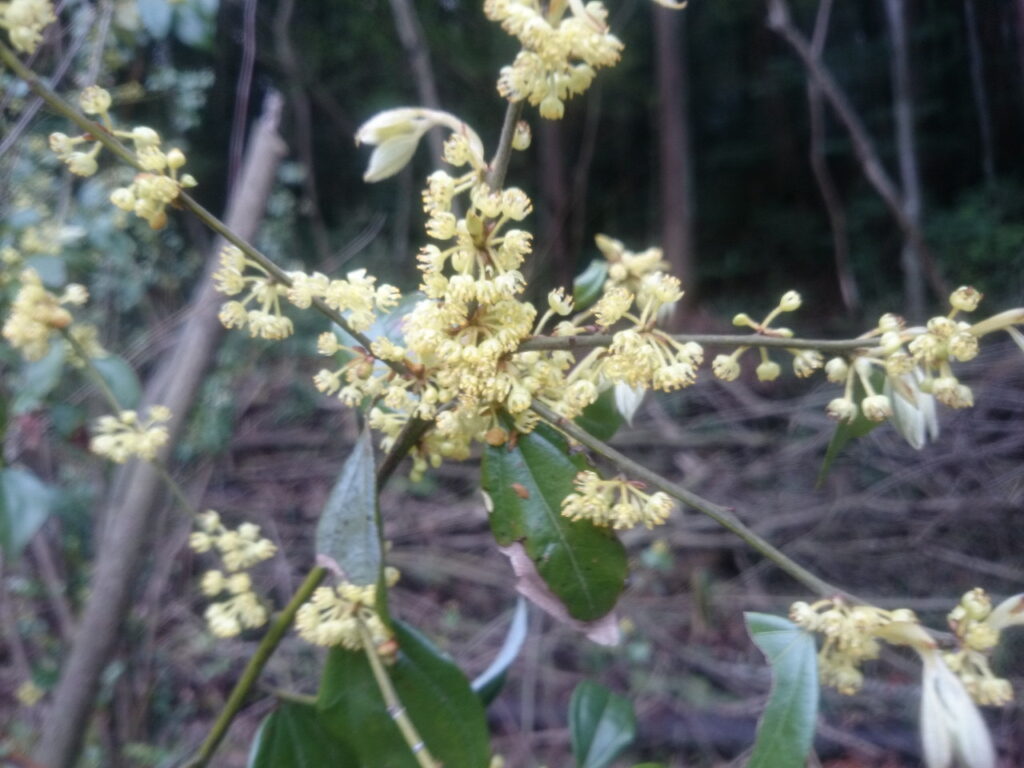
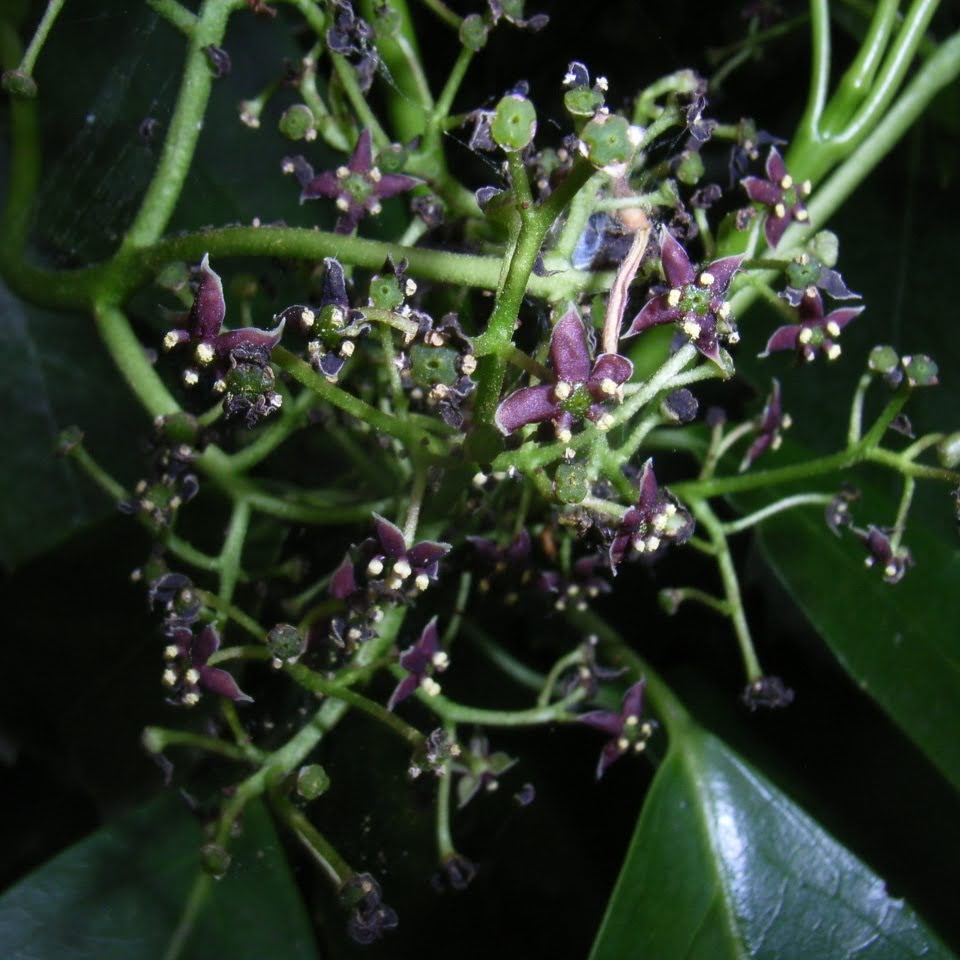
Regarding the flowers, *Neolitsea sericea* blooms in autumn and is yellow, while *Quercus acuta* blooms in spring and is dark red.
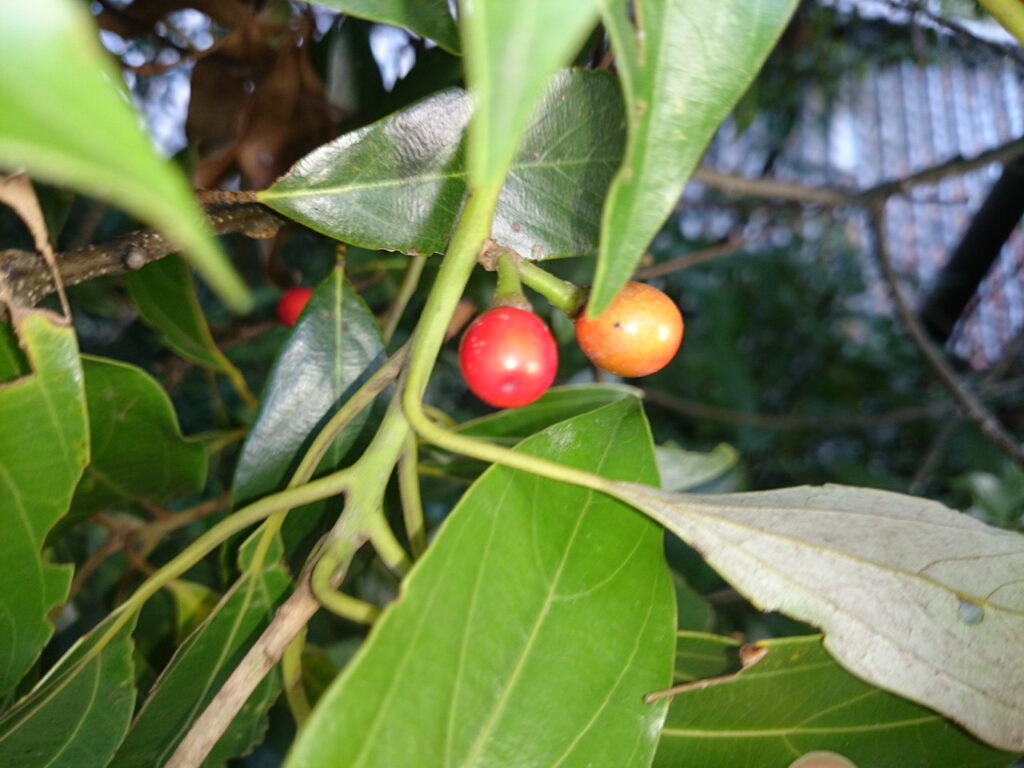
Regarding the fruit, the fruit of Neolitsea sericea ripens to red, while that of Quercus serrata ripens to black.
Please make sure to check the above carefully.
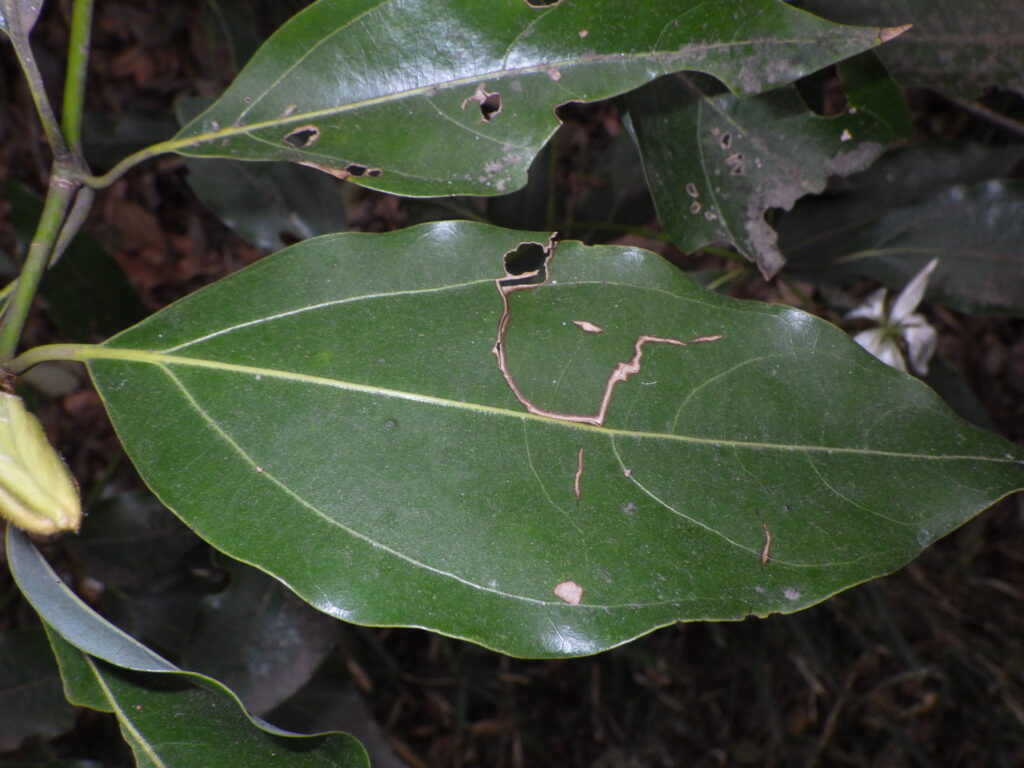
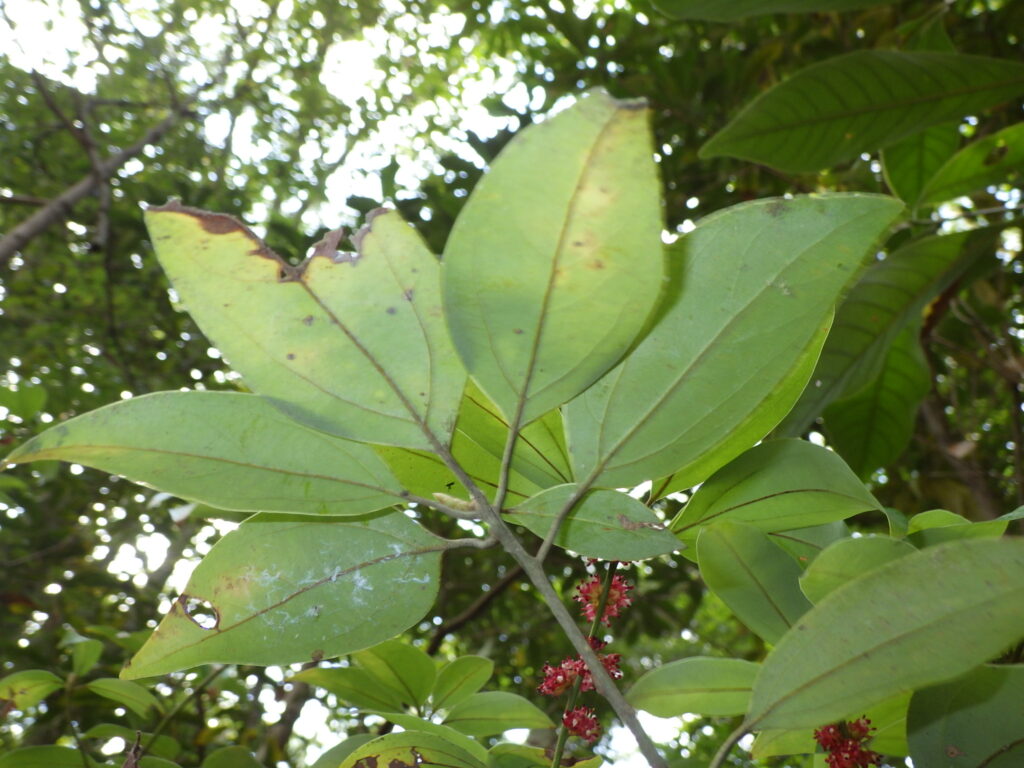
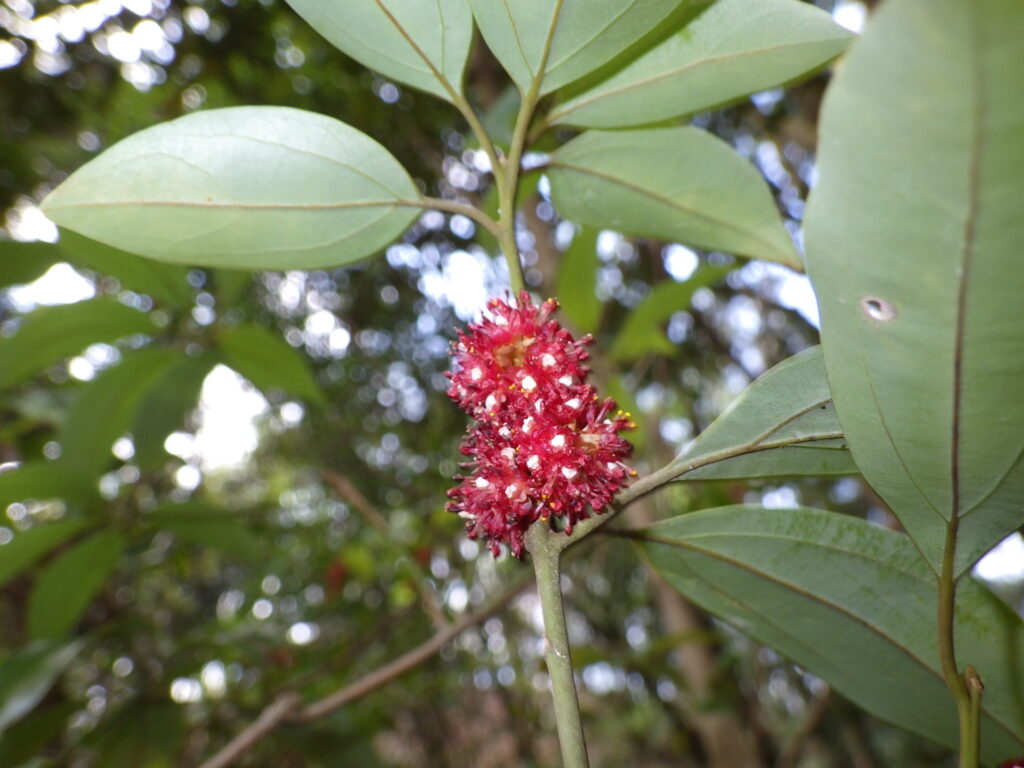
Is the Japanese white oak useful, but the Japanese evergreen oak not?
The Japanese white laurel and the Japanese evergreen oak are also contrasting in terms of human use, that is, in terms of culture.
Regarding the white laurel tree, the oil extracted from its seeds is called "tsuzu oil" or "tsuzu wax," and in the past it was used as a raw material for lamp oil and candles. The wood is also sometimes used for building materials and tools.
However, while the wood of the Japanese evergreen oak (Quercus acuta) is occasionally used for construction and tools, its seeds are not used for oil, and human use of it has decreased. The Japanese name "Inugashi" (meaning "dog oak") is perhaps understandable, as it originates from the idea that its wood is inferior to that of the superior oak, and while similar, it is useless.
However, it is important to observe and record its ecological importance in the natural world just as carefully as we do the white laurel.
The structure of the flowers is similar, but their colors and ecology are contrasting?
Both species share a common characteristic: they are dioecious, meaning male and female flowers bloom on separate plants. Both also produce small flowers in dense clusters in the leaf axils, each composed of four petals. Male flowers have six stamens, while female flowers have reduced stamens, which later develop into fruit. Both male and female flowers possess yellow glands, which are thought to secrete nectar. This structure is unusual in other flowers and may be interesting.
However, while the shape of their flowers is similar in some ways, the two species are contrasting in terms of their ecology and color. Neolitsea sericea blooms in autumn (October to November), while Quercus acuta blooms in early spring (March to April). Also, the color of Neolitsea sericea is yellowish-brown, while that of Quercus acuta is dark reddish-purple. Although they are biologically very closely related, they have quite different characteristics.
They have different colors and behaviors, yet they attract almost the same insects?
What kinds of insects visit these two species?
Unfortunately, there is no systematic study yet, but there is a study on Yakushima Island where these two species coexist (Yumoto, 1987).
This study found that the flowers of the Japanese evergreen oak (Quercus acuta) are mainly visited by hoverflies, calliflies, and houseflies, with a small number of butterflies also visiting. Of these, the butterflies are probably just stealing nectar, so it may be reasonable to consider the flies as the main carriers of pollination.
On the other hand, the same proportion of flies visited the flowers of the white laurel tree as those of the Japanese evergreen oak, and no significant differences were observed.
Although the flower shapes are quite similar, it's surprising that the same insects visit two species with completely different colors.
However, there are a few records of ancient bees visiting the flowers of Neolitsea sericea, and we have also found on the internet images of a species of scabiosa, possibly Campsomeris prismatica, visiting the flowers of Neolitsea sericea (Ozaki, 2014).
This suggests that bees may visit the flowers of the white laurel tree to some extent.
Considering their ecology, since Neolitsea sericea blooms in autumn, it seems useful to target not only flies but also bees. On the other hand, since Quercus acuta blooms in early spring, it might be better to target cold-hardy flies rather than large bees that are not yet active.
The dark red flowers of Aucuba japonica sometimes attract flies, so the color of the flowers of Quercus dentata might be related to this, but this is still just speculation. I'm looking forward to future research to find out what differences exist between these two species.
The fruit is a berry and the seeds are dispersed by birds.
The berries of the Japanese white laurel are oval-shaped, 1.2 to 1.5 cm long, and ripen to a red color in October and November. The seeds are spherical.
The berries of the Japanese evergreen oak are oval to oblong, about 1 cm long, and ripen to a dark purple color in October and November. The fruit stalks are 7-8 mm long. The seeds are somewhat flattened, obovate-elliptic, and brownish in color.
The fact that the seeds ripen to a red or dark purple color clearly appeals to animals, especially birds, suggesting that the plant relies on animals for seed dispersal.
Even looking at actual research records, there are only a few instances of both Neolitsea sericea and Quercus acuta being eaten by raccoons (Takatsuki, 2018).
On the other hand, studies in both Japan and China have confirmed that Neolitsea sericea is eaten by birds (Chung et al., 2000; Arai & Kamitani, 2005; Zhai et al., 2012).
Furthermore, Japanese studies have confirmed that the Japanese evergreen oak (Quercus acuta) is also eaten by birds (Nanami et al., 1999).
However, it is unknown whether there is any difference in the types of birds that visit these two species. It is interesting that although there are differences in the flowering period, the fruiting period is the same.
References
Arai, N., & Kamitani, T. 2005. Seed rain and seedling establishment of the dioecious tree Neolitsea sericea (Lauraceae): effects of tree sex and density on invasion into a conifer plantation in central Japan. Botany 83(9): 1144-1150. https://doi.org/10.1139/b05-089
Chung, MG, Chung, MY, Oh, GS, & Epperson, BK 2000. Spatial genetic structure in a Neolitsea sericea population (Lauraceae). Heredity 85(5): 490-497. https://doi.org/10.1046/j.1365-2540.2000.00781.x
Mogi, T., Ishii, H., Sakio, H., Katsuyama, T., Ota, K., Takahashi, H., Shirokawa, S., and Nakagawa, S. 2000. Flowers Blooming on Trees: Polypetalous Flowers (Vol. 1, Revised 3rd Edition). Yama-kei Publishers, Tokyo. 719pp. ISBN: 9784635070034
Nanami, S., Kawaguchi, H., & Yamakura, T. 1999. Dioecy-induced spatial patterns of two codominant tree species, Podocarpus nagi and Neolitsea aciculata. Journal of Ecology 87(4): 678-687. https://doi.org/10.1046/j.1365-2745.1999.00392.x
Ozaki, Fumio. 2014, November 5. Flowers of Neolitsea sericea. Chiba Prefectural Central Museum, Boso Mountain Field Museum, Mountain Nature News. https://www.chiba-muse.or.jp/NATURAL/special/yama/news/2014/141105neolitsea.htm
Takatsuki, Shigeki. 2018. Characteristics of fruits used by raccoons—a review. Mammalian Science 58(2): 237-246. https://doi.org/10.11238/mammalianscience.58.237
Wu, X., Raven, PH, & Hong, D. (Eds.). 2008. Flora of China (Vol. 7 Menispermaceae through Capparaceae). Science Press, Beijing, and Missouri Botanical Garden Press, St. Louis. xii, 499pp. ISBN: 9781930723818
Yumoto, T. 1987. Pollination systems in a warm temperate evergreen broad-leaved forest on Yaku Island. Ecological Research 2(2): 133-145. ISSN: 0912-3814, https://doi.org/10.1007/bf02346922
Zhai, SN, Comes, HP, Nakamura, K., Yan, HF, & Qiu, YX 2012. Late Pleistocene lineage divergence among populations of Neolitsea sericea (Lauraceae) across a deep sea-barrier in the Ryukyu Islands. Journal of Biogeography 39(7): 1347-1360. https://doi.org/10.1111/j.1365-2699.2012.02685.x