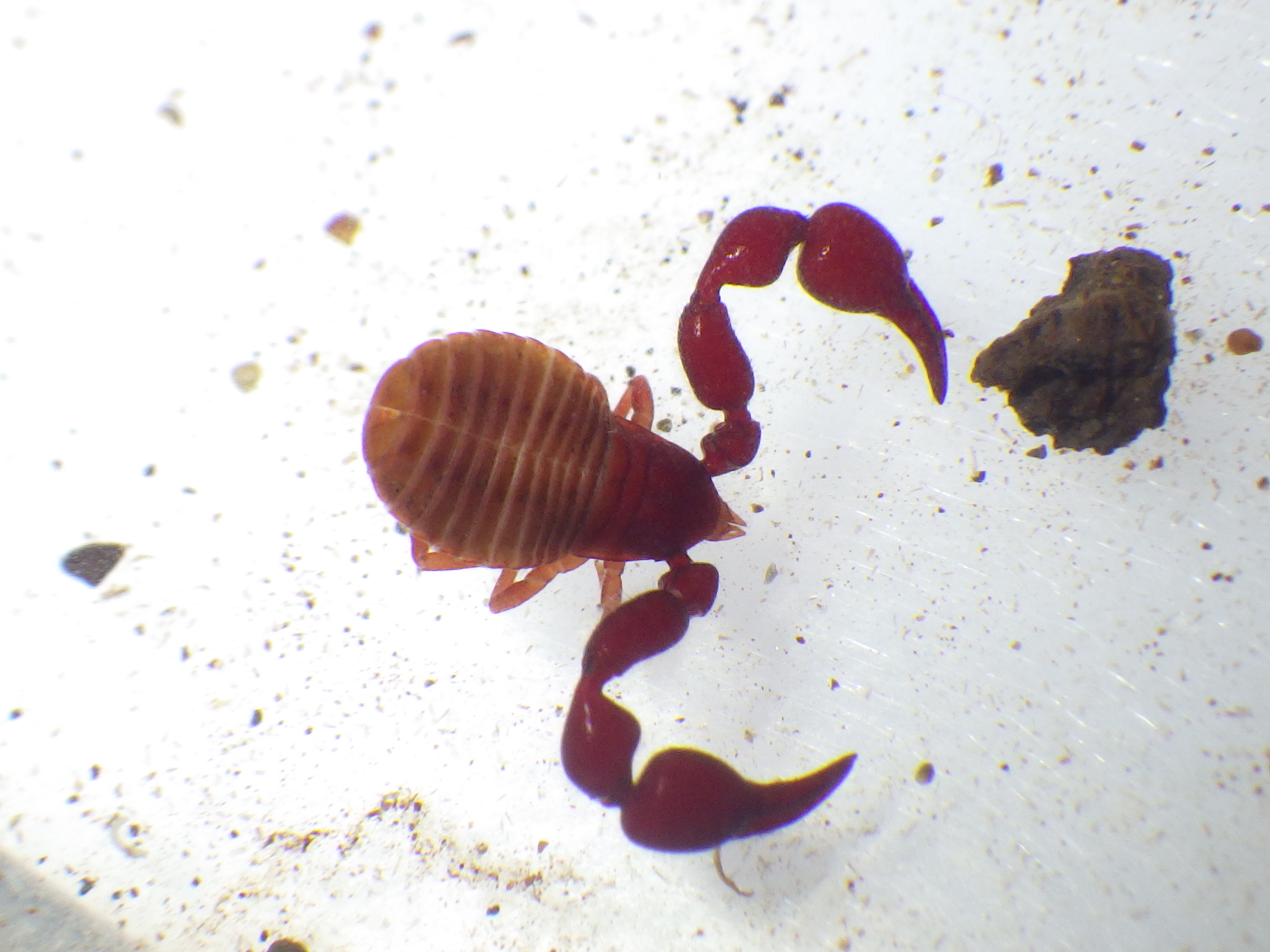
Pseudoscorpions are a type of small arachnid that inhabit inconspicuous places such as crevices in leaves and rocks, under stones and bark, and in decaying trunks. They are distinguished from scorpions by the absence of a long, spiny section on the metathorax (the tail of a scorpion). As of 2023, approximately 3,400 species have been identified worldwide, and 72 species have been found in Japan, where they are widely distributed. However, they cannot be found by simply observing leaves or the ground; you need to search in inconspicuous places hidden in the shade. If you simply want to find pseudoscorpions, it is best to hand-sort them using a sieve in soil with a rich litter layer. The primary use of pseudoscorpion pincers is to catch prey. The pincers have sensory hairs and venom glands, which are used to locate and weaken prey. This is an adaptation to subterranean life that differs from praying mantises and other insects that have access to sunlight. Their prey generally consists of springtails, beetles, various insect larvae, mites, and other small invertebrates , although it is becoming clear that each species has its own preferences, though research is insufficient. Their pincers have other uses as well, including for locomotion. They sometimes use them to grasp the legs of flying insects and move around like an airplane. Mating does not involve mating; males and females exchange only spermatophores. This is also thought to be an adaptation to their subterranean life. Their pedipalps contain organs called "helmets" or "spinning glands" that produce silk, which they use to build nests and raise their young. This article will explain the classification, morphology, and ecology of pseudoscorpions.
- What are the differences between pseudoscorpions and scorpions? Are they dangerous?
- What is its distribution and habitat? Is it found in Japan?
- How do you collect them?
- What are the main uses of crab-like "claws"?
- What's their diet? There are species that eat ticks!?
- How do they spread their distribution? Scissors have more than one use!?
- How do pseudoscorpions reproduce? They don't "mate"!?
- Pseudoscorpions raise their young by spinning silk like spiders!?
- What kinds of pseudoscorpions are there?
- No. 1783 Tyrannochthonius japonicus (family Pseudocatidae)
- No. 1793 Microcreagris japonica (family Microcreagrisidae)
- No. 1795 Microbisium pygmaeum (family Microbisidae)
- No. 1796 Red-horned pseudoscorpion (Roncus japonicus, family Pseudoscorpionidae)
- No. 1804 Bisetocreagris japonica (family Pseudoscorpionidae)
- No. 1819 Japanese Pseudoscorpion (Paratemnus japonicus) (Paratemnus family)
- No. 1825 Megachernes ryugadensis (Pseudoscorpionidae family)
- No. 1828 Mori-no-dori-kanimushi (Allochernes japonicus, family Allocheridae)
- References
What are the differences between pseudoscorpions and scorpions? Are they dangerous?
Pseudoscorpions are a taxonomical term for a group of organisms belonging to the order Pseudoscorpiones. They are small (approximately 2-8 mm) arachnids that inhabit inconspicuous places such as crevices in leaves and rocks, under stones and tree bark, and on decaying trunks (Del-Claro & Tizo-Pedroso, 2009; Sato, 2021b).
At first glance, its appearance and the presence of pincer-like legs (called palps in scorpions, which are the largest appendages that were originally legs and have evolved into pincers) are similar to those of a scorpion, and you might not be able to tell the difference.
However, pseudoscorpions differ significantly in that they are smaller and lack the "metasoma" or "postabdomen," a slender, spiny organ that scorpions have. Therefore, pseudoscorpions do not have any stinging organs and pose no threat to humans, so you can rest assured.
What is its distribution and habitat? Is it found in Japan?
Pseudoscorpions are a highly diverse group, accounting for over 3% of known arachnids, though not as diverse as those in the Araneae or Acari orders. They are the fourth most diverse group within the arachnid class. While 25 families, 470 genera, and approximately 3,400 species have been described, considering their minor status, the small number of taxonomists, the fact that most known species live in secluded, hidden locations, and the lack of accurate information on the diversity of tropical invertebrates, it is suspected that the actual number of species is much higher.
Pseudoscorpions have existed on Earth for 380 million years, since the early Devonian period, and fossil evidence proves that they have undergone very little morphological change compared to currently existing species. Fossil studies reveal that, in addition to walking legs and chelicerae, they already possessed unique structures such as a helmet-like structure (spinning gland, galea, a structure for producing silk) and palpebrae with sensory hairs (trichobothria, structures for sensing vibrations).
Pseudoscorpions are distributed all over the world except for polar regions, and of course, they can be found throughout Japan.
As of October 23, 2022, 15 families, 36 genera, and 72 species have been identified in Japan, but it is believed that there are still many undescribed species (Ohira, 2022).
They inhabit almost all terrestrial environments, including islands, and their specific habitats are inconspicuous places such as crevices in leaves and rocks, under stones and bark, and on decaying trunks. However, there have also been instances of them being found in interesting places such as inside the rosette-shaped leaves of pineapple plants, in bat guano, in ant and bee nests, and on the bodies of birds and mammals.
However, in any case, you won't find them at all by simply observing leaves or the ground. As they are predators, their population is limited, and you're more likely to find them in areas with abundant nature, but surprisingly, you can sometimes find them by investigating litter (decomposed fallen leaves) in nearby parks and other places.
How do you collect them?
Collection methods vary depending on the species, and in some cases it may be necessary to use a Tullgren funnel, which uses heat to collect soil animals, or to search by peeling back bark or stones.
However, if you simply want to observe pseudoscorpions, the "hand sorting method" is sufficient.
The hand sorting method simply involves sifting soil, dropping it onto a tray or white plastic sheet, and then manually collecting and observing soil animals.
Since pseudoscorpions in the soil are often very small, a sieve with a somewhat small mesh size is not a problem.
Soil animals begin their food chain by obtaining nutrients from dead plants. Therefore, wherever springtails and mites are likely to be found feeding on fallen leaves and branches (litter), pseudoscorpions, their predators, should also be present. Consequently, sifting through fallen leaves and branches—or loose leaf litter—is recommended.
Since pseudoscorpions are predators, there needs to be a sufficient supply of soil animals for them to feed on. Therefore, it is best to conduct surveys in areas with well-developed vegetation. However, two species, Microbisium pygmaeum and Tyrannochthonius japonicus, are known to be commonly found even in local parks (Sato, 2021a).
For more detailed information on collection methods, please refer to Sato (2021b).
What are the main uses of crab-like "claws"?
Pseudoscorpions have two large "pincers" on their bodies. This is their most distinctive feature and the origin of their Japanese name, "kanimushi" (meaning "crab scorpion").
First, at the anterior end of the cephalothorax are chelicerae. While chelicerae are organs common to all arachnids, in many groups such as spiders, they have a folding knife-like structure, whereas in pseudoscorpions they are different, being pincer-shaped. For this reason, the chelicerae of pseudoscorpions are sometimes specifically called "chelicerae."
Another prominent appendage is the "pedipalp," located in front of the four pairs of walking legs. The coxa is fused and immobile, but the tip from the trochanter onward can be spread to the sides and bent forward. The two apical segments form a large pincer, composed of a "basal segment" and a "terminal segment." The basal segment is a combination of a hypertrophied "palm" and an "immovable finger," which is one side of the pincer. The terminal segment is attached to the basal segment and is the "movable finger," which is the other side of the movable pincer. Both the immovable and movable fingers have "edge teeth" for grip.

What are these used for?
Pseudoscorpions are known to use these pincers to capture small invertebrates as predators, similar to how praying mantises do.
However, there is a significant difference from praying mantises. While this varies by species, many species have long, slender "sensory hairs (chelal trichobothria)" and "venom glands" on the pincers of their pedipalps .
Pseudoscorpions use sensory hairs on their claws to sense touch and search for prey underground. They also use their claws to explore the surrounding terrain, so they constantly wander around with their claws extended. However, in reality, they often wait for prey to approach them. Once they find prey and catch it with their claws, they weaken it with toxins released from their venom glands, crush its body with their chelicerae, suck out its bodily fluids, and consume it.
Praying mantises have well-developed eyes due to their large compound eyes, while pseudoscorpions have simple eyes in two or one pair, and some are blind.
These differences are likely largely due to the fact that praying mantises are terrestrial and can utilize sunlight, while pseudoscorpions are subterranean and have significantly fewer opportunities to obtain sunlight, making their vision unreliable.
What's their diet? There are species that eat ticks!?
Specifically, the animals they prey on are believed to be springtails, beetles, various insect larvae, mites, and other small invertebrates (Del-Claro & Tizo-Pedroso, 2009).
However, this is a general statement, and in reality, we only have fragmented knowledge about what kinds of prey different species are hunting, and there is a lack of research on this topic.
The same applies to Japanese species; there are records of the species *Pseudoscorpionus serrulata* eating longhorn beetles and springtails (Sato, 2022), the species *Pseudoscorpionus erythropus* eating springtails (Matsuda, 2021), and the species *Pseudoscorpionus serrulata* eating Japanese termites (Kashiwagi and Sato, 2022), but these are all records from captive environments, so it is unknown whether the same is true in the wild.
A few field records have confirmed instances of the spiny parasitic pseudoscorpion preying on springtails under the bark of cedar trees (Sato, 2022).
Even more interesting is the example of the pseudoscorpion Megachernes ryugadensis preying on ticks attached to field mice (Okabe et al., 2018). Although this was a predation experiment, the fact that it managed to penetrate the impenetrable defenses of the tick's hard body and prey on a tick that was feigning death suggests that it likely feeds on ticks in the wild as well.
Overseas, there are records of a species called Chelifer cancroides preying on booklice that infest books, and a species called Maxchernes iporangae preying on small invertebrates that live in bat guano.
On the other hand, social species are said to have preyed on more than 60 different species of prey, rather than just one specific species, suggesting that the range of prey varies depending on the species.
There are clear differences in the development of palps and chelicerae among different species of pseudoscorpions, which is thought to be related to their diet, but the details are not yet understood.
The fact that different species of pseudoscorpions eat different types of prey is a phenomenon called "prey selectivity," which suggests that they may have different positions in the food chain within the ecosystem, and this is something that needs to be investigated further.
How do they spread their distribution? Scissors have more than one use!?
How do pseudoscorpions expand their habitat?
Most commonly, they move simply by walking. Arboreal pseudoscorpions are relatively large and can secure a new location several meters away from their original spot, or even within a neighboring tree. Subterranean pseudoscorpions likely expand their habitat gradually along the spread of the soil.
However, while this method may be more effective against even smaller mites, compared to spiders, their smaller size and the presence of their pincers clearly make them less agile and less efficient.
Therefore, pseudoscorpions have other methods of dispersal. One of them is to attach themselves to the bodies of larger winged insects and use them like airplanes.

This method of dispersal is called "phoresis" in biology. This phoresis is also observed in mites, which are arachnids, and in mites, they may utilize the bodies of birds and mammals as well as insects.
However, what sets pseudoscorpions apart from mites is that they use their pincers to firmly grasp and secure the legs of insects. Pseudoscorpions not only use their unique pincers for predation but also for movement.
In the case of pseudoscorpions, hitching a ride is currently known to occur in 11 out of all 25 families, making it a fairly common method of migration. The presence of their pincers likely plays a significant role in this.
Furthermore, in the ultimate form, there is a species called Cordylochernes scorpioides, which lives in the body of the longhorn beetle Acrocinus longimanus, and there are known cases where males and females mate.
How do pseudoscorpions reproduce? They don't "mate"!?
How do pseudoscorpions reproduce?
While detailed information is lacking, the reproductive behavior of pseudoscorpions is known for 13 out of 25 families, and general information is available.
First, pseudoscorpions are dioecious, meaning that, like humans, insects, and spiders, there are both male and female individuals.
However, a major difference from other groups is that they perform "in-vivo fertilization" and "indirect fertilization."
Internal fertilization is a method in which eggs are not released from the parent's body but are fertilized inside the female's body. This is common in mammals, including humans, and spiders, but it differs from that of typical insects.
Indirect fertilization is a method of fertilization that does not involve mating. The male places a spermatophore, which is a package of solidified sperm, on the ground, and the female receives it through her genital opening. This is similar to spiders, but it differs from mammals, including humans, and common insects.
Another difference between pseudoscorpions and spiders is that while spiders exhibit courtship behavior during the transfer of spermatophores, some pseudoscorpion species perform a "courtship dance," while others, from a human perspective, may seem rather abrupt, as males and females never even meet face-to-face, simply exchanging spermatophores. This might be similar to artificial insemination.
Why are they using such a "simple" breeding method?
In fact, it is known that pseudoscorpions are not the only ones that use this method of mating; other soil animals such as myriapods, oribatid mites, and springtails and dimerids also use this method (Kitazawa, 1977; Aoki, 2010).
The evolution of this mating method is likely largely due to their life in the soil (Shimano, 2015). The underground environment has a complex structure and little light, making it difficult for males and females to "meet" or "ambush" each other at a feeding ground, and thus opportunities for accidental "encounters" and "matching" in their daily lives are also limited. Since predatory pseudoscorpions are high up in the food chain among insects, their population is likely to be small to begin with.
Therefore, in some cases, fertilization occurs through the exchange of spermatophores without the couple ever meeting face-to-face. While this might seem like a lack of romance in humans, it can be said that they employ an extremely rational mating system in an environment where they cannot choose their mates.
Generally, they reproduce once a year, but social species may reproduce continuously throughout the year, mainly in spring and summer.
Pseudoscorpions raise their young by spinning silk like spiders!?
Spiders are closely related to pseudoscorpions, but unlike spiders, pseudoscorpions do not build webs for capturing prey or blow silk onto their victims.
Therefore, at first glance, it might seem that pseudoscorpions do not have the ability to produce silk.
However, in reality, there are organs called "helmet-like structures" or "spinning glands" that produce silk in the palps.
The spinning glands are used for nest building and cocoon production.
Reasons for nesting include molting, egg incubation, summering, and wintering (Sato, 2010). Once nesting, they enclose themselves in cocoons and cease to move, so they are no longer collected using Tullgren traps.
In particular, while some species build nests during incubation, others do not. However, when they do, it serves as an important defense mechanism. After laying eggs, female pseudoscorpions form a "brood pouch" using silk and attach the eggs to the opening of their genitals. In species that build nests, they then create a cocoon and protect their young until they hatch 1-2 days later.

A distinctive feature is that they produce and supply a nutrient solution for the developing embryo inside the egg. This is similar to the amniotic sac in mammals and is a minority behavior among arthropods. This act of parental care is called "parental care," and this behavior is called "subsociality." While this may be a natural trait for humans, this kind of behavior is the first step towards becoming social.
In fact, various stages of sociality are known, and although pseudoscorpions are not found in Japan, it has been confirmed that 9 species across 3 families reach the stage of communal nesting (sociality in which females build nests together) or pseudosociality (sociality in which communal nesting + joint child-rearing).
However, no species have yet been found that exhibit "semisociality," where a caste system is observed, like in ants or bees, or "eusociality," where generations overlap.
What kinds of pseudoscorpions are there?
Here, I will introduce the pseudoscorpions I have photographed so far, including specimens. In Japan, 72 species of pseudoscorpions have been confirmed as of 2022, but the only identification key that can be properly used is Aoki (2015). Aoki (2015) is extremely useful and is an essential book for anyone who wants to study pseudoscorpions. However, it only lists soil-dwelling species, and there are omissions for arboreal species and some soil-dwelling species, so there is currently a lack of literature that identifies all species.
Identifying these insects requires examining the fine details of their leg morphology and ocelli, but the shape of their chelicerae and palps also varies considerably among species, making them significant clues.
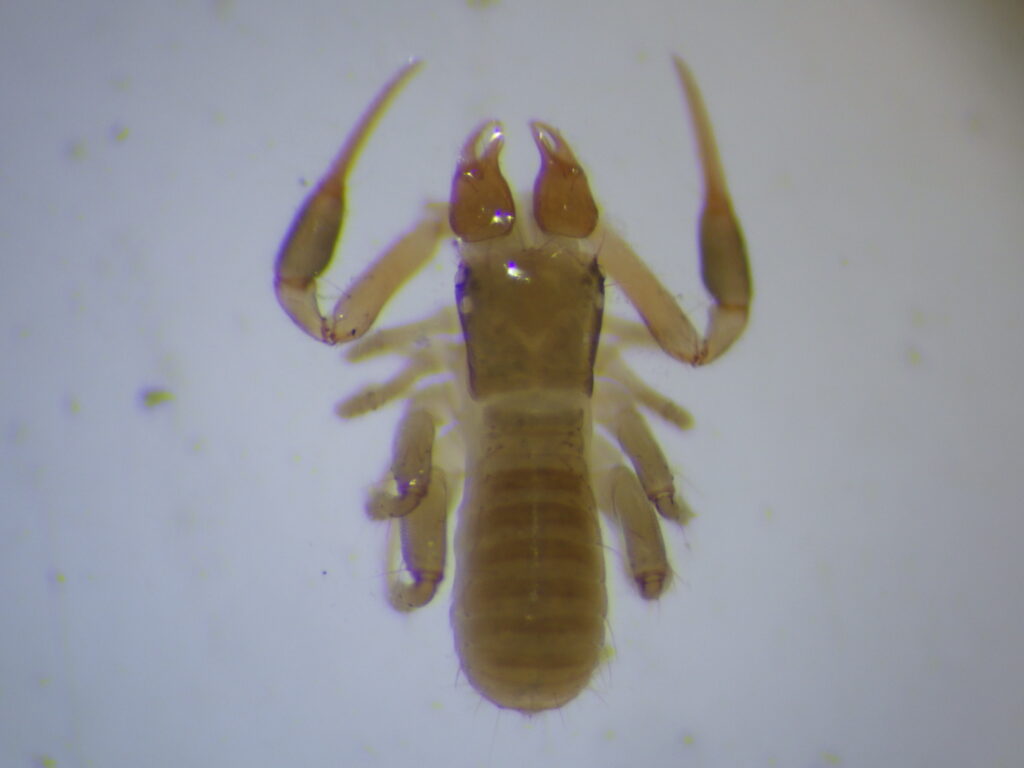
No. 1783 Tyrannochthonius japonicus (family Pseudocatidae)
It measures 1.0–1.7 mm in length. It is distributed from southern Tohoku to Kyushu and is commonly found in evergreen broad-leaved forests, urban parks, and green spaces.
No. 1793 Microcreagris japonica (family Microcreagrisidae)
This is a large species, reaching a body length of 6-7 mm. It is distributed from the Kanto region to Shikoku and the Chugoku region, and inhabits beech forest zones to subalpine zones.
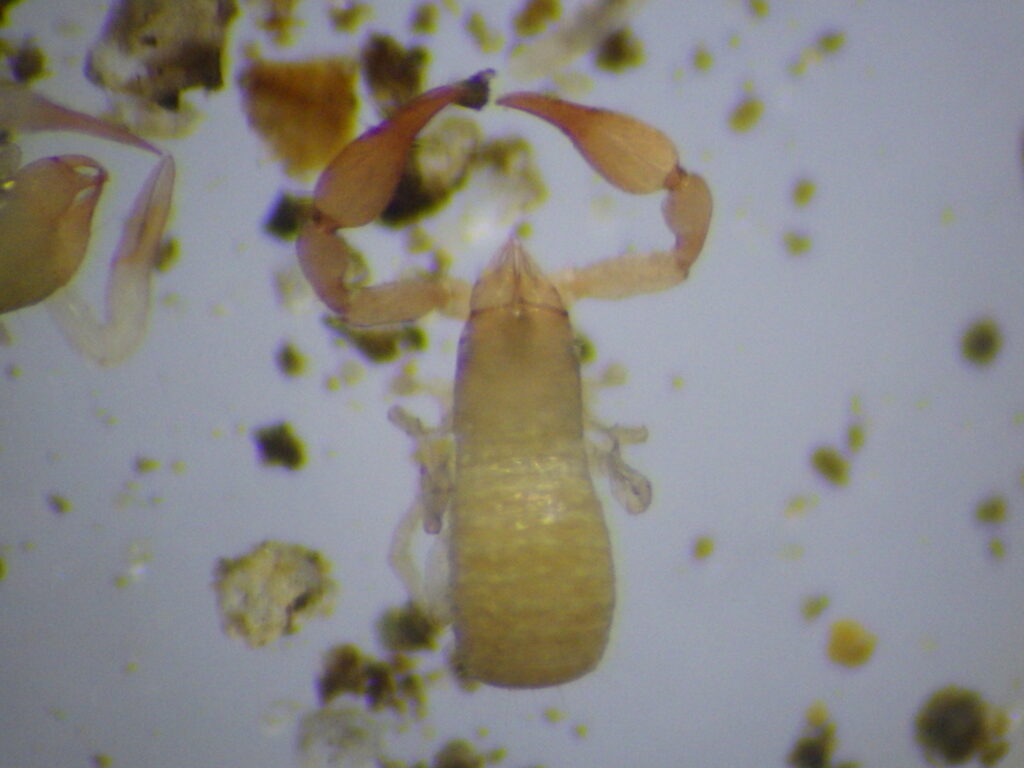
No. 1795 Microbisium pygmaeum (family Microbisidae)
This is a small species, measuring approximately 1.2 to 1.5 mm. It is widely distributed from Rishiri Island to Kyushu and commonly inhabits poor soil environments such as urban parks and green spaces. It is believed to undergo "neotrophy" because it develops into an adult in a form equivalent to the third nymph stage (Japan Forestry Technology Association, 1991; Sakayori, 2001). Furthermore, since the majority of collected individuals are female and males are rarely obtained, it has been suggested that it may reproduce asexually.
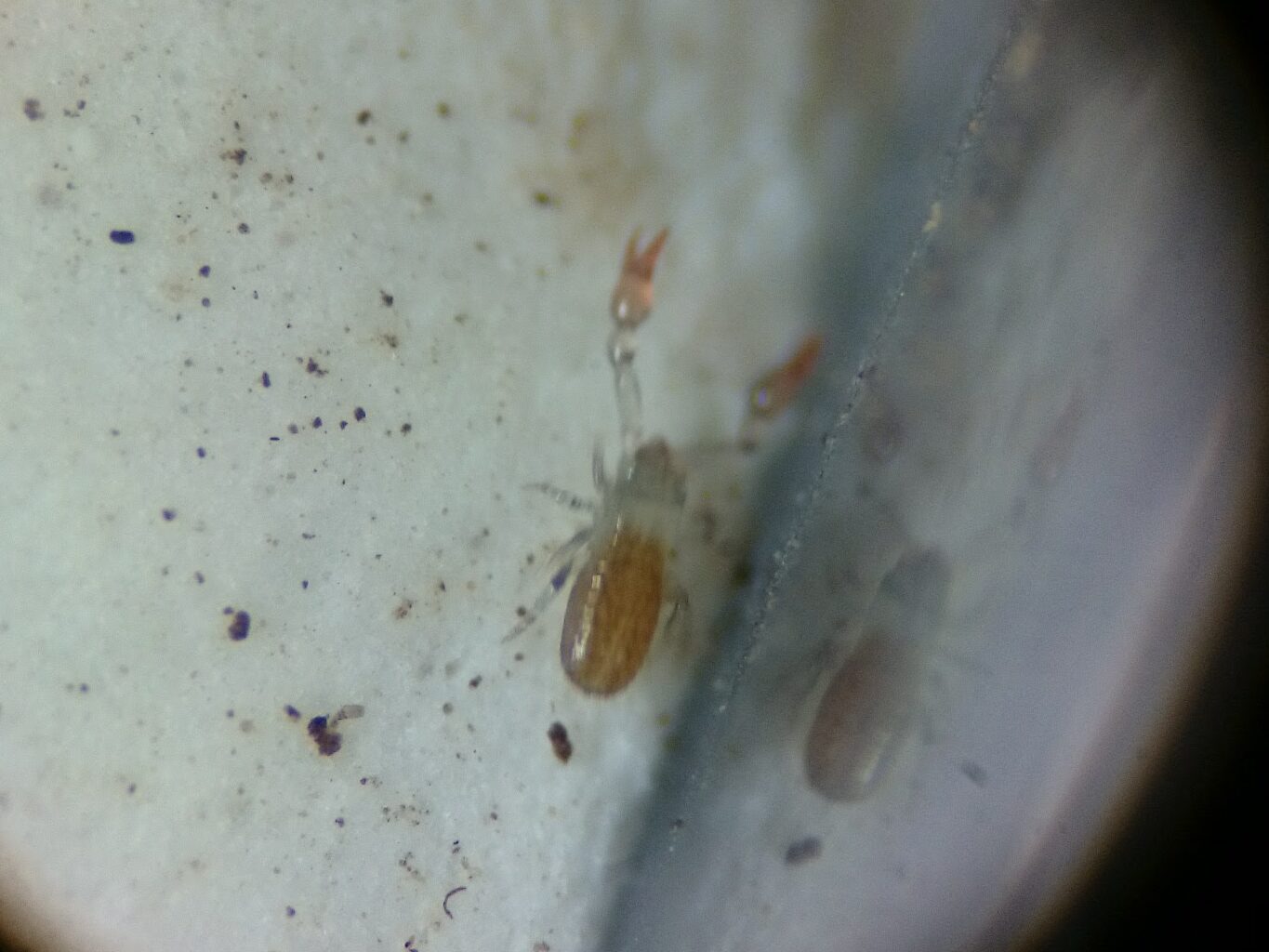
No. 1796 Red-horned pseudoscorpion (Roncus japonicus, family Pseudoscorpionidae)
It measures approximately 3-5 mm in length. It is distributed from Honshu to Kyushu, inhabiting evergreen broad-leaved forests to subalpine coniferous forests. It only appears during the cold season from autumn to winter. Both its cephalothorax and abdomen are slender, and its palps and cephalothorax are characterized by a reddish-brown color.
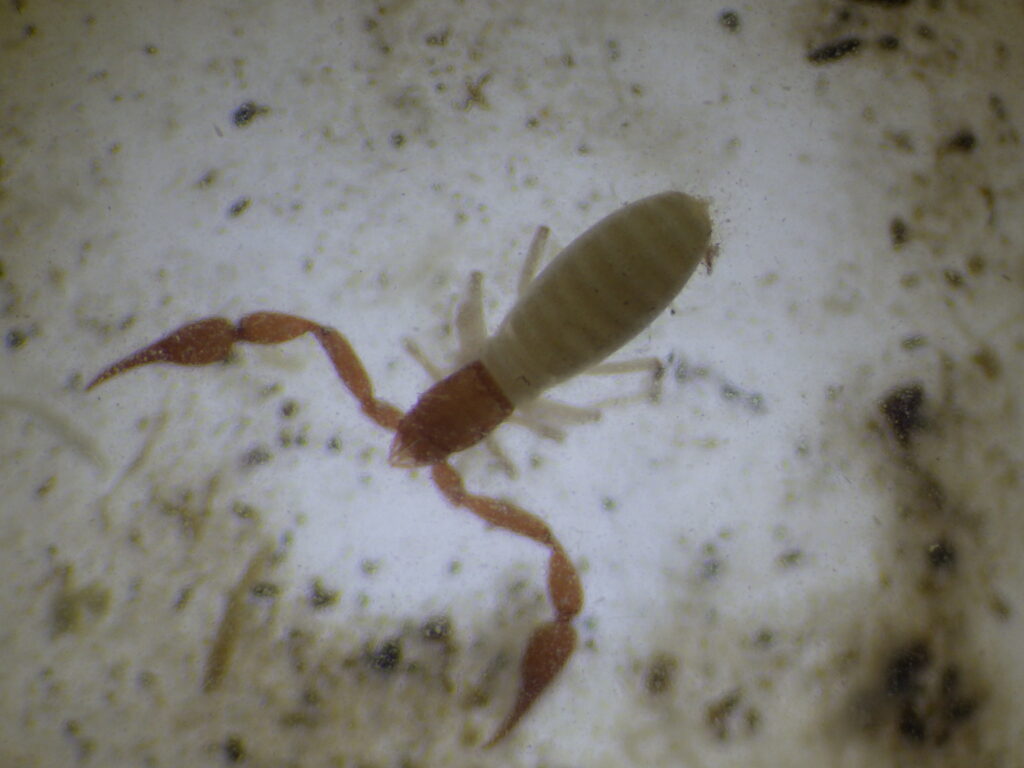
No. 1804 Bisetocreagris japonica (family Pseudoscorpionidae)
Measuring 3.5–5 mm in length, it is the largest of the pseudoscorpions. Its chelicerae have a prominent helmet-like structure on the movable fingers, which branch from near the center and further branch at the ends, although the number of branches varies. It is distributed in Honshu, Shikoku, and Kyushu, and inhabits a wide range of areas from plains to mountains.
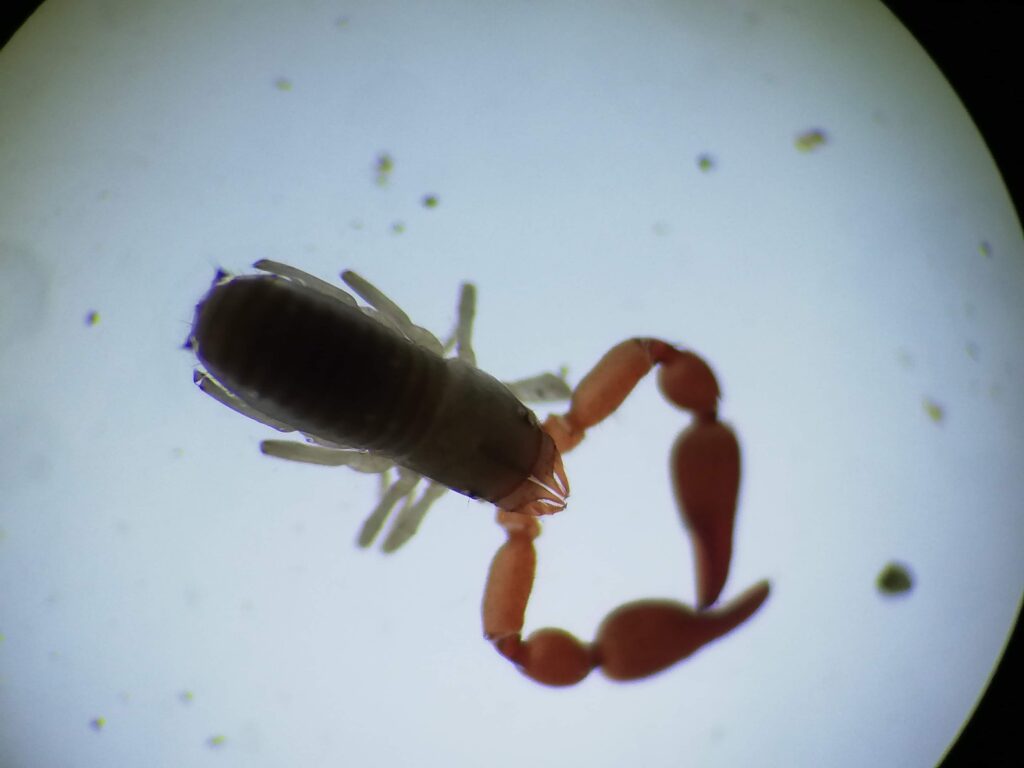
No. 1819 Japanese Pseudoscorpion (Paratemnus japonicus) (Paratemnus family)
It measures 3.0 mm in length. It is distributed in Honshu, Shikoku, and Kyushu, and inhabits the underside of stones, decaying wood, and the bark of pine trees (Okada, 2004). It is not listed in Aoki (2015).
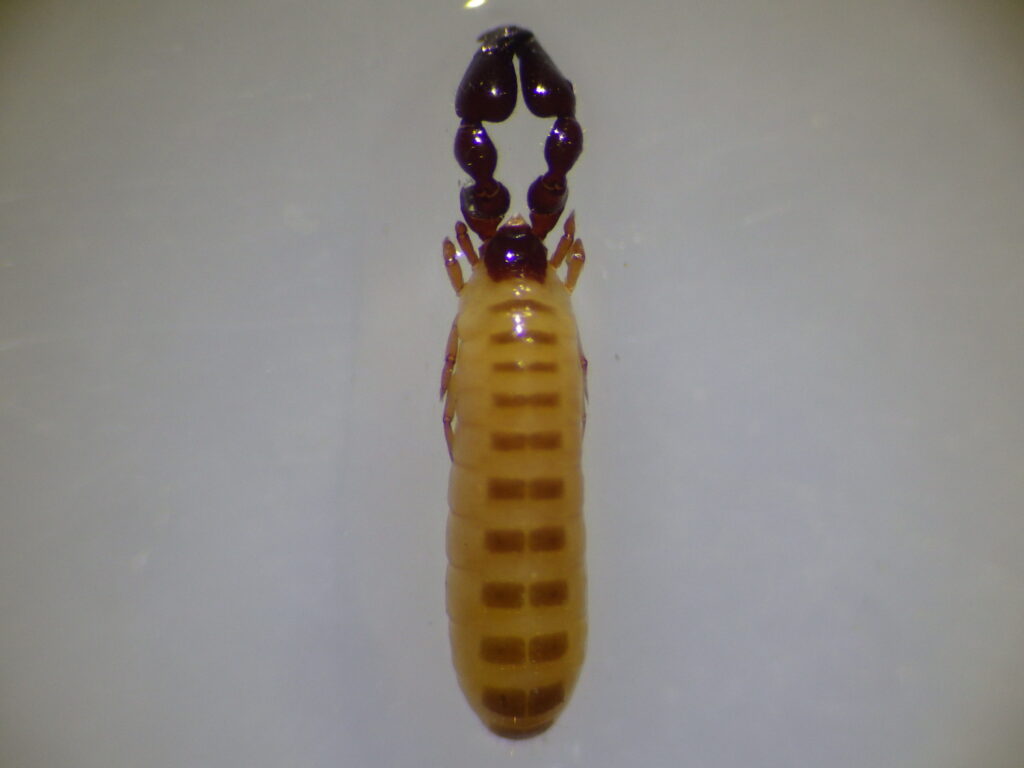
No. 1825 Megachernes ryugadensis (Pseudoscorpionidae family)
It reaches a body length of 5.0 mm, and including its thick, robust palps, it can reach nearly 1 cm. It is distributed from Hokkaido to southern Honshu, inhabiting lowlands to mountainous areas. It is often collected from the nests of bumblebees and moles. There have been instances of it preying on ticks attached to field mice (Okabe et al., 2018).
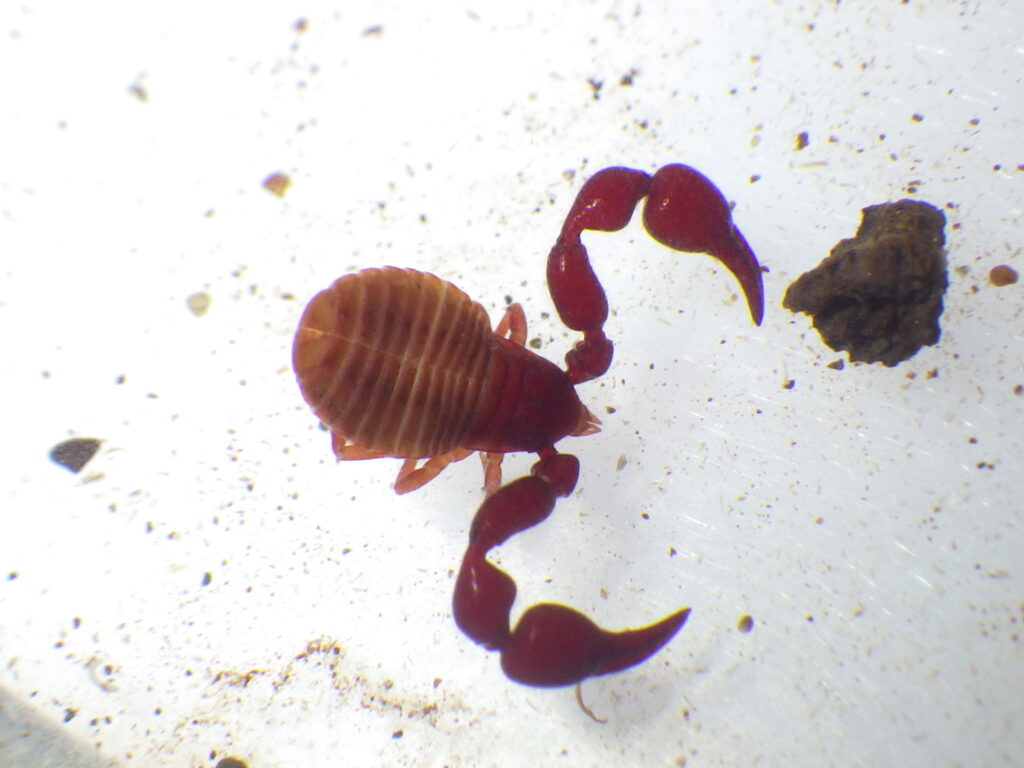
No. 1828 Mori-no-dori-kanimushi (Allochernes japonicus, family Allocheridae)
It measures approximately 1.8 mm in length. It is distributed in Honshu and Shikoku, and inhabits areas from lowlands to mountains.
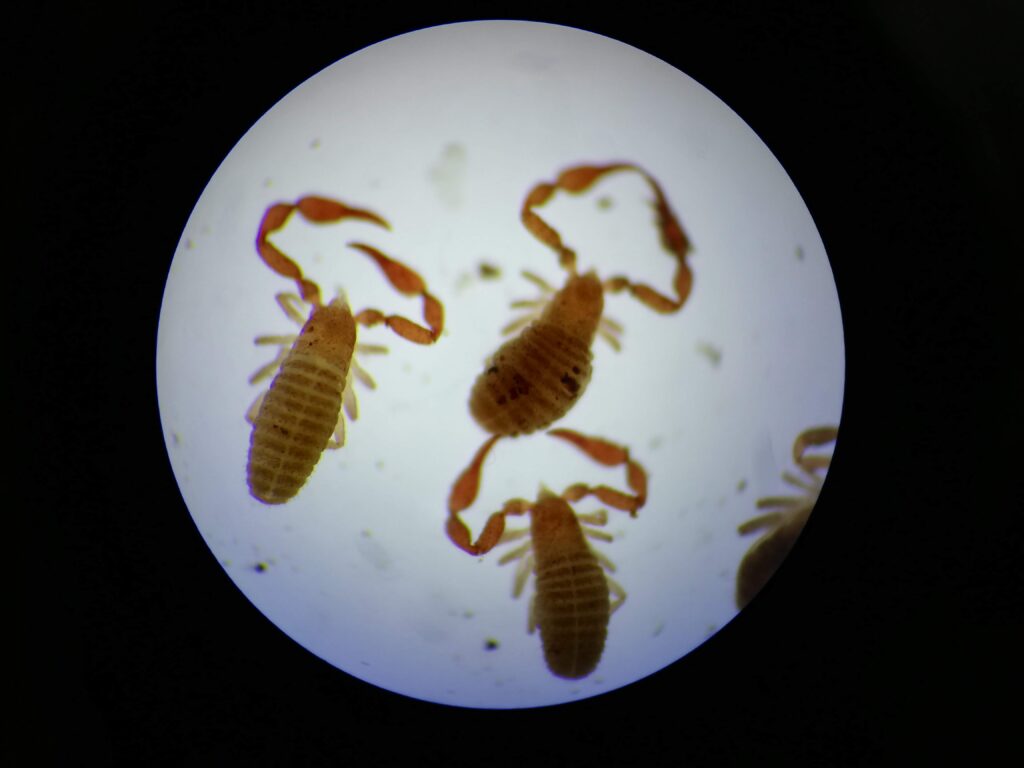
References
Japan Forestry Technology Association. 1991. 100 Mysteries of Forest Insects. Tokyo Shoseki, Tokyo. 217pp. ISBN: 9784487751990
Aoki, Jun-ichi. 2010. Soil Zoology: Focusing on Classification, Ecology, and Relationship with the Environment. Hokuryukan, Tokyo. 797pp. ISBN: 9784832608375
Aoki, Jun-ichi. 2015. Illustrated Key to the Classification of Soil Animals of Japan (2nd edition). Tokai University Press, Hadano. 1969pp. ISBN: 9784486019459
Del-Claro, K., & Tizo-Pedroso, E. 2009. Ecological and evolutionary pathways of social behavior in Pseudoscorpions (Arachnida: Pseudoscorpiones). Acta Ethologica 12: 13-22. https://doi.org/10.1007/s10211-009-0052-y, https://citeseerx.ist.psu.edu/document?repid=rep1&type=pdf&doi=0a469b5c320196b5c239f848ba2c1ab6bf71e6e7
Kashiwagi, Kenji & Sato, Hidefumi. 2022. Record of *Pseudosoma rhodopolium* on the top of a sea cliff at an elevation of 110m. *Hito to Shizen* (People and Nature) 32: 109-114. ISSN: 2185-4513, https://www.hitohaku.jp/publication/r-bulletin/2021-007.pdf
Kitazawa, Yuzo. 1977. Methods for Studying Soil Animal Ecology. Kyoritsu Shuppan, Tokyo. 253pp. ISBN: 9784320051560
Matsuda, Makiko. 2021. Distribution and ecology of the ginkgo parasitic pseudoscorpion in western Yamaguchi Prefecture. Toyoda Firefly Village Museum Research Report 13: 107-110. https://www.city.shimonoseki.lg.jp/uploaded/attachment/16921.pdf
Okabe, K., Makino, S., Shimada, T., Furukawa, T., Iijima, H., & Watari, Y. 2018. Tick predation by the pseudoscorpion Megachernes ryugadensis (Pseudoscorpiones: Chernetidae), associated with small mammals in Japan. Journal of the Acarological Society of Japan 27(1): 1-11. https://doi.org/10.2300/acari.27.1
Okada, Kaname. 2004. New Illustrated Encyclopedia of Japanese Animals, Volume 2. Hokuryukan, Tokyo. 800pp. ISBN: 9784832608139
大平創. 2022. 日本産カニムシ類の種リスト. https://sites.google.com/view/haji-ohira/%E3%82%AB%E3%83%8B%E3%83%A0%E3%82%B7%E3%81%AB%E3%81%A4%E3%81%84%E3%81%A6/%E7%A8%AE%E3%83%AA%E3%82%B9%E3%83%88
Sakayori, Hiroshi. 2001. Seasonal changes in soil-dwelling pseudoscorpions in Shimotsuma City, Ibaraki Prefecture. Research Reports of the Ibaraki Prefectural Museum of Nature 4: 79-82. https://www.nat.museum.ibk.ed.jp/wp-content/uploads/2021/03/2021-03-17_17-01-47_956615.pdf#page=81
Sato, Hidefumi. 2010. Vertical distribution and seasonal fluctuations of the three-pronged pseudoscorpion. Bulletin of Tsurumi University, Part 4, Humanities, Social Sciences and Natural Sciences, 47: 5-13. https://doi.org/10.24791/00000114
Sato, Hidenori. 2019. Pseudoscorpion Miscellany 1: Ideas from White Spots Found in the Habitat of the Spiny Pseudoscorpion. Kishidaia 115: 61-65. https://drive.google.com/file/d/1e803B_7KSJLIy6Z5xpA_zWXkqLuhLblT/view
Sato, Hidefumi. 2021a. Pseudoscorpion Miscellany 2: Arboreal Pseudoscorpions of Meiji Jingu Shrine. Kishidaia 119: 12-14. https://drive.google.com/file/d/1eEXf5va8eAI6AIGlF2jykD0Wf4MF9BDj/view
Sato, Hidefumi. 2021b. Pseudoscorpions: Unknown Insects Lurking in Forests, Coasts, and Bookshelves. Tsukiji Shokan, Tokyo. 240pp. ISBN: 9784806716280
Sato, Hidenori. 2022. Pseudoscorpion Miscellany 3: Rediscovery of the sawtoothed parasitic pseudoscorpion after 41 years. Kishidaia 121: 10-12. https://drive.google.com/file/d/1ygDFO4GlEvjqVMclVrkubDrAkXdPX2hz/view
Shimano, Tomoyuki. 2015. Mite Mania: From Cheese-Making Mites to Giant Mites (Revised and Expanded Edition). Yasaka Shobo, Tokyo. 231pp. ISBN: 9784896941883