Solanaceae

Sponsored Link
plant

What are the differences between *Solanum nigrum*, *Solanum sibiricum*, *Solanum nigrum*, and *Solanum nigrum*? We'll explain how to distinguish between similar species!

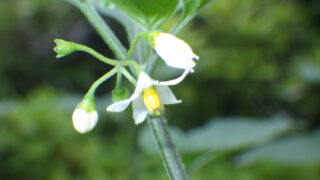
Black nightshade, large black nightshade, American black nightshade, and glossy black nightshade all belong to the Solanaceae family and Solanum genus. They are very commonly seen in urban areas, and can even be found in green spaces in large cities. They are characterized by their round, black, ripening fruits, but the four species are very similar...
plant

What are the differences between ground cherries, edible ground cherries (strawberry tomatoes), and tomatoes? We'll explain how to distinguish between similar varieties! Are three types of "edible ground cherries" being confused?

Ground cherries, edible ground cherries (strawberry tomatoes), and tomatoes all belong to the nightshade family and are characterized by producing red fruits. Edible ground cherries are sold under names such as "edible ground cherry" and "strawberry tomato," and there is some confusion about their relationship to ground cherries and tomatoes...
plant

What are the differences between *Tama coral* (winter coral) and *Himeta coral*? An explanation of how to distinguish between similar species.

Both Solanum sieboldii (winter coral) and Solanum nigrum belong to the Solanaceae family and are cultivated extensively for ornamental purposes because they produce attractive, round, red, ripe fruits (berries) in winter. However, in Japan, it is not always possible to properly distinguish between the two varieties, Solanum sieboldii and Solanum nigrum...
plant

What are the differences between Datura, Datura stramonium, Datura stramonium, and Datura arborescens? An explanation of how to distinguish between similar species.

Datura stramonium, Datura stramonium, and Datura arborescens all belong to the Solanaceae family and are cultivated as ornamental plants, as well as being well-known as poisonous and medicinal plants. They are also collectively called "Datura" or "Datura" from their genus name. However, these...
plant

What are the differences between Solanum lyratum, Solanum sarmentosum, Solanum sarmentosum, and Solanum jasminoides? We'll explain how to distinguish between similar species! What are the structures of their flowers and fruits?

Solanum lyratum, Solanum sarmentosum, Solanum japonica, and Solanum jasminoides all belong to the Solanaceae family and are four species that share the characteristic of being "climbing plants." Their basic flower and fruit structures are the same, which is why they are often confused. However, these four species have clear differences...
plant

What are the differences between goji berries (Lycium chinense) and Elaeagnus umbellata (Elaeagnus umbellata)? Can they be eaten raw? How are they prepared? What kinds of insects visit the flowers?

Goji berries (Lycium chinense) and Elaeagnus umbellata (Elaeagnus umbellata) share the common characteristic of producing delicious red berries in the summer. However, their botanical characteristics are quite different. While the leaves and flowers are the most reliable way to distinguish between them, there are also differences in the fruit stalks. Goji berries can be eaten raw, but they have a "fishy smell...".
plant

What are the differences between eggplant and nightshade? What is the origin and evolution of eggplant? Why is nightshade disliked? Does its flower pollinate by vibration? Why are nightshade fruits poisonous?

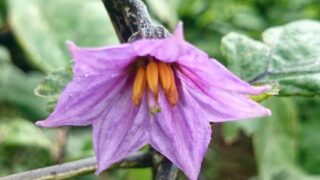
Both eggplant (Nasu) and nightshade (Nightshade japonica) share the name "eggplant" and have similar flower shapes, so those unfamiliar with them might confuse them. However, eggplant and nightshade are completely different species. Eggplant is a cultivated plant that does not grow wild and has no thorns, while nightshade is a wild plant...
Sponsored Link