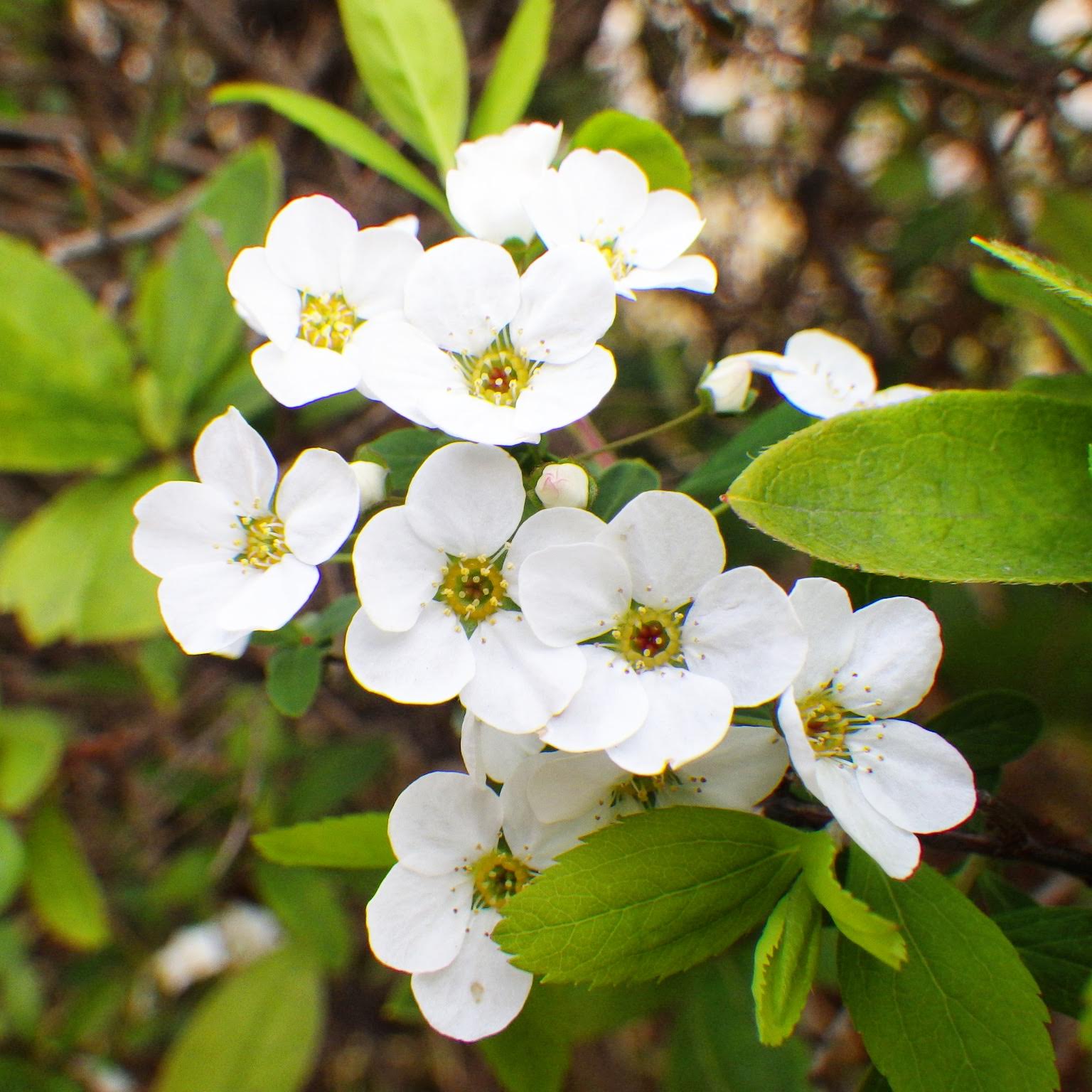
Goji berries (Lycium chinense) and Elaeagnus umbellata (Elaeagnus umbellata) share the common characteristic of producing delicious red berries in the summer. However, their botanical characteristics are quite different. The most reliable way to distinguish between goji berries and Elaeagnus umbellata is by their leaves and flowers, although there are also differences in the fruit stalks. Goji berries can be eaten raw, but they are described as having a "fishy smell, a very bland taste, and a slight bitterness," and may not be very tasty unless processed. On the other hand, Elaeagnus umbellata, particularly Elaeagnus macrophylla, is considered delicious. Goji berries are primarily eaten as dried fruit, and the leaves and buds are also edible and used in traditional Chinese medicine. Goji berry flowers, perhaps because they belong to the nightshade family, are conspicuously purple, but their shape is not particularly specialized, resembling a typical flower, and are likely mainly visited by small bees. In nature, the fruit is used by birds and raccoons. This article will explain the classification, uses, pollination ecology, and seed dispersal of goji berries (Lycium chinense) and Elaeagnus multiflora (Elaeagnus multiflora).
- A delicious red berry that ripens in the summer.
- The most reliable way to distinguish between goji berries and Elaeagnus umbellata is by their leaves and flowers; the fruits differ in their pedicels.
- While goji berries can be eaten raw, is eating them raw not so great?
- Are bees primarily attracted to flowers of the nightshade family that have completely different anther shapes?
- Do birds and mammals eat goji berries?
- References
- Source
A delicious red berry that ripens in the summer.
Goji berry (Lycium chinense) is a shrub distributed throughout Japan, the Korean Peninsula, China, and Taiwan (Hirano, 1997). It is cultivated and sometimes naturalized in South Asia (Nepal), Southeast Asia (Thailand, Malaysia, Indonesia), and Europe (Paisooksantivatana, 1994), and has recently spread to North America (Shirataka, 2018). It inhabits plains with wasteland such as embankments and ditches, and sandy areas near water (Tanaka, 1995; Ohashi et al., 2017). It is cultivated for its edible fruits and leaves.
Botanically, "gumi" (茱萸) is a general term for the genus Elaeagnus and does not refer to a specific plant species. However, in horticulture, it generally refers to Elaeagnus multiflora var. hortensis, or Elaeagnus multiflora var. gigantea, a cultivar of Elaeagnus multiflora with large fruits (Funakoshi, 2017). Elaeagnus multiflora var. gigantea is also called "bikkuri gumi" (surprise gumi) in horticulture.
Elaeagnus multiflora is a deciduous shrub distributed in Hokkaido (Oshima Peninsula) and Honshu (the Sea of Japan side north of central Japan, and central Kinki region), growing in forest edges and within woodlands (Kanagawa Prefecture Flora Survey Association, 2018). It is cultivated for its edible fruit.
From a distance, both goji berries and jujubes appear to be delicious-looking red berries, and their leaves are oblong to oval-shaped, so someone unfamiliar with them might not be able to distinguish them just by looking at the fruit.
The most reliable way to distinguish between goji berries and Elaeagnus umbellata is by their leaves and flowers; the fruits differ in their pedicels.
However, goji berries belong to the nightshade family, while jujubes belong to the Elaeagnaceae family; their classifications are completely different and are the result of convergent evolution. There are considerable differences in their leaves and stems.
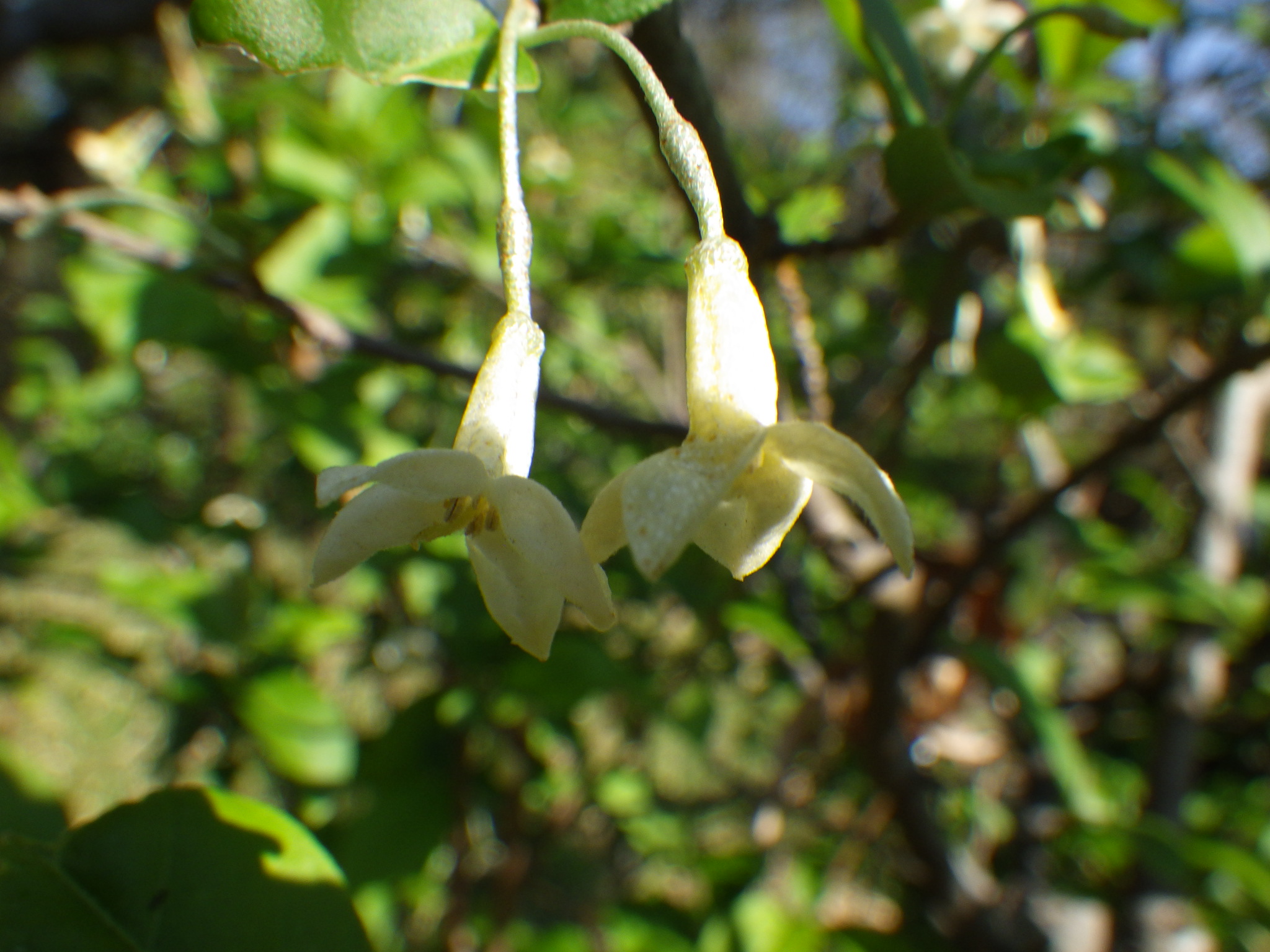
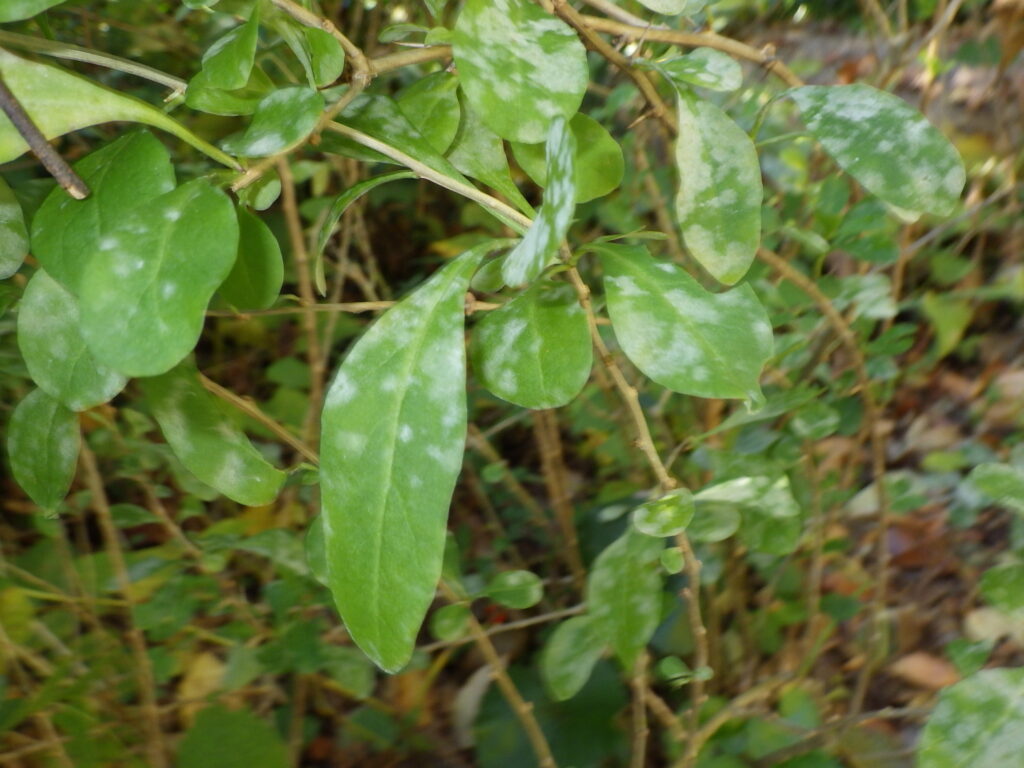
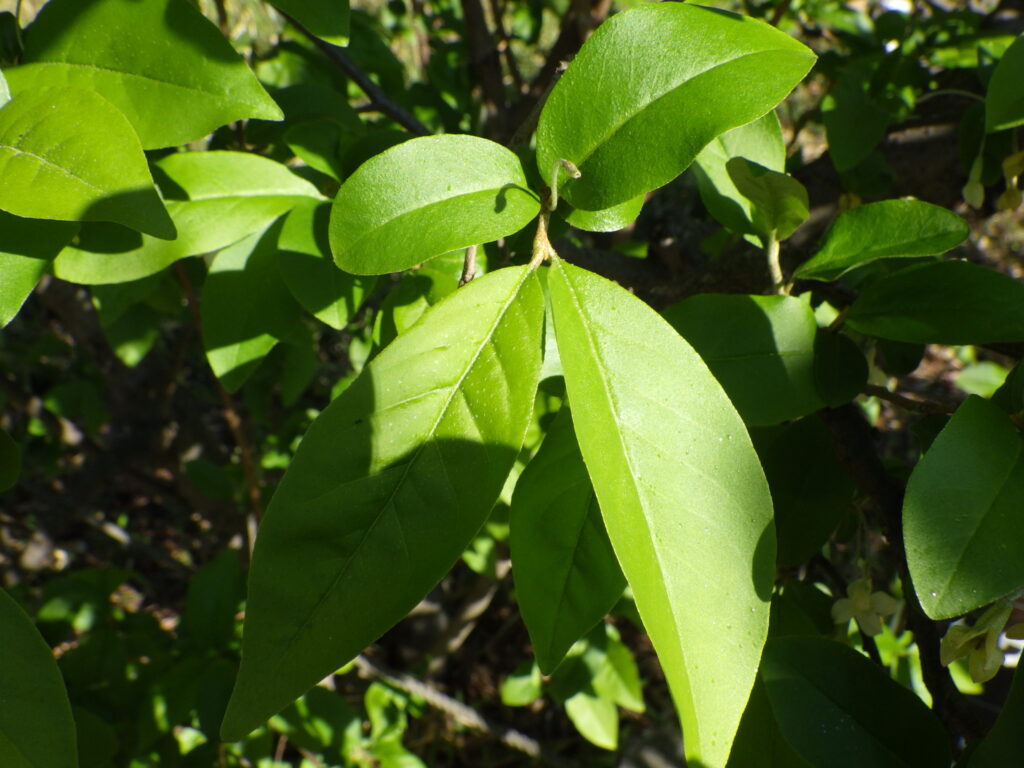
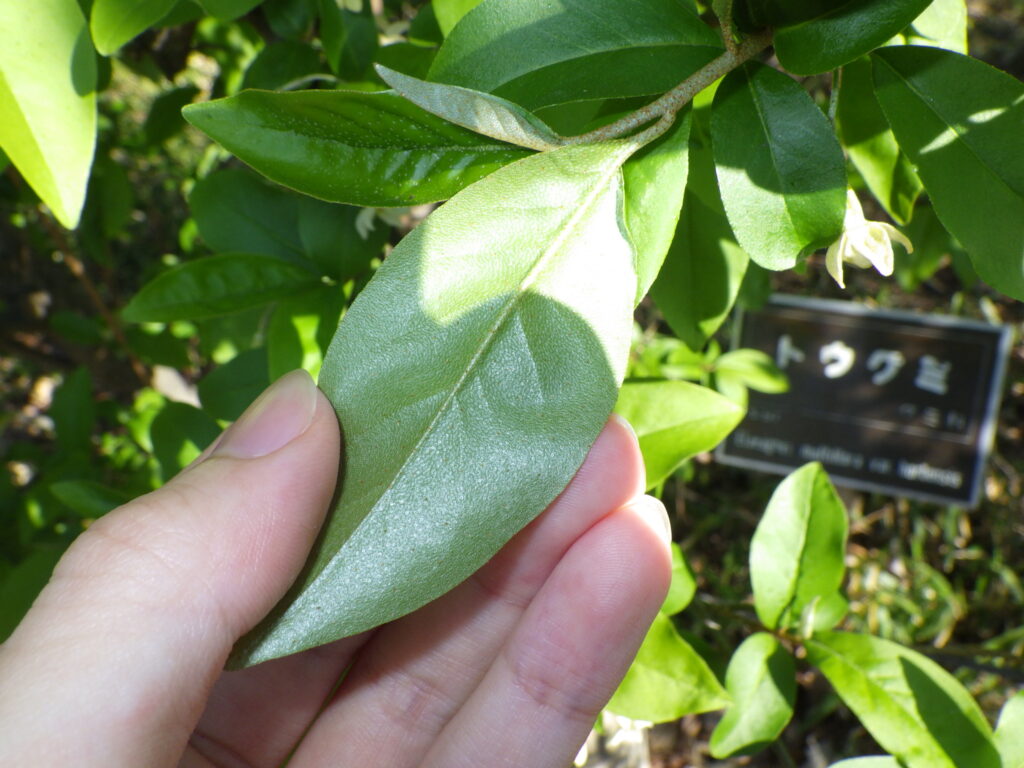
First, there is a striking difference in the leaves. The leaves of the goji berry are soft, papery, and hairless, while those of the Chinese olive have silvery-white or brownish scale-like or stellate hairs, and from a distance, countless tiny dots are visible, giving them a sparkling appearance.
Regarding the stems, goji berries (Lycium chinense) have ridges (horns) and thorns. Chinese jack-in-the-valley (Elaeagnus umbellata) has no ridges and no thorns. However, be aware that other species in the Elaeagnus genus may have thorns.
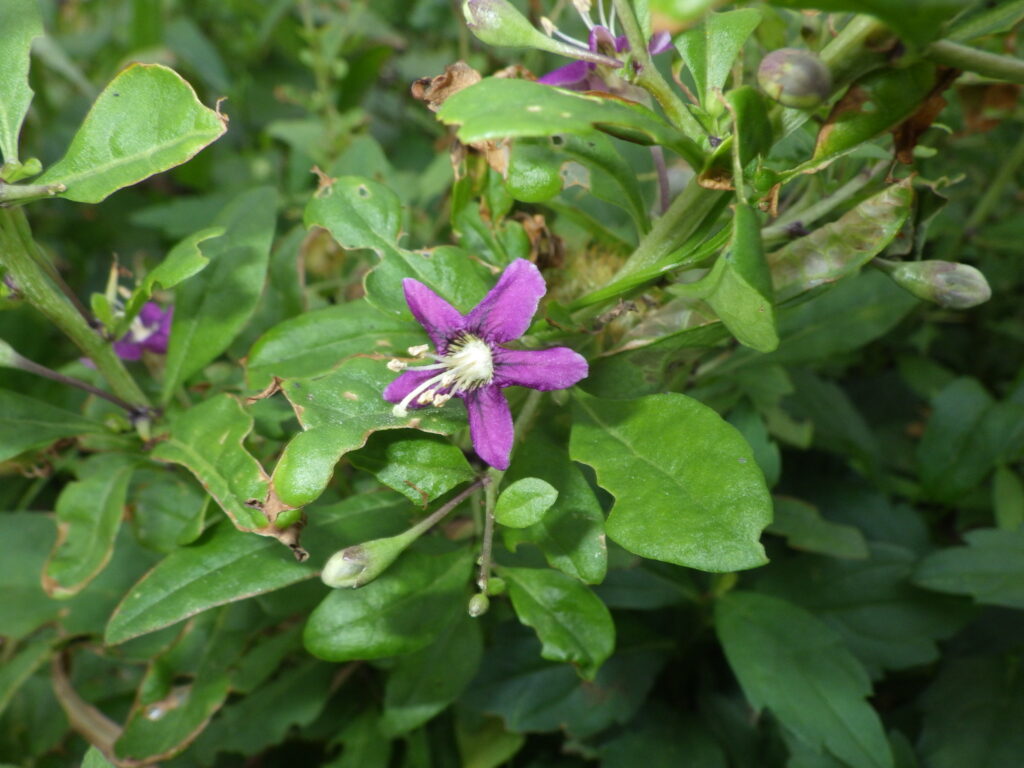
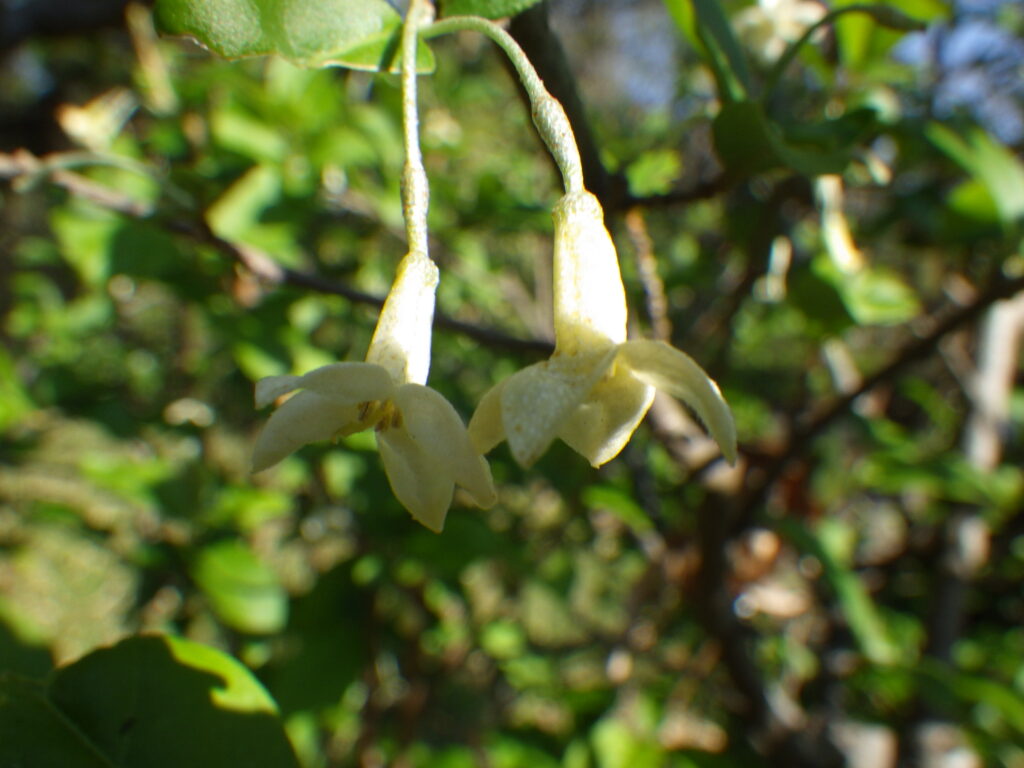
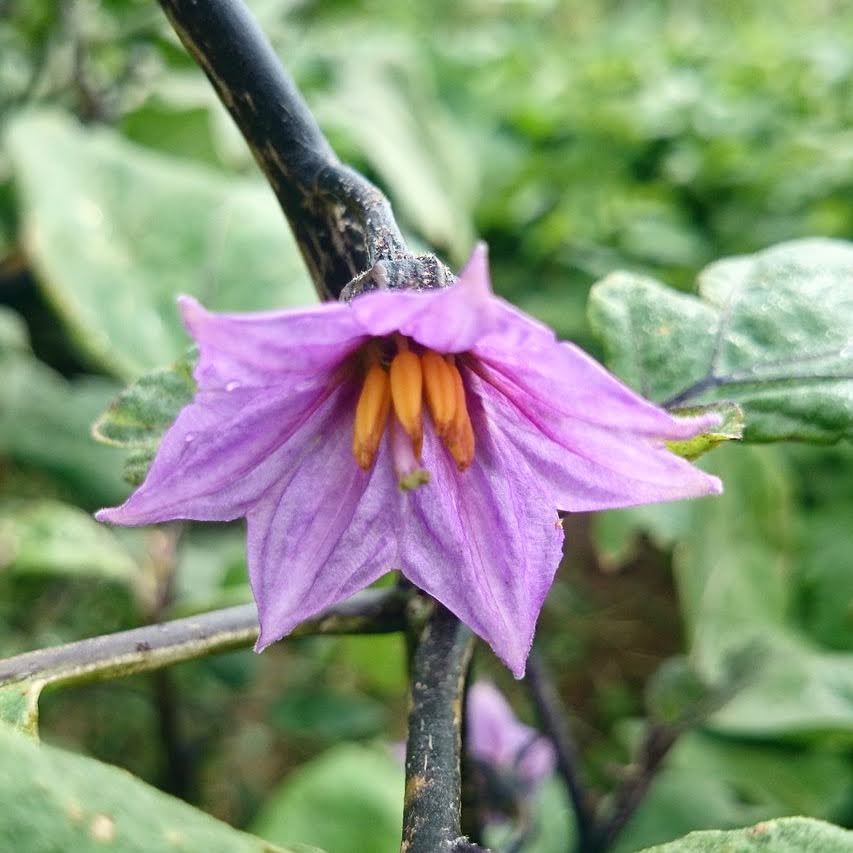
The flowers are completely different; in the wolfberry, the corolla is pale purple and broadly funnel-shaped, whereas in this species, the flower is pale yellow and the calyx tube, which replaces the corolla, is cylindrical.
The most difficult part is the fruit, and first of all, there is a difference in the fruiting period. Goji berries fruit from August to November, while angelica tree berries fruit from June to July. However, depending on the region and weather, there may be some overlap.
Another difference is that the fruit stalk, the elongated organ that attaches the fruit to the plant, is thick and round at the fruit end in goji berries before abruptly narrowing, whereas in angelica trees it remains consistently thin.
Based on the above, you can definitely distinguish them. Judging them by the shape or color of the fruit would be quite difficult.
If you want to learn how to distinguish between different types of gummy candies, please see our other article.
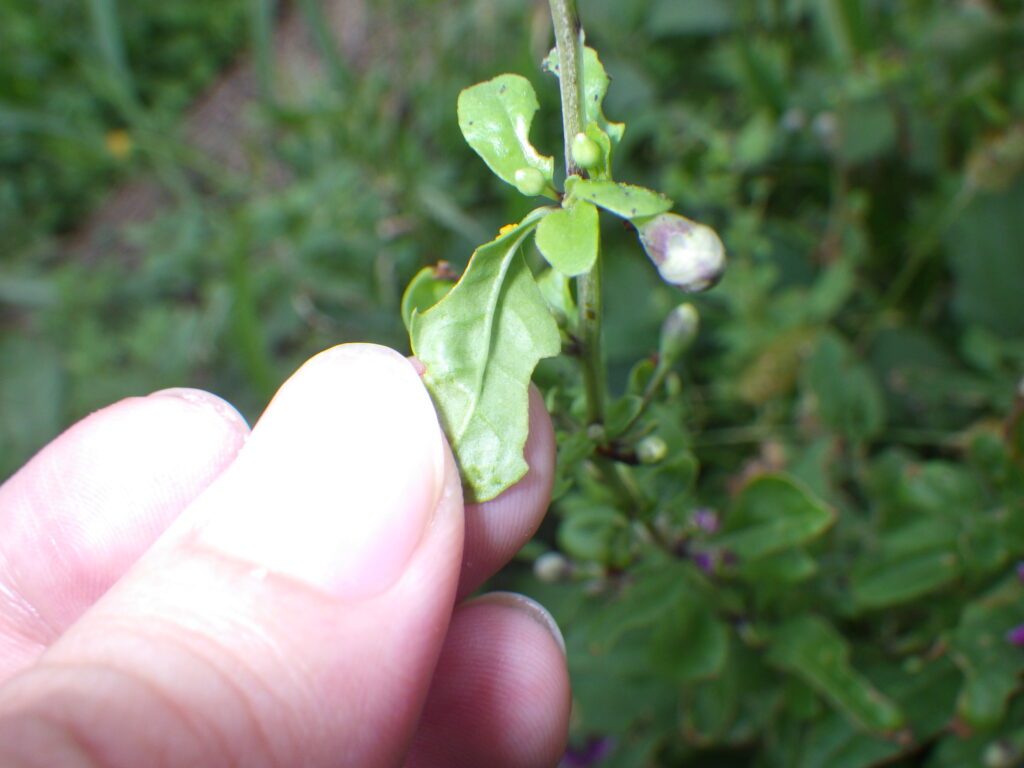


While goji berries can be eaten raw, is eating them raw not so great?
The goji berry is best known for its red berries, and nowadays, it's most familiar to humans as a dried fruit. While it can be eaten fresh, some say it has a "fishy smell, a very bland taste, and a slight bitterness," so it's not very tasty.
In addition, the young shoots in spring and the leaves from summer to autumn are boiled and rinsed in water to be used in salads or blanched dishes, while the raw berries are thoroughly washed and used in tempura, stir-fries, or soups. The fully ripened berries are thoroughly washed and steeped in white liquor to make fruit wine. The leaves and roots are finely chopped and dried to make goji berry tea.
The fruit, root bark, and leaves are also used in traditional Chinese medicine (Shirataka, 2018).
Besides being eaten fresh, the Japanese laurel (Elaeagnus multiflora) is used in jams and other products, as well as to make fruit wine (Elaeagnus multiflora wine). There are various opinions on the taste of eating it fresh, with some saying it is "sweet and sour with a lingering astringency," and others saying it is "almost astringent and sweet enough to be eaten raw." However, the cultivated variety, Elaeagnus macrophylla, is generally considered delicious. Other species of Elaeagnus multiflora, however, are often very sour or bitter and would be difficult to eat without processing.
Are bees primarily attracted to flowers of the nightshade family that have completely different anther shapes?
The flowers of the goji berry are just as vibrant as the fruit, pale purple, and funnel-shaped (Ohashi et al., 2017). They bloom from July to November, from summer to autumn. Although they belong to the same Solanaceae family as eggplants, the shape of their stamens is completely different, with the anthers of the typical form protruding from the outside of the flower.
According to overseas records, this flower is visited by bees, flies, and ants (Paisooksantivatana, 1994), and in Japan, honeybees (Howes, 2015) and red-winged bumblebees (Ikutome, 1992) have also been confirmed. A Google image search also confirmed that a species of bumblebee and a yellow-breasted bumblebee have visited the flower in Japan. There does not seem to be any research yet that has investigated the overall proportion of these species, but it is thought that in Japan, there are many bees that can extend their mouthparts into the funnel-shaped opening.
While pollination in the Solanum genus, including eggplant, is limited to bees capable of vibration pollination, goji berries seem to be able to accommodate a variety of bees. The reason why this method of pollination works is not yet fully understood, but it may be because they have evolved in an environment where there are few insects that steal nectar from outside the flower without carrying pollen, such as bumblebees. However, there are also photographs of bumblebees visiting, so the actual reason remains unclear and research is insufficient.
Do birds and mammals eat goji berries?
What animals in the wild eat goji berries, which can only be enjoyed after being processed by humans?
While this point has not been studied sufficiently, the presence of goji berry seeds carried by birds under persimmon trees suggests that dispersal by birds is a possibility (Takatsuki, 2021).
However, there are also reports that it is being used by raccoons (Takatsuki, 2018).
It's possible that both methods are used, but since it grows in sandy areas near water, bird dispersal might be the primary method. A Chinese study also treats it as bird dispersal (Li et al., 2006).
However, it seems that it is not known which types of birds prefer it.
References
Funakoshi, Ryoji. 2017. 100 Fruit Trees You Can Grow and Eat Yourself: From Familiar Fruits to Popular Berries. Shufunotomo Co., Ltd., Tokyo. 167pp. ISBN: 9784074272013
Hirano, Takahisa. 1997. Tree Guidebook: Understanding the Characteristics and Uses of Trees Found in Gardens, Parks, and Wildlife. Nagaoka Shoten, Tokyo. 319pp. ISBN: 9784522215579
Howes, FN 2015. Plants and Beekeeping. Andesite Press, California. 264pp. ISBN: 9781296522247
Ikutome, Shuichi. 1992. Environment and bee fauna of urban nature parks: Survey results in Shiroyama Park, Kagoshima City. Appendix: Revised Catalogue of bees in mainland Kagoshima Prefecture. Bulletin of Kagoshima Women's Junior College 27: 99-135. ISSN: 0286-8970, http://id.nii.ac.jp/1121/00000877/
Kanagawa Prefecture Flora Survey Association. 2018. Kanagawa Prefecture Flora 2018 (Electronic Edition). Kanagawa Prefecture Flora Survey Association, Odawara. 1803pp. ISBN: 9784991053726
Ohashi, Hiroyoshi; Kadota, Yuichi; Murata, Hitoshi; Yonekura, Koji; and Kihara, Hiroshi. 2017. Wild Plants of Japan (Revised New Edition, Vol. 5: Convolvulaceae to Caprifoliaceae). Heibonsha, Tokyo. 760pp. ISBN: 9784582535358
Paisooksantivatana, Y. 1994. Lycium chinense. In: JS Siemonsma, & K. Piluek (Eds.), Plant Resources in South-East Asia (No. 8 Vegetables, pp. 198-199). Pudoc. ISBN: 9789022010587, http://uses.plantnet-project.org/en/Lycium_chinense_(PROSEA)
Shirataki, Yoshiaki. 2018. Wildflowers of the Mountains and Fields: Edible and Medicinal Properties of Common Wild Plants - Lycium chinense Miller (Solanaceae family). New Food Industry 60(9): 52-54. ISSN: 0547-0277, https://www.i-repository.net/il/user_contents/02/G0000284repository/pdf/JOS-05470277-60(9)-52.pdf
Takatsuki, Shigeki. 2018. Characteristics of fruits used by raccoons—a review. Mammalian Science 58(2): 237-246. https://doi.org/10.11238/mammalianscience.58.237
Takatsuki, Seiki. 2021. Seed dispersal by birds to persimmon trees on the Azabu University campus. Azabu University Journal 32: 1-9. http://id.nii.ac.jp/1112/00005374/
Tanaka, Koji. 1995. Herbal Health Methods: Effectiveness and Usage at a Glance. Kodansha, Tokyo. 123pp. ISBN: 9784061953727
Source
This article is a significantly expanded version of the one included in the following book.