Purslane, Portulaca grandiflora, and Portulaca oleracea are all members of the Portulacaceae family and Portulaca genus, and are characterized by their glossy, succulent leaves. Due to their hardiness, they are cultivated and naturalized in urban areas, and Portulaca grandiflora and Portulaca oleracea are particularly popular as ornamental plants because of their large flowers. However, these three species can sometimes be confused. The three species can be easily distinguished by checking the size of their leaves and flowers. One theory suggests that Portulaca grandiflora is a hybrid of Purslane and Portulaca oleracea, and it is easier to remember if you think of it as having intermediate characteristics. All three species are known to be able to perform both C4 photosynthesis and Crassulaceae-type organic acid metabolism (CAM) photosynthesis, which enables them to grow in harsh environments.
What are purslane, moss rose, and portulaca?
Portulaca oleracea, also known as purslane, is native to Europe, Africa, and West Asia, and has naturalized in temperate to tropical regions worldwide. In Japan, it is distributed in Hokkaido, Honshu, Shikoku, Kyushu, and the Ryukyu Islands, and is a common annual plant that grows along roadsides and in fields (Kanagawa Prefecture Flora Survey Association, 2018; RBG Kew, 2025). The origin of its Japanese name is said to come from the fact that it has been used as food since ancient times, and although it resembles the vegetable "hiyu" which is eaten boiled, it is stickier than hiyu, hence it was called "mumerihiyu" (slimy hiyu).
Portulaca oleracea x P. grandiflora, also known as Portulaca, is an annual hybrid plant artificially created in horticulture from purslane and portulaca. It is cultivated worldwide for ornamental purposes. Several websites, including Ylist, list it under the scientific name Portulaca oleracea x P. pilosa subsp. grandiflora, but this is inconsistent as it follows the practice of classifying portulaca as a subspecies of Portulaca grandiflora. The Kanagawa Prefecture Flora 2018 treats it as P. oleracea 'Wild Fire', which is considered a horticultural variety of purslane.
Portulaca grandiflora, also known as pine needle moss, is also called Horobinsou (meaning "immortal grass"). Native to South America, it has naturalized in some parts of the world and is cultivated in Japan as an ornamental annual plant.
All of these species belong to the Portulaca genus of the Portulacaceae family, and their most distinctive feature is that they are herbaceous plants with glossy, succulent leaves. The leaves are alternate, and the flowers grow in clusters at the top of the stem. These leaves have evolved for a special type of photosynthesis, as will be described later.
One of the appealing aspects of purslane and portulaca is that they are hardy enough to survive even if left unattended, and they come in a variety of colors including white, yellow, pink, and red.
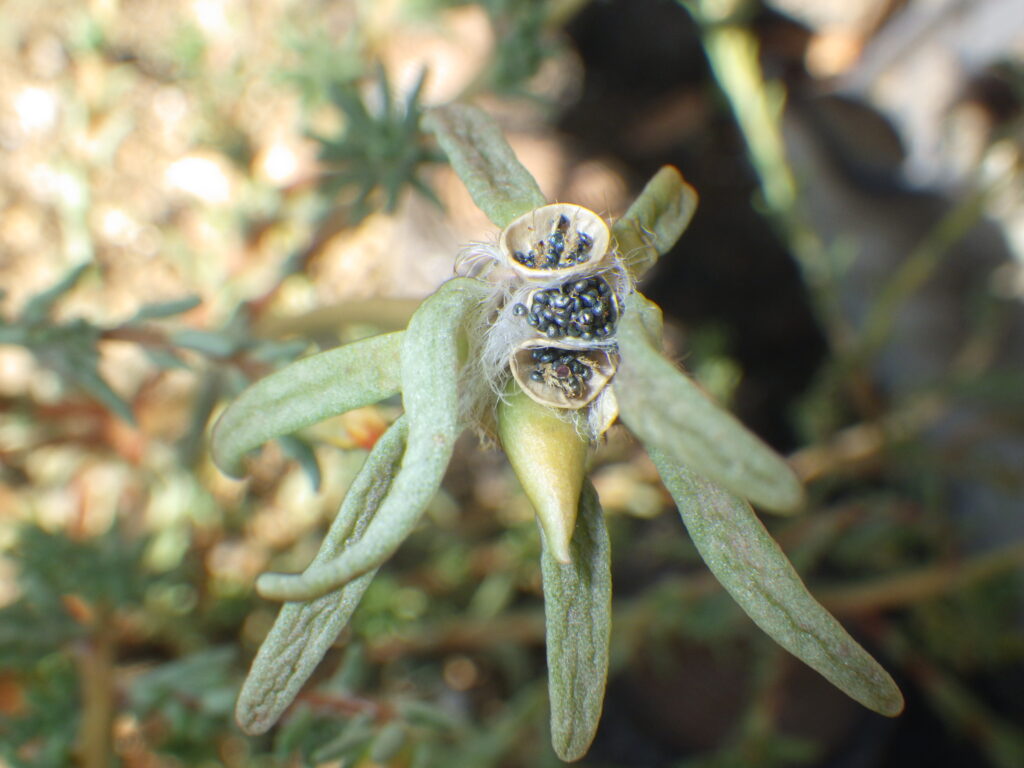
The fruit is a capsule that splits open horizontally when ripe, with the top part falling off, and contains numerous black seeds. This abundance of seeds contributes to its high reproductive capacity.
Furthermore, three species within the purslane genus share the common characteristic of creeping along the ground.
However, in horticulture, Portulaca oleracea is referred to by its genus name, "Portulaca," and may be confused with other plants in the same genus, such as Portulaca grandiflora or the wild, naturally growing species of Portulaca oleracea.
What are the differences between purslane, ornamental purslane, and portulaca?
Of these three species, purslane and portulaca are completely different species, so the difference is clear (Flora of North America Editorial Committee, 2004).
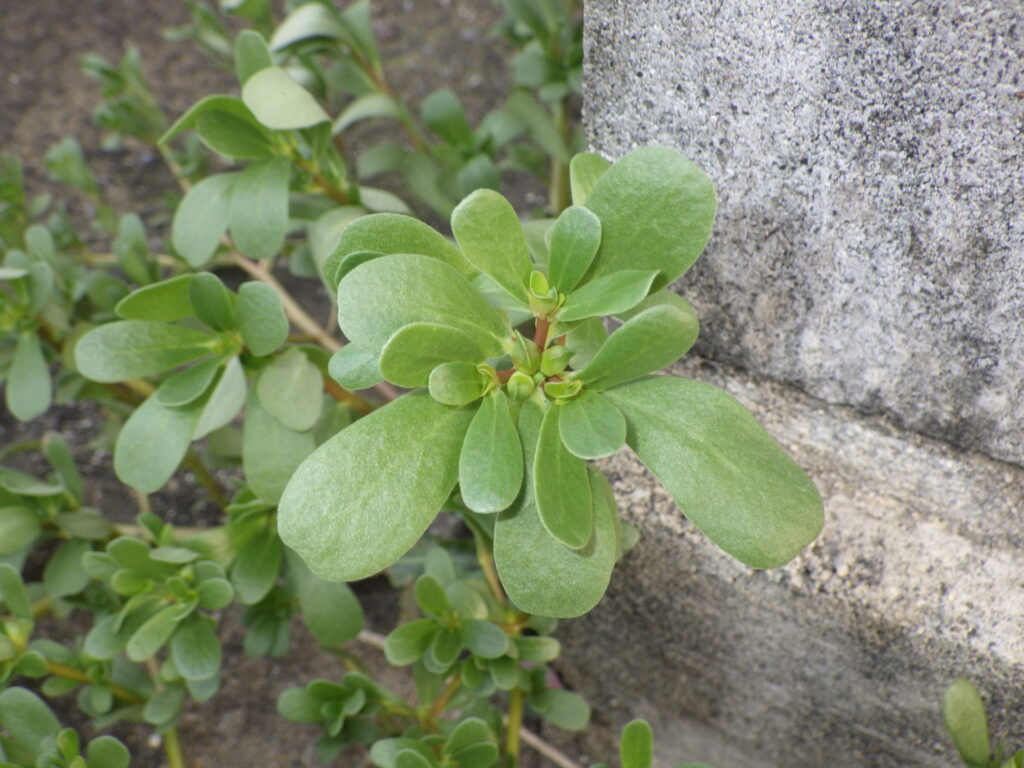
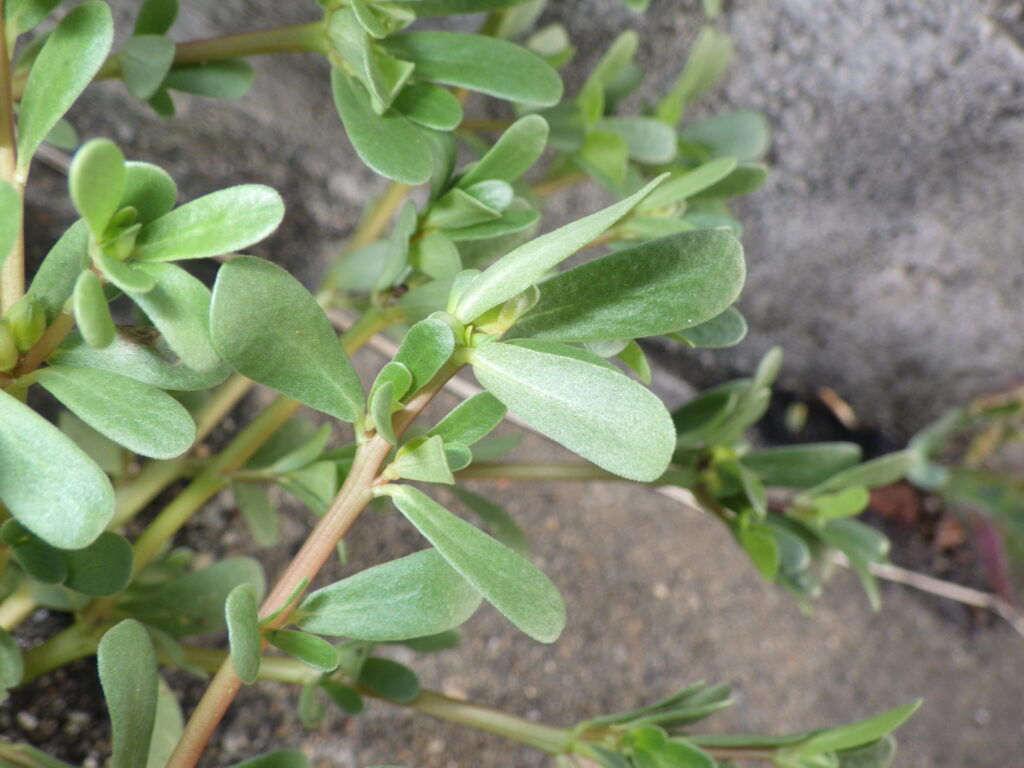
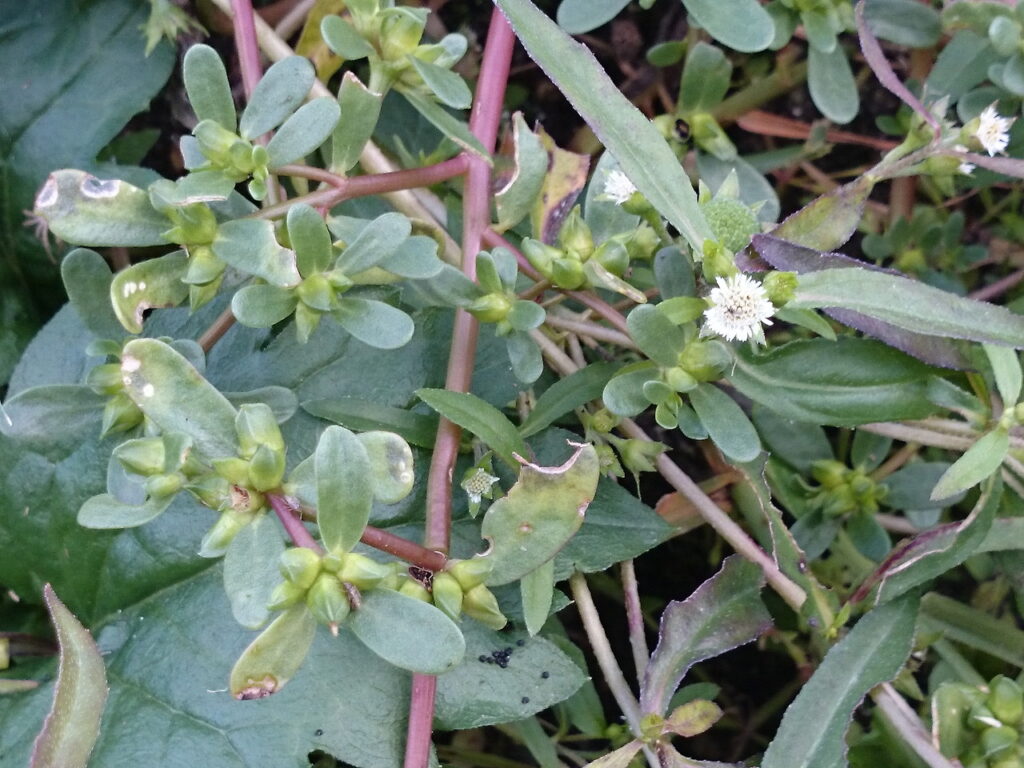
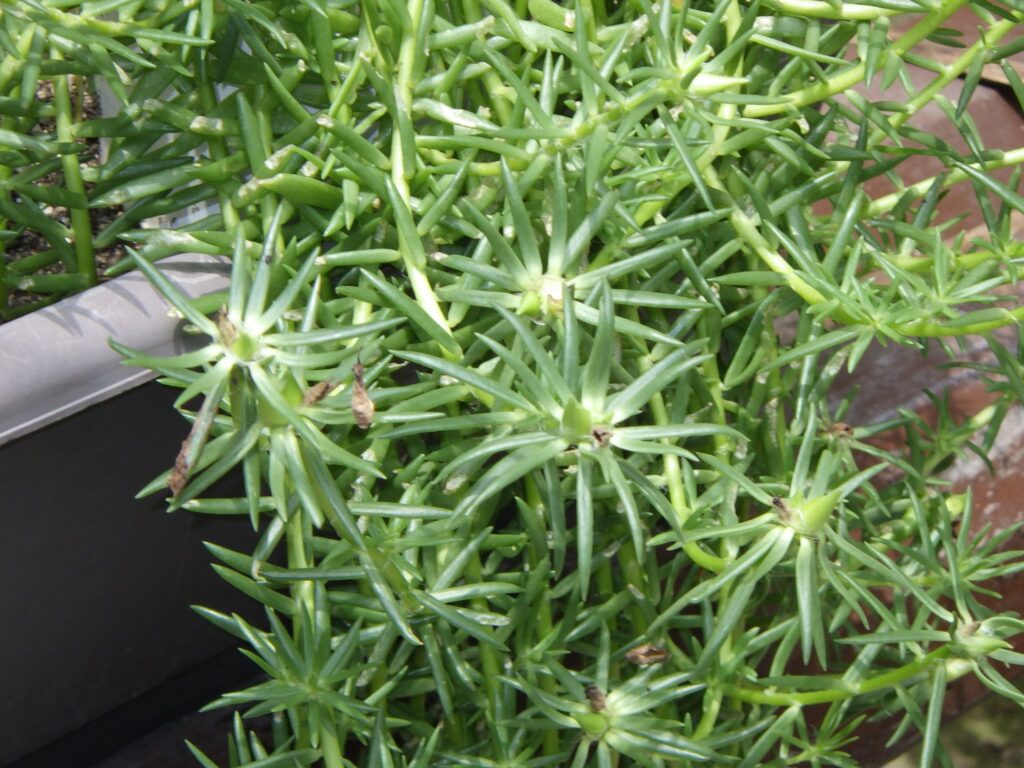
The difference between purslane and portulaca is that purslane has flat, spatulate leaves with a wedge-shaped base, while portulaca has slender, pointed, cylindrical leaves.
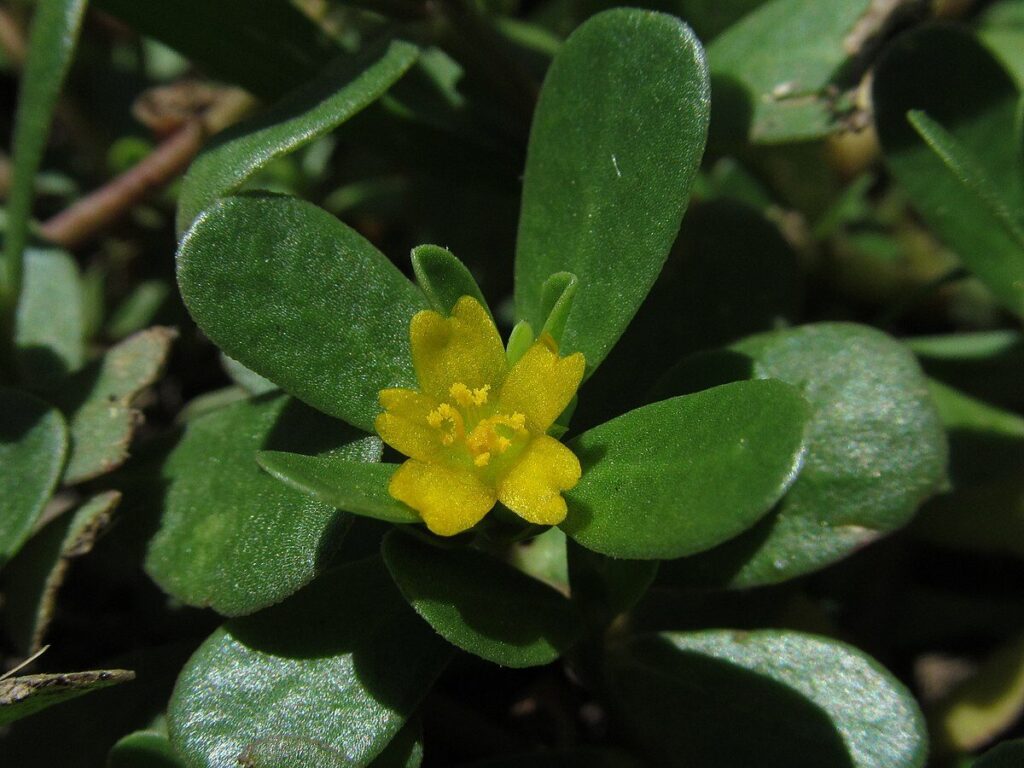
In terms of appearance, purslane has spatula-like leaves, while portulaca has needle-like leaves. Purslane leaves are so distinctive that you can recognize it just by looking at them. Portulaca also lives up to its Japanese name, "matsuba" (pine needle).
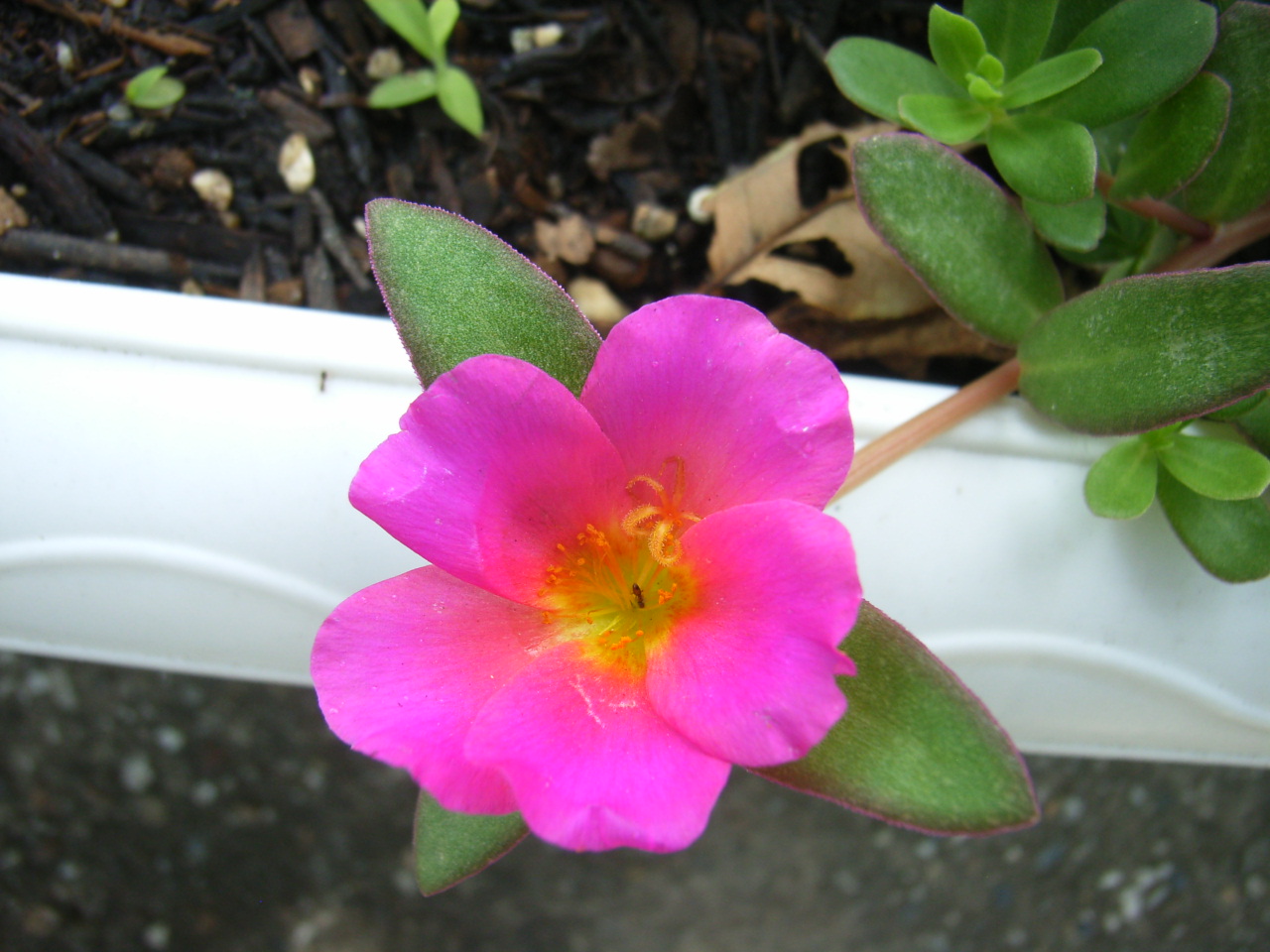
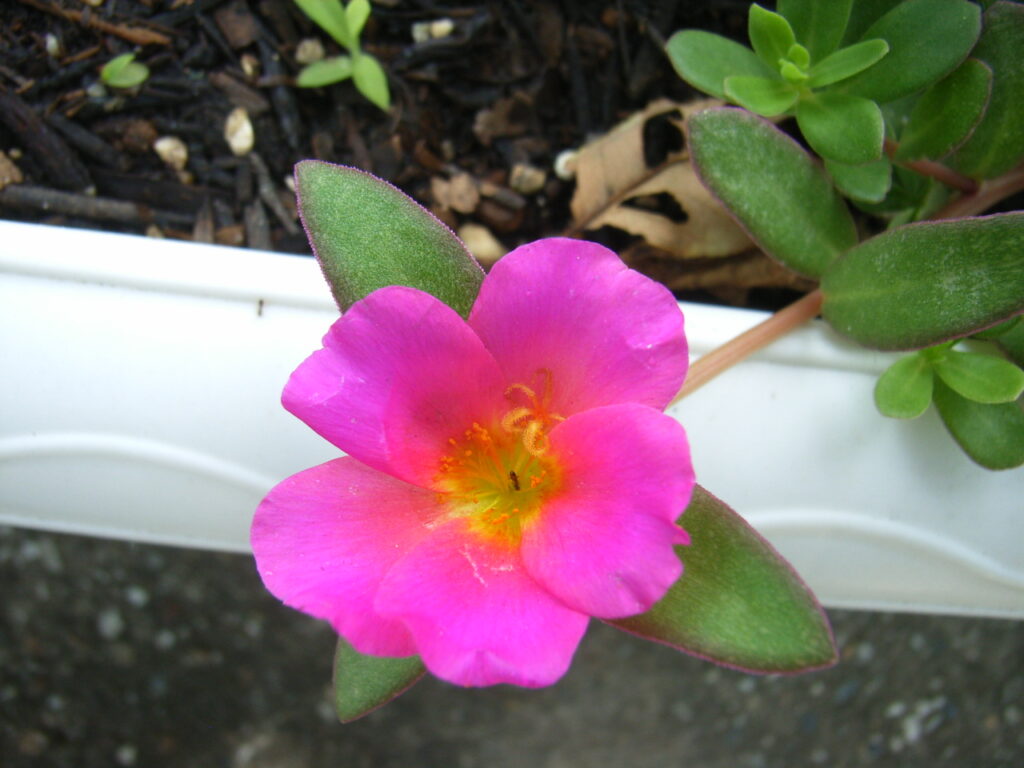
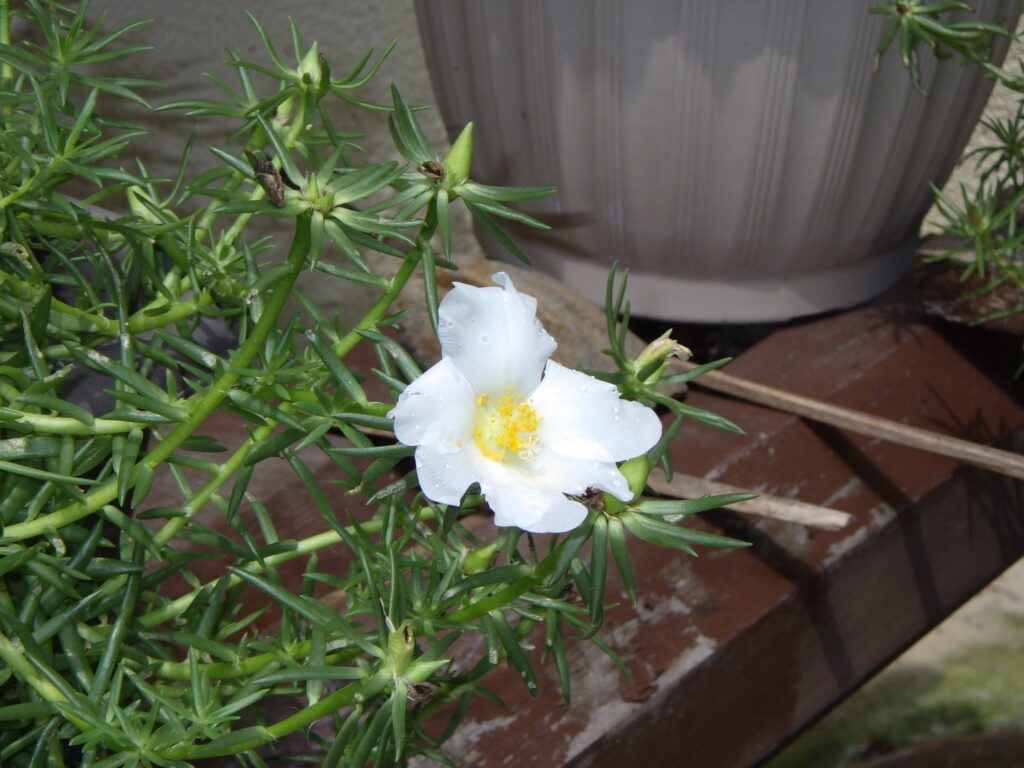
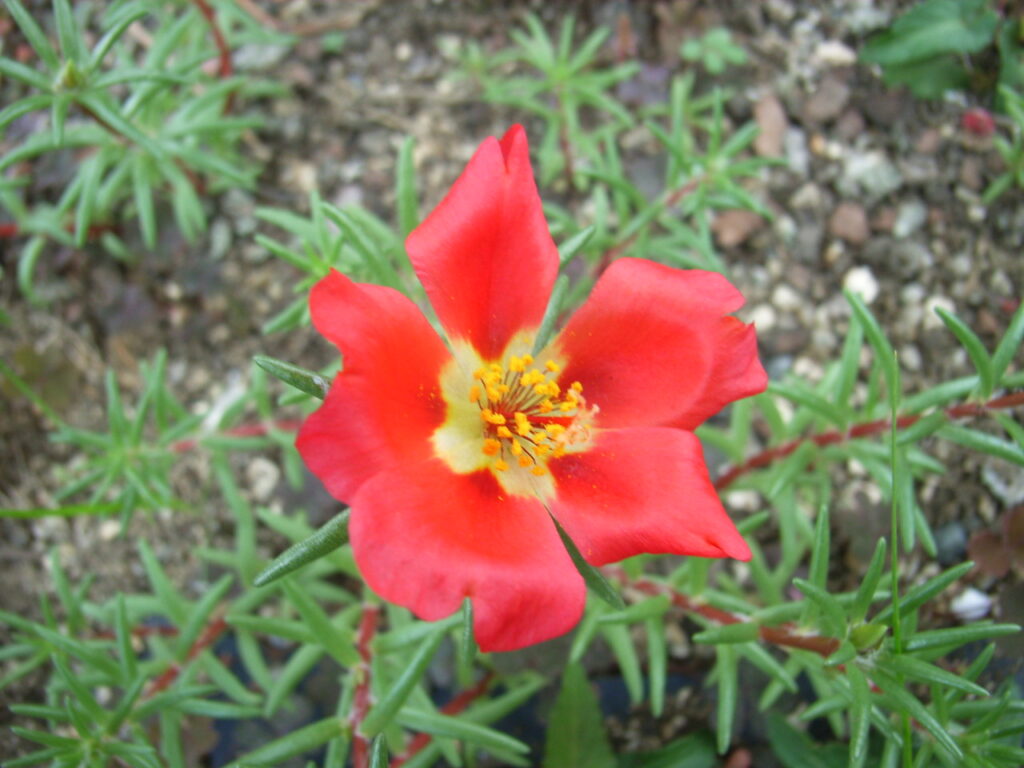
While purslane flowers are always yellow and 6-8mm in diameter, portulaca flowers come in a variety of colors including white, yellow, pink, and red, and can grow to over 30mm in diameter.
Portulaca grandiflora is said to be a hybrid of purslane and portulaca, and therefore exhibits characteristics intermediate between the two species.
The leaves of Portulaca oleracea are similar to those of Portulaca purslane and are flat, but they are not as spatulate as those of Portulaca purslane and are closer to an oval shape.
Portulaca grandiflora flowers are similar to those of Portulaca grandiflora, are large, and come in a variety of colors including white, yellow, pink, and red.
Therefore, plants with large flowers and nearly oval-shaped leaves can be identified as Portulaca oleracea.
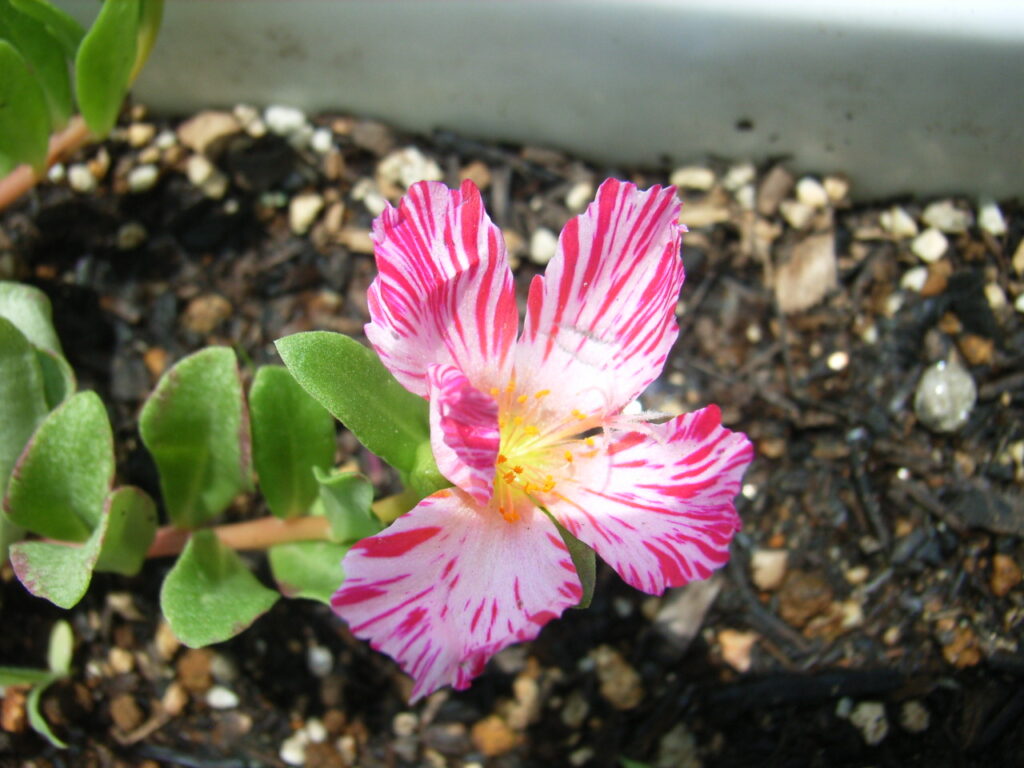
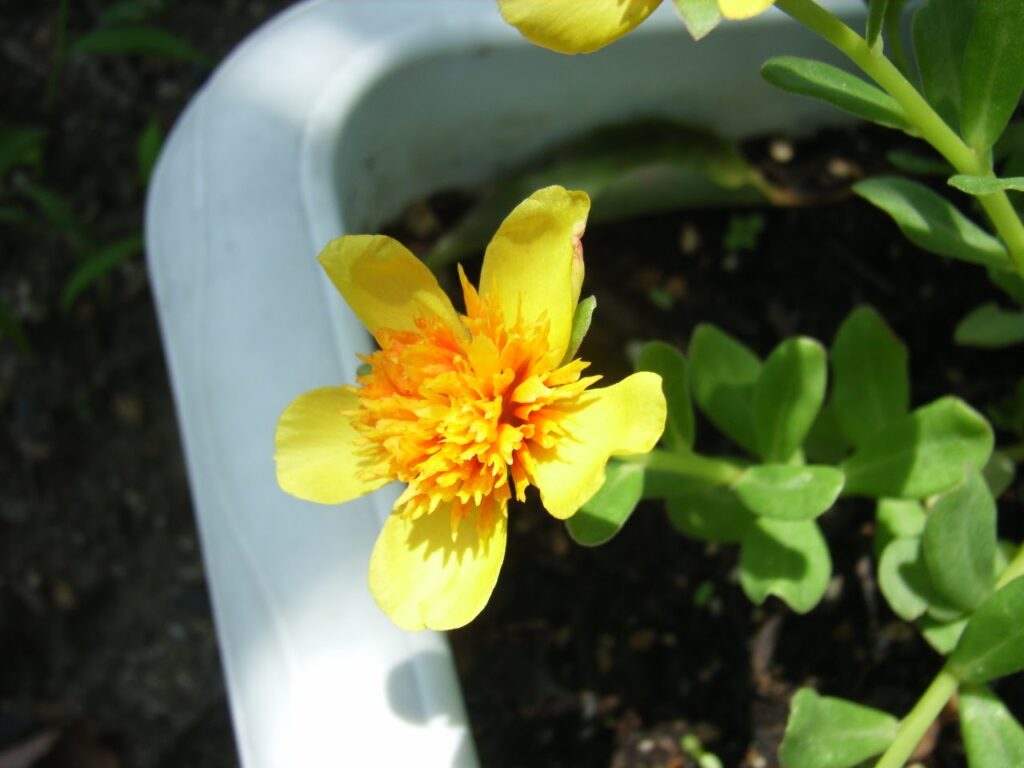
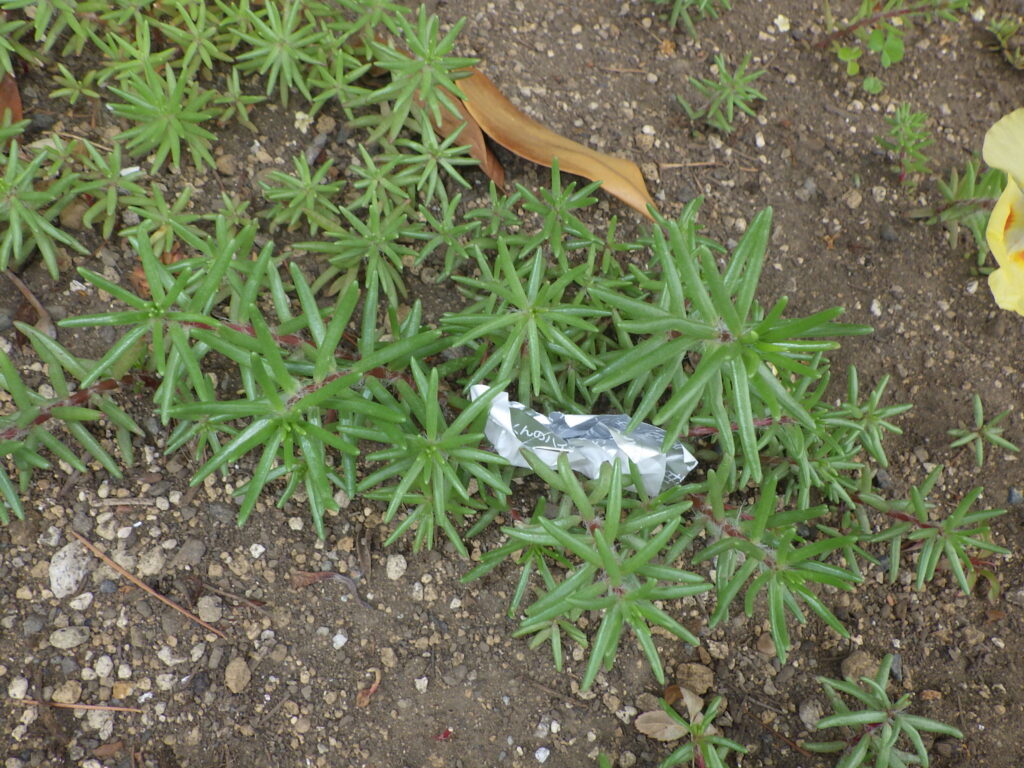
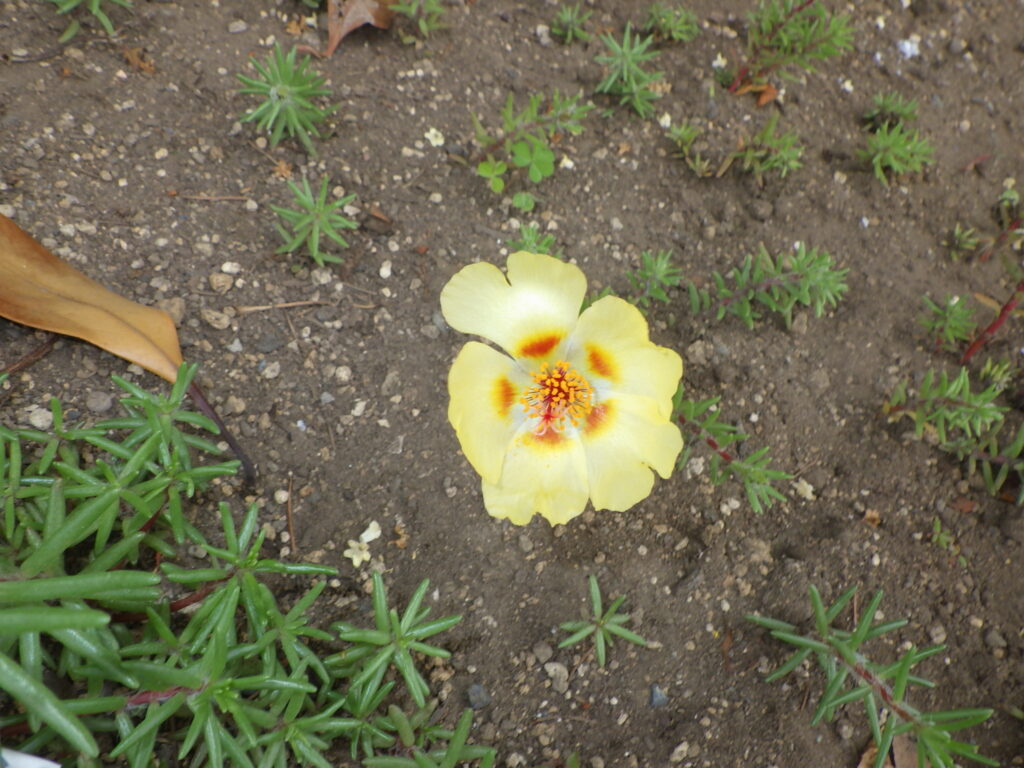
What is the difference between Portulaca grandiflora and Portulaca oleracea?
It is known that a species similar to Portulaca grandiflora, called Portulaca pilosa, is cultivated and naturalized. Like Portulaca grandiflora, Portulaca pilosa also has thick, needle-like leaves.
However, there is a difference between Portulaca grandiflora and Portulaca japonica: Portulaca oleracea has flowers with a diameter of 3 cm or more, while Portulaca japonica has smaller flowers with a diameter of only 1 cm.
The "Flora of Kanagawa Prefecture 2018" also mentions that Portulaca grandiflora has noticeable curled long hairs at the base of its leaves, but some of the Portulaca grandiflora I photographed have noticeable curled long hairs, but also large flowers, so it may not be possible to distinguish them based on this alone.
Purslane species exhibit both C4 and CAM photosynthesis!?
The genus Portulaca, which includes these three species, is characterized by being a C4 plant that performs C4 photosynthesis, while also being a CAM plant that performs Crassula-type organic acid metabolism (CAM) photosynthesis (Ferrari et al., 2020; Guralnick et al., 2020).
Normally, C4 photosynthesis and CAM photosynthesis cannot coexist in a single cell, but in the genus Sedum, both processes coexist through a division of labor within a single leaf.
C4 photosynthesis is generally a physiological adaptation to high-temperature, high-light environments.
CAM photosynthesis generally absorbs carbon dioxide (CO2) at night, suppressing daytime transpiration. This is considered a physiological adaptation that allows terrestrial succulents to secure water in high-temperature, semi-arid environments where they are exposed to harsh moisture conditions. It is advantageous for growing in places where direct absorption of water from the soil is difficult or in soils with high salinity. In addition, the succulent nature of the tissue has evolved to enhance water storage capacity. These three species can be said to reflect these characteristics.
We don't know why the purslane genus has acquired such capabilities, but it may have evolved in extremely harsh environments. It's reasonable to assume that the photosynthesis it gained through this evolution has greatly influenced its ability to grow wild in many places and be cultivated all over the world.
References
Ferrari, RC, Bittencourt, PP, Rodrigues, MA, Moreno-Villena, JJ, Alves, FR, Gastaldi, VD, … & Freschi, L. 2020. C 4 and crassulacean acid metabolism within a single leaf: deciphering key components behind a rare photosynthetic adaptation. New Phytologist 225(4): 1699-1714. https://doi.org/10.1111/nph.16265
Flora of North America Editorial Committee. 2004. Flora of North America (Vol. 4 Magnoliophyta: Caryophyllidae, Part 1). Oxford University Press, 584pp. ISBN: 9780195173895
Guralnick, LJ, Gilbert, KE, Denio, D., & Antico, N. 2020. The development of crassulacean acid metabolism (CAM) photosynthesis in cotyledons of the C 4 species, Portulaca grandiflora (Portulacaceae). Plants 9(1): 55. https://doi.org/10.3390/plants9010055
Kanagawa Prefecture Flora Survey Association. 2018. Kanagawa Prefecture Flora 2018 (Electronic Edition). Kanagawa Prefecture Flora Survey Association, Odawara. 1803pp. ISBN: 9784991053726
RBG Kew. 2025. The International Plant Names Index and World Checklist of Vascular Plants. Plants of the World Online. http://www.ipni.org and https://powo.science.kew.org/