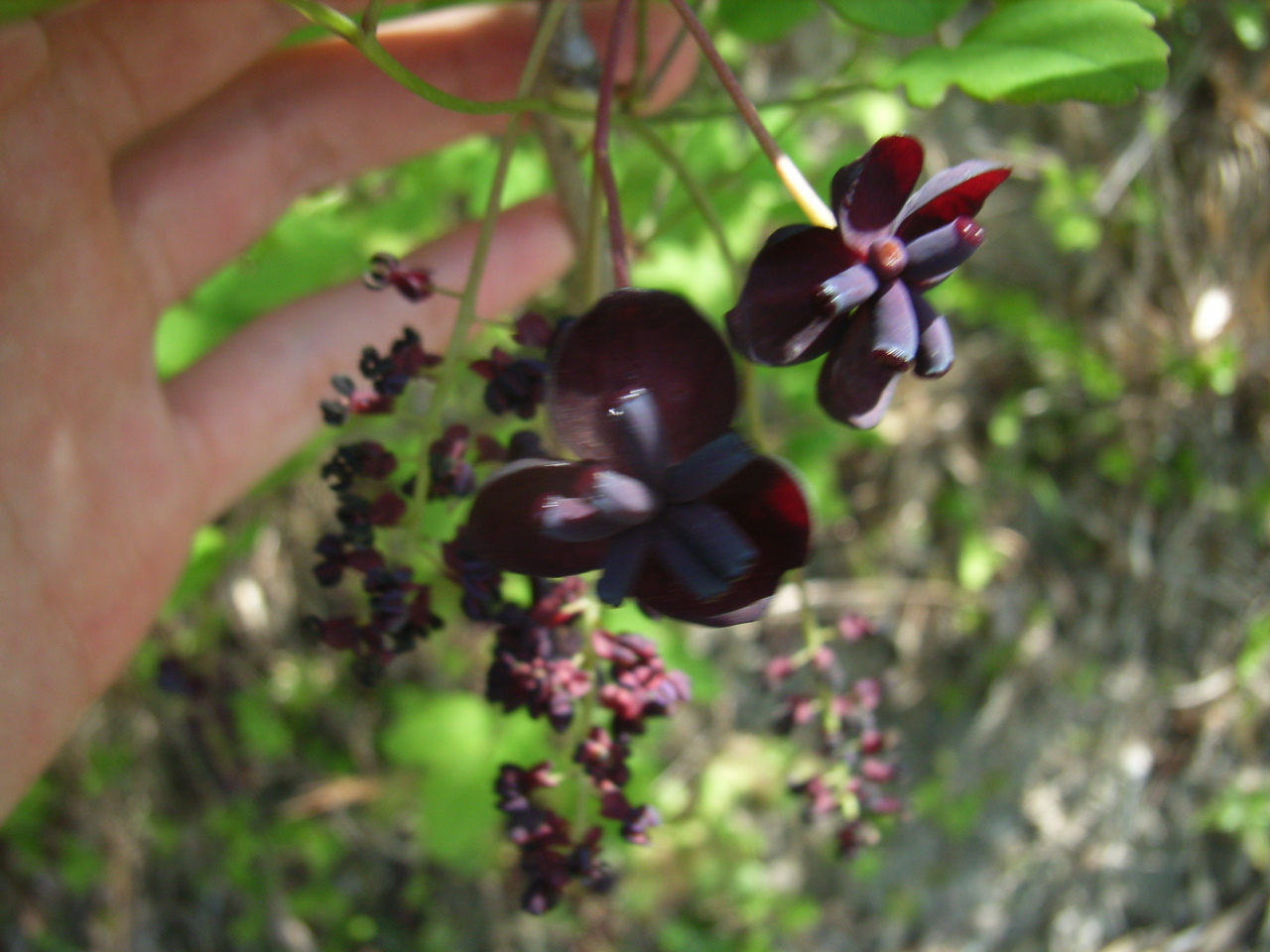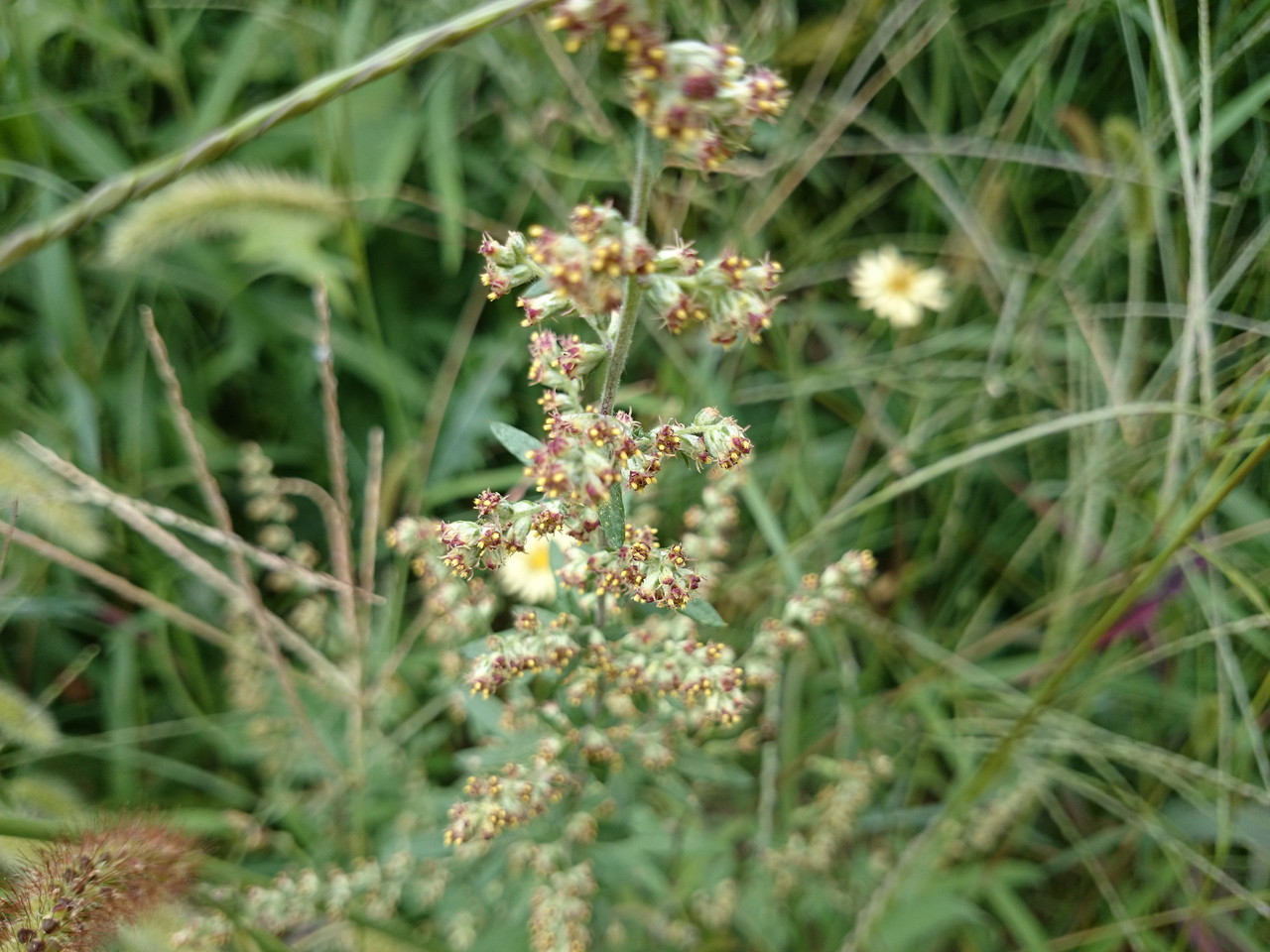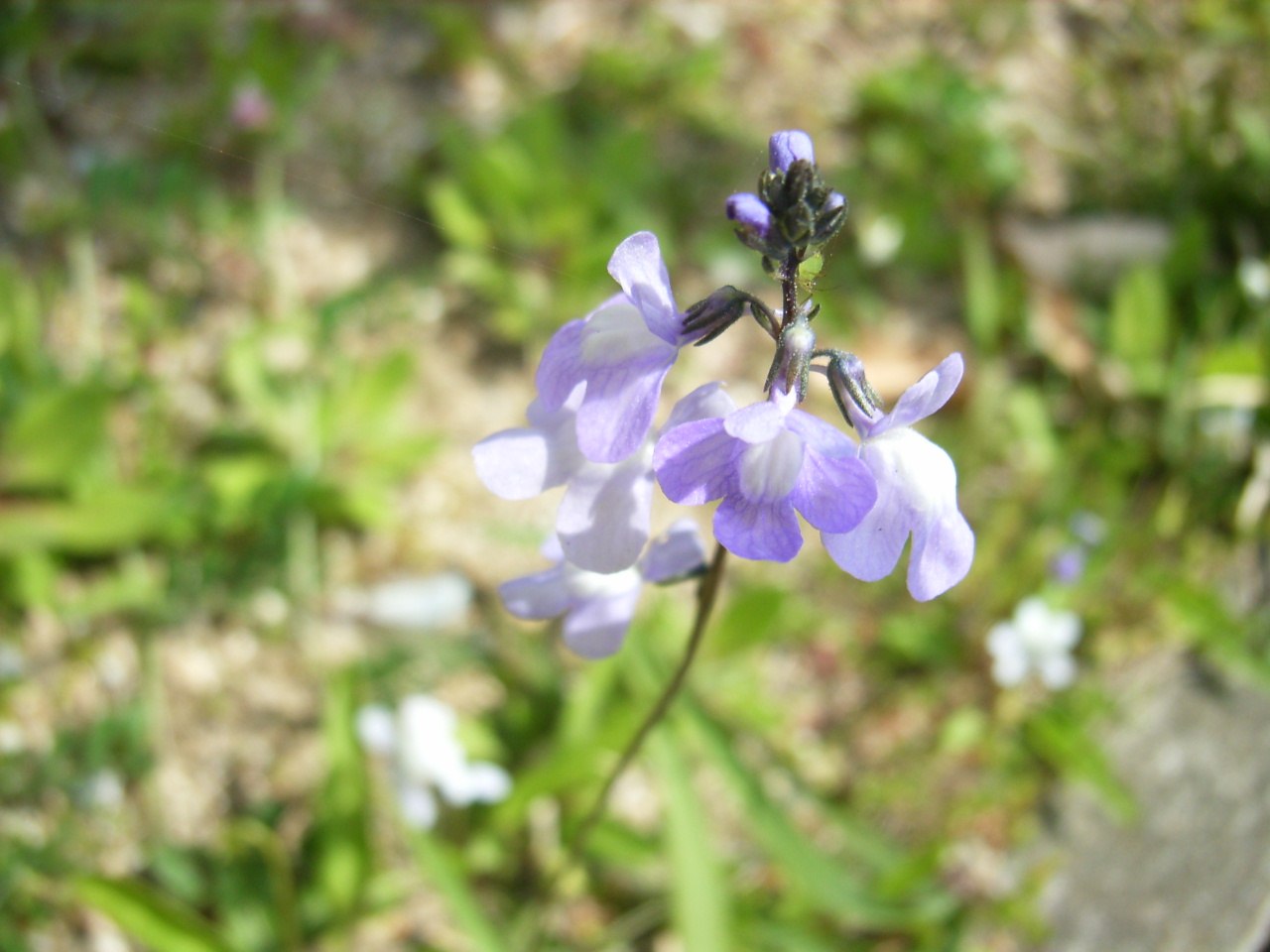
Linaria japonica, Linaria verum, and Linaria serrata all belong to the Plantaginaceae family and are herbaceous plants that bear cute, blue-colored "lip-shaped flowers" (flowers with separate upper and lower lips) with a swollen lower lip. Although they are introduced species, they are frequently seen in urban areas, and you might get confused if you only focus on the flowers. However, if you observe the flower color and leaf shape, you will see that they are clearly different. The flowers are very conspicuous, but surprisingly, the rate of self-pollination is high, and it is thought that almost all species in the Linaria genus are self-pollinating. This article will explain the classification, morphology, and ecology of the Linaria and Linaria genera.
- What are *Linaria japonica*, *Linaria cantoniensis*, and *Linaria thunbergii*?
- What are the differences between *Linaria japonica*, *Linaria cantoniensis*, and *Linaria scabra*?
- How is it pollinated? Despite its showy flowers, it seems to be entirely self-pollinating!?
- What are the seed dispersal methods?
- References
What are *Linaria japonica*, *Linaria cantoniensis*, and *Linaria thunbergii*?
Nuttallanthus canadensis, also known as pine-leaved toadflax, is an annual plant native to the Americas (Canada to Argentina) that has naturalized in Japan (west of the northern Kanto and Hokuriku regions), Russia, India, and Korea (RBG Kew, 2026). It was first collected in Kyoto City in 1941 (Shimizu et al., 2001), and quickly naturalized in port areas along the Kinki region and the Seto Inland Sea, spreading northward between 1988 and 2001 (Kanagawa Prefecture Flora Survey Association, 2018).
Nuttallanthus texanus, also known as large-leaved toadflax, is an annual plant native to North America (Canada and the United States) that has naturalized in Japan and northern South America. Its distribution within Japan is unclear due to ambiguity in distinguishing it from Toadflax japonica (Kanagawa Prefecture Flora Survey Association, 2018), but it may resemble Toadflax japonica.
Cymbalaria muralis, also known as ivy-leaved toadflax, is a climbing perennial plant native to the Mediterranean region (France, Switzerland, Italy, Austria, and the former Yugoslavia) and has naturalized worldwide, including in Japan. In Japan, it was introduced during the Taisho era (1912-1926) for ornamental purposes and planted in rock gardens, but escaped cultivation and naturalized, growing along roadsides and in crevices of stone walls in residential areas throughout Hokkaido and Honshu (Shimizu et al., 2001).
All of these plants belong to the Plantaginaceae family and share the common characteristic of being herbaceous plants that bear "lipped flowers" (flowers with separate upper and lower lips) with a swollen lower lip in the center, often in shades of blue. These swollen labiate flowers are also called "mask-shaped corollas" or "mask-shaped flowers."
Other morphological features include a bifurcated upper lip of the corolla and an elongated spur at the base of the corolla.
Although it's an introduced species, it's frequently seen in urban areas, but if you only focus on the flowers, you might get confused.
What are the differences between *Linaria japonica*, *Linaria cantoniensis*, and *Linaria scabra*?
As a fundamental point, while *Linaria japonica* and *Linaria canadensis* belong to the genus *Linaria*, *Linaria scaber* belongs to the genus *Linaria japonica*.
Therefore, there are significant differences both morphologically and ecologically (Kanagawa Prefecture Flora Survey Association, 2018).
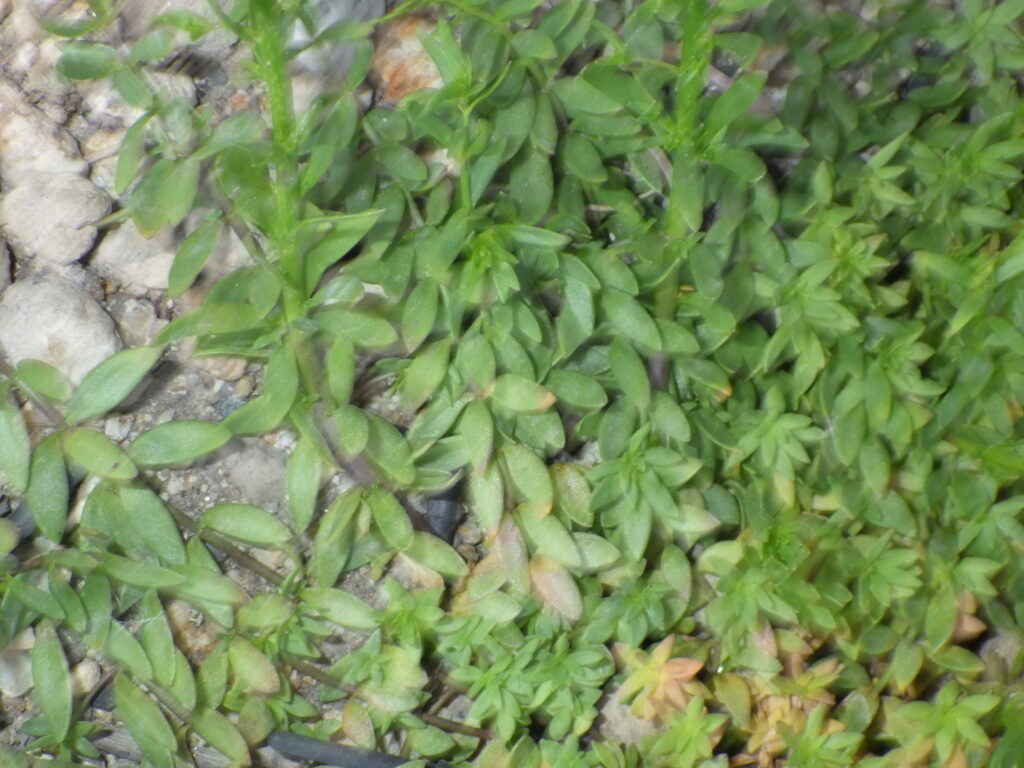
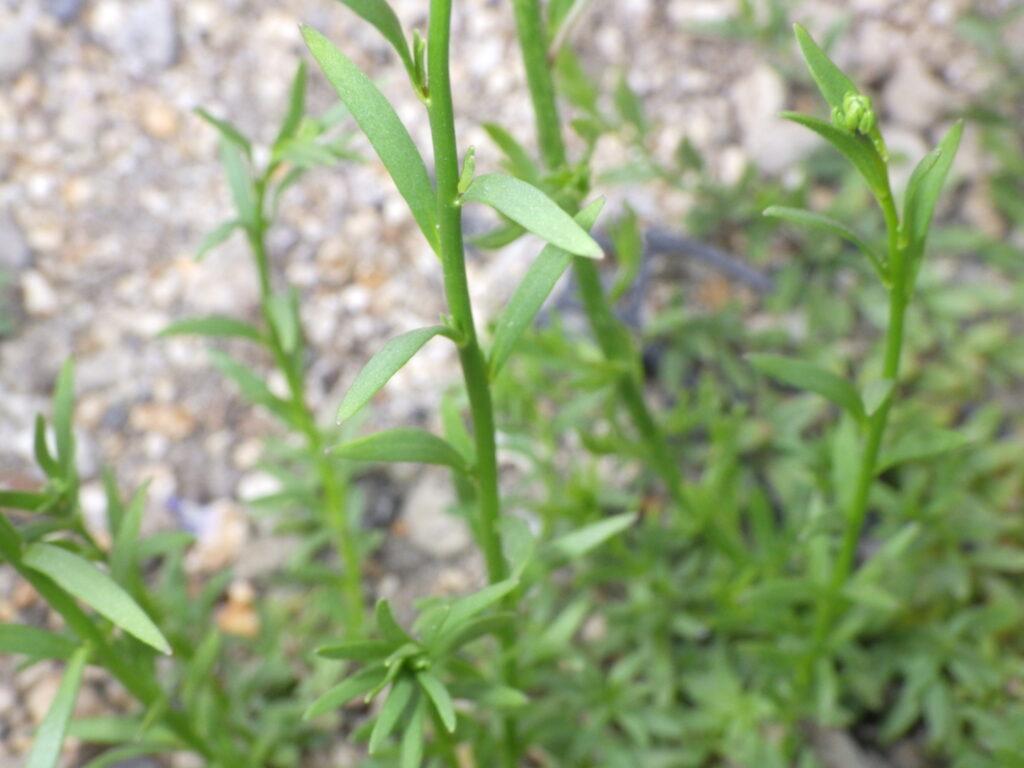
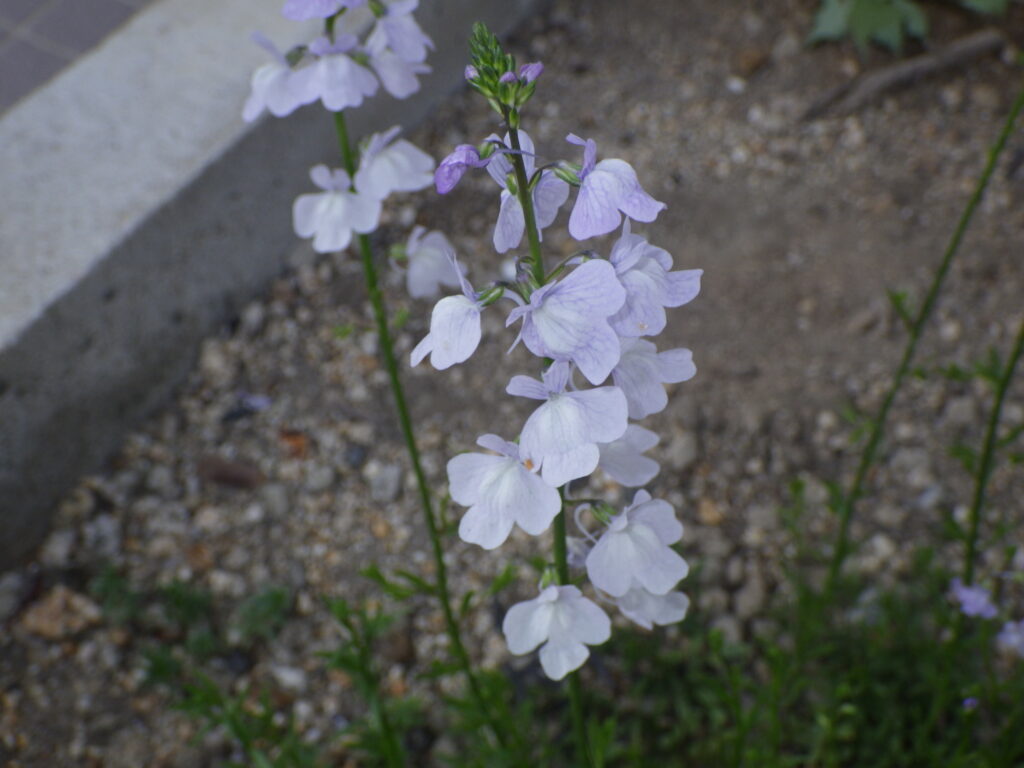
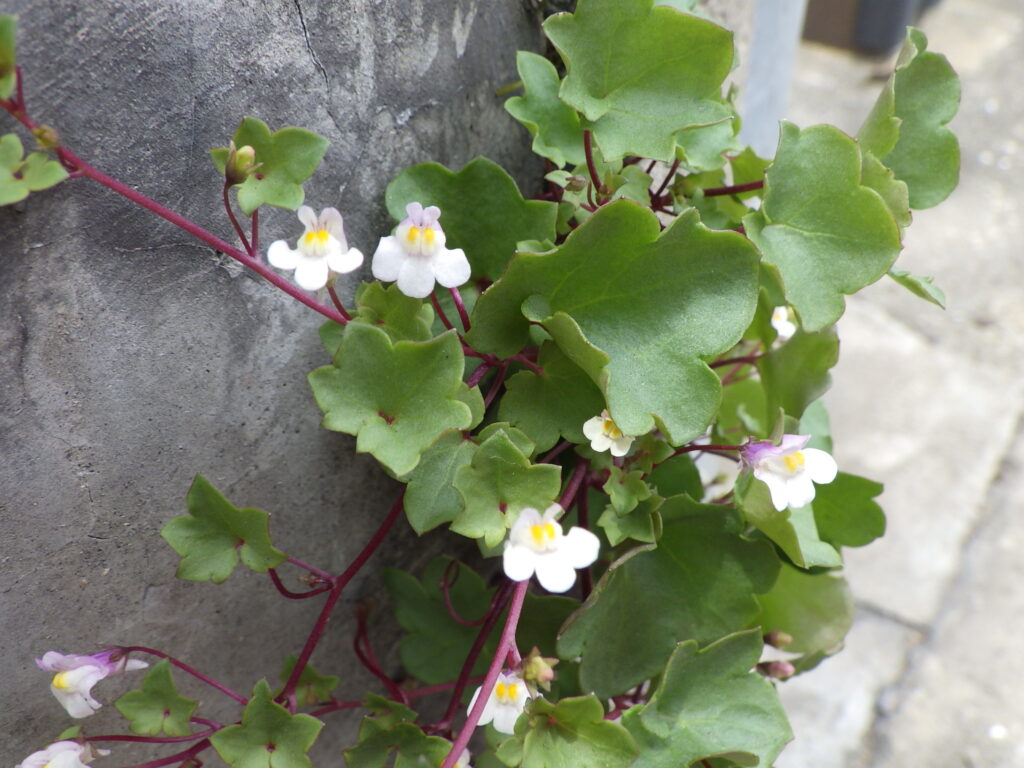
While *Linaria japonica* and *Linaria japonica var. japonica* are annuals with cylindrical stems, linear leaves, and blue flowers, *Linaria thunbergii* is a perennial with thread-like stems, palmate leaves, and purple flowers.
The term "palmate" means "hand-shaped," and in *Linaria japonica*, the leaves are clearly spread out like a palm, but in *Linaria japonica* and *Linaria verum*, they are not, and are closer to ordinary leaves that we commonly see.
Because the ivy-leaved toadflax is specialized to creep along the ground in the gaps of stone walls, its stems are extremely thin.
The field guide states that the difference between Linaria japonica and Linaria maximowicziana is that in Linaria japonica, the corolla (excluding the spur) is 6-10 mm long and the fruit has scattered projections, while in Linaria maximowicziana, the corolla (excluding the spur) is 10-14 mm long and the fruit has densely packed projections.
However, this alone might feel a little vague.
Further comparison reveals that while *Linaria japonica* produces 1 to 4 (up to 7) flowers per stem, *Linaria gracilis* produces 1 to 13 (up to 30) flowers (Flora of North America Editorial Committee, 2019).
Furthermore, while the lower lip of *Linaria japonica* is clearly white in the center, *Linaria japonica* remains blue, although it is slightly whitish.
When you actually look at the photos, you'll find that the differences are much bigger than you might have thought.
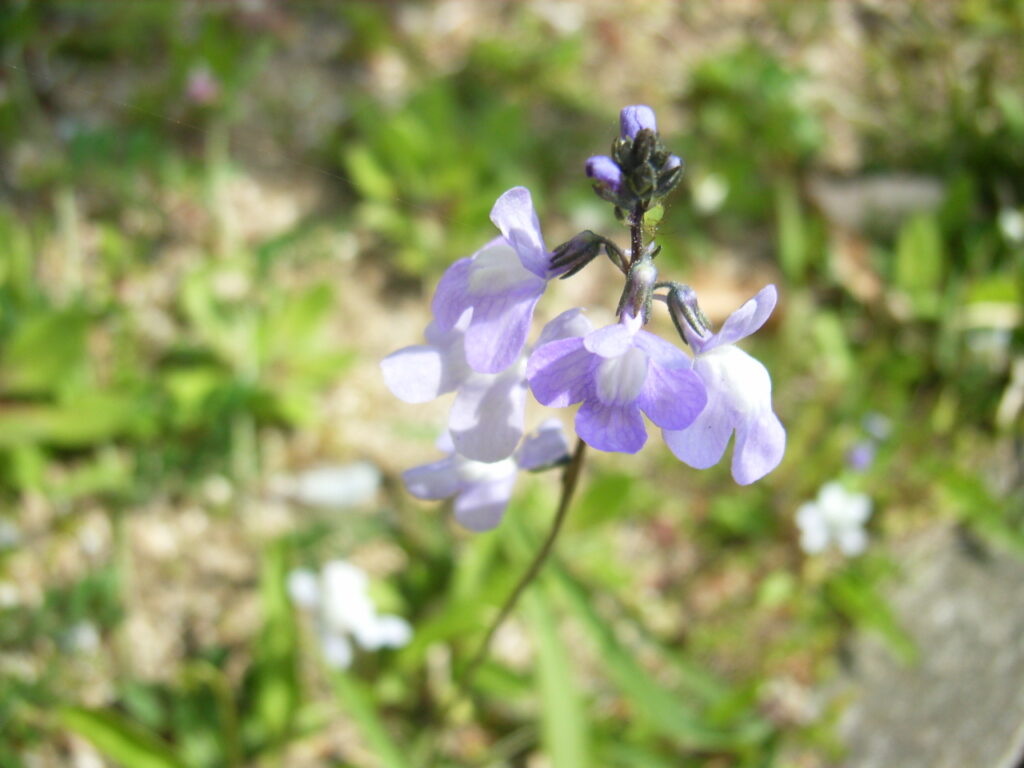
How is it pollinated? Despite its showy flowers, it seems to be entirely self-pollinating!?
How do *Linaria japonica* and *Linaria japonica* get pollinated?
The blue, mask-like flowers of the Linaria genus, though small, are striking in appearance, so one might assume they are insect-pollinated and reproduce through cross-pollination.
However, studies in the United States have shown that, contrary to appearances, all species of the genus Linaria are self-compatible and capable of self-pollination (pollination by pollen from the stamens of the same flower reaching the pistil), producing both cleistogamous and open flowers (Crawford, 2003; Crawford & Elisens, 2006).
Furthermore, cleistogamy occurs frequently, and many flowers complete self-pollination. Pollination occurs in closed flowers without any intervention, and in open flowers before they open.
Cleistogamous flowers are inconspicuous and rarely seen, but they are formed during the early and late stages of a plant's life cycle.
Therefore, despite being a very conspicuous flower, it is believed that most of them do not rely on insect pollination. This is a very surprising result.
The amount and composition of nectar are unknown, but nectar has not been observed in flowers cultivated in greenhouses or growing rooms.
There are a few insects that visit the open flowers; some observations indicate that honeybees and members of the family Carangidae visit them (Wolfe & Sellers, 1997), while others report that butterflies and possibly true bugs (Crawford, 2003).
Thus, because the genus Linaria incorporates only small amounts of other genes, it exhibits low genetic diversity, does not hybridize with other species, and significant population differentiation has been revealed through genetic studies. This is thought to be due to geographical isolation in North America (river, sea level rise, paleogeography).
It seems that this strong self-pollination strategy is related to the fact that the genus Linaria is able to thrive in urban areas of Japan.
By the way, why does it produce so many "seemingly useless flowers" like the open-flowered variety, even though it's entirely self-pollinating?
The study revealed that open flowers produce more seeds than cleistogamous flowers. This indicates that open flowers are more reproductively efficient than cleistogamous flowers, even without cross-pollination by insects.
In addition to this, it could be interpreted as a compromise that doesn't completely rule out the possibility of cross-pollination in case the environment changes.
How is the ivy-leaved toadflax pollinated?
On the other hand, what about the purple, mask-like flowers of the ivy-leaved toadflax?
In fact, research in France has shown that the same thing happens with *Linaria japonica*, with cleistogamous pollination occurring and self-pollination also taking place (Desaegher, 2017; Desaegher et al., 2017).
The exact ratio is unknown, but it is thought to be less extreme than in the genus Linaria, and is believed to involve a combination of cross-pollination and self-pollination.
However, it has been found that the flowers tend to be slightly smaller and the amount of pollen is lower in urban areas than in rural areas, and that the tendency for self-pollination is higher in urban areas of the ivy-leaved toadflax.
The specific pollinating insects found were small bees (such as Lasioglossum) accounting for 48.2%, bumblebees for 29.6%, and a small number of other large bees, honeybees, and syrphidae visiting the flowers.
Although these flowers are very similar, it can be said that the pollination tendencies of Linaria japonica and Linaria veitchii are different.
What are the seed dispersal methods?
The fruits of the genus Linaria are capsules, nearly spherical to oblong-ovate, with thin, hard walls that split open into 4-5 chambers when mature. The seeds are black, radially symmetrical, and prism-shaped with 4-7 corners.
It is believed that the genus Linaria primarily relies on gravity dispersal or wind dispersal (Crawford & Elisens, 2006).
The fruit of *Linaria japonica* is a capsule, spherical in shape with a diameter of 5-6 mm, hanging down by a long stalk, and splitting open when ripe. The seeds are less than 1 mm in diameter, black to brown in color, and have irregular wrinkles.
Toadflax is also treated as a form of gravity dispersal (Benvenuti et al., 2016).
References
Benvenuti, S., Malandrin, V., & Pardossi, A. (2016). Germination ecology of wild living walls for sustainable vertical gardens in urban environment. Scientia Horticulturae, 203, 185-191. https://doi.org/10.1016/j.scienta.2016.03.031
Crawford, PT (2003). Biosystematics of north American species of Nuttallanthus (Lamiales) [Doctoral dissertation, The University of Oklahoma]. https://www.proquest.com/openview/665d70305b3b2aa318f19aae12ba6adf/1?pq-origsite=gscholar&cbl=18750&diss=y
Crawford, PT, & Elisens, WJ (2006). Genetic variation and reproductive system among North American species of Nuttallanthus (Plantaginaceae). American Journal of Botany, 93 (4), 582-591. https://doi.org/10.3732/ajb.93.4.582
Desaegher, J. (2017). Urbanization effects on floral morphology and plant-pollinator relationships [Doctoral dissertation, Paris-Saclay University]. https://theses.hal.science/tel-01665328/
Desaegher, J., Nadot, S., Dajoz, I., & Colas, B. (2017). Buzz in Paris: flower production and plant–pollinator interactions in plants from contrasted urban and rural origins. Genetica, 145 (6), 513-523. https://doi.org/10.1007/s10709-017-9993-7
Flora of North America Editorial Committee (Eds.). (2019). Flora of North America (Vol. 17 Magnoliophyta: Tetrachondraceae to Orbobanchaceae). Oxford University Press. ISBN: 9780190868512, https://floranorthamerica.org/Main_Page
Kanagawa Prefecture Flora Survey Association. (2018). Kanagawa Prefecture Flora 2018 Electronic Edition. Kanagawa Prefecture Flora Survey Association. ISBN: 9784991053726,https://flora-kanagawa2.sakura.ne.jp/efloraofkanagawa.html
RBG Kew. (2026). The International Plant Names Index and World Checklist of Vascular Plants. Plants of the World Online. http://www.ipni.org and https://powo.science.kew.org/
Wolfe, LM, & Sellers, SE (1997). Polymorphic floral traits in Linaria canadensis (Scrophulariaceae). American Midland Naturalist, 138 (1), 134-139. https://doi.org/10.2307/2426661
Shimizu, K., Morita, H., & Hirota, S. (2001). Illustrated Guide to Naturalized Plants of Japan: 600 Species of Plant Invaders (Revised). National Rural Education Association. ISBN: 9784881370858