Sunflowers are said to face the sun, giving them a cheerful and bright image, and they are now a familiar plant in Japan. Originally from North America, there are many varieties, but only a limited number of sunflower species are found in Japan, mostly the common sunflower, dwarf sunflower, and dusty sunflower. The history of humans and sunflowers dates back to around 2600 BC, when they were cultivated in Mexico by Native Americans for their seeds (more precisely , their fruit). While it took time for them to be appreciated in Western Europe, they were widely cultivated early on in Eastern Europe, particularly Russia, where the Russian Orthodox Church permitted the consumption of sunflower fruit even during fasting periods. As a result, they are the national flower of Russia and Ukraine. The image of a sunflower (more precisely, its flower head) facing the sun is deeply ingrained, as its name suggests. However, did you know that this phenomenon is only observed in young sunflowers before they bloom? Once they bloom, their heads become fixed facing east. This is thought to be because it plays an important role in photosynthesis rather than being beneficial for the flower. The fruit is an achene, and while it is often associated with pet food, its role in nature is largely unknown to Japanese people. Originally, it was covered in hairs and was dispersed by animals such as American bison as a "burr." This article will explain the classification, history, pollination ecology, and seed dispersal of sunflowers.
- Are there any sunflower-like species in Japan? What are the differences between the dwarf sunflower (Himehimawari) and the white sunflower (Shirotaehimawari)?
- Are there any other similar species?
- What is the history of sunflowers? Were they slow to gain popularity?
- Why are they the national flowers of Russia and Ukraine?
- What is the structure of a sunflower's "flower head"?
- Sunflowers have a clever pollination strategy!
- Is it a myth that sunflowers follow the sun?
- What are the surprising ecology details of sunflower "fruit"?
- References
Are there any sunflower-like species in Japan? What are the differences between the dwarf sunflower (Himehimawari) and the white sunflower (Shirotaehimawari)?
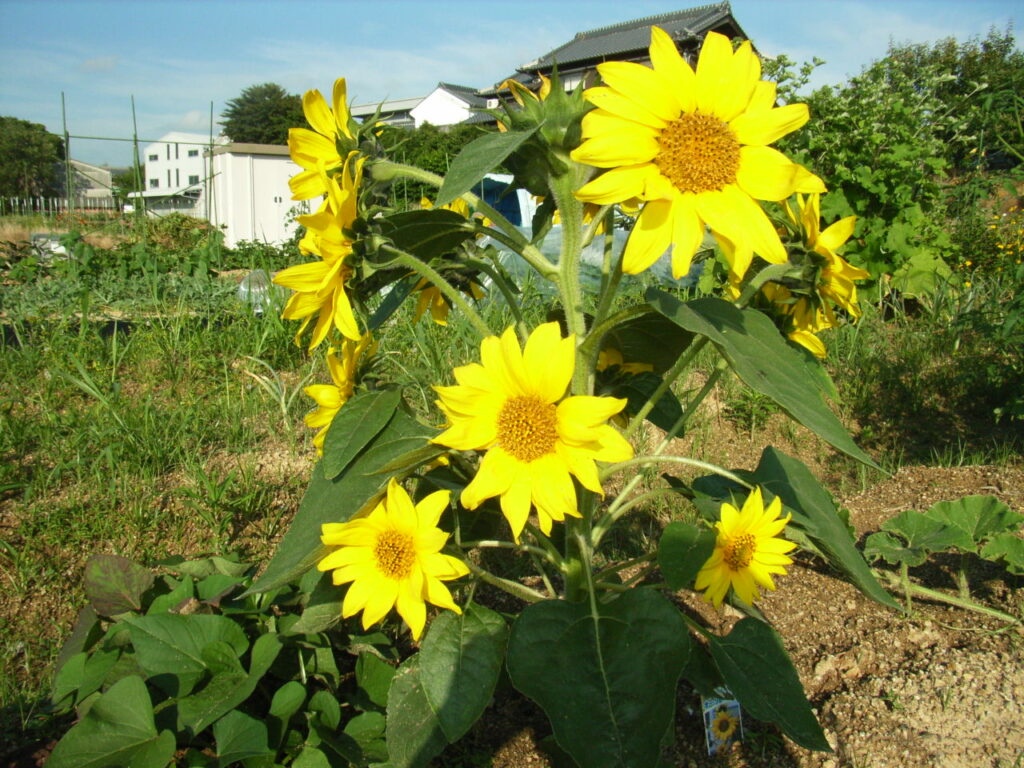
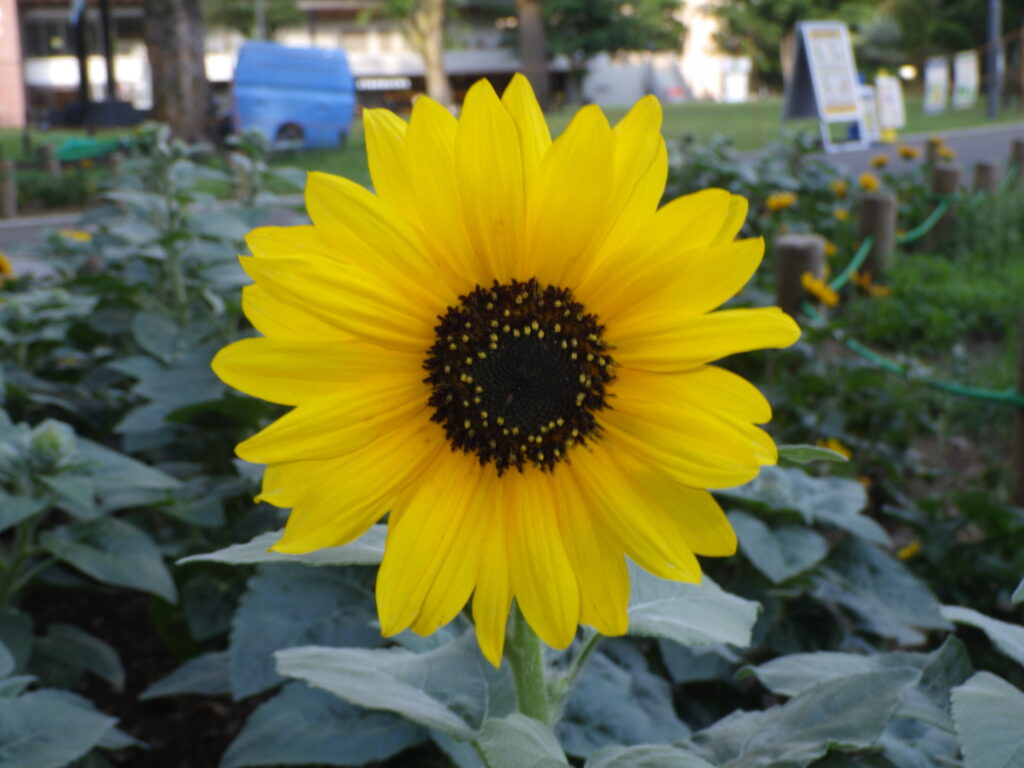
The sunflower (Helianthus annuus) is an annual plant native to North America (Kanagawa Prefecture Flora Survey Association, 2018). In Japan, it is known as a cultivated plant, and its beautiful and cheerful appearance has made it a popular subject for various creative works, so there is probably no one who doesn't know it.
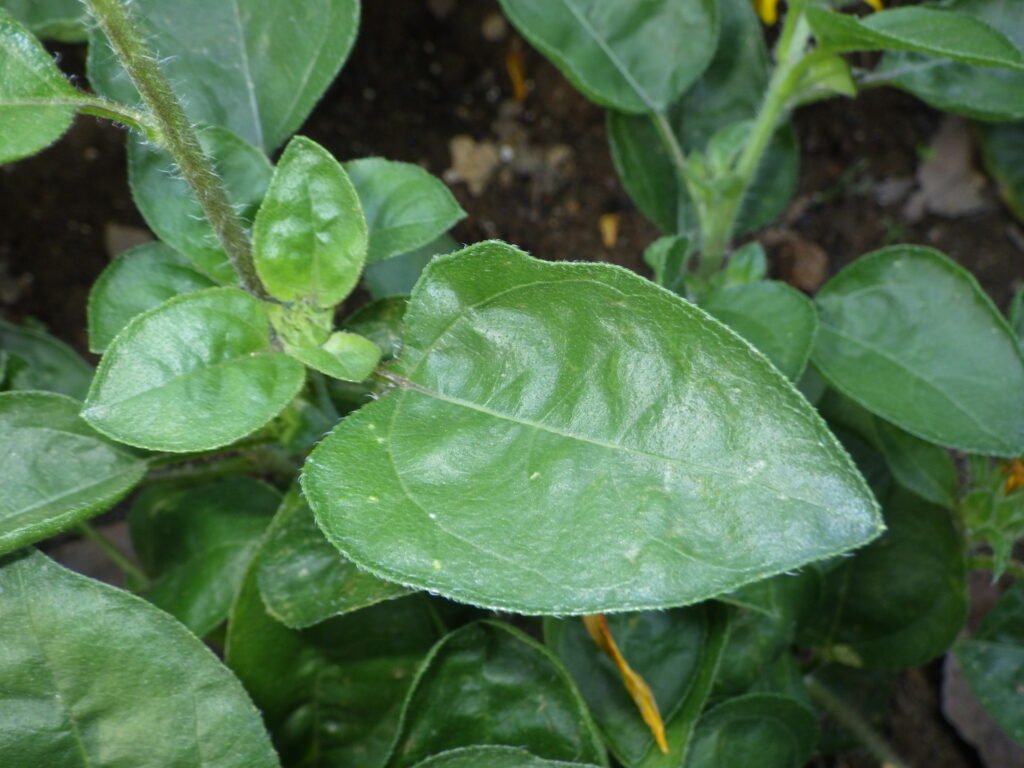
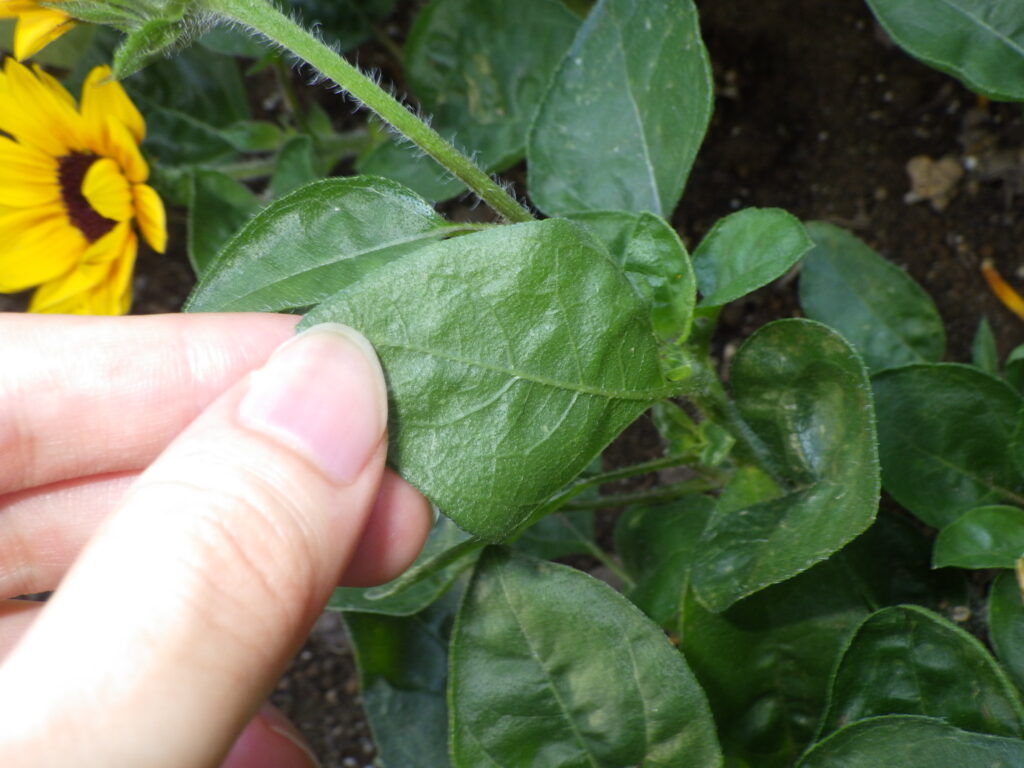
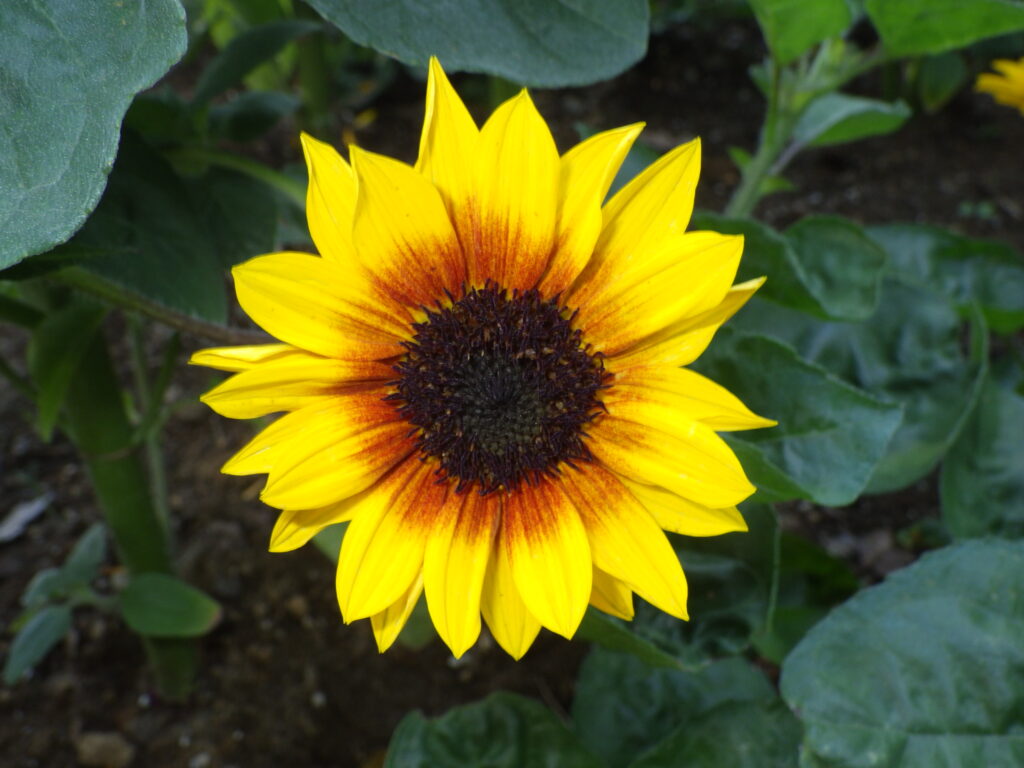
In North America, there are many species within the same genus, making identification difficult. However, in Japan, the closely related species are limited to Helianthus argophyllus (white sunflower) and Helianthus debilis subsp. cucumerifolius (dwarf sunflower).
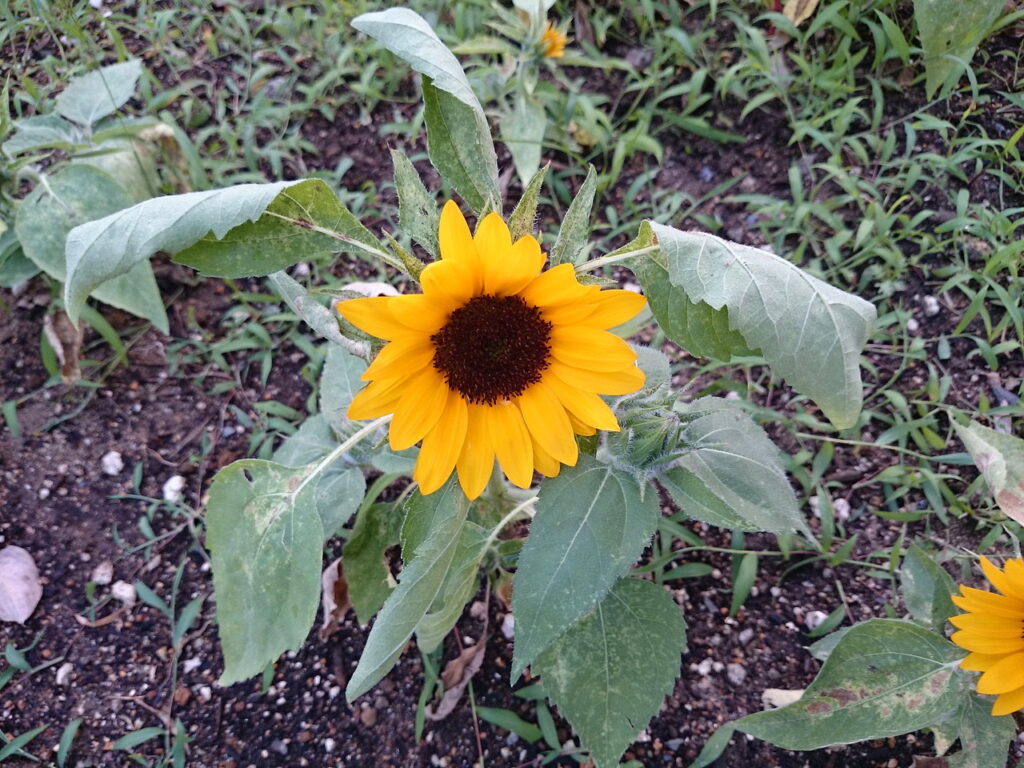
The main difference between sunflowers and dwarf sunflowers is that sunflowers have a flat receptacle that is 5-30 cm in diameter and hairless except for the tip of the achene, while dwarf sunflowers have a receptacle that is about 2-3 cm in diameter and densely hairy achenes. Also, as the name suggests, dwarf sunflowers are clearly smaller than sunflowers.
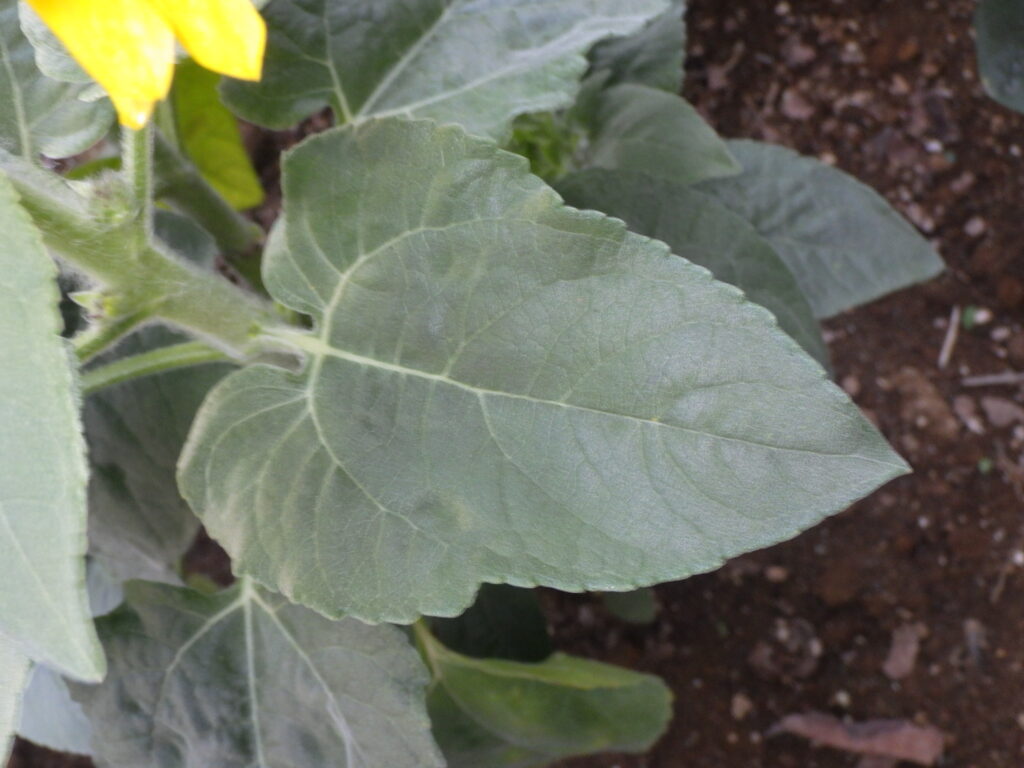
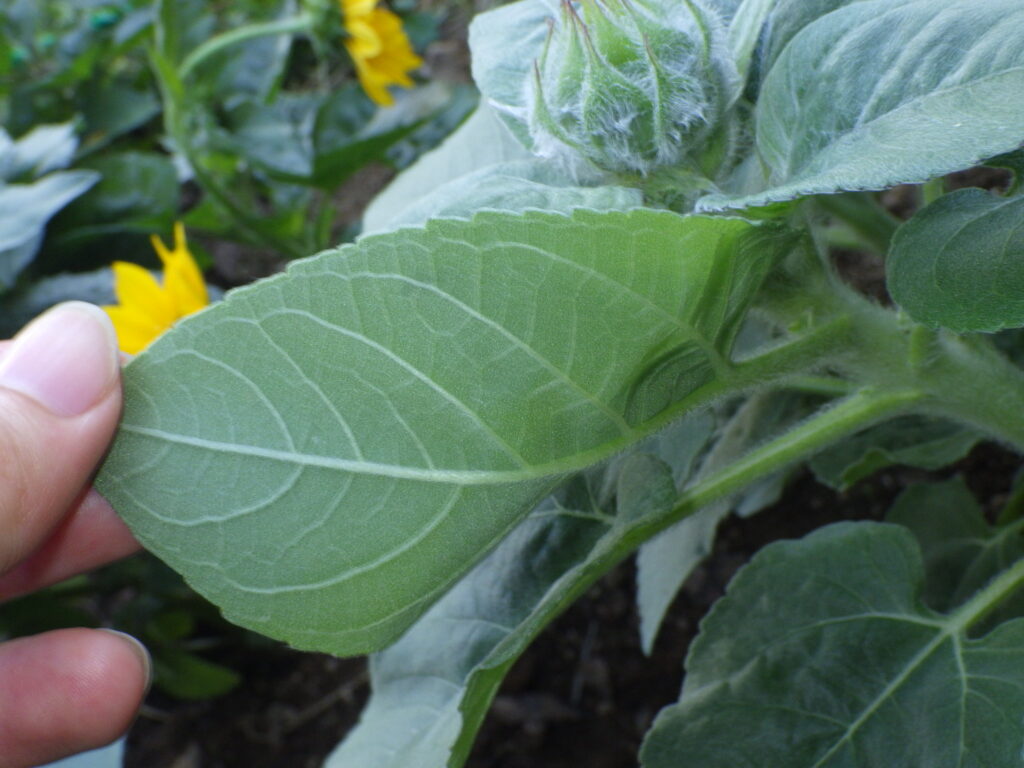
The white-flowered sunflower is distinguished from the common sunflower and dwarf sunflower by the fact that its entire body is covered in white downy hairs.
In addition, the thread-leaved sunflower *H. angustifolius*, which has narrow leaves, is also known.
Are there any other similar species?
While numerous species of sunflowers are distributed throughout North America, their numbers are limited in Japan.
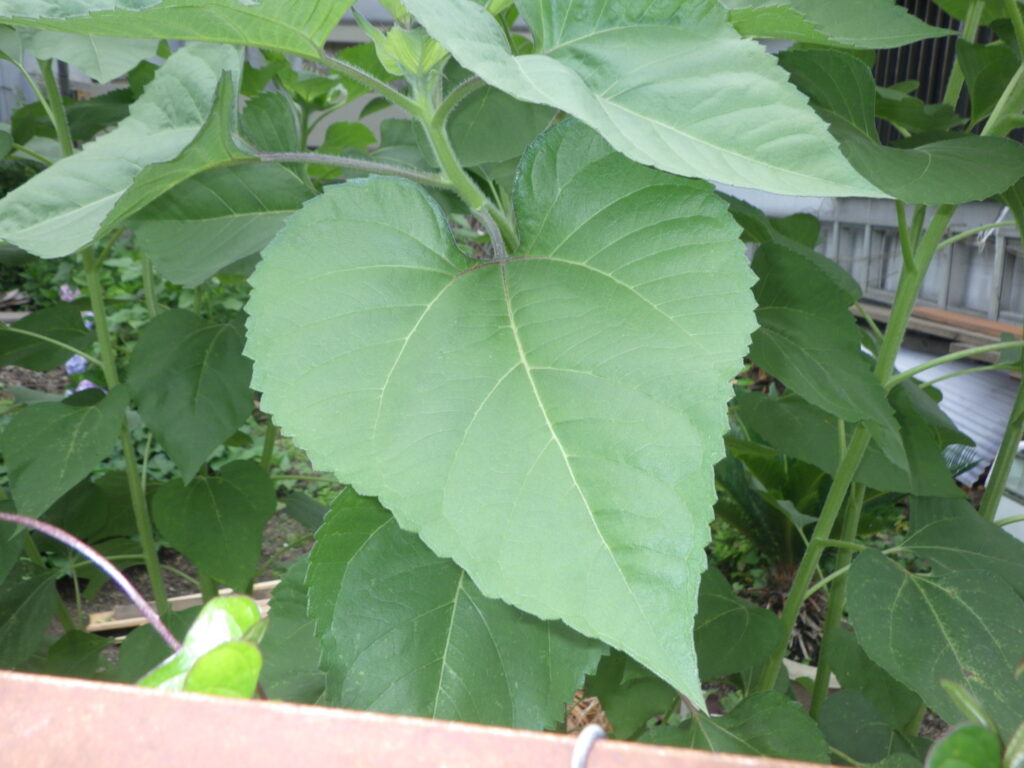
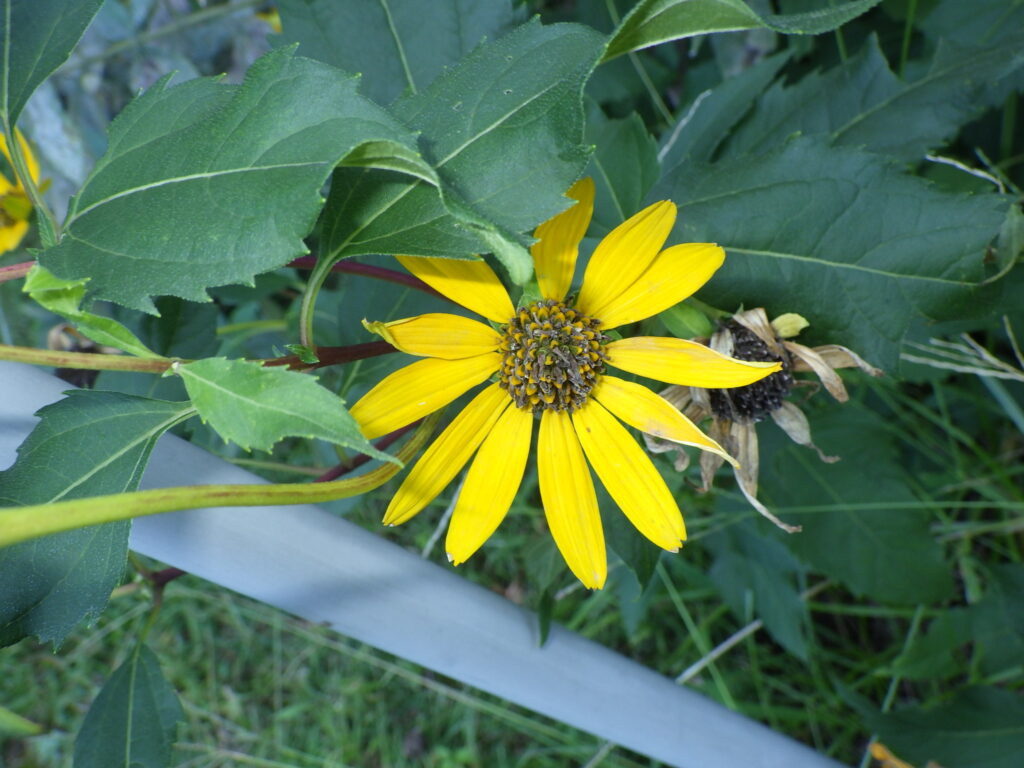
Helianthus tuberosus, also known as Jerusalem artichoke, belongs to the sunflower genus, but it differs in that its leaves are somewhat narrower, have protruding serrations, and it has a rhizome.
What is the history of sunflowers? Were they slow to gain popularity?
The history of humans and sunflowers dates back to around 2600 BC, when they were cultivated in Mexico by Native Americans for their large fruits (commonly called "seeds"), although not much is known about this (Wojtaszek & Maier, 2014; Harris, 2018=2021). Since then, they have been used throughout North America for food, medicine, fiber, dye, and more.
It was introduced to Europeans after the Age of Discovery, but initially it was known not for practical use, but as a beautiful ornamental plant to adorn gardens (Harris, 2018=2021). Globally, it wasn't until the 20th century that its nutritional value, including the fats, proteins, and vitamin E contained in its fruit, was finally recognized, and it became popular.
Sunflower fruits have two main uses: extracting oil to produce sunflower oil, and direct consumption by humans and pets. The characteristics of the fruits differ depending on whether they are cultivated for oil production or for consumption. Fruits cultivated for oil production have large seeds, high oil content, and thin skins. On the other hand, fruits cultivated for consumption are the opposite, with lower oil content, thicker skins, and are easier to eat.
Why are they the national flowers of Russia and Ukraine?
While sunflowers have been slow to spread globally, Russia and Ukraine have treated them as important plants for much longer (Harris, 2018=2021; Pappalardo, 2007).
In Russia, the Russian Orthodox Church, a branch of Christianity distinct from the Western Church in Western Europe, is widely practiced. The Russian Orthodox Church observes a period of fasting before the Palm Feast, during which members refrain from recreation and other forms of entertainment. During this period, the consumption of plant-based fats was permitted, which is why sunflower seeds became popular among believers in the 18th century.
In the early 19th century, large-scale oil extraction technology from sunflowers was developed within the Russian Empire, and in 2013, the Russian Federation and Ukraine accounted for 40% of the country's sunflower fruit production. For this reason, the sunflower is the national flower of both Russia and Ukraine.
What is the structure of a sunflower's "flower head"?
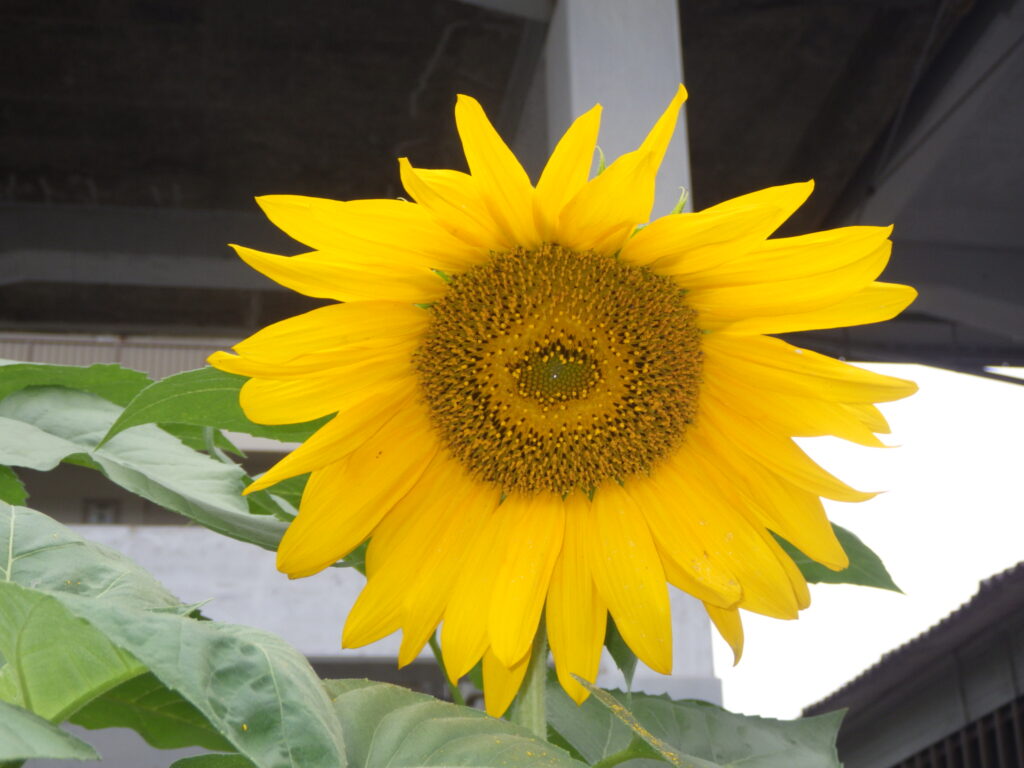
There's a botanical misunderstanding about what's commonly called the "flower" of a sunflower. Sunflowers belong to the Asteraceae family, so they form clusters of small flowers (flora) that fuse together to create a capitulum (flower head). Therefore, it's more accurate to call that large part a "flower head." This isn't just a matter of terminology; as will be explained later, it's related to the pollination strategies that a "cluster of flowers" possesses.
Sunflower heads are seen in the summer (mid-July to September in Japan) and are so large that everyone can easily picture them. The flowers with yellow petals on the outer ring are called "ray florets," while the petalless flowers on the inside are called "disk florets (tubular florets)."

Sunflowers have a clever pollination strategy!
It's intriguing to wonder what insects visit such large flower heads, and the paper describes them as honeybees (Wojtaszek & Maier, 2014). However, honeybees, excluding introduced individuals, are not native to the Americas, the sunflower's native habitat. Therefore, it's possible that in its original natural habitat, a bee similar to a honeybee played the role of pollination. However, it's also possible that the sunflower has adapted to honeybee pollination over time due to long-term cultivation by humans (Wojtaszek & Maier, 2014).
While the ray florets of a sunflower appear only yellow to the human eye, a UV camera reveals that the inner half of the petals is colored. This contrast with the yellow is thought to attract bees to the inner tubular florets.
The tubular florets mature from the outer edge of the flower head towards the center. Each tubular floret develops its stamens first, followed by the pistil. Therefore, when viewed from the petal side of the ray florets, the order is pistil → stamens → bud. This is another adaptation to facilitate pollination when bees visit. After being attracted to the petals of the ray florets, bees come into contact with the pistils on the outer edge in search of nectar. Since bees carry pollen from other sunflowers on their bodies, they can immediately pollinate the pistils with pollen from other individuals. As they move towards the center, they encounter the stamens, and in exchange for providing their own pollen as food, they can attach it to the bee's body. After this, the bee flies away, preventing self-pollination. It is a very rational structure.
The length of the tubular florets is also short, matching the length of a bee's mouth.
Is it a myth that sunflowers follow the sun?
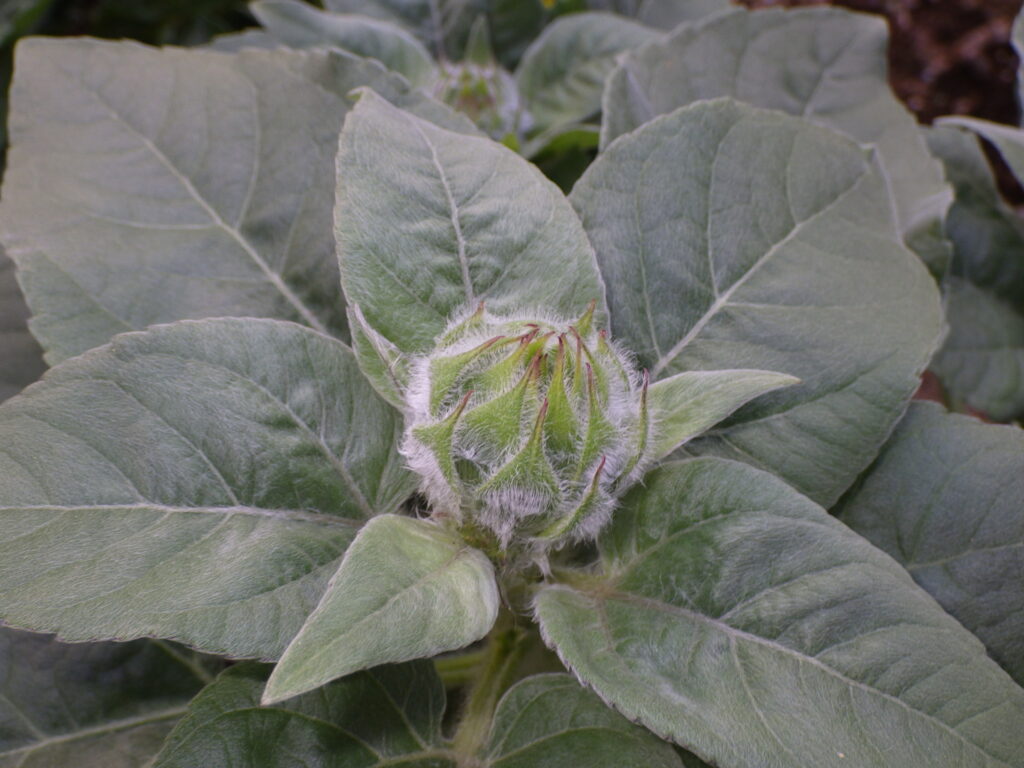
Another characteristic of sunflowers is that their flower heads are said to follow the sun, as is the origin of their name. However, this is not entirely accurate. Only young sunflowers do this before they bloom. Because this activity is carried out using their growth, by the time the florets bloom, the flower heads are fixed in an eastward position. Young flower heads face east in the morning and west in the evening, repeating this every day. This activity is thought to be done not for the benefit of the florets but for the leaves, and it seems to have the purpose of exposing them to sunlight for as long as possible to promote photosynthesis (Atamian at al., 2016). But why do they become fixed in an eastward position once they mature?
Recent research in the United States has begun to explain the reason (Creux et al., 2021). It appears that fixing the flower heads to the east raises the temperature of the flower heads in the morning, providing a warm place for bees that are just starting their morning activity and feeling the cold, thereby promoting pollination.
In fact, when comparing the number of bees visiting east-facing sunflowers in the morning with the number visiting sunflowers that were forcibly fixed to face west, more bees were observed on the east-facing sunflowers. Furthermore, the east-facing sunflowers produced heavier seeds, a larger quantity of fruit, and more pollen.
However, reading only this paper, it seems that if the flower faces west, just like when it was young, it could appeal to bees in the evening as well. I couldn't find any detailed descriptions on this point. Since changing the direction of the flower is an activity that utilizes growth, it may not be capable of such a clever move. Or perhaps it's better to focus on appealing to bees in the morning when they first start their activity, rather than in the evening when they finish their activity.
Currently, sunflowers produced worldwide reproduce through self-pollination and therefore do not require honeybees (Atamian et al., 2016; Harris, 2018=2021). However, cross-pollination is essential for producing sunflowers that reproduce through self-pollination, so honeybees are necessary for that purpose.
What are the surprising ecology details of sunflower "fruit"?
Sunflower fruits (achenes) are rich in fat and are well-known as food for humans and their pets. While these fruits are commonly referred to as "seeds," botanically they are different. The true seeds are what are contained within.
Although sunflowers are a very familiar sight, few people know about their ecological characteristics. In their native North America, they were sometimes eaten by small birds and mammals, but in the case of sunflowers, it seems that being eaten doesn't help them disperse their seeds far away. Instead, it is thought that they act as "burrs," attaching themselves to the fur of American bison, which also inhabit North America, and thus expanding their habitat (Harris, 2018=2021). Indeed, the shape of the achene is flat and has a large surface area, so it seems likely that it would easily stick to an animal's body.
However, even when observing the fruit of Japanese sunflowers, they are hairless and smooth except for the tip, and do not appear to have a structure that would easily attach to an animal's body. Although I could not find any description of this in the literature, it is natural to assume that this is the result of selective breeding.

References
Atamian, HS, Creux, NM, Brown, EA, Garner, AG, Blackman, BK, & Harmer, SL (2016). Circadian regulation of sunflower heliotropism, floral orientation, and pollinator visits. Science, 353 (6299), 587-590. ISSN: 0036-8075, https://doi.org/10.1126/science.aaf9793
Creux, NM, Brown, EA, Garner, AG, Saeed, S., Scher, CL, Holalu, SV, … & Harmer, SL (2021). Flower orientation influences floral temperature, pollinator visits and plant fitness. New Phytologist, 232 (2), 868-879. ISSN: 0028-646X, https://doi.org/10.1111/nph.17627
Harris, SA (2018). Sunflowers. Reaktion Books. ISBN: 9781780239262 [= (2021). A Cultural History of Sunflowers. Hara Shobo. ISBN: 9784562059232]
Kanagawa Prefecture Flora Survey Association. (2018). Kanagawa Prefecture Flora 2018 Electronic Edition. Kanagawa Prefecture Flora Survey Association. ISBN: 9784991053726
Pappalardo, J. (2007). Sunflowers: the secret history; the unauthorized biography of the world's most beloved weed. Overlook Press. ISBN: 9781585679911
Wojtaszek, JW, & Maier, C. (2014). A microscopic review of the sunflower and honeybee mutualistic relationship. International Journal of AgriScience, 4 (5), 272-282. ISSN: 2228-6322, https://hdl.handle.net/11274/17054