Both *Broussonetia papyrifera* and *Broussonetia kozoa* have been used as paper since ancient times, and *Broussonetia papyrifera* is still a common sight in green spaces today. However, some literature suggests that the distinction between the two species is not very clear, and they have historically been confused. Recent research, however, has shown that they can be clearly distinguished. The length of the petiole is the most important factor, and the presence or absence of fruit can also be a distinguishing factor. The hybrid *Broussonetia papyrifera* likely originated in Eurasia and was brought to Japan. The exact time when *Broussonetia papyrifera* was introduced to Japan is unclear, but it already appears in the Kojiki, Nihon Shoki, and Manyoshu from the Nara period. In Japan, it has been used as a symbol of the sacred, as well as a raw material for cloth and washi paper. The flowers of *Broussonetia papyrifera* have evolved to be wind-pollinated, and it is said that the male inflorescence disperses pollen by "popping". The fruit is an aggregate fruit and is orange-red, so it looks delicious to the human eye, but according to people who have actually eaten it, it is not tasty. However, it seems to be a delicacy for wild mammals and birds. This article will explain the classification, history, pollination ecology, and seed dispersal of paper mulberry (Broussonetia papyrifera) and paper mulberry (Broussonetia erythrorhizon).
- Himekozo and Kozo are confusing!
- What is the difference between *Broussonetia papyrifera* and *Broussonetia kozoa*?
- How did the paper mulberry hybrid come into existence?
- Are there any other similar species? What's the difference between this and a mulberry tree?
- How has paper mulberry been used in Japan? What is its history?
- Did flowers release pollen by "bursting"?
- Fruit tastes bad when humans eat it, doesn't it...?
- References
Himekozo and Kozo are confusing!
Broussonetia monoica, also known as Himekozo, is a deciduous shrub found in forest edges, roadsides, and wastelands in hilly and low mountainous areas of Japan (south of Iwate Prefecture), Shikoku, and Kyushu; as well as in Korea and China (Mogi et al., 2000).
On the other hand, Broussonetia x kazinoki is a deciduous shrub or small tree said to be a hybrid of Broussonetia papyrifera, which belongs to the same genus as Broussonetia humilis (Kanagawa Prefecture Flora Survey Association, 2018). It is mainly a cultivated species, but occasionally escapes into the wild.
These two species, both belonging to the genus *Broussonetia papyrifera* in the family Moraceae, are often confused and their distinctions are not very clear (Hosoki, 2005).
What is the difference between *Broussonetia papyrifera* and *Broussonetia kozoa*?
However, recent studies have shown that they can be clearly distinguished (Kanagawa Prefecture Flora Survey Association, 2018).
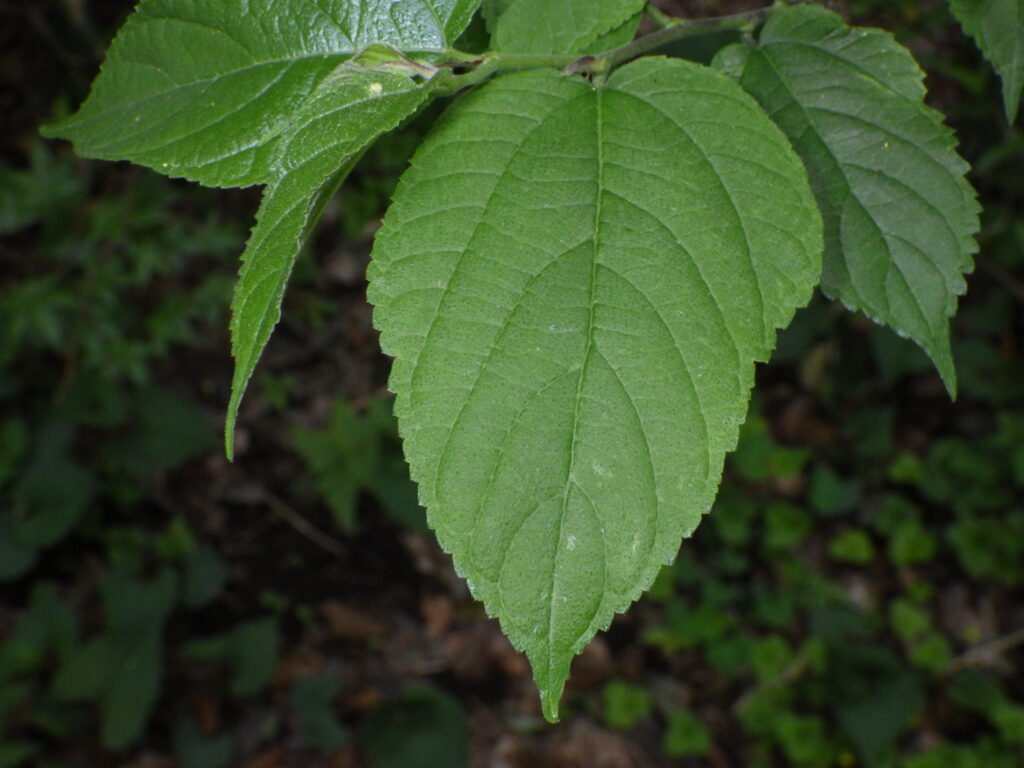
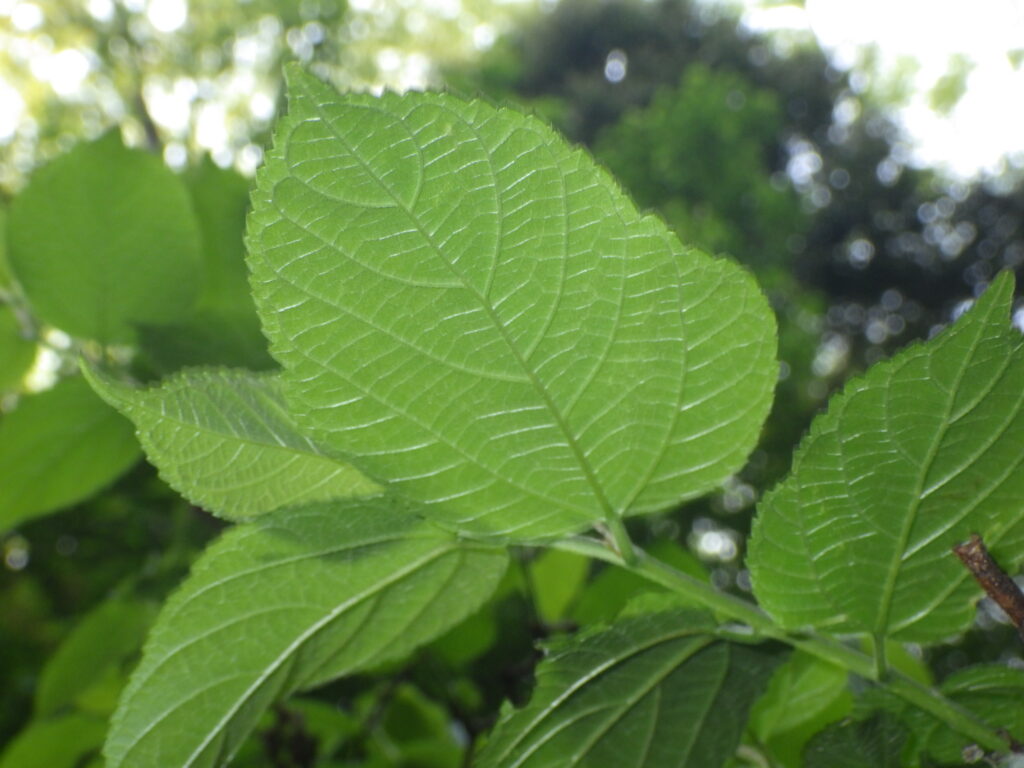
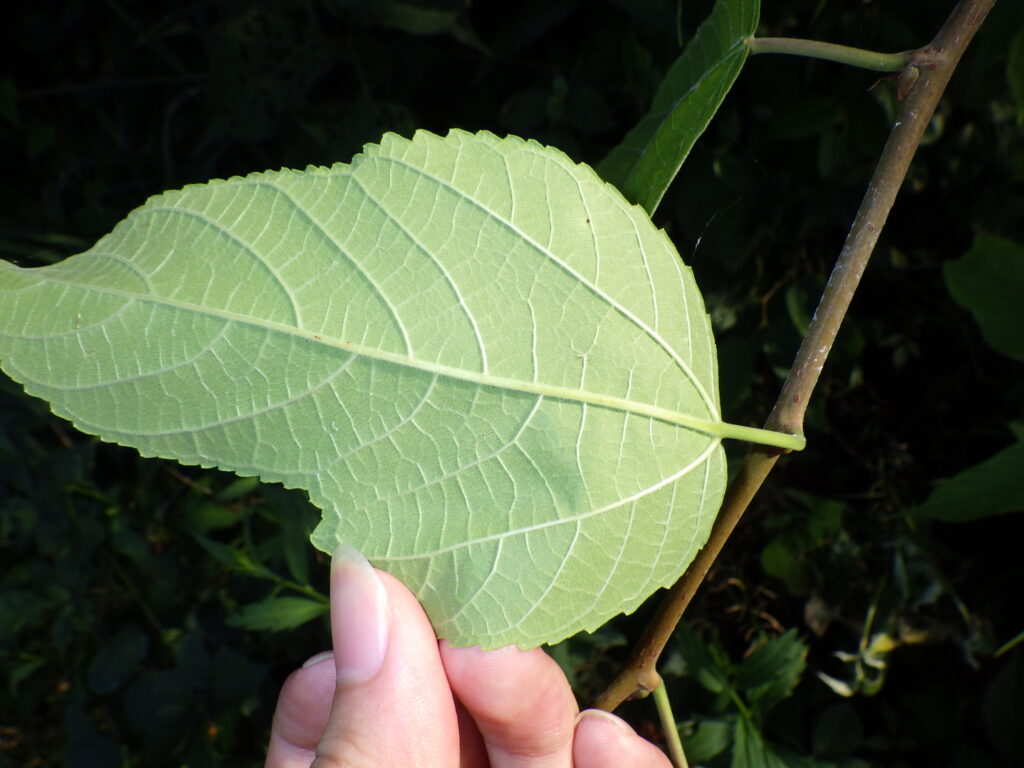
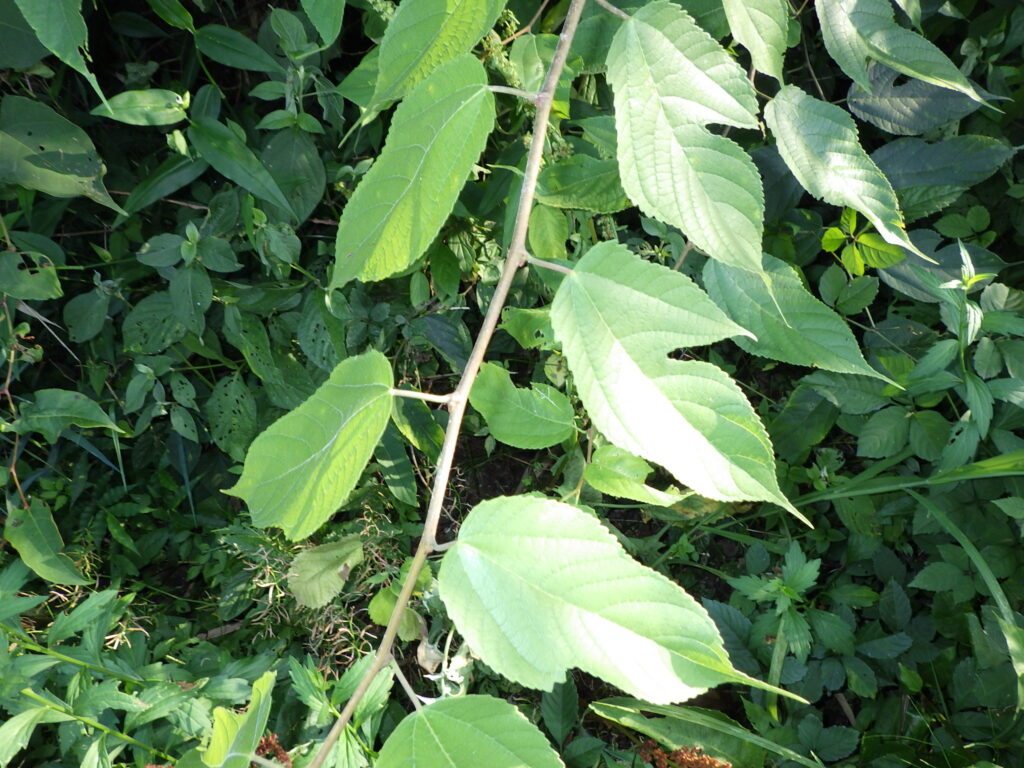
The petioles of *Broussonetia papyrifera* are 0.5-1 cm long, and it is monoecious, so fruiting is frequently observed. On the other hand, *Broussonetia kozoa* has petioles 1-3 cm long, is dioecious, and rarely produces fruit. Incidentally, the petioles of the closely related *Broussonetia mulberry* are 3-10 cm long and covered with many coarse hairs, so it seems that they can be roughly distinguished by checking the petioles.
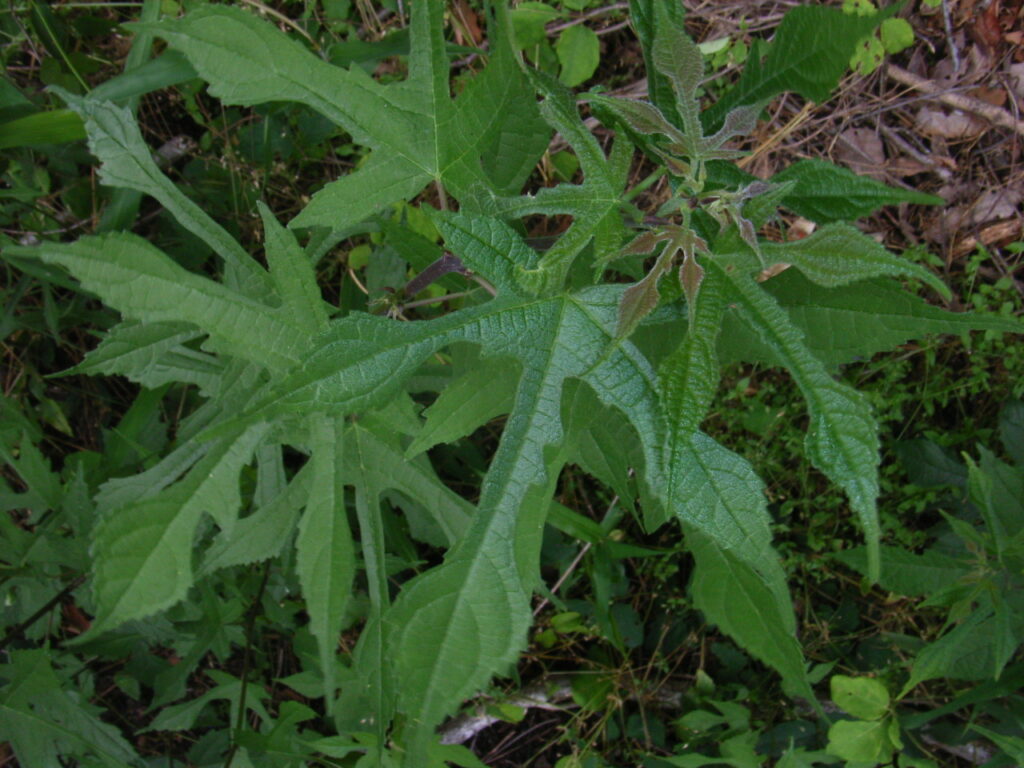
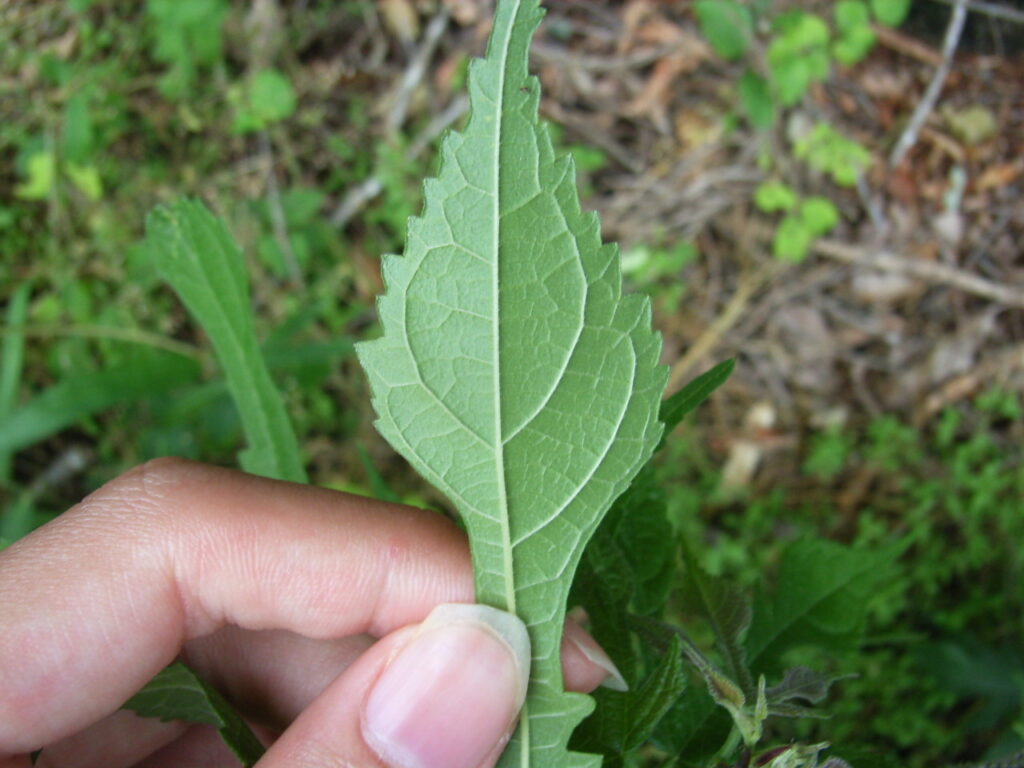
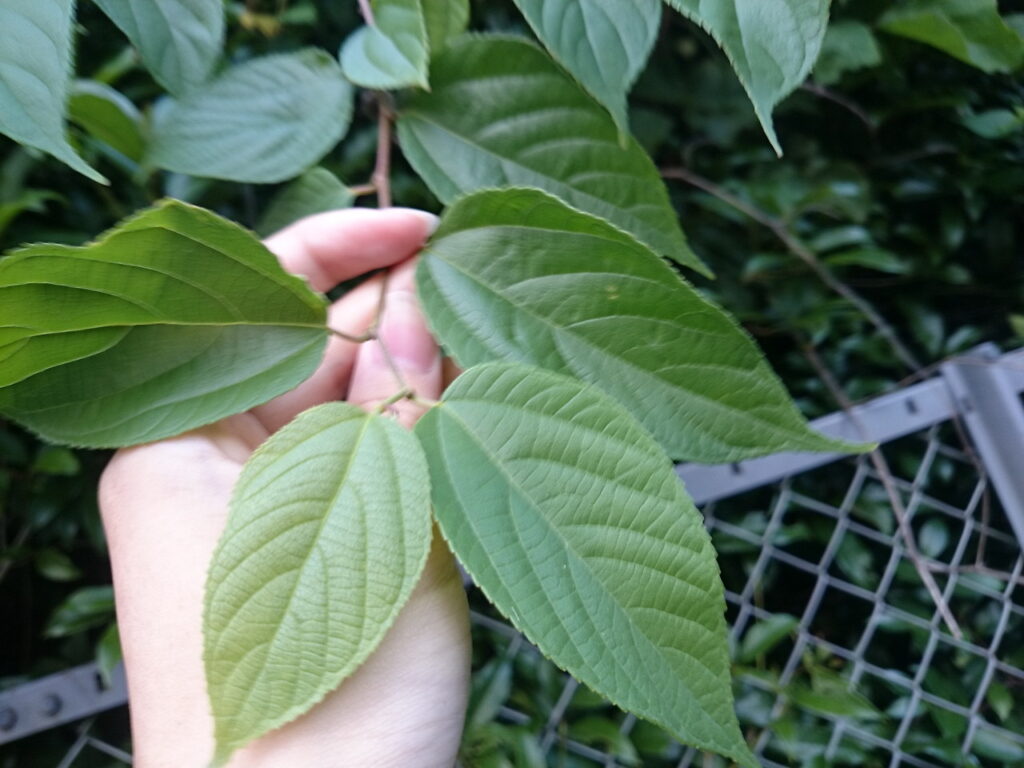
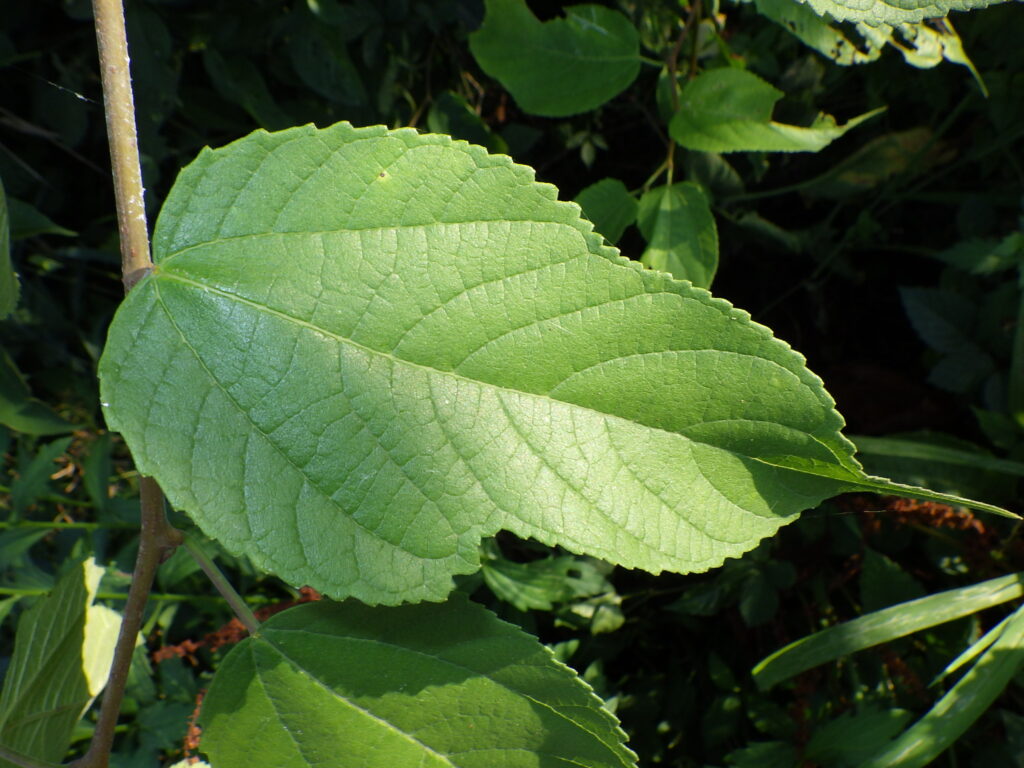
How did the paper mulberry hybrid come into existence?
But how did the paper mulberry hybrid come into existence?
The Japanese paper mulberry (Broussonetia papyrifera) is a native species, while the Japanese paper mulberry (Broussonetia comatus) is a cultivated species introduced to Japan. Therefore, there are two possible origins for paper mulberry in Japan.
First, there's the theory that the native Japanese paper mulberry (Broussonetia papyrifera) and the introduced paper mulberry (Broussonetia comatus) hybridized in Japan.
Another theory is that the Eurasian paper mulberry and the Eurasian paper mulberry hybridized on the Eurasian continent (either in China or Korea).
This matter has long remained unresolved, and descriptions vary from one literature to another. However, recent research using DNA sequences as genetic markers suggests the latter possibility (Won, 2019). In other words, it is believed that the paper mulberry, which originated in Eurasia, was brought to Japan.
Are there any other similar species? What's the difference between this and a mulberry tree?
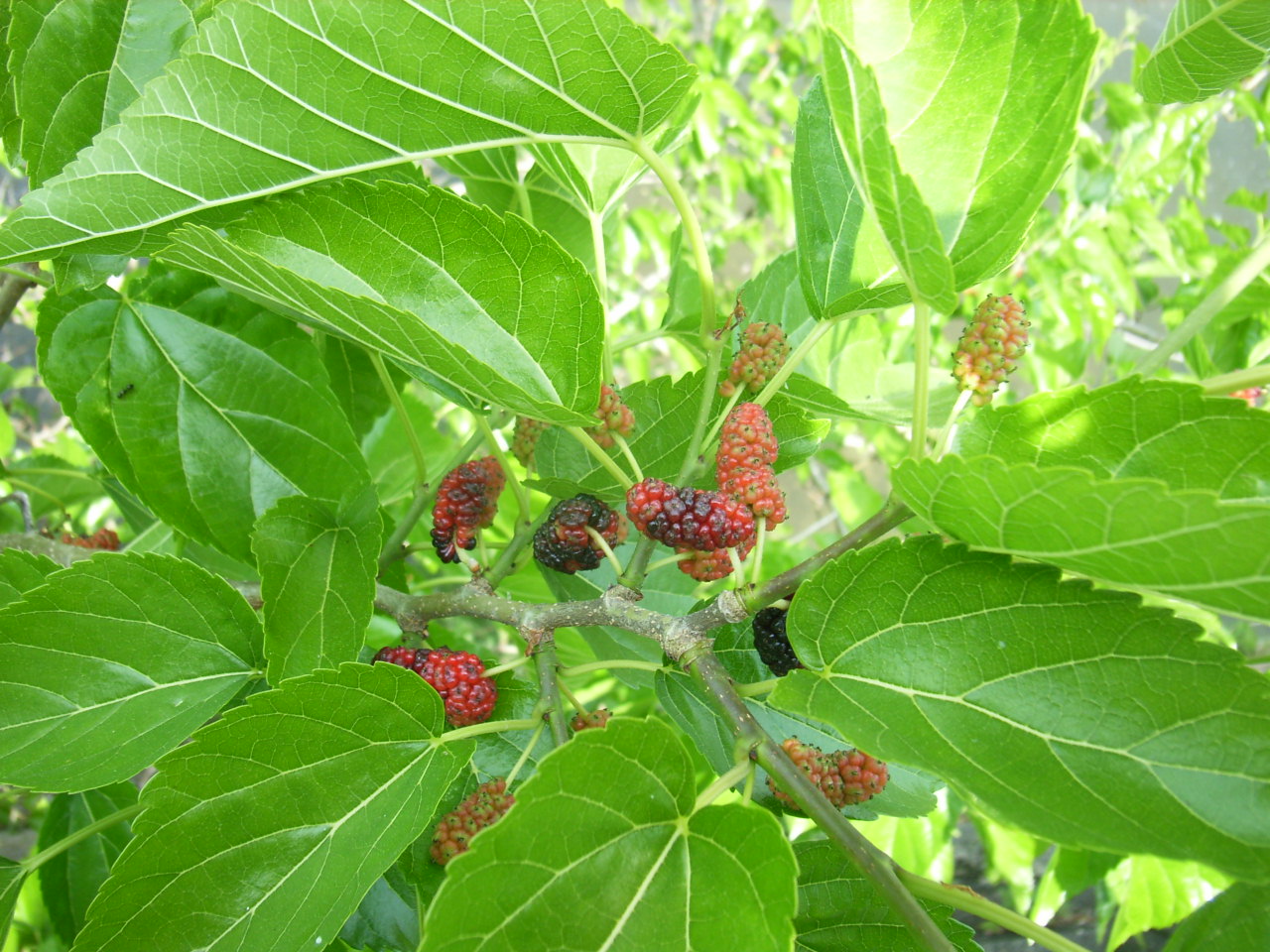
The genus Morus, including Morus australis and Morus serrata, is known to be very closely related to the genus Broussonetia papyrifera. Both species produce lobed and unlobed leaves, have inconspicuous flowers that are wind-pollinated, and their fruits (aggregate fruits) ripen red and are mainly dispersed by birds, among other similarities.
However, while the genus *Broussonetia* has noticeable hairs on the upper surface of its leaves, the genus *Morus* has almost none.
Please see the separate article for more details.
How has paper mulberry been used in Japan? What is its history?
Paper mulberry (Kozo) has long been cultivated in China, Korea, and Japan, primarily as a fiber-producing plant (Won, 2019). In China, it is used not only for fiber but also as animal feed, food additives, and in traditional medicine. The exact time when paper mulberry was introduced to Japan is unclear (Tanaka et al., 2018). In the past, there was no distinction between paper mulberry, paper mulberry, and cranberry. Therefore, although it is a plant with a long history in Japan, it is not known which specific plant was used.
The paper mulberry tree, as a general term, appears in Japan's oldest books, including the Kojiki, Nihon Shoki, and Manyoshu. The Nihon Shoki mentions that ropes made from paper mulberry were used in the construction of Izumo Taisha Shrine, and that they were an important material for tying the pillars together (Arioka, 2018). The Kojiki also mentions its use as a lifeline for harvesting abalone and turban shells.
Another use is for cotton (yu), which is made by steaming the skin, soaking it in water, tearing it into thread, and then bleaching it to make it white. This white color is considered pure and sacred, and has been used in Shinto rituals for sacred objects such as nusa.
Furthermore, it is also used as a raw material for making cloth. Cloth woven from mulberry fibers was called "futobu" and was a valuable type of clothing throughout Japan until cotton, made from cotton fibers, became widespread during the Edo period. There was also "kamifu," which was made by cutting paper after it had been made into paper, and weaving it into thread. It seems to have been the finest fabric because it was breathable and durable.
As for washi (Japanese paper), it seems that papermaking techniques were introduced to Japan in the early 7th century during the Asuka period by Doncho, a monk from Goguryeo (present-day Korea) (Mizumura et al., 2015; Arioka, 2018). Some believe that this was the first time kozo (paper mulberry) in the narrow sense was brought to Japan.
As a raw material for washi paper, it has been the most commonly used because it is cheaper than ganpi or mitsumata.
Since the early modern period, it has been most important as shoji paper, such as Mino paper. This may be the most familiar use for us today.
Did flowers release pollen by "bursting"?
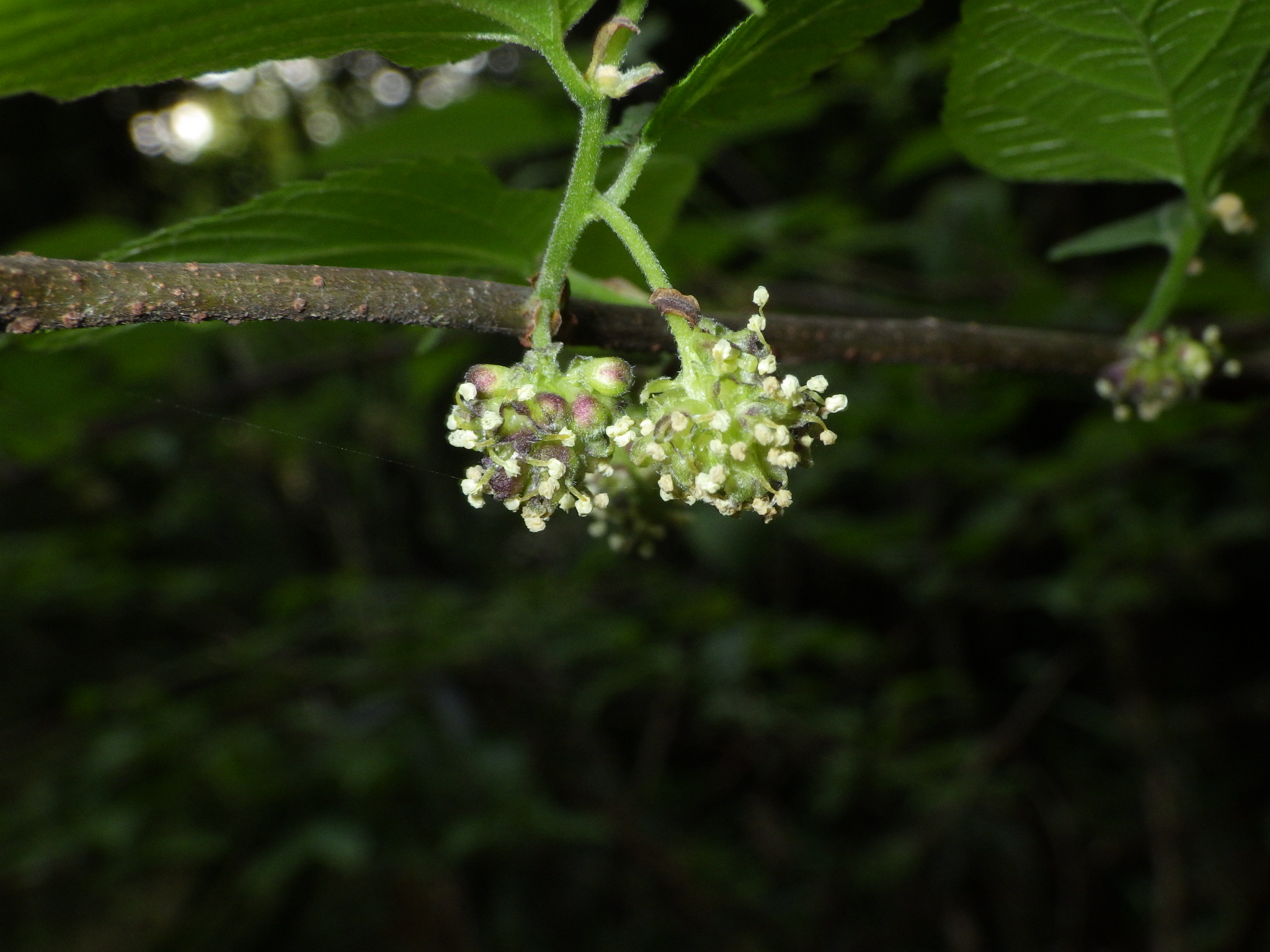
The flowers of the paper mulberry bloom from April to May, with male inflorescences in the leaf axils at the base of new branches and female inflorescences in the leaf axils at the top. The male inflorescences have stalks about 1 cm long and are spherical in shape with a diameter of about 1 cm, while the female inflorescences have shorter stalks and are spherical in shape with a diameter of about 5 mm, and are characterized by their prominent reddish-purple pistils.
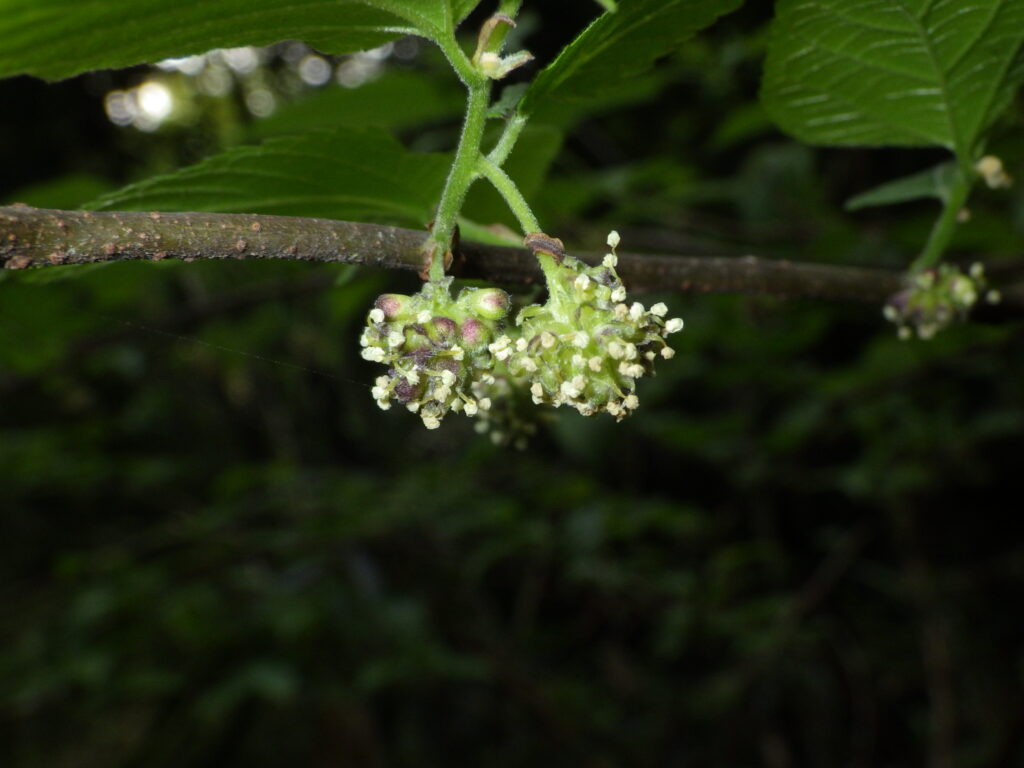
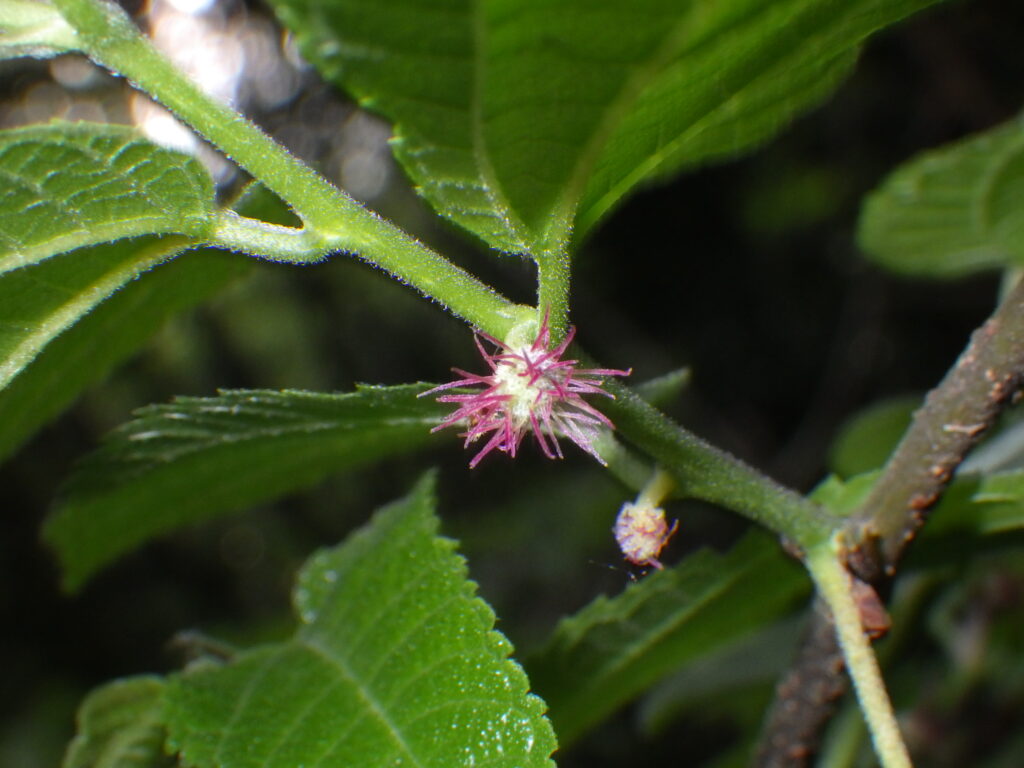
What's most unusual is that it produces male and female flowers separately on the same plant. This is called "monoecious" in technical terms (Shimizu, 2001). While it's relatively common for male and female flowers to bloom separately on different plants, this particular type of flowering is quite rare, wouldn't you say?
Now, this shape is widely seen in the genus *Broussonetia*, but how do they disperse their pollen? It's so inconspicuous that it seems unlikely to be noticed by insects.
Research suggests that members of the genus Paper Brick (Broussonetia papyrifera) are pollinated by wind (Knuth et al., 1906; Tanaka, 2000; Won, 2019). Wind-pollinated flowers have several characteristics, and Paper Brick (Broussonetia papyrifera) particularly meets these conditions well, including (1) low pollen viscosity, (2) significant differences in morphology and color between male and female inflorescences, (3) exposed anthers on the stigma, and (4) a feathery or brush-like stigma on the pistil. These features make the pollen more easily carried by the wind, and the flower shape makes it more susceptible to wind, making it highly adapted for wind dispersal.
Furthermore, several types of wind pollination have been identified, including the "rebound type" in which the filaments, initially bent towards the center of the flower, instantly bend back and release pollen into the air through centrifugal force; the "long filament type" in which the anthers are attached to the end of the long, slender filaments and the anthers are dispersed by the wind; and the "strong wind type" in which pollen is dispersed by strong winds. However, according to research, flowers of the genus Paper Bush are classified as the "rebound type".
However, I couldn't find any description of how the paper mulberry species "bursts open." Perhaps the male inflorescences are small and clustered together, and it might be possible to observe them bursting open over time. Those with time to observe closely might make new discoveries!
The characteristic of "forming male inflorescences in the leaf axils at the base of new branches and female inflorescences in the upper leaf axils" is likely a mechanism to prevent pollen from falling immediately from top to bottom, thus making self-pollination less likely.
Fruit tastes bad when humans eat it, doesn't it...?
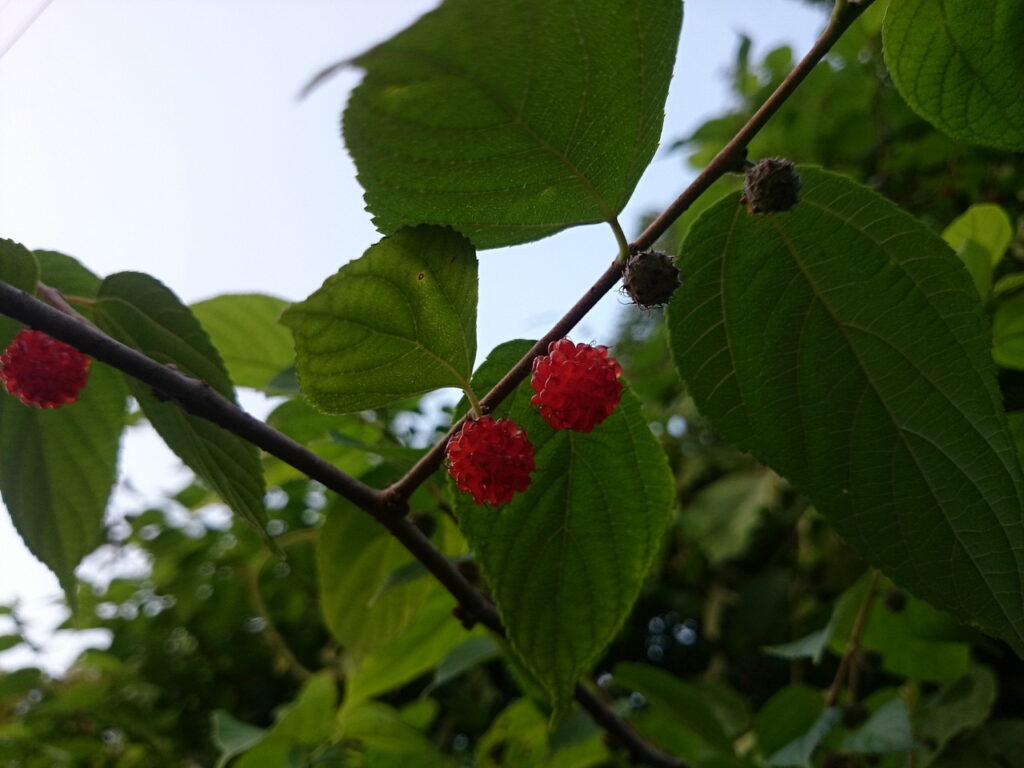
The fruit of the paper mulberry is an aggregate fruit, meaning that multiple fruits are clustered together to form a single fruit. It is spherical, 1-1.5 cm in diameter, and ripens to an orange-red color in June and July. At first glance, it looks delicious, but it has been described as having an unpleasant texture (Mogi et al., 2000) and the juice of the fruit is viscous and sweet when eaten, but not particularly tasty (Hosoki, 2005), suggesting it's not to human liking. There doesn't seem to be a comprehensive study of animals that actually eat it in the wild, but there are records of Asiatic black bears, martens, and raccoons eating it (Koike and Masaki, 2008; Takatsuki, 2018). It has also been used by the invasive species, the Japanese squirrel (Yoshida et al., 2009), suggesting it is a popular fruit at least among mammals.
However, it is common to see many young trees growing at the edge of forests near human settlements. This suggests that the seeds are also being eaten by birds, and some studies treat this as bird dispersal (Obata, 2007). Although I could not find any studies that specifically identified the species, one blog had a photo of a Japanese white-eye eating the seeds (Shiki in the Garden, 2023), suggesting that seed dispersal may be carried out by both mammals and birds.
On the other hand, as mentioned above, paper mulberry rarely produces fruit, and its seeds are known to have very low establishment and germination rates, making it difficult for it to propagate in the wild (Won, 2019). In cultivation, it is propagated vegetatively.
References
Arioka, Toshiyuki. 2018. Cultural History of Things and People 181: Washi Plants. Hosei University Press, Tokyo. 317pp. ISBN: 9784588218118
Obata, Hidehiro. 2007. Construction Examples Utilizing Topsoil Seed Banks in Spraying (VI) – Differences in Invasive Woody Plant Species Between the Center of the Slope and the Forest Edge. Journal of the Japanese Society of Landscape Architecture 33(3): 498-501. https://doi.org/10.7211/jjsrt.33.498
Kanagawa Prefecture Flora Survey Association. 2018. Kanagawa Prefecture Flora 2018 (Electronic Edition). Kanagawa Prefecture Flora Survey Association, Odawara. 1803pp. ISBN: 9784991053726
Knuth, P., Müller, H., & Ainsworth Davis, JR 1906. Handbook of flower pollination: based upon Hermann Müller's work 'The fertilization of flowers by insects'. Clarendon Press, Oxford. 383pp. ISBN: 9781362641742, https://doi.org/10.5962/bhl.title.54973
Koike, Shinsuke & Masaki, Takashi. 2008. A literature review of woody plant fruit utilization by three species of carnivorous plants south of Honshu. Journal of the Japanese Forestry Society 90(1): 26-35. ISSN: 1349-8509, https://doi.org/10.4005/jjfs.90.26
Mizumura, M., Kubo, T., & Moriki, T., 2015. Japanese paper: History, development and use in Western paper conservation. In: F. Whymark (Ed.), Adapt & Evolve 2015: East Asian Materials and Techniques in Western Conservation (Proceedings from the International Conference of the Icon Book & Paper Group) (pp. 43-59). The Institute of Conservation. https://www.icon.org.uk/resource/japanese-paper-history-development-and-use-in-western-paper-conservation.html
Mogi, T., Ishii, H., Sakio, H., Katsuyama, T., Ota, K., Takahashi, H., Shirokawa, S., and Nakagawa, Shigetoshi. 2000. Flowers Blooming on Trees: Polypetalous Flowers (Vol. 1, Revised 3rd Edition). Yama-kei Publishers, Tokyo. 719pp. ISBN: 9784635070034
The Four Seasons in My Garden. June 5, 2023. A Japanese white-eye pecking at the fruit of a paper mulberry tree. The Four Seasons in My Garden. https://kumagai9320.hatenablog.com/entry/5333eeaa58067910c7261e0981dfc250
Shimizu, Takemi. 2001. Illustrated Dictionary of Botanical Terms. Yasaka Shobo, Tokyo. xii, 323pp. ISBN: 9784896944792
Hosoki, Daisuke. 2005. Paper mulberry (Broussonetia kazinoki Sieb.). Journal of the Japanese Society of Green Technology 30(3): 590. ISSN: 0916-7439, http://www.jsrt.jp/pdf/dokomade/30-3kouzo.pdf
Tanaka, Hajime. 2000. Pollen size and dispersal mode of wind-pollinated angiosperms. Journal of Plant Research 75(2): 116-122. ISSN: 0022-2062, https://doi.org/10.51033/jjapbot.75_2_9406
Tanaka, Motomu; Shishikura, Satoshi; and Togashi, Akira. 2018. Lifestyle Crafts Series: Utilizing Local Resources - Paper Mulberry and Mitsumata. Agricultural, Forestry and Fisheries Culture Association, Tokyo. 142pp. ISBN: 9784540171154
Takatsuki, Shigeki. 2018. Characteristics of fruits used by raccoons—a review. Mammalian Science 58(2): 237-246. ISSN: 0385-437X, https://doi.org/10.11238/mammalianscience.58.237
Yoshida, Yukiko; Yamane, Akiomi; and Iwata, Ryutaro. 2009. Diet of Callosciurus erythraeus in Zushi City, Kanagawa Prefecture. Journal of Forest Wildlife Research 34: 7-11. ISSN: 0916-8265, https://doi.org/10.18987/jjwrs.34.0_7
Won, H. 2019. Test of the hybrid origin of Broussonetia × kazinoki (Moraceae) in Korea using molecular markers. Korean Journal of Plant Taxonomy 49(4): 282-293. ISSN: 1225-8318, https://doi.org/10.11110/kjpt.2019.49.4.282