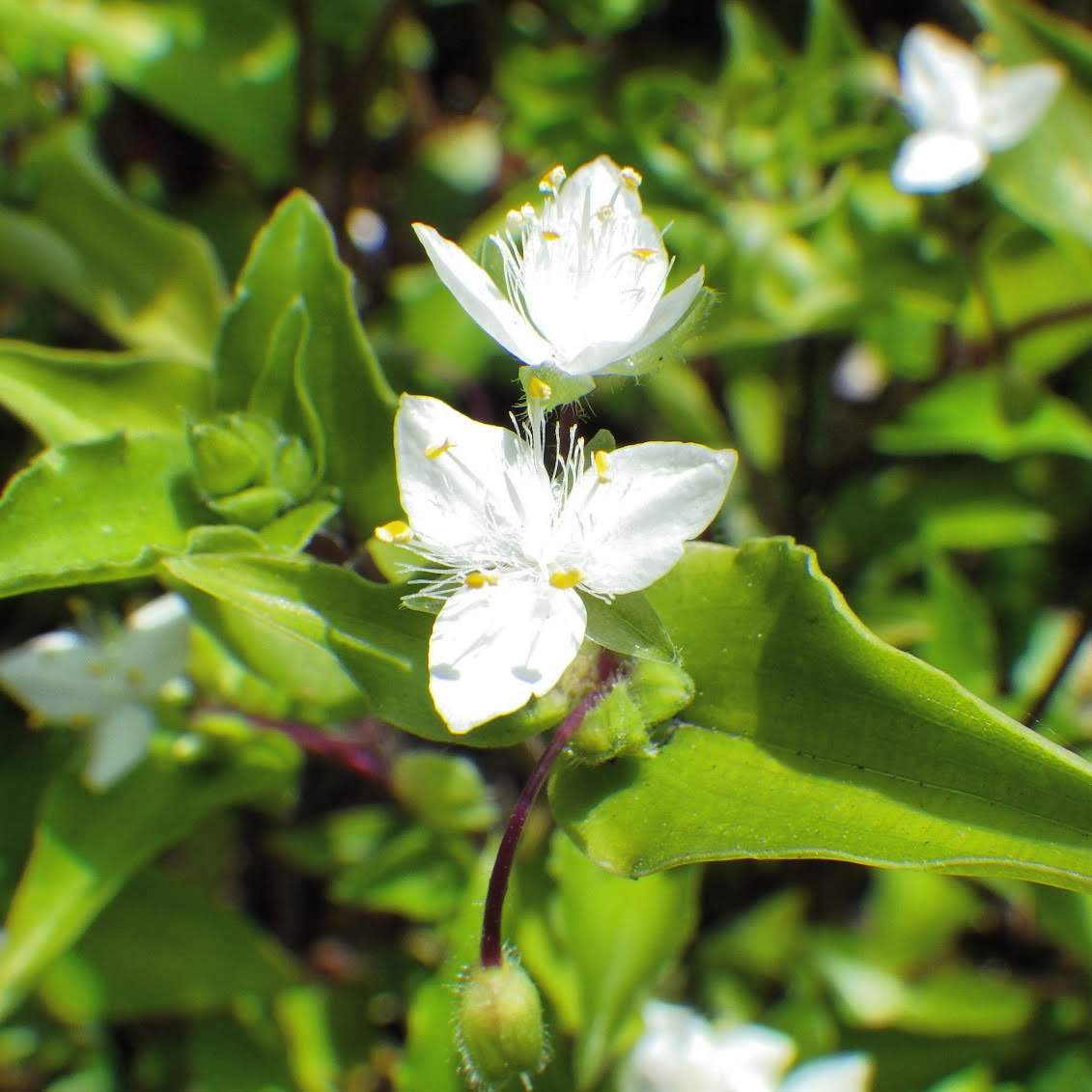
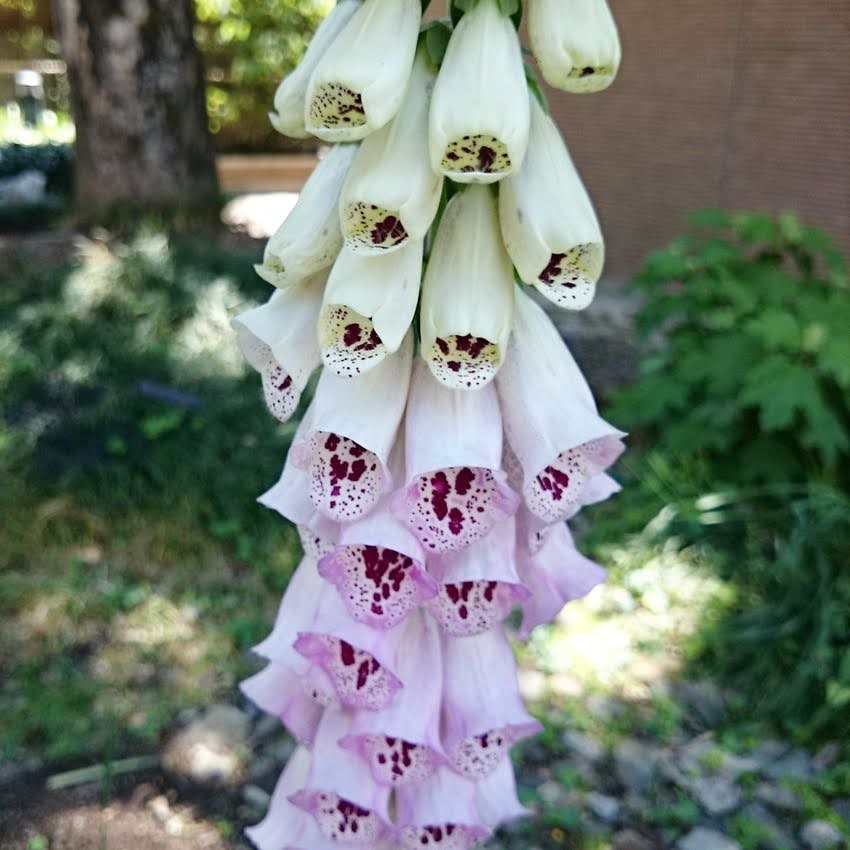
Monotropa uniflora, Monotropa uniflora var. japonica, and Monotropa uniflora are three species of plants that grow in the dark forest floor, where photosynthesis has been lost. They lack normal leaves, which have degenerated into scale leaves. They only have stems and flowers, and their entire bodies are white because they lack chlorophyll. They are known as mycoheterotrophic plants, but distinguishing them can be difficult without experience. However, upon closer inspection, various differences can be observed. Monotropa uniflora and Monotropa uniflora var. japonica belong to the Ericaceae family, while Monotropa uniflora var. japonica belongs to the Orchidaceae family, so their flower structure and ecology are completely different. Monotropa uniflora and Monotropa uniflora var. japonica belong to the same Ericaceae family, but their flowering period, inflorescence, flowers, ovary, and fruit differ. Recently, Monotropa uniflora var. kirishimaensis, which has red flowers, has been discovered, so it is also necessary to distinguish it from these species. These species have stopped photosynthesizing and depend on fungi for nutrients. There are several reasons for this, but the idea that it is the most adaptive for growing in the dark forest floor is easy to understand. The pure white flowers of Monotropa uniflora and Monotropa uniflora appear colored to the eyes of insects, and their downward-facing structure makes them most frequently visited by bumblebees, who contribute significantly to pollination. On the other hand, Monotropa uniflora is self-pollinating. These are also thought to be adaptations to the dark forest floor. The fruit of Monotropa uniflora is a berry, and its seeds are known to be dispersed by cockroaches, but Monotropa uniflora has a capsule, and its seeds are dispersed by wind, which is the opposite. This may be influenced by the fruiting period. This article will explain the classification, evolution, pollination ecology, and seed dispersal of Monotropa uniflora, Monotropa uniflora, and Monotropa uniflora.
- Three plant species that grow in the dark forest floor where photosynthesis has been lost
- What are the differences between Monotropa uniflora, Monotropa uniflora var. japonica, and Monotropa uniflora?
- What is the difference between Monotropa uniflora and Monotropa kiusiana?
- What is the adaptive significance of ceasing photosynthesis?
- The pure white flowers of the Indian pipe plant are exclusively for bumblebees! What's the reason?
- Are the insects that visit Monotropa uniflora the same as those that visit Monotropa uniflora?
- Did the flowers of the Tashiro orchid only self-pollinate?!
- The fruit of the Indian pipe is a berry, and its seeds were dispersed by that disliked creature?
- Why are the fruits of Monotropa uniflora capsules?
- References
- Source
Three plant species that grow in the dark forest floor where photosynthesis has been lost
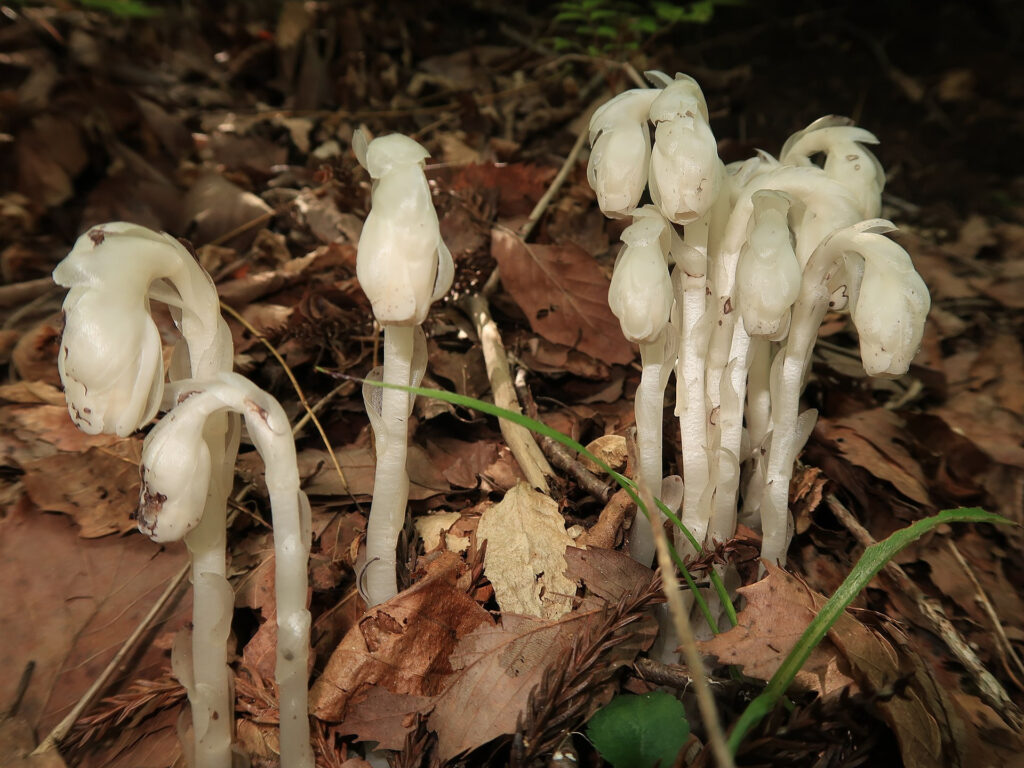
Monotropastrum humile, also known as silver dragon grass or ghost mushroom, is a perennial herb distributed in the southern Kuril Islands, Hokkaido, Honshu, Shikoku, Kyushu, and Ryukyu Islands of Japan; Sakhalin, the Korean Peninsula, China, Taiwan, Myanmar, northern India, and the Himalayas. It inhabits the forest floor of coniferous and broadleaf forests. It mainly grows on moist humus, and its finely branched roots usually form a clump. Its Japanese name, "Ginryusou" (silver dragon grass), is said to come from the resemblance of its appearance, enclosed in vestigial scale-like leaves, to a dragon covered in scales. It belongs to the genus Monotropastrum in the family Ericaceae.
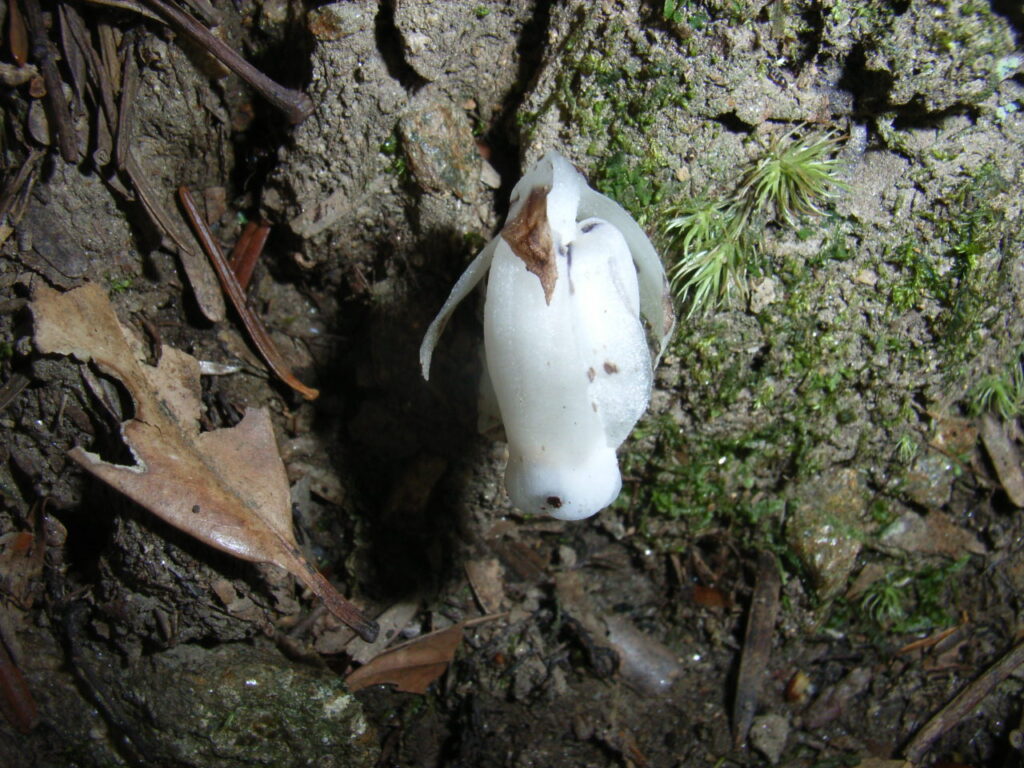
Monotropa uniflora, also known as autumn silver bellflower, is a perennial herb widely distributed in Hokkaido, Honshu, Shikoku, and Kyushu in Japan; as well as in the temperate regions of Southeast Asia and North America. It grows in somewhat shady areas within hilly and mountainous forests. Its Japanese name comes from its resemblance to the silver bellflower (Monotropa uniflora). It belongs to the genus Monotropa in the family Ericaceae.
Epipogium roseum, also known as Tashiro Orchid, is distributed in Honshu (south of Gunma Prefecture), Shikoku, Kyushu, and the Ryukyu Islands in Japan; China, Taiwan, Southeast Asia, India, Australia, New Caledonia, and West Africa. In Japan, it is a perennial herb that grows in evergreen broad-leaved forests. Its Japanese name comes from the name of its discoverer, Zentaro Tashiro, and was given by Dr. Tomitaro Makino. It belongs to the genus Epipogium in the family Orchidaceae.
Neither of them has normal leaves; their leaves have degenerated into scale-like leaves. They only have stems and flowers, and their entire bodies are white because they lack chlorophyll. They are known as mycoheterotrophic plants (i.e., mycoparasitic plants, saprophytic plants). Because their entire bodies are white, it can be difficult to distinguish them without experience. In particular, Monotropa uniflora and Monotropa uniflora look very similar in shape.
What are the differences between Monotropa uniflora, Monotropa uniflora var. japonica, and Monotropa uniflora?
However, upon closer examination, various differences can be observed (Kanagawa Prefecture Flora Survey Association, 2018).
First, while Monotropa uniflora and Monotropa uniflora belong to the Ericaceae family, Tashiro orchid belongs to the Orchidaceae family, so their flower structures and ecology are completely different.
While numerous scale-like leaves can be seen in Monotropa uniflora and Monotropa uniflora var. japonica, in Monotropa japonica var., there are only about 1 to 8 scale-like leaves, spaced apart.
Furthermore, regarding the inflorescence, while Monotropa uniflora and Monotropa uniflora var. japonica have only one to a few flowers that hang downwards, Monotropa japonica produces a raceme inflorescence with 2 to 16 flowers.
Regarding the structure of the flower, in Monotropa uniflora and Monotropa uniflora var. japonica, the calyx and petals overlap to form a tubular bell shape, but in Orchidaceae, there is a unique shape called the "orchid-shaped corolla" common to all plants in the Orchidaceae family, consisting of three sepals and three petals, with two "lateral petals" and a central "labellum" combined.
Although Monotropa uniflora and Monotropa uniflora var. japonica belong to the same Ericaceae family, they differ in their flowering period, inflorescence, flowers, ovary, and fruit.
Regarding the flowering period, Monotropa uniflora flowers in April-May and July, while Monotropa uniflora var. japonica flowers in September-October.
Regarding the inflorescence, in Monotropa uniflora, one to several flowers hang downwards at the tip of the stem, whereas in Monotropa uniflora var. japonica, only one flower is attached to the end of the stem.
Regarding the flowers, in Monotropa uniflora, the sepals and upper parts of the petals are not notched, whereas in Monotropa uniflora var. japonica, there are irregular notches (serrations, teeth) on the upper parts of the sepals and petals.
Regarding the ovary, in Monotropa uniflora, it has one chamber and the ovule is a parametrial placenta, whereas in Monotropa uniflora var. japonica, the ovary has 3 to 5 chambers and is axillary placenta.
Regarding the fruit, Monotropa uniflora has a berry that does not split open when ripe, grows obliquely sideways, and retains its sepals and petals even when fruited, whereas Monotropa uniflora has a capsule that splits open when ripe, grows upwards, and its sepals and petals fall off when fruited.
Regarding the seeds, Monotropa uniflora lacks wings, while Monotropa uniflora var. japonica does.
I've listed quite a few differences, but practically speaking, you can distinguish them simply by checking the flowering period and the way the petals are lobed.
Furthermore, a variety of Monotropastrum , Monotropastrum humile f. roseum, has been identified that has a red ovary inside the flower.
Also in the same family, Ericaceae, subfamily Monotropinae, is * Hypopitys monotropa*, but it can be easily distinguished by the fact that it has 4 to 8 flowers in a raceme at the end of the stem, the plant body is pale yellowish-brown, and the flowers bloom from June to August.
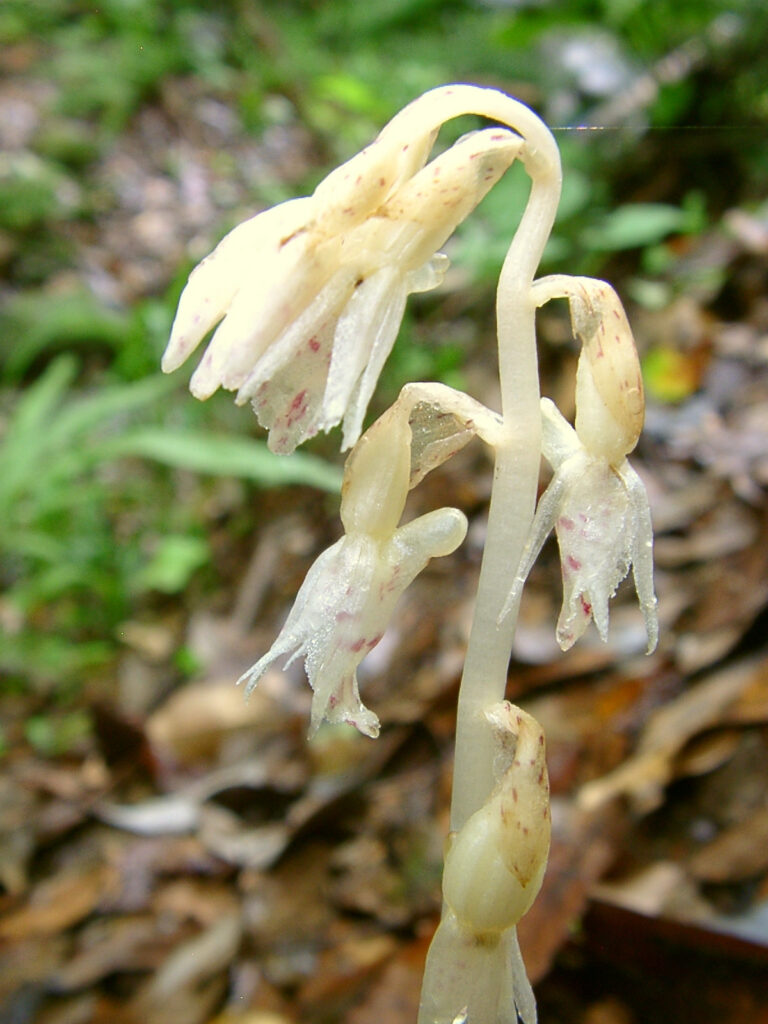
What is the difference between Monotropa uniflora and Monotropa kiusiana?
Furthermore, there is a species called Monotropastrum kirishimense, which has recently been discovered as a new species similar to Monotropastrum verum (Suetsugu et al., 2023). Currently, it has been confirmed in Osaka, Wakayama, Shizuoka, Gifu, Kagoshima, and Miyazaki prefectures. The differences between it and Monotropastrum verum are quoted below.
『Kobe University Press Release』
- While the petals and sepals of *Monotropa uniflora* are reddish, those of *Monotropa uniflora* are transparent to white. Similarly, *Monotropa uniflora* (a color variant of *Monotropa uniflora*) also appears reddish. However, the actual color comes from the ovary inside the flower; the color of the ovary is simply showing through, and the petals and sepals are actually transparent to white.
- The number of sepals in Monotropa uniflora is 4 to 11, which is more than the usual 2 to 3 in Monotropa uniflora. Also, in Monotropa uniflora, the sepals are always in contact with the petals, whereas in Monotropa uniflora they are often separated from the corolla tube.
- The flowers of *Monotropa uniflora* are rounder than those of *Monotropa uniflora* from the early stages of flowering.
- The above-ground portion of *Monotropa uniflora* is often short, less than 5 cm. (*Monotropa uniflora* is often 5 cm or longer.)
- The rhizomes of Monotropa uniflora are often long, exceeding 10 cm. (Monotropa uniflora rhizomes are usually less than 5 cm.)
- The roots of *Monotropa uniflora* are less distinct than those of *Monotropa uniflora*, blending seamlessly with the surrounding soil, and their tips barely protrude, making them almost invisible to the naked eye. (A cluster of white mycelium can be seen.)
What is the adaptive significance of ceasing photosynthesis?
The three species Monotropa uniflora, Monotropa uniflora var. japonica, and Monotropa japonica are known as mycoheterotrophic plants (i.e., mycoparasitic plants, saprophytic plants).
"Heterotrophy" is the opposite of "autotrophy," which synthesizes nutrients on its own through photosynthesis, etc. Heterotrophy is a way of life that relies on obtaining nutrients from other organisms. This applies to many animals, including humans.
In the case of Monotropa uniflora, Monotropa uniflora var. japonica, and Monotropa uniflora, they do not perform photosynthesis but instead steal carbon, which is a nutrient, from fungi (the kind called mushrooms and molds) that grow on trees through their roots.
They were once commonly called "saprophytic plants" because they were thought to be able to obtain nutrients from decaying leaves and soil. While they are still sometimes referred to this way out of convention, it's not a very desirable term.
In the case of Monotropa uniflora, it is known that the majority of mycorrhizal fungi are ectomycorrhizal fungi of trees (Russulaceae, Russula genus), and that a wide range of species within the Russula genus are utilized as mycorrhizal fungi (Yokoyama et al., 2013).
In the case of *Psathyrella tashiroensis*, it has been found to form mycorrhizal symbiosis with fungi of the family Psathyrellaceae (Tanigame, 2011).
Why did mycoheterotrophic plants stop photosynthesis and start obtaining nutrients from fungi?
There are two possible explanations for this (Suetsugu & Kato, 2014).
The most common reason is that parasitizing fungi allows them to survive even in the dark forest floor where there are few competitors. Photosynthesis is a method of nutrient synthesis that does not depend on other organisms, but on the other hand, it can be said that it is a way of life that is highly dependent on light. In the dark forest floor where there is little light, it can be said that a way of life that depends on other organisms is quite advantageous. In fact, Monotropa uniflora, Monotropa uniflora var. japonica, and Monotropa uniflora all live in the shade, so it is quite plausible that they have such advantages.
Another reason is that, when stressed, they can survive by remaining underground instead of extending their plant bodies above ground. While ordinary photosynthetic plants also keep their plant bodies underground, in that case, they still use nutrients through respiration and other metabolic processes while confined underground. By parasitizing fungi, they can obtain carbon and increase their survival rate.
The pure white flowers of the Indian pipe plant are exclusively for bumblebees! What's the reason?
The flowering period for Monotropa uniflora is from spring to summer (April-May and July). The inflorescence has a flower stalk and is 10-20 cm tall. The flowers bloom facing downwards and are tubular-bell shaped. The petals and calyx are oblong and pure white. There are 1-5 sepals and 3-5 petals. Although not visible in the photo, the stigma of the pistil is a purple disc that occupies most of the flower, and 6-10 stamens are arranged alternately in two rows around the pistil.
Although the flowers appear plain white to the human eye, they reflect ultraviolet light, making them conspicuous to insects (Klooster et al., 2009).
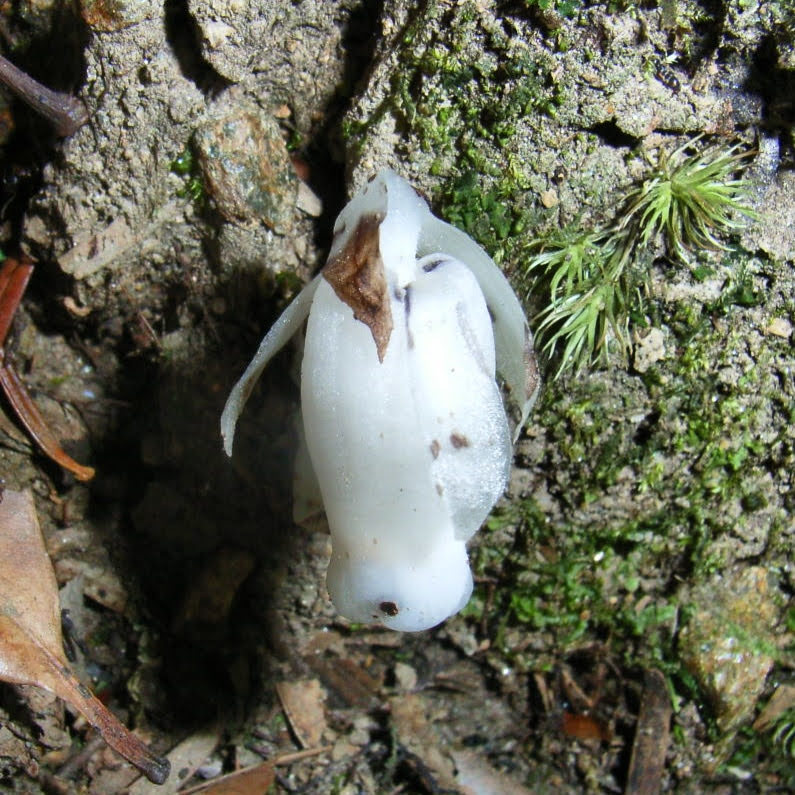
What kinds of insects visit this flower?
Studies conducted by various research groups in Japan have consistently shown that the site is visited almost exclusively by bumblebees of the genus Bombus, primarily Bombus diversus diversus (Tanaka, 1978; Ushimaru & Imamura, 2002; Sueji & Kato, 2014).
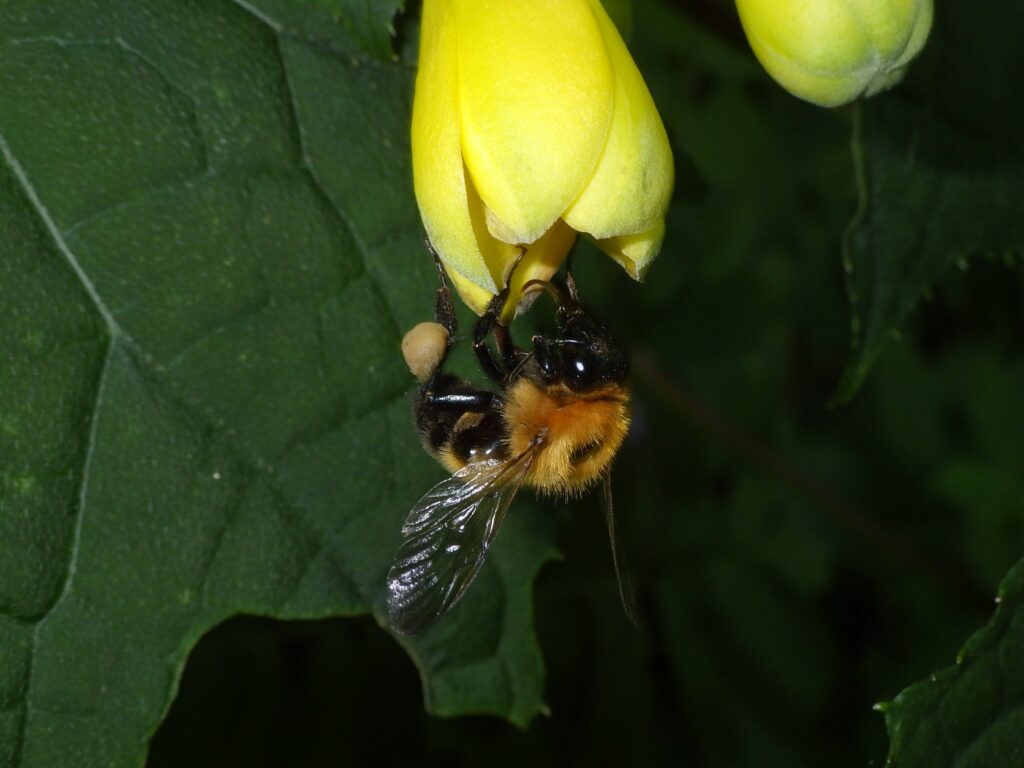
It is said that Monotropa uniflora flowers can bloom in dense clusters within an area of about 20 cm square. When a bumblebee comes to try to drink the large amount of nectar deep inside, its head and legs attach to the stamens located next to the pistil.
Because the flowers face downwards, only bumblebees that can skillfully hang down can insert their mouths, the depth to the nectar is suitable for the length of a bumblebee's mouth, and the entrance to the nectar is closed, it is a somewhat unusual flower, but it can be said to be a flower form that is well-suited for bumblebees (Tanaka, 1978).
The bumblebees that visit are thought to be queen bees that begin their activity in the spring, but it has been suggested that worker bees may also come (Ushimaru & Imamura, 2002).
Why does the Indian pipe plant rely on bumblebees for pollination?
For Monotropa uniflora, a mycoheterotrophic plant that grows in the dark forest floor, relying on pollination from insects that prefer bright environments, such as small bees and honeybees, is extremely difficult. On the other hand, bumblebees can regulate their body temperature and therefore forage even in dark environments. For this reason, it is thought that the shape of the flower has evolved to be specialized for bumblebees (Suetsugu & Kato, 2014).
There is considerable variation in flower size (Ushimaru & Imamura, 2002). While larger flowers might seem more attractive to insects and thus have a higher chance of pollination, this tendency has not been demonstrated in studies. The reason for the small flowers remains unknown. This flower still holds many mysteries.
It's also quite unusual that the ovary of the red-flowered silver pipe plant turns red.
Are the insects that visit Monotropa uniflora the same as those that visit Monotropa uniflora?
The flowering period of Monotropa uniflora is from September to October. The inflorescence has a flower stalk and is 10 to 30 cm tall. The flowers bloom facing downwards and are tubular-bell-shaped. The petals and calyx are lanceolate to oblong and pure white. There are 3 to 5 sepals and 3 to 8 petals. Although not visible in the photo, the stigma of the pistil is a yellowish-brown disc that occupies most of the flower, and there are usually 10 stamens arranged around the pistil.
In the case of Monotropa uniflora, the flowers also reflect ultraviolet light, making them conspicuous to insects (Klooster et al., 2009).
Although there are differences in flowering period and the number of stamens, the basic structure is the same as that of Monotropa uniflora. Are the insects that visit this flower the same as those that visit Monotropa uniflora?
While no research in Japan could be found, a study conducted in Ohio, Indiana, Kentucky, and Tennessee in the eastern United States revealed that while the Bombus spp., which is found only in Honshu, the Korean Peninsula, and Ussuri, was not present, several species of the genus Bombus were indeed visiting (Klooster & Culley, 2009). Syrphidae were the next most frequent visitors, followed by a small number of Apidae, but their contribution to pollination may be low due to the downward-facing flowers. It seems reasonable to conclude that the genus Bombus is the most important pollinator.
Incidentally, this study also investigated pollinating insects of closely related species not found in Japan, such as *Monotropa uniflora* and *Monotropsis odorata*, and in these species as well, multiple species of the genus *Bumblebee* were found to be the most important pollinators.
However, it was found that there are significant differences in how pollen adheres to bumblebees between the genera Monotropa and Monotropa and the genus Monotropis.
In the genera Monotropa and Monotropa, as mentioned above, pollen adheres to the heads and thoraxes of bumblebees as they search for nectar in the flowers. This occurs because the anthers have slits, and the pollen falls off along these slits, spilling onto the inner wall of the corolla.
On the other hand, in the genus Monotropis, the anthers have two pores, and pollen is not easily released from the anther sac.
So how do bumblebees get pollen? Bumblebees hang from flowers and vibrate their wings rapidly. This causes pollen to fall out through the holes in the anthers. This is called "vibration pollination," and it is a well-known pollination method in the Solanum genus, which includes eggplant. It prevents nectar robbing and ensures that pollen is only passed to bees that can vibrate, such as bumblebees.
But ultimately, do these differences reflect any ecological differences?
Although not mentioned in this paper, it would be reasonable to assume that the genus Monotropis has flowers that are more specifically adapted to bumblebees.
In fact, records of pollinating insects show that while hoverflies and bees visited a small number of flowers in the Monotropa genus and Monotropa uniflora, their numbers were considerably reduced in the Monotropis genus.
While it's generally said that he specialized in bumblebees, perhaps he could be considered relatively generalist within the Pyrolainae subfamily.
There are still other questions remaining. Queen bumblebees, which become active in spring, visit Monotropa uniflora, but what kinds of bumblebees, and within the same species caste, visit Monotropa uniflora? This point also remains unclear.
Did the flowers of the Tashiro orchid only self-pollinate?!
Tashiro orchids bloom from June to July. They produce racemes at the top of the stem, bearing 2 to 16 flowers. The racemes are 10 to 20 cm long and extend above the flowerless bracts. The flowers open from the bottom upwards. The bracts usually have reddish-purple spots. The flowers have a characteristic "orchid-shaped corolla" common to all plants in the orchid family, consisting of three sepals and three petals, with two "lateral petals" and a central "labellum" combined. The sepals are linear-lanceolate, with nearly pointed tips. The lateral petals resemble the sepals but are slightly shorter, wider, narrowly ovate-lanceolate, and acute to obtuse. The labellum, when spread, is broadly ovate, with reddish-purple spots, and its edges are finely serrated. There is a spur at the base of the labellum, which is oblong (cylindrical), with a rounded tip, and protrudes towards the ovary.
Tashiro orchid has a typical flower shape for the orchid family, and it also produces fragrance and nectar, so it certainly seems like it would attract insects.
However, a study conducted in Xishuangbanna Dai Autonomous Prefecture, China, found that the only insect that visits this flower is the Asian honeybee , Apis cerana cerana, which is widely distributed in Asia (Zhou et al., 2012).
Moreover, the pollen did not adhere to the bodies of the Eastern honeybees, and therefore did not contribute at all to their fruit production! In other words, although insects visited the Tashiro orchid, it was entirely self-pollinating, producing fruit and seeds. Self-pollination occurred at the bud stage, one day before flowering.
Why are they doing this?
This, too, is likely influenced by its habitat. *Tashiro orchid* grows in very shady forest floors, where insect pollination is virtually impossible. It's possible even bumblebees struggled with pollination.
Therefore, the Tashiro orchid has become self-pollinating, seemingly reaching the ultimate method that surpasses even the Monotropa uniflora and Monotropa uniflora look-alike.
The fragrance and honey are thought to be remnants of their ancestors.
The fruit of the Indian pipe is a berry, and its seeds were dispersed by that disliked creature?
After flowering, Monotropa uniflora produces dull white, fleshy fruits (berries). While this might sound delicious, they are apparently not sweet to humans. The seeds are embedded within the fruit's pulp. Recent research has explored how these seeds are dispersed and how Monotropa uniflora expands its distribution (Uehara & Sugiura, 2017).
We used infrared motion sensors to investigate which insects visit fruit in the wild. As a result, we found that six groups of insects visited: harvestmen, springtails, camel crickets, cockroaches, darkling beetles, and ants. However, only the Japanese cockroach (German cockroach) ingested the seeds. The other species either nibbled on the fruit pulp or visited only in very small numbers. It is natural to conclude that the Japanese cockroach is almost exclusively responsible for dispersing the seeds over long distances.
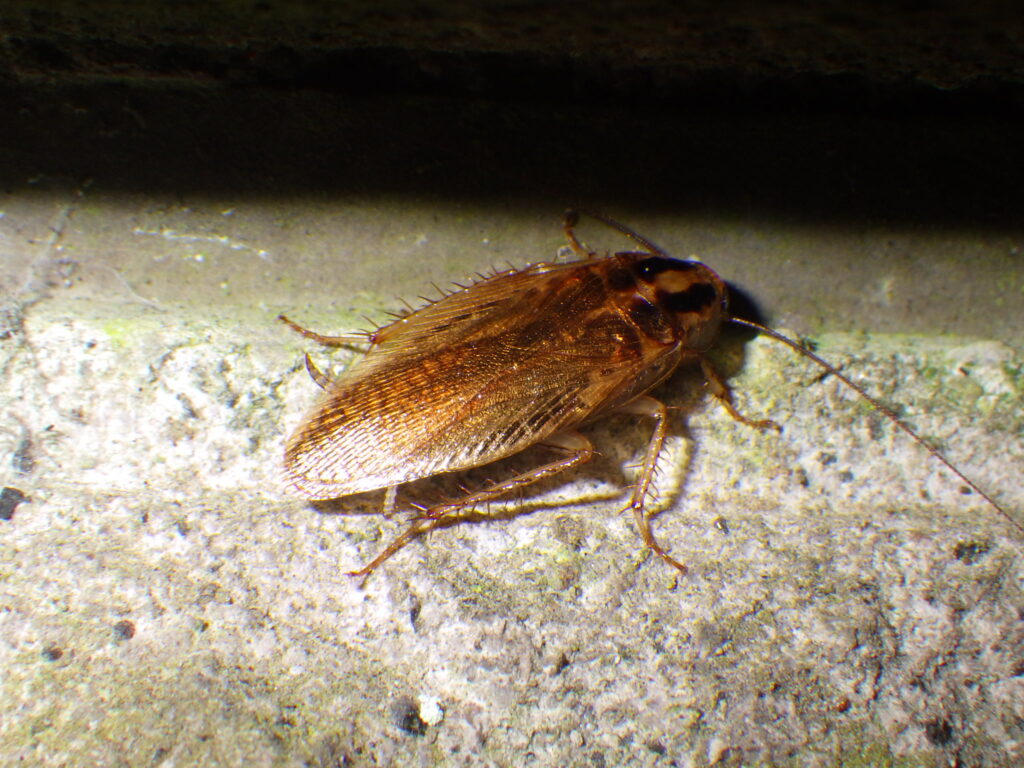
In this study, to further investigate whether the German cockroach (Erythrina japonica) actually carries the seeds alive, a TTC staining test was conducted to determine if the plants were still alive. This allowed researchers to determine how many seeds survived after being expelled from the cockroach's body.
As a result, approximately half of the seeds survived. Moreover, this result was no different from the survival rate of seeds directly extracted from the fruit by hand, suggesting that they were hardly affected by cockroach digestion.
The activity period of the Japanese cockroach coincides with the fruit-producing period, and since it lives on the ground, it is highly likely to come into contact with the mycelium of the Russulaceae fungi that it parasitizes. Its high flight ability also suggests that it can carry seeds over long distances. It seems to be a very convenient seed carrier for Monotropa uniflora.
However, the Japanese cockroach (Tomioka et al., 2016) is said to have a distribution that extends from the vicinity of Tokyo as far north as various parts of the Pacific Ocean southward, and along the Sea of Japan coast as far south as Ishikawa Prefecture, with its southern limit reaching Tanegashima Island. Although it has now spread as far north as Tochigi Prefecture, it does not exist further north than that. Therefore, it is highly likely that the populations in the Southern Kuril Islands and from northern Japan to Hokkaido are dispersed by other animals.
Based on these circumstances, research was also conducted in Hokkaido, where it was discovered that seed dispersal also occurs through camel crickets, woodlice, and earwigs (Suetsugu et al., 2024).
It seems that Monotropa uniflora is a plant that lives in harmony with many creatures, including fungi, bumblebees, and German cockroaches. When studying this species, it seems necessary to observe it while being aware of its relationships with various living things.
Why are the fruits of Monotropa uniflora capsules?
On the other hand, the fruit of Monotropa uniflora is an erect, oval-spherical capsule, 1-1.5 cm long, which is completely different from the flowers of Monotropa uniflora, which were similar in appearance.
How does Monotropa uniflora disperse its seeds?
A Japanese study that closely observed the morphology of the seeds found that the seed coat extends beyond surrounding the inner milky pulp, forming a wing-like structure, which is thought to allow the seeds to be dispersed by wind (Ugajin & Endo, 2018).
Some people who learn about this might think that capsules are a more primitive characteristic within the Pyrola subfamily. This is because there are many other wind-dispersed plants, and there are no examples of plants relying on cockroaches to eat their fruit. It seems that the evolution occurred from wind-dispersed capsules to cockroach-dispersed berries.
However, similar studies have revealed that the evolution from berries to capsules actually occurred. This can be determined by statistically analyzing the various characteristics of seeds of each species. It was also found that this evolution occurred four times independently.
Why did the evolution from cockroach-dispersed berries to wind-dispersed capsules occur?
Unfortunately, the reason for this is still not well understood. However, in my opinion, there are some possible reasons for this in the case of Japanese Monotropa uniflora and Monotropa uniflora var. japonica.
The fruiting period for Monotropa uniflora is from May to September. Therefore, as mentioned above, this overlaps with the activity period of adult German cockroaches, and it is possible that they will eat the fruit.
On the other hand, since Monotropa uniflora has a later flowering period, its fruiting period is from October to November. By this time, the adult Japanese cockroaches have finished giving birth and are gone. Japanese cockroaches are known to overwinter mainly as sixth-instar larvae (Tomioka et al., 2016). They may need to be of a certain size to eat the fruit and disperse their seeds.
Therefore, the delayed fruiting period may have resulted in wind dispersal. However, this is just a hypothesis, and a comprehensive study of various closely related species would be necessary to determine the actual cause.
References
Kanagawa Prefecture Flora Survey Association. 2018. Kanagawa Prefecture Flora 2018 (Electronic Edition). Kanagawa Prefecture Flora Survey Association, Odawara. 1803pp. ISBN: 9784991053726
Klooster, MR, Clark, DL, & Culley, TM 2009. Cryptic bracts facilitate herbivore avoidance in the mycoheterotrophic plant Monotropsis odorata (Ericaceae). American Journal of Botany 96(12): 2197-2205. https://doi.org/10.3732/ajb.0900124
Klooster, MR, & Culley, TM 2009. Comparative analysis of the reproductive ecology of Monotropa and Monotropsis: two mycoheterotrophic genera in the Monotropoideae (Ericaceae). American Journal of Botany 96(7): 1337-1347. https://doi.org/10.3732/ajb.0800319
Suetsugu, K., Hirota, SK, Hsu, TC, Kurogi, S., Imamura, A., & Suyama, Y. 2023. Monotropastrum kirishimense (Ericaceae), a new mycoheterotrophic plant from Japan based on multifaceted evidence. Journal of Plant Research 136(1): 3-18. https://doi.org/10.1007/s10265-022-01422-8
Sueji, Kenji & Kato, Makoto. 2014. Various adaptive evolutions that enabled a mycoheterotrophic lifestyle—particularly changes in pollination methods. Frontiers in Plant Science 5: 93-109. ISSN: 2432-9819, https://doi.org/10.24480/bsj-review.5c3.00056
Suetsugu, K., Kimura-Yokoyama, O., & Kitamura, S. 2024. Earwigs and woodlice as some of the world's smallest internal seed dispersal agents: Insights from the ecology of Monotropastrum humile (Ericaceae). Plants, People, Planet 6(6): 1159-1166. https://doi.org/10.1002/ppp3.10519
Tanaka, Hajime. 1978. Pollination of Monotropa uniflora. Journal of Japanese Plant Research 53(7): 201-202. ISSN: 0022-2062, https://doi.org/10.51033/jjapbot.53_7_6889
Tanigame, Takahiro. 2011. Studies on elucidating the mycorrhizal symbiotic system of orchid plants. Bulletin of the Mycological Society of Japan 52(1): 11-18. https://doi.org/10.18962/jjom.jjom.H22-02
Tomioka, Y., Satake, H., & Tanikawa, R. 2016. Distribution of Blatella niponica Asahina from northern Kanto to southern Tohoku and its northernmost record. Sanitary Zoology 67(3): 177-181. https://doi.org/10.7601/mez.67.177
Uehara, Y., & Sugiura, N. 2017. Cockroach-mediated seed dispersal in Monotropastrum humile (Ericaceae): a new mutualistic mechanism. Botanical Journal of the Linnean Society 185(1): 113-118. https://doi.org/10.1093/botlinnean/box043
Ugajin, C., & Endo, Y. 2018. Comparative anatomy of the seeds of Monotropastrum humile and Monotropa uniflora (Monotropoideae, Ericaceae). Journal of Japanese Botany 93(3): 147-154. https://doi.org/10.51033/jjapbot.93_3_10857
Ushimaru, A., & Imamura, A. 2002. Large variation in flower size of the myco-heterotrophic plant, Monotropastrum globosum: effect of floral display on female reproductive success. Plant Species Biology 17(2-3): 147-153. ISSN: 0913-557X, https://doi.org/10.1046/j.1442-1984.2002.00077.x
Yokoyama, J., Takahashi, M., & Yoshida, M. 2013. Mycorrhizal fungi of Monotropa uniflora growing in a cedar forest in Iwaki City, Fukushima Prefecture. Bulletin of the Urabandai Lake Research Station, Faculty of Science, Yamagata University 20: 4-8. http://id.nii.ac.jp/1348/00003262/
Zhou, X., Lin, H., Fan, XL, & Gao, JY 2012. Autonomous self-pollination and insect visitation in a saprophytic orchid, Epipogium roseum (D. Don) Lindl. Australian Journal of Botany 60(2): 154-159. https://doi.org/10.1071/BT11265
Source
This article is a significantly expanded version of the one included in the following book.