Leucothoe, American Leucothoe (European Leucothoe), and Leucothoe axillaris are representative evergreen shrubs of the Leucothoe genus in the Ericaceae family in Japan. They are similar in that their leaves have pointed tips and fine serrations, and Google search results often mix these species together, which can be confusing. Their Japanese names are also often confused. However, there is a significant difference: Leucothoe is naturally distributed in Japan and can only be found in forests, while American Leucothoe and Leucothoe axillaris are only cultivated in horticulture and can only be found in urban areas. Of course, there are also many morphological differences. American Leucothoe and Leucothoe axillaris seem to be quite confused in both Japan and the US, but it is probably best to check the shape of the flower sepals and the length of the petiole. The flowers have a urn-shaped corolla, which is common in the Ericaceae family, and are white. No research on pollinating insects has been found, but it is likely that bees are attracted to them. The fruit is a capsule that splits open when ripe, and the seeds are thought to be dispersed by gravity or wind. This article will explain the classification, morphology, pollination ecology, and seed dispersal of the genus Leucothoe.
- What are Leucothoe japonica, American Leucothoe, and Leucothoe axillaris?
- What are the differences between Leucothoe japonica and Leucothoe axillaris?
- What are the differences between American rock jasmine and rock jasmine (Leucothoe axillaris)?
- What is the structure of a flower?
- How is pollination done?
- What is the structure of the fruit?
- What are the seed dispersal methods?
- References
What are Leucothoe japonica, American Leucothoe, and Leucothoe axillaris?
Leucothoe keiskei, also known as rock nanten, is a species endemic to Japan, distributed on Honshu (southern Kanto, southern Chubu, and Kii Peninsula). It is an evergreen shrub that grows on cliffs in deep mountains, hanging downwards (Kitamura and Murata, 1979).
American rock jasmine (Leucothoe fontanesiana) is distributed in the eastern United States (Alabama, Georgia, North Carolina, South Carolina, Tennessee, and Virginia) and is an evergreen shrub that grows in forests along streams, mountain canyons, and damp slopes (Flora of North America Committee, 2009). In Japan, it is somewhat commonly cultivated as a ground cover or ornamental plant in parks and gardens. Its alternative name is European rock jasmine, but it is not found in Europe, so this Japanese name is likely misleading.
Leucothoe axillaris, also known as Axillaris rock jasmine, is distributed in the eastern United States (Alabama, Florida, Georgia, Louisiana, Mississippi, North Carolina, South Carolina, and Virginia). It is an evergreen shrub that grows in blackwater floodplains and coastal plains. In Japan, it is occasionally cultivated as a ground cover or ornamental plant in parks and gardens. There is no appropriate Japanese name for it, so here we will refer to it as Axillaris rock jasmine, based on its scientific name.
They all share the common characteristic of being evergreen shrubs belonging to the genus Leucothoe in the family Ericaceae. Their leaves are quite similar, with alternate arrangements, pointed tips, and fine serrations.
Other minor differences include the persistence of the bracts and bracteoles, the arrangement of the calyx lobes of the flowers in a tile-like pattern, the presence of projections on the anthers, the formation of capsules that dehisce dorsally, and the presence of small, numerous seeds (Kanagawa Prefecture Flora Survey Association, 2018).
American rock jasmine is so well-known that it appears in Google search results for the original rock jasmine, which can confuse people who have never seen it before.
Furthermore, American rock jasmine and axillaris rock jasmine, in particular, are native to North America, are well-known in horticulture for their use as ground cover and ornamental plants, and have very similar shapes. Perhaps because of this, not only are they often misidentified, but there is considerable confusion regarding their Japanese names in internet articles and sales sites. Some even mistakenly believe that the Japanese names for American rock jasmine and European rock jasmine are the same. This has become quite common, but it should be corrected as an error.
What are the differences between Leucothoe japonica and Leucothoe axillaris?
The main difference between these three species is that *Leucothoe japonica* is naturally distributed in Japan and is not usually cultivated (although it is occasionally grown in pots), while *Leucothoe axillaris* and *Leucothoe asiatica* are only cultivated. Therefore, you can basically tell right away whether you see *Leucothoe japonica* in a forest or *Leucothoe axillaris* in an urban area.
The genus Leucothoe has an interesting distribution, with three species known in East Asia and three in North America, and two species found in Japan (Kanagawa Prefecture Flora Survey Association, 2018). Due to the long period of isolation between the East Asian and North American species, there are significant differences in their morphology. Let's take a look at their morphology for confirmation (Flora of North America Committee, 2009; Hayashi, 2019).
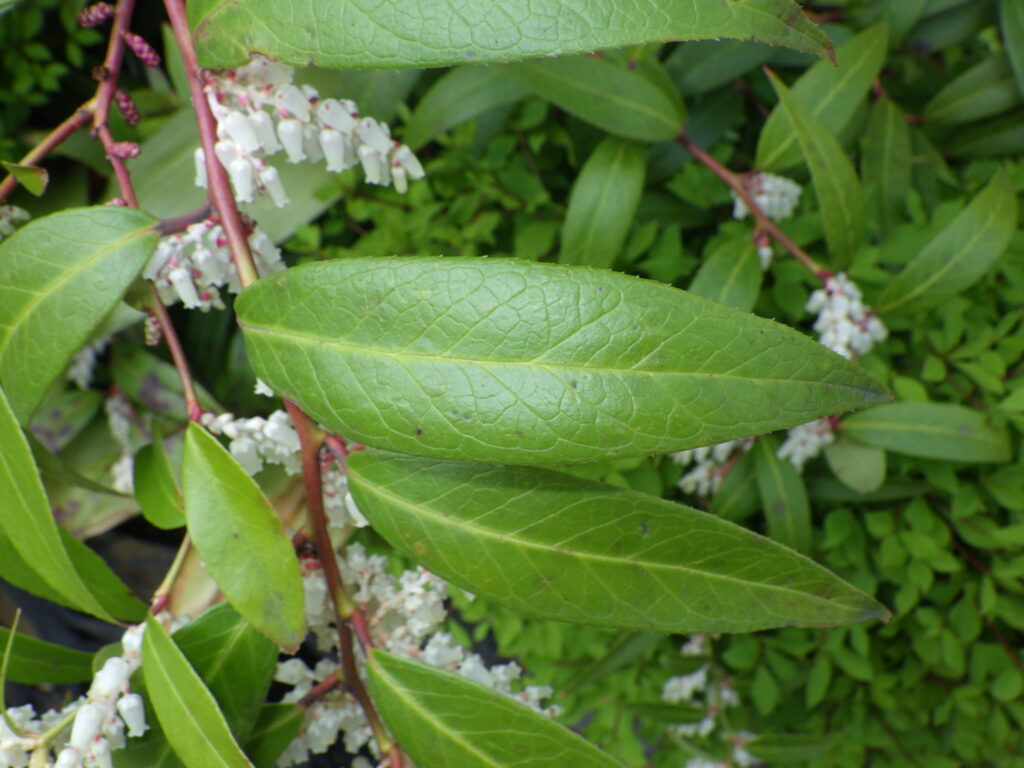
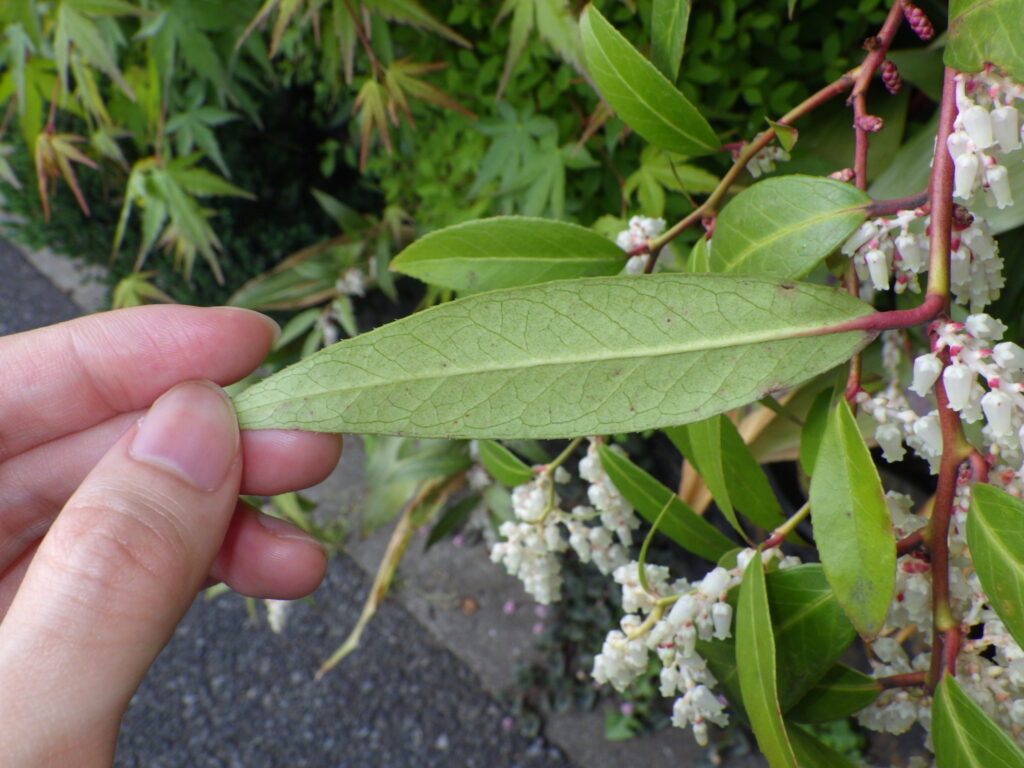
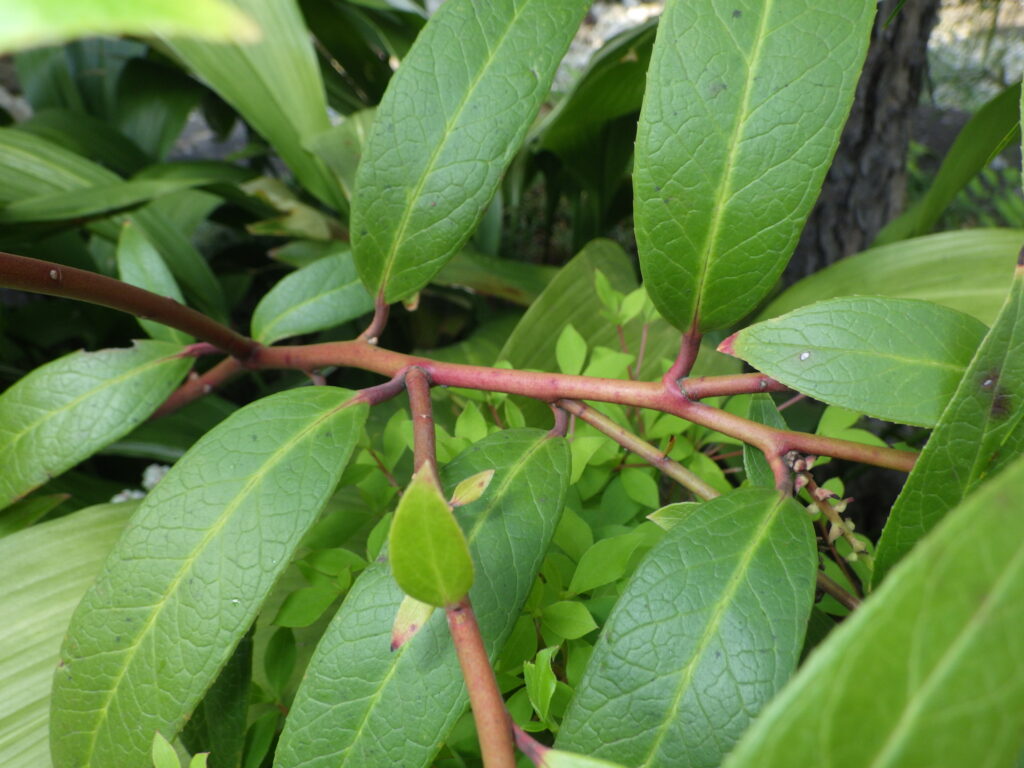
First, while the petioles of the common leucocephala (Iwanan) are hairless and green, those of American leucocephala (Axillaris) and leucocephala axillaris (Iwanan) are finely hairy and red.
Furthermore, while the underside of the leaves of Leucothoe japonica is hairless, Leucothoe americana has fine, brownish appressed hairs, and Leucothoe axillaris has hairless to sparsely hairy leaves.
Regarding the flowers, *Leucothoe japonica* has a few flowers, 1 to 7 per inflorescence, with large corollas measuring 17 to 23 mm and green calyxes, while *Leucothoe americana* and *Leucothoe axillaris* have many flowers, 8 to 60 per inflorescence, with small corollas measuring 5 to 8 mm and white calyxes.
It should be noted that another species of tree found in Japan , Leucothoe grayana, is completely different, with deciduous, papery leaves and prominently visible veins.
What are the differences between American rock jasmine and rock jasmine (Leucothoe axillaris)?
The problem lies in the difference between American leucothoe and axillaris leucothoe. These two are often confused on various websites. However, a look at an American botanical guide reveals the following differences (Flora of North America Committee, 2009).
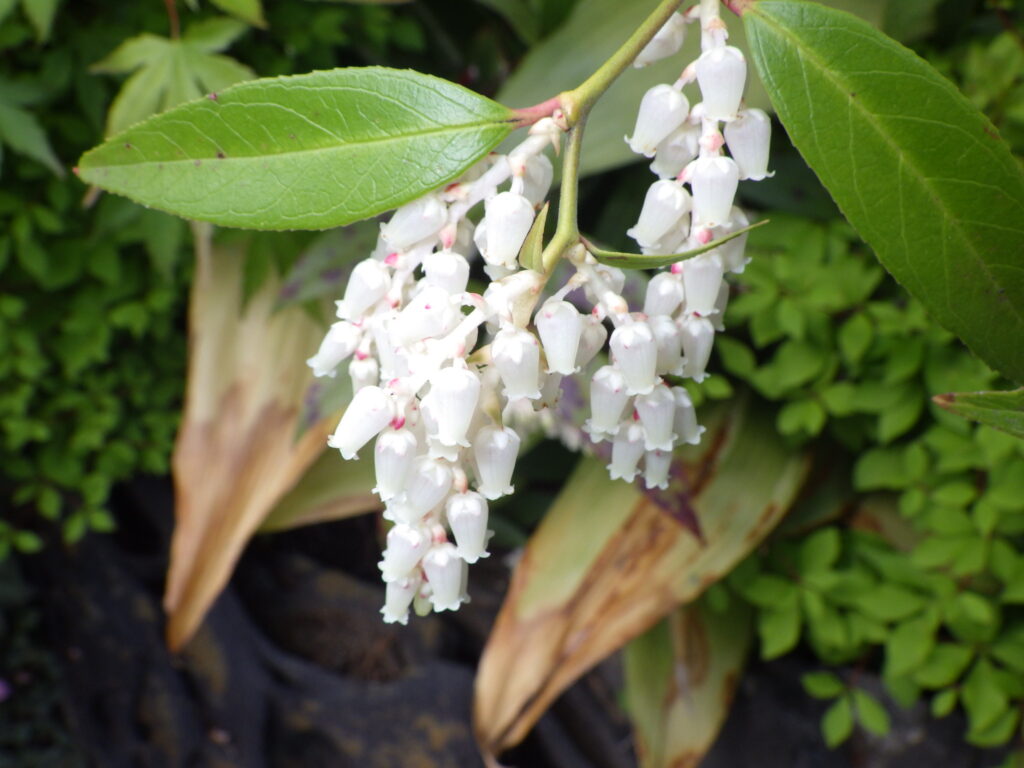
First, the identification key points out that in American rock jasmine, the sepals are lanceolate with acute or subacute tips and the inflorescence is 4-10 cm long, while in rock jasmine axillaris, the sepals are broadly ovate with obtuse or rounded tips and the inflorescence is 2-4 (-5) cm long.
However, the only way to distinguish between them is by their flowering period. I was also able to find differences in the leaves by comparing the descriptions.
Regarding the petioles, American rock jasmine has long petioles measuring 10-15 mm, while American rock jasmine has short petioles measuring 5-10 mm.
Furthermore, regarding the leaf tips, in American rock jasmine, the tips are acute to long-pointed, and some are quite close to caudate, whereas in rock jasmine axillaris, they are acute to abruptly short-pointed.
In addition to these, although there are exceptions, the varieties cultivated in Japan for American leucothoe are mostly variegated varieties such as 'Rainbow', while for axillaris leucothoe, many varieties change color in autumn. This could be a significant clue in Japan. However, I am still not sure how many true axillaris leucothoe varieties are actually cultivated.

What is the structure of a flower?
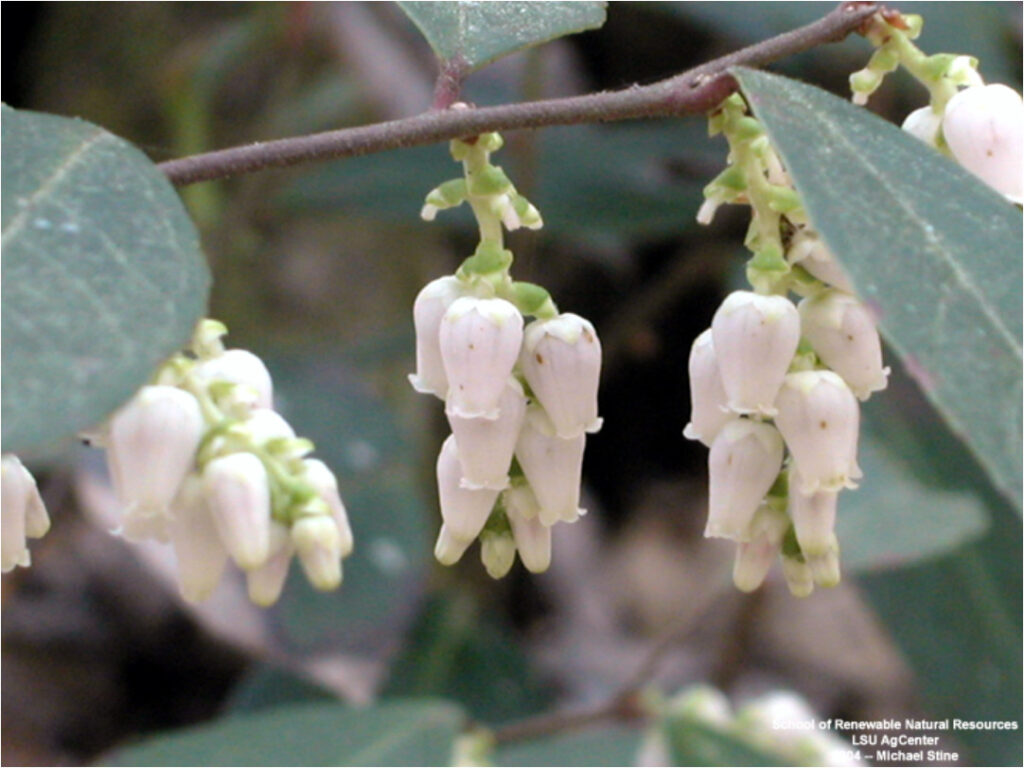
The genus Leucothoe shares a common characteristic with other plants in the Ericaceae family: a urceolate corolla (a type of urn-shaped corolla). As the name suggests, the corolla is modified to resemble a urn.
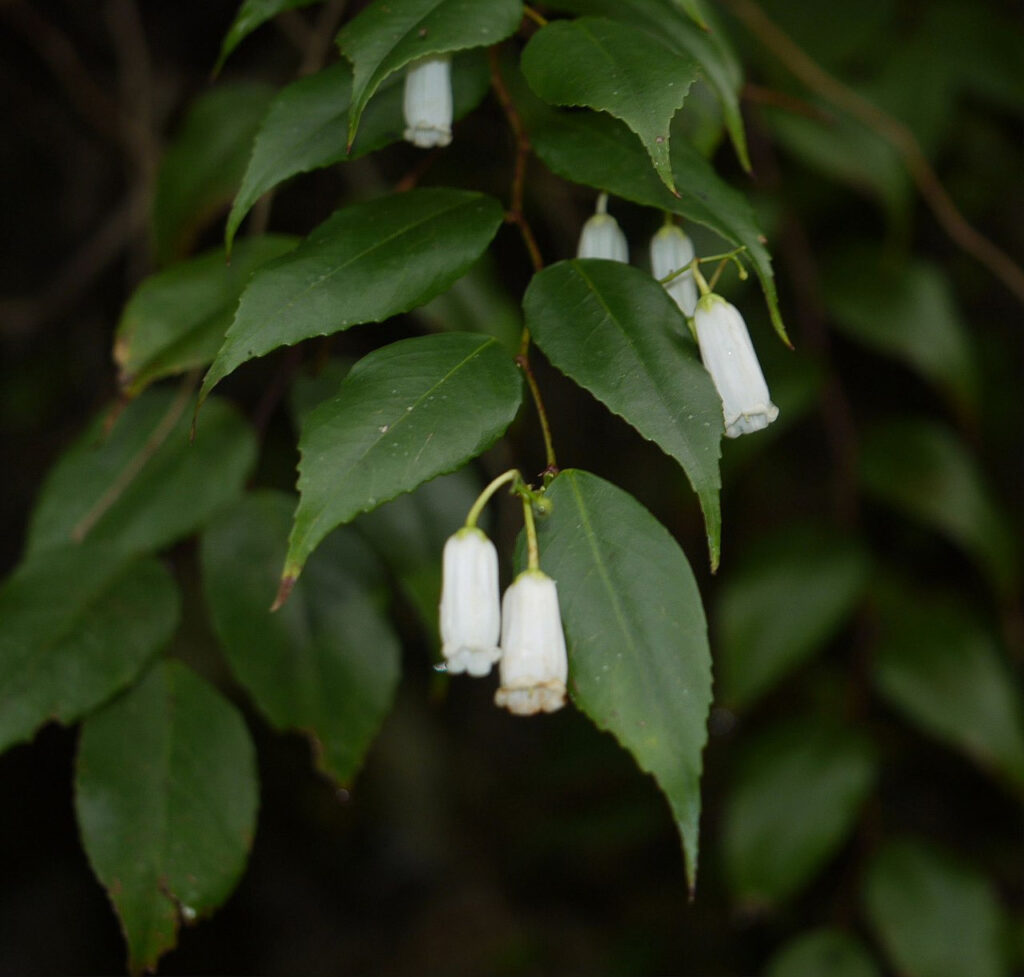
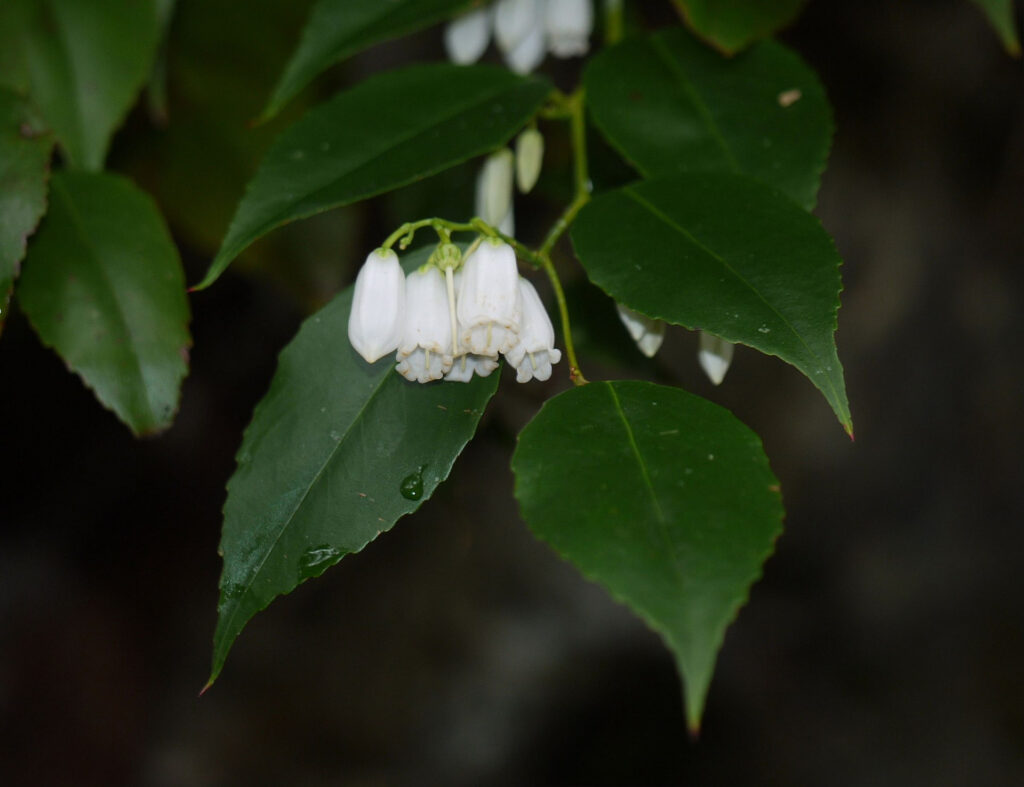
Leucothoe var. japonica blooms from July to August. The flower stalks emerge from the leaf axils of the previous year's branches, are 1-9 cm long, and bear 1-7 flowers in a raceme. The individual flowers hang downwards. The bracts are broadly ovate, 1 mm long, and the bracteoles are also broadly ovate, 1 mm long, with two at the base of the flower stalk. The flower stalk is 7-12 mm long. The calyx is 3 mm long, 5-lobed, with each lobe blunt at the tip and covered with fine hairs along the edges. The corolla is white and cylindrical, 17-23 mm long, with 5 lobes at the tip, each lobe curving backward. The style is 13-18 mm long. There are 10 stamens, and the filaments are densely covered with hairs. The anthers are bifurcated, each with an opening at the tip and two awn-like projections.
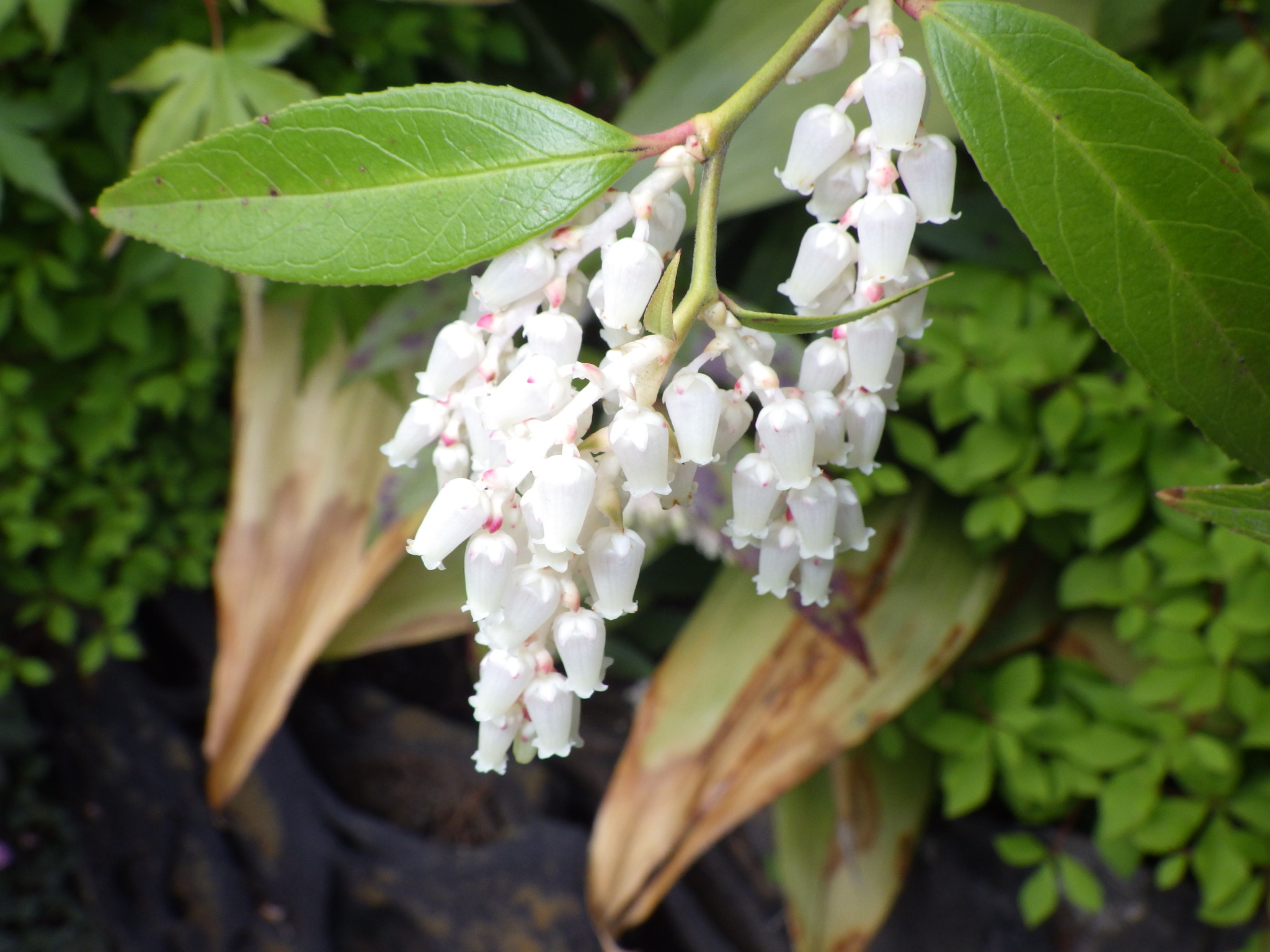
American rock jasmine blooms in mid-spring, and in Japan from April to May. The inflorescences are clustered or solitary, dense, without peduncles, and bear 20 to 60 flowers, measuring 4 to 10 cm in length. The bracts are persistent, ovate-triangular, and 1.7 to 2.2 mm long. The pedicels are 2 to 2.5 mm long. The flowers have white, lanceolate-ovate sepals, 1.7 to 2 mm long, with acute or nearly acute tips. The corolla is cylindrical, 5 to 7 mm long. The filaments are papillate (sometimes with spreading hairs). The anthers are 1.2 to 1.5 mm long, with the half-anthers spreading at the tip.
Leucothoe axillaris flowers from early to mid-spring. The inflorescence is fascicular or solitary, dense, without a peduncle, bearing 8 to 30 flowers, and measuring 2 to 4 (up to 5) cm in length. The bracts are deciduous, ovate, and 2 to 2.5 mm long. The pedicels are 2.2 to 2.5 mm long. The flowers have white, broadly ovate sepals, 1.5 to 2 mm long, with obtuse or rounded tips. The corolla is cylindrical, 6 to 8 mm long. The filaments are spreading and papillate. The anthers are 0.7 to 1.2 mm long, with two awns, and the upper part of the anthers is splayed.
How is pollination done?
The structure is clearly conspicuous to insects, suggesting that it is an insect-pollinated flower, but no research on visiting insects has been found in either Japan or the United States. However, the Ericaceae family generally limits its visiting insects to certain types of bees due to its downward-facing flowers, and the same may be true for the Leucothoe genus. It is intriguing to know what kinds of insects visit the small flowers of Leucothoe var. japonica.
What is the structure of the fruit?
The fruits of the genus Leucothoe are all capsules. A capsule is a type of dry fruit, and a single fruit consists of multiple fused, sac-like pericarps.
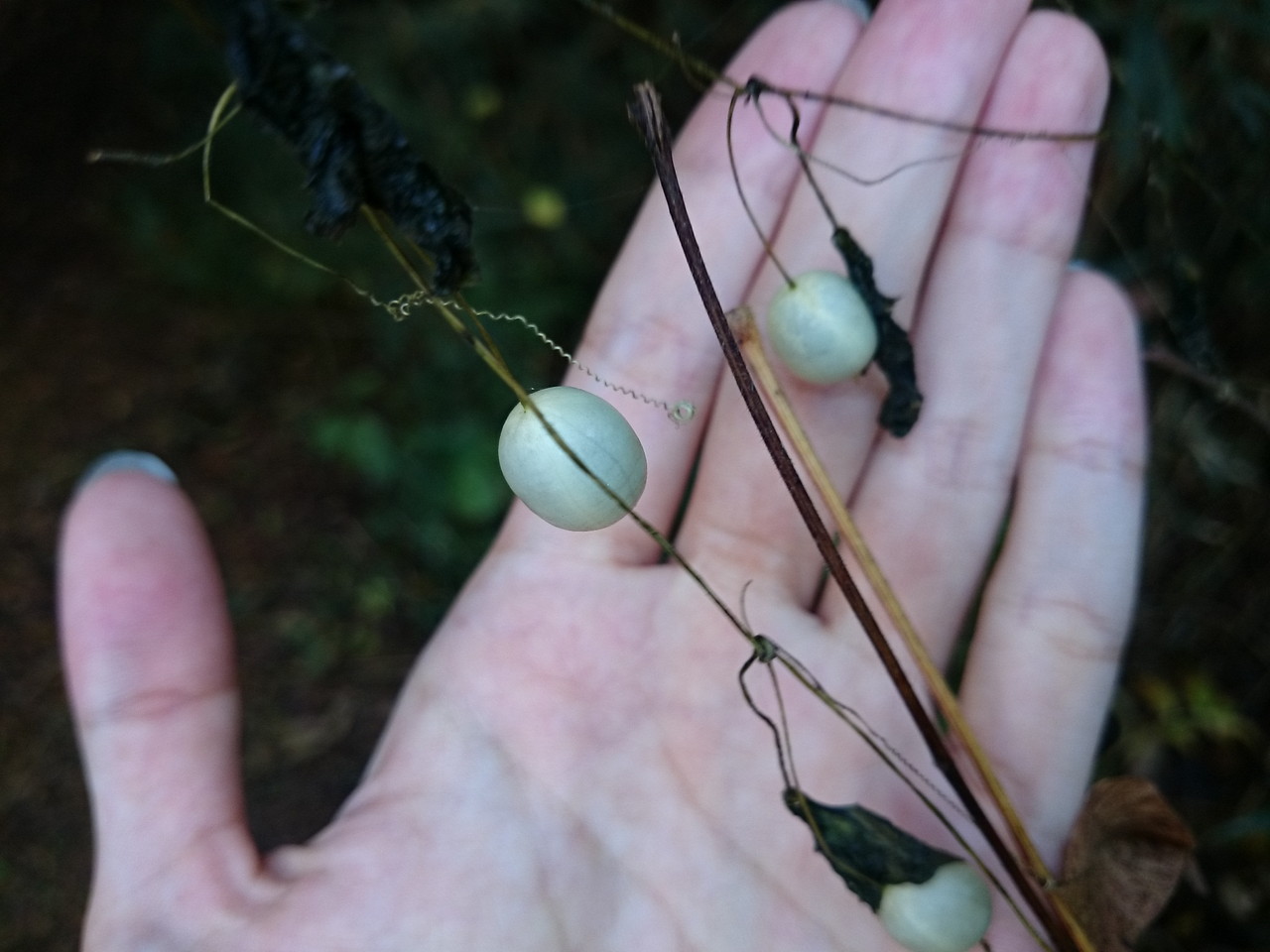
When the flowers of the Nandina domestica develop into fruit, the flower stalks thicken at the tip, curve, and point upwards. The capsules are flattened and spherical, with a diameter of 7 mm.
The capsules of American rock jasmine are 5-6 mm wide. The seeds are oval or oblong. The seed coat is hard and reticulated.
The capsules of Leucothoe axillaris are 4.5-5-6 mm wide. The seeds are angular. The seed coat is hard and papillate.
What are the seed dispersal methods?
Since capsules generally split open when ripe, exposing and scattering the seeds, gravity dispersal is likely a method of seed dispersal. In species with horn-shaped seeds, wind dispersal may also be a factor, and one Japanese study treated the related species, *Hypochaeris radicata*, as a wind-dispersing plant (Tsuyuzaki & Miyoshi, 2009). Similar possibilities seem likely for other species, but there has been little research on their dispersal capabilities.
References
Flora of North America Committee. 2009. Flora of North America (Vol. 12 Magnoliophyta: Paeoniaceae to Ericaceae). Oxford University Press, Oxford. 585pp. ISBN: 9780195340266
Hayashi, Masayuki. 2019. Tree Leaves: Expanded and Revised Edition - Identifying 1300 Species Through Real-Life Scans. Yama-kei Publishers, Tokyo. 824pp. ISBN: 9784635070447
Tsuyuzaki, S., & Miyoshi, C. 2009. Effects of smoke, heat, darkness and cold stratification on seed germination of 40 species in a cool temperate zone in northern Japan. Plant Biology 11(3): 369-378. https://doi.org/10.1111/j.1438-8677.2008.00136.x
Kanagawa Prefecture Flora Survey Association. 2018. Kanagawa Prefecture Flora 2018 (Electronic Edition). Kanagawa Prefecture Flora Survey Association, Odawara. 1803pp. ISBN: 9784991053726
Kitamura, Shiro & Murata, Gen. 1979. Illustrated Flora of Japan in Color: Woody Plants, Vol. 2. Hoikusha, Osaka. 630pp. ISBN: 9784586300501