Cucurbitaceae

Sponsored Link
plant

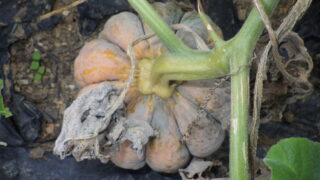
What are the differences between European pumpkins, Japanese pumpkins, and pepo pumpkins? European pumpkins are eaten in Japan, and Japanese pumpkins are eaten in the West! Were the fruits eaten by extinct animals!?

European pumpkins, Japanese pumpkins, and pepo pumpkins are all annual vining plants belonging to the Cucurbitaceae family, Cucurbita genus. Originally from the Americas, they are very popular in Japan, playing an important role in both everyday meals and Halloween celebrations. However, the three species are often confused, and their differences...
plant

What are the differences between snake gourd, yellow snake gourd, and wild gourd? We explain how to distinguish between similar species! Is the "creepy" appearance of the flowers a result of evolution?!

Trichosanthes cucumeroides, Trichosanthes cucumeroides, and Trichosanthes spp. all belong to the Trichosanthes genus of the Cucurbitaceae family. They are herbaceous plants that share several common characteristics: they produce large, fused-petal flowers with a finely divided corolla resembling lace, and they bear fairly large, yellow to red fruits for wild species. Trichosanthes cucumeroides and Trichosanthes spp....
plant

What are the differences between Gynostemma pentaphyllum, Cayratia japonica, and Hydrangea macrophylla (Amacha)? We'll explain how to distinguish between similar species! What are their uses? What is the structure of their flowers and fruits?

Amachazuru is a perennial vine that grows in mountainous areas and thickets in Japan, but it is often confused with Japanese knotweed (Yabugarashi) and amacha (sweet tea). Both Amachazuru and Yabugarashi have similar leaves (palm-foot compound leaves) and fruits (berries), and they are quite similar...
plant

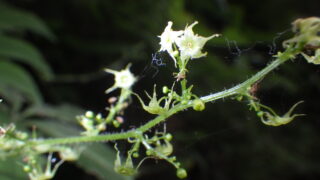
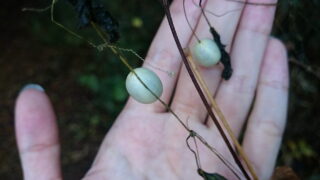
What are the differences between *Melophyllum uliginosum* and *Melophyllum okinawaense*? How do they differ from *Tricholoma cucumeroides* species? We'll explain how to distinguish between similar species! Is the pollination method unknown? Do birds like these cute fruits? Are they edible for humans?

Both *Melo serrulata* and *Melo okinawaensis* belong to the Cucurbitaceae family and are climbing annuals. Morphologically, they share similarities, including small flowers and smooth, hairless fruit surfaces. Furthermore, Google search suggestions are sometimes incorrect, making it difficult to distinguish between them without prior observation...
Sponsored Link