culture

Sponsored Link
Posts 25429 Featured Image Ergot Fungus Moth Honeydew fungi

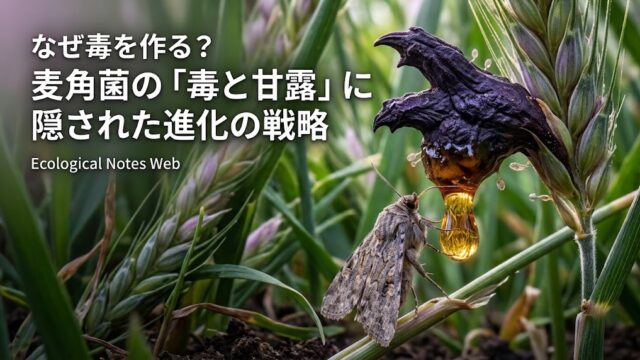
Why do ergot fungi produce toxins? Unraveling the evolution of ergot alkaloids from a biological perspective.

Ergot fungi are a type of fungus that infects grasses, including cereals. The ergot alkaloids produced by this fungus are known to be highly toxic substances that have strong physiological effects on humans and livestock. Historically, consuming rye and other plants contaminated with ergot fungi has caused symptoms such as convulsions and gangrene...
07.3928 Mugwort flower plant

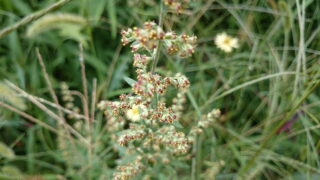
What are the differences between mugwort, wormwood (Artemisia princeps), bitter wormwood, and male wormwood? We'll explain how to distinguish between similar species! Did you know that mugwort is used not only in rice cakes but also in moxibustion and medicine?

Artemisia princeps, Artemisia japonica, Artemisia urticaria, and Artemisia japonica are all members of the Artemisia genus in the Asteraceae family, and are extremely common perennial herbs that dominate small vacant lots from urban areas to mountainous fields. In addition to having a cottony, fluffy underside to its leaves, it belongs to the Asteraceae family...
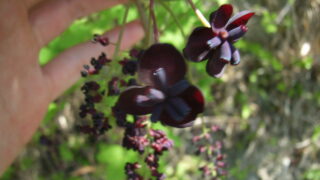
07.1157 Akebia trifoliata (female flower) plant

What are the differences between Akebia, Akebia trifoliata, Akebia quinata, and Stauntonia hexaphylla? We explain how to distinguish between similar species! Are the large female flowers a way to deceive insects? Who eats the fruit in the wild?

Akebia, Akebia trifoliata, Akebia quinata, and Stauntonia hexaphylla all belong to the Akebia family. They are climbing plants with palmately compound leaves, and a key characteristic is that male and female flowers bloom separately. Akebia and Akebia trifoliata, in particular, are famous for the edible white, gelatinous pulp inside their opened fruits. For many, it's a taste of the countryside from their childhood...
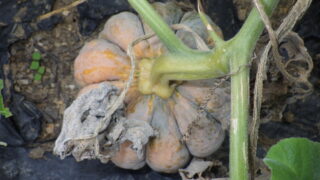
07.2024 Kikuza Pumpkin Fruit plant

What are the differences between European pumpkins, Japanese pumpkins, and pepo pumpkins? European pumpkins are eaten in Japan, and Japanese pumpkins are eaten in the West! Were the fruits eaten by extinct animals!?

European pumpkins, Japanese pumpkins, and pepo pumpkins are all annual vining plants belonging to the Cucurbitaceae family, Cucurbita genus. Originally from the Americas, they are very popular in Japan, playing an important role in both everyday meals and Halloween celebrations. However, the three species are often confused, and their differences...
Posts 18779 Featured Image Spice Myth Age Of Exploration plant

Is the theory that spices were used to mask the smell of rotten meat during the Age of Discovery a myth? A thorough explanation of the real reason.

I originally have a science background, but I enjoy reading world history content. I came across something interesting: the idea that spices (spices excluding stems, leaves, and flowers) don't have much antibacterial properties, and that "spices were used to mask the smell of rotten meat"...
Posts 18617 Featured Image Adlerian Psychology Scientific Evidence animal

Is Adlerian psychology dubious? A thorough examination using modern science to determine the extent of its scientific basis.

If we were to summarize Adlerian psychology in one sentence, it would be: "A psychology that fosters the ability to live in cooperation with others (community feeling) by choosing one's own life (self-determination), acting in accordance with one's purpose (teleology), and letting go of unnecessary control over others (separation of tasks)." However, his psychology...
Posts 16293 Featured Image Origin Of Rhythm And Meter animal

Why can humans move in rhythm? Unraveling the origins of 2/4, 4/4, and 3/4 time signatures from an evolutionary biology perspective.

When listening to music, singing, or dancing becomes a hobby, you naturally develop an interest in rhythm and time signatures. However, if you try to pinpoint the origins of this interest, you might find it difficult to answer. Often, we just naturally find ourselves moving to the rhythm...
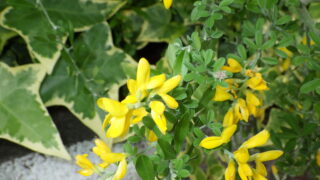
07.1492.a Broom (Cytisus scoparius) flower plant

What's the difference between broom and dwarf broom? We'll explain how to distinguish between similar species! Do the flowers "burst" to release pollen onto bees?!

Both *Cytisus scoparius* (Japanese broom) and *Cytisus scoparius* (dwarf broom) belong to the legume family and are classified under the genus *Cytisus* in Japanese classification. They are characterized by their small, trifoliate compound leaves and the yellow, butterfly-shaped flowers they produce in spring. While cultivated for ornamental purposes, *Cytisus scoparius* is sometimes sold under the name "Japanese broom"...
07.1974 Japanese Walnut (Pseudocarp) plant

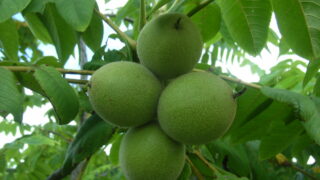
What are the differences between Japanese walnut, black walnut, dwarf walnut, and Japanese walnut? We'll explain how to distinguish between similar species! Did the hard fruit evolve specifically for squirrels and mice?!

Japanese walnut (Juglans mandshurica), Japanese walnut (Juglans regia), Japanese walnut (Juglans mandshurica), and Japanese walnut (Juglans rhoifolia) all belong to the Juglandaceae family and are deciduous trees characterized by odd-pinnately compound leaves with serrated edges. They grow in Japanese forests, and in the case of Japanese walnut, Japanese walnut, and Japanese walnut, the so-called "walnut nuts" are found inside the false fruits and hard fruits...
07.2861 Deutzia gracilis (inflorescence) plant

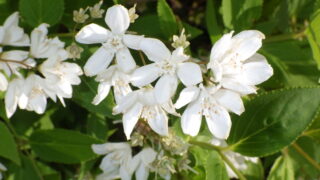
What are the differences between Deutzia, Deutzia crenata, and Deutzia gracilis? We'll explain how to distinguish between similar species! Could Deutzia be the origin of hedges?

Deutzia, Deutzia gracilis, and Deutzia crenata all belong to the Deutzia genus of the Hydrangeaceae family. It is believed that their name, "Utsugi" (hollow tree), comes from the fact that, except for the young branches, the inside of the branches is hollow. In Japan, they have a history of being planted as a guide for rice planting, and are also said to be the origin of hedges...
Sponsored Link