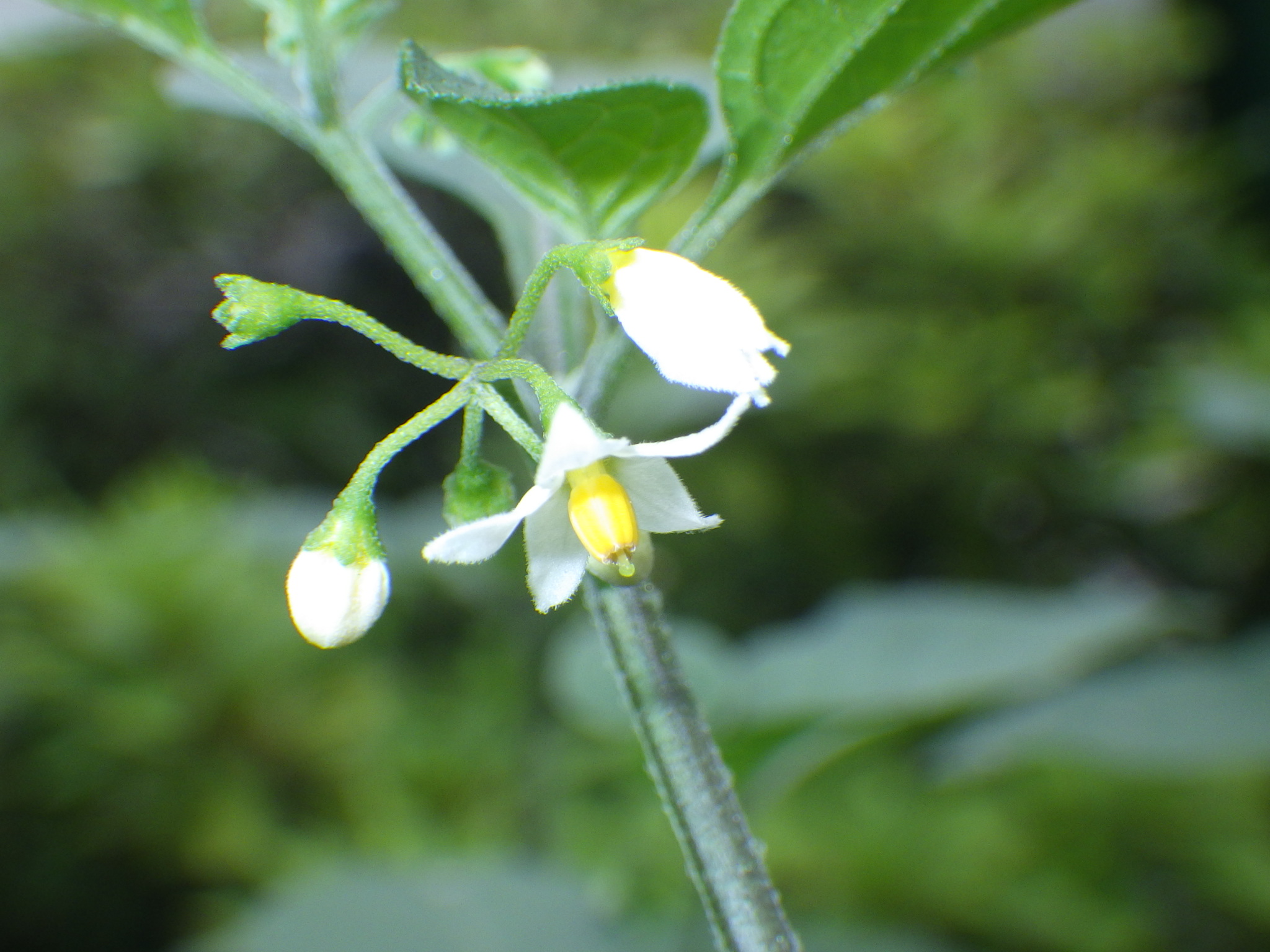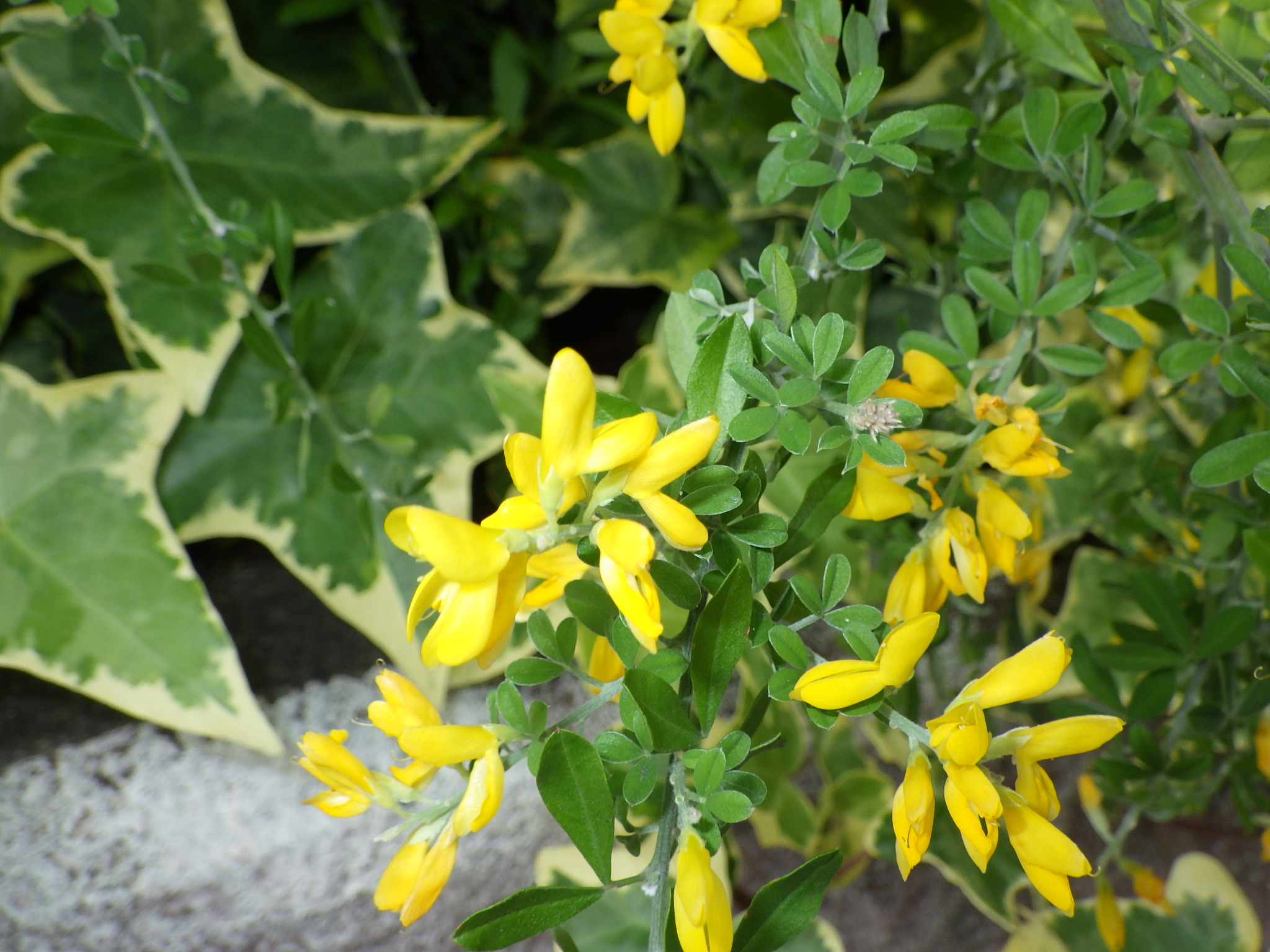
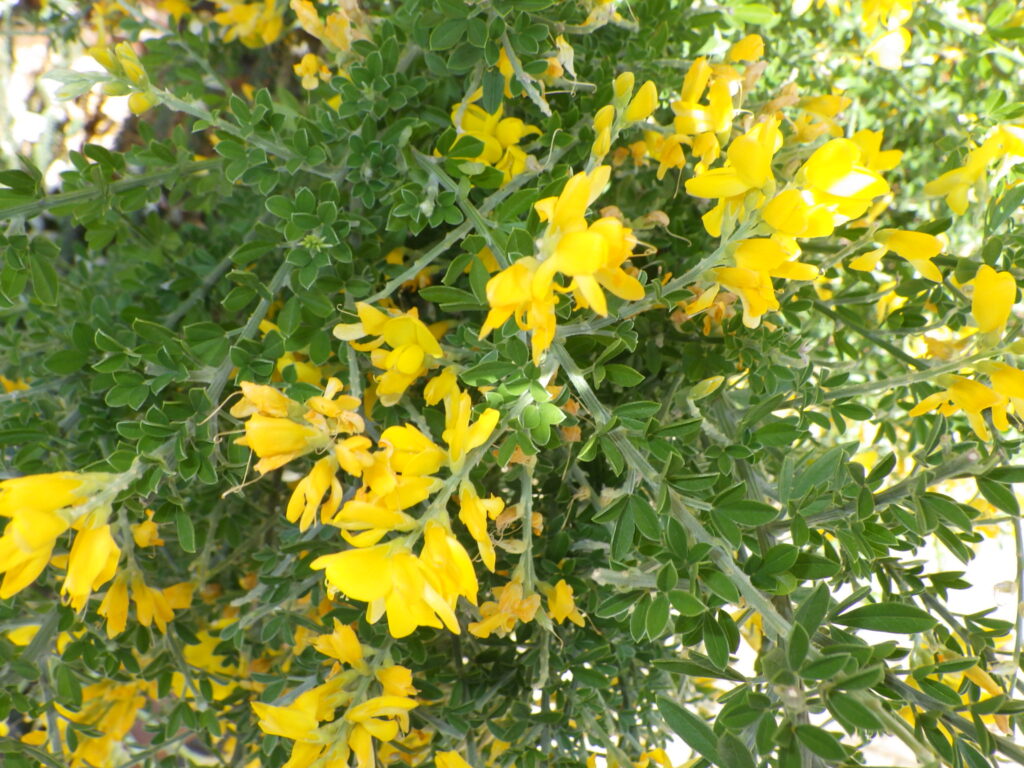
Both Japanese broom (Cytisus scoparius) and dwarf broom (Cytisus erythrosora) belong to the legume family and are classified under the genus Cytisus in Japan. They are characterized by their small, trifoliate compound leaves and yellow, butterfly-shaped flowers that bloom in spring. In horticulture, they are cultivated for ornamental purposes, but dwarf broom is increasingly being sold under the name "Japanese broom," leading to more confusion. However, there is a crucial difference in the leaves, and checking this will prevent any mistakes. Japanese broom flowers are known to "burst" to release pollen onto bees. This article will explain the classification, morphology, and ecology of the genus Cytisus.
What are Broom and Cryptomeria japonica?
Cytisus scoparius, also known as broom or scoparius, is a deciduous shrub native to Europe that is cultivated worldwide for ornamental purposes and sometimes escapes cultivation. In Japan, it is commonly cultivated in gardens as an ornamental plant and sometimes escapes cultivation and becomes naturalized (Hayashi, 2019).
Genista x spachiana, also known as dwarf broom (Genista canariesis), is an evergreen shrub that is a horticultural hybrid of Genista canariesis and Genista stenopetala, native to the Canary Islands (off the northwest coast of Africa, a Spanish territory) (Sheppard et al., 2006). While the Ylist uses the scientific name Cytisus x spachianus, it is generally classified under the genus Genista. It is grown in warmer climates as a potted plant or garden tree.
Both belong to the legume family and are classified under the genus *Cytisus* in Japanese classification. They are characterized by having small, trifoliate compound leaves and producing yellow, butterfly-shaped flowers in the spring.
The Japanese name, originally genst or ginst in Dutch (derived from the Latin genista), was introduced to Japan during the Kyoho era of the Edo period. In Dutch studies books, it began to be written as enista, which later became enisuda with a voiced consonant, and the form genisuda appeared later, but ultimately it became enishida (Maeda, 2005).
Both are cultivated as ornamental plants in gardens, but many people may not be able to distinguish between the two species. The dwarf broom (Cytisus scoparius) is increasingly being sold under the name "Broom," leading to more confusion. They originate from different regions and are completely different species, so we want to reduce such misunderstandings.
What is the difference between Broom (Cytisus scoparius) and Dwarf Broom (Cytisus scoparius)?
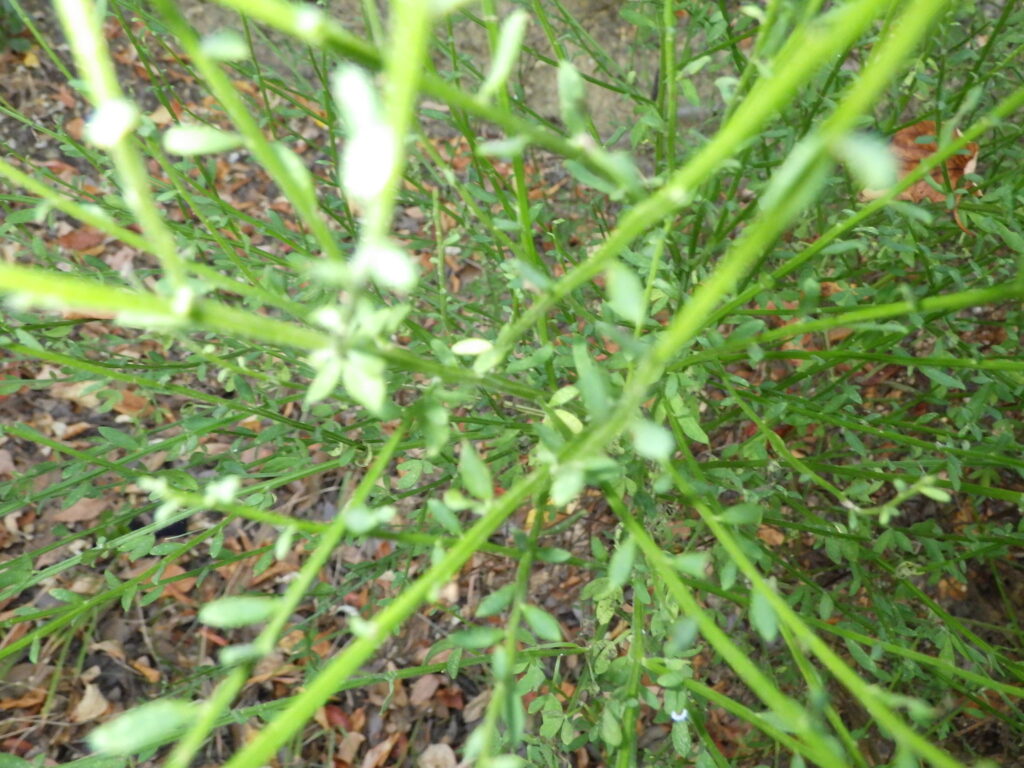
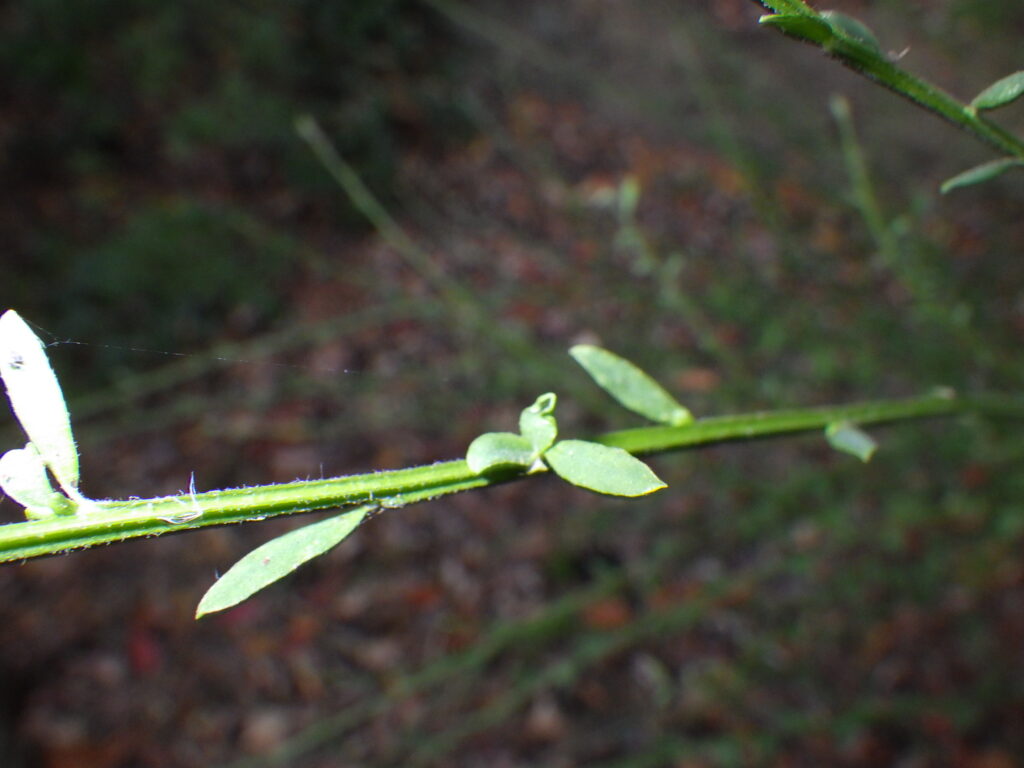
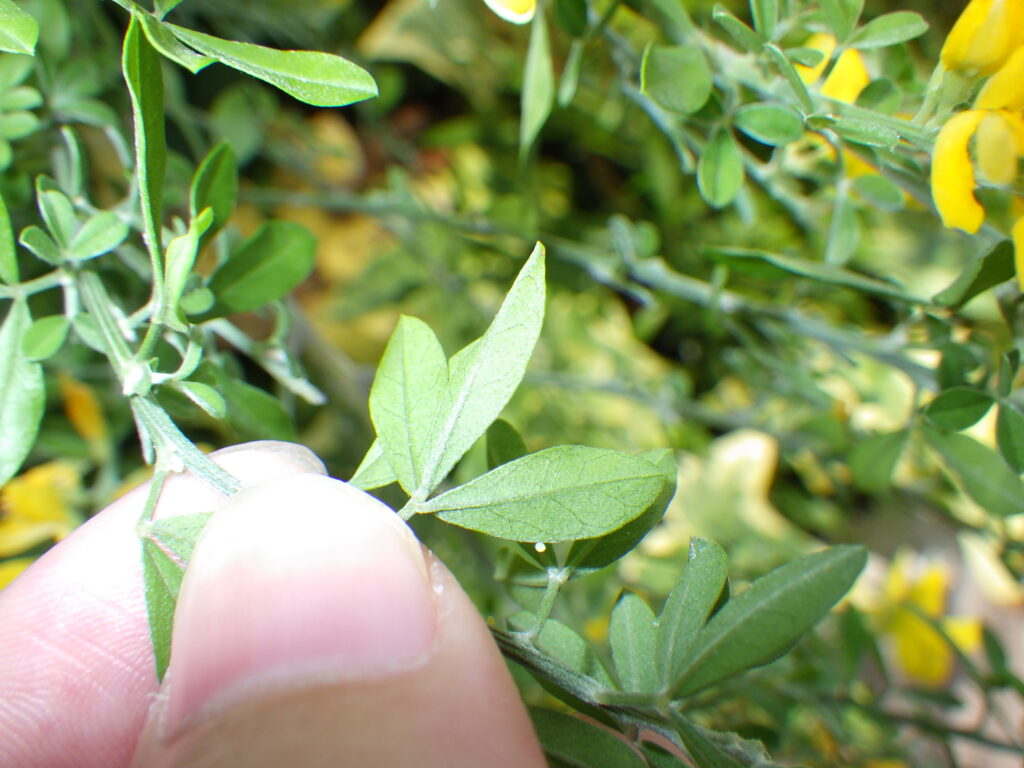
The main difference between broom (Cytisus scoparius) and dwarf broom (Cytisus scoparius) lies primarily in their leaves (Hayashi, 2019).
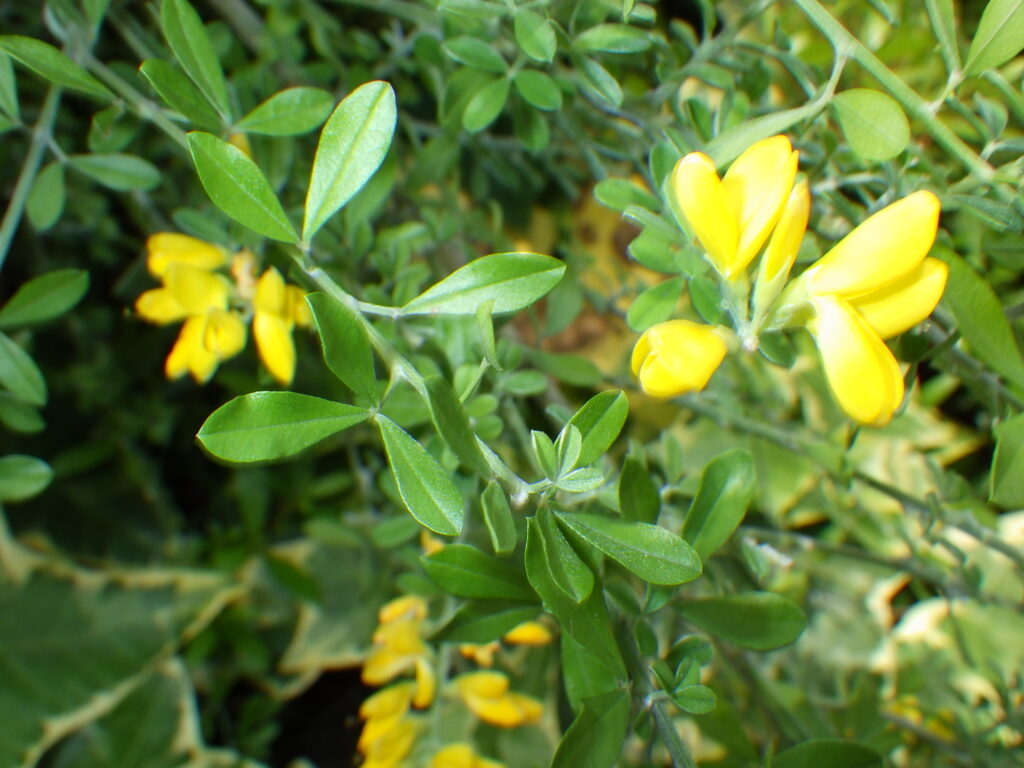
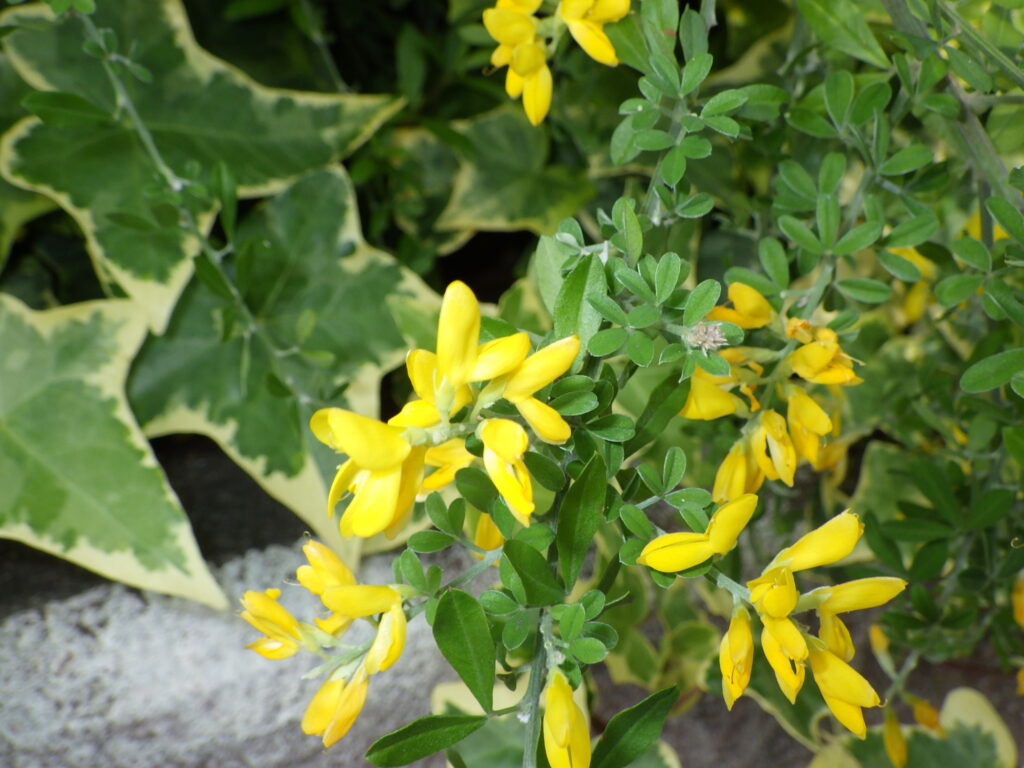
Specifically, in broom (Cytisus scoparius), many leaves lack petioles, and there is a mixture of trifoliate and undivided leaves. The leaf tips are pointed, there are few hairs, and the leaves are dark green. In contrast, dwarf broom (Cytisus scoparius) has distinct petioles, only trifoliate leaves, the leaf tips are rounded, there are many hairs, and the leaves are light green.
Overall, broom (Cytisus scoparius) has a stiff appearance, and its leaves often grow straight upwards at an angle, but dwarf broom (Cytisus scoparius) has a softer appearance, and its leaves tend to droop.
Among the broom species, there is also the red-cheeked broom, Cytisus scoparius 'Andreanus', which has red keel petals on its flowers.
Currently, perhaps because of the abundance of flowers, the number of dwarf broom plants has increased considerably.
The "Ginette" in Plantagenet's name refers to the broom plant!?
Broom (Cytisus scoparius) has strong ties to European culture, and its yellow flowers are known as "golden flowers," highly valued for their beauty and hardiness.
The Plantagenet dynasty, which ruled England from 1154 to 1399, began when Henry II, Count of Anjou, of France, ascended to the English throne. The name Plantagenet comes from the French word "plante genêt," meaning "broom plant," and the word "genêt" comes from the Latin word "genista," meaning "broom."
As mentioned above, the Japanese word "enishida" can also be traced back to "genista," so they actually share the same etymology.
There are several theories as to why the name of the royal family was used for the broom plant. The most famous is that it was the nickname of Geoffrey V, Count of Anjou, the father of Henry II, Count of Anjou, and that he wore a broom plant in his hat.
While it is confirmed that it was a nickname for Geoffrey V, Count of Anjou, the story of him "wearing a broom in his hat" only became popular in the 16th and 17th centuries, and its etymological basis is weak. It has been suggested that it may have spread as a symbolic interpretation in later times (Plant, 2007).
One paper that points this out argues that while the possibility of using broom as a stab cannot be ruled out, it may have been used as a symbol of strong vitality, growth, and reproductive power, given its hairy buds and sturdy branches.
How is it pollinated? Do broom flowers "burst"?!
The pollination method of broom is typical of legumes, with butterfly-shaped flowers, and it is an insect-pollinated flower like other legumes (Tanaka and Hirano, 2000; Tanaka, 2001).
However, the pollination method is slightly different.
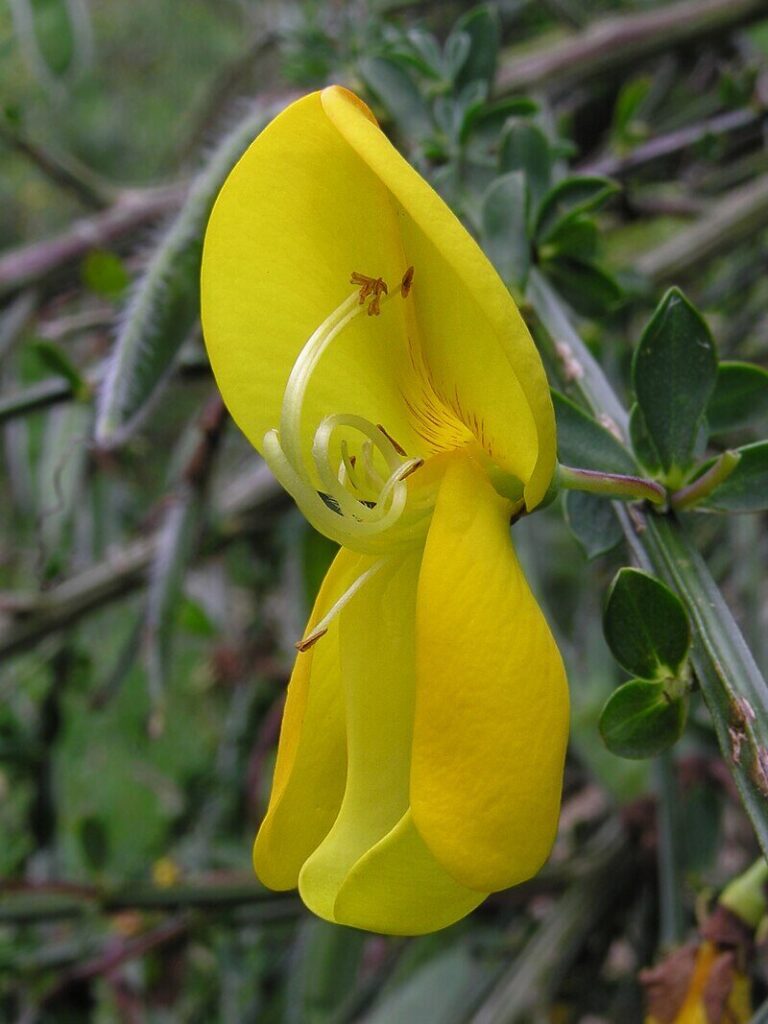
Butterfly-shaped flowers are divided into the standard petal (upper petal) and the wing petals (outer petals) and keel petals (inner petals) of the lower petals, and it is known that the wing petals reflect ultraviolet light.
In other words, while it appears as a uniformly yellow flower to humans, insects see the underside of the flower as having color.
Bees such as bumblebees, honeybees, and long-horned bees recognize these as nectar guides and are attracted to them, attempting to drink the nectar. However, broom flowers actually do not contain nectar.
The bee uses its middle and hind legs to brace itself on the keel petal of the broom flower, and this stimulation causes the keel petal to suddenly burst open, slamming the stamens and pistil that were contained within in a spring-like structure.
In this way, the broom plant successfully pollinates bees by sprinkling pollen from the tips of its stamens onto them, and by allowing pollen from other bees on their backs to adhere to the brooms.
It might seem that the lack of nectar is a disadvantage for the bees, but pollen is an important source of protein, so it's likely that the bees come specifically for this purpose.
References
Hayashi, Masayuki. (2019). Tree Leaves: Expanded and Revised Edition - Identifying 1300 Species Through Real-Life Scans. Yama-kei Publishers. ISBN: 9784635070447
Maeda, Tomoki. 2005. The Complete Dictionary of Japanese Etymology. Shogakukan. ISBN: 9784095011813
Plant, JS (2007). The tardy adoption of the Plantagenet surname. Nomina, 30, 57-84. ISSN: 0141-6340, https://www.snsbi.org.uk/Nomina_articles/Nomina_30_Plant.pdf
Sheppard, A., Haines, M., & Thomann, T. (2006). Native-range research assists risk analysis for non-targets in weed biological control: the cautionary tale of the broom seed beetle. Australian Journal of Entomology, 45 (4), 292-297. https://doi.org/10.1111/j.1440-6055.2006.00553.x
Tanaka, Hajime. (2001). Flowers and Insects: A Collection of Discoveries of Mysterious Deception. Kodansha. ISBN: 9784062691437
Tanaka, Hajime & Hirano, Takahisa. (2000). The Face of Flowers: Wisdom for Bearing Fruit. Yama-kei Publishers. ISBN: 9784635063043