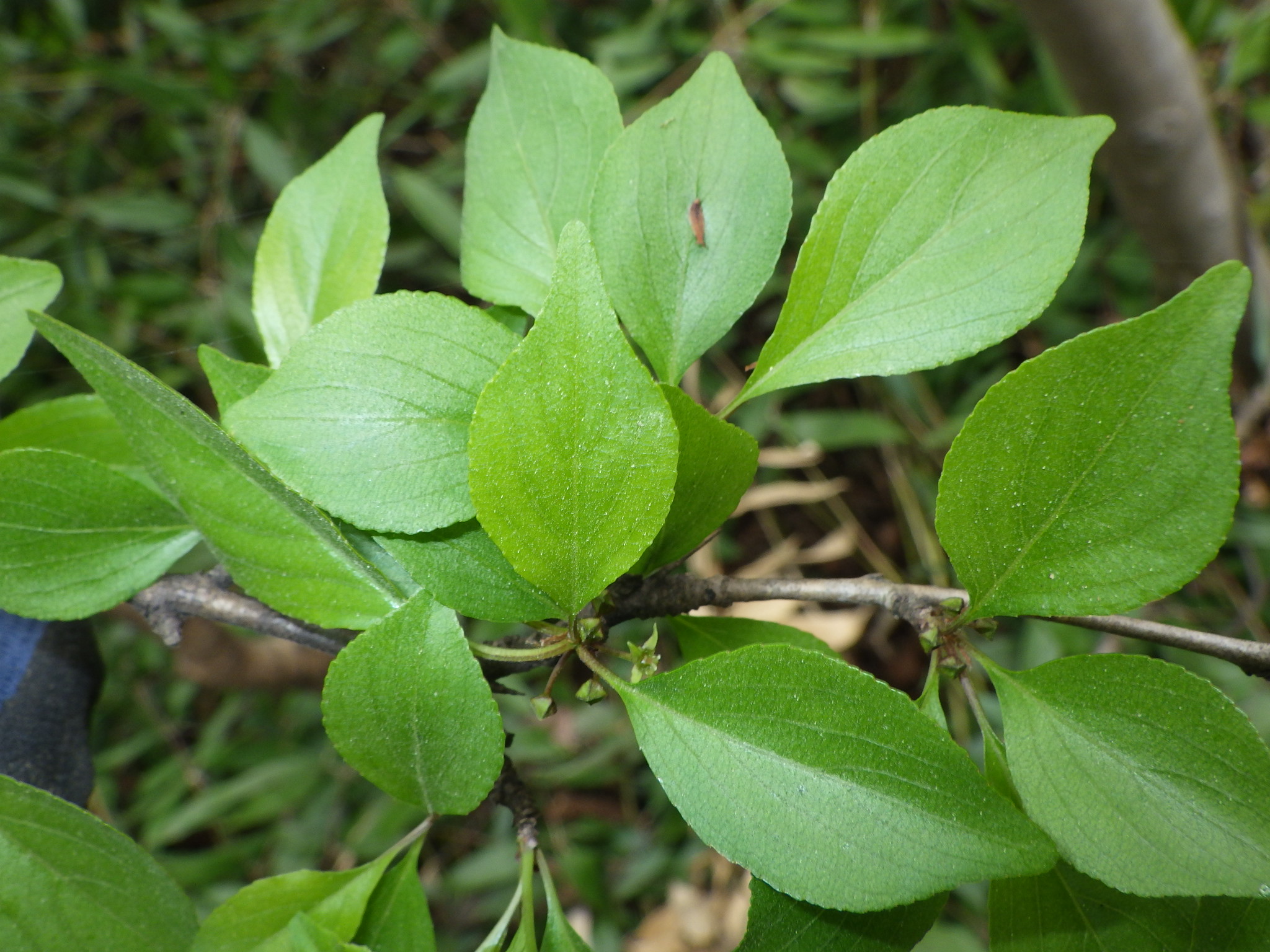
Both Mallotus japonicus and Mallotus japonicus are deciduous trees belonging to the Euphorbiaceae family and share the characteristic of having extrafloral nectaries at the base of their leaves. Therefore, it can be difficult to distinguish between them. Also, the Japanese name "Akamegashiwa" contains the word "kashiwa," which may make you wonder about its relationship to oak. However, oak is a completely different species belonging to the Fagaceae family, so the only commonality is that they were used in the same way. Mallotus japonicus and Mallotus japonicus can be clearly distinguished by differences in the shape and color of various parts of their leaves, such as the presence or absence of stellate hairs. The flowers have no petals, and the male flowers are white. The fruit is a capsule. This article will explain the classification and morphology of Mallotus japonicus and Mallotus japonicus.
- What are *Mallotus japonicus* and *Mallotus japonicus*?
- What is the difference between Mallotus japonicus and Quercus dentata?
- What are the differences between Mallotus japonicus and Mallotus japonicus?
- What is the structure of a flower?
- How did they pollinate? They used both wind and bumblebees!?
- What is the structure of the fruit?
- How do they disperse their seeds? They're incredibly popular with various birds!?
- References
What are *Mallotus japonicus* and *Mallotus japonicus*?
Mallotus japonicus, also known as Akamegashiwa (red-budded oak), is a deciduous tree distributed in Honshu (south of Akita Prefecture), Shikoku, Kyushu, and the Ryukyu Islands in Japan, as well as in China. It grows in bright areas such as logging sites, landslide areas, and forest edges (Mogi et al., 2000; Kanagawa Prefecture Flora Survey Association, 2018).
Alchornea davidii, also known as large-leaved red oak, is a deciduous shrub distributed in China, growing in valleys, streams, river slopes, and deciduous forests (Wu et al., 2008). In Japan, it is cultivated somewhat rarely as a garden tree or park tree because of the beauty of its young leaves when it sprouts, and it occasionally grows wild in barren areas, forming colonies (Hayashi, 2019).
All of them are deciduous trees belonging to the Euphorbiaceae family, and they share the common characteristic of having "extrafloral nectaries" at the base of their leaves.
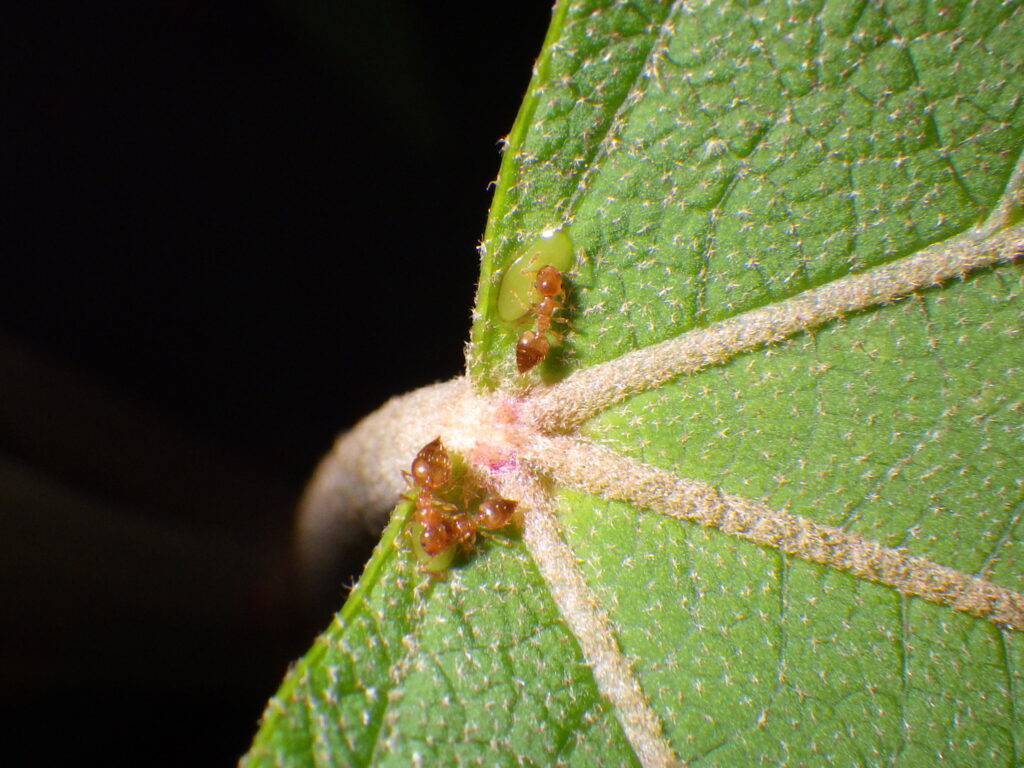
Extrafloral nectaries are glands that secrete nectar in parts of the plant other than the flower itself. They usually secrete nectar as food, attracting ants and driving away parasites (in this case, herbivorous insects) that attach to the plant's body (Yamao & Hata, 2014). Ladybugs can often be seen visiting these nectaries on Mallotus japonicus.
In addition, the leaf shape can be very similar if the margins are entire, which may make identification difficult.
What is the difference between Mallotus japonicus and Quercus dentata?
Since it has the name "Akamegashiwa," some people might be curious about its relationship to "Kashiwa" (oak).
The Japanese name Akamegashiwa is said to originate from the fact that its new shoots are red and that, like the leaves of the oak tree, they were used to hold or wrap food.
However, *Mallotus japonicus* and *Quercus dentata* are completely different species.
Quercus dentata belongs to the genus Quercus in the family Fagaceae, and as mentioned above, it is completely different from Mallotus japonicus, which belongs to the family Mallotustaceae.
Furthermore, while the fruit of the Japanese oak (Quercus acuta) is a type of nut called an acorn, the fruit of the Japanese red oak (Mallotus japonicus) is not.
Furthermore, while oak trees prefer to inhabit high altitudes such as hilly areas and mountainous beech forest zones, making them rarely seen, red oak trees can be frequently found in lowlands.
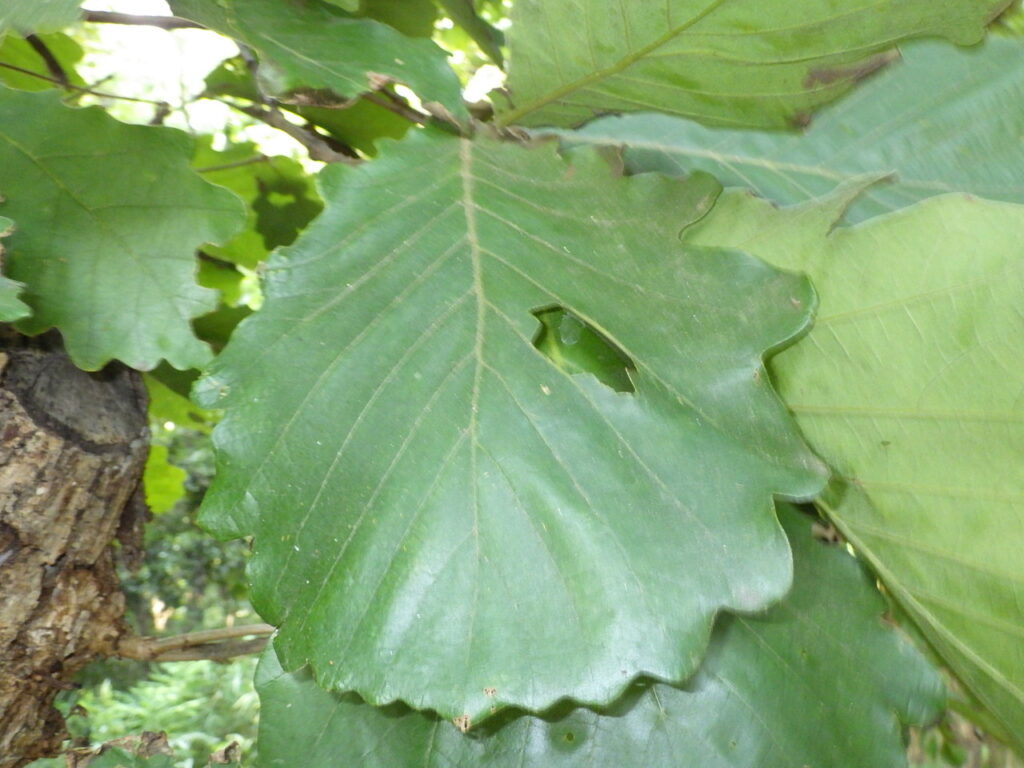
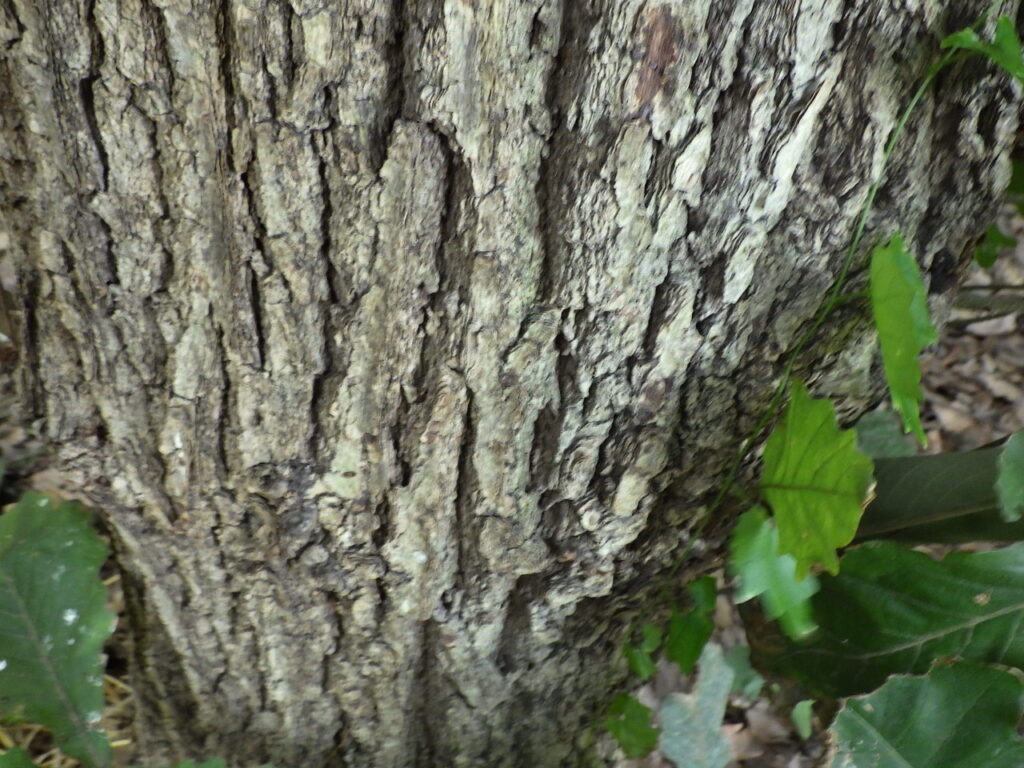
What are the differences between Mallotus japonicus and Mallotus japonicus?
Many differences can be observed between Mallotus japonicus and Mallotus japonicus.
First, while *Mallotus japonicus* belongs to the genus *Mallotus japonicus*, *Mallotus japonicus* belongs to the genus *Mallotus japonicus*, so it can be expected that there are significant morphological differences.
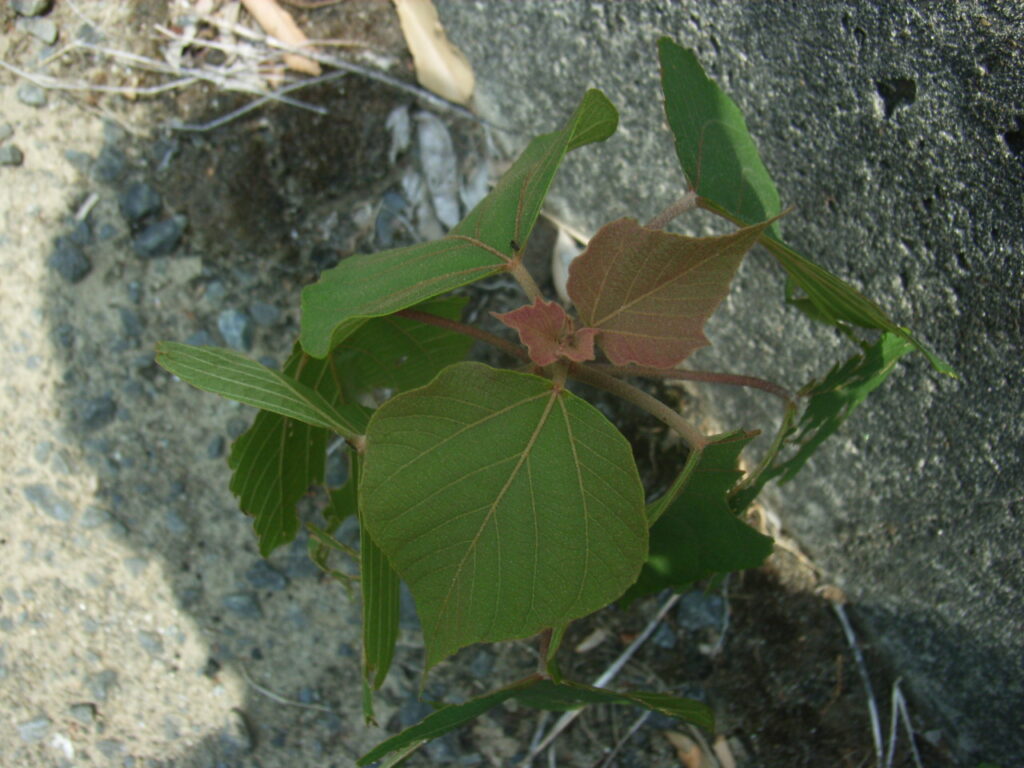
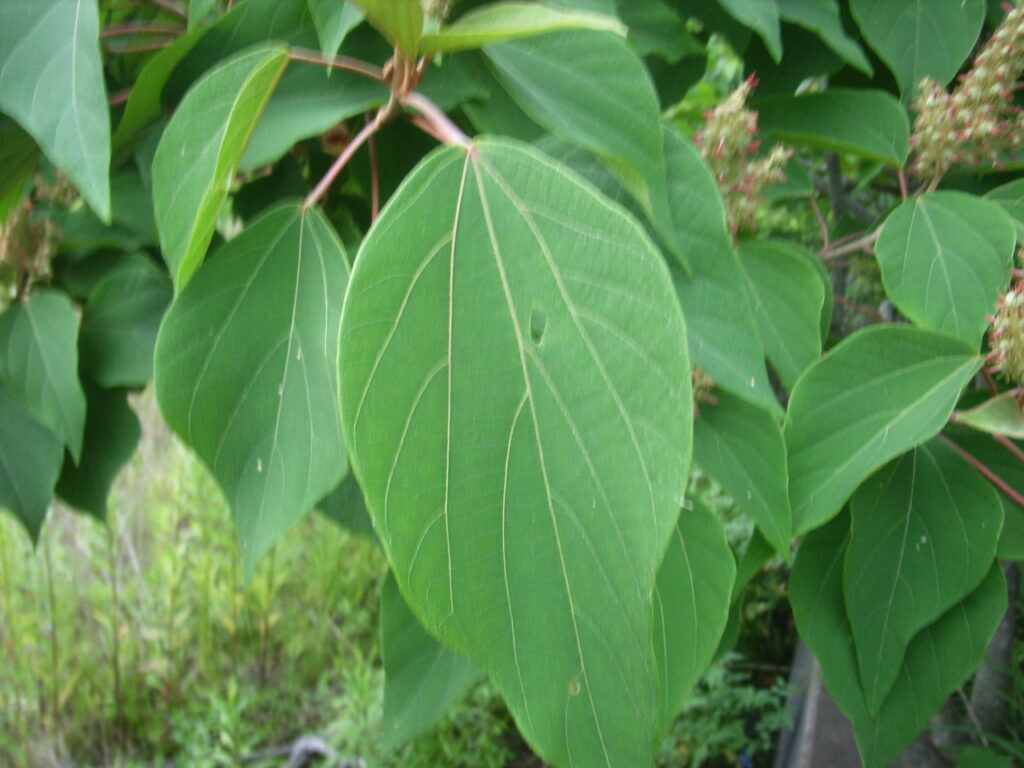
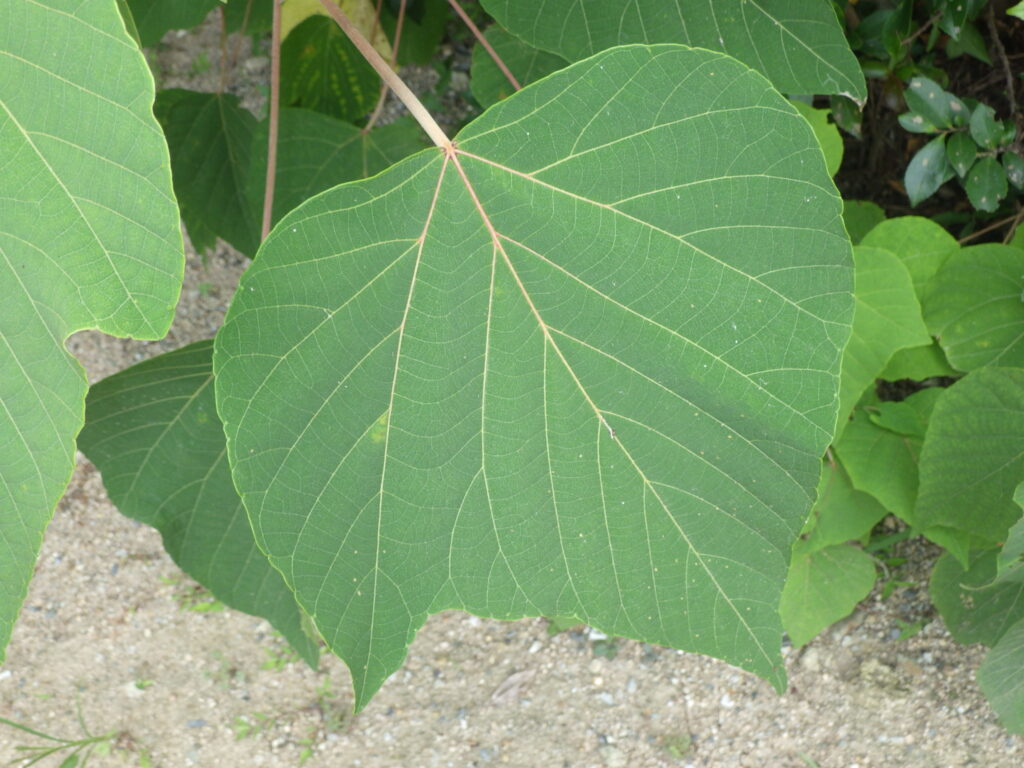
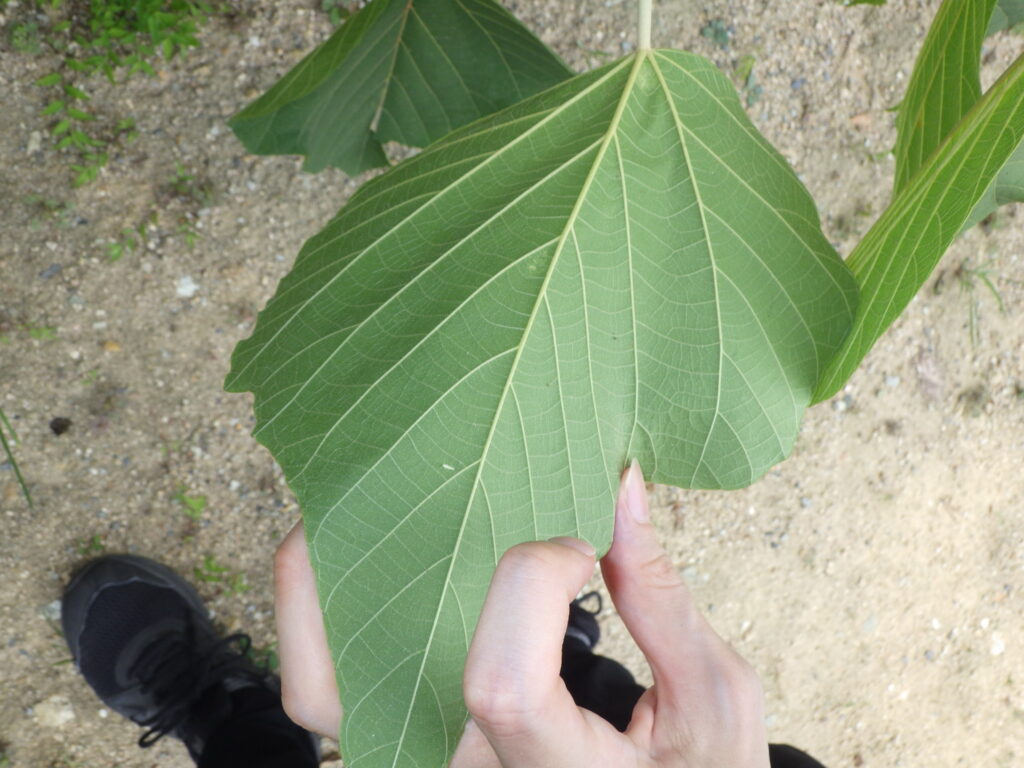
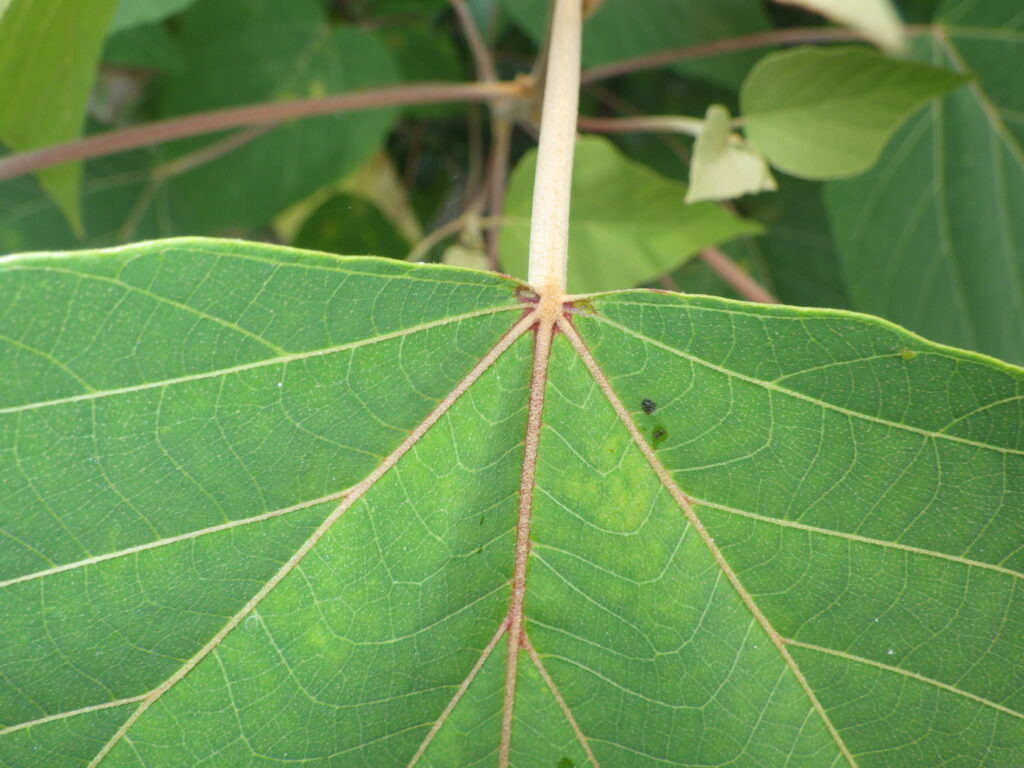
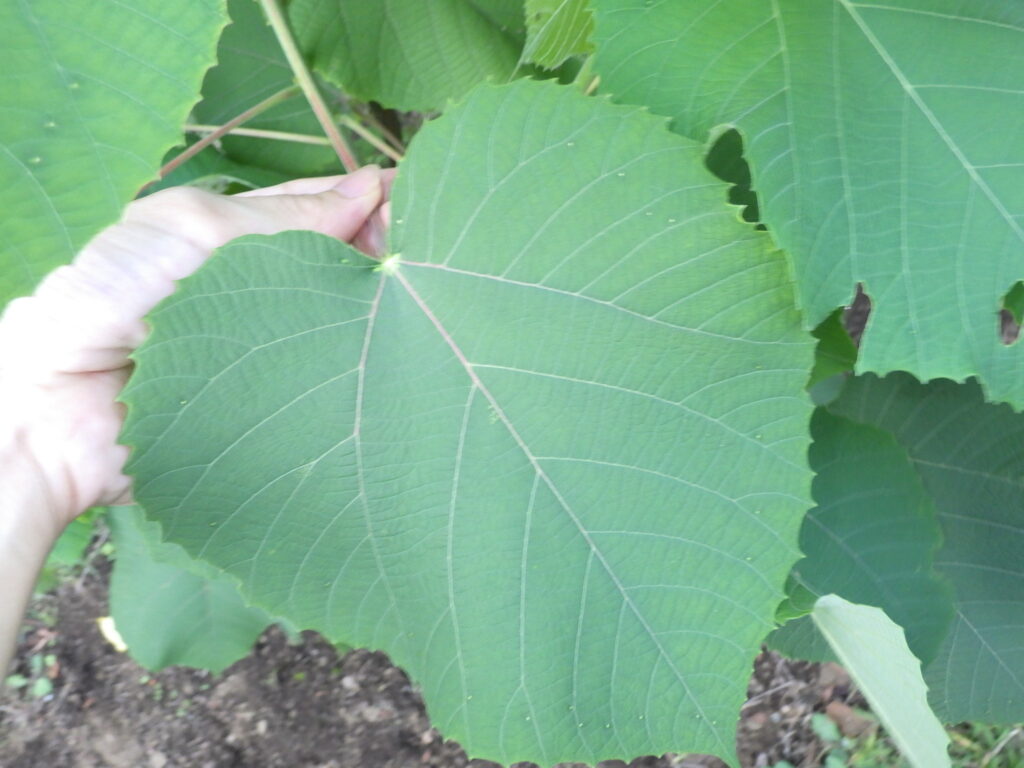
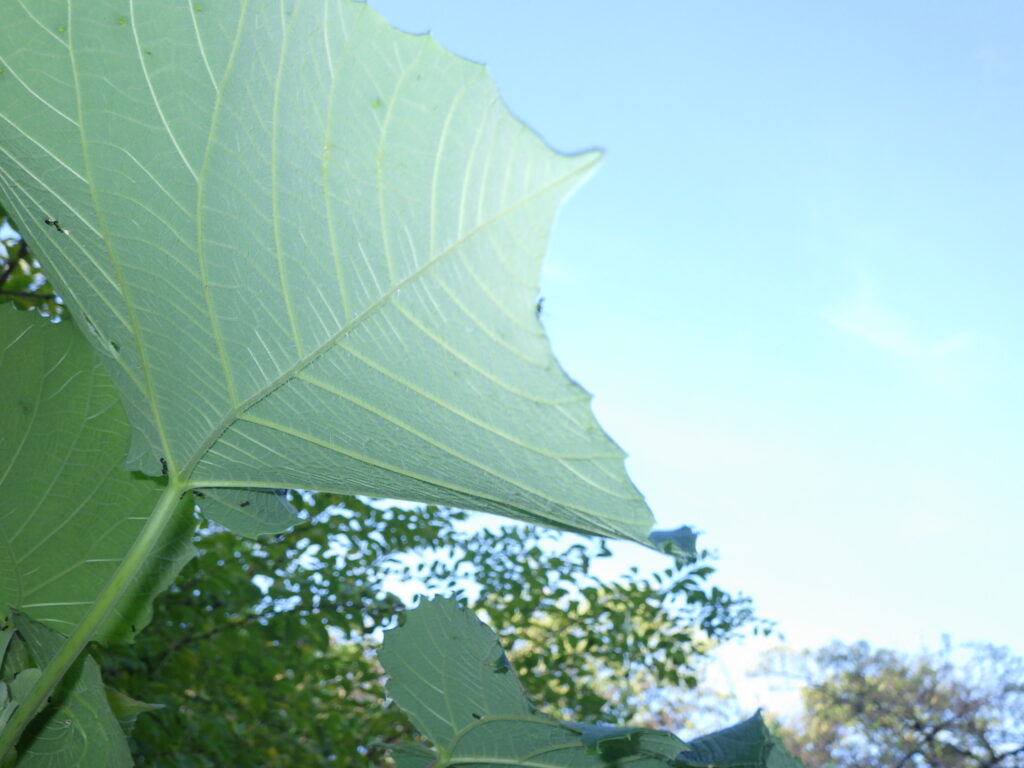
Specifically, the difference is that *Mallotus japonicus* has stellate hairs (trichomes) on its young branches and leaves, while *Mallotus japonicus* has hairs, but lacks stellate hairs on its young branches and leaves. It's a little hard to see, but the brown hairs on the veins and petioles of *Mallotus japonicus* are the stellate hairs.
Furthermore, the hairs (trichomes) on the surface of Mallotus japonicus are thought to be a physical defense trait against herbivorous insects, and on the underside of the leaves, there are capsule-like structures called glandular dots containing secondary metabolites, which are known to function as a chemical defense trait (Yamao and Hata, 2014).
Furthermore, while Mallotus japonicus has both undivided and divided leaves (leaves with incisions), Mallotus japonicus has only undivided leaves and no divided leaves.
The base of the leaf blade is wedge-shaped to truncate in Mallotus japonicus, while it is heart-shaped in Mallotus japonicus.
The petioles are red in Mallotus japonicus, but green in Mallotus japonicus.
Both species have a pair of extrafloral nectaries at the base of the leaf blade. In Mallotus japonicus, the entire nectary is red and no other special structures are visible, whereas in Mallotus japonicus, the entire nectary is green and a linear appendage can be seen below the nectary.
This should allow you to distinguish them reliably.
What is the structure of a flower?
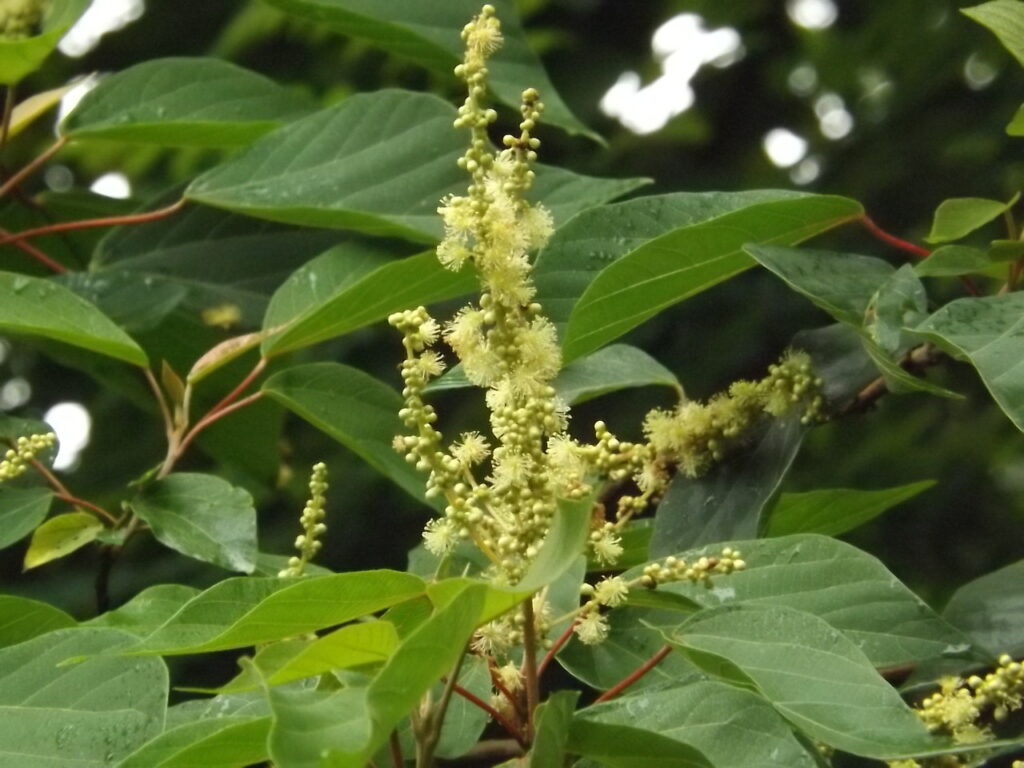
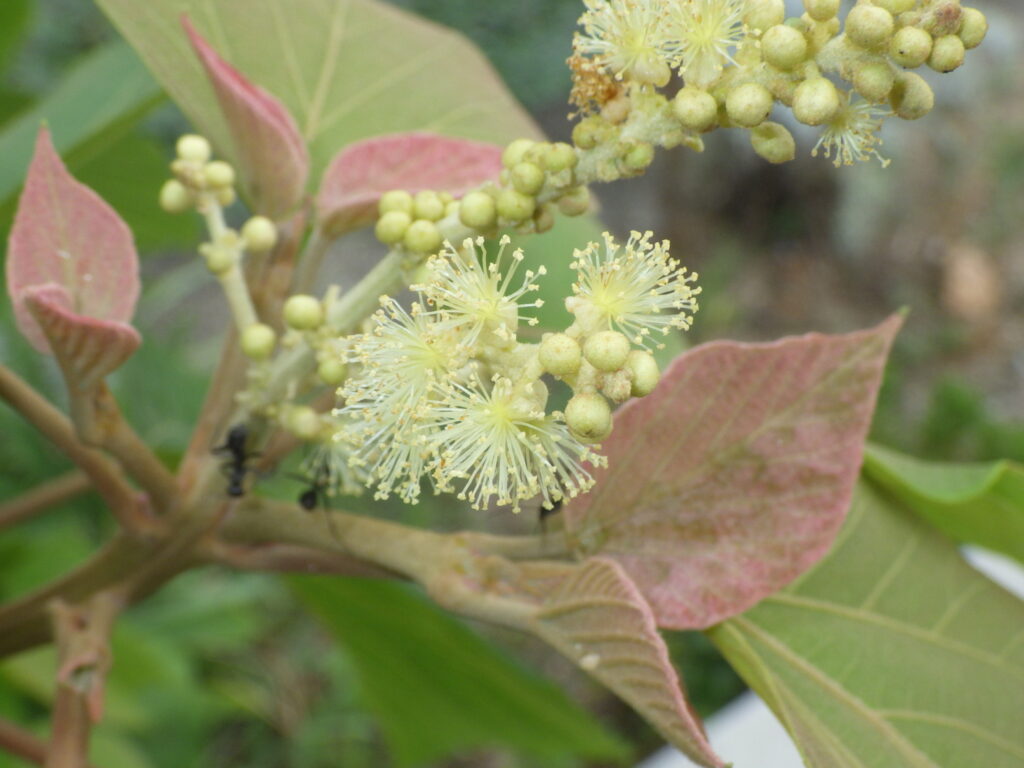
The flowers are small and inconspicuous, as is common in the Euphorbiaceae family, and the distinction between petals and sepals is unclear.
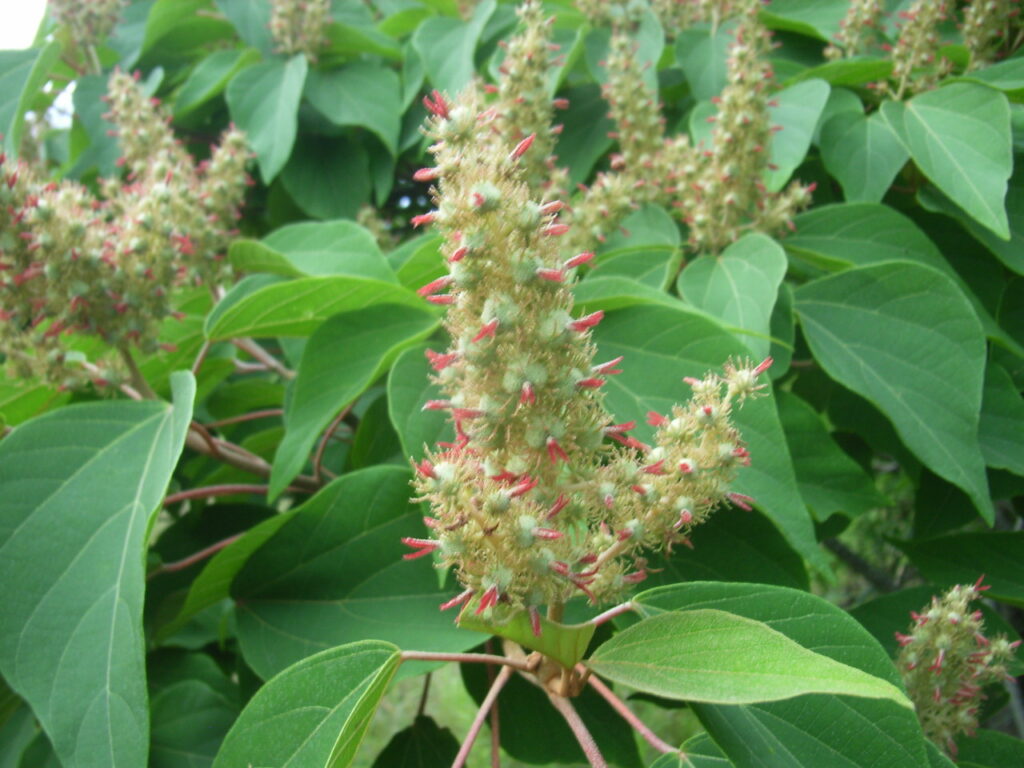
Mallotus japonicus flowers from June to July. It is dioecious (having separate male and female plants). It produces conical inflorescences 7-20 cm long at the tips of its branches. The flowers have no petals. Male flowers grow in clusters of several in the axils of the bracts, and the calyx is pale yellow and 3-4 lobed. There are numerous stamens, and the filaments are about 3 mm long. Female flowers grow singly in the axils of the bracts, and the calyx is 2-3 lobed. The ovary has spine-like projections and is covered with reddish stellate hairs and white glandular dots. There are 3-4 styles, densely covered with papillary projections. The papillary projections are initially reddish and turn yellow when mature.
Ooba-benigashiwa (Ooba-benigashiwa) flowers from April to May. It is dioecious (having separate male and female plants). Male inflorescences have 1 to 3 flowers per leafless node, are unbranched, catkin-like, and 1.5 to 3.5 cm long. Male flowers have 3 to 5 flowers per bract, with pedicels about 2 mm long, spherical buds about 2 mm in diameter, glossy, 3 (or 4) sepals, and 6 to 8 stamens. Female inflorescences are terminal, unbranched, 4 to 8 cm long, glossy, with triangular bracts about 3.5 mm long. Female flowers have pedicels about 0.5 mm long, 5 triangular sepals 2.5 to 3 mm long, glossy, a subglobose ovary with cottony hairs, and 3 filiform styles 10 to 12 mm long, fused together at 1.5 to 2 mm.
How did they pollinate? They used both wind and bumblebees!?
As can be seen from its small, inconspicuous flowers, Mallotus japonicus relies on wind for pollination (Yonebayashi, 2023).
However, it has also been found that some special types of bees, such as the yellow-breasted bumblebee, perform a pollination method called buzz pollination, in which they extract pollen through fine vibrations, causing the pollen to be dispersed into the air and resulting in pollination (Ichikawa et al., 2011). In Japan, the yellow-breasted bumblebee is the only insect that has been confirmed to visit these flowers. This is a type of parasitic pollination called buzz and airborne pollination.
What is the structure of the fruit?
The fruit is a capsule, which is common to all plants in the Euphorbiaceae family.
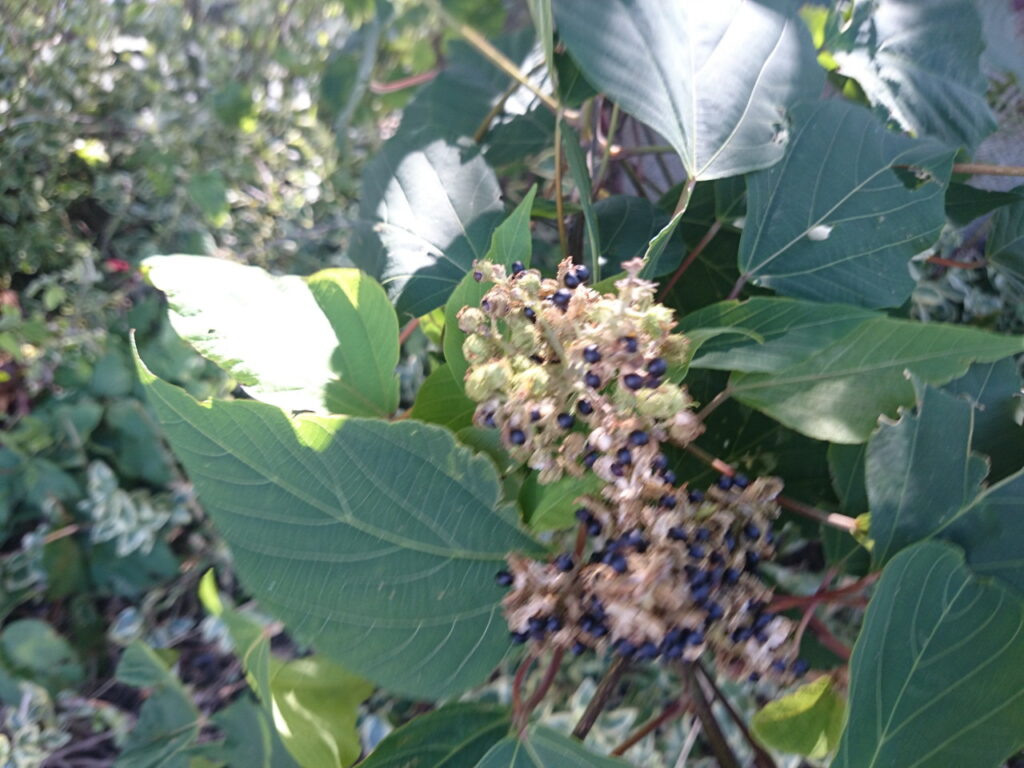
The capsules of Mallotus japonicus are oblate and spherical, about 8 mm in diameter, densely covered with spine-like projections, and ripen to a brown color in September and October. When ripe, they split into 3-4 sections, releasing 3-4 seeds. The seeds are oblate and spherical, about 4 mm in diameter, and black in color.
The capsules of Quercus glauca are subglobose, three-lobed, 10-12 mm in size, and densely covered with downy hairs. The seeds are ovate, about 6 mm in size, brown or gray, and form a head.
How do they disperse their seeds? They're incredibly popular with various birds!?
Although Mallotus japonicus has a capsule fruit, its seeds are dispersed by animal feeding (Sato and Sakai, 2005). After the fruit splits open, the exposed seeds are eaten by birds, and the seeds are dispersed through their droppings.
Specifically, there are records of it being eaten by various birds such as the carrion crow, jungle crow, Okinawa woodpecker, pheasant, turtle dove, Daurian redstart, starling, common starling, and azure-winged magpie, suggesting it is quite popular. In coniferous plantations, it is foraged by nine species, with four species of flycatchers—the Asian brown flycatcher, dark-skinned flycatcher, narcissus flycatcher, and blue-and-white flycatcher—accounting for 751 TP3T.
We see young trees scattered throughout urban areas and forests, which is likely closely related to their popularity among birds.
References
Hayashi, Masayuki. 2019. Tree Leaves: Expanded and Revised Edition - Identifying 1300 Species Through Real-Life Scans. Yama-kei Publishers, Tokyo. 824pp. ISBN: 9784635070447
Ichikawa, S., Kurahashi, T., & Ikuru, S. 2011. Possibility of a novel pollination mode by flower-visiting bees and yellow-breasted bumblebees collected in Kagawa Prefecture. Bulletin of the Faculty of Agriculture, Kagawa University 63(116): 43-59. ISSN: 0368-5128, http://id.nii.ac.jp/1731/00003553/
Kanagawa Prefecture Flora Survey Association. 2018. Kanagawa Prefecture Flora 2018 (Electronic Edition). Kanagawa Prefecture Flora Survey Association, Odawara. 1803pp. ISBN: 9784991053726
Mogi, T., Ota, K., Katsuyama, T., Takahashi, H., Shirokawa, S., Yoshiyama, K., Ishii, E., Sakio, H., and Nakagawa, S. 2000. Flowers Blooming on Trees: Polypetalous Flowers (Vol. 2, 2nd edition). Yama-kei Publishers, Tokyo. 719pp. ISBN: 9784635070041
Sato, Shigeho & Sakai, Atsushi. 2005. Birds as seed dispersers of Mallotus japonicus in coniferous plantations. Journal of the Ornithological Society of Japan 54(1): 23-28. https://doi.org/10.3838/jjo.54.23
Wu, ZY, Raven, PH, & Hong, DY (Eds.). 2008. Flora of China (Vol. 11 Oxalidaceae through Aceraceae). Science Press, Beijing, and Missouri Botanical Garden Press, St. Louis. ISBN: 9781930723733
Yamao, Ryo & Hada, Yoshio. 2014. Variation in predation defense traits of Mallotus japonicus in response to heterogeneity of soil nutrients and moisture on slopes, and leaf utilization by insects. Konchu New Series 17(3): 111-118. https://doi.org/10.20848/kontyu.17.3_111
Yonebayashi, Naka. 2023. Airborne pollen count over a five-year period (2017-2021) in the suburbs of Kumagaya City. Global Environmental Research 25: 1-13. ISSN: 1344-9842, http://ris-geo.jp/wp/wp-content/uploads/2023/05/25_02_Yonebayashi.pdf