Malabar spinach (Tsurumurasaki) and Okinawa spinach (Okawakame/Akazakazura) are both climbing herbs belonging to the Basellaceae family, cultivated for ornamental and edible purposes. They share many similarities, such as having thick, oval-shaped leaves that are green on both the upper and lower surfaces, and because they are less common species, they can be difficult to distinguish. However, there are crucial differences between Malabar spinach and Akazakazura. These are the shape of the flowers and the method of reproduction. There are also differences in taste; Akazakazura seems to have a stickier texture, similar to wakame seaweed. You might also confuse it with Taiwanese tetragonum, but there is a significant difference in classification, and the shape of the leaves and flowers are different, making identification easy. This article will explain the classification of the Basellaceae family.
- What are Malabar spinach and Okinawa spinach (also known as red spinach)?
- What is the difference between Malabar spinach and Okinawa spinach (also known as red spinach)?
- What is the difference in taste between Malabar spinach and Okinawa spinach (also known as red spinach)?
- What is the difference between Malabar spinach and Tetragonia tetragonioides?
- References
What are Malabar spinach and Okinawa spinach (also known as red spinach)?
Basella alba, also known as Malabar spinach, is a climbing annual plant native to India and Southeast Asia (RBG Kew, 2023). In China, tropical Africa, Central America, and South America, it has become naturalized after being cultivated for food. In Japan, it was introduced during the Edo period and cultivated mainly for ornamental purposes, but it was very rare. However, after the normalization of diplomatic relations between Japan and China following World War II, cultivation for food has gradually increased with the arrival of the Chinese vegetable boom.
Anredera cordifolia, commonly known as Akazakazura or Yunnan Baiyao, is a climbing perennial plant native to South America. It has naturalized in Africa, the Pacific region of Australia, Southern Europe, and North America, where it was cultivated for ornamental and edible purposes. In Australia, in particular, it is known as a harmful weed. Although rare, it is also cultivated in Japan for ornamental and edible purposes. Hereafter, it will be referred to as Akazakazura.
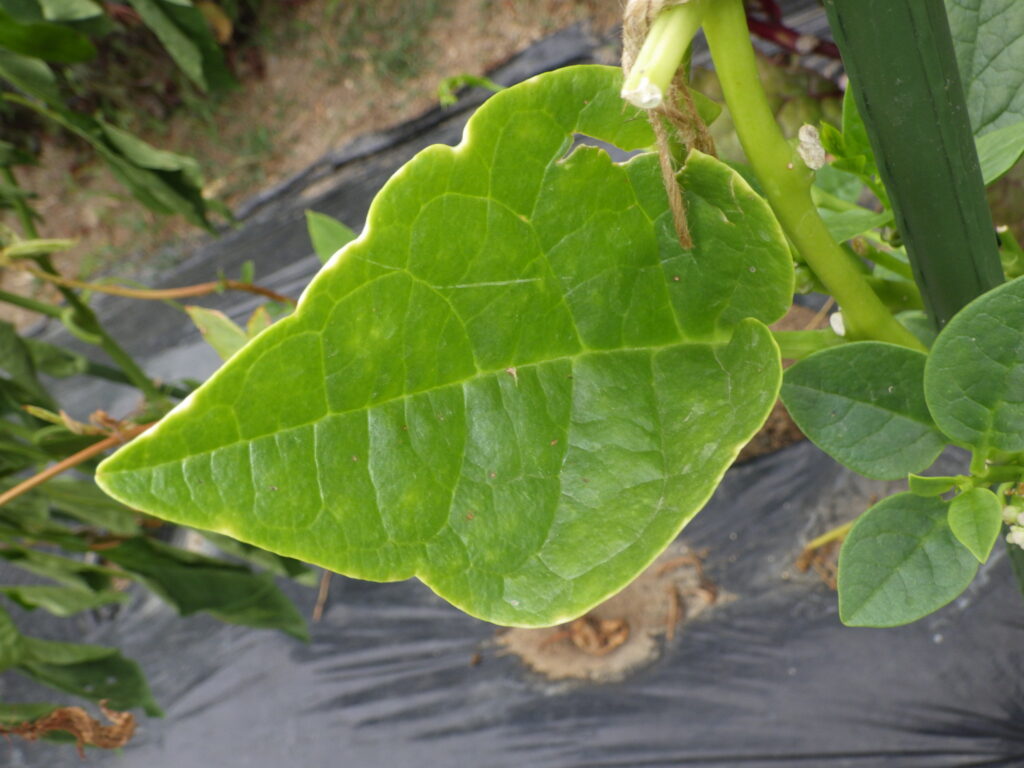
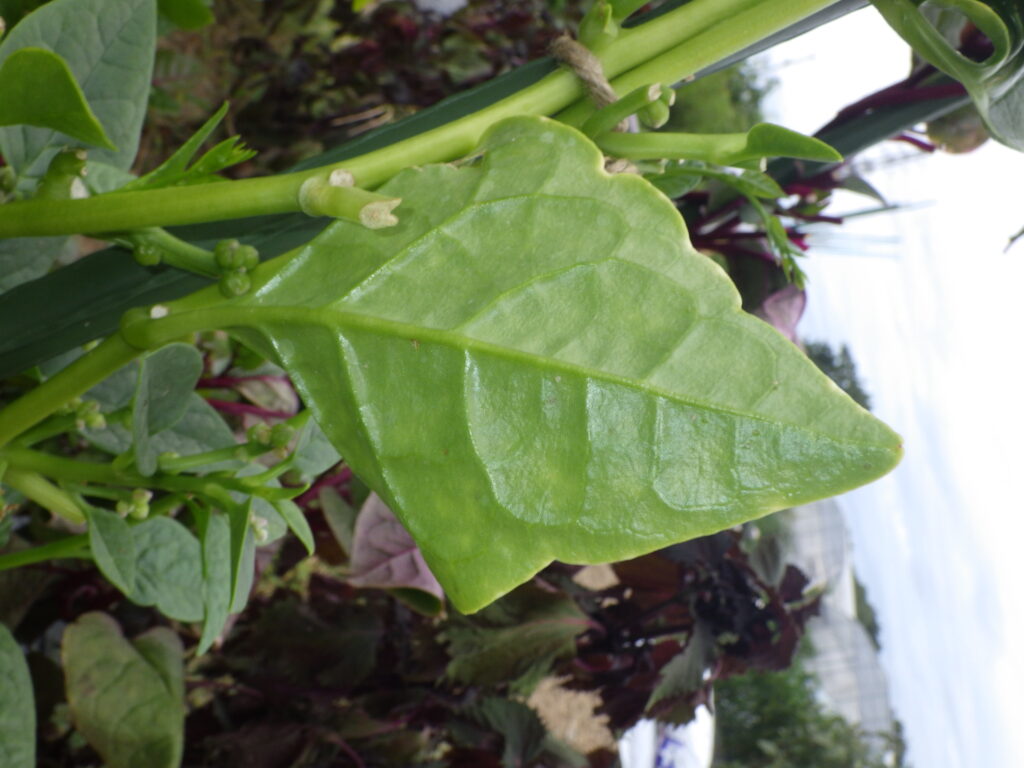
All of them are climbing herbs belonging to the Basellaceae family, cultivated for ornamental and edible purposes. They share many similarities, such as having thick, oval-shaped leaves that are green on both the upper and lower surfaces, and having glossy stems and leaves that are hairless. Because they are relatively minor species, they may be difficult to distinguish.
What is the difference between Malabar spinach and Okinawa spinach (also known as red spinach)?
However, there is a crucial difference between Malabar spinach and Chinese jasmine (Wu et al., 2003).
First, while Malabar spinach belongs to the genus Malabar spinach, red vine belongs to the genus Red Vine. So, although they belong to the same family, it can be expected that there is a taxonomic gap between them.
Specifically, the shape of the flowers is completely different.
In Malabar spinach, the pedicels are absent, the perianth segments are succulent and barely open when in bloom, and the stamens are short, whereas in Chinese jasmine, the pedicels are present, the perianth segments are membranous and fully open when in bloom, and the stamens protrude long.
Furthermore, there are differences in their breeding methods.
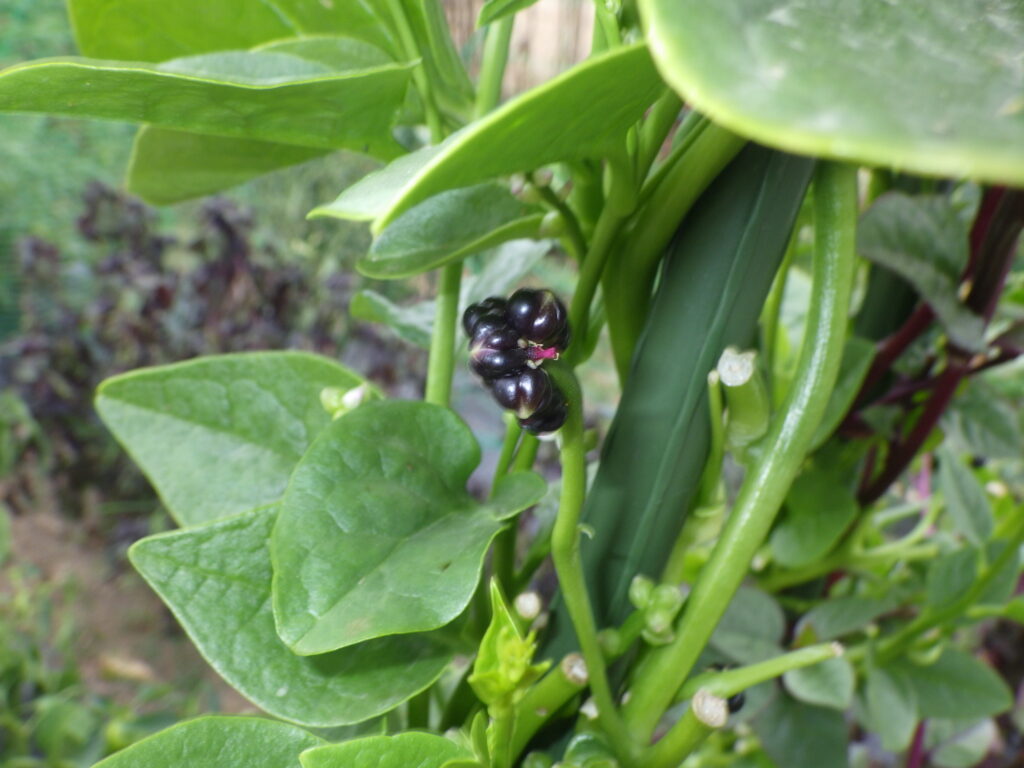
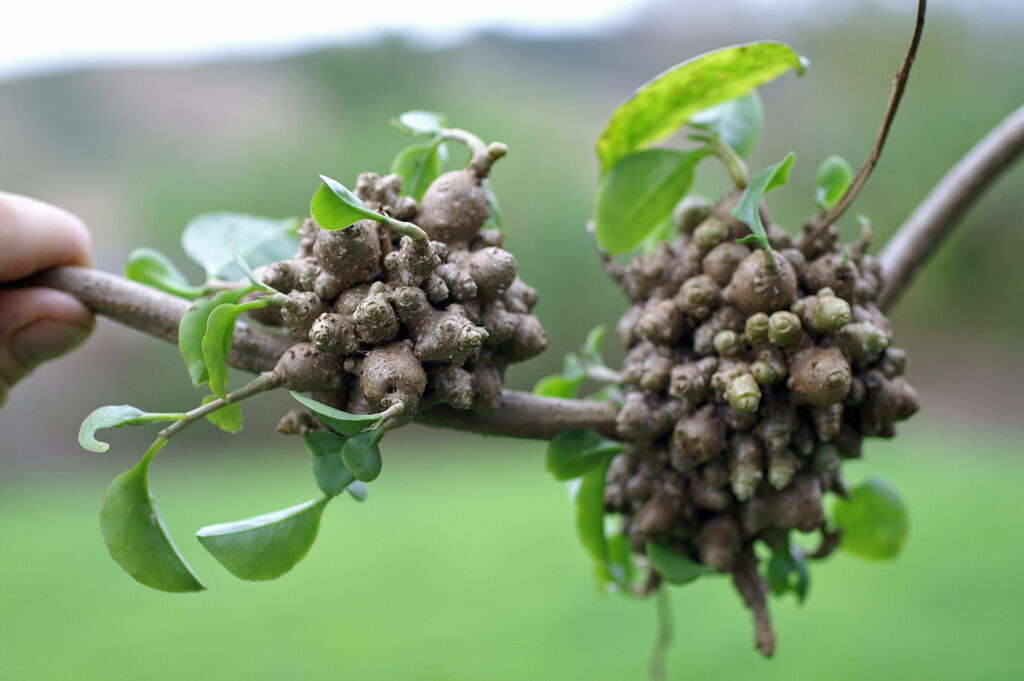
While Malabar spinach produces fruits, reproducing by creating spherical, dark purple berries (reproductive growth and sexual reproduction), while Chinese jasmine occasionally produces spherical, dark brown to black drupes, it rarely bears fruit and reproduces from above-ground tubers (bulbils) or severed roots (vegetative growth and asexual reproduction).
Therefore, you will be able to observe brown clumps between the stems of *Chinese jasmine*. This is not present in *Malabar spinach*.
While it can be difficult to distinguish them by their leaves alone, Malabar spinach has leaf blades that are 3-9 cm long, while Japanese spinach has leaf blades that are 2-6 cm long, so Malabar spinach tends to have slightly larger leaf blades.
Also, the leaves of *Chinese jasmine* are often wavy, but those of *Malabar spinach* are not.
I believe this should allow you to identify it.
In addition, there is a horticultural variety of Malabar spinach called 'Rubra', in which the stems are reddish-purple and the leaves are initially green, but as the plant matures, it produces purple pigment from the base of the leaves, causing them to take on a purple hue.
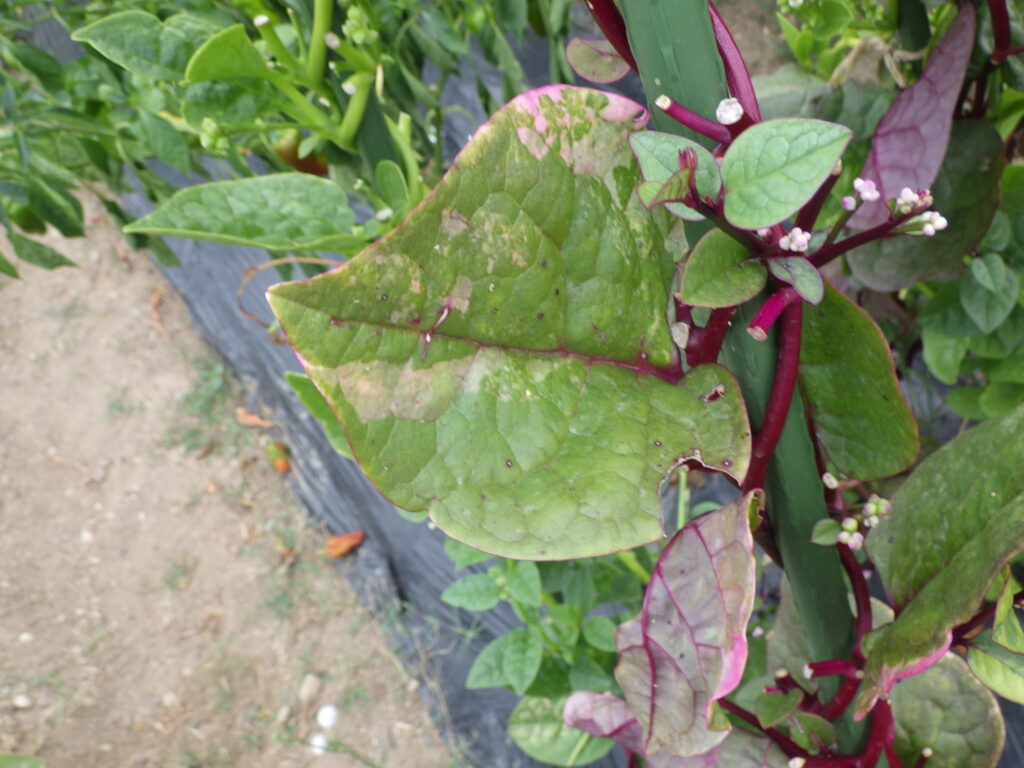
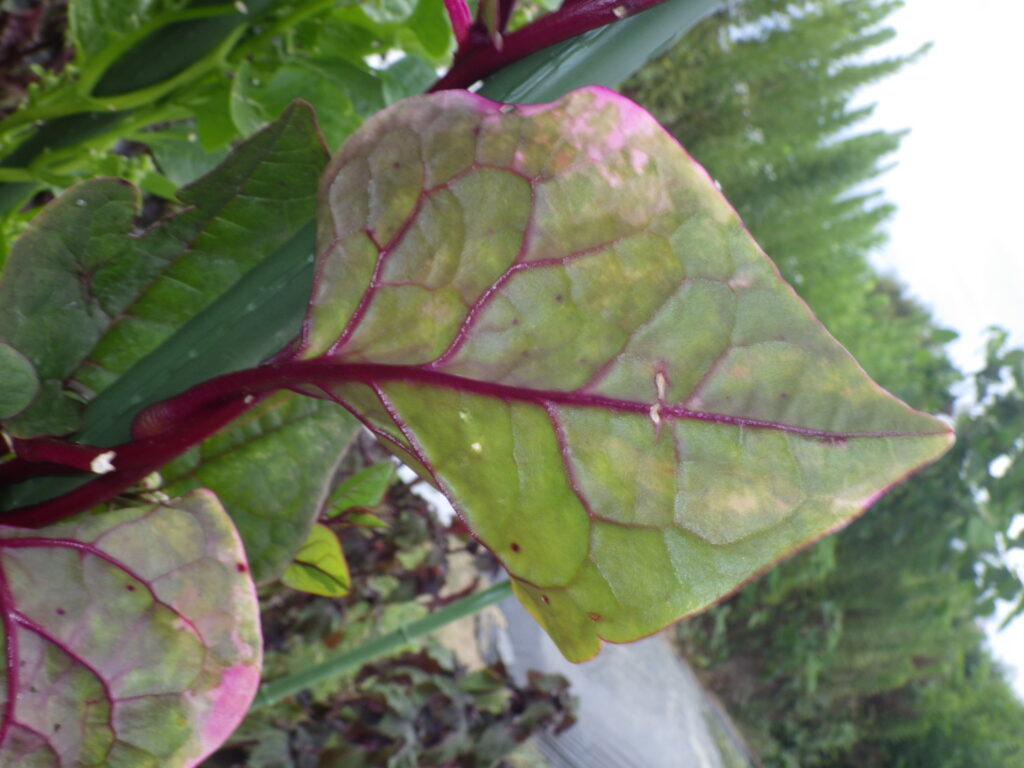
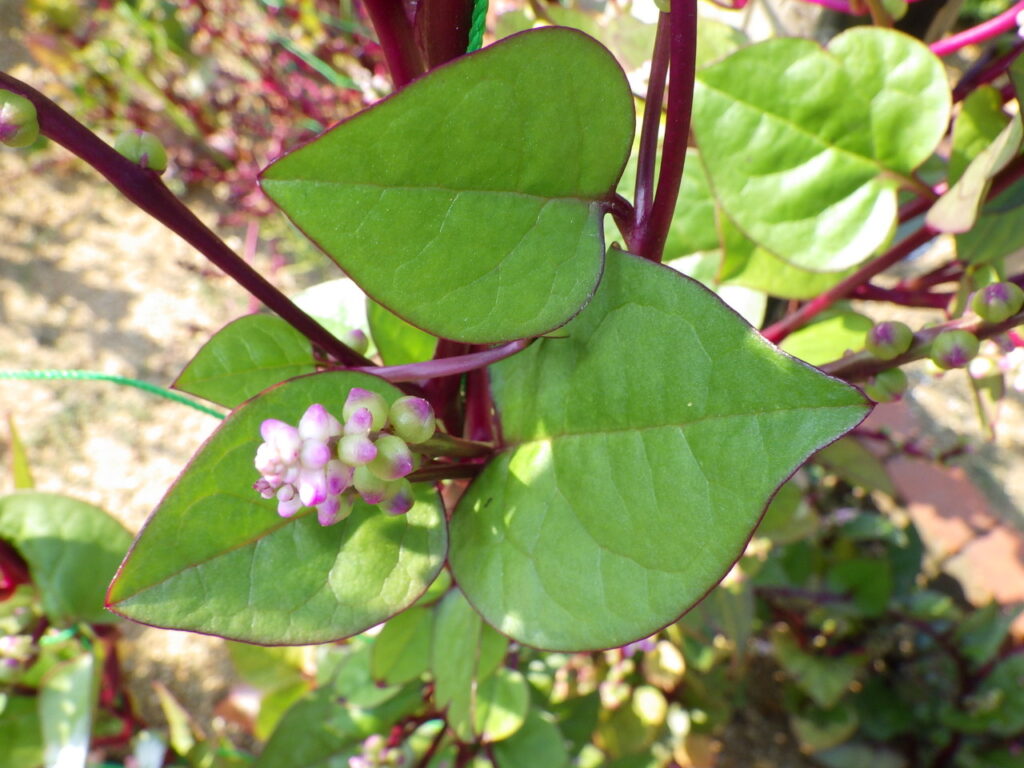
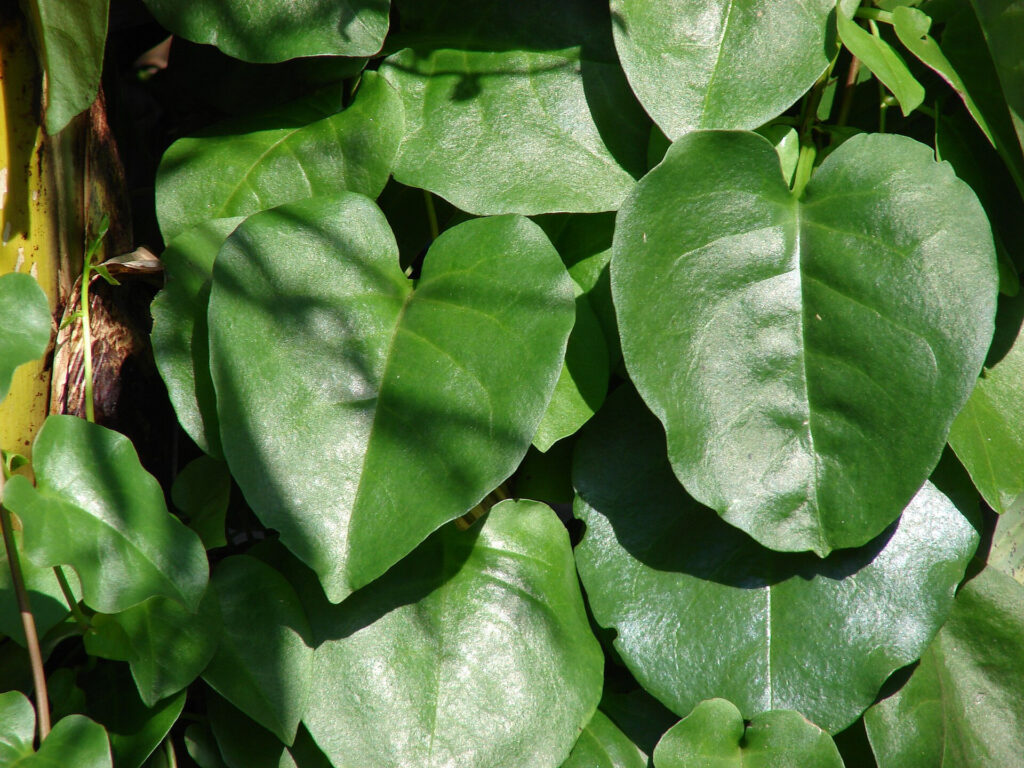

What is the difference in taste between Malabar spinach and Okinawa spinach (also known as red spinach)?
Both Malabar spinach and Chinese jasmine are used as food.
Is there a difference in taste between these two?
One blog actually describes the experience of comparing the taste of the two dishes after preparing them as blanched greens (fukuoka-vegico, 2010).
According to the report, Malabar spinach is "less sticky and has no strong taste, making it easy to eat compared to Okinawa spinach," while Chinese spinach has "a chewy texture and is very sticky, with a slightly grassy smell, but it has a rich and delicious flavor."
Malabar spinach has a texture similar to spinach, and red jasmine, as its alternative name "Okawakame" suggests, may have a texture similar to wakame seaweed.
I think it would be interesting for everyone to try comparing them.
What is the difference between Malabar spinach and Tetragonia tetragonioides?
Another species that might be confused with Malabar spinach is Tetragonia tetragonioides, which is also a climbing perennial plant whose young leaves and stems are sometimes picked and eaten.
However, this plant belongs to a completely different classification: the Aizoaceae family, genus Tetragonia. Its leaves are ovate-triangular to rhomboid in shape, which is entirely different from the round leaves of Malabar spinach. Its flowers are also yellow and fully open.
Therefore, with careful observation, you should be able to distinguish between them.

References
fukuoka-vegico. June 25, 2010. Malabar spinach and Okinawa spinach. Fukuoka Vegico* Farm is sunny again today. https://vegico2006.exblog.jp/14658390/
RBG Kew. 2023. The International Plant Names Index and World Checklist of Vascular Plants. Plants of the World Online. http://www.ipni.org and https://powo.science.kew.org/
Wu, ZY, Raven, PH, & Hong, DY (Eds.). 2003. Flora of China (Vol. 5 Ulmaceae through Basellaceae). Science Press, Beijing, and Missouri Botanical Garden Press, St. Louis. ISBN: 9781935641056